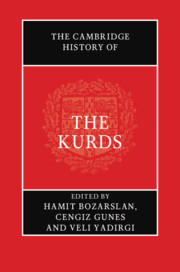
Book contents
- The Cambridge History of the Kurds
- The Cambridge History of the Kurds
- Copyright page
- Contents
- Figures
- Maps
- Tables
- Contributors
- Acknowledgements
- Abbreviations
- Additional material
- Introduction
- Part I Historical Legacies
- Part II Regional Political Developments and the Kurds in the Twentieth and Twenty-First Centuries
- Part III Domestic Political Developments and the Kurds in the Twentieth and Twenty-First Centuries
- 12 Kurdish Nationalism in Turkey, 1898–2018
- 13 Why Autonomy Hasn’t Been Possible for Kurds in Turkey
- 14 The Kurdistan Region of Iraq, 1991–2018
- 15 Street Protest and Opposition in the Kurdistan Region of Iraq
- 16 Minority, State and Nation
- 17 The Kurdish Question in Syria, 1946–2019
- 18 The Yezidis in the Soviet Union
- Part IV Religion and Society
- Part V Kurdish Language
- Part VI Art, Culture and Literature
- Part VII Transversal Dynamics
- Index
- References
13 - Why Autonomy Hasn’t Been Possible for Kurds in Turkey
from Part III - Domestic Political Developments and the Kurds in the Twentieth and Twenty-First Centuries
Published online by Cambridge University Press: 13 April 2021
By

Book contents
- The Cambridge History of the Kurds
- The Cambridge History of the Kurds
- Copyright page
- Contents
- Figures
- Maps
- Tables
- Contributors
- Acknowledgements
- Abbreviations
- Additional material
- Introduction
- Part I Historical Legacies
- Part II Regional Political Developments and the Kurds in the Twentieth and Twenty-First Centuries
- Part III Domestic Political Developments and the Kurds in the Twentieth and Twenty-First Centuries
- 12 Kurdish Nationalism in Turkey, 1898–2018
- 13 Why Autonomy Hasn’t Been Possible for Kurds in Turkey
- 14 The Kurdistan Region of Iraq, 1991–2018
- 15 Street Protest and Opposition in the Kurdistan Region of Iraq
- 16 Minority, State and Nation
- 17 The Kurdish Question in Syria, 1946–2019
- 18 The Yezidis in the Soviet Union
- Part IV Religion and Society
- Part V Kurdish Language
- Part VI Art, Culture and Literature
- Part VII Transversal Dynamics
- Index
- References
Summary
The chapter examines the antagonism of the Turkish political elite towards Kurdish autonomy claims in a broader historical and ideological context with a view to understanding how that antagonism has been codified into law and jurisprudence in Turkey. It explores answers to the question why autonomy has not been a viable political project for Kurds in today’s Turkey and one that can be realized through democratic and legal means. The chapter also explains how the enduring trajectory has led the country into an unprecedented centralist system and authoritarian rule in recent years and the repression of Kurdish claims for autonomy. In so doing, it concentrates on three main reasons behind the impossibility of Kurdish autonomy in the current political and legal status quo. First, a dominant anachronistic reading of the centralist state legacy overlooks the Ottoman legacy for organizational diversity and the Kurdish conventional self-rule. Second, a dexterously designed legal system has made unlawful autonomy as a political project, while presenting the unitary state model as the only one conceivable and fundamental to political and legal order. Third, the mainstream political elites’ ideologically driven response to the Kurds’ claim for autonomy and failure to comprehending or to deal with Kurdish nationalist sentiments and aspirations attached to it.
Keywords
Information
- Type
- Chapter
- Information
- The Cambridge History of the Kurds , pp. 333 - 361Publisher: Cambridge University PressPrint publication year: 2021
References
Agos (2013). ‘“Kürdistan” kelimesi anayasal suç’. www.agos.com.tr/tr/yazi/5540/kurdistan-kelimesi-anayasal-suc.Google Scholar
Akbulut, O. (2018). Legal background of autonomy arrangements in Turkey from historical perspectives. In Akbulut, O. and Aktoprak, E. (eds), Minority Self-government in Europe and the Middle East (pp. 228–45). Leiden and Boston, MA: Brill.Google Scholar
Akil İnsanlar Heyeti Güneydoğu Raporu (2013). www.mazlumder.org/webimage/akil%20insanlar%20heyeti%20guneydogu%20raporu.pdf.Google Scholar
Aljazeera Turk (2014). ‘Arınç: Mısır ile İlişkileri Düzeltmemiz Lazım’. www.aljazeera.com.tr/al-jazeera-ozel/arinc-misirla-iliskileri-duzeltmemiz-lazim.Google Scholar
Aljazeera Turk (2015). ‘Ortak Açıklamanın Tam Metni’. www.aljazeera.com.tr/haber/ortak-aciklamanin-tam-metni.Google Scholar
Atmaca, M. (2017). Three stages of political transformation in the 19th-century Ottoman Kurdistan. Anatoli, 8, 43–58.Google Scholar
Barkey, K. (2009). Empire of Difference: The Ottomans in Comparative Perspective. Cambridge: Cambridge University Press.Google Scholar
Bataković, D. T. (2006). A Balkan-style French revolution? The 1804 Serbian uprising in European perspective. Balcanica, 36, 113–28. www.doiserbia.nb.rs/Article.aspx?ID=0350-76530536113B#.XlKLWi10fIE.Google Scholar
Bayır, D. (2014). The role of the judicial system in the politicide of the Kurdish opposition. In Gunes, C. and Zeydanlioglu, W. (eds), The Kurdish Question in Turkey: New Perspectives on Conflict, Representation and Reconciliation (pp. 21–46). London: Routledge.Google Scholar
Bayır, D. (2017). Türk Hukukunda Azınlıklar ve Milliyetçilik. Istanbul: İstanbul Bilgi University Publishing House.Google Scholar
Bayraktar, S. U. and Massicard, E. (2012). ‘Decentralisation in Turkey’. www.afd.fr/en/ressources/decentralisation-turkey.Google Scholar
Bayramoğlu, A. (2015). ‘Çözüm Süreci: Siyasetten Silaha’. Democratic Progress Institute. www.democraticprogress.org/wp-content/uploads/2015/10/Ali-Bayramoglu-Assessment-TUR.pdf.Google Scholar
BBC (2015). ‘Turkey’s Erdoğan: Demirtas Kurdish autonomy plea is treason’. www.bbc.com/news/world-europe-35192854.Google Scholar
BBC Türkçe (2016). ‘Erdoğan’dan “Özerklik” Tepkisi: Dünyayı Başlarına Yıkarız’. www.bbc.com/turkce/haberler/2016/01/160128_erdogan_yeni_anayasa.Google Scholar
Belge, M. (2003). Türkiye’de Zenefobi ve Milliyetçilik. In Bora, T. and Gültekingil, M. (eds), Modern Türkiye’de Siyasi Düşünce (Vol. 4, pp. 179–92). Istanbul: İletişim Yayınları.Google Scholar
Bianet (2013). ‘BDP’nin Çözüm Süreci Önerileri’. http://bianet.org/bianet/toplum/151696-bdp-den-cozum-sureci-onerileri.Google Scholar
Bianet (2015a). ‘Erdoğan: Çözüm Süreci Mümkün Değil, Herkesten Hesap Soracağız’. https://m.bianet.org/biamag/siyaset/166358-erdogan-cozum-sureci-mumkun-degil-herkesten-hesap-soracagiz.Google Scholar
Bianet (2015b). ‘Özyönetimlerle İlgili Siyasi Çözüm Deklarasyonu’. http://bianet.org/bianet/siyaset/170561-dtk-sonuc-bildirgesi-turkce-ve-kurtce-tam-metin.Google Scholar
Bianet (2016). ‘Adalet Bakanı Bozdağ’dan Belediyelere Kayyum Açıklaması’. http://bianet.org/bianet/siyaset/178644-adalet-bakani-bozdag-dan-belediyelere-kayyum-aciklamasi.Google Scholar
Binkley, R. C. (1935). Realism and Nationalism, 1852–1871. New York: Harper and Row Publishers.Google Scholar
Bora, T. (2015). Medeniyet Kaybı: Milliyetçilik ve Faşizm Üzerine Yazılar. Istanbul: İletişim Yayınları.Google Scholar
Bothe, M., Ronzitti, N. and Rosas, A. (1997). The OSCE in the Maintenance of Peace and Security: Conflict Prevention, Crisis Management and Peaceful Settlement of Disputes. The Hague, London and Boston, MA: Kluwer Law International.Google Scholar
Bullain, I. (1998). Autonomy and European Union. In Suksi, M. (ed.), Autonomy Applications and Implications (pp. 343–55). The Hague: Kluwer Law.Google Scholar
Çavuşoğlu, N. (1995). Parti Yasaklaması Rejiminde Azınlıklar Problemi: Türk Anayasa Mahkemesi Kararları Üzerine Bir Not. İstanbul Üniversitesi Siyasal Bilgiler Fakültesi Dergisi, 10, 35–42.Google Scholar
Çetin, B. (2018). Türk Hukuk Düzeninde Yetki Genişliği İlkesi. Uluslararası Yönetim Akademisi Dergisi, 1 (2), 94–112.Google Scholar
Cihan, E. (1979). Milli Duygulara Aykırı Propaganda Yapma Suçu (TCK. m. 142/b.3). İstanbul Üniversitesi Hukuk Fakültesi Mecmuası, 43 (1–4), 45–63.Google Scholar
Conference on Near Eastern Affairs (1922–1923). Records of Proceedings and Draft Terms of Peace, 1923. London: His Majesty’s Stationery Office.Google Scholar
Coşkun, V. (2015). 7 Haziran Seçimlerine Doğru Halkların Demokratik Partisi. SETA Analiz, No. 124.Google Scholar
Council of Europe (2017). ‘Fact-finding mission on the situation of local elected representatives in Turkey’. https://rm.coe.int/16806fbf0d.Google Scholar
Cumhuriyet (2015). ‘Bahçeli: Sevr Anlaşmasıyla İhanet Metni Arasında Fark Yoktur’. www.cumhuriyet.com.tr/haber/bahceli-sevr-anlasmasiyla-ihanet-metni-arasinda-fark-yoktur-225385.Google Scholar
Cumhuriyet (2018). ‘Çözüm Sürecini Bitiren Ceylanpınar Davasında Karar: Tüm Sanıklar Beraat Etti’. www.cumhuriyet.com.tr/haber/cozum-surecini-bitiren-ceylanpinardaki-iki-polisin-cinayeti-davasi-da-beraatle-sonuclandi-935930.Google Scholar
Davison, R. H. (1977). Nationalism as an Ottoman problem and the Ottoman response. In William, W. H. and William, O. (eds), Nationalism in a Non-national State: The Dissolution of the Ottoman Empire (pp. 25–56). Columbus, OH: Ohio State University Press.Google Scholar
Demokrat Haber (2017). ‘Anayasa Mahkemesi’ne TKDP Tepkisi’. www.demokrathaber.org/guncel/anayasa-mahkemesi-ne-tkdp-tepkisi-h91820.html.Google Scholar
Elazar, D. (1997). Contrasting unitary and federal systems. International Political Science Review/Revue Internationale De Science Politique, 18 (3), 237–51.Google Scholar
Euronews (2018). ‘Demirtaş: Hendek barikat var diye demokratik özerklikten vazgeçemezdim’. https://tr.euronews.com/2018/04/11/demirtas-cezaevine-gonderilecegimi-bile-bile-turkiye-ye-dondum.Google Scholar
Evrensel (2017). ‘Șırnak’ta Kayyım Atanmayan DBP’li Belediye Kalmadı’. www.evrensel.net/haber/312599/sirnakta-kayyim-atanmayan-dbpli-belediye-kalmadi.Google Scholar
GABB (Union of Southeastern Anatolia Region Municipalities) (2016). ‘Report on local governments and appointments of trustees to municipalities’. www.hlrn.org/img/violation/KayyumDosyasi.pdf.Google Scholar
Gençer, F. (2011). ‘Merkezîleşme Politikaları Sürecinde Yurtluk-Ocaklık Sisteminin Değişimi’. http://dergiler.ankara.edu.tr/dergiler/18/1627/17446.pdf.Google Scholar
Genell, A. M. (2016). Autonomous provinces and the problem of ‘semi-sovereignty’ in European international law. Journal of Balkan and Near Eastern Studies, 18 (6), 533–49.CrossRefGoogle Scholar
Güler, B. A. (2000). Yerel Yönetimleri Güçlendirmek mi? Adem-i Merkeziyetçilik mi? TODAİE. Çağdaş Yerel Yönetimler, 9, 14–29.Google Scholar
Hafızoğulları, Z. (2015). Devletin Birliğini ve Ülke Bütünlüğünü Bozmak Suçu. In Prof. Dr. Nevzat Toroslu’ya Armağan (Vol. 1, pp. 557–67). Ankara: Ankara Üniversitesi Yayınları Ankara.Google Scholar
Henning, B. (2018). Narratives of the History of the Ottoman-Kurdish Bedirhani Family in Imperial and Post-imperial Contexts: Continuities and Changes. Bamberg: University of Bamberg Press.Google Scholar
Hürriyet (2014). ‘Buradan Bu Irkçıya Oy Çıkmayacak’. www.hurriyet.com.tr/gundem/buradan-bu-irkciya-oy-cikmayacak-26894227.Google Scholar
Hürriyet Daily News (2012a). ‘Euro speaker links Kurdish autonomy to EU accession’. www.hurriyetdailynews.com/euro-speaker-links-kurdish-autonomy-to-eu-accession-21929.Google Scholar
Hürriyet Daily News (2012b). ‘BDP free to advocate break-up: AKP official’. www.hurriyetdailynews.com/bdp-free-to-advocate-break-up-akp-official-10775.Google Scholar
Karataş, Y. and Karasu, D. (2017). Osmanlı’dan Cumhuriyet’e Miras Kalan Bir Mesele: Yurtluk-Ocaklık ve Emlak-ı Mazbuta Mukabili Maaşların Tasfiyesi. International Journal of Social Science, 56, 369–81.Google Scholar
Karpat, K. H. (1972). The transformation of the Ottoman Empire, 1789–1908. International Journal of Middle East Studies, 3 (3), 243–81.CrossRefGoogle Scholar
Karpat, K. H. (1982). Millets and nationality: The roots of incongruity of nation and state in the post-Ottoman era. In Braude, B. and Lewis, B. (eds), Christians and Jews in the Ottoman Empire: Functioning of a Plural Society (Vol. 1, pp. 141–67). New York and London: Holmes and Meier Publishers.Google Scholar
Kılıç, O. (1999). Yurtluk-Ocaklık ve Hükûmet Sancaklar Üzerine Bazı Tespitler. OTAM, 10, 119–37.Google Scholar
Kılıç, O. (2001). Van Eyaletine Bağlı Sancaklar ve İdarî Statüleri (1558–1740). Osmanlı Araştırmaları, 21, 189–210.Google Scholar
Kostopoulou, E. (2013). Armed negotiations: The institutionalization of the late Ottoman locality. Comparative Studies of South Asia, Africa and the Middle East, 33 (3), 295–309.Google Scholar
Lewis-Anthony, S. (1998). Autonomy and the Council of Europe. With special reference to the application of Article 3 of the first protocol of the European Convention in Human Rights. In Suksi, M. (ed.), Autonomy Applications and Implications (pp. 317–41). The Hague: Kluwer Law.Google Scholar
Machiavelli, N. (1998). The Prince. Chicago, IL, and London: The University of Chicago Press.Google Scholar
Milliyet (2014). ‘85 Yillik maasimizi Faiziyleistiyoruz!’ www.milliyet.com.tr/gundem/85-yillik-maasimizi-faiziyle-istiyoruz-1852631.Google Scholar
Milliyet (2016). ‘“Kürdistan” Adli Üçüncü Parti Geliyor’. www.milliyet.com.tr/siyaset/kurdistan-adli-ucuncu-parti-geliyor-2253929.Google Scholar
Mynet (2010). ‘Selim Sadak 1 Yıl Hapis Cezasına Çarptırıldı’. www.mynet.com/selim-sadak-1-yil-hapis-cezasina-carptirildi-110100508295.Google Scholar
OHCHR (2017). ‘The report on the human rights situation in south-east Turkey (July 2015–December 2016)’. www.ohchr.org/documents/countries/tr/ohchr_south-east_turkeyreport_10march2017.pdf.Google Scholar
Özoğlu, H. (2004). Kurdish Notables and the Ottoman State: Evolving Identities, Competing Loyalties, and Shifting Boundaries. New York: State University of New York Press.Google Scholar
Pelek, S. and Benlisoy, F. (2011). ‘AKP’s passion for Kurds: Either you belong to me, or to the courts’. www.jadaliyya.com/Details/24590.Google Scholar
Reyhan, C. (2006a). Ademi-merkeziyet: Bir Kavramın İçerik Analizi. Folklore ve Edabiyat Dergisi, 2 (46), 207–24.Google Scholar
Reyhan, C. (2006b). Osmanlı’da Millet Nizamnameleri: Avrupa ile Uyum Sürecinde Rum-Ermeni-Yahudi Cemaat Düzenlemeleri. Belgeler, 27 (31), 33–90.Google Scholar
Reyhan, C. (2007). Türkiye’de Yüzyıllık Gündem: Federalizm. Memleket Siyasi Yönetim, 2 (5), 107–18.Google Scholar
Reyhan, C. (2015). 1864–1871 Vilayet Nizamnameleri İdare Meclisleri: Osmanlı Taşrasında – Bir örnek Yönetim Model’inin Kuruluş Sorunu. In Tural, E. and Çapar, S. (ed.), 1864 Vilayet Nizamnamesi (pp. 51–68). Ankara: Türkiye ve Orta Dogu Amme Idaresi Enstitüsü.Google Scholar
Reyhan, H. and Şenalp, M. G. (2005). Emperyalizmin Kurumsallaşma Süreci: Yönetişim, Yönetişimci Devlet ve STK’laştırılan Sendikal Hareket. Siyaset ve Toplum, 126–52.Google Scholar
SAMER (Siyasal ve Sosyal Araştırmalar Merkezi) (2012). Toplumsal Sorunlar and Yeni Anayasa: Algı, Beklenti ve Talepler Ön Raporu. www.slideshare.net/BizsizAnayasaOlmaz/134840-toplumsal-sorunlar-ve-yeni-anayasa-algbeklentitalepler.Google Scholar
Şerif Paşa (1919). Memorandum on the Claims of the Kurd people. Paris: Imprimerie A.-G. L’Hoir.Google Scholar
Sobacı, M. Z. (2015). Türkiye’nin Avrupa Yerel Yönetimler Özerklik Şartı’na Uyumu: Özerklik Miti. Seta Analiz, 120. http://file.setav.org/Files/Pdf/20150403121644_turkiyenin-avrupa-yerel-yonetimler-ozerklik-sarti’na-uyumu-ozerklik-miti-pdf.pdf.Google Scholar
T24 (2013). ‘Güçlü Türkiye Asla Eyalet Sisteminden korkmamalıdır’. https://t24.com.tr/haber/ocalana-ev-hapsi-soz-konusu-degildir,226728.Google Scholar
TC Başbakanlık (2015). ‘64. Hükümet Programı’. www.aa.com.tr/uploads/TempUserFiles/64.hukumet_programi.pdf.Google Scholar
TCCB (Türkiye Cumhuriyeti Cumhurbaşkanlığı) (2015). ‘Silahların Bırakılması Çağrısı Çok Önemli Bir Beklentiydi; Ancak Uygulanmasını da Görmek Lazım’. www.tccb.gov.tr/haberler/410/29607/silahlarin-birakilmasi-cagrisi-cok-onemli-bir-beklentiydi-ancak-uygulamasini-da-gormemiz-lazim.Google Scholar
Time Turk (2015). ‘Demirtaş’tan Özerklik Açıklaması’. www.timeturk.com/demirtas-tan-ozerklik-aciklamasi/video-50058.Google Scholar
Toros, T. (1978). ‘Dosya Adı: Prens Sabahattin’. http://earsiv.sehir.edu.tr:8080/xmlui/bitstream/handle/11498/9985/001580939010.pdf?sequence=1andisAllowed=y.Google Scholar
Ülke, C. (2014). Kürdistan Eyaleti’nin İdarî Yapısı. Unpublished MA thesis, Sosyal Bilimler Enstitüsü. https://docplayer.biz.tr/57041436-Kurdistan-eyaleti-nin-idari-yapisi.html.Google Scholar
Venice Commission (2000). ‘Self-determination and secession in constitutional law’. www.venice.coe.int/webforms/documents/?pdf=CDL-INF(2000)002-e.Google Scholar
Watts, N. F. (2010). Activist in Office: Kurdish Politics and Protest in Turkey. Washington, DC: University of Washington Press.Google Scholar
Yaşar, O. G., Gökcan, H. T. and Artuç, M. (2010). Yorumlu Uygulamalı Türk Ceza Kanunu, C. IV. Ankara: Adalet Yayınevi.Google Scholar
Yeğen, M. (2006). Müstakbel-Türk’ten Sözde-Vatandaşa: Cumhuriyet ve Kürtler. Istanbul: İletişim Yayınları.Google Scholar
Yeğen, M., Tol, U. U. and Çalışkan, M. A. (2016). Kürtler Ne İstiyor? Kürdistan’da Etnik Kimlik, Dindarlık, Sınıf ve Seçimler. Istanbul: İletişim Yayınları.Google Scholar
Yeni Șafak (2010). ‘Kürt Meselesinde Siyasetin Dönüşümü(mü)?’ www.yenisafak.com/yazarlar/yasinaktay/kurt-meselesinde-siyasetin-donuumu-25384.Google Scholar
Yıldırım, R. (1993). Kanuni-Esasi’ye Gore Tevsi-i Mezuniyet İlkesi. Dicle Üniversitesi Hukuk Fakültesi Dergisi, 6, 231–48.Google Scholar
Yılmazçelik, İ. (2010). Dersim Sancağının Kurulmasından Sonra Karşılaşılan Güçlükler ve Dersim Sancağı ile İlgili Bu Dönemde Yazılan Raporlar (1875–1918). OTAM, 28, 163–214.Google Scholar
Zharmukhamed, Z. (2006): Ottoman Kurds of the First World War era: Reflections in Russian sources. Middle Eastern Studies, 42 (1), 67–85.Google Scholar
Accessibility standard: Unknown
Why this information is here
This section outlines the accessibility features of this content - including support for screen readers, full keyboard navigation and high-contrast display options. This may not be relevant for you.Accessibility Information
Accessibility compliance for the HTML of this chapter is currently unknown
and may be updated in the future.
- 1
- Cited by