

3.1 Introduction
The corpus of Latin inscriptions surviving from the beginning of the 4th to the end of the 2nd century bc, while undoubtedly more consistent than the antiquissimae dated from the 7th to the end of the 5th century (CIL 12 Pars prima) dealt with in the previous chapter by Wallace, nevertheless presents several methodological issues, which have to be discussed before any in-depth analysis of single inscriptions or group of inscriptions may be attempted. These limitations restrict the overall hermeneutic approach to the corpus and reduce its representativity in respect of the study of Latin as it was spoken and written in the 4th to the 2nd centuries bc. During this period, which must be considered in its historical framework, the role played by Rome not only in the Italic context, but also in the Mediterranean, increases dramatically. Originally a small town in Latium, Rome was in this period rising to become the centre of an extended empire (Coarelli Reference Coarelli2011: 85–8; Nonnis Reference Nonnis, Friggeri, Granino Cecere and Gregori2012: 136). Additionally, probably also as consequence of this new role, Rome ‘creates’ its literary tradition and first schools of grammar during the 3rd century bc. It cannot be forgotten that Livius Andronicus and Spurius Carvilius, the initiators of these two traditions, came from the Greek milieu of Southern Italy (272 bc : defeat of Taranto and arrival of Livius Andronicus at Rome; see Wachter Reference Wachter1987: 338). It is therefore unsurprising that the inscriptions of this period present a multifaceted and sometimes mixed situation in relation to graphemic and phonological features. Fluctuations between archaic and innovative traits characterise a differentiated level of literacy in the documents from Rome and from the neighbouring towns and districts of old Latium, such as Praeneste, Tusculum and Ardea.
3.1.1 Etymological versus Phonetic Solutions
Sometimes phonetic spellings, which seem to mirror the spoken language – for exampleFootnote 1 cosoleretur versus consoluerunt in the Senatus consultum de Bacchanalibus (CIL 12 581), or cosentiont in an Elogium Scipionum (CIL 12.9) – alternate, even in the same inscription, with etymological reconstructions (consol, or even cesor versus censur; see Wachter Reference Wachter1987: 304). The level of literacy, considered before the spreading and the strengthening of a literary tradition, is often limited, thus producing varying solutions to the same phonological issues.
3.1.2 Personal Names
The majority of inscriptions, as in almost all the languages of ancient Italy, contain exclusively personal names, which represent more than 90% of the total lexicon. Personal names have a special and independent status within the lexicon of a language, and as such they exhibit a grammar of their own and often preserve archaic traits even in an innovative milieu. For this reason, it is difficult to argue for grammar rules starting from the propria. The remaining 10% of lexemes, as we will see, may be considered to be more faithful records of spoken practices and therefore more useful for an inquiry into questions relating to spoken versus standard language.
3.1.3 Lexical Categories Represented in the Inscriptions
Another limitation affects the evidence offered by the other lexical categories of the given records: the inscriptions known to date belong mostly to a few textual categories, which generally do not include, for example, references to future actions or facts, and therefore do not generally exhibit expressions of futurity in either the verb or noun system. The short texts, which can be attributed mostly to a religious context or are private dedications, are not elaborated (in the sense, for example, in which philosophical or technical treatises may be viewed as ‘elaborated’ or ‘speculative’), and only in few cases is the text longer than a line or two. Many lexical and grammatical categories are thus missing. The verbs are mostly expressed in the past and in the present tenses, the persons are the third singular or the third plural. The few lemmata belonging to an institutional lexicon (e.g. cosul, praetor, iurato, coirauerunt, iustei, sententiad) are indeed very interesting, as they shed light on the historical and social frameworks of Latin society at the time.
3.1.4 Chronological Aspects
The last issue, which is overwhelming for the inscriptions dated between the 4th and the 2nd century, is the chronological uncertainty of their execution. Recurring archaisms, which appear vis-à-vis innovative features in the same document, prevent us from establishing the date of the inscriptions unambiguously. Only twelve out of the very ancient inscriptions (antiquissimae, see Wallace in Chapter 2 of this volume, Table 2.1, nos. 1, 2, 7, 8, 9, 12, 18, 20, 21, 22, 23, 24) have been reassessed by means of modern archaeological and epigraphical considerations (Hartmann Reference Hartmann2005) and in many cases with a very large chronological span. Later inscriptions, which are the focus of this chapter, are still difficult to attribute to a specific context, owing to the lack of archaeological evidence and to the insufficient dating clues that the few stylistic elements displayed in the inscribed objects offer. Yet some graphemic solutions of phonetic features, such as the introduction of the letter <G> by Spurius Carvilius (Scaur. GL 7.15–16 = 4.9.5 Biddau = GRF p. 3), or the monophthongisation of oi to o (Wachter Reference Wachter1987: 127, 187) might establish a terminus post quem for the chronology of some texts. As it seems impossible to reconstruct the chronological seriation of all the inscriptions – that is, the relative dating method based on the coherent association of letter types (definition and examples in Marchesini Reference Marchesini2004 and Reference Marchesini and Tribulato2012; an attempt of seriation for Latin inscriptions from the 7th to the 5th century in Maras Reference Maras, Mannino, Mannino and Maras2009c) – and many of them may be ascribed to a large time span, it is difficult to follow the development of the language and to establish even a relative chronology of grammatical features. An enlightening case comes from the inscriptions on the two sarcophagi of the Scipiones, the chronology and historical value of which have been extensively discussed among specialists, historians, linguists and archaeologists (see 3.2.4.2 in section 3.2.4, and section 3.7) without any conclusive agreement.
The catalogue of the epigraphic collection of the Museo delle Terme in Rome, published in 2012, includes some of the inscriptions of this period which were considered chronologically uncertain by Wachter (Reference Wachter1987): among these are CIL 12.545, dated towards the end of the 3rd century on the basis of epigraphic and linguistic features (Nonnis Reference Nonnis, Friggeri, Granino Cecere and Gregori2012: 27 = Wachter Reference Wachter1987: 469) and CIL 2.477, dated by Caruso to the middle of the 2nd century also on the basis of linguistic and epigraphic features (Caruso Reference Caruso, Friggeri, Granino Cecere and Gregori2012: 29 = Wachter Reference Wachter1987: 347, l).
3.1.5 Tendency to Preserve Fossilised Features
In inscriptions of the period between the 4th and 2nd centuries, we observe the tendency to preserve fossilised features of morphology and spelling, both in personal names and in other nouns. Examples of such features are the loss of final -s (see section 3.4.8) and the preservation of pre-monophthongised forms (section 3.4.6). We must emphasise once more that archaic and/or archaising traits, where given, undermine the representativity of inscriptions as reliable linguistic sources (Penney Reference Penney and Clackson2011: 221).
3.1.6 Faliscan
Another aspect which deserves attention is the relationship between Latin and Faliscan. The c. 350 short inscriptions coming from Falerii Veteres (Civita Castellana), from Falerii Noui – the city of southern Etruria rebuilt by the Romans after the conquest of Falerii Veteres in 241 bc – and its surroundings, dated from the 7th to the 2nd centuries bc, must be considered the expression of a dialect variety close to Latin but divergent in some aspects. There is no agreement as to the status of Faliscan, viewed by some as the language closest to Latin but separate from it (see for example Wallace and Joseph Reference Wallace and Joseph1991) and by others as a dialect of Latin, albeit divergent in some respects (see Weiss Reference Weiss2020: 16–17). The main distinguishing feature is the treatment of the PIE aspirates, which result in Faliscan word-initial /f/ and /h/ as developments of both *bh/*dh and *gh (Fal. hileo, fe), whereas Latin and Oscan–Umbrian have respectively /f/ from *bh/*dh (filius), and /h/ from *gh (hic). Wallace and Joseph (Reference Wallace and Joseph1991), after reconsidering the evidence in a diachronic perspective, explain this unexpected behaviour as a sound change (f > h) and ‘subsequent hypercorrection as the source of Faliscan f/h variation, [which] happened after the 4th century’ (see also Stuart-Smith Reference Stuart-Smith2004: 61–2; for a consideration of Faliscan as a dialect sharing strong similarities with the Latin language due to a common stage of development called ‘Urlatinofaliskisch’ (see Meiser Reference Meiser1998: 9–10).
Depending on whether the separation appears justified or, vice versa, the Faliscan evidence is to be included in our consideration of ‘early Latin’, differences arise in the evaluation of some phonological and morphological aspects. In support of the Latin-Faliscan hypothesis one could mention the fact that the first record of (Latin) rhotacism comes from Faliscan (Bakkum Reference Bakkum2009, II, Nr. 59–60), where the verbal form carefo (< *kasēfō: ‘to be free from’, ‘to lack’, first pers. sing. future indicative) presents the development /s/ > /r/, which Latin completed by the early 4th century (Fortson Reference Fortson and Clackson2011b: 203–4; for rhotacism see also section 3.4.3). Another relevant feature is the preservation of the archaic form of the genitive singular *-osi̯o, as displayed in the inscription on the impasto pitcher from Civita Castellana (Bakkum Reference Bakkum2009, II, Nr. 3, p. 409), where the form euotenosio is recorded. Even if this inscription is dated to the 7th century bc, the development of this genitive is later represented in Faliscan by the form titoio (*<tit-osio), scratched on a red-varnished cup from a necropolis of Ardea (Bakkum Reference Bakkum2009: 2.586–7, Nr. 483) of the 3rd century bc. Jane Stuart-Smith (Reference Stuart-Smith2004: 54–5), in her reanalysis of the Proto-European voiced aspirates in the languages of ancient Italy (specifically Sabellian and Latin), while remarking that Faliscan seems to have closer connections with Latin than with the Sabellic languages – as for example in the continuation of the labial-velar -cue (Lat. -que from *kwe) versus Oscan píd ‘any’ – admits that it is not clear where one should draw the line between the two languages.
3.2 Quantitative Data and Distribution of the Inscriptions on the Territory
The corpus of Latin inscriptions from the 6th century to the Social War in the 1st century bc contains almost 500 items: if we subtract the two dozen inscriptiones antiquissimae of the 7th and 6th centuries (CIL 12, pars II,1; Hartmann Reference Hartmann2005: 433; see Wallace’s Chapter 2 in this volume), some 480 inscriptions remain, which may be typologically divided into the following categories (Panciera Reference Panciera and Solin1995; Berrendonner Reference Berrendonner and Haack2009: 183–4):
3.2.1 Production/Distribution Texts
Almost twenty texts display production or distribution letters and alphabetic nexus. If we include the carrier marks of the Servian wall (4th c. bce), the number increases to 205. These documents do not reveal any interesting linguistic features.
3.2.2 Possession Inscriptions
Almost 100 texts on pottery or other objects of everyday use (instrumentum) contain short inscriptions expressing the object’s possession.
3.2.3 Dedication to the God/Gods (about 100)
3.2.3.1 Altars.
Altars/arae, bases (Année Epigraphique 1994: 215), bronze slates (CIL 12.34, CIL 12.37) and other inscriptions pertaining to the dedication of altars or donaria to a god/goddess, such as the dedication to the Magna Mater on the Palatine, dated to the beginning of the 2nd century: see Nonnis Reference Nonnis, Friggeri, Granino Cecere and Gregori2012: 136.
3.2.3.2 Objects.
Clay oil lamps (from the Esquiline, with dedication to ‘Menerva’ CIL 12.460); black painted pottery with theonyms (CIL 12.2890: mirc(uri)) or the names of the offeror, as in the cup from the Palatine (Nonnis Reference Nonnis, Friggeri, Granino Cecere and Gregori2012: III 14); pottery from votive places with the name of the god or the name of the offeror in extenso or short, as in Nonnis Reference Nonnis, Friggeri, Granino Cecere and Gregori2012: III, 1–4, for example the Genucilia plate with matri- (‘to the mother’, probably intended as the Magna Mater), from the Temple of Castor and Pollux in the Forum, end of the 4th century (Poulsen Reference Poulsen, Rathje, Nielsen and Rasmussen2002: 87–8; Bilde and Poulsen Reference Bilde and Poulsen2008: 50–1, fig. 77, pls. 9.1–2; Bilde and Poulsen Reference Bilde and Poulsen2008: 50, 52, n. Lb5), or the red-painted cup with Surus M[---?], from the Palatine, first half of the 3rd century (Pensabene, Reference Pensabene2000: 246 n. 218).
‘Heraklesschalen’ (Cups Dedicated to Herakles) (CIL 12.426;) with the Name of the God in Shortened Form H.
3.2.3.4 Pocola Deorum.
A group of black painted vases (mostly stamped ware manufactured in the Atelier des petites estampilles), dated to the first half of the 3rd century, with overpainted inscriptions, in which the name of the god is expressed in the genitive followed by the word pocolom (drinking vase), sometimes written with omission of final -m (pocolo).
3.2.4 Epitaphs (about Twenty), Used especially in an Aristocratic Milieu
3.2.4.1 Tabulae triumphales displayed in the temples with metrical texts, which commemorate the military enterprises of a general, known from the 3rd century (CIL 12.2837 and 2930).
3.2.4.2 Strictly linked to the previous class are the funerary elogia, such as the metrical elogia of the Scipiones, inscriptions carved on the roof or on the front side of sarcophagi for the purpose of self-representation of the influential patrician family in the middle Republic, dated from the mid 4th to the end of the 3rd century (LTUR IV 1999: 281–6; see further in this chapter and Kruschwitz Reference Kruschwitz2007 for the entire corpus).
3.2.4.3 After that age, from 200 to 90 bc about fifteen stone inscriptions contain epitaphs (Berrendonner Reference Berrendonner and Haack2009: 192): among them, nine inscriptions must be referred to members of the senatorial class; five have been written for ‘plebeian’ persons (low class individuals), including liberti. In the whole period from the end of the 6th to the beginning of the 1st century bc, Berrendonner counts only about twenty epitaphs in the entire corpus of Roman inscriptions, by ‘epitaph’ meaning an inscription including the name of the deceased written either on the object containing the person’s remains or on the tomb itself (Berrendonner Reference Berrendonner and Haack2009: 181). This fact is particularly remarkable, if compared with the much larger data from contemporary Etruscan towns, and may not be explained away by pointing out the different progress of archaeological research among different locations, as the French scholar argues, because middle-republican necropolises from Rome with epigraphic records have also been explored (for example on the Esquiline). The different situation in Rome is more probably due to the low level of literacy in the city (e.g. Harris Reference Harris1989: 156–63), restricted mostly to official documents and pontifical archives. Besides, Berrendonner adds that approximately a quarter of the 500 inscriptions from Rome predating the Social War seem to have been written by non-specialists.
3.2.5 Graffiti on Pottery and Oil Lamps from the Necropolis on the Esquiline
Among the seventy-nine objects, which display mostly personal names, Berrendonner (Reference Berrendonner and Haack2009: 194–5) counts thirty-two oil lamps and nineteen open vases, probably pertaining to the funerary equipment.
3.2.6 Jars from the Via Tiburtina
A small group of small jars from the via Tiburtina next to the Portonaccio (LTUR, Suburbium V, 2008: 165) with personal names overpainted in black (Nonnis Reference Nonnis, Friggeri, Granino Cecere and Gregori2012: 138).
3.3 Text Classes
At the end of the 4th century the so called pocula deorum appear. The most famous of them are CIL 12.433 from Otranto and the black painted kantharos from Ardea with white overpainted inscription (CIL 12.359). In the 3rd and 2nd centuries, overpainted or scratched inscriptions appear on pottery, as in the pocula deorum (Panciera Reference Panciera1989–1990: 23). In the 4th century only two sacred inscriptions on lamina are known (CIL 12.2833 from Lavinium and CIL 12.5 from the Fucino). Here the formulae donum atolero (as in the bronze slate from the Fucino), donom/dono(m)/d(onom) dedet/dedi, or simply dono(m) (cippi from Tor Tignosa), begin to be established at this time. The tendency to write on lead slates increased during the 3rd and the 2nd centuries: not only bronze, but also lead tablets contain sacral inscriptions. Alongside the abovementioned recurring expressions, the new formulae lubens/libens and mereto/meretod/merito/merite appear from the first half of the 3rd century. In the same way records from the end of the 3rd century exhibit the expression uotum, which in some cases is resolved as uotum soluit (CIL 12.1816 from the territory of the Aequi), or in the dedication to Minerva from Falerii Noui, where the formula uootum dedet occurs (CIL 12.365).The formula, mostly shortened, uotum soluit libens merito can be dated to the end of the 2nd/beginning of the 1st century, and remains very limited in its use during the republican period. Sporadically the verbs dicare and dedicare are displayed, while ponere, statuere and sacrare are known only from the 2nd century (examples in Panciera Reference Panciera1989–90: 26). Panciera underlines the tendency to express the character of offers in more and more specific ways, according to the diverse typology of inscribed sacral objects: buildings, arae, statues, items of furniture. This tendency, already observed in the 3rd century, becomes more popular in the 2nd and 1st centuries, when also male ingenui, women and freedmen (liberti) and freedwomen begin to add their name to the votive formulas. Slaves’ names appear in later inscriptions, starting from the 2nd century, but only in groups or as representatives of collegia. During the 3rd century the expression of the beneficiary or of the aim of the votive dedication decreases in frequency and disappears during the 2nd century. Examples of expressed destination of the inscription are CIL 12.20, pro po[plod], CIL 12.40, pro poplo Arimenesi, CIL 12.42, pro Cn. filiod, or CIL 12.718, 831, 868, nationu cratia. In some inscriptions the reasons for the dedication are explicitly stated, as in the texts with the formula castus Iouis (CIL 12.2836), or the reference to multae, as in CIL 12.383 and 2437 (all examples quoted in Panciera Reference Panciera1989–1990: 28 n. 90).
3.4 Graphemic Innovations/Reforms
A number of Latin graphemic innovations took place in the period between the 4th and the 2nd centuries bc. Some of them originated from different graphemic solutions for documents of the same period; some coexist with the older forms within the same document. I give a selection of the most important innovations.
3.4.1 Introduction of the Letter G
Plutarch, Quaest. Rom. 54, reports that the letter G was created to notate the voiced velar /g/ through remodelling of the letter C. The letter G was originally not available in the Etruscan model alphabet, as the Etruscan language did not have voiced plosives /g/, /b/ and /d/, only voiceless stops /c/, /p/ and /t/. The initiative was attributed to Spurius Carvilius Ruga in the second half of the 3rd century. He was the freedman of Spurius Carvilius Maximus Ruga (cos. in 234 and 228 bc), and opened a scribal school in Rome. More than a reform, the innovation was driven by the need to fill a gap, which at the same time served the purpose of advertising and attracting interest for Spurius Carvilius’ school. The letter C survived as abbreviation of praenomina, as in C(aius) (Bernardi Perini Reference Bernardi Perini1983: 146; Wachter Reference Wachter1987: 324–33; Weiss Reference Weiss2020: 30; see also Wallace in this volume, Chapter 2).
3.4.2 Removal of the Grapheme Z
According to Martianus Capella (3.261), the Latin encyclopedist of the 5th century ad, the removal of the letter Z from the original model alphabet was attributed to Appius Claudius Caecus, the censor of 312 bc : ‘z’ idcirco Appius Claudius detestatur quod dentes mortui dum exprimitur imitatur (‘when it is pronounced, the speaker imitates the teeth of a dead person’). In the Greek alphabet the letter was written as a capital I and expressed the voiced affricate /dz/. In Etruria, the sign expressed an affricate at word end. In Faliscan the letter, largely used in inscriptions, represented a voiced /s/ (e.g. in EF 1 zextos and LF 330 zextoi ‘sexti’: Bakkum Reference Bakkum2009: 1.85, 2.387). The grapheme was reintroduced in Rome in the 1st century ad, mainly to transcribe Greek words (Bernardi Perini Reference Bernardi Perini1983: 144; Wachter Reference Wachter1987: 43–50; Meiser Reference Meiser1998: 48; Bakkum Reference Bakkum2009: 1.83–6, 2.387; Weiss Reference Weiss2020: 30–1).
3.4.3 Rhotacism
The change of intervocalic /s/ to /r/ is also traditionally ascribed to Appius Claudius Caecus. Sextus Pomponius, a Roman jurist of the 2nd century ad, writes (Dig. 1.2.2.36): R litteram inuenit [Appius Claudius] ut pro‘Valesiis’ ‘Valerii’ essent et pro ‘Fusiis’ ‘Furii’ (‘[Appius Claudius] invented the letter R, so that Valerii could be written instead of Valesiis and Furii instead of Fusiis’). In a private environment the change had already taken place before this date, as the name of the gens Papiria (<*Papisia) was written with <r> already in 340 bc, the year of the dictatorship of L. Papirius Crassus, ‘the first of the race not to be called Papisius’ (Cic. Fam. 9.21.2 primum Papisius est uocari desitus, transl. Shackleton Bailey). Rhotacistic forms are also known in Faliscan (carefo instead of *casefo, Bakkum Reference Bakkum2009 II: 434) and in Umbrian, where the relationship to the phenomenon in the Latin language is still unclear (Meiser Reference Meiser1998: 95–6). Untermann (Reference Untermann2000: 407) highlights that Umbrian kuratu, kuraia in the Iguvine tablets (ST V a 5, 24, 26, 29) might be a loanword from Latin curare and independent from the separate process that affected the Umbrian language just after 300 bc. Paelignan coisatens (ST Pg 1 from Molina Aterno ‘curauerunt’), belonging to the Oscan group, presents a non-rhotacistic form. The difficulty in establishing correlations between the Umbrian and the Latin evidence lies in the uncertainty of the chronology of the inscriptions on both sides.
3.4.4 Gemination of Consonants
In most ancient Latin inscriptions consonant doubling was not marked by geminates, but rather (and inconsistently) with a mark (sicilicus) placed above the simplex (cf. Fontaine Reference Fontaine2006, with evidence from ancient grammatical sources). According to the tradition (Fest. p. 374.5–11 L.), the use of double consonants was introduced by Ennius (200 bc), but he cannot have been the author of this reform, as he moved to Rome in 204 bc. It is more probable that the prestige of Ennius as a poet might have contributed to spreading in the Roman world the use of a reform that already existed locally. In the inscription CIL 12.208 the word hinnad (ablative) features in a consular titulus of the year 211 bc (M. Claudius M. f. consol Hinnad cepit, ‘M. Claudius, son of M(arcus), took [this] from Enna’), Hinnas being the name of the Sicilian town Enna in Greek speaking areas (Greek Ἔννα; see Adams, forthcoming). The use of double consonants is also common in Oscan epigraphy. Other documents of this use are cottas (ILLRP 1277), the consul in the years 252 and 248 who came from Sicily. In this case the interference may be assigned to the Greek substrate. In other inscriptions of the 3rd–2nd century, non-geminated forms such as apolonei (CIL 12.368), tetio (CIL 12.377) and pola (CIL 12.379) still appear; all these records come from the ager gallicus and are dated immediately after the foundation of the colony Pisaurum (Pesaro) in the year 184 bc (Wachter 1987: 432–3). The oldest attestation of geminates comes from an inscription from Alcavá de los Gazules in Spain, dated 189 bc (CIL 12.614, ILLRP 514, Wachter Reference Wachter1987: 278; Adams, forthcoming), in which geminates feature in words such as turri, essent, oppidumque, possidere, uellet, alongside non-geminated forms such as posedisent and iousit.
3.4.5 Geminatio vocalium
To be distinguished from the previous phenomenon is the geminatio uocalium, that is, the graphemic representation of the long vowels, traditionally attributed to the tragic writer Accius (Scaur. Gram. 6.2.1 Biddau = GL 7.18.12; for discussion and further references see most recently Chahoud Reference Chahoud, Pezzini and Taylor2019: 64). In inscriptions double vowels appear between 134 bc and 74 ad. It seems that Oscan influence might have been at the basis of the introduction of this orthographic tendency in Latin, as many examples from Oscan-speaking areas confirm (Weiss Reference Weiss2020: 32). The most ancient record of epigraphic evidence of a geminated long /ā/ is AARAM from Delos (ILLRP 751), dated 135/134 bc.
3.4.6 Monophthongisation
Our records exhibit a tendency to build monophthongs, first in non-initial syllables, later in stressed initial syllables, from the beginning of the 3rd century bc – more or less at the same time as the phenomenon is recorded in the Faliscan territory and in Praeneste and in other languages of ancient Italy, such as Umbrian, Volscian and Marsian. Diphthongs are preserved in Oscan and Pelignean. The process must be considered as concluded at the beginning of the 2nd century bc. I discuss some specific phenomena in the following sections.
3.4.6.1 ai/ae
The diphthong ai becomes ae at the end of the 3rd century bc. The word [p]raifectura (= praefectura) is recorded in the tessera hospitalis CIL 12.611 from Fundi, dated 338 (or 332) bc ; aidiles is recorded in CIL 12.8, the inscription of L. Cornelio L.f. Scipio, consul in 299 bc, or in CIL 12.21, dated immediately before 251 bc, but aedem is displayed in CIL 12.626 of the year 146 bc and aediles in CIL 12.1463 from Praeneste. Writings with <ae> are for example aescolapio, aetolia (CIL 12.616; see also Wachter Reference Wachter1987: 285), aemilius (CIL 12.617; Wachter Reference Wachter1987: 278) and aedem (CIL 12.581). Most cases of monophthongisation, as Adams (Reference Adams2007: 80) points out, come from outside Rome, but spellings with digraphs do not necessarily mean that the diphthong was effectively retained in speech. On the other side, forms such as cēdito (for caedito; CIL 12.366), or cēdre (CIL 12 p. 832, for caedre), or Grēcia (CIL 12.350) for Graecia are considered deviating spellings by Wachter (Reference Wachter1987: 285). Additionally, spellings such as ceisia and queistores appear, where <ei> is a graphic representation of ē. Contaminations of both /ae/ and /ai/ can be seen in the words caeicilius (CIL 12.633, from Rome), conquaeisiuei (CIL 12.638 from Polla in Lucania), or Caeici (CIL 12.2270 from Africa)
As some cases of monophthongs come from Umbria, Wachter (Reference Wachter1987: 430) and Blümel (Reference Blümel1972: 13) suppose that the change might have been influenced by the Umbrian language, which presents the monophthongs /ē/ and /ō/ instead of respectively /ai/, /ei/ and /au/, /ou/ in its earliest written records (see also Meiser Reference Meiser1986: 122). It is nevertheless difficult to establish that epichoric languages such as Umbrian might have influenced Latin writing, as we do not know anything about the stonecutters, their origin and their first language (Adams Reference Adams2007: 80). It is worth noting that in the case of Greek loanwords <ae> is not a diphthong, but rather the graphic representation of the middle-low front vowel /ε/: thus, for example scaena from σκηνή (‘stage’) or scaeptrum from σκῆπτρον (‘sceptre’). In medial syllables /ai/ becomes /ei/ and finally /ī/ as in the Senatus consultum de Bacchanalibus (CIL 12.581), where inceideretis (‘and you shall inscribe’) represents this development. Adams (Reference Adams2007: 79) points out that a distinction was felt between urban and non-urban Latin according to literary sources of the later Republic such as Varro, who states that haedus was pronounced hedus in rural Latium (L. 5.97).
3.4.6.2 ei
In the process which sees ei becoming ī in all positions in the classical period, we observe an alternation of <ei> and <i> in the inscriptions of the 4th–2nd century, even if <ei> is still overwhelming: deicerent (CIL 12.581.4: dīcerent, cognate of Greek δείκνυμι, Oscan deíkum); deiuo from Ardea, 3rd century (CIL 12.455), deiueti (Gasperini 1970: 35–49) from Luceria in northern Apulia, end of the 3rd century, but cofeci in the inscription CIL 12.560 of the third-century Praenestine cista (with long ī from -ei, see section 3.7.1 in this chapter). An intermediate stage is the spelling with e, for example ploirume, nominative plural, in the Scipionic elogia CIL 12.9 (Wachter Reference Wachter1987: 253; see also Adams Reference Adams2007: 59–64 for a list of examples attested predominantly outside Rome; for pre-classical developments see also Adams forthcoming).
3.4.6.3 oi
oi becomes ū: contrast for example coirauerunt (= curauērunt, from *koi-sa, ‘cure’: CIL 12.675) or coirauere (CIL 12.679), both from Praeneste, and the monophthongised forms from later Praenestine inscriptions, such as curauit (CIL 12.1470) or curauerunt (CIL 12.656).
3.4.6.4 eu
eu becomes ou (and then o) as in neuna (CIL 1².2846 from Lauinium, on which see Wachter Reference Wachter1987: 373 and Bakkum Reference Bakkum2009: 589), which is written nona in CIL 12.586, dated around 159 bc (Wachter Reference Wachter1987: 280, 299–300).
3.4.6.5 ou
ou becomes ū: loucom of CIL 12.366 (3rd–2nd century from Umbria), but lucius is attested in the Scipiones inscriptions (CIL 12.7, 9).
3.4.7 Loss of Final -d
Final -d after long vowel falls from the mid of the 3rd century bc. An inscription from Falerii (Zimmermann Reference Zimmermann1986: 40), dated 241 bc, presents the ablative of the gentilicium Lutatio without -d (Meiser Reference Meiser1998: 5, 100). Yet later inscriptions (2nd century) preserve archaising spellings such as sententiad or publicod (Senatus consultum, CIL 12.581). Especially personal pronouns in the accusative or ablative, such as mēd or tēd, tend to be maintained in the epigraphic records.
3.4.8 Writings without Final -s
Recently Giuseppe Pezzini has reviewed the evidence for omission of final -s in early Latin inscriptions (Pezzini Reference Pezzini2015: 197–8, and note 3 and 4, p. 194 for other references). Analysing the evidence of the 319 cases found in CIL 12, he argues that the loss of -s is subject to graphotactic constraints (at the end of the line: 116 cases) or morphological patterns, such as the nominative of the second declension in -o(s) (164 cases). On the other hand, the loss of -s is extremely rare in -us nominative. To explain the -s on nominative plural forms of -o stems, Wachter (Reference Wachter1987: 253–4; see for example Pisaurese in CIL 12.389 or probably aidile in CIL 12.2442) had argued that the coincidence of nominative plural of -i and consonant stems, -ē(s), and the nominative plural of -o stems, -ei (from *-oi), both of which later developed to -ī, might have led to the same pronunciation of both morphemes, so that final -s might have been added also to the -o stems. He wondered further whether a written -s on inscriptions was actually pronounced in the spoken language. Pezzini concludes that the loss of -s in -o(s) might be considered as a formulaic and/or archaising feature of epigraphic style. The co-occurrence of the same phenomenon in Middle Faliscan might be significant to explain the Latin evidence (Bakkum Reference Bakkum2009: 1.93–4). The most recent contribution to this topic comes from Marotta and Tamponi Reference Marotta and Tamponi2019, who have re-examined the epigraphic evidence, considering inscriptions as a reliable source for the study of the Latin language. As they have found out, the epigraphic data confirm Cicero’s statement (Orat. 161) that omission of final -s before consonant was a subrusticum (‘suburban’) trait at his time but was considered olim autem politius (‘once rather refined’).
3.5 Social Aspects
Even if literacy still remains a limited condition in the period of early Latin inscriptions, as the number of records proves, yet some social features of the writers can be detected from the epigraphic evidence. Alongside inscriptions with the name of well or lesser known families from Rome, from Praeneste and from Campania, during the 3rd century the records preserve also dedications from individuals who can be placed at the edge of the social structure, such as women (Année Epigraphique 1994: 215, Tita Varia T.f., end of the 3rd century), freedmen (Nonnis Reference Nonnis, Friggeri, Granino Cecere and Gregori2012: III, 12), or even slaves and peregrini (as the name Surus on the cup from the Palatine mentioned at section 3.2.3.2, cf. Nonnis Reference Nonnis, Friggeri, Granino Cecere and Gregori2012: III, 2).
3.6 Sermo rusticus/sermo urbanus
Plautus was already aware of the duality between the Latin of Rome and the Latin of satellite towns such as Praeneste or Lanuvium, and references to this opposition can be found also in later republican authors, such as Catullus (Poem 84), Nigidius Figulus (rusticus fit sermo si adspires perperam, ap. Gel. 12.6.3; see Poccetti et al. Reference Poccetti, Poli and Santini1999: 46, 137), and of course Cicero (e.g. Fin. 2.77 omnes urbani, rustici, omnes … qui Latine loquuntur; for an extensive discussion of the Ciceronian evidence see Adams Reference Adams2007: 123–47). Archaic traits rejected by urban Latin continued to have currency in the country, resulting in the confusion between ‘archaic’ and ‘rustic’ features (Lazzeroni Reference Lazzeroni1956: 135; Reference Lazzeroni1983: 177–8), with the result that ‘both [features] assumed the same metalinguistic value’ (Vine Reference Vine1993: 26). In the epigraphic record it is extremely difficult to distinguish between the two aspects, especially in inscriptions from outside Rome, which present innovative, urban features alongside archaic elements, which may reflect conservative tendencies. One example is the so called geminatio uocalium (see section 3.4.5), which, according to Lazzeroni, would reflect ‘Italic’ influences. Both Wachter and Vine tend to explain ‘dialectal’ features rather as orthographic phenomena (Wachter Reference Wachter1987: 504–5; Vine Reference Vine1993: 27, 267–86), which must be analysed in the single inscriptions. Possible examples quoted by scholars as evidence of rusticitas are fercle instead of hercle (CIL 12.564 from Praeneste), felena instead of Helena (CIL 12.566 from Praeneste), foratia instead of horatia (CIL 12.166, from Praeneste). On the other hand, forms such as hirmio (versus firmio, CIL 12 317) are equally attested in the same town. Wachter (Reference Wachter1987: 505) suggests as a possible reason that in Falerii the graphemes <f> and <h> stand not only for Proto-Italic *dh/*bh, but also for *gh (as in hileo), thus being perceived by Latin speakers as rounded aspirates. It is worth noting that a similar phonological variation appears in the same period – yet with some forerunners – in Etruscan (for example in the doublets of the personal names fulχena/hulχena, fanu/hanu), where documentation of the replacement of initial f with h is concentrated in northern inland Etruria (Chiusi and Perugia). Gilles van Heems (Reference Van Heems, Ruiz Darasse and Luján2011) argues for parallel developments in the Etruscan and the Latino-Italic world. Another example of a perceived ‘rustic’ feature is the dative in -a instead of -ae, which in Adams’ analysis (2007: 46–9) seems restricted to the religious register, where Italian regions prefer -a, but Rome prefers -ai (for considerations on the value of the term ‘rustic’ as emerging in the literary sources see Adams Reference Adams2007, especially 52–4, 136–7, 145–6, 154–5; on the opposition urbanitas versus rusticitas as perceived by the Roman elites see also Marotta and Tamponi Reference Marotta and Tamponi2019: 86).
3.7 The Most Relevant Inscriptions
Among the Latin inscriptions of the 4th–2nd century bc some extraordinary documents must be mentioned. One is the Cista Ficoroni (CIL 12.561), a cylindric bronze beauty-case of the mid 4th century used to contain the female/nuptial trousseau (Coarelli Reference Coarelli2011: 207–18). Found in the Praenestine necropolis La Colombella, the cista was made by the toreuta Novios Plautios in Rome, as the inscription on the base of the lid handle displays in two lines: nouios plautios med romai fecid | dindia macolnia fileai dedit ‘I was made by Novios Plautios in Rome. Dindia Magolnia gave me to the daughter’. The two lines of the inscription, which are engraved in opposite directions, may be metrical (Wachter Reference Wachter1987: 123–9). As highlighted earlier, the fluctuation of graphic solutions, typical of this time, may be observed in the different endings fecid versus dedit of the 3rd person perfect, evidence of the tendency to rebuild the ending after dropping of final -d or in the analogic normalisation on the basis of the morpheme of the 3rd singular indicative -t (Wachter Reference Wachter1987: 126). The writing fileai (to be compared with Faliscan filea and with fileod in CIL 12.2658 from Tibur, of the 6th century) instead of filiai is an archaic feature. Additionally, the word Romai displays the only case of -a stem locative attested in the epigraphic evidence up to the end of the 2nd century, where -ae forms are recorded for example in CIL 12.584.4 (Romae: 117 bc), or CIL 12.845 (Alexandrae: 99 bc).
Other outstanding documents of the epigraphy of the time are the Elogia Scipionum (CIL 12.6–7 related to father L. Cornelius Scipio Barbatus and 8–9 related to his son, consul in 259 and censor in 240–230 bc). Berrendonner (Reference Berrendonner and Haack2009: 189–90) and Solin (Reference Solin1999: 396) see in the epitaphs of the Scipiones a distinctive Etruscan influence, in that the Etruscans were used to celebrating in inscriptions the life of the noble deceased (compare the Tomba François at Vulci, dated 340–330 bc, and the many inscriptions with the name of the deceased and the offices held during his life). The Volterra campaign and the incursions into the Faliscan territory explain the connection between Scipio Barbatus (cos. 299) and Etruria. On the other hand, the relationship of the cultural environment of the Scipiones with the Hellenistic world is highlighted by other scholars, who detect Sicilian models in the form of the sarcophagus and reminiscences of the Greek epigram in the form of the epitaphs (van Sickle Reference Van Sickle1987: 42; Radke Reference Radke1991: 70; Berrendonner Reference Berrendonner and Haack2009: 190). Berrendonner (Reference Berrendonner and Haack2009: 191) suggests moreover that, if the sarcophagi of the Scipiones are later than the tombs on the Esquiline, the Elogia Scipionum may be a verbal ‘translation’ of the deeds celebrated in the friezes on the walls of the Esquiline necropolis. Nevertheless, the Elogia Scipionum cannot be taken as a proper image of the language written (and spoken) in their age, firstly because of their external cultural influences, secondly for the chronological incongruences they present: the inscription of L. Barbatus’ son seems to be older than the father’s.
3.7.1 The Cista CIL 12.560
A probably fitting example of consistency between written and spoken language is the cista CIL 12.560 from Praeneste (Figure 3.1), dated to the 3rd century (Bordenaque Battaglia and Emiliozzi Reference Bordenaque Battaglia and Emiliozzi1990: 1.70–2) or even to the second half of the 4th century (Massa-Pairault Reference Massa-Pairault1992, on the basis of the seahorses decorated on the lid). In the represented scene seven young servants prepare and transport food (meat and fish). Each servant addresses a sentence to the companion next to him. Annalisa Franchi de Bellis (Reference Franchi de Bellis2005) has recently reanalysed the inscriptions of this cista, highlighting that the direction of the script reflects – with a very effective strategy – the direction of the speech among the servants, as happened in the mirrors from the same town (already Wachter Reference Wachter1987: 166–9). A servant tells another con.[fic]e piscim (‘prepare the fish’), and the latter replies cofeci (‘I already did it’), while the butcher replies creui alia ‘I cut the other food’ (from cerno). The reading coenalia has been proposed for this last text, which is usually quoted in this form in the archaeological literature. Other readings have been proposed, such as coepi alia (Franchi de Bellis quotes Duvau; Ken), creui alia (with upside down <u>: Lommatzsch, Ernout, Diehl), coeci alia (Warmington) and coemi alia (Vetter). Unfortunately, the poor condition of the bronze surface does not permit us to verify the text properly, so much so that we are forced to use the original drawing made for Duvau in 1890 by a French collector (Figure 3.1) for an image of the inscriptions.

Figure 3.1 Drawing of the scene of the cista from Praeneste CIL 12.560
Franchi de Bellis argues that coenalia poses some linguistic issues, as coena is a later form of cēna (from cesna; see also Oscan kersn-), and etymologically unjustified. Coenalia would neither be consistent with the other sentences in the scene, nor suitably provide a title for the whole scene, because it is written along the animal carved by the butcher and not in a prominent position as would be expected in a title. As for the other proposed readings, Franchi de Bellis points out that the form of the grapheme following the initial <c>, usually read as an omicron, does not find comparable parallels in the other omicrons displayed on the cista, and that it should be read rather as a rho <r>, thus confirming the reading creui, despite the sign <u>, written upside down. The reaction of the servant ‘I have divided’ or ‘I have cut other pieces [of meat]’ (a plausible extension of the original meaning of the verb cerno) would be the answer of the butcher to the order cofice piscim, in the sense that he has another duty. To the same order the other servant replies cofeci (with dropping of the nasal) ‘I already did’.
Another servant coming to the left orders the butcher feri porod ‘cut again’. Feri is the imperative of the verb ferio (used here perhaps in a mock-epic reference) and porod for porrō (from the preverb por- ‘forth, forward’), attested only in this Praenestine text (for the two forms see EDLIL 481; Nussbaum Reference Nussbaum1994: 173).
Another scene presents two cooks at a tripod: one says misc sane (‘mix properly’, with uncertain final -e or punctuation) to another servant, who replies madent recte/or recie (= regie) ‘they are properly/regally boiled’ (on madeo see TLL 8.34.45; the verb properly means imbutum, madidum esse; used both with active and passive meaning). This last sequence presents difficulties in the diuisio uerborum, and some scholars read made (for madet) mire cie/mi recie or madent recte (Duvau, Lindsay, Kent), while Fröhner proposes made mi recte. Lommatsch, Vetter, Ernout and Diehl suggest madent recte, von Planta made mirecie (? cf. Emiliozzi Reference Emiliozzi2008: 72) and Conway made mire cie or maden isecie or madent regie. Franchi de Bellis (Reference Franchi de Bellis2005: 127) retains two possible readings: made mire cie ‘boil, admirably, emerge’ (referred to the meat in the boiling water) and madent recte or recie ‘the meat is properly/regally boiled’.
The last servant, on the right side of the drawing, exclaims asom fero. The first word is taken as assum by Wachter (Reference Wachter1987: 169) in the sense of the supine arsum, referring to the skewers the servant is bearing in his hands. This reading is accepted also by Duvau. Franchi de Bellis objects that the -u in the supine should have been preserved, there being no reason for a change to -o. Additionally, the pieces of meat brought by the servant in the skewers are not roasted, but boiled, as the tripod proves. As a consequence of this, she suggests taking assum as an assimilated form of adsum, which would give the utterance the meaning ‘I am here, I bring [the piece of meat]’). If this interpretation is correct, the two verbs produce a case of asyndeton bimembre in the staccato style which was used in Latin for narrative rapidity (Adams Reference Adams2016: 43, commentary to Plautus, Miles gloriosus). Pairs of verbs, of which the first is a verb of motion or implies motion, are common in Plautus and later, as in Aul. 411a–412 (adest sequitur); for adsum as the first member of an asyndetic pair see for example Cic. Sull. 61 adsunt laborant, with Berry ad loc., and see Adams (Reference Adams2021: 421–2).
In a recent attempt to identify the context of the artefact, Adriana Emiliozzi (Reference Emiliozzi2008: 32) reconstructs two separate activities, preparation/boiling of fish and preparation/boiling of meat, and argues that these actions might refer to the context of a sacral banquet, where, cutting away the scene of the sacrifice, the artisan would have focused on the scene of the preparation of the sacral meal. Other possible explanations of the sketch have been put forward, such as the representation of a public meal (epulum publicum) commemorating some historic event, or the reference to kitchen activities in case the cista was intended as a mother’s gift to her daughter marrying a chef (as is the case with the Cista Ficoroni, the gift given by a mother to her daughter).
3.7.2 The Mirror CIL 12.547
Similarly the Etruscan mirror (Figures 3.2–3.4), dated to the 3rd/2nd century, might be taken as a good record of the Latin language as reproduced in a dialogue (Wachter Reference Wachter1987: 145–6 = CIL 12.547; a first drawing of the London mirror is given by Beazley Reference Beazley1949: 13, fig. 17 p. 15; tables and drawings are available in Franchi de Bellis Reference Franchi de Bellis2005: no. 547, Illustrations I a, I b, I c 1, I c 2). In the scene a young man and a woman are playing a board-game at a table, which Franchi de Bellis (Reference Franchi de Bellis2005, 27), arguing from the number of lines on the table, suggests might represent the ludus duodecim scriptorium. The woman says deuincam ted ‘I shall beat you’, while the young man replies opeinor ‘I think you will’. The reading of the two texts is easy, but most editors read opeinod instead of opeinor because of the eccentric form of final R, which resembles a D. The new reading, which is congruent with the meaning of the text (1st person present indicative), was originally proposed by Wachter (Reference Wachter1987: 145) and later accepted by Franchi de Bellis (Reference Franchi de Bellis2005: 27–8). As in the scene on the cista (section 3.7.1), the dialogue between the two young characters is performed with the vivid strategy of call and response, reproducing the features of a cartoon in which the woman speaks first. Linguistically the diphthong ei in opeinor features in pre-monophthonged form, as in many documents of the 3rd century, where diphthongs and monophthongs coexist (section 3.4.6.2). To paraphrase Wachter’s consideration on the second utterance, the words deuincam ted are just what we expect in an inscription of the 3rd century, with the preservation of final -d of the accusative (only in Latin formally identical to the ablative; see Meiser Reference Meiser1998: 157–8).

Figure 3.2 Etruscan mirror CIL 12.547

Figure 3.3 Detail of the inscription CIL 12.547
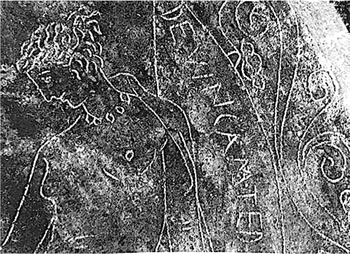
Figure 3.4 Detail of the inscription CIL 12.547
3.8 Conclusions
The epigraphic evidence we have briefly surveyed in this chapter presents a complex picture, in which our interpretation of the extant records is in most cases affected by the uncertainties surrounding their chronology. This situation makes it difficult to establish the sequence and the level of adherence of each inscription to the conventions and to the developments of the language of its time. The lack of systemic orthographic rules seems to reflect a low level of literacy. The relationship between centre and periphery appears dynamic and in constant development during the first centuries of the Republic, as Rome was rapidly turning into the powerful city of the later republican period. The lack of a central control, of an ‘Authority of Writing’ (a phrase of Coulmas Reference Coulmas2002: 247) in epigraphic matters, remains indeed one of the features of later epigraphic stages, in which the increasing number of inscriptions, and the new peripheries born as consequence of the expanding power of Rome, increased the differentiation of writing practices and styles. Additionally, the meeting with epichoric cultures, characterised by different languages and peculiar graphic traditions, makes the situation even more complex, blurring if not altogether obscuring the distinction between ‘rustic’ versus ‘dialectal’ features.


