Book contents
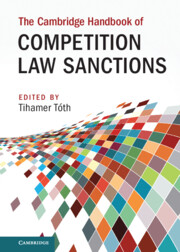
- The Cambridge Handbook of Competition Law Sanctions
- The Cambridge Handbook of Competition Law Sanctions
- Copyright page
- Contents
- Authors’ Affiliations
- Acknowledgment
- Part I General Chapters
- Part II Country Reports
- 17 Competition Law Sanctions in Austria
- 18 Antitrust Enforcement in Belgium
- 19 The Effectiveness of Competition Law Sanctions: Brazil
- 20 The Present Situation and Improvement Direction of the Sanction System in China’s Anti-monopoly Law
- 21 Application of the 2006 Guidelines on Fines by the European Commission and the Union Courts
- 22 Competition Law Sanctions in Germany
- 23 Competition Law Sanctions in Hungary
- 24 Competition Law Sanctions in Indonesia and a Comparison to Other ASEAN Member States
- 25 Competition Law Sanctions in Italy
- 26 Competition Law Sanctions in Japan
- 27 Effectiveness of Competition Law Sanctions: Kenya
- 28 The Enforcement of Competition Law in the Netherlands
- 29 A Barking Dog Seldom Bites
- 30 Effectiveness of Competition Law Sanctions
- 31 Competition Law Sanctions in Spain
- 32 The Swedish Competition Law Enforcement System
- 33 Effectiveness of Competition Law Sanctions: Turkey
- References
30 - Effectiveness of Competition Law Sanctions
Portugal
from Part II - Country Reports
Published online by Cambridge University Press: 29 July 2022
Edited by

Book contents
- The Cambridge Handbook of Competition Law Sanctions
- The Cambridge Handbook of Competition Law Sanctions
- Copyright page
- Contents
- Authors’ Affiliations
- Acknowledgment
- Part I General Chapters
- Part II Country Reports
- 17 Competition Law Sanctions in Austria
- 18 Antitrust Enforcement in Belgium
- 19 The Effectiveness of Competition Law Sanctions: Brazil
- 20 The Present Situation and Improvement Direction of the Sanction System in China’s Anti-monopoly Law
- 21 Application of the 2006 Guidelines on Fines by the European Commission and the Union Courts
- 22 Competition Law Sanctions in Germany
- 23 Competition Law Sanctions in Hungary
- 24 Competition Law Sanctions in Indonesia and a Comparison to Other ASEAN Member States
- 25 Competition Law Sanctions in Italy
- 26 Competition Law Sanctions in Japan
- 27 Effectiveness of Competition Law Sanctions: Kenya
- 28 The Enforcement of Competition Law in the Netherlands
- 29 A Barking Dog Seldom Bites
- 30 Effectiveness of Competition Law Sanctions
- 31 Competition Law Sanctions in Spain
- 32 The Swedish Competition Law Enforcement System
- 33 Effectiveness of Competition Law Sanctions: Turkey
- References
Summary
Nuno Castro Marques presents the Portuguese competition law framework. Portugal was one of those European countries opting to introduce a misdemeanour law, inspired by the German Ordnungswidrigkeit law, but this has now evolved a long way. EU and Portuguese competition laws establish the same potential sanction for all competition infringements: a fine up to 10% of the undertaking turnover. Not only companies but also natural persons may be liable for competition law infringements, and fines applicable to natural persons can go up to 10% of their annual income. Portuguese competition law is fully aligned with the European framework, with the Portuguese Competition Authority (PCA) armed with strong investigation powers, an experienced leniency regime and the full set of mechanisms for speeding up enforcement, such as the settlement or commitment procedures. The results are visible, with general deterrence also making an important contribution, and whenever the PCA adopts a sanctioning decision, especially in cartel cases, it makes front-page news. That was recently the case with a banking cartel, where fourteen banks were fined for exchanging sensitive business information and even the Parliament felt the need to openly condemn the situation in public hearings.
Keywords
Information
- Type
- Chapter
- Information
- The Cambridge Handbook of Competition Law Sanctions , pp. 613 - 636Publisher: Cambridge University PressPrint publication year: 2022
References
ALBUQUERQUE, P. P. d. (2011). Comentário do Regime Geral das Contra-Ordenações à luz da Constituição da República e da Convenção Europeia dos Direitos do Homem. Lisbon: Universidade Católica Editora.Google Scholar
BEATON-WELLS, C. & PARKER, C. (2013). Justifying Criminal Sanctions for Cartel Conduct: A Hard Case. Journal of Antitrust Enforcement, 1(1), 198–219.CrossRefGoogle Scholar
BOLINA, H. M. (2009). O regime dos processos de contra-ordenação dos reguladores independentes. In FERREIRA, E. P., MORAIS, L. D. S. & ANASTÁCIO, G. (Eds.), Regulação em Portugal: novos tempos, novo modelo? (pp. 737–71). Coimbra: Almedina.Google Scholar
BRANDÃO, N. (2016). Crimes e contra-ordenações: da cisão à convergência material – ensaio para uma recompreensão da relação entre o direito penal e o direito contra-ordenacional. Coimbra: Coimbra Editora.Google Scholar
BUXBAUM, H. L. (2005). German Legal Culture and the Globalization of Competition Law: A Historical Perspective on the Expansion of Private Antitrust Enforcement. Berkeley Journal of International Law, 23(2), 101–22.Google Scholar
CASTRO MARQUES, N. (2017). A Different Path to the Same Old Question: Why Should Cartels Be Criminalised? Market and Competition Law Review, 1(2), 141–76.Google Scholar
CASTRO MARQUES, N. (2019). Contributo para a Autonomia do Direito Nacional da Concorrência – em particular na criminalização dos cartéis. Porto: Universidade Católica Editora.Google Scholar
CORREIA, E. (1998). Direito penal e direito de Mera Ordenação Social. In Direito Penal Económico e Europeu: Textos Doutrinários (Vol. I, pp. 1–18). Coimbra: Coimbra Editora.Google Scholar
COSTA ANDRADE, M. d. (1998). Contributo para o conceito de contra-ordenação (a experiência Alemã). In Direito Penal Económico e Europeu: Textos Doutrinários (Vol. I, pp. 75–107). Coimbra: Coimbra Editora.Google Scholar
COSTA PINTO, F. d. L. d. (1998). O ilícito de mera ordenação social e a erosão do princípio da subsidariedade da intervenção penal. In Direito Penal Económico e Europeu: Textos Doutrinários (Vol. I, pp. 209–74). Coimbra: Coimbra Editora.Google Scholar
DANTAS, A. L. (2009). O processo das contra-ordenações na Lei n.º 50/2006. In FERREIRA, E. P., MORAIS, L. D. S. & ANASTÁCIO, G. (Eds.), Regulação em Portugal: Novos Tempos, Novo Modelo? (pp. 773–98). Coimbra: Almedina.Google Scholar
FARIA COSTA, J. d. (1998). A importância da recorrência no pensamento jurídico. Um exemplo: a distinção entre o ilícito penal e o ilícito de mera ordenação social. In Direito Penal Económico e Europeu: Textos Doutrinários (Vol. I, pp. 109–43). Coimbra: Coimbra Editora.Google Scholar
FEIJOO SÁNCHEZ, B. (2008). Sobre la crisis de la teoría del bien jurídico. Indret: Revista para el Análisis del Derecho 2, 1–16.Google Scholar
FIGUEIREDO DIAS, J. d. (1998). O Movimento de Descriminalização e o Ilícito de Mera Ordenação Social. In Direito Penal Económico e Europeu: Textos Doutrinários (Vol. I, pp. 19–33). Coimbra: Coimbra Editora.Google Scholar
FONTAINE CAMPOS, M. (2015). Fundamentos económicos da regulamentação internacional da concessão de ajudas públicas. Direito e Justiça, II (Estudos dedicados ao Professor Doutor Bernardo da Gama Lobo Xavier), 431–65.Google Scholar
FREEMAN, P. (2012). ‘Beware the Ides of March’–The Government’s Proposed Competition Reforms. European Competition Journal, 8(3), 563–72.CrossRefGoogle Scholar
FREEMAN, P. (2013). The Competition and Markets Authority: Can the Whole Be Greater Than the Sum of Its Parts? Journal of Antitrust Enforcement, 1(1), 4–23.CrossRefGoogle Scholar
GAGEIRO, A. (2009). Modelos de direito estrangeiro na perspectiva do enforcement (E.U.A./R.U./Europa Continental). In PALMA, M. F. D., SILVA, Augusto; MENDES, Sousa, Paulo (coord.) (Eds.), Direito Sancionatório das Autoridades Reguladoras (pp. 41–74). Coimbra: Coimbra Editora.Google Scholar
GAL, M. S. (2010). Free Movement of Judgments: Increasing Deterrence of International Cartels through Jurisdictional Reliance. Virginia Journal of International Law, 51(1), 57–94.Google Scholar
GODINHO, I. F. (2017). The Criminal Offence: Definitions and Internal Structure in Portugal. In SIEBER, U., JARVERS, K. & SILVERMAN, E. (Eds.), National Criminal Law in a Comparative Legal Context (Vol. 3.2, pp. 50–58). Berlin: Duncker & Humblot.Google Scholar
GRAHAM, C. (2012). The Reform of UK Competition Policy. European Competition Journal, 8(3), 539–62.CrossRefGoogle Scholar
GRAY, A. (2008). Criminal Sanctions for Cartel Behaviour. Queensland University of Technology Law and Justice Journal, 8(2), 364–79.Google Scholar
HARDING, C. (2011). Cartel Deterrence: The Search for Evidence and Argument. Antitrust Bulletin, 56(2), 345–76.CrossRefGoogle Scholar
HARRISON, G. & BELL, M. (2006). Recent Enhancements in Antitrust Criminal Enforcement: Bigger Sticks and Sweeter Carrots. Houston Business and Tax Law Journal, 6(2),207–40.Google Scholar
JONES, A. & WILLIAMS, R. (2014). The UK Response to the Global Effort against Cartels: Is Criminalization Really the Solution? Journal of Antitrust Enforcement, 2(1), 100–125.CrossRefGoogle Scholar
JOSHUA, J. M. (2003). The UK’s New Cartel Offence and its Implications for EC Competition Law: A Tangled Web. European Law Review, 28(5), 620–41.Google Scholar
KOCH, F. E. (1945). Cartels as Instruments of International Economic Organization: Public and Private Legal Aspects of International Cartels. Modern Law Review, 8(3), 130–48.CrossRefGoogle Scholar
KOKKORIS, I. (2010). Should Crisis Cartels Exist amid Crises? Antitrust Bulletin, 55(4), 727–58.Google Scholar
KOVACIC, W. E. & HYMAN, D. A. (2012). Competition Agency Design: What’s on the Menu? European Competition Journal, 8(3), 527–38.CrossRefGoogle Scholar
LANDE, R. H. (1982). Wealth Transfers As the Original and Primary Concern of Antitrust: The Efficiency Interpretation Challenged. Hastings Law Journal, 34(1), 65–151.Google Scholar
LESLIE, C. R. (2006). Antitrust Damages and Deadweight Loss. Antitrust Bulletin, 51(3), 521–67.Google Scholar
LEVER, J. & PIKE, J. (2005a). Cartel Agreements, Criminal Conspiracy and the Statutory ‘Cartel Offence’ – Part 1. European Competition Law Review, 26(2), 90–97.Google Scholar
LEVER, J. & PIKE, J. (2005b). Cartel Agreements, Criminal Conspiracy and the Statutory ‘Cartel Offence’ – Part 2. European Competition Law Review, 26(3), 164–172.Google Scholar
LUMBRALES, N. B. M. (2006). Sobre o conceito material de contra-ordenação. Lisbon: Universidade Católica Editora.Google Scholar
MacCULLOCH, A. (2007). Honesty, Morality and the Cartel Offence. European Competition Law Review, 28(6), 355–63.Google Scholar
MacCULLOCH, A. (2012). The Cartel Offence: Defining an Appropriate ‘Moral Space’. European Competition Journal, 8(1), 73–93.Google Scholar
MARQUES, M. M. L. (2002). Um curso de direito da concorrência. Coimbra: Coimbra Editora.Google Scholar
MÖSCHEL, W. (2011). Fines in European Competition Law. European Competition Law Review, 32(7), 369–75.Google Scholar
MOURA e SILVA, M. (2011). Anti-cartel Enforcement in Portugal: A Short Chronicle of an Uphill Struggle. European Competition Law Review, 32(1), 37–41.Google Scholar
MOUTINHO, J. L. (2008). Direito das Contra-Ordenações – Ensinar e investigar. Lisbon: Universidade Católica Editora.Google Scholar
NIKPAY, A. & TAYLOR, D. (2014). The New UK Competition Regime: Radically Different or More of the Same? Journal of European Competition Law & Practice, 5(5), 278–86.CrossRefGoogle Scholar
O’KANE, M. (2011). Does Prison Work for Cartelists? The View from behind Bars: An Interview of Bryan Allison. Antitrust Bulletin, 56(2), 483–500.Google Scholar
OECD. (2002). Fighting Hard-core Cartels: Harm, Effective Sanctions and Leniency Programmes. Paris: OECD.Google Scholar
PAIS, S. d. O. (2011). Entre inovação e concorrência – em defesa de um modelo europeu. Lisbon: Universidade Católica Editora.Google Scholar
PEDROSA MACHADO, M. (1998). Elementos para o estudo da legislação portuguesa sobre contra-ordenações. In Direito Penal Económico e Europeu: Textos Doutrinários (Vol. I, pp. 145–207). Coimbra: Coimbra Editora.Google Scholar
RILEY, A. (2010). The Modernisation of EU Anti-cartel Enforcement: Will the Commission Grasp the Opportunity? European Competition Law Review, 31(5), 191–207.Google Scholar
ROXIN, C. (2013). O conceito de bem jurídico como padrão crítico da norma penal posto à prova … Revista Portuguesa de Ciência Criminal, 23(1), 7–43.Google Scholar
SCHINKEL, M. P. (2007). Effective Cartel Enforcement in Europe. World Competition, 30(4), 539–72.CrossRefGoogle Scholar
SILVA PEREIRA, M. M. (2003). Bens jurídicos colectivos e bens jurídicos políticos. In COSTA ANDRADE, M. d., FARIA COSTA, J. d., MIRANDA RODRIGUES, A. & ANTUNES, M. J. (Eds.), Liber Discipulorum para Jorge de Figueiredo Dias (pp. 293–316). Coimbra: Coimbra Editora.Google Scholar
SMITH, A. (2003). A Riqueza das Nações (Ostrensky, A. A. R. e. E., Trans.). São Paulo: Livraria Martins Fontes.Google Scholar
SMITH, R. L. & KING, S. (2007). Does Competition Law Adequately Protect Consumers? European Competition Law Review, 28(7), 412–24.Google Scholar
STEPHAN, A. (2014). Four Key Challenges to the Successful Criminalization of Cartel Laws. Journal of Antitrust Enforcement, 2(2), 1–30.CrossRefGoogle Scholar
STIGLER, G. J. (1976). The Xistence of X-Efficiency. American Economic Review, 66(1), 213–16.Google Scholar
VILELA, A. (2013). O direito de mera ordenação social: entre a ideia de ‘recorrência’ e a de ‘erosão’ do direito penal clássico. Coimbra: Coimbra Editora.Google Scholar
WARDHAUGH, B. (2012). The Cartel Offence within a ‘World Class’ Competition Regime: An Assessment of the BIS Consultation Exercise and Its Results. European Competition Journal, 8(3), 573–88.CrossRefGoogle Scholar
WERDEN, G. J. (2009). Sanctioning Cartel Activity: Let the Punishment Fit the Crime. European Competition Journal, 5(1), 19–36.Google Scholar
WERDEN, G. J., HAMMOND, S. D. & BARNETT, B. A. (2011). Deterrence and Detection of Cartels: Using All the Tools and Sanctions. Antitrust Bulletin, 56(2), 207–34.CrossRefGoogle Scholar
WHELAN, P. (2007). A Principled Argument for Personal Criminal Sanctions As Punishment under EC Cartel Law. The Competition Law Review, 4(1), 7–40.Google Scholar
WHELAN, P. (2012). Improving Criminal Cartel Enforcement in the UK: The Case for the Adoption of BIS’S ‘Option 4’. European Competition Journal, 8(3), 589–601.CrossRefGoogle Scholar
WHELAN, P. (2014). The Criminalization of European Cartel Enforcement: Theoretical, Legal, and Practical Challenges. New York: Oxford University Press.Google Scholar
WILKS, S. (2011). Institutional Reform and the Enforcement of Competition Policy in the UK. European Competition Journal, 7(1), 1–23.CrossRefGoogle Scholar
WILS, W. P. J. (2007). Leniency in Antitrust Enforcement: Theory and Practice. World Competition, 30(1), 25–64.Google Scholar
Accessibility standard: Unknown
Why this information is here
This section outlines the accessibility features of this content - including support for screen readers, full keyboard navigation and high-contrast display options. This may not be relevant for you.Accessibility Information
Accessibility compliance for the HTML of this chapter is currently unknown
and may be updated in the future.