

7.1 Collaborating with Large Companies
Small firms in high-tech industries often need to collaborate with large companies to commercialize their technology. Large firms can commercialize small firms’ technologies by leveraging their large-scale manufacturing capabilities, brands, or distribution systems. SMEs frequently depend on large companies to generate value from their inventions.1 SMEs have, for instance, limited ability to profit from their intellectual property because they lack enforcement power, especially when collaborating with large firms. In the United States, the median cost to each party of proceeding through a patent infringement suit to a verdict at trial is at least $500,000 whereas the stakes are relatively modest.2 This is a higher cost than most SMEs can withstand. In addition to the high cost and risk of legal enforcement, smaller firms that collaborate with established companies may face a potential “lock-in” problem as they become increasingly dependent on the investments and complementary assets of the latter. This strategic dependence makes the small firm vulnerable: when it discovers a patent infringement, it cannot act against the large company even if objective legal assessments may indicate that the small firm has a strong case. Going to court against an established company that represents a major revenue source is not a viable option for most SMEs.
Open innovation can flourish, however, only if relationships between large and small companies are based on trust and result in mutual benefits. An increasing number of large companies are successfully collaborating with dozens of small firms to create breakthrough products. Moreover, nowadays there are more opportunities for collaboration between large and small companies. Underlying drivers for this trend toward increased collaboration are the shortening of product lifecycles, increasing international competition, and growing technological complexity. Large companies increasingly rely on both internal and external knowledge sources to create new business.3 Even powerhouses such as P&G, J&J, Google, Unilever, Philips, and Siemens, to name a few, are relying increasingly on technology and expertise from external partners. Universities, research labs, experts, lead users, and knowledge brokers are just a few examples of potential external sources of knowledge. Small, high-tech companies, usually financed by venture capital funds, represent another interesting wellspring of external knowledge for large companies. An increasing number of corporations now recurrently collaborate with these startups and they therefore have a strong incentive to become the preferred partner of these high-tech ventures. Established companies start to understand how to avoid conflicts and how to align their corporate strategic objectives to grow new businesses with the objectives of venture capitalists who are the majority owners of these ventures. The interests of corporate investors and venture capitalists are seldom, if ever, fully aligned, but they must nevertheless manage potential tensions. Corporations can build reputations as trustworthy investors, which, in turn, allows them to attract the most valuable ventures around the world.
Open innovation also implies that large companies have to monetize their unused technology.4 Corporations have lots of unused technology, which should be licensed out, sold, or spun off if the technology was already developed as a new business project within the company. Several large companies have succeeded in increasing the productivity of their knowledge base by searching for different external paths to the market. Unused technologies in large companies represent a fertile opportunity for individual entrepreneurs or small firms to start a new business. However, large firms often have no genuine incentive to become involved in technology deals with small companies. They consider it too cumbersome or time consuming because small firms generate only small income flows for the licensor, whereas the technology transfers might still require significant investments in engineering time to transfer the technology effectively. Furthermore, large firms that license technologies risk knowledge leaks that could lead to adverse competitive effects.
Although cooperation between large and small companies has previously been fraught with difficulties, the situation is changing. An increasing number of large firms are exploring new methods of cooperating with a multitude of external innovation partners, including small companies. In this chapter, we present two examples of a successful collaboration between a large and a small company. The first, Isobionics, illustrates how an entrepreneur can establish a successful venture by licensing technology from a large firm. In this case, a startup successfully commercializes the technology that was previously developed by an established company. The other case, the AirFryer, illustrates how Philips successfully sources a technology for its kitchenware group from a tiny engineering company. In this case, the large company brings the product to the market, commercializing the technology of a small engineering firm.
7.2 Isobionics: Turning a Large Firm’s Unused Technology into a Business
Large companies are great wellsprings of new technologies. However, only a fraction of the technological discoveries developed in the research and development (R&D) labs of large firms are successfully launched as new offerings in the market. Most technologies developed in corporations gather dust on the shelves.5 A growing number of companies, however, are implementing a “use it or lose it” strategy. P&G, for instance, implements a patent strategy aimed at improving the company’s innovation process: all technologies developed in the company can be licensed three years after market introduction (i.e., for used technology) or five years after patent approval.6 The revenue stream from these licensing practices is reinvested in the business unit that owns the technology. In this way, the business unit can balance the risk of increased competition in the market with the royalty income it receives from licensing the technology. Philips Intellectual Property and Standards (IP&S) is another example: IP&S licenses intellectual property, services, and expertise owned by Philips to other companies. IP&S considers IP as an asset for value creation through licensing and selling technology. Technology that is unused or no longer used in the company will still generate value through licensing agreements or sale of the technology.
An increasing number of large companies with deep technological competencies thus make their technology available for other companies. However, it remains an open question how startups and small firms can benefit from this outbound open innovation strategy of large companies. How can they collaborate with these large technology suppliers, and what are the challenges or potential pitfalls when large and small firms collaborate? We examine these topics by analyzing how Isobionics, a startup company, developed a rapidly growing business in the span of several years based on a technology it licensed from a large manufacturing company.
Isobionics, a Dutch biotechnology company established by Toine Janssen in 2008, is located at the Chemelot Campus in Sittard-Geleen (in the southeast of the Netherlands).7 The company is developing a portfolio of flavors and fragrances using a biotechnological process that is based on a proprietary platform technology developed by DSM, a large Dutch chemical company that specializes in life sciences and materials sciences products.8 BioValencene™ was Isobionics’ first product, introduced on the market in late 2010. BioValencene is an orange fragrance for the food, beverage, flavor, and fragrance industry; it is used in soft drinks, detergents, soaps, and fine perfumery. In the marketplace, it competes with conventional valencene, which is currently distilled from orange peels, making it relatively expensive.9 Isobionics received the Frost & Sullivan 2010 Global Technology Innovation Award for its introduction of BioValencene. In citing the value of the product, the award committee stated that “it has the capacity to change the functioning of the market by providing a unique technology, being cost competitive and improving product functionality and process efficiency.”10
The Isobionics case demonstrates how a startup can commercialize a technology that a large firm had placed on hold. The Isobionics story dates back to 2007, when researchers of DSM developed the idea of producing specific ingredients that could be synthesized by microorganisms using different key enzymes. This was the initial idea behind the technology that Isobionics later on developed into a platform for the flavors and fragrances (F&F) product. The range of potential applications for this platform was broad, extending from F&F to agrochemical products (insecticides) and pharmaceutical products. The new technology didn’t land in DSM at that point in time: it was one of the many projects that were “weeded out” from the innovation pipeline. This is a common process, as large innovating firms typically start with many ideas to end up with a few new products in the market. As the technology was canceled out, the management was interested in finding external partners who may be enthusiastic to commercialize the technology. Toine Janssen had been working for several decades at Royal Philips Electronics as a business director and before that at AT&T and Flexsys. He was one of the persons who got introduced to this abandoned technology. After analyzing the idea and zero-order business plan, he concluded that synthesizing flavor and fragrances using DSM’s biotechnological process was a promising, game-changing innovation. It could dramatically reduce the production cost of existing flavors and generate new types of fragrances.
Once he decided to pursue the technology, he faced several major challenges. First, the strategy had to be sound. The F&F products he intended to develop could be used in several applications, but he focused exclusively on F&F because agrochemical and pharmaceutical applications required more demanding technical standards and complex approval procedures. In contrast, certifications in the F&F market required only one or two months. Janssen was determined to stay in F&F only:
A small company like ours has to stay focused. Large competitors in biotech produce biofuels, medicines, cosmetics, F&F, lubricants and rubber. But a small company has to stay sharply focused on F&F only, because you have to understand this industry in all its details to make and deliver products that meet customers’ demands. Knowing biotechnology doesn’t mean you will be successful in the F&F market: understanding the F&F market is a full-time job. And although our technology platform can be used in the agro-chemical business, this industry has its own chemical definitions, delivery requirements etc. If you want to enter the agrochemical business, you have to set up a separate plant fully-dedicated to serve that business.11
The F&F business has already existed for centuries. Historically, flavors and fragrances have been made from natural resources such as roses, oranges, grapefruit and other fruits, trees, and so on. However, the industry was searching for alternative production methods (biotechnology) because the natural resources had been expended to their maximum capacity. The biotechnological process DSM developed could give Isobionics a major cost advantage over traditional F&F producers, and it had the potential to develop new flavors and fragrances by collaborating with specific clients. As there are more than 3,000 flavors and fragrances, Toine had to decide which flavors to develop first. Valencene (oranges) and nootkatone (grapefruit) were the two flavors that Isobionics decided to develop and produce first – beta-elemene was ready in 2015.12 Technically, they were relatively easy to develop and the markets were small enough to accommodate products from a small company such as Isobionics. Valencene and nootkatone can be characterized as low-volume high-price businesses. Based on the information he obtained from the F&F industry, Janssen estimated the market for valencene in 2010 at $6 million and for nootkatone at $30 million. As valencene production took off in 2009, he learned over the years that the market was larger, with a best estimate of $15 million. (The market didn’t grow but the F&F companies were reluctant to give information about their actual production and the prices they paid to suppliers.) The valencene and nootkatone markets were small and were an optimal habitat for a small player like Isobionics:13 the advantage of low-volume, high-price markets is that large companies are not interested because these markets can’t move the needle. They are a niche market where a small company is to some extent protected against competition from large companies. An additional advantage to start with valencene and nootkatone is that the customers and the customer needs are similar.
In the coming years, Isobionics could consider entering other flavor markets. The development of new flavors and fragrances (as of 2015, Sandalwood and Patchouli were in the preparation stage14) has been completed in collaboration with different universities in Europe, with DSM, and with other innovation partners. However, some large F&F markets such as vanilla and strawberry are excluded because they aren’t isoprenoids. The microorganism Isobionics uses for fermentation is an isoprenoid strain: the microorganism lives in lakes of 10 kilometer depth where there is almost no oxygen; when it has no oxygen it makes isoprenoids. The company also tries to avoid very large markets such as menthol (a market of $275 million) because that is the playing field of large companies. Competition among companies producing biotechnological F&F was limited. In 2010, Isobionics had two main competitors, but with 3,000 flavors it was easy to avoid competition. Still, entry barriers are considerable given the proprietary technology and the years required to develop the technology.
An additional advantage for Isobionics was the production overcapacity in the market: Isobionics could easily find fermenters and did not need to invest in production facilities.15 The development cost of the microorganisms that could produce a specific flavor was the single largest investment for Isobionics; developing a new natural ingredient was estimated to amount to approximately €5 million.
Second, Toine Janssen had to secure the required investments for his startup. At the time Isobionics was established, the biotech startup was in need of considerable investments to advance the technological development and commercialization of the first flavors. Classic venture capital funds (VCFs) were somewhat reluctant to finance Isobionics at the time it was established, because the venture needed considerable investments that were too big a risk for VCFs in an early investment stage.16 In the end, Isobionics was financed in the first years in a complex way, securing the company a broad financing base. The startup was financed combining investments from VCFs, Technostars, Limburg Ventures (a regional venture capital investor in which DSM also participated), bank loans, and subsidies from local and national governments. Isobionics was profiting from the “halo effect,” being linked to DSM and spawning a business based on DSM technology. This connection with a large, reliable company helped the startup to get the necessary funding at the start.
The initial financing enabled Isobionics to further develop the technology and prepare the commercialization of BioValencene, its first commercial product. As the company was growing fast in the following years it needed new financing: a growing number of VCs were backing Isobionics’ growth in the first five years. Finding new investors became less difficult as the credibility and performance of the company were rapidly improving. In 2014, Isobionics completed another financing round; the company received additional capital from Van Herk Ventures, a late stage VC, and from DSM Venturing B.V., the corporate venture arm of DSM, as well as from existing investors. The investment allowed the company to expand the production capacity of its BioValencene, BioNootkatone and beta-elemene products. The investment of DSM Venturing is remarkable: after licensing the technology in 2008 to Isobionics, DSM is now considering Isobionics as an interesting growth opportunity. The minority holding of DSM Venturing in Isobionics can be considered as the creation of an option that allows the former to follow the technology and the commercialization of the products first hand and it offers the opportunity to acquire Isobionics in the future. In other words, Isobionics is an interesting example illustrating how a large company can choose an external path to commercialization (through licensing) and yet create a growth option when the new venture shows real commercial potential. A technology or venture that appears too risky for further internal development can be licensed out or spun off. This is a great way to monetize the technology. But such technologies can also generate new strategic growth options over time when the venturing arm of the company takes a minority holding in them.17 Toine formulates it as follows: “The start and growth of Isobionics is also interesting for DSM. If Isobionics was not established this DSM technology would be definitely lost. By licensing the technology DSM put the technology outside the corporate boundaries where it could be commercialized much faster in a startup than it ever would within DSM, because the decision procedures in the big companies are much slower and they have a risk-averse mentality. With every risk they would have enough reasons to stop the development and commercialization of the venture. I think that large firms kill a lot of innovation with their risk adverse mentality.”18
Third, Isobionics could not prosper without the continuous technological support of different innovation partners. Isobionics is a startup with few resources: developing the first products and pilot production runs had to be conducted by its partners, including several European universities, research labs, DSM, and other value chain partners. The startup has signed several research contracts with DSM and other technology partners to develop the technology and to start the production of BioValencene. As DSM and Isobionics started their technological collaboration, some DSM researchers resumed working on this technology that they started as an internal DSM project. Their experience gave Isobionics a considerable head start. Securing research time from large technology partners is not easy, however, because the contract work for a startup, which still has to prove its economic viability, is competing with many internal projects that have to be executed in the company. Once the startup begins to prosper, as in the case of Isobionics, managers start to see the value of the R&D collaboration and are less reluctant to work with the venture.
Finally, Toine Janssen also had to license the technology from DSM. The negotiation resulted in a licensing deal in which Isobionics could use DSM’s technology for applications in the F&F industry. Signing a licensing deal with a business manager in a large firm is not straightforward. A business manager may be reluctant to license technology to a startup because at the time the agreement is signed the startup is still a cash burner. So, he might make a mistake by licensing technology that can still turn out to be valuable for his company when royalty income starts flowing in only four or five years after the license deal is signed and by that time, the manager is likely to have other responsibilities within the company. Moreover, the royalties that one can reasonably expect from a startup are small and will not move the needle for the manager’s business. Therefore, Janssen had to look for innovation champions within DSM to get the licensing of the technology on the agenda of the responsible DSM managers. Innovation champions were senior managers in DSM who had a strong belief in the commercial success of Isobionics. Everyone involved in establishing Isobionics agreed that Janssen’s management experience in large companies was crucial in dealing with large partners to guarantee Isobionic’s commercial success. Janssen commented, “I learned through my experiences at AT&T and Philips how a large company works. A startup entrepreneur with no corporate background lacks this experience. In dealing with the corporate partner he would jump out of the window because he does not understand why it takes the large firm so long to decide about the use of the technology. I know what is behind it and I know managers in large firms need time because of their slow and bureaucratic decision processes. I know a lot of these processes and I know that they cannot take a short-cut.”19
Over the years, the technology collaboration with DSM has been phasing out. Janssen describes this as a natural evolution: “In the beginning, DSM helped us a lot in R&D. But now Isobionics’ people have more know-how about our specific technology than DSM. It’s like you start with a bicycle but you upgrade it to an electric bike and at a certain moment you know more about the electric bike than the company that offered you the bike.” In contrast, Isobionics has been increasing the collaboration with universities and research labs. In the beginning, the startup worked with only two universities. In 2015 they had collaborations with six to eight universities worldwide, each selected for its specific expertise in a particular technology domain.
Isobionics was always searching for new technologies based on its strategic needs. Janssen always looked first for outside partners to solve R&D problems, and only if no external expertise was available would he decide to start a research project internally. He explains, “If we do research inside we have to hire people and that takes half a year. So we do it the other way round. It’s a combination. We are expanding fast, so we have to move fast. By sourcing outside R&D, you can move much faster. They have the equipment and trained people. It can also be a combination: it can first be developed outside and then we take the technology into the company and we further develop it internally. You also have to keep in mind that the value of R&D projects erodes over time. The technology is interesting this year but next year you are moving on with another product or technology and therefore you don’t need that know-how any more. So, it makes no sense to build a very expensive lab and hire people that you have to fire again after a few years. However, we keep the basic know-how about our microorganism in-house. Core technology stays in-house, that’s not going outside.”20
Toine Janssen is a strong believer of open innovation: he first looks outside for technology before Isobionics can start developing its own research as a second option. There are three mechanisms by which Isobionics captures value from open innovation. First, the startup protects its core technology very well through a combination of patents, trademarks, and trade secrets. Second, Isobionics relies heavily on outside technology and is working together with the universities and institutes with the best top technology. The joint technology projects are always focusing on a particular aspect of the overall technological needs, which are diverse and multiplex. In this way, open innovation is not generating external competitors even though the startup is relying for most of its technology on external partners. Third, external knowledge needs to be assimilated and integrated into the technology base of the startup. This integration is not a trivial process and guarantees that the technology base of the startup is updated and upgraded. In this sense, Isobionics is building a dynamic competitive advantage, keeping it abreast from potential followers in the market.
The open innovation idea was pushed even further by Isobionics: Most large firms are afraid that know-how can leak out from the company and give others the opportunity to experiment with their technology. Therefore, they tend to put other projects outside and learn from the experiments of others with the “fake” project. In contrast, Isobionics makes their “real” project open to external parties. Isobionics was facing a problem: other biotech firms working in the F&F area were all using yeast as a biotech platform. In contrast, Isobionics was using an unknown microorganism that lives in deep lakes. To increase the application potential for this type of microorganism, Isobionics recently made the strain accessible to external parties. The company wanted them to work on it, in order to get feedback, improvements, and suggestions for new applications. This is like an open software community where people can “play” with the microorganisms in order to improve them for particular applications. The conditions under which external parties can get access to the microorganisms are of course strictly defined. They can work with Isobionics’ tools and Isobionics teaches them how they can change the microorganism. Then these people start teaching other people. As more and more people become acquainted with the technology, the variety of new applications would increase, Isobionics would have fewer difficulties in finding people skilled in working with the technology, and the company would get free know-how from all these external experiments.
Isobionics’ open innovation strategy in R&D fits perfectly in the broader asset-light management philosophy of Toine Janssen, as he had been working for a long time in the telecommunications and electronics field, where it is a common practice to work with partners for most activities. He explains, “It never came to my mind to build a factory when there is overcapacity in the market. When I talked to other startups in the chemical industry the first thing they asked me was when I would start a pilot factory. So I think that my way of thinking is a result of my education in electronics. Really, I am the only one who is doing it in the whole chemistry and bio-tech world.”21 Isobionics is an extreme example of an asset-light business model, because it applies to production facilities, sales, R&D, and other business activities in the company. Isobionincs itself has no production facilities. However, in 2015 the startup was building a small pilot plant to produce very small quantities of a specific product in order to increase flexibility and adaptability to customer needs.
Isobionics also outsourced sales to DSM. The startup has a distribution contract with DSM. While the joint R&D activities decreased, the two companies signed a deal in 2013, which stipulates that DSM would distribute worldwide Isobionics’s valencene and nootkatone. DSM has a dedicated sales force for these products, and with their logistics and large warehouse, they can supply to the whole world in a few days. They also work as a reliable financial partner. F&F is a global market. Customers look at financial securities and delivering through DSM helps in this respect. DSM also has strong logistics capabilities and they are doing quality audits ensuring the delivered Isobionics products are good quality products. So, there is a quality layover and a logistic layover because of good logistic facilities. Via DSM, Isobionics has a small but very effective sales team in flavor and fragrances. DSM was first an R&D partner, but this role eroded as Isobionics became more knowledgeable: as Isobionics was increasingly operating at a global expansion DSM became a reliable sales partner.
In sum, Isobionics illustrates how a promising venture can be established by licensing the unused technology of a large company. It is a typical win–win situation. Isobionics profits from the collaboration with DSM in different ways. First, it gained access to a game-changing technology that was the cornerstone for its commercial success. Second, it could build on the reputation of DSM to gain access to universities, technology labs, and commercial partners. Third, DSM was a formidable partner for Isobionics in the further development and continuous technical support of Isobionics’ products. Fourth, the relationship changed over time: DSM became less relevant as a technology partner but as the startup was globalizing rapidly it could make use of DSM’s excellent sales team in F&F and logistic infrastructure. DSM, in turn, also derived benefits from its investment in Isobionics. First, it had the opportunity to follow the evolution of Isobionics. In this way, it gained valuable lessons about the F&F applications of its technology, which it could apply in other industries. Second, the establishment of Isobionics implies that a technology that was discontinued at DSM could be further developed and these new discoveries can be useful for DSM’s research in related technology fields. Third, it could learn how the development and commercialization of a new technology can be accelerated in a startup that has the freedom to make its own managerial decisions. Finally, the participation of DSM Venturing in 2014 provided the chemical company the option to acquire Isobionics in case the business continues to develop and becomes an interesting growth opportunity for DSM.
Isobionics illustrates how a startup can establish a business by licensing the technology of a large firm. Now, we turn to a situation in which a large company brings the technology of a small firm to the market.
Isobionics, a Dutch startup company, was established in 2008. Its activities focus on manufacturing natural ingredients for the flavors and fragrances (F&F) industry. Their products are prepared with an innovative fermentation process, which results in high-quality, natural products for customers in the food, beverage, and F&F markets. The company’s technology was developed by DSM, a globally operating Dutch chemical company with annual net sales of €7.9 billion in 2016. The company has strong technical expertise in biotech and new materials.
The seed for Isobionics was planted in early 2007, when Toine Janssen met with Frank Schaap, a new business developer at Chemelot. Chemelot is an Open Campus for small companies in the chemical business, colocated at the Sittard-Geleen site of DSM in the Netherlands. The infrastructure and services comprise world-class laboratories and research facilities, development services, and all-round expertise, from high-performance materials to industrial chemicals.22 Toine Janssen, a former director at Philips, initially wanted to buy a plant in the Chemelot campus. Instead, Frank Schaap offered him an alternate business proposal: Why not pick up a research project at DSM that had been discontinued?
About a year before, Frank and Toine met Rinus Broxterman and a colleague developed a way to produce natural substances – called isoprenoids – through a biotechnological fermentation process. Normally, producing isoprenoids is expensive and laborious, but Broxterman’s method produced better quality results, required fewer production steps, and was 50 percent less expensive.
Rinus decided to file his process with the Emerging Business Unit of the DSM Innovation Centre. The Emerging Business Unit is part of an Emerging Business Area (EBA), which was established to explore innovative fields outside the existing core technologies of DSM and to professionalize innovation within DSM. As 2006 came to a close, it was clear that the EBA was going to drop the proposal because the project did not fit into DSM’s strategic scope. Jacques Joosten, senior R&D director, however, was convinced the proposal had potential and advised DSM researchers to look for other ways to valorize the technology. Following this advice, Rinus shared the news with Frank Schaap that he had an idea for a new startup. Understanding that an experienced business development manager is a key for success, Rinus and Frank started looking for external managers. By that time, Frank Schaap had met with Toine Janssen.
Once Toine realized that the business case had great potential, he decided to take on the challenge. He wrote a business plan, was looking for financial resources, and was forging an agreement with DSM. Reaching that agreement was not simple because DSM had no experience with this form of outbound open innovation. Furthermore, DSM researchers who had worked on the project were not happy with the project’s evolution. They felt that they had to sacrifice knowledge they had acquired over a long period of time. Thanks to his experience and management skills in a company such as Philips, Toine Janssen convinced DSM’s managers that this spinout had significant business potential. After Janssen signed a research and intellectual property contract to use the fermentation procedure in predefined areas, Isobionics was founded. Initially, the company employed four people. In addition to Toine Janssen and Rinus Broxterman, researcher Dr. Theo Soncke and project manager Dr. Marijn Rijckers were added to the team through service agreements with DSM. Isobionics immediately started joint research and development with the Plant Research International (PRI) institute at the Wageningen Agricultural University. They chose the Chemelot campus as the location for their new business, just a few hundred meters from the DSM laboratories. This colocation allowed Isobionics and DSM researchers to communicate and interact frequently, which accelerated research and decision making.
Toine successfully raised funding for his venture by filing for subsidies and attracting Limburg Ventures B.V. Limburg Ventures is an active regional venture capital investor in materials and life sciences in the Netherlands founded by DSM.
The first product Isobionics commercialized was valencene, a sesquiterpene and one of the components of orange oil (see Figure 7.1). Valencene can be used as a flavor ingredient and tastes like oranges. The majority of applications are found in flavors for the beverage industry, particularly citrus flavors. Although minor, valencene can also be found in fragrances. Isobionics focused on selling to F&F companies such as Givaudan, Symrise, and Firmenich, all of which supply flavors to multinationals such as P&G and Unilever.

Figure 7.1 Isobionic’s valencene development.
The strategic decision to start by producing valencene (and not another flavor) was made because it is a relatively small market compared to flavors such as vanilla and menthol, where Isobionics would certainly face head-to-head competition of large established companies such as BASF. Furthermore, this product could generate quick cash without major investments. Moreover, by producing valencene, Isobionics achieved proof of principle and generated knowledge and insights needed for further steps. Isobionics patented the process of producing valencene (valencene-synthase), but the patent on the microorganism from which valencene was formed was DSM’s property. Isobionics, however, had an exclusive licensing agreement with DSM for it in the domains of F&F, pharmacy, and agrochemicals.
Isobionics has been growing fast and by 2015 it was also investigating the market for nootkatone, a flavor characteristically associated with grapefruit. Although the company was growing fast, Toine Janssen continued to use an asset-light model for the growth of his company. He relied to a maximum on skills and assets outside Isobionics. R&D was executed with a growing number of universities around the world, tapping in the best expertise available. The technical collaboration with DSM decreased over time as Isobionics became more knowledgeable on the specific technology for produce F&F using microorganisms. Production was outsourced: Isobionics worked through contract manufacturing with two fermenters, one in Eastern Europe and one in India. The choice of the manufacturer is a function of their skills and specific installations. Production included three stages: fermentation, distillation, and packaging. A different type of company executed each of the stages. In this way, Isobionics could produce the flavors without investing in production capacity and without the fear that a contract manufacturer could ever become a competitor on the market. As Isobionics was growing fast, it had to distribute products effectively on a global scale. Here again, Isobionics relied on an external partner – DSM – that already had the logistic expertise and infrastructure to deliver products to B2B clients worldwide.
Isobionics next had the ambition to grow further in the valencene and nootkatone market and to start developing other flavors and fragrances that fit the size of the startup. Isobionics focuses on the markets that are small enough to avoid direct competition with established multinationals. The relationship with DSM changes over time but the chemical company remains important for the startup (in logistics for instance). Toine Janssen is also very positive about the Chemelot site. As the company continues to grow, it has to change the location of its offices, but Isobionics will look for a location on or close to Chemelot.
To learn more, see
7.3 The AirFryer: A Large Company Creating Value Based on a Small Firm’s Technology
Small, high-tech firms are valuable sources of new-to-the-world technologies. In several industries, however, small firms cannot commercialize their own inventions because large investments in complementary assets are required.23 Examples of complementary assets include large-scale manufacturing, brands, and distribution channels, just to name a few. A rapid increase in licensing of technologies is occurring across the globe, and an increasing number of small firms license their technology to large companies that own or control complementary assets. From their perspective, established companies are increasingly aware of the growing technological capabilities of universities, research labs, and high-tech startups. They leverage these external knowledge sources using licensing agreements, corporate venturing investments, codevelopment agreements, and acquisitions. Licensing agreements imply that the licensor and licensee share revenues: the balance they strike depends on their respective bargaining positions. However, licensing agreements can be a positive sum game if the deal is negotiated in a clever way. As both firms profit from the new technology, we should not necessarily think in terms of a trade-off as the bargaining metaphors suggest. In many cases, a small innovating company can improve its bottom line when it licenses while, at the same time, the established licensee uses the technology to create new growth opportunities. Both companies can be active as producers, but in different product markets. We illustrate this with the case of the Philips AirFryer (see p. 172)
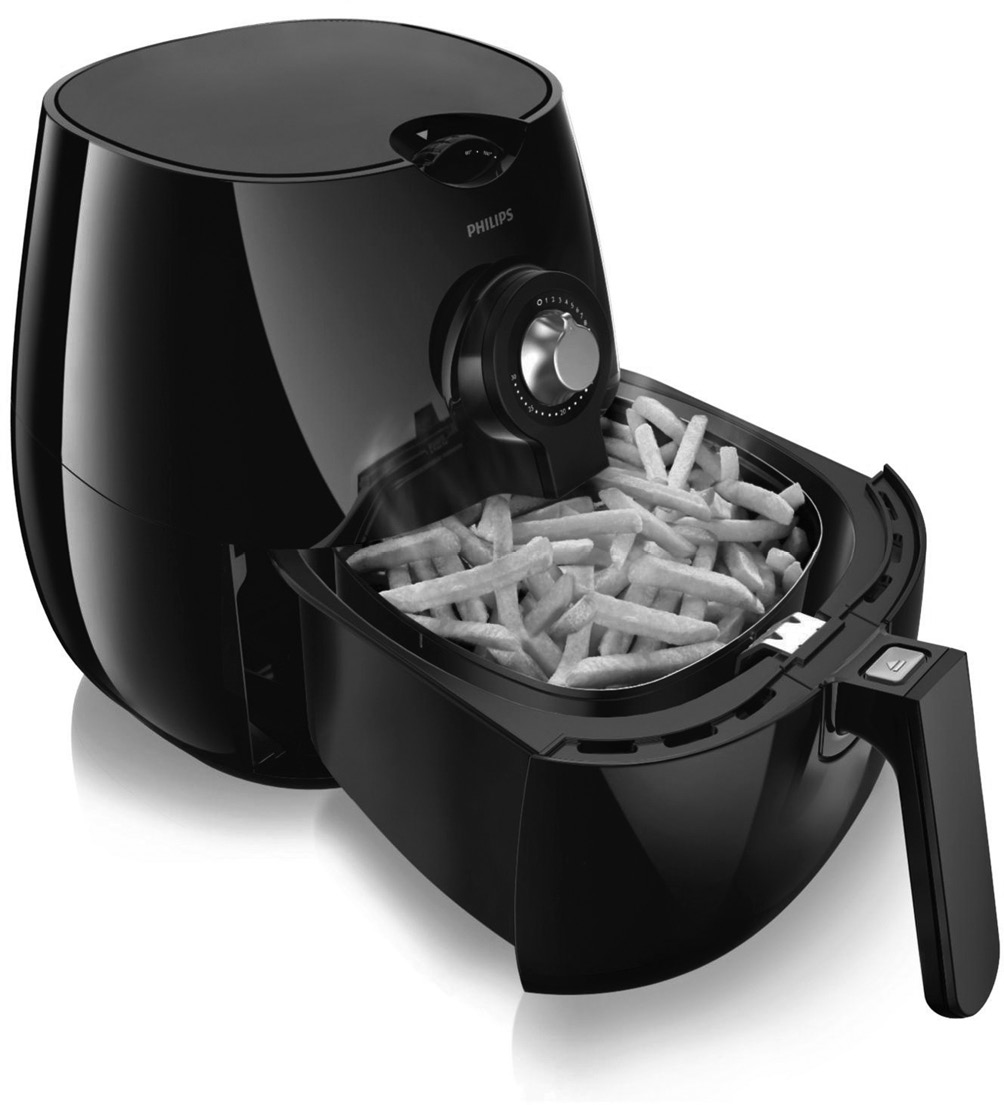
The AirFryer was introduced in 2010 as a new product in the Kitchen Appliances division within Philips. It has an elegant, egg-shaped design (see Figure 7.2) and it uses just one-half a tablespoon of oil to fry a variety of foods and snacks including French fries (chips), chicken nuggets, other meats, and even tempura. Rather than frying fries in hot fat, the AirFryer uses superheated air, producing the same quality fries. Its secret is the patented Rapid Air technology, which combines fast-circulating hot air with a grill to create fries with up to 80 percent less fat, yet maintaining a great taste. The AirFryer was launched in September 2010 in several European markets and was later introduced in many European countries and in various other continents. Philips was not the first company to introduce healthier ways to fry, however. Actifry of SEB (Tefal) was already on the market for several years, but it could not be compared with the AirFryer because its frying time was forty-five minutes – compared to twelve minutes for the AirFryer. Furthermore, fries from the Actifry were considered not that tasty.
For quite some time, the Kitchen Appliances group at Philips had the ambition to develop new products that could make cooking and frying healthier. With the AirFryer, Philips tried to make the frying process less unhealthy, while keeping high-quality taste. Healthy frying was one of the group’s ambitions, and they studied ways to achieve that target, consulting the literature and research from different institutes. They had already developed a process to fry using hot air/steam rather than oil. In 2006, Philips had a prototype, but the engineers were struggling to transform the technology into a feasible consumer product. The process of baking fries led to acceptable results, but difficulties endured in translating that technology into a consumer product that would fit the Philips promise of “sense and simplicity.” The appliance was too complex, too large, and too expensive.
The Kitchen Appliances group had contacts, however, with inventors who had developed similar appliances, but had struggled with the same problems. They did not have solutions to create a home-use appliance simply and cheaply enough to make it a success on the market. In early 2009, a small engineering company – more precisely two individuals who worked together – presented their idea to Philips. Their company had developed a technology similar to what Philips had developed internally, except that it was much simpler. It had the proper execution to translate the technical process into a consumer product. The owners took the right steps to translate the idea into a product that could be sold as a consumer good and was simple to use. It featured a basket into which the consumer placed the fries and a simple user interface.
Godwin Zwanenburg, who was at that time innovation lead at Kitchen Appliances, remarked that within big companies it is difficult to develop new but simple products. Technicians usually start with a blank sheet and look for what is possible from a technical standpoint. After the right appliance is developed, commercial people express their wishes, which leads to more features being added. This project dynamic is driven by the desire to make a “perfect appliance,” whereas simplicity implies that the appliance is not perfect, but “good enough” for the job to be done. Small firms, on the contrary, have limited resources and time to develop products: They have to deal wisely with constraints. The result is that small firms are better at developing simple and easy-to-use products.
The small engineering company is KCS, a tiny Dutch company consisting only of an engineer, Fred Van der Weij, and a seasoned manager, Hans Brocker, with twenty-four years of experience as a senior manager in the Braun division of Gillette. Hans left the company when Gillette was acquired by P&G. After he left Gillette, he started to commercialize innovations for different inventors. KCS was one of those companies: Fred developed the technology that was used later in the AirFryer. He detected that the existing turbo-fryers on the market didn’t work properly. He made a simple adaptation to the airflow that made air frying quite effective. The company was granted a patent for this invention. The application development and preproduction were completed by a Chinese company, which Hans Brocker knew from his days at Gillette. It still took two years to develop a prototype that could be demonstrated to potential customers. The manager of the small company decided to license the technology to large companies active in the kitchen appliances industry that could leverage their international presence, brands, and access to distribution channels. Ironically, Braun was not interested. Philips, on the contrary, was decidedly interested given its strategy to invent new ways to prepare food in a healthier way. Furthermore, the company was already acquainted with the technology but had been unable to translate the technical process into an attractive and simple consumer product. Godwin Zwanenburg, the then innovation lead at Kitchen Appliances, sold the idea internally and coordinated a demonstration at the Kitchen Appliances business of Philips. The commercial people saw the technology as an opportunity. Philips asked for “first right of refusal” for a period of three months to test and evaluate the application. The evaluation was positive, and Philips launched the internal development process and the business plan for the new product.
Small firms are usually reluctant to share information with large companies because the risk of misappropriating the technology is very real. However, Philips’ extensive evaluation of the technology did not pose a risk for the small engineering company, because Philips was reputed as a reliable innovation partner. Philips relies recurrently on new technologies from universities, specialized research labs, and high-tech startups. The electronic giant endeavors to be the preferred partner for small, high-tech companies and will therefore not cheat on its innovation partners. Simply put, the reputational damage would be too big. Likewise, the best technology start-ups in the world want to team up with Philips because of its reputation as a reliable innovation partner. Ultimately it is a matter of trust, because it would be quite challenging for a small firm to take a large company such as Philips to court. Philips’ reputation is one of the company’s assets: it facilitates information exchange with potential technology partners, and it is an effective and cost-efficient way to manage open innovation. The two companies signed a nondisclosure agreement (NDA) only before they started the information exchange and a letter of intent covering the investigation phase. This also implies that small firms must exercise care in selecting innovation partners that can be trusted.
In October 2009, the two companies signed a licensing agreement. Good licensing agreements reflect the needs of both the licensor and the licensee. In this case, Philips was acquainted with the technology, and the small engineering company felt no need to be involved actively in developing the AirFryer. The company agreed to grant an exclusive license to Philips for the consumer market for a period of five years. In addition, Philips received the right to buy the technology thereafter at a predetermined price. The option to buy the technology was crucial for Philips because it is too risky to depend on external technology when the business grows into an important growth engine for the company. Godwin Zwanenburg explains: “It is a good construction because you fix something at the moment that the technology’s success is not clear yet. So you have a more objective price which is a potential win for both: if it’s not a success you will not buy the technology, if it’s a limited success then it remains a question mark what you will decide, but if it’s a big success then it’s better to fix a price in advance. If we would have to fix the price at the end of the licensing term it would be far too high for the licensee.” Thus, Philips would certainly buy the technology in case the AirFryer became a major business success and the price it would pay for the takeover is only a fraction of the yearly licensing cost when the product is really an unanticipated success.
Furthermore, the Kitchen Appliances group was interested only in the mass consumer market, not in the professional market. The small engineering company had the freedom to build a business in the market for professional use of the technology such as snack bars. Subsequently, in 2011, the company collaborated with a Chinese partner to develop a first version of the fryer that could fry twice as much in half the time as the Philips AirFryer. The small engineering company decided to license the technology on a nonexclusive basis to several suppliers because the professional market was highly segmented geographically and in terms of products.
The AirFryer is a major success for Philips Kitchen Appliances. By 2015, Philips was the number one brand in low-fat frying worldwide. By 2014, Philips sold 3.7 million AirFryers and the product was available in 100 countries. The market for frying appliances was characterized by local players in each market and a few global players such as Philips, SEB (Tefal), and DeLonghi. Initially the AirFryer was intended mainly as a product for Europe and was considered as only marginally important outside Europe, because Phillips’ original intention was to develop a device that could fry French fries, a typical European dish, with less fat. When the company brought the product into the market, it turned out that it picked up quite well in certain countries outside Europe, while sales in Europe stayed below expectations because of strong competition. It turned out that the AirFryer’s ability to fry a large variety of recipes was crucial to understanding the success outside Europe. Fried food is very important in Asia (fried chicken and meat for instance) and Kitchen Appliances quickly learned that the product picked up quite well in some Asian countries. Philips expanded that success to basically almost all Asian countries and also to Latin America over the period 2011–2013.
Philips also learned in the first years that sales didn’t pick up as expected because the AirFryer is a highly innovative product and represents a new way of frying. It takes time for customers to understand that the AirFryer greatly reduces the need for oil and creates fried food that is less unhealthy. Consumers have to be (re-)educated to understand the full cooking potential of the new product. In this respect, Godwin Zwanenburg makes a distinction between “putting something up for sale” and “selling something, really making it sell.” Products such as shavers don’t need any explanation, as consumers know how to use them. The AirFryer, on the contrary, was completely new, most consumers were unaware of its benefits, and therefore sales would not take off without considerable efforts of the company to explain what the AirFryer is to the retailers and the end consumers. The Philips salespeople had to use a new approach to increase consumer awareness in the first place.
The AirFryer could fry a broad range of products such as chicken wings, cheese balls, and “croque monsieurs,” just to mention a few examples. Therefore, the AirFryer was packaged with an inspiring recipe booklet, written by a culinary expert, containing thirty easy-to-prepare recipes, as well as cooking tips and tricks. Godwin Zwanenburg explains: “The AirFryer is a new product, so people have to learn to work with the appliance and if you can show them how versatile it is, it will be more attractive to them, they will be more enthusiastic and they will be better promoters of the product. Therefore, we need the recipe booklet. You will also see that, say, maybe in ten years’ time, a recipe booklet will only be a bonus but not a primary need any more if everybody knows the concept of an AirFryer.”24
Moreover, eating and frying habits are quite different across countries. To have the right value proposition for consumers, the appliance manufacturer needs a good understanding of local cooking habits. Therefore, Philips was developing different recipe booklets per market, adapted to the local food habits. The localization of the recipes explains much of AirFryer’s success, according to Godwin Zwanenburg.
Philips also opened the Philips My Kitchen Home website25 and blogs where recipes could be added and where people could learn inspirational ways to fry food. The company was also working together with chefs to explore new recipes and with universities to understand better how food reacts to hot airflows. Finally, Philips collaborated with some snack producers, such as Mora, to copromote the AirFryer and Mora’s frozen snacks.26 During the launch of the AirFryer Philips also included vouchers for Mora products. Most companies selling (frozen) food that could be fried in the AirFryer were local companies. Therefore, the country organizations in Philips made arrangements with these companies per country.
Of course, there are other people also bringing recipe booklets onto the market outside Philips’ control. The company stimulated social media-based sharing of information, which was good for the product. There were also several Facebook groups about AirFryer. The biggest one had 56,000 followers, which also helped popularize the concept.27 According to the responsible managers, the promotion of the AirFryer via social media was a major opportunity for Philips. It also required some adaptation from Philips’ management, however, because it was not possible to control the content on social media. The company can promote, follow, and steer it a little. If there was wrong information on a website, Philips provided correct information to inform consumers accurately. Also, sites such as “Kieskeurig” in the Netherlands, which is a product review site, were monitored by the Philips consumer care team: if consumers had a bad experience with the AirFryer, the team would try to help them to use the AirFryer correctly for optimal frying results. Godwin further comments, “If you can easily help consumers then it will create extra enthusiasm because they had a problem but Philips was quick to solve it. So, what was initially a problem is now turned into a positive experience for them.”28
Philips introduced four models of the AirFryer in the first five years: the original model (see Figure 7.2), the electronic version of the original model, a bigger version with more power, and a low-end version with a different look. Competition was driving prices down over time, but Philips was working hard to reduce costs of the AirFryer. By introducing a bigger version, the AirFryer could be sold for more than €200: selling a kitchen appliance successfully above a particular price ceiling is possible if you have the right product.
The future for the AirFryer seems to be bright. First, new kitchen appliances have a long life cycle. Other products such as coffee makers, blenders, and toasters stay in the market for twenty to fifty years. Considered from this point of view, the AirFryer was still at the start of its product life cycle and could stay on the market for decades. To stay competitive it is mandatory to make small improvements to keep the interest in the market and to differentiate the product from competing products and copycats. Second, the AirFryer is an important business now for Philips, and low-fat frying is a trend, not a fad. According to the Euromonitor, the low-fat frying market was expected to grow 15 percent annually in the period 2013–2018 while the deep-fat frying market would grow only 7 percent annually. There is a rapidly growing segment for low-fat frying and there is a huge potential to grow in that segment. The most important issue in growing the market is to make more customers aware of the fact that the product exists.
In 2010, Philips introduced the AirFryer, a new kitchen appliance, at the Internationale Funkausstellung (IFA), an important consumer electronics fair in Berlin. The AirFryer is an egg-shaped device that allows consumers to fry a variety of foods conveniently and easily, including French fries, snacks, chicken, and meat, among many other foods. The AirFryer was developed using the patented Rapid Air technology, which results in frying crispy fries that contain up to 80 percent less fat than fries produced in a conventional fryer. Because the device uses only air to fry the foods, it produces fewer smells and vapors than traditional frying; it is also easy to clean and safe for daily use. The AirFryer was listed among the top five inventions of the 2010 IFA. Alongside Philips’ marketing managers, Fred van der Weij, who invented the technology, was in attendance when the award was presented to the company. Fred owns APDS, a small product development firm founded in 1990, and under which the AirFryer was developed.
Several years prior to this success, Fred was not happy with the results he achieved with the fat-free fryer he bought via a television sales ad. As an engineer and food aficionado, his discontent triggered his desire to solve the problems he was encountering with his fryer. He started working on a better version of this popular appliance. By 2007, he had found a way to optimize the fryer so that it worked properly. At that time, however, he did not have the financial means or business insight to market the product properly. Coincidentally, Fred met Hans Brocker. After working for Braun as a commercial director for twenty-four years, Hans started a company that guides inventors in marketing their ideas. He immediately recognized the potential of Fred’s invention and became a shareholder of KCS, the daughter company of APDS, which was tapped to manage the new product. The partners first tried to secure a bank loan and external investors, but were not successful. Eventually, Fred developed the prototype himself by teaming with Chinese partners who were part of the network to which Hans had access. They subsequently filed for a patent. Two years later, the prototype was ready and Hans and Fred developed the product strategy. They were considering whether to produce the product themselves or sell the idea. Because Fred had connections with Braun, they first presented their invention there, but Braun was not interested. As their next step they contacted Philips.
Since 2005, Philips had been trying to develop a fryer that makes the frying process healthier. They had the technology, but were struggling to transform it into a consumer product that was consistent with the Philips credo of sense and simplicity. The product they initially developed was too complex and too expensive. Early in 2009, KCS, the small company owned by Fred van der Weij and Hans Brocker, contacted them. They had developed a product that not only used appropriate technology, but could also be translated into a consumer product that is simple and user-friendly. Godwin Zwanenburg, the innovation lead at Philips Consumer Lifestyle, presented the idea to his commercial team, and they decided to sign a letter of intent so they could start the investigation phase. In this phase, various aspects of a potential product undergo rigorous testing for safety, technical specifications, applicability, and quality. The product passed every test, and Philips decided to sign a licensing agreement with the inventors. They subsequently created the AirFryer, an appliance that uses 80 percent less fat than a traditional fryer by implementing Rapid Air technology. The appliance was fashioned according to the typical look and feel of Philips’ products.
The AirFryer was launched in September 2010 at the IFA and immediately attracted significant attention. It was featured in magazines and on television and was listed among the top five inventions of the fair. After this introduction, the AirFryer was demonstrated and promoted in various shops in the Netherlands, Belgium, France, and Germany. Philips expended great effort to persuade customers to fry their food in a healthier way. To do this, they included a recipe booklet with the product and created a website where recipes were available to give owners and potential buyers inspiration. Sales took off and Philips began thinking of its next steps. They were planning to introduce the AirFryer in other European countries, Australia, the Middle East, Russia, and the Americas and tailor the product for different electricity nets and cooking habits.
From their perspective, the inventors also had ambitious plans. They aimed to introduce a new version of the AirFryer for the professional market. This product would process a larger amount of food in a shorter time. Because Philips does not target the professional market, the licensing contract allowed the inventors to explore this market niche. They were, however, required to notify Philips and share all royalties and profits.
For Philips, finding an externally developed invention such as the AirFryer was like finding a needle in a haystack. It was important, therefore, that independent inventors find their way to the company, so that inventions with a strong market potential would not remain unexplored. For Philips, licensing agreements on external inventions mean quick entry into the market, without spending a lot of time and money on their own R&D. For the inventors, on the other hand, it is a good way to commercialize and market their ideas; indeed, most do not have the much-needed capital, resources, networks, and market leverage. For these reasons, Philips was in 2015 working on a strategy to make it easier for external engineers and inventors to find their way to Philips business developers. Once inventors reach them, for example, through a portal on the Internet, they receive a reply within two weeks that includes a clear evaluation of the technology and the way to proceed. In this way, open innovation can create a win–win situation for both inventors and multinationals. Collaborating with smaller firms is a way for established companies to innovate that becomes increasingly important to stay ahead of competitors.
The AirFryer became a major commercial success: it was the number one brand in low-fat fryers in 2015. Managers originally thought that the AirFryer would sell well in Europe, but the real successes were booked in other continents because of the variety of foods that could be fried with the AirFyer. Its versatility is one of its best selling points. The market for low-fat fryers is growing rapidly but still has a large growth potential, as the awareness among consumers is still low. Philips is promoting the use of the AirFryer by working with chefs, developing recipe booklets, and promoting social media around the AirFryer. It is an innovative product: consumers have to be educated about its potential.
To learn more about the Philips AirFryer, see www.youtube.com/watch?v=iaVTCu54bKIwww.usa.philips.com/c-m-ho/cooking/airfryer-top
7.4 Key Takeaways
Startups and small companies can create a new business using technology from large companies. Most patents in large firms are not used for any commercial purpose. Patents stay unused in big companies for a variety of reasons and, as a consequence, they represent an important external technology source for entrepreneurs who are eager to develop new businesses. Working together with a large company as technology provider has its advantages but is no panacea to manage. This chapter has described the different hindrances SMEs may encounter partnering with corporates; below is a summary of how small firms can deal with large technology providers.
1. Most large firms have not developed a routine to systematically inform the outside world about the technology they want to license or sell. Though DSM has a long tradition in inbound open innovation, it was not acquainted with outbound open innovation. When a large company has no routine to consider external pathways to market for its technology, it becomes difficult for an SME to get the technology licensed. In this case, you need an entrepreneur like Toine Janssen who knows the decision-making process within large companies, who gets the respect of managers because he was one of them in a prior working life, and who knows whom he needs to talk to in order to get the licensing agreement signed.
2. The technology provider is likely to be a quintessential technology partner in the first years after the technology transfer, and good cooperation will lead to a jumpstart for the small company. Therefore, it is important to discuss the technical collaboration between the licensee and the licensor (or between the spinoff and the parent company) upfront. This collaboration is not straightforward because the large firm wants to divest the technology and is not inclined to invest research and engineering time in it. However, in case of a licensing agreement, it can be negotiated as part of the deal or it can be a paid service. In case of a spinoff it can be part of the arrangement to offer shares to the parent company.
3. The recipient startup company can make collaboration interesting for the large firm because many companies want to learn how to speed up innovation. Large firms can learn through their collaboration with startups how to become agile and more entrepreneurial. Some large companies organize accelerators and incubators to learn from and even emulate them. Large firms are struggling to navigate the new markets technology is creating and can learn from nimble startups how to do that.
4. The relevance of the large firm as technology provider will shrink over time as the startup becomes more knowledgeable while the former stops investing in that technology. The large firm can become important for the startup in other activities such as production or logistics when the latter starts to globalize its activities.
5. The startup develops core technology over time, assimilating and integrating technology from universities, research labs, and other technology partners. As research is expensive for a startup in full development, it has to collaborate within a network of technology partners, reducing the cost and risk. By applying a “rule and divide” policy, a startup can develop most technology in collaboration with others while ensuring that no partner can ever turn into a competitor.
6. The previous point can be generalized: as a startup is always in need of cash, it has to work in an asset-light way. That is, it has to look for outside partners to outsource most activities such as production, research, logistics, and sales. Isobionics is an extreme example of this strategy: it has virtually no internal production, most research is done by or in collaboration with partners, and logistics and sales are outsourced to DSM. In this way, Isobionics can grow fast while keeping investments to a minimum.
Small firms and startups are also increasingly an important source of external technology for large companies that license or buy the technology to develop new products or businesses. What are the dos and don’ts for a small firm in that position?
1. You have to do your homework before you start looking for a large company as a licensee. First, look for the assets that the licensee has to possess to make the product a commercial success. In the case of Rapid Air technology, development capabilities, a strong brand name, leadership in B2C markets, and a worldwide commercial network are key assets that are required to succeed commercially with the AirFryer. Second, you have to understand whether the large company is a trustworthy partner: Does it have a track record of good collaborations with small companies? Is it considered as a preferred partner among venture capitalists and small companies?
2. A licensing contract can be complex. Hire an advisor with ample experience with license agreements! The payoff can be tremendous if he or she does the job right.
3. In negotiating licensing agreements between a small technology provider and a large firm that intends to develop and commercialize that technology, both parties should understand that the deal should lead to a win–win outcome (it is a positive sum game). For a successful negotiation, it is crucial to start the discussion with what each party can bring to the table to create a new business, and to keep this joint value proposition in mind throughout the process.
4. Providing technology is likely to be crucial for the new product or new business development. But keep in mind that the large company is in many cases doing all the development and commercialization work, is taking all the risks, and has to be credited for the success of the innovation project. The small firm can earn via royalties but royalty rates may be small, and asking for large upfront payments may be unreasonable as the large firm faces considerable technology and market risks at the start of the collaboration.
5. New product/business development is a risk-laden process and there are many reasons to cancel the project during the development or commercialization stage. These contingencies have to be dealt with in the agreement. The large firm can, for instance, find an alternative and more powerful technology later on, technical problems may delay the development significantly, or initial sales may stay far below expectations. The small firm should include clauses in the agreement for these and other setbacks. The same holds for unexpected windfalls, as in the AirFryer case: the so-called “bonanza” clause is one way to allow the small firm to profit from an unexpected market success.
6. Smart negotiation in a licensing agreement starts with the understanding of what you, as well as what the other partner really needs/wants. In many cases, both of you have different objectives in mind and that, in turn, gives you the freedom to realize your own goals without hurting the other. As Philips Kitchen Appliances is a B2C business, the technology provider could develop the B2B market without hurting Philips.
7. Take different time horizons into consideration when you negotiate a licensing agreement. The licensing duration (five years, for instance) might be significantly shorter than the patent life (twenty years) or the time the product can stay in the market (twenty to fifty years for a kitchen appliance). In case the patent and product life are considerably longer than the licensing duration, you as a technology provider should figure out how you can extract value beyond the first licensing period: you can extend the licensing period (see licensing between DSM and Isobionics), build in strong renewal conditions, or negotiate conditions in which you can benefit from long-term sales.
8. As a small technology provider you have to determine upfront if you want to improve your technology in the future and how this might affect the licensee. The technology will be further developed by the licensee to improve the product and keep abreast of competition through continuous innovation efforts. As licensor you can ask for a grant-back clause under conditions that you define clearly with the licensee in which product areas each will work.
9. Are you a continuous source of innovation for a large company or rather a one-shot opportunity? If the latter is the case, you should keep in mind that you will become irrelevant for the licensee after a while. It’s likely that the large company will invest heavily in the technology to improve the product and therefore it will become more knowledgeable about the technology than you. The situation is quite different if you are a continuous source of innovation for a large company – for instance, in case your firm has a core competence that is hard to imitate. For example, P&G has a few small partners in skincare that are highly innovative: P&G tries to become their preferred partner by providing equitable deals, streamlining the interaction process, and developing joint technology roadmaps.


