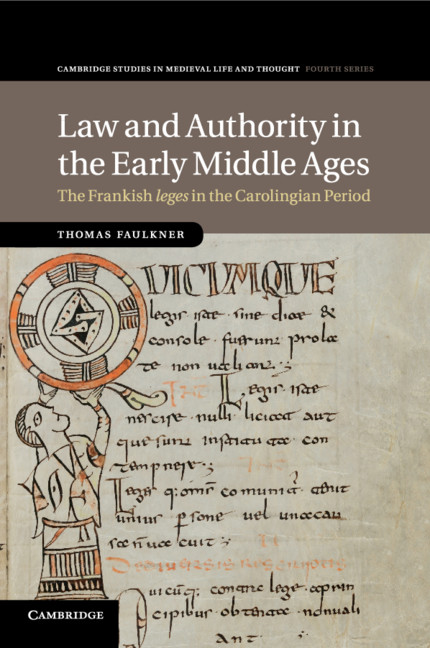

The barbarian law codes, compiled between the sixth and eighth centuries, were copied remarkably frequently in the Carolingian ninth century. They provide crucial evidence for early medieval society, including the settlement of disputes, the nature of political authority, literacy, and the construction of ethnic identities. Yet it has proved extremely difficult to establish why the codes were copied in the ninth century, how they were read, and how their rich evidence should be used. Thomas Faulkner tackles these questions more systematically than ever before, proposing new understandings of the relationship between the making of law and royal power, and the reading of law and the maintenance of ethnic identities. Faulkner suggests major reinterpretations of central texts, including the Carolingian law codes, the capitularies adding to the laws, and Carolingian revisions of earlier barbarian and Roman laws. He also provides detailed analysis of legal manuscripts, especially those associated with the leges-scriptorium.
‘Faulkner offers a valuable exploration of the early medieval, Frankish leges and capitularies, centred on their use and reuse throughout the Carolingian period.’
Thom Gobbitt Source: Early Medieval Europe
Loading metrics...
* Views captured on Cambridge Core between #date#. This data will be updated every 24 hours.
Usage data cannot currently be displayed.
This section outlines the accessibility features of this content - including support for screen readers, full keyboard navigation and high-contrast display options. This may not be relevant for you.
Accessibility compliance for the PDF of this book is currently unknown and may be updated in the future.
