

In the next six chapters, we present detailed narratives of our ASEAN champions based on our extensive study, on-site interviews in the ten ASEAN countries, and a variety of secondary published sources.
In this research, we find that the success of our ASEAN champions stems from their ability to transform themselves into strong local players, despite highly adverse political and economic circumstances. Particularly in underdeveloped markets characterized by voids and underdevelopment, most of these firms were able to capitalize on opportunities and crafting innovative strategies. In an environment of fledgling institutions, they are able to harness human and financial resources that enabled them to embrace risks and uncertainty.
Specific strategies are parsed in six chapters: preserving institutional legacy (Chapter 4); leveraging market power (Chapter 5); pioneering market strategies (Chapter 6); deepening localization (Chapter 7); building synergy (Chapter 8); fostering internationalization (Chapter 9); and nurturing human capital (Chapter 10).
Introduction
The concept of legacy is generally conceived to denote the transfer of wealth over time or the continued succession of intergenerational capital. In narratives about organizational success, the concept of wealth has been expanded and further refined to include both tangible and intangible assets. In their study of emerging transnationals, Bartlett and Ghoshal (Reference Bartlett and Ghoshal1987, 1990) proposed a nuanced formulation – “administrative heritage” – or a confluence of history, traditions, customs, culture, and leadership successions. Specifically, administrative heritage is: “a configuration of organizational assets and capabilities that are built up over decades; a distribution of managerial responsibilities and influence that cannot be shifted quickly; and an ongoing set of relationships that endure long after any structural change has been made” (Reference Bartlett and Ghoshal1987: 8).
In ensuing studies, administrative heritage has been interpreted broadly and in different ways. Occasionally, it is restricted to corporate culture – defined broadly as shared and binding beliefs, norms, and values. Even so, although corporate culture is an integral part of administrative heritage, culture is more restrictive and does not constitute legacy. Administrative heritage should likewise not be confused with strong leadership, although enduring patterns of leaders and the values that have embodied them shape and influence administrative legacy.
Administrative heritage is primarily understood in the context of a firm’s overall history, specifically pivotal events that have led to its current strategy, resources (both financial and human), and competencies developed over time. As Bartlett and Ghoshal (Reference Bartlett and Ghoshal1987, 1990) have noted, it can be an enabler of change, or it can be a constraint or an obstacle to change, assuming that the direction of change comports with prevailing norms, values, and resources.
In this study of firms in primarily developing regions that define ASEAN, administrative heritage is inextricably intertwined with institutional development. Although this connection to institutions is recognized by Bartlett and Ghoshal in a firm’s internationalization strategy in relation to it external environment, institutions per se are not the focus of their work. Hence, administrative heritage in their work is primarily internal in form and development.
In ASEAN, in particular, the primary effects of colonialism and the newfound sense of nationalism after colonialism are deeply etched into institutional development. Even so, as indicated in Chapter 1, evolving institutions are the bedrock of emerging and developing economies and a key determinant of national economic development.
To accentuate the pervasive impact of institutional development, one that combines key historical events and government decisions with the development of organizations, we use the term institutional legacy to describe one feature of successful ASEAN champions. By this term, we refer to the amalgamation of organizational history, resources, assets, and human capital with evolving institutional features of economic development in both the country and the region. Preserving institutional legacy, highlighted in this chapter, accentuates the ability of ASEAN champions to sustain advantages deriving from legacy despite formidable odds, and thus adding context to our argument about mobilizing institutional grassroots.
What underpins institutional legacy further is our emphasis on the coevolution of institutions with firm development over time. In biology, coevolution can be described as changes in two interlocking bodies or entities that are mutually inclusive and reciprocal for survival and growth. One popular example is the development of bumble bees and flowers in the continuing process of copollination.Footnote 1 Bumble bees flourish with an improved stock of flora; relatedly, flora becomes more diverse with continuous pollination. Hence, one cannot survive, evolve, and thrive without the other (Wikipedia, 2011).
Applied to organizations, management professors Michael Tushman, William Newman, and Elaine Romanelli (Reference Tushman, Newman and Romanelli1986) used coevolution to describe the interplay of exploration and exploitation and how strategy, structure, and processes change as a result. In the ASEAN context, institutions in highly developing economies are fledgling, underdeveloped, and in flux. Even so, pivotal changes, such as changes in government policies, can create propitious opportunities for organizations. Institutional change also involves fundamental shifts in attitudes about development.
Nevertheless, capitalizing on these opportunities is hardly a result of self-acclamation; it involves visionary entrepreneurship and a deep commitment to market entry, regardless of risks. With continuous changes in institutions, organizations have to learn to be responsive and adaptive to meet the requirements of new demands on them. If and when institutions change, less resilient organizations are prone to inactivity and eventual replacement by more responsive firms. Those that are successful in meeting initial institutional needs are able to create further opportunities and market demands. Governments in emerging markets often rely on these successful intermediaries to fill new market and social needs that emerge along the economic growth.
In cases and examples to follow, we describe institutional changes within particular countries and how exemplary firms are able to capitalize on such opportunities. It is in this context of coevolution that we place our concept of an institutional legacy. This does not abjure the double-edged feature of institutional legacy: Much like administrative heritage, new actions by firms can be enabled or be constrained by legacy. In fact, we argue that those firms that have been unsuccessful in addressing key opportunities were constrained by their own legacy. Hence, the ability to capitalize on and leverage institutional legacy is one factor that separates successful from unsuccessful firms. In this chapter, we describe cases of institutional legacy that have led to success. These cases and the context of their institutional legacies are previewed accordingly:
Holcim Philippines, Inc. (Philippines): An innovative market leader that kept pace with developments in the nation’s cement industry;
Siam Cement Group (Thailand): A company that capitalized on Thailand’s fledgling industry;
Summit Auto Body Industry Co., Ltd. (Thailand): An innovative pacesetter in automotive and parts industries;
Dao-Heuang Group (Laos): A national champion from an entrepreneurial intermediary during market reform;
Far Eastern University, Inc. (Philippines): A long-standing and visionary leader in education;
Ayala Land, Inc. (Philippines): A value-driven leader in land development and construction;
PT Lippo Karawaci Tbk. (Indonesia): A pioneer that sets the new standard in property development;
EEI Corporation (Philippines): From a producer of engineering equipment to a national behemoth in heavy industrial projects;
Other ASEAN Champions-Aboitiz Power Corporation (Philippines) and Adinin Group of Companies (Brunei): Family-run legacy business.
Holcim Philippines, Inc.
Historical events have a major impact on the business environment and consequently on the development of business entities, their strategies, and their success or failure. Whether these major external shocks present opportunities or challenges to a firm depends on entrepreneurial foresight and strategic thinking as much as historical chance.
One of the first cement plants in the Philippines was set up by the national government with the help of an American contractor on the island of Cebu in 1921. The company formed the Cebu Portland Cement Company (CEPOC), became one of only two major producers of the time, and eventually accounted for more than two-thirds of the country’s domestic cement output until the Japanese occupation during World War II. When the United States came to liberate the Philippines, much of the capital, Manila, was reduced to rubble by both American air raids and Japanese pillaging, becoming the second most devastated city in the world, following Warsaw. The American-led postwar reconstruction effort that followed, plus the pent-up demand for houses, buildings, roads, and infrastructure, provided promising opportunities in the cement business. In 1949, local production was at 8 million bags/year, while consumption was at 10 million (Albarracin, Reference Albarracin1969).
In 1956, Philippine President Ramon Magsaysay sought to privatize government-owned and -operated industries, including cement. A group of enterprising Filipino industrialists under the leadership of Ramon V. del Rosario Sr. had recently formed the Philippine Investment Management Consultants (PHINMA) to take an active role in the development of the country’s industrial sectors. In 1957, PHINMA won the bid for CEPOC’s new plant in the La Union province, some 280 km north of Manila. This marked the first successful privatization of a government-owned corporation in the Philippines. Although other cement companies were set up by wealthy Filipino families taking advantage of the growing market, PHINMA gradually expanded its cement holdings, took control of several other cement plants, and went on to become one of the country’s largest producers.
The Swiss company, Holcim, entered the Philippine market as early as 1969 by acquiring minor shares in a local cement company, but it was in 2002 when it began to expand more aggressively in the Philippines by acquiring majority stakes in the company. By this time, PHINMA had successfully diversified into other sectors, including steel, energy, paper, and real estate. In 2004, Holcim successfully entered into a merger with PHINMA’s cement business, which then became officially known as Holcim Philippines.
The merger not only consolidated the company’s local market leadership by affiliating the company with an international brand, but it also created dynamic synergies in market knowledge and technical expertise, which enabled Holcim Philippines to develop its product portfolio to include various kinds of cement for different applications. After five decades of focusing on cement products, the company also expanded operations to the processing of ready-mix concrete and aggregates. In addition to its cement products, Holcim Philippines currently provides concrete for roads, pavements, and housing as well as for industrial, structural, and special purposes (Holcim Philippines, 2010).
In addition to offering a wider range of products, Holcim Philippines has endeavored recently to offer more value-added services to its customers. The company has developed Holcim Helps-U-Build, or HUB, a customer support center that offers homebuilding solutions and technical support for its clients. In line with the company’s trust in the triple bottom line of “people, planet, and profit,” the company has also developed an alternative fuels, raw materials and waste management unit, called Geocycle, which has also grown to become a waste management solution brand offering various services such as waste coprocessing, analysis, and transport (Holcim Philippines, Reference Holcim Philippines2013).
Following its transparent, innovative, forward-looking, and people-oriented strategies, Holcim Philippines continues to become a well-known and trusted brand in the Philippine cement industry. What distinguishes Holcim Philippines is its ability to combine its legacy with continuous innovation that has brought the company to its position of market leadership. Throughout its history, Holcim Philippines had been able to successfully capitalize on developments in the industry and in the national economy. This success required a certain degree of entrepreneurial foresight coupled with innovative thinking in taking advantage of historical events, policy changes, and technological advancement, together with commitment to take an active role in national industrial development.
Siam Cement Group (SCG)
Like in the Philippines, the development of the cement industry in Thailand was tied to the country’s national economic development. Under the leadership of King Rama V, followed by his successor, King Rama VI, Thailand sought to modernize its economy at the beginning of the twentieth century. The move toward modernization required investments in infrastructure and buildings that pushed demand for construction materials, including cement, to unprecedented levels. In 1913, King Rama VI founded the Siam Cement Co. Ltd. by royal decree in order to decrease the country’s dependence on imported construction goods, to reduce the costs of infrastructure development, and to develop local industrial capacity.
At this time, managerial talent and technical knowhow were scarce in Thailand. Thus, Siam Cement sought a joint venture with the Dutch cement production equipment and machinery manufacturer F.L. Smidth & Co. to provide them with the necessary technology alongside technical expertise. Allowing the Danish investors to acquire up to 25 percent ownership in the company, Siam Cement recognized the importance of both intellectual and financial resources provided by their foreign partner. In fact, Dutch managers held the company’s top position up until 1974. The foreign partnership also helped Siam Cement leverage the local brand to match public perception that foreign products offered better quality. The company today attributes its professional management system and company culture to a synergistic combination of its royal Thai heritage, Dutch managerial effectiveness, and technological excellence.
Throughout SCG’s history, investment in technology and R&D has always been a priority for the company; it set up its own laboratories and has cooperated with local and international research institutions. One of its latest collaborations is an R&D excellence center with Oxford University.
Currently, SCG has diversified beyond cement products and has ventured successfully into concrete, paper, and petrochemicals across Southeast Asia. SCG’s experiences parallel those of Holcim Philippines by way of addressing the initial disadvantages of underdevelopment in terms of potential advantages and building on its relationships with the Thai monarchy. Its legacy owes much to its founding with the support of the monarchy, but also to its foreign partnerships in its effort to keep abreast of industry development. It acquires not only the critical technological expertise but also the managerial capabilities from the partnerships that set the foundation for its continuous growth as an innovative market leader in the sector.
Summit Auto Body Industry Co., Ltd. (SAB)
The former McKinsey consultant Kenichi Ohmae (1980) once described the history of progress in developing countries as a series of evolving needs in transportation, from rickety units, to bicycles and motorcycles, and eventually to automotive and modern transport. Such milestones in personal transportation can also be graded in terms of supporting or ancillary industries. The Summit Auto Body Industry Co., Ltd. was founded in 1986 in Thailand by Sunsurn Jurangkool as a wholly-owned subsidiary of his emerging Summit Group of companies, to engage in the production of automotive exhaust systems, body parts, rolled formed parts, and mechanism parts. Mr. Jurangkool had founded a motorcycle seat and automobile interior parts manufacturer in 1972 and had been involved in the automobile industry since early in his entrepreneurial career.
The 1980s were an opportune time for the auto parts industry in Thailand. Beginning in 1975, the Thai government gradually enforced stricter local content requirements, forcing assemblers to source automobile parts and components locally from 25 percent for passenger cars in the late 1970s to as much as 70 percent for diesel-engine pickup trucks by the 1990s. In the 1980s, local sourcing of specific parts including exhaust pipes, diesel engine parts, radiators, and batteries was made compulsory. As the local content requirements became stricter, automobile companies that had invested in Thailand, most notably Japanese firms, began to engage local suppliers more closely by establishing supplier networks and collaborating with local parts manufacturers (Techakanont, Reference Techakanont and Kagami2011). The Japanese were particularly interested in investing in the Thai auto industry as they sought to find new markets and an alternative production base in response to the appreciation of the Japanese Yen against the U.S. dollar following the Plaza Accord of 1985, which had increased the cost of Japanese exports to the United States.
Taking advantage of these policy developments in automobile local content requirements and the influx of Japanese investments in Thailand, SAB grew alongside the Thai auto industry. As demand for their products grew, SAB expanded by establishing subsidiaries in special economic zones created by the Thai government to take advantage of special incentives received from the Thai Board of Investments. A subsidiary was established in the Laemchabang Industrial Estate in 1994 and in the Rayong Industrial Estate in 2004.
Today, SAB is the market leader in auto body parts in the country (Summit Auto Body Industry Co., Ltd., 2005b). It has invested heavily in R&D and continuous innovation as a direct result of the legacy imprinted upon them by the stringent safety and technological requirements of international auto manufacturers. SAB has several research centers including quality test laboratories for various auto parts, dynamometer systems, and tooling capabilities. They also have developed exclusive integrated production technologies, excellent quality assurance systems, and rationalized quality and environmentally conscious management systems at par with global counterparts (Summit Auto Body Industry Co., Ltd., 2005a).
Much like Holcim Philippines, SAB took advantage of developments in the economic landscape, alongside changes in government policy. The cases of Holcim and SAB show how ASEAN champions have been quick to respond to developments in their home bases that are also affected in turn by international developments. Like Holcim Philippines and SCG, innovation has also been a hallmark of SAB’s institutional legacy. SAB focused on its innovative capabilities to build and offer products that were aligned with an evolving automotive industry. In fact, innovation was an integral part of its corporate culture that was the unifying factor in SAB’s successful forays into different products and extensions.
Dao-Heuang Group
Although food and beverages are essential in any economy, the underlying structure of the industry can vary substantially, ranging from small and fragmented retail establishments to large global enterprises. In developing economies, this structure typically assumes local entrepreneurial ventures that become more diversified over time. Even so, growth is not universally effective, and firms can stumble in this transition. One stalwart, the Dao-Heuang Group founded in 1991 as Dao-Heuang Import – Export Company Limited, is exemplary in meeting the evolving demands of a changing environment. The company originally dealt with the import of whisky, wine, and tobacco products. However, in subsequent years, it diversified into other areas, starting with the export of coffee beans to neighboring countries. Today, the company’s main line of business includes coffee, tea, import retail, and several other ventures such as real estate rental, pharmaceuticals, and air booking services.
When Leuang Litdang, President and Chief Executive Officer (CEO), founded her company in 1991, the country of Laos was just beginning to open up to international trade as it transitioned from a socialist economy to a liberalized one (Soukamneuth, Reference Soukamneuth2006). The trading company began importing tobacco products, alcoholic beverages, and perfumes from Singapore, France, and the United States. In search of export opportunities, the company looked toward Laos’ agricultural sector and the country’s vast tracts of available farm land. In 1998, the company tried exporting coffee beans produced by a few local growers to neighboring countries. Seeing the potential of coffee as an export product, it explored the viability of export-oriented coffee cultivation in Laos. With practically no experience or expertise in coffee production, Dao-Heuang had to look outside Laos to learn more about the business, studying international best practices and hiring Vietnamese coffee growers to teach local farmers how to grow coffee.
Since creating a new agricultural export for Laos meant job creation and economic development, the Lao government warmly supported the company’s initiative. The government helped the company establish contract farming agreements with local farmers and allowed Dao-Heuang to use 65,000 square miles of fertile land suitable for growing coffee beans.
It took the company about eight years to complete intensive studies on planting methods and processing techniques, plus three more years to complete the construction of its first coffee production plant in 2008. The hard work and dedication seemed to have paid off. In 2012, with financial support from the government of Laos, Dao-Heuang successfully opened the largest instant coffee factory in Southeast Asia.
In conjunction with her company’s ambitious venture into coffee production, Litdang also recognized several other investment opportunities in the newly developing Lao economy. She put up businesses in other product and service areas including retail management, property management, and pharmaceuticals. In 2007, Litdang’s companies were consolidated into the Dao-Heuang Group.
After consolidation, the company conceptualized strategies for further growth. Dao-Heuang, using its agro-industry as its foundation, expanded in offering tea, beverage, and food products. The company intends to list publicly on the Lao stock exchange in five years’ time.
On the surface, food and drinks are staples in any economy, developed or emerging. The differences between them lie in the development of their agricultural industry and underpinning institutions and infrastructures, and notably the functions of market intermediaries. Dao-Heuang is the classic exemplar of an entrepreneurial intermediary, as in the export-import business at a frontier stage of the business. Dao-Heuang saw promising opportunities of which it could only take advantage by getting its hands dirty and getting into the action. It saw coffee as a profitable export trading opportunity, and in the absence of a reliable supply chain, Dao-Heuang decided to establish its own. Dao-Heuang successfully transformed the challenges of underdevelopment into sustainable growth opportunities for itself and its country. Its effort to benchmark internationally and learn from leading practices nurtured strong managerial capabilities, which made it possible to capitalize market opportunities and open up new government support and business opportunities.
Far Eastern University Inc.
Educational opportunities provide a crucible for development in developing countries. Nonetheless, although education is a prerequisite for success and upward mobility, it does not guarantee it. The lack of access to education is an important institutional void. Due to its colonial past under Roman Catholic Spain and later the United States, which heavily invested in public education, the Philippines is home to a multitude of educational institutions. Although more than 70 percent of higher education institutions in the Philippines are private institutions (Commission on Higher Education [CHED], 2012), most of the country’s prestigious colleges and universities are run by either religious sects or the state as not-for-profit organizations. They rely heavily on endowment for their long-term sustainability and financial success. Far Eastern University (FEU) is one of only three for-profit educational organizations listed on the Philippine Stock Exchange. The university network offers a wide range of undergraduate and graduate programs from business and law to engineering and computer studies.
FEU was formed in 1934 as a result of a merger between the Institute of Accountancy, founded in 1928, and Far Eastern College, founded in 1919. Its founder, Nicanor Reyes, recognized a void in the existing educational system that failed to accommodate working students. Higher education institutions catered mostly to students who came from higher-income families that could afford to finance their children’s college education. He also noted the lack of local accountants at a time when commercial activities were increasing due to the country’s economic development. American and British accountants had to be hired by large corporations operating in the country to meet their growing needs. The Institute of Accountancy was originally set up primarily as a night school for working students. In the 1930s, Reyes sought to establish the Institute as a full-fledged university, culminating in the merger with Far Eastern College, which enabled the newly founded FEU to offer a liberal arts education, with majors in accountancy and business. Several “institutes” were established thereafter: an Institute of Education in 1931, an Institute of Law in 1934, and an Institute of Technology in 1936.
The university’s expansion, as well as day-to-day operations, ceased during World War II when the Manila campus was taken over by the Japanese occupying forces. The university immediately reopened in 1945. Ten years later, Institute of Nursing and Medicine was established, along with a university hospital to meet the growing healthcare needs of the country. In 1970, an Institute of Architecture and Fine Arts was established. The university entered the IT age in the early 1990s, through a joint venture with a local computer school to set up the East Asian Institute of Information Technology. Throughout its history, FEU has sought to provide educational opportunities to ordinary Filipinos to empower them to fill the needs of industries as the country progressed in its economic development.
“Our aim is to provide working students and students with lesser means a value education that is accessible, affordable, and promotes employability of the FEU graduate.”
“The vision of Nicanor Reyes is that the courses have to be empowering for the students. That was why we went into Accounting in the first place[:] because Filipinos could not practice Accounting in the Philippines and they wanted – we wanted – to show that Filipinos were just as capable as foreigners … that is one of the things that I’m thinking of right now. What other courses – what would be the equivalent of Accounting and Law in Nicanor Reyes’ time, now? What is it in this new economy that would empower the Filipino?”
In recent years, the university network has sought to expand aggressively, putting up satellite campuses in Makati, the country’s premier business district, and in Silang, Cavite, 54 kilometers south of Manila.
Although it is uncommon for an educational entity to be financially successful over time, FEU accentuates its legacy with continuous improvement over time with a timely focus on its constituencies. Throughout its history, FEU has adapted closely to the needs of the developing Philippine economy as much as it has helped shape the country’s development story. It was the entrepreneurial insight to fill the institutional void in education and deliver necessary competencies for continuous growth of the economy.
Ayala Land, Inc.
Another key institution in national economic development is real estate and property management. In developed countries, this industry involves key intermediaries that provided important services. Given the importance of property management, it is important that services are able to support this industry through good management processes and management capabilities. In developing countries, channels for intermediaries are much narrower in scope, affecting the growth of housing and infrastructure.
As the real estate arm of Ayala Corporation, one of the Philippines’ largest business groups, Ayala Land is the country’s foremost real estate developer. Although Ayala Land was officially incorporated only in 1988, the company has had a long legacy under the Philippines’ oldest business house, Ayala y Compania (now Ayala Corporation). The company is particularly known for developing a piece of former farmland in Makati just outside the capital city of Manila into the country’s premier central business district (CBD).
The Ayala-Roxas family had purchased the farm estate or hacienda from the Jesuits in 1851. In the mid-1930s, a group of foreign investors led by L. R. Nielson became interested in privately developing an airport to serve Manila. When the Ayalas learned about this, they offered their suburban property as an ideal site, being still largely undeveloped and sparsely populated but very close to the growing capital city. The offer was accepted, and Manila’s first airport was completed in 1937. The airport saw numerous maiden flights including that of Philippine Airlines, the oldest operating airline in Asia, in 1941. The beginning of World War II forced the airport to cease commercial operations as it was dedicated to the U.S. Air Force. Operations briefly resumed at the end of the war, but a bigger airport was opened in a different location in 1948, and ownership of the facilities was soon transferred to the Ayalas. Seizing what they saw as a real estate opportunity, the Ayala Company converted the former airport’s two intersecting runways into roads, forming two sides of what would become the Ayala Triangle at the center of the company’s grand commercial and residential development project. Dubbed as ambitious and farsighted when it was conceived, the Ayala Master Plan envisioned a large-scale, mixed-use, purpose-built community in what was then a sleepy, unremarkable Manila suburb.
The success of this first major venture laid the foundation for the development of real estate as one of the Ayala Corporation’s core businesses. In the 1970s, the company sought to replicate its early success in Makati using the same formula of master-planned, mixed-use development in Alabang, a suburb further south of Makati and Manila. In the 1980s and through the 1990s, the company began to explore possible opportunities in Central and Southern Philippines. Some of its newer developments include Bonifacio Global City, a thriving business district developed from a former military base in Fort Bonifacio, about 4 kilometers east of the Ayala Center in Makati, and NUVALI in Sta. Rosa, Laguna, some 40 kilometers south of the Makati CBD.
As it seeks to expand market and geographical reach, Ayala Land has been engaging other real estate companies in a number of joint venture projects across the country. Most of these real estate companies are part of large conglomerates led by prominent Filipino business families. Its Bonifacio Global City project, for instance, was developed along with Evergreen Holdings of the Campos family. It has also partnered with Aboitiz Land (of the Aboitiz family) for the development of a new business district in Cebu and with the Alcantara family’s Alsons Group for a mixed-use community in Davao. Engaging in joint ventures and strategic partnerships has enabled the company to expand rapidly while reducing risk and optimizing capital (GMA News, 2013).
In all of its projects, Ayala Land has had visionary leadership in developing business and residential communities, contributing to national economic development. As President and CEO Bernard Vincent Dy articulated when he accepted the 2014 Southeast Asia Property Award on behalf of the company, Ayala Land’s long-term vision has been an integral success factor, remarking that “this is truly something that has shaped Ayala Land from the very beginning – the preference of leaving a long-term legacy and the desire to create lasting value for generations” (Ayala Land, Reference Ayala2014). As in other case-examples, Ayala has had a continuous stream of good management and a steadfast corporate culture, intricately linked with the home country’s development story. Although family management has been impaired in other firms, the legacy of successful successions among family members has been a legacy of the Ayala Group.
PT Lippo Karawaci TBK
As in the Philippines, property development has flourished in Indonesia. PT Lippo Karawaci TBK is the leading property developer in Indonesia involved in residential and urban development, large-scale integrated developments, retail malls, hospitals, hotels and leisure, and asset management. It is the largest publicly listed property company in Indonesia in terms of market capitalization, assets, and revenue, and also boasts of owning the largest diversified land bank in prime locations.
What has set Lippo Karawaci apart from the competition is its pioneering strategy of township development in Indonesia. In all of its real estate projects, the company builds comprehensive facilities such as road infrastructure, clean water sanitation, electricity transmission lines, hospitals, schools, and other basic necessities. The company’s first township project, Tangerang City, some 25 kilometers west of Jakarta, has served as the model for future township development projects not just for Lippo Karawaci, but also for other Indonesian real estate developers that have begun to develop townships as well. A growing Indonesian middle-class population has fueled demand for real estate in general and has spiked demand for the company’s township projects in particular, as middle class property buyers sought the higher quality of life provided by master-planned developments.
Being the first movers in township development in the country, the company initially had to source talents from abroad: American architects, Scottish township managers, and several foreign landscape architects. This expertise from abroad matched with the increasing sophistication of Indonesia’s growing middle and upper class, which eagerly bought properties in Lippo Karawaci’s world-class developments.
The company’s success with its pioneer project, Tangerang City, required visionary leadership and faith in the country’s economic development trajectory. In the early 1990s when the company planned to build the township, others viewed it as crazy given the immense scale of the operation, that is, building a city. However, its leaders viewed it as an opportunity, setting a new standard of property development in the country (Wijaya, 2014).
Established just three years earlier as a subsidiary of the Lippo Group of Companies, Lippo Karawaci acquired the rights to develop two townships near the Indonesian capital of Jakarta, Cikarang, in the east and Tangerang in the west. Both projects were thought to be highly ambitious due to costs and scale. Both townships covered an area of about 3,000 hectares each.
The company needed to find sources of capital in order to finance the huge costs of its township developments. In 1996, Lippo Karawaci was listed in the Indonesian Stock Exchange with an initial public offering of 30.8 million shares. What distinguished Lippo Karawaci – and a defining element of its legacy – was its ability to forecast emerging developments and to build internal capabilities aligned with market entry. It followed its vision and took the challenges of creating something no one had done before with new strategies and capabilities sourced from abroad.
EEI Corporation
Our final case in this chapter relates to a transformation of a company from engineering equipment to a national behemoth in heavy industrial projects. This was achieved principally by its ability to keep abreast of both industry- and nationwide developments, and by aligning internal competencies with purposeful expansion. Founded in 1931 by a retired U.S. Navy officer, the company, then known as Engineering Equipment and Supply Company (EESCO), began as a machinery and mills supply house mainly for the mining industry during the mining boom of the 1930s (EEI Corporation, 2014).Footnote 2 Today, EEI’s core business is construction, specializing in heavy industrial projects.
EEI’s growth path has been determined by the company’s attitude of constantly seeking opportunities for growth and profit. Although it started in the booming mining industry, it would later take on related activities, expanding beyond machinery distribution. In 1934, the company branched out into general machine work, steel fabrication, welding and sheet metal work, and gear cutting. It was also during this time that EEI was first exposed to the international market when it successfully won contracts outside of the Philippines. In 1937, the company started doing tunneling work for the U.S. Army and built a custom cutter for the U.S. Navy in 1939. The company also got involved in the fabrication and construction of U.S. Navy coastal vessels.
When World War II broke out, the company had to close shop like the rest of the Philippine industry. Toward the end of the war, most mines were completely destroyed by the retreating Japanese forces as they faced imminent defeat. This left the Philippine mining industry virtually paralyzed (Boericke, Reference Boericke1945). Consequently, the company began exploring opportunities in other sectors. In 1946, EEI grew its machinery merchandising operations and delved into steel fabrication and installation. It began to cater to the government by fabricating the bodies of garbage trucks and constructing US Navy vessels. At this time, the company had begun shifting from the importation business and began focusing on its engineering shop facilities and increasing the company’s capabilities as a contractor.
In 1959, Benguet Corporation, a local business group, acquired majority stake in EESCO, and in 1969, the company was renamed Engineering Equipment, Inc. (EEI). By this time, the company had ventured into fabrication for oil companies and U.S. military bases at Clark Field and had become a pioneer in the installation of power furnaces in the country and the leader in LPG tank fabrication.
In the 1970s, EEI saw opportunities in providing construction services in the Middle East and in 1974 began operations in the United Arab Emirates (UAE) and Saudi Arabia. Rising oil and energy prices throughout the decade fueled demand for construction work in the oil-rich region. By 1978, EEI had set up its Overseas Division, further diversified operations in the Middle East, and entered Malaysia. The same period marked the beginning of the overseas Filipino worker (OFW) phenomenon, with skilled construction workers and engineers taking on contractual employment in the Middle East. The new trend was facilitated by the Philippine government as it sought to remedy an increasing unemployment problem.
Today, more than half of EEI’s revenue comes from overseas contracts, particularly Saudi Arabia. It has completed projects in many different countries including Kuwait, Qatar, Iraq, Singapore, Malaysia, and New Caledonia. This has been deliberate since the company specializes in heavy industrial work, of which there is limited demand in the local market.
EEI is looking to do business anywhere and is willing to go wherever the work is. Roberto Jose Castillo, President and CEO, says “Because we are a construction company, we go where the work is.” It is neither geographically constrained nor is it limited by a preference to work in a specific industry. The company also offers a full range of construction services. This diversity and flexibility allows it to mitigate its exposure to international crises and diversify its business so that any slumps in a particular sector will not heavily damage the company. In fact, it is EEI’s diversity that is credited for the company’s ability to ride out the 2008 financial crisis. EEI’s legacy was built on its visionary leadership in searching for business opportunities to apply its competences in industrial engineering. It pursued related diversification while developing the necessary internal capabilities and managing organizational arrangements to support the fast and broad growth across sectors and country boundaries.
Other ASEAN Champions: Aboitiz Power Corp. and Adinin Group of Companies
It is readily acknowledged that family businesses are a prominent feature in emerging and developing countries. But legacy is built on successful generational transfers in management talent and competencies, not on companies that might have excelled in one generation but failed in succeeding ones. In the cases illustrated earlier, the Ayala Land is regarded not only as one of the more successful corporations in the Philippines but among the best professionally managed companies as well. In our research, two family firms are distinguished in the management of generational talent.
Although the incorporation of Aboitiz Power Corporation happened in 1998, the Aboitiz family has been involved in the power sector since 1918 when they owned a 20 percent stake in the Visayan Electric Company (VECO), an electric company which was started by businessmen from Cebu. Through thoughtful acquisitions and partnerships that nurtured a reputation as both a family-run and a professional-led corporation, the family has since developed a leadership position in the areas of geothermal, hydro, coal and oil. Similarly, the Adinin Group of Companies, a Bruneian business conglomerate founded in 1982, is a fine example of a family-run enterprise. After progressing in the hospital where he started out as a dental technician, Haji Adnin went into a venture with his son, Musa Adnin, in order to establish Haji Adinin and Sons Co., which subsequently became Adinin Group of Companies. Haji Adnin and Musa Adnin used their entrepreneurial skills that they acquired from doing odd jobs and set them to practice in the early years of the company. It was due to their leadership, opportunity-seeking behavior, and hard work that the company diversified into construction-related services, and later into an international conglomerate.
Conclusions
In our assessment of characteristics that are common to ASEAN champions, the concept of institutional legacy is a suitable starting point because of a similar path of industrial growth and the influence of history and shared traditions. Such influences tend to be both pervasive and encompassing. Because institutional legacy covers history, industrial development, national policy, developing managerial capabilities, and ensuing strategies, it overlaps with other features of success that will be described in later chapters. Even so, we emphasize the role of pivotal historical events in the subsequent development and success of any given company. Admittedly, our treatment is biased and limited in depicting successful cases; it will suffice to say that we are not focused on failure, though we speculate that many failed cases demonstrate the lack of success in capitalizing on legacies.
In our case studies, we recognized a similar process that these leading companies applied to develop their own unique institutional legacies for sustained growth over time. There were first business opportunities due to the economic development, market transformation, and industrial policies to support local economies, and social and economic needs to overcome institutional voids. There were then entrepreneurial, visionary, and ambitious leaders who capitalized on these opportunities, which gave birth to institutional legacies setting the foundation for their growth as industrial champions. These companies emerged as key intermediaries between the government, market, and consumers facilitating the economic growth of these countries. A synthesis of variables that create and foster institutional legacy is presented in Exhibit 4.1.

Exhibit 4.1 Preserving Institutional Legacy
Industrial development and market transformation open up the initial opportunities, but these leading companies did not stop there; they subsequently nurtured further opportunities by securing government support since they became the primary engine of the economic growth and new employment. It became possible through strong government relationships and/or pioneering strategies to build leadership in newly identified business opportunities. The legacy evolved and became stronger as the companies managed to build internal capabilities and competences that could sustain their initial success. They develop internal capabilities typically through international partnership, benchmarking of leading companies, and/or international sourcing of critical expertise. Their continuous growth into different sectors and regions was still built on the institutional legacy as the primary intermediary along the economic growth. The institutional legacy is highlighted by successful management transitions, an entrepreneurial innovative outlook, and an uncanny capability to address initial periods of high adversity. In all, firms have been able to nurture fledgling grassroots, develop core competencies during critical periods, and continue searching for opportunities across different markets and sectors. It is this context that we include legacy as part of mobilizing institutional grassroots. This feature is notable in that many other firms, including multinationals, have not fared as well in this regard.
Altogether, leveraging institutional legacy is not a guarantee of success. But because institutional development is inextricably tethered to national economic development, there are far-reaching implications on what firms can do to take advantage of opportunities that have a limited window of opportunity. In the next chapter, we elaborate on the second pillar of ASEAN champions that is related to institutional legacy but not subsumed by it – market power resulting from historical monopolies or dominant oligopolies.
Introduction
A key theoretical plank in economics and industrial organization is the study of market power. Broadly defined, this refers to the ability of a given firm to control competition by setting prices in relatively uncontested markets or those with high entry barriers. Market power is closely related to the structure of an industry. Typically, market power is associated with highly concentrated structures characterized by one dominant seller (monopoly) or when a few firms have a disproportionate level of market share (i.e., an oligopoly or oligopsony). Market power can be bequeathed by government, an outcome of a changing competitive environment or sheer good fortune.
In basic economic theory, monopolies are generally treated unfavorably and are seen as a primary cause of market failure (see Scherer, Reference Scherer1980: 9–27). Because a monopolist has the ability to set prices and determine its output to maximize its own profits, the resulting price and output combination may not be optimal for society, particularly when the monopolist sells at a price higher than what would have prevailed in perfect competition (see Martin, Reference Martin1988: 25–290). The higher price results in a suboptimal level of sales and output, whereby fewer customers can afford to buy. And because such a firm’s monopoly power rewards it with large profit margins, resources are wastefully – in a social perspective – devoted to preserving such power by erecting high barriers to entry and stifling competition.
Nonetheless, some economists and policymakers agree that in certain cases highly concentrated industries – and a monopolist, in particular – can serve the public more efficiently than a competitive market (see Martin, Reference Martin1988). In the case of natural monopolies, as they are called, one very large firm or organization may be able to provide a good or service at a lower long-term average cost than several small firms because of strong economies of scale. Historically, some monopolies arise when it is considered, rightly or wrongly, by the government that one firm or organization can better serve the public good and the risk is too big for small entrepreneurial firms. To further illustrate, a firm can become a monopoly if government decrees an impassable barrier to entry for others. A national postal service has been historically defended in that having more than a single service provider would result in inefficiencies of overlapping routes, scattered customers, and multiple mailboxes. A similar logic can extend to power utilities, power generation, the railway system, and other industries that exhibit strong economies of scale. To ensure that this natural monopoly successfully serves the public good, conditions are usually set by the bequeathing government such as requiring the monopolist to serve unprofitable or economically unfeasible sectors or subjecting prices to government regulation.
Market power can also result from proprietary technology – patents and copyrights that preclude other firms from using a particular production process or producing the same product (Scherer, Reference Scherer1980). It is argued the profits guaranteed by monopoly power resulting from these exclusive property rights provide necessary impetus for innovation and justify expensive investment in research and development. Finally, a firm or a group of firms can benefit from access to a scarce resource (oil; precious minerals), a favorable location (distance to favorable ports and suppliers), or even managerial prowess (a prescient and visionary leader) that competitors cannot readily imitate.
Although traditional theoretical treatises treat market power in suspiciously unfavorable terms, the actual behavior of firms with market power and the effects of their dominance can vary considerably. Students of economics are socialized into thinking that a monopoly or an oligopolistic firm can raise prices above and beyond their marginal costs because of the lack of competition, resulting in inefficiency and impaired economic welfare. This logic has been used to justify anti-trust government regulations to break up highly concentrated firms and industry structures (such as the Ma Belle in the United States), or to discipline uncooperative firms (such as the steel industry in the United States) (see Scherer, Reference Scherer1980). Google, for example, is clearly a dominant market power in the search engine world – 68 percent of Web searches in the United States and more than 90 percent in Europe.Footnote 1 It has been accused of anti-competitive behavior by European regulators for bundling its search engine with its other commercial services, and threats have been made to weaken the company’s dominance.
Similar to other Internet companies, Google benefits from network effects, whereby the development of a large user base attracts further adoption and usage, resulting in exponential increases in both. Network effects create a considerable entry barrier and may stifle competition. However, network effects also reduce costs because of economies of scope and scale, and may allow the firm to reduce prices, especially when the incremental cost of production is very low or even zero. A very large and continually growing customer base for its search engine allows Google to run its advertising business profitably enough to provide users with a multiple array of free services, including the search engine. In such a case, the benefits to consumers and to society of a single firm’s exercise of market power cannot be easily discounted.
This is not to say that firms that hold considerable market power cannot do harm. They have, and when they do, they are either squashed by regulators – at least in developed markets – or eventually toppled by ambitious newcomers usually armed with new technologies. In a static world, monopolists can rely on the entry barriers they have erected, simply collecting economic rent for as long as these barriers remain (Bain, Reference Bain1956). However, in a highly dynamic environment, market power can wax and wane considerably.
The context of market power in ASEAN is a much more nuanced application. Particular to any fledgling and struggling national economy is the need to build critical industries literally from scratch. The reasons range from postwar rehabilitation to flawed legacies from colonialism. Even with good intentions, it is unlikely that this condition is best served with a fully functioning competitive market, spurring governments to favor significantly large and reputable firms. In context, individual firms are either bestowed monopolies or given special support to start up the process of national economic development. The scorecard is that some firms succeeded, while others failed. In context, being a monopolist or a recipient of market power is hardly a guarantee for sustained success. What differentiates our ASEAN champions is the ability to leverage market power in ways that create core competencies for current operations and for the future when competitors are likely to materialize. In this chapter, we detail the experiences of several such firms. A preview of these cases is as follows:
Phnom Penh Water Supply Authority (Cambodia): a high-performing and well-respected water supply company;
Energy Development Corporation (Philippines): capitalized on what was considered by government to be a strategically important industry;
PTT Exploration and Production PCL (Thailand): another case where the industry was deemed to be critical for national economic security;
Manila Electric Company [Meralco] (Philippines): the largest electric distribution utility in the region;
Philippine Long Distance Telephone Company [PLDT] (Philippines): strong competence and innovative products and services into related areas;
Masan Consumer Corporation (Vietnam): building the scale advantage through a portfolio of brands;
Boon Rawd Brewery (Thailand): market dominance through proprietary technologies;
Other ASEAN Champions: Lao Brewery Co. Ltd. (Lao), EDL-Generation Public Company (Lao), and PetroVietnam Gas Joint Stock Corporation (PV Gas) (Vietnam): capitalizing on their early selections as industry champions.
Phnom Penh Water Supply Authority (PPWSA)
The Millennium Development Goals (MDGs) articulated by the General Assembly of the United Nations in 2000 included a commitment to reduce by half the proportion of the world’s population that is unable to reach or afford safe drinking water by 2015. At the time of the Kingdom of Cambodia’s adoption of these goals as one of the developing country signatories to the U.N. Declaration, the Phnom Penh Water Supply Authority (PPWSA) was in the middle of an impressive turnaround.
Just seven years ago in 1993, the failing state-owned monopoly was able to supply water to only 20 percent of the population of Phnom Penh, the Cambodian capital city, and less than half of the city area. Water supply was unreliable – intermittently available for only about 10 hours per day – and was of questionable quality and portability. Operations were highly inefficient. New applications for water connections took months to process. Billing was often late and very inaccurate since only 13 percent of customers had metered connections. Among those billed, only about 40 percent paid their dues. Employees were generally underqualified, underpaid, and unmotivated, resulting in incompetent service.
In 1993, Ek Sonn Chan, an engineer who rose through the ranks of Phnom Penh’s city government, was put in charge as Director of the PPWSA. As soon as he took office, he quickly learned that the water system he had inherited was barely a system at all. Its pipe network, dating back to the French colonial period, was old, dilapidated, and unmapped. Seventy percent of the city’s water was lost to leakage or theft (Biswas and Tortajada, Reference Biswas and Tortajada2010). Among the thieves were the company’s own employees as well as military men and other VIPs who profited by redirecting and selling water to richer neighborhoods (Ramon Magsaysay Award Foundation, 2012). Mr. Ek Sonn Chan took on the daunting challenge of improving the system by completely overhauling it. He began by restructuring the bloated company, hiring more qualified staff, promoting young and dynamic personnel to senior positions, promoting a culture of transparency, engaging civil society, and investing in modern management procedures and technology (Das et al., Reference Das, Ek, Visoth, Pangare and Simpson2010). With financial aid and technical assistance from France, Japan, the UN, ADB, and the World Bank, PPWSA laid down new pipes, repaired leaks, installed thousands of water meters, and closed hundreds of illegal connections. Instrumental to these changes was a landmark government decree granting the company full autonomy in 1996, allowing PPWSA to run as an independent business-like operation without political interference.
To achieve higher revenues and thus financial self-sustainability, Mr. Ek pushed for a gradual increase in water tariffs, but only after making sure that its customers experienced and appreciated better quality and reliable service. The tariffs increased from zero tariffs before 1983 and USD0.04 per cu.m. in 1994 for residential customers to block rates of $0.14 to 0.31 per cu.m. in 2001. These tariffs were calculated considering the company’s total expenses, including operation and maintenance costs and asset depreciation. This was far from the traditional model of below-cost pricing among public enterprises in developing countries, where strong lobbies from concentrated interests (urban poor groups, unions, and political parties) and the pressure to make popular policies to maximize electoral chances keep prices inefficiently low, especially when the poor are affected (Araral, Reference Araral2008).
Between 1993 and 2008, PPWSA was able to increase its annual water production by 430 percent, its distribution network by 550 percent, and its customer base by 660 percent. During the same period, it reduced water lost to leakage and theft from over 70 percent to only 6.2 percent. The number of metered connections increased by 5,255 percent, while the number of accounts handled per employee increased by 670 percent.
In 2006, Mr. Ek received the Ramon Magsaysay Award for government service for “his exemplary rehabilitation of a ruined public utility, bringing safe drinking water to a million people in Cambodia’s capital city (Ramon Magsaysay Award Foundation, 2012). Two years earlier, the PPWSA was awarded the Asian Development Bank Water Prize for “dramatically overhauling Phnom Penh’s water supply system and demonstrating leadership and innovation in project financing and governance.” In April 2012, PPWSA became the first domestically listed company on the Cambodia Securities Exchange.
Public sector monopolies in developing countries are often associated with inefficiencies and inability to meet rapidly growing demand. Prior to its remarkable transformation, PPWSA was a glaring example of such problems. But through the excellent leadership of Ek Sonn Chan, PPWSA has demonstrated how absolute market power can be exercised while ensuring customer satisfaction, product and service quality, and long-term financial sustainability through good corporate governance, continuous improvement, and customer-orientation.
Energy Development Corporation (EDC)
Although some firms are granted absolute market power to allow them to maximize economies of scale typical of natural monopolies, other firms may be given special treatment, leading to substantial market power based on considerations of “strategic importance,” especially in a developing country context. Market power is often vested on a firm to spur the development of an industry deemed critical to economic development or national security. Special treatment may not, and perhaps must not, last forever, though.
The Energy Development Corporation (EDC) was founded in 1976 as a government-owned and -controlled corporation under the Philippine National Oil Company (PNOC), mandated by law to explore alternative forms of fuel in the Philippines. It is currently engaged in electricity generation through renewable energy sources – including geothermal, hydroelectric, and wind – and in the construction and management of geothermal power plants.
The PNOC, which founded the EDC as its subsidiary, was established three years earlier by the Philippine government to ensure a stable supply of oil in the Philippines as well as to explore, exploit, and develop all energy resources in the country, as a direct response to rapidly increasing world oil prices and the 1973 Oil Crisis triggered by an OPEC oil embargo on the United States and its allies. Realizing that the country’s dependence on foreign oil imports presented a threat to both national security and sustained economic development, the Philippine government mandated the EDC to explore and develop renewable energy sources to decrease the country’s dependence on foreign fuel, which was then close to 100 percent.
In the 1980s, the company discovered and developed two large geothermal reserves in Leyte and Negros in the Central Philippines, the completion of which immediately made the Philippines, the world’s second largest producer of geothermal energy, behind Iceland. Today, the Philippines remains the world’s second largest producer, behind the United States. Geothermal energy currently provides over nearly 11–12 percent of the country’s electricity (Balangue-Tarriela and Mendoza, Reference Balangue-Tarriela and Mendoza2015). The rapid development of the country’s geothermal resources was deemed to be of national importance, and thus received generous support from the government. Richard Tantoco, Chief Operating Officer of EDC acknowledges:
“We were fortunate to have the backing of the government and that kind of development. And that kind of context provided very strong tinder for the fire. EDC developed and progressed rapidly under those types of conditions…”
With government support, the company was able to pursue investments that would have been considered too risky by private investors. The exploration of geothermal wells in Negros early in the company’s history, for example, would have amounted to between $8 and $9 million – not a small amount of investment to ask for exploration in a country new to geothermal energy.
A crippling power crisis brought about by an electricity shortage in the 1990s due to insufficient installed capacity plus pressure from the World Bank pushed the Philippine government toward privatization and deregulation in the power industry, which took away the company’s monopoly over geothermal energy. Through build-operate-and-transfer (BOT) schemes, private contractors were encouraged to construct and operate power generation facilities for an assured return on investments. EDC, still then a state-owned company, took advantage of this by venturing into a BOT project with financing from the World Bank in a new geothermal plant in the Central Philippines.
During the 2000s, the Philippine government pushed strongly for the privatization of many of its state-owned enterprises. In 2007, EDC was successfully privatized. With privatization came the loss of direct government support and financial guarantees, which meant the company had to find alternative ways of financing its big-ticket projects and managing the corresponding risks through BOT schemes and joint ventures. Another challenge was that the local generation business was getting crowded and major geothermal assets had already been exploited. This led to the company’s exploration of opportunities abroad. EDC is currently exploring several joint ventures in geothermal energy in Chile, Canada, Peru, Australia, and Indonesia. Most of these projects are being explored in coordination with the respective energy ministries or other related government agencies in these countries. The company has also begun to diversify into other forms of renewable energy, including hydroelectric, and later, wind power.
PTT Exploration and Production PCL
As in the previous case, the PTT Exploration and Production PCL (PTTEP) was set up by the state-owned Petroleum Authority of Thailand (PTT) to explore and exploit resources of strategic importance to the country – oil and natural gas. Also as in the previous case, the PTT, which founded PTTEP, was established by decree in 1978 as the government’s response to the 1973 oil crisis. The mandate of PTT was to procure oil for domestic consumption and to lessen Thailand’s dependency on oil imports through the exploitation and exploration of oil and other energy resources within the country.
PTTEP was founded in 1985 specifically to take advantage of opportunities for joint ventures with foreign companies, primarily to strengthen PTT’s resource exploration capabilities. Upon its founding, PTTEP immediately bought a 25 percent stake in Thai Shell’s small oil field operation in Northern Central Thailand. In 1989, the company acquired all assets held by an American private equity firm, the Texas Pacific Group, in the Bongkot gas fields in the Gulf of Thailand. The acquisition of these assets by PTTEP allowed the company to invite foreign firms to develop the area for resource exploitation.
In 1990, PTTEP brought in French company Total, British Gas, and Statoil of Norway as partners in a BOT scheme to develop the Bongkot gas fields. Under this scheme, Total was to manage operations for the first five years, after which all operations were to be transferred to PTTEP. This was intended to allow PTTEP to maximize knowledge transfer and to learn best practices from its international partners. Through this and succeeding joint ventures in the development of local natural gas and oil reserves, the company was able to raise its capacities for exploration and operations to global standards.
Banking on its local success, PTTEP has pursued opportunities outside Thailand since the early 2000s. Its first successful venture outside the country was a joint project with Chevron to develop gas fields in Myanmar, which today services both Myanmar and Thailand’s energy demands. The company has also ventured into Vietnam, Indonesia, Canada, Brazil, Algeria, Egypt, Mozambique, Kenya, Oman, and Australia. Although currently, only 10 to 20 percent of income comes from international operations, PTTEP expects the share of overseas income to increase to 20 to 30 percent by 2020.
The establishment of state-owned monopolies and the awarding of special government support in areas of “strategic importance” is common practice in the early years of industrial development across many developing countries – even those that generally welcome free market capitalism. What distinguishes our ASEAN champions is their ability to masterfully develop their own competencies so that they eventually “grow up” enough to be weaned off government support and to go out into the world to compete on an international level.
Manila Electric Company (Meralco)
Some of our champions have used their core businesses where they are able to exercise significant market power as a springboard for innovation and diversification. The Manila Electric Company was founded in 1903. Today, it is the largest electric distribution utility in the Philippines, exclusively powering more than 5 million customers across Metro Manila and surrounding areas. Apart from its core business in distribution, the company, through its subsidiaries, also engages in power generation, transmission and energy-related services.
Meralco gained its early advantage with its entry into the electricity sector made possible by its acquisition in 1904 of La Electricista, a Spanish-American electricity company that began providing electricity to residential consumers in Manila in 1892. By the turn of the century, La Electricista had been serving three thousand customers and provided street lighting services in parts of the city.
By being a first mover in a naturally monopolistic industry, the company was able to position itself toward becoming the Philippines’ leading electricity provider early on. In 1925, the company was bought by Associated Gas & Electric Company (AGECO) of the United States. This allowed Meralco to purchase existing utilities such as small diesel-powered generators and consequently expand its operations beyond Manila and into its surrounding suburbs that would later form part of Metropolitan Manila. In 1961, a consortium of Filipino businessmen led by Eugenio Lopez Sr. bought Meralco from its American owners, becoming one of the first American firms in the country to be “Filipinized.” A period of expansion and capacity building ensued in the areas of power generation and distribution. By 1969, Meralco became the country’s first billion-peso company (Paterno, Reference Paterno2010). In the 1970s, the Philippine government nationalized power generation, forcing Meralco to sell its generation assets. Now focusing on electric distribution, the company tripled its franchise area by the mid-1980s (Paterno, Reference Paterno2010).
Although Meralco’s franchise area is only 3 percent of the country’s land area, it is by far the biggest distribution utility, serving 25 percent of the population and accounting for 55 percent of all electricity consumed, while the second-biggest power distributor accounts for less than 10 percent.
The sheer size of its exclusive franchise area – the entire national capital region plus the neighboring provinces, which in total make up about 25 percent of the country’s population and 55 percent of all electricity consumed – has provided Meralco with a competitive advantage over other electric utilities and power generators in the country.
Moving forward, Meralco is intent on not only further strengthening its core distribution business and expanding its power generation capacity to ensure reliable supply for its customers, but also introducing innovations to create greater customer value. Toward the latter objective, the company has created a Corporate Technology and Transformation Office to encourage innovative solutions to promote customer centricity and enhance reliability. Meralco is embarking on a “smart grid” journey – putting in place a communications network layered on its electric grid – to provide real-time information regarding network conditions. This enables Meralco to optimize overall grid performance and provide rate options for more efficient use of electricity, including demand response and the handling of distributed energy sources like solar and wind.
From a customer standpoint, smart grid allows for the offering of prepaid electricity. Meralco’s prepaid service, branded Kuryente Load, is the world’s first electric service integrated with a telecommunications platform. Customers can load their meters in exactly the same way they load their mobile phones. Its product roadmap includes an enhanced postpaid service that will provide near real-time consumption data accessed by customers through an online account.
In parallel, Meralco is exploring renewable energy, battery storage, and even electric vehicles, supporting initiatives by the Asian Development Bank and various local government units to deploy electric tricycles and jeeps versus the conventional vehicles that cause pollution.
Philippine Long Distance Telephone Company (PLDT)
In the 1920s, several small telecom companies, each with its own system, served the Philippine archipelago. This meant that a call can only be made within an island or region, with zero connectivity between competing networks across the islands. To address this issue, the Philippine Commonwealth government passed a law creating the Philippine Long Distance Telephone Company (PLDT) to merge four competing telecom companies serving Eastern Visayas, Bicol Peninsula, and Samar Island. The law granted PLDT a 50-year charter and the exclusive right to establish telephone lines in specific parts of the country within a 40-year time period, creating a legal monopoly for the company over its franchise areas. The aim was to facilitate quick communication and delivery of services as a means of promoting economic development.
With this mandate, the company began to acquire other small telecom companies across the country, in order to hasten the interconnection of previously separate intercom systems into one nationwide network. The Second World War disrupted operations, but operations had resumed to prewar levels by the early 1950s. From its founding in 1928, PLDT ran as a private corporation, but in the 1970s, the company was nationalized by President Ferdinand Marcos. In 1982, the Philippine government acquired the company’s only remaining competitor and integrated it into PLDT, making the company a national monopoly. With the toppling of the Marcos government in 1986, PLDT was soon re-privatized but remained a nation-wide monopoly until the Philippine government deregulated the telecommunications industry in 1995. The company experienced rough times during the 1997 Asian financial crisis, but this provided an opportunity for Manny Pangilinan of the Hong Kong-based First Pacific Co. Ltd. to acquire a 17.5 percent stake in PLDT, through which Mr. Pangilinan became CEO. Under Mr. Pangilinan’s leadership, PLDT began to pursue more aggressive strategies.
In 1999, the company acquired Smart Communications, then and now the Philippine’s largest mobile phone operator. This acquisition has proven to be a clever move as Smart now contributes greatly to PLDT’s bottom line, buffering the effects of declining revenues from the landline business.
In 2000, PLDT started to venture into information and communications technology through the establishment of ePLDT. Services eventually offered by ePLDT have included data, data security, call centers, and e-commerce. In December 2000, ePLDT launched Smart Money, the world’s first bank-issued reloadable electronic payment card linked to a mobile phone. Smart Money serves as what is now popularly known as an electronic or digital wallet that allows the user to pay bills (including third-party transactions), reload phone credits, and transfer money using a Smart mobile phone. PLDT’s Smart Money arguably pioneered mobile money services, which have now become very popular in a number of African and Latin American countries. The famous M-Pesa was launched by Safaricom in Kenya, where about 25 percent of the country’s GDP flows through electronic money (The Economist, 2013), more than six years after the launch of Smart Money. Other innovations introduced by PLDT include electronic mobile phone credit reloading for Smart and prepaid landline service.
Today, PLDT is focused on continuing to build its local subscriber base and preparing its services for international markets. With regard to the former, the company continues experimenting with new value-added services while strengthening its e-commerce services, particularly Smart Money. One of their latest new services is a joint project with the Philippines’ SM Group and South Korea’s Samsung in an online retail venture targeting overseas Filipino workers. The new service will allow overseas Filipinos to purchase retail products online and have the products delivered directly to their recipients at home using Smart Money (Manila Bulletin, Reference Manila2014). For its internationalization strategy, the company has set up PLDT Global to seek opportunities abroad, specifically emerging markets. In 2014, PLDT bought a 10 percent stake in Rocket Internet, a German Internet business incubator, to codevelop innovative online payment solutions to be introduced in low-income markets in other countries.
PLDT has demonstrated how a company that has secured considerable market power by being a first mover and by taking advantage of economies of scale and scope can leverage its market strengths to develop pioneering innovations that create greater value for its customers and contribute further to its longer-term profitability. It continued building its competences through international alliances and mergers and acquisitions, which led to stronger marker positions by launching innovative products and services in related market sectors.
Masan Consumer Corporation
Although power and water utilities, telecommunications, and oil and gas exploration are more often considered natural monopolies, food and beverage companies also have the potential to develop and exercise market power. The economies of scale and scope linked to food and beverage processing and distribution, coupled with the potential for building household brands, provides an opportunity for firms to grow into powerful market players. When a company is able to hinge on the progress of its host country and its growing consumer market, such development potentiates its market power further.
Masan Consumer Corporation is the largest subsidiary of the Masan Group, one of Vietnam’s top three private sector firms, with a market capitalization of over $3 billion. Masan manufactures and distributes food and beverage products including soya sauce, fish sauce, chili sauce, instant noodles, instant coffee, instant cereals, and bottled beverages. The company traces its origins to an import-export trading company founded in 2000, which was later merged with a food processing and seasoning firm in 2003.
Masan’s initial success can largely be attributed to the rapid economic development experienced by Vietnam in the last two decades. The country’s food and beverage industry has been on the rise due to improving living standards and rapid urbanization, leading to a substantial increase in the population’s spending power. Masan Consumer has been able to successfully leverage this progress, allowing it to thrive quite remarkably. And this progress is expected to continue. In 2011, per capita expenditure on food and nonalcoholic beverages in the country still stood relatively low compared to its Asian peers, promising huge potential for further growth. Currently, the potential size of the food and beverage category is estimated at $500 million (Masan Group, 2014b). It is therefore not surprising that the company has taken an aggressive acquisition-led expansion path.
To help fund its expansion activities, Masan opened its doors to foreign investment. In 2011, Masan received $159 million from the U.S.-based multinational alternative asset manager Kohlberg Kravis Roberts & Co. LP (KKR) for a 10 percent stake in the company. This was followed by another $200 million in 2013, making KKR’s investment in Masan Consumer the largest private equity transaction in Vietnam to date (Kohlberg Kravis Roberts & Co. LP, 2011; Reuters, Reference Reuters2013).
Masan has acquired several brands in recent years to diversify its growing portfolio. Being especially keen on the beverage sector, the company bought 50 percent of Vinacafe, the country’s market leader in instant coffee in 2011, and bought additional shares to gain a majority stake the following year. Masan also bought into and later also gained a majority stake in a bottled mineral water company in 2013 (Masan Group, 2014a). Masan also bought stakes in an animal feed manufacturer in 2012 in a bid to join the protein-based food market.
Taking advantage of a rapidly growing domestic market has been a key to the success of Masan Consumer Corporation. As expected, the company is very determined to continue growing alongside the rapidly growing Vietnamese market and to further establish itself as the market leader in Vietnam’s food and beverage sector. It managed to build scale and scope advantages to capitalize on the fast growth by acquiring key assets and a portfolio of well-recognized brands.
Boon Rawd Brewery
When a rapidly growing domestic market provides an opportunity for business, being a first mover no doubt boosts a company’s market power potential. When proprietary technology is involved, the market power potential is multiplied even further. A company that successfully leverages such power can have a bright future ahead of it.
Boon Rawd Brewery was founded in 1933. It is currently the largest beverage company in Thailand. It produces, distributes, and export beverage products under several brands, including the famous Singha and Leo Beer brands. It has also ventured into other interests such as agriculture and real estate.
In 1929, Boonrawd Sresthaputra, the company’s founder, fancied the idea of brewing a homegrown Thai beer after having sampled a number of imported brews. The following year, he requested permission from the monarchy to set up the first beer brewery in Thailand. It took three years for the permission to be granted by the King. While waiting, Mr. Boonrawd went to Germany and Denmark to study different techniques of beer-making (Soravji, Reference Soravjin.d.). He brought back German brewing technology, which allowed him to produce high-quality beer on par with foreign brews.
Boon Rawd became the first beer brewery in Thailand when it began operations in 1934. The absence of local competition from being a first mover plus protection from imports provided by the Thai government allowed the company to grow virtually unchallenged for years. Local sales steadily increased through the decades. By the 1970s, Boon Rawd had started exporting to the United States, triggered by demand from returning soldiers who had tried Singha beer in Vietnam during the war. From then on to the 1990s, sales increased even more rapidly. In 1998, Boon Rawd introduced Leo Beer at a lower price point than Singha.
The company started expanding into the overseas market more aggressively in the 2000s. In 2010, Boon Rawd sought global partnerships with the football clubs Manchester United and Chelsea and the Formula One Red Bull Racing Team to promote the Singha brand (Businessweek, n.d.). Boon Rawd has also sought to diversify into snack products, fruit juices, and even Korean food, through several acquisitions. The company has also recently expanded into real estate and packaging (Businessweek, n.d.).
These expansion activities demonstrate how Boon Rawd has successfully leveraged its market power to expand its portfolio and move into both related and unrelated segments that present promising opportunities for the company both locally and overseas. This was a case that a company solidified its first-mover position in a market by acquiring unique proprietary technologies no other competitors had, which resulted in dominant market power for a long time.
Other ASEAN Champions: Lao Brewery Co. Ltd., EDL Generation Public Company, and PetroVietnam Gas Joint Stock Corporation (PV Gas)
In any discussion of market power, it is easy to overemphasize the impact of monopolies derived from state-owned or state controlled companies, or from fortuitous circumstances favoring the first firm to have access to critical resources. But the extension of such market power would not necessarily occur without concomitant management skills to continue to build and nurture core competencies. In our research, two firms provide graphic testimony to these arguments. From 1975 up to the early 1990s, large corporations in Lao were nationalized by the government. This included Lao Brewery, where foreign owners of the company surrendered their shares to the government. It was during this period of nationalization that Lao Brewery attained monopoly status, being the sole beer producer in Lao until the early 1990s, when the Lao government initiated market reforms. Since then, Lao Brewery has capitalized on its partnership with the Carlsberg Group to become one of the most successful and innovative companies in the country and is noted for its product quality, diversification, and unrivaled distributorships.
Another Lao company, EDL Generation Public Company, is a newcomer in the power generation industry but has already earned accolades from pundits for its leadership in the generation, distribution, and wholesale of electricity (primarily through its parent company), as well as in the construction of transmission lines. To understand the company’s performance, the Mekong River is considered to be an important geographic landmark in Laos that connects the Tibetan Plateau to China’s Yunnan province going through Indochina (Wikipedia, 2015). The majority of EDL Generation’s hydropower plants relies on the Mekong River’s presence in the country (EDL-Generation Public Company, 2015). In fact, EDL-Generation is the only company in Laos that constructs and operates hydropower plants. Even so, the company has leveraged knowledge about the industry as it has sourced its technology from Japan, France, and England and is now on track to become a key player in the region.
In a similar fashion, the PetroVietnam Gas Joint Stock Corporation (PV Gas), the current market leader in Vietnam’s gas industry, was initially supported by the government under the auspices of its parent company, PetroVietnam. Being the first and sole distributor of dry gas in the country bore early benefits, and the company rose into prominence as the market leader. With the prospects for the Vietnamese gas industry looking favorable for its products and infrastructure. More importantly, the company seeks to further develop its technology and research activities to enhance processes and the quality of gases it provides. It plans to invest more on integrated, state-of-the-art infrastructure for its R&D institutions as well as enhance international cooperation ties with foreign companies, research institutions, and universities around the world (PetroVietnam, 2012; PV Gas, 2013).
Conclusions
Although often maligned as unfair or derided as unwieldy and inefficient, market power can be a highly enabling success factor both for the firm exercising it and the country whose socioeconomic development coevolves with it. It is a double-edged sword. Market dominance, control over prices, and weak or inexistent competition can lead to complacency and inertia. On the other hand, economies of scale and scope, deeper pockets, and in some cases, special government support can provide a springboard for innovation and international growth, contributing to long-term success.
Our ASEAN champions have successfully leveraged the market power that they have either secured for themselves by pioneering the industry or been entrusted with by the government in an effort to develop an industry of strategic importance for economic development or people’s welfare. They have used their market power to develop competencies that have enabled them to sustain long-term profitability even with the arrival of competition and, for some, to venture into related and unrelated activities both local and abroad. A synthesis of these characteristics is presented in Exhibit 5.1.
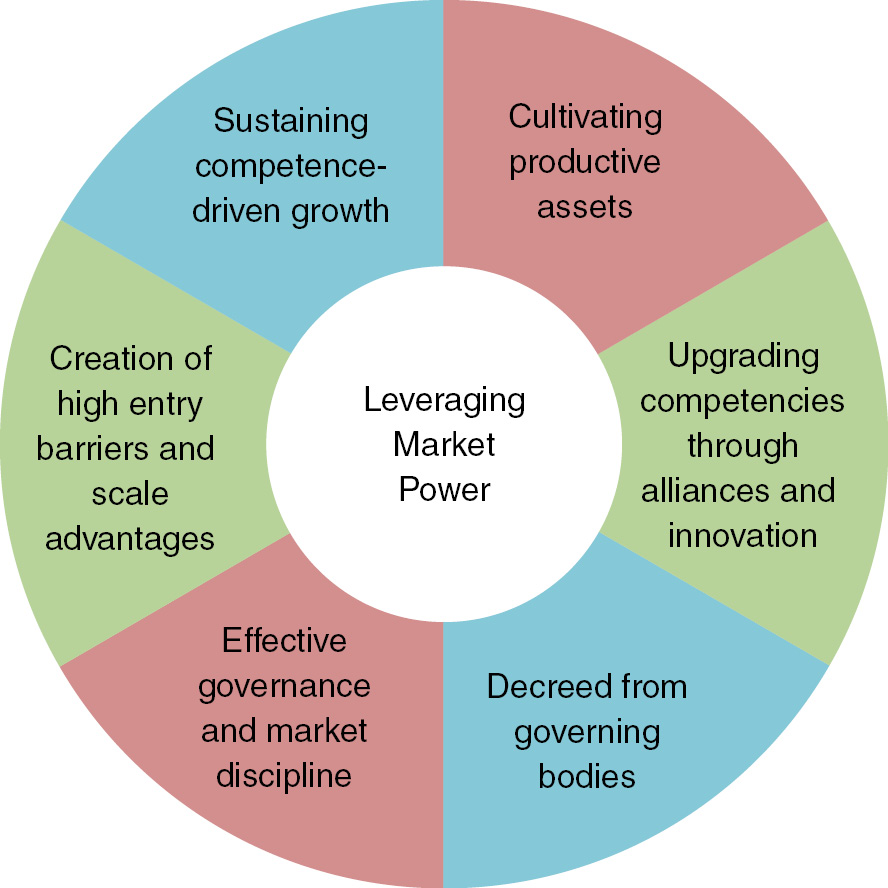
Exhibit 5.1 Leveraging Market Power
Market power is of course neither unique nor confined to emerging and developing countries. In fact, its study occupies a prominent position in economics and industrial organization that has focused largely on developed economies. What is notable in ASEAN is the coevolution of market power and economic development. Many of our ASEAN champions have had market power that was secured through government edict as a national strategy to harness resources and to provide critical services in pivotal times of a country’s history. Like Meralco, Electricite du Laos (EDL), although founded in 1961 as a private company, was nationalized by the government of Laos in 1986, and like PLDT, was tasked to consolidate several provincial public utilities under its supervision. In 2011, with strong government support, its subsidiary EDL- Generation Public Company became the first company to be listed in the Laos Stock Exchange – part of the government’s efforts to offer Laos as a promising frontier market for investors. Meralco, EDC, PPWSA, PTTEP, PLDT, and PetroVietnam Gas were all government-created monopolies.
Our ASEAN champions have been successful and continue to have promising futures because of how they have maximized their potential, having been bequeathed their market power early on. Champions like PPWSA have embraced good governance and corporate discipline to foster efficiency and a strong commitment to public service. Without such discipline, monopolies can quickly succumb to inefficiency and incompetence. Monopolies, especially those that had been given the privilege of government support early on, must build internal competencies and “grow up” sooner rather than later to sustain long-term success. EDC and PTTEP are shining examples of government supported monopolies that weaned themselves off special treatment and developed the competence to venture and succeed overseas.
Building internal competencies, developing human capital, and cultivating productive assets can be made easier when a firm holds market power. What sets our champions apart is their ability and conscious decision to use their strengths to innovate and create greater value for their customers. Meralco and PLDT turned their first mover advantage into strong innovative capabilities that set the basis for their strong international presence.
A rapidly growing domestic market, often characteristic of developing countries, is a boon to any firm, especially one that captures a large share of the market. Masan Consumer Corporation, for example, has grown alongside Vietnam’s thriving consumer market. Its growth potential is as bright as the country’s promising development prospects. As Vietnam’s economy prospers, Masan can secure a growing customer base for as long as it preserves its market share by continuously upgrading product quality and variety to meet increasingly demanding consumer preferences as consumer incomes rise. In particular, it successfully acquired key assets and established a portfolio of well-known brands to sustain its dominance.
Commitment to product excellence and development of brand equity can come a long way in a company’s push toward internationalization. Boon Rawd Brewery took advantage of foreign proprietary technology combined with market power bequeathed by the Thai monarchy early in its history to develop resources and build competencies, which it then used to invest in exploring markets overseas and building a global brand as it embarked on an internationalization strategy. In all, our arguments relating to market power are much more expansive in terms of understanding marketing in underdeveloped contexts. Market power is distinguished from marketing strategies. Although market power is a product of both endogenous and exogenous factors, firms that employed exemplary marketing strategies tend to arise from primarily internal or endogenous factors. Such firms are discussed and portrayed in detail in our next chapter.
Introduction
Economic development can be viewed from the historical prism of market transactions. Markets have been in existence since the first exchange and trade, but they are formally chronicled only as far back as the eleventh century, which ushered in chartered markets and new towns (Casson & Lee, Reference Casson and Lee2011). Markets have foreshadowed development and have defined the human condition throughout history. Markets predate capitalism and corporations (Roxas, Reference Roxas2000).
Marketing management, on the other hand, is a relatively recent phenomenon, dating back to pre–World War II conditions to a strong producer orientation epitomized by Henry Ford’s dictum that buyers could buy any car in “any color they want, as long as it is black” (Lutz & Weitz, Reference Lutz, Wietz and Navarro2005: 89). With more customer knowledge and awareness, this dictum shifted to a consumer orientation or a focus on customer needs and requirements. Stanford’s professor Theodore Levitt, in his influential paper “Marketing Myopia,” argued that businesses fail when they are more concerned with the product and lose sight of broader marketing/consumer needs (Levitt, Reference Levitt1975). More recently, there is a further shift to what Alvin Toffler (Reference Toffler1980) called “prosumer” or its modern variant, co-creation, defined as deep engagement by the customer in defining the form and function (i.e., co-creating) of a product or service (Mills, Reference Mills1986; Prahalad & Ramaswamy, Reference Prahalad and Ramaswamy2004a, Reference Prahalad and Ramaswamy2004b).
With respect to emerging markets, marketing management can be conveniently parsed into three stages of strategic decisions: (1) what market to enter, (2) how to market, and (3) when to enter. In this chapter where we highlight the experiences of successful ASEAN firms, our focus is on the first and the third decisions. The argument underlying marketing excellence is that such ASEAN champions outdo their peers in these two phases (market entry and timing), despite facing formidable odds and constraints. The second question – how to enter – is more nuanced and treated in the next chapter (deepening localization).
Deciding on which markets to enter typically involves considerations of potential size, access, and responsiveness. Size is important in determining the level of market penetration and anticipated revenues. However, access is likewise pivotal in that even highly attractive but inaccessible markets can significantly raise costs and entry and ensuing operations. Finally, responsiveness of customers to various marketing attractors, such as the 4Ps (place, price, product, and promotion), will determine the potential effectiveness of a given marketing strategy.
As applied to developing markets, such as ASEAN, considerations of size, access, and responsiveness can be potentially discouraging. The limited size of markets, the difficulty in gaining entry, and the lack of receptiveness – characteristics of a relatively underdeveloped economy – leads to a calculation where costs far outweigh benefits. Unsurprisingly, many multinationals shy away until they think that a market has developed substantially. Intuitively, such reticence can become opportunities for local firms, particularly if they are attuned to local market conditions and have the ability to respond to market needs.
In a previous study of successful local firms, called the “rough diamonds,” it is reported that they capitalized on these opportunities but are at considerable risk (Park, Zhou & Ungson, Reference Park, Zhou and Ungson2013). Nascent market niches are not easy to identify, and even if they are, the risk is that consumers who populate these niches might not grow significantly, nor will they necessarily respond to market cues and strategies. Hence, not only do prospective firms need to recognize the potential, but they must be prepared to invest and nurture the segment themselves. In this context, we call this “filling unserved market niches.”
Closely related to this decision is when to enter, or the general issue of timing. Observers suggest that the timing of entry is oftentimes the more difficult decision when compared to identifying which markets to enter, given that windows of opportunities tend to be brief and uncertain. In the mainstream marketing literature, this decision is included in the topic of first and secondary mover advantages.
First-mover advantages accrue when leaders are able to build their reputation, secure logistics and materials, garner government support, and build entry to barriers (Lieberman & Montgomery, Reference Lieberman and Montgomery1998). On the other hand, followers can gain the advantage if they are able to learn from the mistakes of the leader, capitalize on the demand created by the leader, and offer better products and services than the leader (Lieberman & Montgomery, Reference Lieberman and Montgomery1998). In all, there is no conclusive empirical evidence that either decision holds an absolute advantage (D’Aveni, Reference D’Aveni1994; Lieberman & Montgomery, Reference Lieberman and Montgomery1998).
This finding holds true when applied to developing markets, such as ASEAN, with some firms developing competitive muster as first movers, while others follow a successful growth path as followers and learners. Success depends largely on how well a particular decision is implemented and supported by the entire organization.
Because ASEAN presents such diverse markets, new models for capturing value in a meaningful manner have become an imperative (Bhasin, Reference Bhasin2010). In Think New ASEAN!, scholars Philip Kotler, Hermawan Kartajaya and Hooi Den Huan (Reference Kotler, Kartajaya and Hooi2015) argue for a further shift from consumer to human centricity. In cases that we present in this chapter, we address some of these issues and present the nuances of these marketing decisions. A preview of these cases is as follows:
Bangkok Cable Company Limited (Thailand): sustained growth through international collaboration and related product and market diversification;
Thai Metal Trade Public Company Limited (Thailand): total steel solution provider with high value-added service across the entire supply chain;
Pruksa Real Estate Public Company Limited(Thailand): correctly forecasted market needs and built a formidable market position;
PT FKS Multiagro Tbk (Indonesia): first company to use whole fish to produce food oil and import soybeans to meet fast-growing local needs;
Keppel FELS Limited (Singapore): built a competitive edge by addressing local needs;
TC Pharmaceuticals Industries Co., Ltd. (Thailand): first to market energy drink to blue-collar workers;
PT Solusi Tunas Pratama Tbk (Indonesia): led the market growth with right technologies and business model;
Other ASEAN Champions: Tien Phong Plastic Joint Stock Company (Vietnam), PT Ultrajaya Milk Industry and Trading Company Tbk (Indonesia), and Cebu Air, Inc. (Philippines): displaying the benefits of first mover and secondary mover advantages.
Bangkok Cable Company Limited
Bangkok Cable Company Limited was founded in 1964 by Mr. Sompong Nakornsri, who heads the company as Chief Executive Officer. Currently, it holds a formidable market position in several products: wire and cable products including copper cables, PVC wires, aluminum cables, telecommunication cables, and fire safety cables. The company also exports its products to neighboring countries such as Myanmar, the Philippines, and Bangladesh.
But, like many other ASEAN champions, the company’s success was based on its ability to understand the economic needs at the time and its willingness to shape the market. In the 1960s, Thailand received increased demands in electricity generation and consumption, resulting in the construction of more power plants within the country (Country Studies, n.d.). Moreover, Thailand had shifted from 110 voltages to 220 voltages. This meant that wires had to be changed, increasing the demand for new copper wires that were compatible with 220 voltages.
Mr. Nakornsri was able to identify this opportunity in the cable market. He sought to produce copper wires to support the growing market of Thailand and the infrastructure of the country. A visionary in this respect, he secured one of the first contracts to produce copper wiring. At first, the company focused on supplying homebuilding installations and catered mainly to the provincial markets (Bangkok Cable Co. Ltd., 2014) whose demands for electricity were growing rapidly (Country Studies, n.d.). Later on, the company expanded its market to the government and private sectors.
In addition, collaboration with Japanese companies in technical and academic matters gave Bangkok Cable a comparative edge in developing and producing various types of cables and wires. These advantages included technology transfers and the sharing of best practices which made the company more competitive and that facilitated the company’s diversification into PVC wires.
By the late 1980s, the company pursued a joint venture with Phelps Dodge Thailand Co. Ltd. to produce copper rods, complementing its other ventures with Japanese firms. By the year 2000, the company opened its fire- and flame-testing laboratory for cables. This included Bangkok Cable’s production and distribution of fire safety cables.
Currently, the company mainly exports its products with neighboring countries such as Myanmar. Most of Bangkok Cable’s overseas customers concentrate on government infrastructures, since such projects require large amounts of cables and wires. It is expected that demand for such products would go up, especially since various Southeast Asian countries continue to pursue several infrastructure projects (OECD, 2014). In all, Bangkok Cable combines its previous expertise in marketing along with technological adaptations to continuously enhance its market position in the industry.
Thai Metal Trade Public Company Limited
One element shared by many ASEAN champions is the ability to creatively combine technological prowess with market savvy. Thai Metal Trade Public Company Limited, a total steel solution provider, engages in the distribution, processing, and production of steel. The company aims to provide all-inclusive steel-related services to their favored sector – medium-sized companies – according to client specifications.
Thai Metal’s marketing strategies resulted from its recognition of early market needs as well as an astute reading of competition. At the time of the company’s inception, the value of steel in Thailand was relatively the same, reflecting its commodity status, which was advantageous for the company’s larger competitors. The company made the bold move of differentiating itself from other trading companies by offering value-added services. Nevertheless, initiating a differentiation strategy in a commodity market was a risk. The company needed to convince its customers to buy steel from the company by including additional services besides distribution of steel.
In order to support this strategy, Thai Metal established steel center functions to penetrate new market bases mostly including medium-sized companies. Furthermore, the company improved its distribution systems such as through warehouse expansions (Thai Metal Trade PCL, 2010). By 1992, the company was renamed as the Thai Metal Trade Co., with a vision for a radically new business model. In light of its success in offering various services beyond basic steel, the company strove to become the fully integrated steel service center.
Mr. Soon Tarasansombat, the current CEO, was able to visualize Thai Metal as an integrated steel company that would not only concentrate on steel trading, but also on steel servicing and manufacturing. He saw that the company could not survive on steel trading alone, particularly since there were larger steel companies in Thailand that concentrated on the same service. Instead, he decided to focus the company’s services toward medium-sized companies that were willing to pay for Thai Metal’s services over other larger companies so long as additional services were provided.
Mr. Soon Tarasansombat used his vision of an integrated steel company in order to capture this niche market. In an interview, he opines:
“We’re just a small company. And then step by step we [increased] some sales then [expanded] our market. We tried to penetrate in some other markets that we didn’t cater before. … We [expanded] some other functions. We setup steel center functions.” –
In 2004, the company ventured into the fabrication industry. Unlike the general construction industry where it concentrated on cement-based construction such as buildings, warehouses, and factories, the fabrication industry concentrated more on steel components such as car parts, truck assemblies, and so on. For the company’s steel component, Thai Metal concentrated more on producing pipes for which local demand was high. Through this venture, the company established its own pipe manufacturing plant, where Thai Metal gets 50 percent of its sales.
Thai Metal partnered with Metal One of Japan in 2007 – a partnership that reaped further synergies through Metal One’s experience and expertise combined with Thai Metal’s marketing force and capabilities. Because Thai Metal owns a complete supply chain of steel – ranging from steel production and distribution to servicing – the company is able to tweak the strength and durability of its steel depending on specific requests by customers. This is further supported by the company’s proactive approach in servicing its customers, ensuring Thai Metal’s loyal consumer base among medium-sized companies (Thai Metal Trade PCL, 2014).
Currently, Thai Metal Co. is primarily targeting medium-sized companies, as these types of firms require more support as opposed to larger-sized firms. Through this strategy, the company is able to carve out its own market share separate from larger competing companies. Furthermore, Thai Metal cannot just distribute steel because the market price of said product tends to be the same regardless of the company source. Due to this price competition, medium-sized companies tend to source their steel from larger companies that provide steel at the same price. Thai Metal was able to prevent this when it offered not only to distribute steel but also to guarantee customers of its steel products based on customized quality specifications. Thai Metal continues to build marketing competencies based on its shrewd understanding of technological developments.
Pruksa Real Estate Public Company Limited
Among the few cases that exemplify industrial marketing is Pruksa Real Estate Public Company Limited. Founded in 1993 as a residential developer by Mr. Thongma Vijitpongpun, the company’s primary business is the construction and development of low-cost housing, but it has recently diversified into the development of high-end real estate projects. Its housing products include the construction of townhouses, duplexes, and single detached houses for low-cost housing, along with villas and condominiums for their high-end real estate projects.
In the 1990s, the real estate market in Thailand was gearing toward townhouses. The Thai government promoted low- and middle-priced housing in 1993 through reducing corporate income taxes for developers who constructed low-cost housing projects. Along with this, the Thai government also increased civil service salaries and liberalized the banking sector in Thailand, allowing commercial banks and other financial institutions to provide more housing loans to its customers. The reforms made by the Thai government created a new market of consumers interested in low-cost housing, due to the increase of salaries and better loan programs contributing to Thailand’s middle class growth at that time (Kritayanavaj, Reference Kritayanavajn.d.).
Real estate developers in the early 1990s were not too keen on undertaking low-cost housing projects due to low margins of return. Seeing the opportunity in terms of the potential market growth for low-cost housing, Mr. Thongma founded Pruksa Real Estate in 1993 in order to take advantage of the new niche market of middle-class customers looking for affordable and low-cost housing. In order to keep revenues sizeable, Mr. Thongma implemented a high-volume model for his company’s low-cost housing projects, supported with new and innovative construction processes.
Pruksa Real Estate was founded in 1993, riding on the back of government incentives provided to real estate developers offering low-cost housing. It was during this period that the low-cost housing market was still in its infancy. Several Thai customers were looking for houses with affordable rates. Pruksa Real Estate decided to develop town houses to capture the growing demand for low-cost housing.
It was right after the company’s founding that Pruksa Real Estate was able to develop several townhouses and duplexes. These projects included Baan Pruksa, Pruksa Town, The Reno, and Villette Citi. Subsequently, the company expanded beyond constructing townhouses.
New market demands meant that the company had to adapt. In Thailand’s case, the real estate market had an increase of demand for low-cost housing, with demands going as high as eight hundred thousand units in the industry from the years 1993 to 1997; and reaching a demand of ninety thousand units per year after the Asian Financial Crisis (Kritayanavaj, Reference Kritayanavajn.d.). Pruksa Real Estate decided to capitalize on this venture.
The company decided to increase its production in order to meet growing demands for low-cost housing in Thailand. Pruksa Real Estate established in 2005 a new precast concrete factory so that it could increase its production, supporting several low-cost housing projects (Pruksa Real Estate PCL, 2014a). The construction of Pruksa’s precast concrete factory was supplemented by knowledge and skill-transfer programs from Germany (Pruksa Real Estate PCL, 2014b).
Besides the construction of its precast concrete factory, the company also completed its precast fence and pillar factory in 2005. The construction of the said factory amounted to 150 million baht (Pruksa Real Estate PCL, 2014a). The company’s investments in constructing its precast factories allowed Pruksa Real Estate to increase its market share in the Thailand housing industry by guaranteeing construction materials for the company’s projects.
Furthermore, the company continues its strategy of not only constructing and developing its own projects, but also managing the projects after completion. This means that the operations of Pruksa’s projects are also operated by the same company. This practice by Pruksa is seen to be different from other real estate developers, since the usual practice for real estate development companies is that they spearhead construction, but not the operation of projects once completed.
In order to accommodate its long-term growth both in the construction, development, and management of its real estate projects, the company adopted a strategic business unit (SBU) structure to minimize costs and sustain the company’s growth (Pruksa Real Estate PCL, 2014a).
The company rebranded itself in 2010, by changing its English name from “Preuksa Real Estate” to the current Pruksa Real Estate brand. The brand change aimed to reflect the evolution of the company’s services. One of these changes is the development of condo projects targeted at high-growth areas within and in proximity of Bangkok (Pruksa Real Estate PCL, 2014a). The move to developing condominium projects is one of the key strategies of the company in pursuing diversification.
In order to minimize costs, the company created an integral strategy to grow its market share. While other real estate developers hire contractors for construction, it was decided by the company that it would manage its own construction projects. This strategy allowed Pruksa Real Estate to implement total quality management policies in order to keep costs at a minimum and manage time effectively.
PT FKS Multiagro Tbk
As indicated in the previous chapter, food and agribusiness constitute a critical industry in the early stages of economic development. FKS Multiagro is engaged in the food and feed industry. Its three business activities are fisheries, feeds, and trading. In 1970, before FKS Multiagro, its founder created a trading company based in Jakarta that exported agricultural commodities. From that time until the 1980s, the business engaged in the trade of spices and exportation to Europe, the United States, and China. The company also expanded its operations throughout the country by establishing branches in other parts of Indonesia.
In 1992, FKS Multiagro was incorporated as PT. Fishindo Kusuma Sejahtera. It commenced commercial operations in 1993, engaged in the production of feed ingredients, and was the first company in Indonesia that used whole fish in the production of fish meal and fish oil. In 1998, the company expanded its manufacturing facilities by increasing its capacity to process whole fish and including the processing of poultry feathers for the production of feather meal. Despite the Asian Financial Crisis and the depreciation of the Indonesian Rupiah, exporters found an opportunity given the weaker currency. Despite a fall in domestic demand, export activities enabled the company to boost its revenue and net income.
In 2000, the company underwent a period of re-evaluating its core business and the change from El Niño to La Niña weather patterns exposed the company’s reliance and vulnerability to the availability of fish. Thus, the company decided to lessen its reliance on the manufacture of feed ingredients and explore opportunities in the import of feed ingredients. Given that the largest feed ingredient imported at the time was soybean meal, the company decided to go with this.
In 2002, the company decided to list its shares on the Jakarta Stock Exchange, now known as the Indonesian Stock Exchange. In 2005, the company installed a cold storage facility with a capacity of 300 MT. It was in 2006 when the company changed its name from Fishindo Kusuma Sejahtera to FKS Multiagro. This was done to represent the transition the company had undergone from industrial fisheries to a broader feed ingredient base. FKS also stands for the three product lines of the company, namely fisheries, kernel (corn), and soya. Also in 2006, the company crossed the 1 trillion Rupiah mark in terms of revenue.
The reason for the company’s decision to include soy in its portfolio was mainly foresight. The company had observed that Indonesians consume soy on a regular basis in the form of Tahu Tempe. Furthermore, there is inadequate production of soybeans within the country. With the country’s growing population, it is anticipated that the demand for soybeans will continue to increase.
The current strategy of the company is to continue with prioritizing the import of healthy foods, particularly soy beans. It sees that local consumption per capita of meat and poultry is still relatively low while consumption of tempeh and tofu are quite high. The company believes that given the lack of local production of soybeans relative to the demand of consumers and small and medium producers of food in which soybeans are a major ingredient, FKS Multiagro will find soybean import continuously profitable. This is only expected to increase given the growth of the middle-class sector (PT FKS Multiagro Tbk., 2014).
PT Solusi Tunas Pratama Tbk
In another example of industrial marketing, Solusi Tunas Pratama ranks as one of the leading telecommunications infrastructure providers in Indonesia. Since its founding in 2006, Mr. Nobel Tanihaha has led the company as its President Director. Solusi Tunas engages in providing, managing, and leasing Base Transceiver Station towers.
When the Indonesian government issued eleven licenses to telecommunication (telecom) operators, most of the telecom operators initially refused to share their Base Transceiver Station (BTS) tower networks with one another. This presented problems for Indonesia as it would be considered a logistical nightmare if all eleven telecom operators built BTS tower networks independent from one another. This provided an opportunity for Solusi Tunas to operate as a telecom infrastructure provider independent of the eleven telecom operators, especially the big three operators of Indonesia. Ever since, leasing out BTS towers has been the core business of Solusi Tunas.
It was during its founding that the Indonesian government was trying to convince telecom operators to allow their BTS towers and other networks to be accessed by other local competitors. These telecom operators included Indonesia’s Big 3 companies in the local telecom industry: Telkomel, Indosat, and XL Axiata (Oxford Business Group, n.d.).
While the Indonesian government was negotiating with the Big 3 and other telecom operators, Solusi Tunas decided to join its first bid to buy a BTS tower. Mr. Nobel Tanihaha mentions that:
“… I came back to Jakarta, set up a company, went to the bidding then I lost. I lost to the biggest tower company now in Asia. They [became] the biggest because they won that [bid] first.”
Losing its first bid did not stop Solusi Tunas from pursuing its core business. The company started to build its first BTS towers right after said bidding. In 2007, Solusi Tunas signed a contract with PT Ericsson Indonesia for the construction of 528 towers to build and have subleased to PT Axis Telecom Indonesia. Subsequently in 2008, the company entered into a master lease agreement with PT Bakris Telecom Tbk (PT Solusi Tunas Pratama Tbk, 2014).
However, Mr. Nobel Tanihaha realized that building BTS towers alone was both financially and logistically unfeasible. He along with the entire company decided to adapt their strategy by acquiring BTS towers from telecom operators themselves.
In 2009, the company bought 543 towers from PT Indosat Tbk., PT Smart Telecom, and PT Telekomunikasi Indonesia (Persero) Tbk. To pursue its expansion, Solusi Tunas signed Master Lease Agreements with PT Axis Telecom Indonesia, PT XL Axiata Tbk., PT First Media Tbk, and PT Hutchinson CP Telecommunications. As of 2010, the company was the fourth largest tower provider in Indonesia, with its portfolio containing 650 BTS towers in Jakarta and approximately 500 more in the Greater Jakarta region and other locations in the country (Borroughs, Reference Borroughs2012). In 2012, Solusi Tunas acquired PT Platinum Technology, a company that owns fiber optic network investments and microcell poles (PT Solusi Tunas Pratama Tbk, 2014).
Using newly acquired PT Platinum Technology as its subsidiary, the company has established small data centers using fiber optics. Solusi Tunas is considered to be one of the pioneers in the telecom provider industry to use microcell posts as a means of rolling out its fiber optics expansion. The company expects that Indonesia’s growing middle class would fuel the expansion of the telecom industry, hence the need for upgrading its networks using fiber optic technology to meet this demand in the next few years (PT Solusi Tunas Pratama Tbk, 2014).
This is further supported by the increasing usage of LTE technology in Indonesia’s big cities. Hence, a fiber optic-based infrastructure is necessary to meet the increase of data usage expected in LTE-based technologies. Moreover, the company has used innovative tactics in adding value to its service. One of these innovations is the company developing a software application for telecom providers to share and distribute code division multiple access (CDMA), a channel-access method integral to communication technologies (PT Solusi Tunas Pratama Tbk, 2014).
Solusi Tunas strategy is centered on increasing profit margins and portfolio expansion. In terms of increasing profit margins, the company continues to take advantage of its lease agreements with telecom companies, along with benefiting from its IPOs. This has allowed Solusi Tunas to increase its revenues in 2012 by 60 percent as compared to the previous year (PT Solusi Tunas Pratama Tbk, 2014).
In terms of portfolio expansion, Solusi Tunas aims to expand its capacity for bigger data networks. The company is aiming to concentrate on areas with larger density of data users as opposed to increasing coverage. By focusing on areas with larger density, the company will be able to increase its profit over time due to the increase of data traffic (PT Solusi Tunas Pratama Tbk, 2014).
In aid of this expansion, the company is seeking to grow its portfolio through acquisitions of towers from other independent tower providers or from existing telecom operators. Solusi Tunas uses a selective acquisition process that enables the company to strategically increase its portfolio. An integral focus of tower operators is having strong balance sheets to support large capital expenditures needed for the construction of new towers since companies cannot simply rely on tower acquisition alone (Grazella, Reference Grazella2013b). Expansion of portfolio requires strong financial capacity, hence why Solusi Tunas’s current strategy is focused on increasing profit margins in supporting portfolio expansion. Solusi Tunas senses the market needs and makes dynamic adjustments ahead of the market. It aggressively expands the tower portfolio, acquires necessary technologies, and establishes market positioning according to impending market changes while addressing internal financial conditions.
Keppel FELS Limited
To be the first mover in oil rigs reflects not only marketing gravitas but also a calculated risk because of the high investment. Keppel FELS was founded in 1967 and is the largest rig builder in the world today. It specializes in mobile offshore drilling rigs that can be used in deep waters and harsh environments (Bloomberg Businessweek, 2014). Keppel FELS is listed as a subsidiary of Keppel Corporation and leads Keppel Offshore & Marine’s (Keppel O&M) offshore operations. Its core activities are the design, construction, fabrication, and repair of offshore drilling rigs and production facilities as well as other offshore support facilities. Mr. Wong Kok Seng has held the current Managing Director position since October 2012.
“[Mr. KC Lee] built the first oil rig in Asia; that was the first in the market. The advantage at that point was that they were the first in the market then so the early bird catches the worm in this case.” – Wong Kok Seng, Managing Director
Far East Shipbuilding Industries Limited (FESL), later renamed as Far East Levingston Shipbuilding (FELS), was born in 1967. It was a family-owned offshore yard founded by Mr. Lee Khim Chai or “KC Lee.” Toward the end of the decade, there was an expectation of offshore exploration expansion in the waters of Southeast Asia as more areas came under lease or concession agreements. Mr. KC Lee saw an opportunity to enter the rig-building business as the demand for oil rigs was anticipated to increase due to heightened exploration in the region. Furthermore, the estimated amount of time that companies were expected to carry out exploration in offshore concession areas in Southeast Asia was about 10 years.
Shortly thereafter, in the 1970s, ARCO of Indonesia kick-started the business of oil exploration in the Southeast Asia region. At the time, all the rigs used for this purpose originated from Western companies since rig building in the region was practically nonexistent during this period. Moreover, the dominant players in the market were from the United States of America. Being the first rig-builder in Asia, Keppel FELS benefitted from the first-mover advantage. The costs of constructing a rig in the West and transporting it to Southeast Asia where it was to operate were immense, which is where Mr. KC Lee saw an opportunity for his company to enter the market.
Mr. KC Lee sought to gain knowledge from American rig-building industry leaders concentrated in the areas of Mississippi and Texas. The three big players in the business during this time were Bethlehem, Levingston, and LeTourneau.
The 1970s was a successful year of learning and capacity-building for the company as they sought to augment their knowledge and expertise in rig building and were able to achieve the delivery of quality rigs to their clients, all the while still remaining a contract manufacturing company. The subsequent years of 1971–1973 were tough on FELS, and its profits were affected by the cyclical nature of the industry. While 1974 marked a year of prosperity for the company, it was cognizant of the dangers of focusing solely on rig building. The company decided to diversify into related products such as platforms, heli-rigs, jack-up legs, and derricks, among other steel structures.
The years of 1975 and 1976 were record-breaking years for the company in terms of profits with shareholders earning 25 percent dividend. True to the cyclical nature of the industry, this was followed by a slowdown in the demand for rigs and ships. The company’s diversification strategy allowed it to keep its yards busy for that year despite a slowdown in operations. However, it would not be able to sustain them for long: FELS reported its first loss in 1978 and its second in 1979.
In the late 1970s, rig-building companies that carried original designs such as LeTourneau and Bethlehem set up operations in Singapore. FELS was now faced with competition from these original manufacturers because it was now operating in the same region as them. FELS had to find its competitive edge in order to continue to thrive in the industry. FELS also decided to license designs in order to remain competitive with companies with original design capabilities. FELS licensed a rig design from Friede & Goldman, an American engineering company that designed rigs but had no building capacity.
While Keppel Shipyard had a majority stake in the company since 1973, it was only in 1980 that Keppel took over the management of the company and started looking at changing the corporate strategy. When Keppel management came in, an upward climb was ahead of them. Although the company was profitable for the most part, current projects were delayed and the current cost management system in place was inefficient. The new management was able to turn things around and transform the company into an efficient organization. Furthermore, market outlook was positive as the rise in oil exploration led to an increasing demand for rigs. The company’s revenue in 1980 doubled. By 1981, it had achieved a record net profit of S$42.7 million, had a steady flow of projects in the works, and was completing jobs ahead of schedule.
In 1982, FELS bid for a Soviet Union contract to build two turnkey projects, one of which was a harsh environment rig which the company had never built before. After seven months of negotiation, FELS won the bid; both projects were completed by 1984. The subsequent years marked a period of downturn in demand for rigs; however, the company foresaw a pickup in 1986 and in anticipation of this, decided to build the Friede & Goldman MOD V jack-up rig that could withstand harsh environments and was capable of operating in deep waters. In less than a year after completion, the rig was bought by Santa Fe International Services. Mr. Frank Connor of Santa Fe said, “Against the European, Chinese, and American shipyards, FESL wasn’t always cheaper, but they were the best in terms of delivery times.”
In 1993, FELS signed two Build-Own-Operate agreements with the National Power Corporation of the Philippines, marking its first power generation undertaking. FELS was commissioned by then President of the Philippines, Fidel V. Ramos, to build a floating power plant. This was built in Singapore and towed to Batangas. In 1994, a second order came in that was to be towed to Manila. Power generation helped boost the company’s bottom line, and this became the second most important business for Keppel FELS. Later on, once the contracts with the Philippine Government had ended, these barges were refurbished and deployed to Brazil.
Since the integration of Keppel FELS, Keppel Shipyard, and Keppel Singmarine under Keppel Offshore & Marine in 2002, the three companies have been able to reap synergies. For example, before the integration, Keppel AmFELS used to be under Keppel FELS while the yards in the Philippines were managed under Keppel Shipyard; this led to different managerial practices that served a narrow set of interests. However, under the umbrella of Keppel Offshore & Marine, the companies are able to apply standardized managerial practices and purse a common vision.
Keppel FELS and Keppel Offshore & Marine believe in the “near market, near customer” approach that allows them to better cater to customer needs and contribute to local content. In line with this, Keppel Offshore and Marine has established offices in various parts of the world such as the United States, Brazil, the Netherlands, Azerbaijan, Indonesia, China, and Japan (Keppel Offshore and Marine, 2014).
Integration has also helped Keppel O&M to pursue their “near market, near customer” strategy. Keppel O&M is able to better reach customers through its network of yards and the presence of local teams worldwide. Also, customers with varying projects have the ease of working with a single entity to provide a range of services. Though each yard has its own areas of specialization, Keppel O&M allows greater rationalization of resources by allowing sister companies to utilize facilities and workforce all over the world (Seatrade, Reference Seatrade2012).
Mr. Wong has identified sustainable energy as a potential growth area for Keppel FELS. Given the company’s design capabilities and expertise in construction coupled with a growing long-term demand for offshore wind energy in Europe, he believes that Keppel FELS is in an optimal position to maximize opportunities in this area. For instance, the European Wind Energy Association (EWEA) anticipates that by 2030, 120 gigawatts of offshore wind energy can be attained. In line with this, Keppel FELS has tailored solutions for installation and maintenance vessels to support offshore wind farms (Lee, Reference Lee2013). Its continuous success comes from its market-based value that emphasizes building advantages by addressing local needs. It applies the same value in its international operations looking for business opportunities from local practices and needs.
TC Pharmaceutical Industries Co., Ltd.
Diversification can be an integral part of any marketing strategy. While this subject is treated in depth in later chapters, one company that successfully integrated marketing as a part of its diversification strategy is the TC Pharmaceutical Industries Co., Ltd. It is engaged in the manufacturing and marketing of nonalcoholic beverages and snacks. Its product line includes Kratingdaeng (Red Bull), Zolar energy drink, Puriku white tea, Sponsor sports drink, and Sunsnack. Saravoot Yoovidhya, son of founder Chaleo Yoovidhya, is the Managing Director of TC Pharmaceutical Industries Co., Ltd.
The company was founded by Chaleo Yoovidhya in 1956. Mr. Yoovidhya was a self-made man from humble beginnings. He was a bus-ticket collector, a duck farmer, and a fruit trader before arriving in Bangkok to work as a salesman for a foreign pharmaceutical company (The Red Bull Beverage Co. Ltd., n.d.a). Mr. Yoovidhya pursued unrelated diversification by expanding his business to include the manufacturing and retailing of products used by consumers in their daily lives (The Red Bull Beverage Co. Ltd., n.d.b). In 1976, Mr. Yoovidhya created the Kratingdaeng (Red Bull) formula. After a year in the market, Kratingdaeng outsold all of its competitors except for Lipovitan – D. The following year, Red Bull would outsell this too to become the number one energy drink in Thailand.
The reason behind Kratingdaeng’s success was that Mr. Yoovidhya was able to strategically market and to position his product in order to appeal to blue-collar workers (Fernquest, Reference Fernquest2012). Not only did he tap laborers by building his brand through distributing free samples and heavily advertising to the target market, but he made the decision to target provincial areas of the country first. This strategy was unique at the time and distinguished Kratingdaeng from other products on the market (Horn, Reference Horn2012). In 1978, the company changed its name to “TC Pharmaceutical Industries Co., Ltd.”
In 1985, Sponsor – an electrolyte beverage marketed as a “Sports Drink” – was launched by the company (TC Pharmaceutical Industries Co. Ltd., 2011). Today, Sponsor is Thailand’s most popular sports drink (DKSH, 2014). The beginnings of Kratingdaeng’s internationalization trace back to 1987 when Dietrich Mateschitz, an Austrian cosmetics salesman, and Mr. Yoovidhya entered into a partnership to create Red Bull GmbH, an Austrian-based company independent of TC Pharmaceutical Industries (Onkvisit and Shaw, Reference Onkvisit and Shaw2009). Mr. Mateschitz discovered that Kratingdaeng was useful as a cure for his jetlag and after getting in contact with Mr. Yoovidhya, each of them put up $500,000.00 to create the western producer of Red Bull.
TC Pharmaceutical’s Red Bull is exported to foreign markets and is the market leader in the Asia Pacific Region. In terms of energy drinks, it ranks first in China and second in Thailand. In 2012, it recorded a market share of 81.2 percent in off-trade volume in China. However, in markets such as the Philippines and Indonesia, TC Pharmaceuticals has been unable to take full advantage of opportunities as brands such as Asia Brewery’s Cobra and PepsiCo’s Sting of the Philippines have been considered to be more dynamic and heavily marketed and advertised in comparison to TC’s Red Bull. Although TC’s Red Bull has a long history in the region, customer interest is waning due to this (Euromonitor International, 2013).
TC Pharmaceutical Industries is looking to launch its sports drink “Sponsor” in Vietnam. The sport drink segment has been growing at double-digit rates in the country due to the public’s increasing interest in fitness and health. Sponsor aims to appeal to those who are involved in sports, outdoor or industrial workers, office workers, and students with active lifestyles. In 2014, TC Pharmaceutical Industries teamed up with DKSH to bring this product to Vietnam (DKSH, 2014).
Red Bull sponsors various concerts and racing events to promote its brand, such as the international racing event called “The Race of Champions,” which was created in 1988 and was jointly sponsored by the brands Red Bull and the Boon Rawd Corporation’s Singha in Thailand in 2012. The event is the only motorsport event which brings together drivers from various motorsport categories to race in identical cars. In the same year, the company sponsored the Kratingdaeng Fat Fest Bangkok, a concert showcasing over 100 bands on five different stages.
TC Pharmaceutical emerged as an ASEAN champion based on its unrivaled marketing and sales capabilities rooted in thoughtful diversification. Its founder had rich experiences and knowledge in establishing the energy drink business by accessing the right channels, identifying the right target consumers, and building the internationally recognized brands.
Other ASEAN Champions: Tien Phong Plastic Joint Stock Company, PT Ultrajaya Milk Industry and Trading Company Tbk, and Cebu Air, Inc.
While first-mover advantages confer initial advantages for a given firm, sustaining this advantage can become more difficult with the subsequent entry of competitors. The Tien Phong Plastic Factory was borne out of a resolution by then Ministry of Light Industry in December 1958 to construct the first plastic factory in Vietnam. Having been the first plastic manufacturer in Vietnam, the company was easily able to gain dominance in the market. With its origins as a state-owned enterprise, the company enjoyed a lot of government support in its early years, especially since the Vietnamese government has been aggressively promoting its plastics industry – due to it being a fast-growing export industry, among other strengths (Vietnam Trade Promotion Agency, 2011). Far from resting on these laurels, the company shifted away from plastic pipe products for water supply and construction projects by establishing a number of subsidiaries and joint ventures, expanding production facilities, forging partnerships with Sekisui Chemicals of Japan, and planning expansion in selected Asian markets.
Initially a family business in 1960, the PT Ultrajaya Milk Industry and Trading Company (Ultrajaya) currently produces the largest share of liquid milk products in the Indonesian market. Just a few years later, in 1975, it earned distinction as a pioneer in Ultra High Temperature (UHT) technology and aseptic packaging in the Indonesian market (Ultrajaya, 2014). The UHT technology involves heating raw materials at 140 degrees centigrade for 3–4 seconds. It is known to sterilize products by killing bacteria while at the same time preserving the drinks’ nutrients. Aseptic packaging, meanwhile, ensures long life of the products without the addition of preservatives (Ultrajaya, 2014). Being a pioneer in this efficient technology, the company was able to establish itself as a market leader in the liquid milk segment (Ultrajaya, 2012). With the growing popularity of its products for Indonesian consumers, the company is on the forefront of extending its market-oriented strategies to international markets.
As indicated, being a follower can lead to competitive strategies, provided that such a firm can learn from the lessons borne from the first mover. In certain cases, such learning can arise out of adversity. Cebu Air (Philippines) commenced commercial operations in 1996 with a “low fare, great value” strategy (Cebu Air, Reference Cebu Air2014). Its market scope was limited to daily flights from Manila to Cebu and Iloilo daily with only a few aircrafts. Early on (Steinmetz, Reference Steinmetz2011), Cebu Air’s fares were pegged at around 40 percent lower in price than that of the country’s flagship Philippine Airlines (Flightglobal, Reference Flightglobaln.d.). However, with increased oil prices, Cebu Air could not sustain its cost-leadership position. Undaunted, the company also went on a campaign to win rights to international locations. It solidified its marketing strategy by forwarding its image as a fun and lively airline. It tapped into new markets and began to capture segments such as those that would travel inter-island and would traditionally use ferries to do so. In a bold move, the company tapped overseas Filipino workers and Filipino residents abroad. Currently, the company is a huge contributing factor to the Philippine airline market growth, which was at about two million passengers in 2005 and, as of 2011, had increased to 12 million (Flightglobal, Reference Flightglobaln.d.).
Conclusions
While market power can lead to dominant firms, either by bequeathing them with monopolies or by sheer access to favorable resources, marketing entails strategic vision, commitment, and keen insights on market trends. The questions for firms relate to what markets to enter and the timing of entry. Our cases indicate that firms explore market niches that are largely unfilled because demand is not manifest or because the size of the niche does not justify the investment. The firms are hence called pioneers in that they assume the risk of overinvestment should market niches not become full-fledged markets. In our cases, the firms were entrepreneurial in fashioning opportunities into enterprises. These characteristics are summarized in Exhibit 6.1.
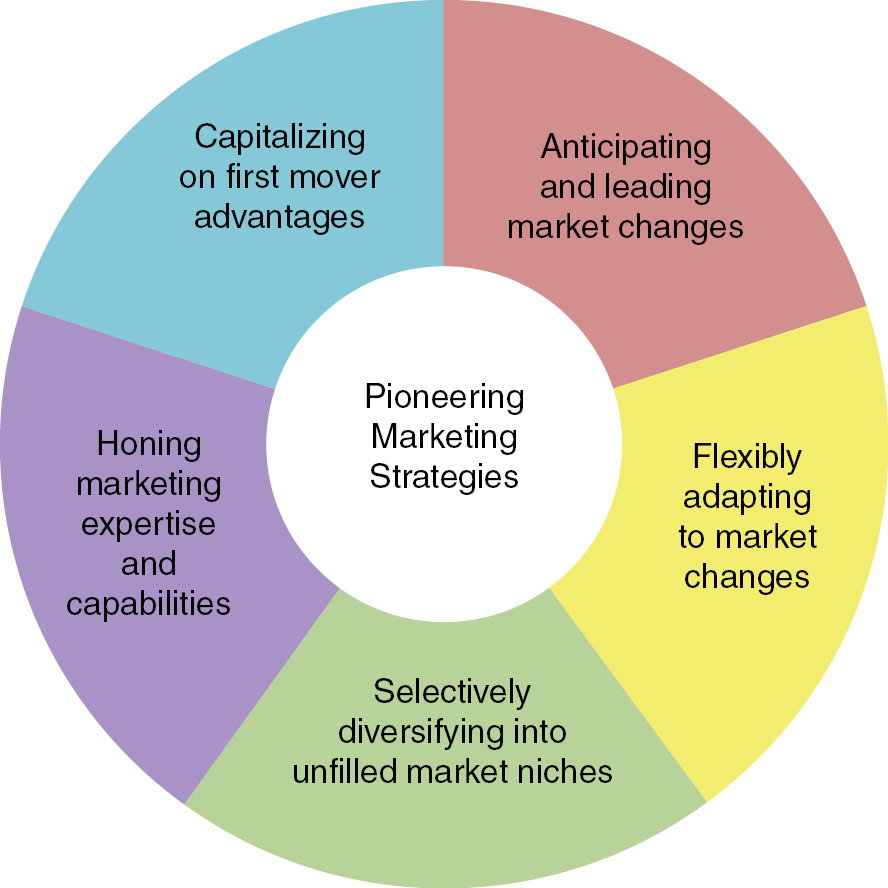
Exhibit 6.1 Pioneering Marketing Strategies
These companies illustrate uncanny abilities to sense the market trends and emerging consumer needs. They recognize unmet needs in the local market or for the fast-growing middle-class customers. Their market dominance owes not only to this market-sensing ability and foresight to lead the market, but also to their innovative business models and technologies. Once they identify a niche or target a new consumer group, they were able to come up with innovative business models (e.g., Sumber Alfaria’s minimart for convenient service of low-to-middle class consumers, Solusi Tunas’s leasing of BTS towers, or Thai Metal’s total steel solution provider approach) or new technologies (e.g., Multiagro’s use of the whole fish for fish oil and Solusi Tunas’s fiber optics to be ready for bigger data needs by the fast-growing middle class) to solidify their market positions. The sustained growth of these champions was then possible due to their operational improvement. They acquired the necessary capabilities through international alliances and acquisitions for brand building and channel management in their newly identified markets (e.g., TC Pharmaceuticals) and developed a vertically integrated steel supply chain for high-value-added service (e.g., Thai Metal). These companies often start with strong marketing-based corporate value that guides their strategic directions. Following its vision of “Near Market, Near Customer,” Keppel FELS focused on appealing to the specific needs of local consumers in every country in which it operates.
In regard to the second issue – the timing of entry – decisions are inextricably related to entry into niche markets. ASEAN champions principally assumed the role of first movers and took advantage of circumstances surrounding their decision. Rarely did the firms wait for markets to fully blossom before they entered them. In some cases, firms entered unfilled niches (e.g., Bangkok Cable’s entry into copper cables); in others, firms astutely combined marketing and technology (e.g., Thai Metal’s integrated service model); in other cases, firms set the standard for future competition (e.g., Solusi Tunas’s BTS tower leasing or TC Pharmaceuticals’ minimart). What is not as evident is the hard decision undertaken by these firms to invest heavily in products and industries that were considered risky at the time. The ability of firms over time to exploit the early advantages in the niches they have entered is further illustrated in our next chapter.
Introduction
The term “localization” prompts both traditional and contemporary narratives. In marketing theory, localization might simply mean attending to the demands and preferences of a given local market or segment. It is generally taken that such local adaptation or local responsiveness, although compelling, does not radically alter the value proposition of the firm. Thus, if Starbucks, the market leader of coffee products, decides to add sushi to their offerings in Japan, the company sees this as an ancillary offering that does not change its image as a leading coffee provider. In global strategy, the term “transferable marketing” is used to define the ease and the cost of adapting particular product features to accommodate local preferences (Yip, Reference Yip1995).
Even so, in markets that are predominantly local and valuable for added breadth, the characteristics of the local segment can overwhelm considerations of a marketing strategy that are traditionally global or multidomestic. When, in fact, local adaptation becomes the overriding objective, and if a firm decides that minor adjustments do not suffice to meet local demands, then a different interpretation of localization becomes more appropriate.
Localization goes beyond changes in the product or services that add value to a prospective customer. In their study of surging firms in emerging markets, Park, Zhou, and Ungson (Reference Park, Zhou and Ungson2013) reported that, in addition to simply hiring local talent, successful firms also had to invest and train local workers. Thus, localization transcends transferable marketing and local adaptation and will entail more significant commitment and investment, given the growing affluence of the middle-classes in China and India. For example, a follow-up study by Park, Ungson, and Cosgrove (Reference Park, Ungson and Cosgrove2015) found that successful firms used an assortment of multibrand and -product extensions to afford breadth and choice to an idiosyncratic middle-class consumer in addition to an investment in human capital. In short, localization is not confined to extending marketing strategies or locational decisions that were largely formulated in the context of advanced economies, but to financial investments and human resource management focused on the needs and aspirations of a growing and viable local market segment. Collectively, localization entails a deep commitment on the part of the firm to a local population.
Within ASEAN, the conventional wisdom was that firms succeeded on account of favorable protectionist policies, access to critical resources and supplies, and simply cheap labor. Although this might have been valid in the past, our study discloses that sustained success also depends on the ability of local firms to meet the requirements of local responsiveness, in many cases ahead of foreign multinationals. In fundamental ways, the needs of localization go counter to globalization of a “flat world” of large and homogenous market segments. Localization impels its own logic and creates its own contingencies. It challenges firms to uncover deep and previously recessed needs of nascent consumer groups. It requires an immersion in the nature, culture, and very being of the markets they serve. Even so, localization is not a universal strategy that works in all cases. There is the risk that a firm might err by overinvesting, in which case over-localization creates higher costs and commitment than expected. Hence, as in any effective strategy, the costs and benefits of localization have to be considered, and this is what differentiates high from low performance.
In this chapter, we describe specific localization strategies of ASEAN champions in their quest for national prominence. A preview of these cases is as follows:
Jollibee Foods Corporation (Philippines): Outcompeting McDonald’s by catering to local flavor, culture, and values
Vietnam Dairy Products Joint Stock Company [Vinamilk] (Vietnam): Building the best brand by making dairy products part of the local diet
PT Mitra Adiperkasa Tbk. (Indonesia): Leading the trends as premium lifestyle retailer
SM Prime Holdings, Inc. (Philippines): Becoming the largest mall developer through innovative responses to market needs
PT Summarecon Agung Tbk. (Indonesia): Developing townships for prosperous local economies and communities
PT Sumber Alfaria Trijaya Tbk (Indonesia): Mini-marts deeply entrenched in the local community
Other ASEAN Champions – Lafarge Republic Inc. (Philippines) and Yoma Strategic Holdings Limited (Myanmar): Adapting closely to business and community needs
Jollibee Foods Corporation
If there was ever a poster child for localization, it would be the Jollibee Foods Corporation. Widely known as a popular Filipino food chain, Jollibee is involved in the operation of various fast food restaurants. From its humble beginnings as a small ice cream parlor in the 1970s, the company has successfully grown to become the largest quick-service restaurant in the Philippines with a market capitalization of $4.4 billion and now aims to become one of the top five restaurant groups in the world. The company expects to do this by expanding the existing operations of its global portfolio of restaurant chains, including Greenwich Pizza, Chowking, Red Ribbon Bakeshop, Mang Inasal, Burger King (Philippines), and three fast food chains in China, as well as by forging joint ventures and pursuing acquisitions in the Philippines, China, and the United States (Jollibee Foods Corporation, 2013; 2014a).
Filipino-Chinese entrepreneur Tony Tan Caktiong opened his family ice cream parlor in 1975. Three years into its operation, Mr. Tan Caktiong decided to diversify into sandwiches after realizing that events triggered by the 1977 oil crisis would almost double the price of ice cream. The Jollibee hamburger, made to the family’s home-style Filipino recipe, quickly became a customer favorite. A year later, with seven stores in metropolitan Manila, the family incorporated the Jollibee Foods Corporation. The company expanded quickly and gained considerable market share without facing serious competition until the early 1980s, when American fast food chain McDonald’s entered the Philippine market. McDonald’s was the behemoth of the global fast food industry, unsurpassed in global competition. Indeed, McDonald’s commanded such a reputation that it had set the standard not only for fast food operations, but even as a desired family destination.
Rather than back down and give way to the global giant, Jollibee decided to compete with McDonald’s head on. The company leveraged on what they believed was their strongest advantage: the preference of Filipino consumers for the taste of Jollibee burgers, which was slightly spicy and more flavorful than McDonald’s American-style plain beef patty. Counting on developing products that were more friendly to the Filipino palate, Jollibee broadened its menu to include Chickenjoy fried chicken, a larger premium single-patty burger called the Champ and meant to compete directly with the McDonald’s double-decker Big Mac, Filipino-style Jolly spaghetti, which was slightly sweet and contained ground meat and hotdog slices, and even a unique peach-mango dessert pie, all developed to local consumer tastes. In 1983, Jollibee launched a TV ad campaign containing what has become famous among Filipinos as the Jollibee trademark, “Langhap Sarap,” which loosely translates to “smells good, tastes good.”
Around the same time, Jollibee introduced today’s widely popular Jollibee mascot to depict its vision of its ideal employee as a bee working happily and efficiently with other jolly bees. Taking advantage of the Filipino penchant for celebrations and family gatherings, Jollibee pioneered offering children’s birthday party packages. The company did all of this while making sure to keep its prices lower than McDonald’s by maintaining tight operations management (Tran, Reference Tran2005; Bartlett & O’Connell, Reference Bartlett and Connell1998). Despite the growing foreign and local competition, Jollibee secured its place as market leader by 1985 (Jollibee Foods Corporation, 2014b).
The company ambitiously ventured into overseas markets quite early, starting in Singapore in 1984 and Taiwan in 1985, but issues with local partners undermined its success (Alfonso & Neelankavil, Reference Alfonso and Neelankavil2012). Consequently, Jollibee focused on local expansion throughout the Philippines and was largely successful. In 1993, the company went public through an initial public offering, raising $8 million, but the family maintained majority ownership. The following year, the company began its diversification by acquiring Greenwich Pizza Corporation and then entered into a joint venture with Deli France bakeshop in 1995. Since then, Jollibee has gradually expanded its own brand internationally and has acquired other quick-service restaurant chains locally and abroad. As of the end of 2013, the company operated more than 580 stores overseas in eight countries and territories: Brunei, Singapore, Vietnam, Hong Kong, Qatar, Kuwait, Saudi Arabia, and the United States. It is also currently looking into entering the Indonesian, Malaysian, and Canadian markets (Alfonso & Neelankavil, Reference Alfonso and Neelankavil2012; Morales, Reference Morales2013; Rivera, Reference Rivera2014a; Reference Rivera2014b).
Vietnam Dairy Products Joint Stock Company (Vinamilk)
Most people would agree that food is primarily local. Different countries, and different regions embedded in them, have different tastes, needs, and expectations regarding what they eat. Dairy is no exception, despite the common perception that milk is a staple experienced the same way by everyone in the world.
Vinamilk is the biggest dairy company in Vietnam, and with a market capitalization of roughly $4.88 billion, it is the second most valuable business in the country after PetroVietnam Gas, another one of our ASEAN champions. The company’s products include fresh milk, condensed milk, powdered milk, yogurts, ice cream, cheese, and nondairy products such as soya milk and fruit juices.
Vinamilk was set up as a state-owned enterprise in 1976. Immediately after being established, the company sought to consolidate the industry through the nationalization of several dairy factories. Although it essentially was a government monopoly with virtually no local competition, the company adopted a strong consumer focus early on, trying to better understand local needs and attitudes toward dairy products. After all, dairy was relatively new to the Vietnamese diet, and the country did not have a tradition of dairy farming. Vinamilk sought to gradually integrate milk products into the Vietnamese diet. In 1990, average annual milk consumption was just half a liter per person. By 2013, this had surged to 18 liters per person per year. The secret? Add a little vanilla to make the milk taste sweeter, which the Vietnamese loved.
The company grew steadily as the local market welcomed more dairy into their lives. In 2006, Vinamilk went public through an initial public offering in the Ho Chi Minh City Stock Exchange. In the same year, it launched its first large-scale dairy farm, which allowed the company to produce its own milk. Prior to this, it had depended on powdered milk imported from China and Australia. Vinamilk continued to expand thereafter, setting up a number of large-scale dairy farms.
On all of its farms, Vinamilk made sure that high quality standards were strictly met, while keeping operation costs down. In order to reach as many Vietnamese homes as possible, the company established a wide local distribution network that covered more than 224,000 retailers (Vinamilk, Reference Vinamilk2014).
The company today enjoys 50 percent market share for milk, 80 percent for condensed milk, and 90 percent for yogurt. The Vinamilk brand is now one of the best known in Vietnam, but it is not stopping there. The company aims to boost sales from $1.65 billion in 2014 to $3 billion by 2017, and join the ranks of the world’s fifty biggest dairy companies. It has recently entered into a joint venture in Cambodia set to begin operations in 2015. It is also looking to expand into Europe and the Middle East.
PT Mitra Adiperkasa Tbk.
Like culinary taste and diet, localism applies to clothing preferences, fashion, and lifestyle. Dubbed the number-one premium lifestyle retailer in Indonesia, Mitra Adiperkasa (MAP) operates fashion and lifestyle stores, food and beverage establishments, department stores, and supermarkets. It is known as a premium retailer of branded clothing, accessories, shoes, bags, toys, and sports equipment, and as the local operator of Starbucks. The company currently manages more than 1,800 outlets across 64 Indonesian cities and boasts a portfolio of over 150 world-famous brands, including Zara, Marks & Spencer, Topshop, Lacoste, Adidas, Reebok, SOGO, SEIBU, Debenhams, Galeries Lafayette, Domino’s Pizza, Burger King, and Krispy Kreme.
Starting with a single sports store in the 1990s, the company quickly diversified into the fashion and lifestyle segments, achieving phenomenal growth in the last two decades. A lot of this success can be attributed to the company’s decisive action in taking advantage of partnership opportunities with foreign brands wanting to take a piece of the growing Indonesian pie. This meant a balance of recognizing what the market currently wanted and predicting what it would want in the future. For example, when MAP introduced the Next and Lacoste brands to the market, most Indonesians did not know anything about them. Soon after their introduction, however, Indonesian shoppers were eagerly flocking to their stores (PT Mitra Adiperkasa Tbk., 2014).
The company briskly expanded, and by the time of its initial public offering in the Indonesia Stock Exchange in 2004, MAP had a network of 448 stores selling various premium brands. After the 2000s, the company realized that Indonesia’s growing middle class was an even larger and faster growing segment than the affluent bracket. In recent years, MAP has “recalibrated” its portfolio to include more brands that catered to middle-class consumers (Grazella, Reference Grazella2013a). They have also recently been pursuing e-commerce to cater to its increasingly tech-savvy customer base.
MAP is intent on growing its local business even further, aiming to achieve 20–25 percent growth each year. In particular, it is seeking to expand outside Jakarta and into smaller cities like Makassar in South Sulawesi and Balikpapan in Eastern Kalimantan, seeing massive potential in areas outside the Indonesian capital where competition is already tight (Grazella, Reference Grazella2013b). The company is very optimistic about the local market and aims to bank on Indonesia’s consistently high consumer confidence levels and growing middle class. Although MAP currently operates a small-scale enterprise in Thailand, it remains deliberately focused on the Indonesian market, choosing to “localize” deeper into the smaller cities across the Indonesian archipelago, where the size of the middle-class and affluent population is expected to double in less than a decade.
SM Prime Holdings, Inc.
A casual stroll through a shopping mall anywhere in the world reveals several typical features: multiple floors of shops and restaurants, lounging areas, ample parking spaces, air-conditioning, and perhaps an activity center. Yet walking through one of fifty-three SM malls in the Philippines will surprise the most avid international shopper with uncommon amenities, such as a chapel where daily masses are offered – although perhaps one should have expected this in a country where about 90 percent of the population is staunchly Roman Catholic. SM Prime Holdings Inc. engages in the development, operation, and maintenance of shopping centers, amusement centers, cinemas, and also, after a recent consolidation with the SM Group’s real estate subsidiaries in 2013, the development of residences, offices, hotels, and convention centers. The company currently operates over fifty malls in the Philippines and six in China.
When Henry Sy Sr., today the richest man in the Philippines with an estimated net worth of over $12 billion (Forbes Reference Forbesn.d.), opened the first “ShoeMart” in downtown Manila in 1958, he envisioned an inviting, upscale shoe store to cater to Manila’s up-and-coming consumer class – it was the first fully air-conditioned shoe store in the hot and humid Philippine capital. Increasing local demand for shoes, matched by Mr. Sy’s pioneering innovations in store layout, sales, and merchandising, some of which he had picked up from practices he observed in the United States, led to the early success of ShoeMart (SM Shoemart n.d.). The business expanded, branching out into a store chain, and in 1972, ShoeMart opened its first full-line department store, changing its name to SM. This shift to the department store business sprung out of both an opportunity in the market and the challenge brought about by the inability of local shoe suppliers to catch up with ShoeMart’s rapid expansion. Since suppliers could not provide more shoes, Mr. Sy decided to start selling apparel and other merchandise in his stores.
The department store business thrived, and SM began opening new branches. However, another roadblock soon emerged, as the lack of adequately large leasable retail spaces in metropolitan Manila limited the company’s expansion. Again, Mr. Sy converted this challenge to an opportunity, venturing into real estate as he decided to develop his own shopping center in suburban Quezon City just outside the city of Manila. After two years of construction, SM launched the country’s first “supermall” in 1985. This pioneering introduction would soon change the face of the Philippine retail industry, one that SM would naturally take the lead in. Soon after the mall’s launch, SM further diversified its retail business into supermarkets and appliance stores to complete the roster of anchor tenants in its mall and fulfill the promise of its now-famous tagline, “We’ve got it all for you.” Today, the company takes pride in making sure it provides everything that customers want when they come to its lifestyle malls, including international brands that Filipinos have been exposed to abroad.
“Our focus is on our customers – we understand what they need and want when visiting the malls. About five years ago, we see a lot of Filipinos going to Hong Kong and Singapore to shop in Uniqlo, Forever 21 and H&M. What we did was to bring these brands to the Philippines for their convenience.”
With the success of its first mall project, the company soon began building more malls around metropolitan Manila and later ventured outside the capital and into provincial cities. From 1991 onward, the number of SM malls all over the country has grown exponentially, and in 2001, SM opened its first mall outside the Philippines in Xiamen, China.
Looking to the future, SM intends to continue expanding in the Philippines outside metro Manila wherever it sees a significant rise in disposable income. They are also keen on continuing to expand in China.
What SM has done is to closely cater to the evolving needs and wants of the Philippine consuming class, pioneering concepts borrowed from abroad while introducing tweaks and innovations uniquely suited to the local market. The SM story is deeply entrenched in the development history of the Philippine retail industry, both as a visionary pioneer and a recognized market leader.
PT Summarecon Agung Tbk.
No company can exist in a vacuum. Even Internet-based companies have multiple points of contact to the ground, whether in hiring manpower, dealing with suppliers, or engaging its customers. To different extents, companies, because they are grounded in specific locales, will have to invest in the specific areas and communities that they operate in. Some companies are more heavily invested than others.
When Mr. Soejipto Nagaria founded Summarecon Agung in 1975, he started with 10 hectares of undeveloped marshland in Kelapa Gading in what was then the backwaters of Jakarta. Since then, Summarecon has managed to transform the subdistrict into one of the most affluent residential and commercial areas in metropolitan Jakarta. And over the years, Summarecon has built a reputation as one of the leading real estate companies in Indonesia, especially in the development of townships.
During the 1970s, there was very little interest among investors in developing the swamp lands of Kelapa Gading, as most developers preferred to work with arable agricultural land. As a result, Mr. Nagaria was able to acquire the land at a very low price (Ellisa, Reference Ellisa2014). Originally, the intention was simply to speculate on future increases in land prices, but increasing demand for housing among the growing Indonesian middle class presented a development opportunity for the company. The company began with just thirty townhouses, but later expanded to three hundred. Soon, Summarecon started buying more land in the area but had to acquire properties parcel by parcel given the small landholdings in the district. The company painstakingly had to consolidate the small parcels into larger blocks to form a large-scale development project. By 1978, it had acquired a total of 30 hectares in the area.
This allowed the company to develop the area as a township. Unlike most developers at that time, who sought to target the upper classes by building upscale housing alongside traditional upmarket amenities such as golf courses, Summarecon envisioned a fully functioning neighborhood that placed an emphasis on public life and setting up facilities as “trigger factors” that would attract affluent inhabitants. In line with this, Summarecon created a master plan that accounted for the building of commercial spaces and facilities such as a market, schools, a commercial and food center, and a sports center in addition to residential housing (Ellisa, Reference Ellisa2014).
Determined to provide residents all the services and facilities they needed within Kelapa Gading, Summarecon set up a primary school in 1979 and an Islamic school in 1983. The establishment of these private schools effectively boosted the image of Kelapa Gading as a reputable residential neighborhood since private schools did not only serve the residents of the neighborhood but also brought in students from other areas as well. Today, several top-notch private schools are located in Kelapa Gading, namely BPK Penabur, North Jakarta International School, Jakarta Taipei International School, and Don Bosco (Ellisa, Reference Ellisa2014).
In 1984, Summarecon built Pasar Mandiri, a retail complex anchored by a supermarket and surrounded by an assortment of commercial shops, patterned after Singapore’s modern market concept.
“The key thing … for a township to survive is that it has to grow. To be successful there must be a local economy. In each location we develop, we must create a local economy. Because without a local economy, no one’s going to live there.”
Providing a conducive environment for the local economy to develop and prosper became a key priority of Summarecon Agung in each of its projects. This was the reason for the building of shopping arcades early on in the development of each of its townships. Later, these shopping arcades would give way to full-sized malls.
In the same year that the shopping arcade was opened, the company also launched a sports club in Kelapa Gading, the first of its kind to be built within a housing complex in Jakarta. Finally, in 1990, the first phase of a full-sized mall was completed. By this time, Summarecon had practically built a new town from scratch, attracting residents from Jakarta and neighboring cities, to a new, well-planned township will full amenities.
Soon, Summarecon ventured into developing other townships using the same successful formula. In 1991, they entered into a joint venture to develop another township in Gading Serpong, an area spanning 1,500 hectares located 21 km to the west of Jakarta. The following year, they began development of Summarecon Bekasi, located 21 km to the east of Jakarta. In all of these projects, Summarecon invested heavily in infrastructure, including roads and sewerage, as well as schools, markets, and leisure centers alongside residential, commercial, and office developments. At the core of its real estate development strategy has been a commitment to the development of the local economy and community.
PT Sumber Alfaria Trijaya Tbk
Not all companies have the rare opportunity to build their locale from the ground up. Others have to find their place and purpose in a well-established local economy and community with established preferences and resources. At the age of 17, Djoko Susanto began managing his parents’ small grocery food stall inside a traditional market in Jakarta. Taking advantage of the increasing smoking habits of Indonesians, the young Mr. Susanto started selling cigarettes in the family stall alongside grocery items. This proved to be very profitable. Soon, he was opening a few new stalls in different locations. Putera Sampoerna, a local tobacco tycoon, noticed the success of Mr. Susanto’s stalls, and partnered with him to open several more stalls and eventually a discount supermarket chain.
From these beginnings came what is now known as PT Sumber Alfaria Trijaya Tbk, founded in 1989, today a $1.6 billion retail empire of more than nine thousand AlfaMart convenience stores across Indonesia with sales of $3.37 billion in 2014. Sumber Alfaria was originally founded as a consumer goods trading and distribution company, functioning as a subsidiary of Sampoerna’s tobacco company. In 1999, the company opened its first Alfa Minimart. This was a different retail format, bigger than a traditional grocery stall or convenience store, carrying more household goods and basic foodstuffs including vegetables and meat, unlike regular convenience stores, but smaller than a full-sized supermarket.
“If you come to our stores, you will see that it’s basically a very small supermarket… Why did we develop this format? At that time, the infrastructure in Indonesia was not very good with heavy traffic congestion in the city. People were not willing to go too far away from their homes to buy daily needs. They wanted stores that offer convenience and easier accessibility.”
The minimart concept catered to families, who found it difficult to buy daily needs in supermarkets far away from residential areas. Most of its customers belonged to the lower- to middle-income class segment, which constituted the majority of the local population. The minimarts were located primarily in residential areas, away from the high-traffic business and commercial centers where most of its competitors, mainly convenience stores, were located. Unlike convenience stores that offered mostly ready-made, ready-to-eat products, Alfa Minimarts sold mainly groceries and foodstuffs. In essence, the Alfa minimart was a cleaner, brighter, more modern version of the traditional Indonesian warung, or neighborhood store.
The format proved successful among its customers. However, an early challenge emerged in the recruitment of store staff. The company initially found it difficult to recruit enough workers with experience in the retail industry and the level of customer orientation that the company required. Furthermore, the long and unconventional shifts required in the operation of a 24-hour minimart were a relatively new idea to the local labor force. To meet the increasing human resource requirements of its rapid expansion, Sumber Alfaria had to invest in human resource development early on. It prioritized hiring store staff from the local community, offering both part-time and full-time positions. To elevate their employees’ level of competence, the company instituted comprehensive training programs for them and encouraged more senior employees to mentor and share best practices with their newer counterparts. The company also provides e-learning programs and scholarships for employees who wish to seek further education at various universities and technical institutes in the country.
Sumber Alfaria’s “localization” was not limited to tweaking their business model and store format to cater to local needs. Its deep localization involved commitment to the local community in which each store was embedded. The traditional warungs held a special place in many Indonesians’ hearts, especially because of their personal relationships with store owners and managers, and their familiarity with fellow patrons. Building on this special function of the warung in the local community, the company envisioned each of its thousands of Alfamart stores as local “community stores.” About 140 Alfamart stores have invested in “community zones” within store premises that serve as function rooms for the local community. These rooms are made available for free to the community for birthdays, special occasions, and public meetings, as well as to local government for official business. The company has also provided community boards for local announcements. As an added service to its customers, Alfamart began accepting bill payment services and train ticket purchasing in its stores in 2008. This has since been expanded to other services, such as the purchasing of airline tickets and payment of motorcycle installment fees in most Alfamart stores.
Alfamart has ventured into online shopping recently, allowing customers to shop on the web and have their purchases delivered or readied for pick-up in the most convenient Alfamart store. In 2014, Sumber Alfaria partnered with SM Prime Holdings, the largest retailer in the Philippines and another of our ASEAN champions, to bring the Alfamart brand to the country. As of mid-2015, the joint venture had opened thirty stores in the Philippines as part of a “pilot test” of the market. One of the changes the company is considering for the Philippine market is the introduction of dine-in meals and amenities, which are common features among the local competition but alien to the original business model. It will be very interesting to see how Alfamart’s localization efforts will proceed in this new market, especially since the two companies involved in this joint venture have both been highlighted for their success in understanding and catering to local needs.
Other ASEAN Champions: Lafarge Republic Inc. and Yoma Strategic Holdings Limited
From food to retail services to real estate, the cases discussed so far showcase how some of our ASEAN champions have espoused a strategy of deep localization to take full advantage of the local economy and community in which they operate. Localization requires paying close attention and adapting to local customer needs, preferences, and developments. Deep localization involves integrating these factors in one’s strategy and business model, rather than mere tweaks in product or service features. More importantly, deep localization involves solidarity with the local economy and community – a commitment to its codevelopment. Although we have focused on the cases above, there are other examples among our ASEAN champions worth briefly mentioning here.
Lafarge Republic, Inc., engaged in the manufacturing, development, exploitation, and sale of cement, marbles, and other types of construction materials in the Philippines, is a notable example. The company traces its origins to a local cement company founded in 1955 that pioneered the dry process of manufacturing cement in the country. In general, cement manufacturing is strongly grounded in its locale, both for its supply of resources and demand for its output. Each of the company’s plants is situated near basic raw-material sources and primarily depends on these sources for its production. At the same time, it relies on the local labor force to supply its workforce needs. Acknowledging the importance of the local communities in which their plants are embedded, Lafarge Republic has integrated corporate social responsibility in its business strategy, making sure that it “gives back” to the communities it operates in, offering scholarships, engaging with local government in support of its projects, and responding in times of local disasters. In 2013, when a super typhoon hit the central Philippines, flattening coastal towns and destroying thousands of homes and hundreds of millions of dollars’ worth of infrastructure, Lafarge Republic quickly responded by developing a special low-price cement product to aid in the reconstruction efforts and made it available directly to NGOs. As part of its commitment to serving its Filipino customers best, the company has invested in developing cost-efficient products as well as green technologies such as alternative fuels (including local waste products) in its manufacturing process to not only provide what local customers need, but also to help ensure the preservation of the local environment.
Some companies are wholly invested in their locales such that their company’s success is ultimately tied with the success of their relatively small but budding local market. Yoma Strategic Holdings of Myanmar is a prime example. Yoma was set up in 2006 by Hong Kong businessman Serge Pun and listed on the Singapore stock exchange to allow international investors to invest in Myanmar, a developing economy of 50 million people that had just recently opened up to foreign investors and was often described as a frontier market. Yoma has ventures primarily in real estate and construction, but it has also ventured into agriculture, logistics, automotive, retail, and luxury tourism as it actively builds itself into a local conglomerate. By venturing into multiple sectors of the developing Myanmar economy, it believes that it is able to gradually build expertise, strengthen its competencies, and develop human capital among its employees. Banking on this, Yoma believes that it has become the ideal business partner among multinational companies wanting to invest in Myanmar. As the company has developed alongside the local economy and the skills and competencies of its people, Yoma has decided to share its gains through an employee share option scheme, a pioneering move in the very young private-sector economy.
Conclusions
Localization is increasingly being viewed as an imperative for profitable growth in emerging markets, but the term’s meaning has transformed. Going local does demand stringent attention to the needs and requirements of a targeted local sample. However, localization now also means uncovering the cultural attitudes and values that are not all that transparent in the local sector. Moreover, it impels firms to carefully align their product/service mix in ways that incorporate these underlying attitudes and values. A synthesis of our findings is presented in Exhibit 7.1.

Exhibit 7.1 Deepening Localization
When current local preferences or customs do not perfectly match a company’s offerings, it must learn to adapt to them, but it may also seek to shape local preferences to create demand for its products. Jollibee Foods Corporation clearly demonstrated how catering to the local palate (with a tastier burger or a sweeter spaghetti sauce) and providing for local needs (birthday party packages) was key element of success even against bigger foreign competition. Vietnam Dairy Products Joint Stock Company, more popularly known as Vinamilk, faced a developing market that did not consider dairy a dietary staple. But by working with the government to introduce dairy products to the Vietnamese diet for their nutritional value, innovating products to make them more palatable to local tastes, and developing a wide distribution network to facilitate ease of access among the growing consumer class, Vinamilk had succeeded in growing its local customer base and is now aggressively looking at expansion opportunities aboard.
Sometimes opportunities do come from the outside. When premier Indonesia retailer Mitra Adiperkasa (MAP) first brought in foreign brands like Lacoste to the local market, customers barely knew anything about them. But the company had insight into changing trends in customer tastes and behavior. They saw the rise in disposable income among the growing Indonesian upper and middle class as a sign of things to come – an increased desire for imported lifestyle brands among increasingly sophisticated buyers. And as this trend continues outside the primary cities, MAP is venturing more locally into second-tier cities in the provinces, bringing imported clothing brands, restaurants, and cafes – including Starbucks. Success in retail often requires insight to ever-shifting local trends. And as successful as MAP has been in bringing foreign brands to Indonesia, a company in the Philippines, SM Prime Holdings, was successful not just in bringing in international brands but also in bringing in the international phenomenon of the shopping mall. SM pioneered the development of full-sized malls in the Philippines back in 1985. Its success demonstrates how a company can cater to local needs while introducing foreign concepts to differentiate itself from local offerings, resulting in a final product that is both local and world class.
PT Summarecon Agung deeply committed itself to the development of Kelapa Gading, the site of its first real estate venture, beginning with a 10-hectare property in undeveloped swampland just outside Jakarta. Today, the subdistrict is a prestigious residential and commercial area, known for its urban planning and abundant amenities, including schools, hospitals, hotels, commercial centers, and entertainment destinations – a benchmark for township developments across Indonesia. Finally, PT Sumber Alfaria has demonstrated what deep localization fully entails. Not only does it involve catering to the local retail needs of Indonesian households, upgrading the traditional warung or neighborhood store, and providing for the basic food and grocery needs of its customers at a high level of service and quality assurance. More importantly, it involves a company immersing itself in the local communities it operates in. It must not just coexist but also codevelop with these communities. It must help build local human and social capital just as much as it takes advantage of it. It must give back to the community in which it thrives as much as it expects that community to contribute to its long-term profitability and success.
It is not all too surprising that local firms are able to understand, cater to, and influence local needs and wants more so than an average multinational firm. Because local firms are themselves embedded in the local culture, they are in a better position to do all of this. Nevertheless, identifying underlying cultural values and even managing to influence them is not enough; successful local firms have to make a deep commitment to serving and (aiding in) sustaining the local sector, and they must do this in ways that build distinctive competitive advantages.
Introduction
Historically, the question confronting firms has been whether they should internationalize or not. Because the world keeps getting smaller, in today’s economic environment, the emerging mantra among firms is no longer whether they should, but when they should do so. Without unjust implications, globalization has been welding a highly interconnected world that is paced by international trade, lowered trade barriers, strategic partnerships, and the transfer of technology. Social media has ushered in a new conduit for information exchange and retrieval in almost instantaneous fashion, creating numerous windows of opportunities for entrepreneurial ventures. New market segments, particularly the global youth, have emerged with more market power than before. These segments dare organizations to change and respond, or remain inert and risk being changed.
The history of international business is essentially one focused on the strategies and experiences of multinational firms located principally in developed countries in their quest to open up new international markets. Each stage of globalization is punctuated by the emergence of new technologies – railroads, steel, electricity, information exchange, automobiles, and microprocessors – that accelerate international trade and commerce. Accompanying each stage are new forms of enterprise that predefine the nature of multinational activities. In his groundbreaking work, historian Alfred Chandler (Reference Chandler1962) reported the rise of large-scale organizations with requisite strategies and structures that support core activities. This work has spawned a number of follow-up studies designed to replicate the findings and to assess its generalizability in other cultural settings (Stopford & Wells, Reference Stopford and Wells1972). While there are differences among multinationals from the United States, Europe, and Japan, it is evident that sustaining growth trajectories remains a complex and daunting undertaking.
Today’s multinationals have grown in prominence so much that their strategies and experiences have formed a plethora of material in any international business course. Simply defined, multinationals are “large enterprises with substantial resources to perform various business activities through a network of subsidiaries and affiliates located in multiple countries” (Cavusgil, Knight, & Riesenberger, Reference Cavusgil, Knight and Riesenberger2014:13). Whereas globalization is examined across different levels – world, country, industry, and the firm – it is at the level of enterprise that specific applications can be readily accessed. Currently, a global firm is a multinational with highly interlocking activities across several countries that create value through scale and scope economies (Yip, Reference Yip1992, Reference Yip1995). In Yip’s work, Wal-Mart, Coca Cola, Samsung, Sony, ABB, Nike, Exxon, and Procter & Gamble are among many established multinational firms that fall within the “globalized firm” category.
Recently, attention has been directed at multinationals from emerging and developing countries, which has been referred to as “Emerging Multinationals” or “Born-Again Multinationals” (Cuervo-Cazurra & Ramamurti, Reference Cuervo-Cazurra and Ramamurti2014). This new breed of multinationals has distinct differences from their older brethren in terms of their ability to transform local into global brands, leverage local skills into international competencies, excel in a narrow but scalable market segment, employ local resources more effectively than foreign stalwarts, and innovate a business model that does not directly conflict with erstwhile market leaders (The Economist, 2008). In an incisive study of upcoming firms termed as “rough diamonds” from Brazil, Russia, India, and China, management professors Seung Ho Park, Gerardo Ungson, and Nan Zhou (Reference Park, Zhou and Ungson2013) extol related competencies such as the ability to capitalize on changing governmental policies and industry conditions, aggressively fill untapped market niches, develop distinctive operational excellence, and create a pathway for profitable growth.
As applied to ASEAN economies, many if not most ASEAN champions do not meet the full requirements to be truly global multinationals. Although these firms are most certainly market leaders in their respective countries, few would qualify as “regional champions.” Nevertheless, a number of firms have already paved the way for internationalization in the foreseeable future. A preview of these firms is as follows:
Dutch Mill Co. Ltd. (Thailand): Internationalizing into neighboring countries from a strong domestic position
Thai Union Frozen Products PCL (Thailand): Global expansion in seafood business through partnerships and acquisition
Thai Beverage Public Company Limited (Thailand): Achieving global vision through professional management and learning
Sembcorp Marine Limited and Keppel FELS Limited (Singapore): Integrating regional and global value chain for marine and offshore platforms
Other ASEAN Champions: Charoen Pokphand Foods PCL (Thailand), PETRONAS Dagangan Berhad and DIALOG Group Berhad (Malaysia), and TOA Paint (Thailand) Co., Ltd. (Thailand): Strong global presence with full-scale local operations
Dutch Mill Co. Ltd.
When a group of food scientists from Kasetsart University, an agricultural university in Bangkok, established the company that would later become Dutch Mill Co. Ltd., their singular interest was to provide quality dairy products to the Thai people to improve their nutrition and health. Thirty years later, the company has become the largest dairy producer in Thailand, and has successfully introduced its brand in nine out of the ten ASEAN markets, targeting to penetrate its last untapped market (Brunei) by 2016. Today, it envisions itself as one of the best dairy companies in ASEAN.
The company’s initial success may be partly attributed to several developments in the local dairy industry in the 1980s. The Thai government passed several policies promoting dairy farming and milk consumption. In particular, the creation of the National Milk Drinking Campaign Board in 1985 significantly boosted milk consumption in the country (Chungsiriwat & Panapol, Reference Chungsiriwat and Panapol2009). Following its early success in milk products, the company diversified into producing flavored yoghurt drinks, which the company is particularly known for across the region today.
Dutch Mill’s entry into the Southeast Asian market began in 1996, when it began exporting its yoghurt drink products to Singapore rebranded under the trademark of an established Singaporean company. Shortly after this, the company began developing its own Dutch Mill brand for export to nearby Vietnam, Cambodia, Laos, Myanmar, and Southern China. This export strategy was primarily motivated by the large surplus capacity the company had in its newly built production facilities. However, the growth of its export markets soon encouraged the company to take on internationalization more deliberately. In 2001, Dutch Mill entered into a joint venture with a Chinese beverage and ice cream company to set up local production and avoid the high import duties slapped by the Chinese government on imported dairy products then. Today, Dutch Mill has several production plants across the region, including plants in the Philippines and Myanmar.
In order to strengthen its R&D capabilities and raise itself to global standards, Dutch Mill partnered with French multinational food and beverage giant Danone in 2007. Danone, on the other hand, was particularly interested in Dutch Mill’s knowledge of the regional market and its regional distribution network.
Despite beginning with humble roots and modest aspirations, Dutch Mill has emerged as a regional player in Southeast Asia and is intent on expanding export markets further.
Thai Union Frozen Products PCL
Although some firms originally targeted domestic consumers then saw the opportunities presented by overseas markets, others embraced an international strategy from the onset. Thai Union Frozen Products PCL (TUF) is today the leading seafood producer and exporter in Thailand and one of the largest in the world. It produces and exports a wide variety of products including frozen tuna loin, shelf-stable tuna, sardines, and mackerel, frozen salmon; and frozen cephalopods, as well as baked goods, pet food, and frozen ready-to-eat meals. Among the company’s internationally recognized brands are Chicken of the Sea (USA), Hyacinthe Parmentier (France), and Mareblu (Italy).
Around the time of the company’s founding in 1988, American fish companies were looking to transfer their canning operations overseas to reduce production costs. Thailand’s low wages attracted American business to the country. The father-and-son team of Kraisorn and Thiraphong Chansiri, founders of TUF, grabbed the opportunity. Previously, the two had run a smaller operation that would later become a subsidiary of TUF producing and exporting canned sardines and mackerel. To become internationally competitive, the company consciously held product and process quality up to global standards. In 1992, they partnered with two major Japanese clients/dealers, Mitsubishi Co. Ltd. and Hagoromo Foods Co. Ltd. to develop products suitable for Japanese and global tastes and quality standards.
To ensure product quality and operational efficiency along the supply chain, TUF sought to vertically integrate its business, setting up subsidiaries in various related businesses: can manufacturing, label printing, packaging, and marketing (Cohen, Reference Cohen2006; Thai Union Frozen Products PCL, 2012). It also acquired a frozen shrimp packaging business in southern Thailand, which later evolved into what is now Thai Union Seafood, producing and distributing the company’s second-largest product segment (Cohen, Reference Cohen2006; Thai Union Frozen Products PCL, 2012).
TUF has sought to expand internationally through mergers and acquisitions. In 1996, it established its U.S.-based subsidiary, Thai Union International, through which it bought into Tri-Union Seafoods LLC, producer and distributor of seafood products under the popular US brand name “Chicken of the Sea.” Three years later, TUF fully acquired Tri-Union, solidifying its entry into the U.S. market (Cohen, Reference Cohen2006; Thai Union Frozen Products PCL, 2012). After establishing itself in North America, the company went on to pursue more acquisitions in the subsequent years and began to enter other major markets, including China with its acquisition of Century Union (Shanghai) Foods in 2005 (Cohen, Reference Cohen2006). With its international acquisitions, TUF was able to acquire a number of world-famous brands and widen its geographical reach into a truly global network (Thai Union Frozen Products PCL, 2014). Most recently, TUF announced acquisitions of Norway’s King Oscar, one of the world’s largest suppliers of canned fish, and MerAlliance, Europe’s leading producer of chilled smoked salmon (Bangkok Post, 2014; Jittapong, Reference Jittapong2014).
Through strategic partnerships and acquisitions of international brands, TUF has successfully expanded its global reach, establishing operations in multiple countries and penetrating international markets.
Thai Beverage Public Company Limited
Thai companies are among the most internationalized on our list of ASEAN champions. Most of them have embraced internationalization as an integral part of their overall strategy, and many have embraced the whole of Southeast Asia as their market base. In their strategic roadmap for the next six years laid out in 2014, the Thai Beverage Public Company Limited or ThaiBev, maker of Chang beer, announced its intent to solidify its position as the largest and most profitable beverage company in Southeast Asia. Established in 2003 in a consolidation of fifty-eight small alcoholic-beverage producers into a single corporation, ThaiBev is today the largest beverage producer in Thailand, and is in fact already one of the largest in Asia. Chang Beer, the company’s flagship product, enjoys a 60 percent market share at home. Their other products include spirits, other beers, nonalcoholic beverages, and food.
Although Chang Beer remains the company’s largest revenue earner, it has diversified into other segments to both secure new markets and at the same time develop new competencies. In 2004, they launched Beer Archa, targeting younger Thais who preferred products with lower alcohol content. This required new marketing and product positioning that was different from its flagship product. In 2008, they launched Federbrau, a German-style premium beer. Federbrau was the only locally brewed beer that met the German Purity Law, which strictly prescribed the use of natural ingredients, a German-based manufacturing process, and a unique fermentation method (Thai Beverage PCL, 2008).
In 2012, ThaiBev bought into Fraser and Neave (F&N), a Singaporean food conglomerate (Koh, Reference Koh2012), seeking to gain access to its R&D and marketing assets as well as its experience in overseas operations. Subsequently, the company has tapped F&N resources to supplement its international trading arm, International Beverage Holdings Limited (IBHL). IBHL has offices in several countries all over the world, including the United States and Australia.
As this and our previous cases have shown, producing world-class quality products through the adoption of international standards and investment in R&D, and establishing wide regional distribution networks are essential to successful internationalization. But equally important is the development of an international outlook, a culture of professionalism, and good governance on par with some of the world’s leading multinationals. Since its founding, ThaiBev has actively sought to professionalize itself in order to transform the local beverage industry. This was necessary to successfully harmonize the operations, resources, and organizational capabilities of over 50 formerly independent companies into a single corporation. It did this by emphasizing the need for good corporate governance and transparency. These efforts were highly instrumental in ThaiBev’s early success in achieving its aspirational goal of being listed on the Singaporean Stock Exchange in 2006. In the same year, it was a finalist in the award for “Most Transparent Company” among newly listed firms, and in 2009 it won the award among foreign listings from the Securities Investors Association of Singapore.
Sembcorp Marine Limited and Keppel FELS Limited
Singapore is perhaps more popularly known for its reputation as the business and financial hub of Southeast Asia. It is however, also the regional hub for the marine and offshore platform construction industries. Two of our ASEAN champions from Singapore, Sembcorp Marine and Keppel FELS, are in the marine and offshore platform engineering industries. These two companies are good examples of how firms in ASEAN have fostered internationalization not only by offering products and services to the wider international market, but also by integrating operations across countries into a regional or global value chain.
Sembcorp Marine is an integrated marine and offshore company that offers the entire spectrum of engineering solutions such as shipbuilding, ship repair and conversion, rig building and repair, as well as offshore construction and engineering. The company has a network of six yards in Singapore and is present in six other countries worldwide.
Its early roots tracing back to a joint venture between Singapore’s Economic Development Board and Ishikawajima-Harima Heavy Industries Co., Ltd. of Japan, what eventually in 2000 would become Sembcorp Marine Ltd. started acquiring foreign assets, although indirectly, in the late 1990s. With its acquisition of another Singaporean shipyard company in 1997, it acquired partial ownership of shipyards in Indonesia and China. In 2001, the company bought into Cosco (Dalian) Shipyard in China. Three years later, they acquired a 30 percent stake in the greater Cosco Shipyard Group, which operated five shipyards in China. In 2005, they ventured into the United States by acquiring Texas-based Sabine Industries. The following year, they acquired two more shipyard companies in Indonesia. They also began making minor investments in India. In 2008, the company entered into a partnership with a shipyard company based in Rio de Janeiro, Brazil.
Today, Sembcorp Marine has overseas shipyards in six different countries: Brazil, Indonesia, China, India, the United States, and the United Kingdom. The new shipyard in Brazil will enable Sembcorp Marine to construct drillships, semi-submersibles, jackup rigs, platforms, and supply vessels once it is completed by the end of 2015. Meanwhile, the company’s investments in the United Kingdom will allow them to provide services to clients who operate in the North Sea. They are currently exploring opportunities in Saudi Arabia.
Sembcorp Marine has embraced internationalization as central to its long-term growth strategy, which involves not only its strategic expansion in overseas hubs but also its continued investment to strengthen its position and capabilities in Singapore.
Another example of success in internationalization is that of Keppel FELS (also profiled in Chapter 6). We focused on Keppel FELS’s success in pioneering market strategies earlier, but its success in overseas expansion is also worth noting here). From its early roots as a family-owned offshore yard founded in 1967, the company has made a name for itself in the global offshore and marine industry.
One of its earlier ambitious international ventures was in the Gulf of Mexico in 1990, with the company buying a 60 percent stake in a shipyard in Texas creating AMFELS. The following year, they won a bid to design and construct a semi-submersible oil production platform for Petrobras, the Brazilian national oil company. Meanwhile, they were one of the first to recognize opportunities in the Caspian Sea which had one of the world’s largest oil discoveries in the last 20 years, leading the company to set up an office in Azerbaijan in 1996, and a yard in 1997. The North Sea was another important region and in 2002, to strengthen its presence to serve the North Sea, the company acquired a 100 percent stake in the Verolme yard in Rotterdam, the Netherlands, which was renamed Keppel Verolme.
As a guiding principle, Keppel FELS has adopted a “Near Market, Near Customer” approach, which the company believed allowed it to better cater to customer needs and contribute to local content. This was the rationale behind the establishment of representative offices in countries all over the world, including the United States, Brazil, the Netherlands, Azerbaijan, India, Indonesia, China, and Japan (Keppel Offshore and Marine, 2014). The company needed to have these offices as close as possible to clients, deployment sites, and shipyards that can provide products and services. Nonetheless, although each yard had its own areas of specialization, the company encouraged optimal utilization of resources by allowing sister yards to utilize its facilities and workforce anywhere in the world.
Because of the company’s network of twenty shipyards all over the world, an order can come in from one part of the world, and the closest shipyard may provide the bulk of required services to be able to coordinate with the client closely and deploy rapidly, but shipyards from another part of the world also provide complementary products/services as part of a regional or global production network.
Other ASEAN Champions: Charoen Pokphand Foods PCL, PETRONAS Dagangan Berhad and DIALOG Group Berhad, and TOA Paint (Thailand) Co., Ltd.
Only a small number of our ASEAN champions may be categorically named “multinationals,” especially by Western standards, but many of them have indeed explored opportunities outside their domestic markets, and quite a number of them have successfully laid the path to greater internationalization by establishing a presence overseas through representative offices, fully functioning subsidiaries, or joint ventures. Thai companies have been particularly enthusiastic in expanding their reach, especially across ASEAN. Dutch Mill, TUF, and ThaiBev are some examples. Another is Charoen Pokphand Foods (CPF), the agro-industrial and food subsidiary group of Thailand’s largest conglomerate.
CPF does business in feeds, farms, food, and food service worldwide, from the Philippines to Sweden. Tracing its roots to a small seed-manufacturing business in 1954, the company successfully rode the wave of rapid growth in the Thai poultry industry in the 1980s, which motivated an expansion into livestock and then aquaculture. The company first went overseas in 2002 with the establishment of a subsidiary in the United States for the distribution of seafood products in the American market. In the same year, it set up CPF Europe to import and distribute products in the EU. Within the next five years, investments were made in the United Kingdom, China, Turkey, Malaysia, India, Russia, Laos, and the Philippines. Since then, CPF has embarked on a path of rapid internationalization, as it envisions itself as the “Kitchen of the World,” investing heavily in expansion activities aimed at sustainable growth through an expansion of food businesses, market diversification, and the expansion of distribution channels in Thailand and overseas, particularly in high-potential countries.
Another modern necessity, petroleum, has allowed other ASEAN champions to make promising inroads on the path of internationalization, such as PETRONAS Dagangan Berhad and DIALOG Group Berhad of Malaysia. PETRONAS Dagangan Berhad (PDB) is the retail and marketing arm of the Malaysian oil and gas giant, Petroliam Nasional Berhad (PETRONAS) of the famed twin towers that distinguish the Kuala Lumpur skyline. PDB is engaged in the sales and marketing of downstream petroleum products, including petrol, liquefied petroleum gas (LPG), and lubricants in Malaysia and several other ASEAN countries. The company now has the second-largest market share of LPG over the central and southern Philippines, and is looking to grow its presence in the North and in metro Manila. PDB is also growing its LPG business in Vietnam. Meanwhile, the company has focused on selling lubricants in Thailand.
The DIALOG Group Berhad provides integrated technical services to the oil, gas, and petrochemical industry. It provides engineering and construction services, logistics, plant maintenance, and IT solutions. After earning an impeccable reputation at home, the company gained a partnership with New Zealand’s Fitzroy Engineering Group, opening windows of international opportunities for the company. Over the years, DIALOG’s overseas network has grown to span three continents. The company currently has offices and facilities in Singapore, Thailand, Indonesia, China, Australia, New Zealand, India, United Arab Emirates, Saudi Arabia, and the United Kingdom.
Another company that is meritorious in our research is Thailand’s TOA Paint, which systematically transformed itself from a small family enterprise into a fledgling international firm that currently operates in several ASEAN countries. It is currently the largest paint manufacturer in Thailand, owning about 50 percent of shares in the market, with a product range that includes decorative paint, wood coating, marine protective coating, construction chemicals, automotive coating, and spray paint.
The company started to expand its geographical reach through overseas markets in 1994 with the establishment of several subsidiaries in Vietnam and Malaysia as well as branch offices in Vietnam and China (TOA Group, 2010; 2013). Today, the company is present in seven ASEAN countries, namely Vietnam, Indonesia, Malaysia, Laos, Cambodia, and Myanmar (TOA Group, 2014). It also exports its products to Singapore, Brunei, and more than forty other countries across the globe (Gujarat Money, Reference Gujarat Money2010).
Beyond ASEAN, TOA Paint is also looking to expand to South Asia and the Middle East. In 2010, the company founded its Indian subsidiary, TOA India Private Limited, and announced the construction of a manufacturing facility with a 3-million-ton annual capacity in the state of Tamil Nadu in South India (Business Standard, 2010). It also opened a representative office in the southwest city of Kerala the following year (The Hindu Business Line, 2011). Furthermore, another plant is to be constructed in West India, set to commence operations after 2015. The company has been expanding aggressively in India due to its huge paint market. In a 2011 interview with then-President Jatuphat Tangkaravakoon, it was mentioned that the company’s strategy for expanding overseas is through gradual and selective product offerings (ISN Hot News, 2011).
“In the initial stage, due to our small customer base we’ll have to start out by following the market leader and overtake them when the opportunity arises. We’ll need to focus on particular products so that people become attached instead of focusing on a variety of products where there is no focus point.”
Conclusions
As indicated, internationalization is closely related to diversification in that broadening market vista would invariably entail international expansion. In this chapter, the focus is on firms with a clear strategic intent to go global in order to gain more competitive advantage, tap into foreign markets, establish global value chain, and acquire advanced competences.
Our ASEAN champions have made inroads on the path of internationalization by investing in product quality and adopting international standards, acquiring local firms in overseas markets, establishing regional distribution networks, initiating integrated regional value chains, and adopting a global outlook. Dutch Mill and TUF have demonstrated how ASEAN firms have begun to think global beyond local. Realizing that their commitment to customer satisfaction and high-quality products is universally appreciated, these companies have found overseas opportunities for their world-class products and services. To further enhance their capacities to provide products that meet global standards, they have forged partnerships with foreign and global companies to learn best practices and benefit from their experience and expertise in foreign markets. But internationalization does not just require meeting global product standards; it also means adopting globally accepted processes and good corporate governance. Companies like Thai Beverage have invested in internal processes and the development of a corporate culture that values integrity, transparency, and corporate sustainability – well beyond the common expectations for developing-country firms. Firms like Keppel FELS and Sembcorp Marine have embraced a fully global outlook, bringing their business closer to their international clientele and creating a truly global presence. A synthesis of our findings is presented in Exhibit 8.1.

Exhibit 8.1 Fostering Internationalization
Even so, these firms would not be regarded as multinationals according to the standards set by renowned firms from developed countries. Although these firms are champions in their national settings, they are still fledgling multinationals in the global sense.
This evaluation should not be taken as a disparagement of the international operations of these firms, but as a starting point in their evolution into full-fledged multinationals in the future. The progress at this time reflects the difficult circumstances of any developing economy. It also indicates how these firms had to first develop domestic strengths and market leadership before they were able to compete with multinationals that typically have more experience and resources. Currently, the firms profiled in this chapter are national powers, with some emerging as regional players. With ASEAN and the AEC, however, the jury is out whether some of these firms can leverage their capabilities and become ASEAN multinationals. To meet this requirement, these firms will need to muster their full capabilities. One such capability is building synergy, which is the subject of the next chapter.
Introduction
The subject of diversification has a long history in management strategy and international business. Generally regarded as a growth strategy, diversification refers to expanding a firm’s line of business, specifically with a new product offering in an existing market or tapping completely new markets. Typically, entering new businesses requires building new capabilities internally or obtaining these skills externally through acquisitions. Because entry into new markets involves the development of new skills and capabilities, it can be expensive, and it generally leads to higher risks (Ansoff, Reference Ansoff1957).
Even so, a distinction should be made between operational and financial risk (Klein & Saidenberg, Reference Klein and Saidenberg1997). Operational risk generally arises from uncertainty in procedures and processes. However, diversification can reduce financial risks because investments are not placed in one single nest, but mediated within a varied portfolio. Hence, any loss in one business can be compensated by profits made elsewhere.
Diversification is generally classified as either related, when new products and markets are similar to existing businesses, or unrelated, when new products and markets do not fall in any categories of a firm’s given portfolio. Unrelated diversification is considered riskier and more complex than related diversification. Diversification is also closely related to horizontal (expanding into new product or market areas) or vertical (internalizing supplier or retailer activities) growth.
Whether diversification poses more risks than gains is a subject of empirical inquiry and verification. On one hand, diversification is regarded as a part of an evolving successful growth strategy that, if supported by appropriate structures and processes, may contribute to long-term profitability (Chandler, Reference Chandler1962). In regard to financial risks, there is evidence that diversified financial portfolios have advantages in terms of holding less capital and issuing more loans, but not necessarily being more profitable (Klein & Saidenberg, Reference Klein and Saidenberg1997). Yet in another study of diversification records of thirty-three U.S. companies from 1950 to 1986, Porter (Reference Porter1987) reports that these companies are generally unsuccessful: they divested more acquisitions and their strategies failed to create value during the study period.
Where there is common ground in many of these studies is a recognition that high performance will depend on the ability of firms to remain efficient, specifically the ability to control and coordinate the complexity that results from having multiple businesses. Thus, while diversity is good, it can also detract attention from core strategies.
To reduce organizational inefficiencies, firms need to build synergies across different lines of business. In all, synergies can be financial (creation of value through good portfolio management), operational (honing economies of scale and scope across the different product/business lines), or organizational (the ability to learn through diverse offerings and structures and build slack and capacity).
This objective can be nuanced when applied in the context of firms in emerging and developing markets. Among the distinguishing elements of success in Japan and South Korea is the ubiquity of large diversified business groups. Once derided as politically riddled and hopelessly inefficient, Japan’s zaibatsu that flourished before World War II was forced to dismantle but resurrected in a looser form of conglomeration called keiretsu. The growing success of Japanese firms in the 1980s even kindled an interest in framing some type of counterpart in the United States (Gerlach, Reference Gerlach1990). In South Korea, the resurgence of a postwar economy was explained in large part by mostly family-led conglomerates called chaebols (Amsden, Reference Amsden1992; Ungson, Steers, & Park, Reference Park and Ungson1997).
Among observers and pundits, mostly from developed economies, these large-scale conglomerates were still held in suspicion and occasionally denigrated in terms of importance and influence. In the case of Korea, the chaebol was also disparaged as being anti-competitive and detrimental to the full development of small and medium-sized enterprises and became the subject of structural reform by one Korean administration. Rebuttals came by way of arguments that in developing economies the size of a business mattered for both reliability and security, and that diversified conglomerates operated as an internal market that funneled much-needed capital to smaller affiliated firms that would otherwise have been denied it (Ungson, Steers, & Park, 1999). According to McKinsey, conglomerates made up 80 percent of the largest fifty companies by revenue in Korea over the last decade to 2014, and their revenues grew by 11 percent per year on average. In India, conglomerates constituted 90 percent of the top fifty companies, excluding state firms, and had average revenue growth of 23 percent per year. Their continued success seems to negate the notion that they exist as mere second-best alternatives when institutional voids exist or when markets are largely undeveloped.
In our study of ASEAN champions, we determined that diversified structures mattered in determining high performance for so long as synergies were built along with diversity. Admittedly, many of these firms would hardly resemble the size and function of keiretsu and chaebol and may not be considered by observers as “conglomerates,” but many of the advantages and benefits arising from a broad operational portfolio gave rise to distinctive features and favorable financial results. In cases we profile in this chapter, we pinpoint how these firms were able to develop synergies to match their diverse product/market offerings. A profile of each firm is as follows:
PT Indofood Sukses Makmur Tbk. (Indonesia): Building a total food company through related diversification
PT Global Mediacom Tbk. (Indonesia): Creating an integrated media platform around the core business
WCT Land Sdn. Bhd. (Malaysia): Building a holding company that links construction, property development, and property management
PT Malindo Feedmill Tbk. (Indonesia): Vertical growth from its core across the entire industry chain
Yoma Strategic Holdings Limited (Myanmar): Managing an investment conglomerate to capitalize on multiple business opportunities
Bangkok Dusit Medical Services PCL (Thailand): Managing a network of health care service businesses
Mudajaya Corporation Berhad (Malaysia): Developing a network of engineers with deep industry expertise
Other ASEAN Champions: QAF Brunei Sdn. Bhd. (Brunei), Adinin Group of Companies (Brunei), and Advanced Info Services PCL (Thailand): Building profitable businesses through unrelated and related diversification
PT Indofood Sukses Makmur Tbk. (ISM)
Indofood, through its highly popular brand Indomie, is the world’s largest producer of instant noodles. The company was born out of Liem Sioe Liong’s group of companies, more popularly known as the Salim Group, today Indonesia’s largest conglomerate and one of the largest in the region. The company that would eventually become known as Indofood was established in 1971 as part of the Salim Group’s early diversification strategy into food, textiles, banking, and later, cement, automobiles, wood products, and real estate, born out of its highly profitable commodity-trading business. The Salim Group had become particularly known for its expansive diversification strategy, which peaked before the Asian Financial Crisis of 1997, with 280,000 employees organized into 12 divisions ranging from food to computers (Dieleman, Reference Dieleman2007).
Embedded in this strategy of expansive horizontal diversification was the irresistible opportunity to ride the wave of favorable government policies that allowed firms like the Salim Group companies to develop market power in order to jumpstart local industry and to reduce the country’s import dependence. However, although from an observer’s standpoint the group may seem to have entered every industry it could get itself into, what makes the Indofood subsidiary quite exemplary is how its related diversification has taken advantage of synergies across its products and services. The company today has five core business segments, namely consumer branded products (CBP), bogasari, agribusiness, distribution, cultivation, and processed vegetables.
The CBP segment is the company’s main food processing arm, producing its trademark Indomie noodles, dairy products, snack foods, food seasonings, nutrition and specialty foods, as well as beverages such as ready-to-drink tea and coffee, bottled water, carbonated soft drinks, and fruit juice. Under the same group, Indofood operates two subsidiaries in the business of corrugated and flexible packaging, which serve other divisions within Indofood as well as third-party customers in Indonesia and overseas. Bogasari, which has been with the Indofood Group from the start, is still one of the top flour producers in the country, and is the largest pasta producer in Indonesia and the whole Southeast Asia. Meanwhile, Indofood’s agribusiness subsidiary, IndoAgri, owns and operates nearly 300,000 hectares of oil palm plantations in Sumatra and Kalimantan. The company also cultivates and processes rubber, sugar, cocoa, and tea. IndoAgri’s edible oil and fats division, in turn, manufactures and markets the downstream products of the agribusiness plantation division. Among its products are cooking oil, margarine and crude coconut oil, some of which are leading brands in Indonesia.
The company’s distribution segment, which has the most extensive network in the country distributes majority of Indofood’s products, and serves third-party customers as well. Finally, the cultivation and processed vegetable segment is overseen by China Minzhong Food Corporation, an integrated Chinese vegetable processing company acquired in 2013.
Indofood has adopted diversification as a key strategy toward its vision of becoming a “total food solutions” company, from planting and processing of raw materials to the production of final products and the distribution of such to retailers (Afriani, Dewi, & Mulyati, Reference Afriani, Dewi and Mulyati2012).
PT Global Mediacom Tbk.
Synergy across business activities was demonstrated in the previous case along both vertical and horizontal lines. The next case shows synergy across diversified products and services on multiple media platforms.
Global Mediacom is Indonesia’s first and largest integrated media, broadcasting, entertainment, and telecommunications company. It produces and distributes media content, broadcasts TV and radio channels, publishes newspapers, magazines, and tabloids, and develops mobile content and value-added services. It is currently the market leader in both free-to-air and pay television.
Founded in 1981, Bimantara Citra, the company that would later become Global Mediacom, was involved in various unrelated ventures in broadcast media, telecommunications, IT, hotels, chemicals, infrastructure, and transportation. As the years progressed, however, the company’s success in broadcast media convinced its leaders to focus on media as its core business, and the company soon divested itself of its other assets. Through a number of acquisitions, the company expanded its broadcasting reach on television and began partnering with international content providers like the popular music channel MTV Asia. By 2005, the company had fully acquired two major television networks and soon focused on building its media content, both by acquiring programs and developing in-house productions. It also put up four radio stations and began its print media business by acquiring a local tabloid publisher.
The following year, the company introduced value-added services to TV viewers, including SMS Call TV that allows viewers to participate in game show quizzes or vote in reality/talent shows through phone calls or SMS text messages. In the same year, the company acquired majority ownership of its third TV network. Following these developments, the company officially changed its name to PT Global Mediacom Tbk in 2007 to strengthen its image as a leading integrated media company. In the same year, Global Mediacom acquired majority ownership in a Singapore-based company offering content and value-added services. With this acquisition, the company launched its online news and entertainment media portal, okezone.com. By this time, Global Mediacom had fully divested itself of its non-core assets, including its shares in a mobile telecom company. This signaled the company’s commitment to focusing on media as its core business. It did not mean, however, that the company was not intent on expanding its activities. On the contrary, Global Mediacom embarked on an aggressive expansion in the media broadcasting, content, and value-added services business.
Expanding to new media, such as mobile and Internet, Global Mediacom has ventured into PC online gaming and mobile gaming. Through a joint venture with Chinese Internet services giant Tencent, the company has begun offering the mobile and social networking application, WeChat, and is collaborating with them on developing other online communication and entertainment products. It has also ventured into online shopping through a joint venture with the Japanese e-commerce company Rakuten, as well as 24-hour home TV shopping through a joint venture with South Korea’s GS Home Shopping Network.
Global Mediacom shows how a company can diversify without losing focus, and in fact, build synergies across integrated platforms as demonstrated in its multimedia business. Through several acquisitions and international partnerships, the company has broadened its reach and increased its depth of product and service offerings, cementing its market leadership in Indonesia.
WCT Land Sdn. Bhd.
What Global Mediacom did in media, WCT Land demonstrated in real estate and property management. WCT Land is the property development and management arm of WCT Holdings Berhad, a leading investment holdings company also engaged in engineering and construction. The company’s portfolio includes townships, luxury homes, high-rise residences, industrial properties, offices, mixed commercial developments, concessions, hotels, and shopping malls – covering a total area of over 300 hectares of development projects across Malaysia.
WCT Land was founded in 1996 by its parent company, then named WCT Berhad, as it ventured into property development. WCT Berhad, founded in 1981, was then primarily a civil engineering and construction company, specializing in earthwork, highway construction, and other infrastructure developments. Seeing opportunities in real estate development brought about by the highly favorable economic conditions of the early 1990s, including the liberalization of financial markets in the region, WCT jumped into the real estate bandwagon with a pioneer project in the Bandar Bukit Tinggi Township in Klang, a high-growth city west of the capital, Kuala Lumpur. Although the financial crisis that plagued the region in 1997 and 1998 was a major setback for most real estate developers, WCT bounced back strong at the turn of the decade. Synergies between WCT Berhad and WCT Land proved highly valuable, as WCT Land’s township development, which involved the construction of buildings, roads, and waterworks, required resources and expertise that WCT Berhad was strong in.
In 2006, WCT Land diversified into property investment and management through the launch of the Bukit Tinggi Shopping Center in its Bandar Bukit Tinggi township. In the same year, the company won a concession for the construction and management of an integrated complex at the new low cost carrier terminal (LCCT) of the Kuala Lumpur International Airport. It also won concessions in India for the Durgapur and Panagarh-Palsit Expressways through its parent company, which are now also being managed under WCT Land. In 2010, the company launched its first hotel venture also in the city of Klang. In 2012, it launched The Landmark, a premier development aimed to serve as the corporate hub of its Bandar Bukit Tinggi township. From construction (through its now-sister company, WCT Berhad) to property development and on to property management, WCT Land has taken full advantage of synergies across the real estate and property segments, and it has now extended these synergies to overseas ventures in Vietnam.
PT Malindo Feedmill Tbk.
Although some firms take advantage of synergies horizontally, as Global Mediacom has done across media platforms and WCT Land has done across real estate projects and properties, other firms have no less remarkable success in harnessing manifest synergies vertically along the value chain.
PT Malindo Feedmill Tbk, another Champion from Indonesia, is in the business of producing animal feed, growing poultry, and processing poultry products. Founded in 1997, the company’s sales have grown 18 percent every year for the past 5 years, exceeding the industry average of 11 percent (Mayagita & Eslita, Reference Mayagita and Eslita2014). The company started as an animal feed producer of corn and soybean meal, but in 2001, Malindo acquired an 80-hectare chicken farm, realizing the obvious complementation between its feed mill business and the production of day-old chicks (DOCs). The company pursued more acquisitions of other feed mills and DOC farms thereafter. In 2007, Malindo entered the broiler chicken business, which was the next stage in the poultry meat value chain after DOC production. Broiler farms raised DOCs until they were fully grown and ready for meat harvesting.
In 2013, Malindo ventured further down the value chain into food processing through the creation of a new subsidiary. The new company was expected to produce synergies with the on-farm segment of the Malindo group, thus Malindo intends to further increase its investments in commercial broiler farms in order to augment its supply of raw materials for the new subsidiary (World Poultry, 2013).
Moving forward, the company has announced that it will continue to expand its market reach across Indonesia so that the products of its core businesses, namely the production of animal feed, day-old chicks, and commercial broilers, span the entire country. Malindo also aims to further develop its downstream and upstream businesses to support and further strengthen its core businesses. The trend of increasing chicken consumption among Indonesians continues to motivate Malindo to eagerly pursue its geographical expansion and vertical integration as it leverages on the synergies among its businesses along the value chain.
Yoma Strategic Holdings Limited
Tarun Khanna of Harvard Business School has argued that conglomerates in developing countries have thrived because businesses need to compensate for the underdeveloped nature of the local market. Whether this implies that conglomerates are a transient phenomenon or that by maximizing early opportunities and securing a sizable chunk of the market they are able to maintain their dominance in the long run is not the subject of this chapter. However, the opportunities presented by the carte blanche nature of very young markets do offer fertile ground for rising conglomerates to develop synergies across related and perhaps even seemingly unrelated businesses.
In the early 1990s, when Serge Pun, founder of Serge Pun and Associates (SPA), decided that it was time to invest in Myanmar, the country of his birth, he came armed with years of experience in the real estate business, having had success in Hong Kong, Thailand, China, and Malaysia. But the business environment in Myanmar, having just recently begun to open up to private-sector development and foreign investment was very different from the more developed markets he had previously operated in. Rather than being daunted by the unique challenges presented by doing business in a transition economy, Mr. Pun saw the opportunity to take part in the creation of new markets and the founding of new industries.
Originally, SPA’s venture into Myanmar was focused on real estate through the establishment of First Myanmar Investment Co. (FMI) in 1992. However, Serge Pun soon realized that various sectors in Myanmar provided opportunities for investment. Yoma Strategic Holdings was set up to take advantage of these opportunities. Mr. Pun recalls how new business opportunities presented themselves in conjunction with the company’s real estate business.
“…We built the first gated community in Myanmar and it required security guards, so we hired about 60 to 70 guards. The neighbors thought we were doing a pretty good job. They came to us and said, ‘Will you do security for our factory?’ ‘Will you provide security for our building?’ Soon, we had a company employing 830 security guards, providing security services for factories, embassies, executive homes, and other properties.” –
Besides its own security agency, Yoma Strategic Holdings also had to set up its own landscaping company that would meet the high quality requirements of its premium real estate developments. Soon, this company also began providing service to third parties in the same way that it turned out for the company’s security agency. In 2013, the company entered into a joint venture with Dragages Singapore Pte Ltd, a large-scale international construction company, to build FMI developments to world-class standards. These ventures, borne out of necessity, proved to be highly complementary to the company’s core real estate business and provided Yoma Strategic Holdings with a strong competitive advantage from the synergies formed across them. From real estate development and building construction to landscaping, security, and property management, subsidiaries under the Yoma umbrella working together guarantee the premium quality promised by the company in each of its projects.
In 1993, the company established Yoma Bank, one of Myanmar’s first private banks and today one of its largest. Among the bank’s key products are housing loans, for which buyers of FMI properties enjoy better deals. In the following year, the company ventured into motorcycle trading through a joint venture with Suzuki. In 1997, it entered into a joint venture with Nissan and Sumitomo, acquiring exclusive distributorship of Nissan automobiles in Myanmar.
In 2007, Yoma diversified into the biodiesel industry through the harvesting of Jatropha curcas – a plant that can produce oil for biodiesel production. The company has also ventured into retail, luxury tourism, and logistics, while continuing to expand its operations in auto trading, construction, and real estate.
Bangkok Dusit Medical Services PCL and Mudajaya Corporation Berhad
Because narratives about synergy tend to focus on the financial and operational aspects of benefits and risks, it is rare to locate cases in which synergy is obtained from organizational structures and internal processes. And yet, Bangkok Dusit Medical Services PCL, a leading provider of health care services in Thailand, and Mudajaya Corporation Berhad in Malaysia provide illuminating examples in our study. The company was founded in 1969 by a group of forty medical practitioners and pharmacists (Bangkok Hospital, 2015). The original founders were friends studying at the same college, and the establishment of the company’s first hospital was made possible through each doctor’s contacts and experiences. At the time of establishment, scarcity marked the Thai health care industry, with only public hospitals operating in Thailand. Seeing that the health care providers are not enough, the founders of BDMS set out to establish Bangkok Hospital in 1972, which became the first private medical institution in the country (Bangkok Hospital, 2015).
As the operations of the company’s first hospital improved, BDMS started to look into the goal of creating a network of hospitals in a continuous bid to provide more options for health care in Thailand. Although the company continued to expand its Bangkok Hospital group, it also began to acquire other local hospital brands, starting with the acquisition of the Samitivej Group in 2004.
A year later, in 2005, BDMS launched its two specialist hospitals, the Bangkok Heart Hospital, which specializes in cardiac diseases, and the Wattanosoth Hospital, specializing in cancer treatment (Tris Rating Credit News, 2014).
In 2011, the company’s portfolio significantly increased as a result of a share-swap merger with Health Network PCL (HNC), the major shareholder of two well-known local hospital brands, Phyathai Hospital and Paolo Memorial Hospital. In the same year, the company acquired minor shares in Bumrungrad Hospital PCL, an internationally accredited, multispecialty hospital in Bangkok (Bangkok Dusit Medical Services PCL, 2014; Tris Rating Credit News, 2014).
Additionally, in the past decade, the company has also diversified into complementary businesses such as medical laboratories, saline production, and pharmaceuticals. Most recently, BDMS purchased shares in Save Drug Center Co. Ltd. through subsidiary Bangkok Save Drug Co. Ltd. to further expand noncore business activities and take advantage of rising opportunities in the pharmaceutical industry. Earlier, in 2010, BDMS first forayed into the market with its acquisition of ANB Laboratories (Ulloa, Reference Ulloa2010; Tris Rating Credit News, 2014).
As Thailand’s medical industry sustains its progress, the company also intends to further strengthen their market leadership by continuing to grow their network of hospitals on a nationwide scale. Chief Financial Officer Narumol Noi-am shares that BDMS is presently targeting to achieve a network of fifty hospitals all over Thailand by 2016. In addition to its thirty-nine hospitals in operation, four hospitals are now under construction, which brings the company’s total network to forty-three hospitals. The management team is positive that the company will be able to reach its goal of having a fifty-hospital network by the end of 2016.
Aside from geographical reach, the company is also pushing to attain a wider market segment by targeting more middle-income and social security patients, as evidenced by its recent acquisitions of secondary care hospitals serving middle-income patients in Thailand’s provinces. Noi-am also mentions that the company intends to have more primary and secondary care facilities as well as “telecare” clinics in the near future.
Although BDMS has not engaged with other health care companies in its current expansion pursuits, it has been actively seeking affiliations with different institutions such as the Oregon Health and Science University and the Mahidol University for the development of education, research, expertise, and resources for medical services. Most recently, BDMS has partnered with Japan’s Nagoya University with the primary aim of developing the skills of its medical staff (The Nation, 2014, 2015).
Similar to BDMS, Mudajaya was founded as a construction firm by a network of professional engineers. Their first project as a construction firm was to build the Muda Irrigation Project. The World Bank-funded project jumped start Mudajaya’s growth as a competitive construction firm, where the company gained more contacts due to the prominence of the Muda Irrigation Project. Mudajaya gained Japanese and other contractors that helped establish the brand name of the company (World Bank, 2014).
Because the construction sector in Malaysia was relatively young during the founding of Mudajaya, the company had the advantage of there being fewer competitors in the industry. Furthermore, competitors were limited due to a huge barrier of entry; deep expertise in engineering and construction was needed in order to compete in the said market. Mudajaya developed the reputation as one of the very few companies with expertise in constructing power plants. The company started to diversify when it pursued the development of its first township in Kuching Sarawak, East Malaysia. Mudajaya entered a joint venture with the city of Kuching Sarawak in which the city would continuously contribute land while the company would bring in capital to develop its township.
As Mudajaya foresees the on-streaming of major power plant projects in the near future, it also intends to capitalize on these initiatives, given its strong track record and technical capabilities in power plant construction. With this, it aims to acquire or develop strategic assets that satisfy the risk-return profile and provide future recurrent income streams.
In keeping with its focus on hiring professional engineers with deep industry expertise, Mudajaya believes in the importance of people development. Hence, it has organized several in-house trainings as well as external courses for its employees. The company’s employees include engineers, who are part of its strong, professional, and skilled workforce.
Other ASEAN Champions: QAF Brunei Sdn. Bhd., Adinin Group of Companies, and Advanced Info Services PCL
For many Western observers, unrelated diversification is rare and daunting. In this part of Asia, however, large conglomerates with very broad interests tend to be a far more common phenomenon. From Myanmar to Singapore, many markets in ASEAN economies are dominated by businesses that are part of large business groups that harness synergies across both related and seemingly unrelated activities. In the smaller ASEAN markets like Brunei, conglomerates tend to hold favorable positions as market leaders and preferred business partners of foreign investors given their greater capacities to pool resources, develop expertise, and build synergies across their businesses. QAF Brunei Sendirian Berhad (Sdn. Bhd.), and the Adinin Group of Companies are prime examples.
QAF Brunei Sdn. Bhd. is a conglomerate in Brunei with interests in automobile dealership, media, fast food, supermarkets, livestock production, industrial machinery, and marketing & promotions. Most recently, the company has ventured also into the telecommunications and IT infrastructure business.
QAF originally started out as a foreign offshoot of a Singaporean company. The company began investing in multiple industries to take advantage of the rising Brunei economy, engaging in a deliberate strategy of horizontal diversification to cast as wide a net as possible over the emerging market. In the 1990s, Prince Abdul Qawi, a member of the Brunei Royal Family acquired QAF, and the company became a Bruneian firm thereafter.
QAF’s main line of business has been in auto trading and importing luxury vehicles, which it later extended to auto leasing. To sustain growth amidst a very small but increasingly wealthy domestic market of a little over four hundred thousand people, the company aggressively sought a strategy of unrelated diversification. In 2003, it ventured into telecommunications and IT, constructing and managing telecom/IT infrastructure, and providing electronic business solutions and value-added data communication services. It also maintains smaller operations in the businesses mentioned earlier, including fast food, livestock, supermarkets, media, and industrial machinery.
Although QAF can trace its roots to a foreign venture into Brunei that had a deliberate strategy of diversification from the beginning, the Adinin Group of Companies was mainly homegrown and realized the benefits of synergistic diversification as it grew. Originally set up as family business by Haji Adnin bin Pehin Dato Haji Ibrahim and his son, Musa Adnin, the company that would later become the Adinin Group started out as a medium-sized company in the business of distributing paint products. An increase in construction activities following Brunei’s independence from the United Kingdom in 1984 presented an opportunity to the company to enter the construction business.
“When we were selling paints, some of the customers asked: ‘Since you know the product best, could you apply the paint for us as well?’ So we replied: ‘Okay!’ And we went into that. Now, we sell and then we apply the paint.”
Beginning with painting services, the company soon ventured into plumbing and other construction-related services. Its success in paint, trading and construction services encouraged the company to expand the business further, taking advantage of another opportunity arising from developments in the business environment. Many foreign companies had begun selling their assets as the country transitioned from British rule to independent government. The Adinin Group started acquiring some of these assets, including hardware shops and petroleum-based services. The company’s interest in petroleum was piqued when Musa Adnin participated in a special program for local businessmen developed by the Brunei Government and the Brunei Shell Group. Adinin’s acquisitions led to the creation of Deladi Petroleum Services in 1985, which subsequently won contracts with Brunei Shell Group and Total E&P Borneo. Adinin’s petroleum services subsidiary specialized in servicing machines and equipment used in the petroleum and gas industries. The company later diversified even further, venturing into automation in 2006. Today, the company’s broad portfolio of businesses includes civil engineering, machine fabrication, electrical and instrumentation services, manufacturing, interior design, information technology, travel agencies, and manpower supply.
Although unrelated diversification can hold center stage on account of a perceived higher level of risk, synergies can likewise be built and cultivated through related diversification. In our research, one company – Advanced Info Service PCL, or AIS – has been exemplary in this regard. Founded in 1986, it is a fully integrated telecommunications company based in Thailand catering to the Thai market, and it is the current market leader in the industry. From its modest beginnings as a computer rental company, the company was given an exclusive 20-year concession agreement by the Telephone Organization of Thailand (TOT) to run mobile telephone services on a 900-MHz frequency. It has since launched a number of products and services that have solidified its market power in telecommunications. Such offerings include GSM Advance and Global System Mobile Communications, MobileLIFE services in accordance with Wireless Application Protocol (WAP) technology, a customer service software called “C-Care Smart System,” and the “Advanced in Building Network.” In the future, the company plans to transition itself from a purely mobile service operator into a “digital life” service provider. The firm plans to integrate its mobile business and the fixed broadband business to create an integrated, all-digital business in its aim to serve market demands and achieve greater profitability.
Conclusions
Synergy can be defined in many ways, but perhaps the simplest depiction is “1 + 1 = 3.” Our profiles of firms in this chapter reveal different paths taken to achieve synergy. From our narratives, size and synergy are closely related; large firms have the capacity to broaden their product and market offerings through diversification – a capability that smaller and less endowed firms cannot afford. A synthesis of our findings is presented in Exhibit 9.1.
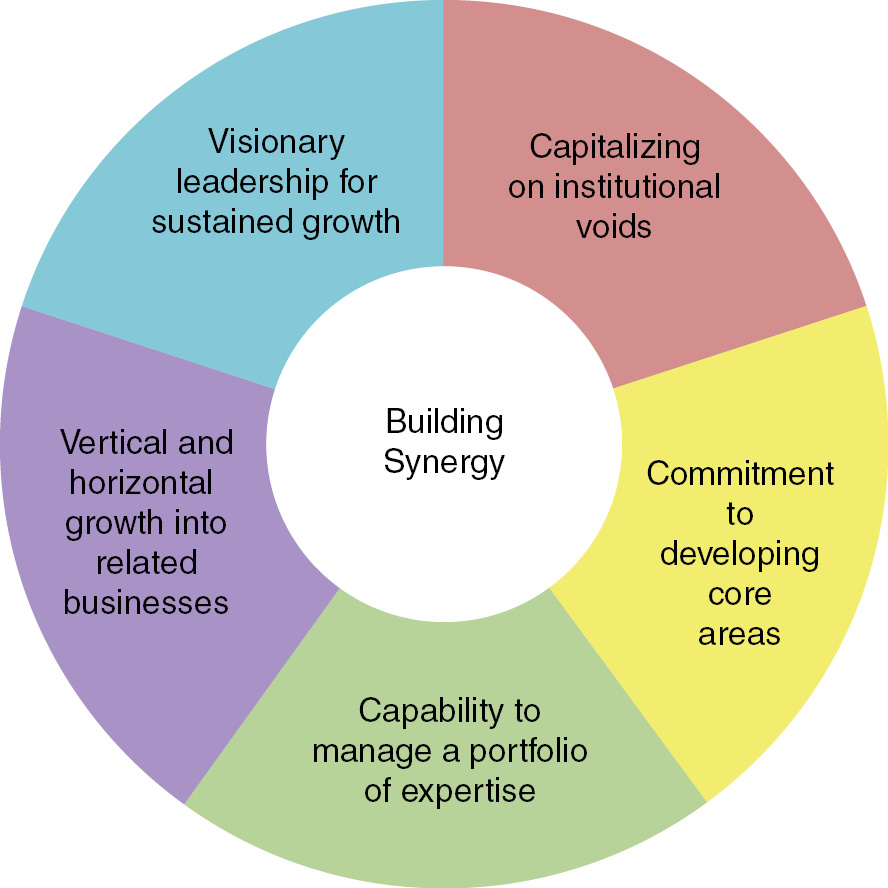
Exhibit 9.1 Building Synergy
Still, larger size matters less without leadership and corporate governance. In our cases, broader horizons were accompanied by astute, dedicated, and often visionary leadership. Serge Pun of Yoma Strategic Holdings and Haji Adnin and his son Musa Adnin of the Adinin Group believed in the roles that their companies played in the rising markets they served. They took on the challenges of underdevelopment, inadequate supporting services, and “institutional voids” and turned them into opportunities for creating synergistic umbrellas of like-minded and goal-oriented companies under the same visionary leadership.
Some firms, particularly those operating in small, emergent markets had to start up their own complementary businesses, as Yoma and QAF had to do. Other firms chose to enter into joint ventures with foreign or local companies to extend their reach or expand their capabilities. Many firms engaged in acquisition activities to diversify horizontally across related or seemingly unrelated businesses like what Global Mediacom did in media; vertically along the value chain like what Malindo Feedmill did in the poultry business; or both, as Indofood, the Indonesian food giant, successfully demonstrated.
ASEAN champions emerged through related vertical and/or horizontal diversification of businesses by capitalizing on institutional voids in the early developing economies. Scope economies were also possible by managing a network of expertise such as BDMS’ health care management and Mudajaya’s construction expertise. While unrelated diversification would be discounted in the West, some of the champions mobilized holding companies of unrelated businesses to supplement market inefficiencies with necessary competences.
These cases underscore an important distinction from that taken from largely developed economies. Criticisms of large portfolios tend to emphasize control and coordination costs that overwhelm strategic focus. This occurs when the portfolio is treated primarily in financial terms or when returns from the overall portfolio are expected to be larger than the simple aggregation of individual returns. In the cases presented in this chapter, the overarching consideration is not so much the financial return – although this is an important goal – but the advantage, if not necessity, of synergistic complementarity among a company’s business activities. In this regard, our ASEAN champions have successfully harnessed the synergies of the related and seemingly unrelated activities they have diversified. To fully capitalize on synergy, these firms also have to excel in managing human capital – the subject of the next chapter.
Introduction
Although human capital is widely acknowledged to be a requisite for managerial success, its precise impact on financial performance is not as tangible as other measures. Not at all surprisingly, it is given short shrift when considered in the total context of a firm’s sustained success. In terms of a metric, it is typically lumped as an administrative cost. Yet, in a landmark book, The Competitive Advantage through People, management professor Jeffrey Pfeffer (Reference Pfeffer1994) whittled away this belief with supportive empirical studies that indicate an opposite effect. Pfeffer compared various firms against the usual correlates – strategy, structure, technology, patents – using four common measures of stock valuation. His findings indicate that none of the factors above predicted sustained financial success more so than the firm’s ability to manage its workplace. This finding was reaffirmed in ensuing documented studies by Pfeffer (Reference Pfeffer1998) and his coauthored work with colleague Charles O’Reilly, Hidden Value: How Great Companies Achieve Extraordinary Results with Ordinary People (2000).
The importance of having good-to-great people in any organization has been a prominent staple in strategy and management (see Davenport, Reference Davenport1999). Accentuating this advocacy, Pfeffer cites an influential management consultancy firm, McKinsey & Company, which famously declared, “superior talent will be tomorrow’s prime source of competitive advantage” (Charles Fishman, Reference Fishman1998, quoted in O’Reilly & Pfeffer, Reference O’Reilly and Pfeffer2000: 1). However, Pfeffer and his associates remind readers that attracting talent alone is hardly sufficient; creating and nourishing talent over the long run is the added component of sustained success.
The efficacy of human capital for Asian firms has run the gauntlet from universalistic application to contingent refinement. The success of Japan, the acknowledged poster child of post–world war economic miracles, is largely attributed to the discipline and commitment of its well-trained workforce (Ouchi, Reference Ouchi1982). Similarly, the rapid rise of South Korea has been explained by the attention placed on workforce skills and shop-floor management (Amsden, Reference Amsden1989), which enabled Koreans to move from sheer imitation to newfound innovation (Kim, Reference Kim1990). At the euphoric height of Asia’s resurgence, when Singapore, Taiwan, Hong Kong, and South Korea had evolved into powerful export economies, the new term “Asian Values,” attributed largely to Malaysia’s Mahatir Mohamad and Singapore’s Lee Kuan Yew, was invoked to describe the unique personal style underpinned by valuable connections that forged the human capital of these Asian economies.
The aftermath of the 1999 Asian Crisis undermined these claims, fueling contrarian arguments that the purportedly cultural strengths such as personal connections were limited or even corrupt practices. Even so, with Asia – and specifically the potential of emerging economies – back on the rise, there has been a resurgent interest in human capital as a correlate of economic success. In a sweeping account of this renaissance, economic journalist Michael Schuman, in the tellingly titled book The Miracle: The Epic Story of Asia’s Quest for Wealth (Reference Schuman2009: xxxv), declares, “Theories on economic development tend to leave out the human element. Yet it is in the lives of people that the secret to Asian success is found.”
In Schuman’s account, human capital is deeply interwoven with political/economic/cultural origins. While it is derivative of these roots, human capital has its own integral quality. It is manifest in the types of management structures and processes that are developed to support the strategies of any given firm. It forms the basis of the dreams and vision of entrepreneurs who founded and led exemplary firms. The particular application that combines the “best practices” of successful firms in developed countries with the underlying cultural context of developing countries is what makes human capital organic in form and prepotent in its emphases.
Unlike the previous chapters that highlighted specific firms, here we present different characteristics of human capital that define ASEAN champions. Altogether, these firms embrace various facets of human capital ranging from visionary leadership to succession planning. It is evident that these firms have been able to employ various facets of human capital to align structures, processes, and systems in support of their corporate strategies.
Visionary Leadership and Execution
Lao Brewery Co. Ltd.
Lao Brewery considers leadership and vision to be integral core competencies that impact a company’s success. Long-term sustainability cannot be achieved without competent leadership and a solid vision for the company’s corporate goals and objectives. To ensure that the vision is translated to action, a high level of coordination is undertaken, involving the Lao Management Team, Top Level Management Team, and the rest of the team managers throughout the organization. These groups constantly interact with each other in driving the company’s vision into practice. This combination of long-term and short-term orientation ensures that the company concentrates not on short-term profitability but rather on long-term sustainability to make Lao Brewery more competitive in the market.
The management can be described as a top-down system combined with essences of being democratic and participatory. Mr. Mads Brinks, Deputy Managing Director, mentions that there is close collaboration between management and employees, especially when it comes to making decisions integral to the goals of the company.
Moreover, the level of coordination also mediates possible conflicts in advance. A company spokesperson describes this coordination as a traditional way of reaching satisfaction across levels and hierarchies within the company’s workforce. Human resource issues are also resolved through a party within the company, which is similar to the concept of a “union” in Western management philosophy. In all, the leadership style employed by Lao Brewery is considered to be democratic and participatory.
“I think this dual structure really is quite interesting for me as a Westerner because there’s the daily interaction between the employee and the manager and all the way to the system, which is a very traditional way of making sure that we have satisfied employees.”
Bangkok Cable Co. Ltd.
In the cable industry, an entrepreneur cannot simply enter into the industry by relying solely on access to capital and ability to purchase modern technology. Such expertise would be difficult to imitate since not all entrepreneurs have this capability. Even so, visionary leadership in itself is not enough. Execution has to follow for success to ensue.
The company sees a strong workforce and personnel supported with decentralization of administrative responsibilities as key areas of success. It achieves this by developing its workforce through training courses and programs. Bangkok Cable emphasizes workforce quality by providing training on different levels. New recruits go through an on-the-job training program that involves practices related to basic skills and knowledge needed for the production process. It is after this process that new recruits undergo an exam (Rogovsky & Tolentino Reference Rogovsky and Tolentino2010).
The continuous flow of talented employees is undertaken through systemic training. Those who pass are given a vocational education certificate. The company also provides an outside training course to those who have been working in the production line for a certain period of time. Those who have undergone outside training are encouraged to share best practices and expertise acquired from said training programs. Sharing such practices is also done through an in-house training course. For employees working in technical fields, a competency-based training system is in place (Rogovsky & Tolentino Reference Rogovsky and Tolentino2010).
These training courses provide a theoretical and practical approach that is tailored to the responsibilities and capabilities of workers. Furthermore, technical staff members take an annual competency test. The apprentice and training programs have resulted in a higher rate of employee retention since their establishment. They have also resulted in more positive behavior, discipline, and greater collaboration among workers (Rogovsky & Tolentino Reference Rogovsky and Tolentino2010). The company’s business development manager Mr. Somsak Ngamprompong also underscores the importance of having experienced industry professionals in the company with regard to sustainability: “In our company, we have a lot of good people that have a lot of experience in this industry. That’s why we have been able to keep our company running for 50 years” (Mr. Somsak Ngamprompong 2014).
Dao-Heuang Group
The consultative and participatory management style in Dao-Heuang Group is seen as one of its strengths. Managers and employees collaborate to share best practices and exchanging solutions for several challenges faced by the company. According to a company spokesperson, the leadership style of the firms is first to ensure that the management team understands the vision and strategic mission of the corporation. Furthermore, the leadership of the organization has to show sincerity and treat the organization’s employees in the spirit of being both a family and a team.
Leaders need to extend their hand to the team in order to promote an environment of stability and helping one another achieve targets. The leaders should also sacrifice more for the team and be ready to actively help in solving problems of the organization. In this way the team will be able to understand the direction of the firm and happily work harder for the company. This type of environment helps the company achieve success in the long run.
At each level of employment, the company trains its employees to develop their leadership capacities. The second type of leadership training that CPF holds caters specifically to young leaders. If the company sees potential and talent in a young individual, it has a development plan that gives them the opportunity to exercise their talents and skills and offers them mentorship from senior leaders in the company.
About 70 percent of the company’s total workforce consists of Laotians, while the remaining 30 percent are foreign workers. Most of the company’s foreign workers come from neighboring countries such as Vietnam and Thailand. Dao-Heuang also hires experts from other countries through its strong international network. It is due to the diverse nature of the company’s workforce that Dao-Heuang benefits from the sharing of best practices, which transpires whenever foreign and local employees collaborate with each other.
EDL-Generation Public Company
EDL-Generation keeps its staff competitive and highly trained through professional training, including both in-house and overseas training. Each training is also conducted differently, as each training program focuses on a certain skill or asset needed by EDL-Generation. This includes training courses in English to prepare its staff for ASEAN integration.
Moreover, the company coordinates with technical schools and universities to keep its training programs consistent with the needs of EDL-Generation. The company’s training programs are also supported by EDL-Generation’s emphasis in hiring domestic and foreign new graduates with highly technical backgrounds to strengthen the technical core of the company’s staff.
The company was the first company to be listed in the Lao Stock Exchange. EDL Generation inherited its management system from its parent company, EDL, and uses a similar corporate structure that emphasizes professional management. This means that leadership is still top-down, but the top management remains responsive of the needs of its department. The Managing Director, Mr. Bounoum, mentions that these types of meetings happen at least once a month.
PT Lippo Karawaci Tbk.
The leadership style employed by the company’s management team is top-down with regard to corporate policies and strategies. In terms of feedback, Lippo Karawaci employs a bottom-up approach. A company spokesperson mentions that the company receives market feedback through its consultants and uses the feedback to adjust its strategies.
Through its roadmap, “On A Transformational Journey,” the company seeks to improve its infrastructures, management, and manpower skills. It plans to do this by nurturing its workforce inside the company and implementing a systemized form of succession plan for management teams. Furthermore, the company’s talent management hires highly skilled graduates, subsequently profiling these individuals for the next 3 to 5 years in order to prepare them for key positions.
The company believes that its workforce is a key ingredient in terms of guaranteeing quality products. As such, it prioritizes a competency-based policy in managing its human resources and pursues human resource development to strengthen the skills and capabilities of its workforce. It conducts internal and outside updates and training programs for all employees. The company also incentivizes its people by determining rewards and promotions based on evaluation results.
PTT Exploration and Production PCL (PTTEP)
The management style of the company can be described as participative. The company also tries to pursue this participative-based management style laterally, partially top-down and partially bottom-up. Since PTTEP has subsidiaries outside of Thailand, the workforce composition of the PTTEP Group can be described as diverse and multicultural. There is a total of three thousand personnel in PTTEP. The number of employees is small relative to the company’s size because PTTEP relies heavily on employee productivity and output.
PTTEP is publicly traded in the Thailand stock exchange and has been trading since 1989. As mentioned previously, the company has one of the largest capital shares in said stock exchange. Due to the company’s meritocratic nature, PTTEP is professionally managed. Executives who are well experienced in the oil and gas exploration industry hold key positions within the company.
Human Resource Management Training
Hanoi Production Services Import-Export Joint Stock Company (Haprosimex)
Among the distinctive aspects of Haprosimex’s training is the focus on the environment along with people development. The company is currently working with several training schools in Ho Chi Minh City. These training schools provide services to the company’s employees to increase their capabilities. Haprosimex employees are trained in various practices, such as management, sales, administration, and software application.
These training programs help Haprosimex keep its employees well prepared to meet several challenges associated with the export and manufacturing industry. Moreover, the company also trains local farmers how to drain rainwater and recycle it for their crops. Technical practices are also taught to the local farmers, such as how to keep records of the number of crops they have planted and sold during the harvest season. Haprosimex has even established a school for the children of the local farmers to ensure their welfare.
PT Petrosea Tbk.
Petrosea takes great efforts to develop a highly skilled, highly trained workforce. It believes that human capital is a valuable element in its commitment to provide reliability of services and its creation of spare capacity in anticipation of future growth. To maintain its pool of competent and driven personnel, the company is continually launching initiatives to strengthen its human resource management. Especially in recent years, MAP has been ardently introducing a number of programs to augment the potential of its people, placing emphasis on training and development as well as organizational improvement. Examples include such initiatives as the key performance indicator (KPI)-based New Performance Management System, the MAP Fast Track Management Trainee Program, and English literacy programs.
The company’s Petrosea Academy is its training and skills development facility for employees and workers. Additionally, the Human Capital and Organization Department of Petrosea conducts initiatives to increase employee training. In 2011, training programs such as the Supervisory Development Program, which targets potential leaders, were added to the roster of training conducted (PT Petrosea Tbk., 2012). Virendra Prakash, Vice President and Director, opines in a 2012 interview with The Jakarta Post, “The company’s main driver of success is not technology or machinery, but its people. MAP is blessed to have dedicated people run the business and make sure that it is always ahead of the game.”
EEI Corporation
EEI is a privately owned, professionally managed company under the Yuchengco Group of Companies. President and Chief Executive Officer, Roberto Jose L. Castillo describes his personal management style as being quite open; he walks the grounds and job sites and tries to relate to his employees. He tries to know what’s happening on the ground, and this allows him to make informed managerial decisions. Furthermore, he treats his people with respect and does not try to expect the impossible from his employees.
On the ability of the company to maintain a skilled and well-trained workforce, EEI has a strong training program and has been able to utilize this in developing its people. In fact, according to Mr. Castillo, EEI’s employees are often pirated by other companies due to an EEI employee’s reputation for being well trained. The company identifies Human Resource Development as an integral component of the firm’s overall strategy. It is through developing its people that EEI is able to ensure that the company’s projects are supported by an effective manpower complement (EEI Corporation, 2013:18).
Today, EEI invests heavily in skills training and personnel development and offers further education and advanced training to its employees (EEI Corporation, 2013: 22). EEI has also been able to improve excellence in training by partnering with other institutions and organizations such as TESDA in providing classroom and practical training (EEI Corporation, 2013: 22). EEI also has its own facilities in the Philippines and abroad where workers can undergo training and refresher courses; among these are EEI’s welding academy in Saudi Arabia.
Sembcorp Marine Limited
Sembcorp Marine believes that human capital is essential for the company’s long-term growth and competitive edge. Thus it has embodied a human resource strategy that has several key elements. First, the company prioritizes manpower availability. This is defined as the ability of the company to secure the right people for the appropriate roles within the organization. The second element in the company’s human resource strategy is manpower development, which entails training workers and enhancing their skills. Third, the company recognizes that manpower retention is the key to sustainable growth, and it rewards its people based on merit. Fourth, Sembcorp Marine believes that creating an environment that is healthful, safe, and secure is essential for its employees. By maintaining a positive work environment, the company ensures its workers that employee welfare and care is a continued commitment of Sembcorp Marine to its employees. Fifth, part of its Human Resource strategy is organizational development. This means that the way the company is structured should gear employees toward contributing to the vision of the company. Lastly, the company promotes a sense of belonging to Sembcorp Marine’s corporate values among its workers. This is achieved through employee engagement events and activities. IT and the Internet are also used by the company as means of connecting with its employees.
Phnom Penh Water Supply Authority (PPWSA)
PPWSA’s training department is quite active. Training sessions are organized and held in-house. Short training sessions are conducted in which experts are invited to give guest lectures. The company also sends staff members from relevant departments to external training sessions depending on the type of program. Furthermore, PPWSA employees have also attended training sessions conducted by other water utility entities. After trainings, it is common for all personnel who attended to undergo an exam so that this can contribute to employee performance ratings.
Performance-based incentives in PPWSA ensure that employees remain motivated and driven to perform at a high level. For instance, the company has what it calls a collection incentive scheme wherein employees are given monetary compensation based on their collection rate. Furthermore, if employees are able to attain a 100 percent collection rate, then they are given a bonus on top of their salaries.
Continuous Learning and Improvement
Holcim Philippines, Inc.
Attributing its initial strengths to its focus on people, Holcim Philippines, Inc. maintains the building of a culture that engages its employees and promotes continuous learning. With its various strategies on employee engagement, the company’s people are expected to continue to be the force that thrusts the company forward. Its corporate strategy, called the Holcim Leadership Journey, puts people at its core as it encompasses “passion for safety, manufacturing excellence, people engagement, and customer value management” (Holcim Philippines, Reference Holcim Philippines2013).
Putting workplace safety at the top of its priorities, the company has plotted several courses of action to prevent accidents and encourage a healthy environment. Further, it seeks to encourage employee engagement by fostering a people-oriented corporate culture. The company also has its unique “trust” program, wherein employees identified as “hi-po” (“high potential”) are given training locally or overseas (Holcim Philippines, Reference Holcim Philippines2013). “Hi-po” employees are treated by their managers as equals, even in management committee meetings, where they are not excluded from discussions of confidential matters. Besides taking care of its employees, the company also believes in taking care of the environment and its “host” communities, which makes its CSR practices also central to the company’s philosophy.
Manila Electric Company (Meralco)
In terms of corporate culture, Meralco emphasizes both technical and professional excellence as well as a culture of teamwork and working as one toward corporate goals. The company’s cultivation of a highly technical and professional culture is critical since the nature of the work is highly technical in itself.
While Meralco executives represent a combination of highly skilled technicians and well-experienced business professionals, this competence is not difficult to imitate, but Meralco does try to do its best to land the top professionals in the market. In fact, in the past 2 to 3 years, Meralco has been hiring executives from all over the globe in order to create the best talent pool for the organization. Another value the company believes in is “One Meralco,” which places an emphasis on teamwork and transparency within the organization.
The prioritization of value creation has allowed the company as a whole to transform into a forward-looking, goal-oriented organization. Stakeholder value creation and customer value creation are important for Meralco because by keeping stakeholders and customers satisfied with the company, Meralco positions itself toward sustainable growth. This is accomplished through organizational leadership that allows exploration into new opportunities by innovating and investing in related and unrelated profitable industries locally and abroad.
People Development
Jollibee Foods Corporation
A prominent component of Jollibee’s success is its people. The company takes pride in its strong corporate culture, which fosters the values of excellence, spirit of family and fun, humility to learn and listen, integrity, frugality, respect for the individual, and teamwork. Another key driver of Jollibee’s corporate culture, especially in the Philippine market, is its strong branding and marketing strategies. From its early years, the company has been staunchly establishing its brand as a fun, family-oriented, proudly Filipino restaurant, which has made it endearing to Filipino customers. Moreover, Jollibee has always been keen and active in the formulation of its promotions and campaigns, from the company’s logo to its television ads to its various projects for children.
PT Solusi Tunas Pratama Tbk.
A distinctive part of the company’s success is its hiring strategies. According to a company spokesperson, most of its employees are under 40 years old as a result of the strategy employed by its human resource management. Hiring younger and less experienced people is better for the company since these types of individuals are more willing to consider constructive criticism. Furthermore, hiring people with potential will allow the company to mold each employee to see where he or she fits in the company.
Moreover, the company’s corporate culture encourages productivity to assure that the office is not as uptight compared to other office environments. This type of productive thinking induced by its corporate culture has led to company innovations such as the creation of an application that would allow telecom-based media companies to share technologies. Relatedly, speed and flexibility are core competences for Solusi Tunas’s services. In meeting demands and gaining an advantage over competitors, quick decision-making within the company is important. This is made possible due to the company being relatively smaller compared to other firms. This allows Solusi Tunas to be more flexible due to the minimal bureaucratic slowdowns that it experiences when it comes to its projects.
Thai Metal Trade Public Company Limited
People development and service quality are crucial for Thai Metal. In terms of people development, a company executive indicated that the company needs people who are familiar with the steel industry in Thailand. He said that customer trust can only be gained if the company makes minimal mistakes, which can only happen in Thai Metal’s operations if its workforce has the competency and experience to meet industry standards. Thus, Thai Metal prepares its employees through its in-house knowledge center, where the company trains its people to share best practices and enhance employee capabilities.
Service quality is also important for the company, as it allows Thai Metal to compete against larger companies with huge financial capitals. Thai Metal relies on its excellent service quality as its comparative advantage in order to attract customers and ask for prices a bit higher than those of other competitors. It’s due to its service quality that Thai Metal has invested heavily in quality-control operations and has even allowed its customers to provide the company their specifications to ensure that the best steel products are delivered.
Leadership Style and Management Systems
Lafarge Republic, Inc.
The company heads tend to use a collaborative leadership style that draws on the skills and experiences of coworkers and subordinates. However, leadership in the company is not as hands-on to prevent employees from being too dependent. A company executive finds this type of leadership sufficient in guiding employees toward the company’s corporate goals.
The company uses Lafarge’s Plant Operating Model (POM) as a training guide for people working in Lafarge Republic’s plants. POM aims to train people to make efficient and quality products, but the model also aims to instill the mindset that the company’s employees are cobusiness holders.
The company’s emphasis on people development – such as through its exchange programs and training seminars – ensures that its workforce is able to contribute to the competitiveness of Lafarge Republic.
Mudajaya Corporation
Mudajaya believes in the importance of developing people through management systems. Hence, it has organized several in-house trainings as well as external courses for its employees. The company’s workforce consists of engineers, which has been a long tradition for Mudajaya to emphasize in having a strong, professional, and skilled workforce. This is also important for the company since its clients tend to look for competent contractors with relevant experience.
Moreover, the company works with labor agents especially with regard to sourcing workers overseas. Right now, most of Mudajaya’s professionals are from Malaysia, while several of its general workers are foreigners. The company has plans in the near future to hire engineers from neighboring countries. However, legal impediments have made it difficult for the company to hire foreign engineers. Nonetheless, the company’s highly professionalized workforce ensures that Mudajaya’s projects are usually finished on time and in an efficient manner.
In terms of operational excellence, the company adheres to health, safety, and environment (HSE) principles. It has launched campaigns and in-house regulations that aim to assure that all employees are instilled with a culture of safety and comply with company standards in this regard. Furthermore, the company has achieved operational efficiency through the implementation of automation initiatives such as the use of Flexspeed, a high-speed LPG cylinder filling system, in the Melaka LPG terminal. It is the first installation of this kind in Malaysia and the tenth in the world. SDD also carries out an Infrastructure Planning Study each year to improve tankage utilization and strategic expansion of storage facilities and develop better road tanker utilization. Lastly, the Organizational Effectiveness pillar is achieved through ensuring that PDB’s workforce is highly skilled and technically capable. Toward this end, the company invests in the development of its people.
Siam Cement Group (SCG)
Dutch executives helped SCG grow from the company’s founding in 1913 until 1974. During the company’s first 60 years, SCG learned how to establish and operate a cement brand within Thailand. The company also learned how to keep and maintain a professional management system from its Dutch executives. Significant experience and knowledge transfers paved the way for the strong corporate culture of SCG.
Along with promoting innovation, the company has also focused on increasing human capabilities and improving human resources. Several programs have been implemented by SCG in order to improve the capabilities of its workforce. Harmonizing business and personal development within the workforce provides a shared understanding of organizational goals, which leads to establishing such goals efficiently. SCG’s core competencies are concentrating on people development, management and leadership style, and its capabilities of CSR. The company strongly emphasizes the welfare of its workforce. Currently, the company has initiated several programs that ensure the loyalty of its employees through several financial and social benefits. The company also focuses on increasing the capabilities of its workforce through several educational programs, such as workshops initiated by SCG’s training centers.
Professional Management
SM Prime Holdings, Inc.
The company is primarily family run but also includes aspects of being professionally managed. The children of Mr. Henry Sy Sr. are involved in the business in differing capacities and areas. However, the family decided to hire professionals to run the business alongside the family as the company grew. Although SM is a family corporation, they reasoned it was better to keep it in the hands of the children because whether or not disagreements arise, there is still a sense of having to settle them at the end of the day. If members of the extended family are involved, this increases risk, as it could divide the family.
The company has what it calls as a “Family Board” that evaluates decisions and proposals before they go to the formal corporate board. Professionals have slots in these meetings and present their ideas to the family members, who then give their input. Once the proposal is brought to the formal board, the family members take a step back and allow the independent directors to give their input. Currently, SM Prime Holdings is publicly traded in the Philippine Stock Exchange, where it has been listed since 1994.
Singapore Aero Engine Services Private Limited
SAESL corporate leadership is based on a professionally managed system in which meritocracy is greatly emphasized. Overall, management is headed by the CEO of the company. Under the CEO, various positions include the Human Resource Department, Engineering Department, Operations Department, Finance & Admin Department, Planning, Control & IT Department, Customer Business Department, and Programmes & Business Development Department (SAESL, 2013b).
The firm’s approach to people development allows the company to provide internships and on-site training programs for future aviation engineers. Through this, SAESL has ties with local universities and polytechnic institutions (SAESL, 2013a).
Adinin Group of Companies
In this company, managers are empowered by giving them autonomy over their operations. This type of management system allows the company’s managers to handle a subsidiary in a style with which they are comfortable. The autonomy-based management system has been successful, and no major complaints have occurred.
The company ensures that its subsidiaries are able to deliver its projects and other services on time. Adinin and its subsidiaries have in their mindset to identify and accept offers they deem as doable. This is to ensure that the company does not take offers or contracts that it knows it won’t be able to deliver on time or outside of customer expectations.
Moreover, its services are amplified by the company’s highly technical workforce; employees have years of experience and training under their belt, ensuring the highest quality of service and standard. Through the company’s Adinin Training and Development Centre, employees remain in top shape to compete in local markets.
Boon Rawd Brewery System
The company is privately managed, and leadership of the company is top-down, but executives are open to collaboration with managers within the company. People development is also an important aspect of the company. Boon Rawd invests in several in-house training programs and scholarships for its employees. The company has partnered with local universities in Thailand so that its employees could get scholarships in MBA courses. Boon Rawd is also very open to graduating college students looking to complete their internships with the company.
Yoma Strategic Holdings Limited
Meritocracy is the fundamental principle running the management of Yoma. This means that not even family members are given special treatment within the company. This is due to the belief that inexperienced people running executive positions would be detrimental to the growth of the company.
Through its meritocratic system, Yoma is able to hire talented individuals fit for the different positions of the company. The company was also able to create a system to attract talented individuals. Moreover, Yoma also conducts training and knowledge transfers in order to constantly prepare its workforce for challenges within the market. Yoma also recognizes the importance of maintaining a trained pool of human resources and a strong management team to lead them. Furthermore, the company also believes in aligning career growth opportunities to employees’ career prospects. Opportunities are offered to promising employees based on their personal performance. The company also has a policy of internal promotion and transfer, which means that higher positions are ideally filled with people from inside the company, and people are only hired from outside when there is no suitable candidate within the organization.
Conclusions
It is fitting that the requisite for attaining excellence is substantiated in large part by supportive management. It has become widely acknowledged that great implementation and execution through people and systems are critical to the successful implementation of any strategy. In fact, there are those who believe that effective execution might overcome any deficiencies in a corporate strategy. This belief redounds to a classical precept that one cannot succeed even with a sound strategy without the people to support the strategy.
Harnessing human talent is particularly daunting in emerging and developing economies where it is well acknowledged that levels of education attainment fare poorly relative to those of the most advanced countries. This argument prompts further questions on the extent to which mainstream business theories apply to emerging markets. Reflecting modernization arguments, one position is that it is just a matter of time before erstwhile managers in emerging countries adopt mainstream theories. Others argue that management training should be particularistic and reflect the local conditions of changing development. Still others, notably management scholars Ming-Jer Chen and Danny Miller (Reference Chen and Miller2011), posit a relativist conception that combines the “best” features of Eastern and Western intellectual traditions as a better theoretical anchor for understanding Asia, and by extension, (Asian) emerging economies. To some extent, this combination of universalistic and particularistic orientation is a part of our ASEAN champions approach to building human capital. A synthesis of our findings is presented in Exhibit 10.1.

Exhibit 10.1 Nurturing Human Capital
Collectively, human capital and advanced management systems constitute the glue that holds different parts of an organization together. This glue is the difference that determines whether synergy materializes or not. It might just be that a fitting tribute to ASEAN champions – one that differentiates them from other firms – is their ability to nurture and harness their employees. In particular, we point out six human-resource-related elements that make companies better. They exhibit exceptional visionary leadership that finds the right balance between long-term goals and short-term operations, and between top-down control and bottom-up and horizontal collaboration. These local champions have well-developed and systemic training programs supported by corporate governance that values human resource training. Continuous learning is embedded in their corporate cultures, which is further enforced through external recruiting of senior leaders. Their recruiting and people development often turn to young and inexperienced people who can be easily nurtured into their own corporate values and norms. These companies put in place professional management systems that could enforce consistent stakeholder-oriented value systems. They generally remain family-owned companies, but they rely on professional management teams for strategic and operational decisions, while they exert their influence through shared board and leadership structures.


