

When I was an ugly little kid growing up in Karachi in the 1980s, my upwardly mobile mother used to hound me to get straight As so I could eventually go to a top university like Harvard. (“Look at Dolly Aunty’s daughter Naila. She’s going to Oxford!”). “Why can’t she just let me be?” I inwardly fumed. All I wanted to do was read Anne Frank, listen to Wham!, and climb the Eucalyptus tree in the backyard. It ran up against our house’s boundary wall, so I’d climb the tree, run along the top of the wall, and jump down into the alley below. I didn’t want total freedom – just enough to have a bit of a romp in the neighborhood and loop around to let myself in at the front gate.
I wanted to be left alone but my mother’s decade-long nagging persisted and eventually produced an intense revulsion in me for any exhortations to improve intellectually, morally, Islamically, physically, or domestically. At college my favorite book was Dostoevsky’s Notes from Underground with its splenetic anti-hero. When I returned to Karachi after graduating (from McGill University, the “Harvard of the North”), I drove around listening to the “menacing leer” of P.J. Harvey.Footnote 1 When I started working as a journalist, all I wanted to do was drink chai in the “slums” with the boys, or ruffians. I was drawn to ugly. I was going in the opposite direction of progress.
It was, therefore, with great unease that I received the words “sustainability” and “resilience” when I began to cover Karachi as a journalist heading the metro section of a daily English newspaper. A fellowship on urban growth and conferences abroad brought me in touch with urban planners who kept talking about “smart” cities. (Just to spite them, a friend of mine and I created “The Dumb Cities Project.” It never took off.) I didn’t know enough urban planning theory to unpack “sustainability” or “resilience,” and, of course, I agree that going forward these are crucial considerations for our global megacities. But somehow, I just wanted Karachi to be left alone. When the politicians running the city would talk about “improving” it and making it like Dubai, I would recoil inside. “Let us be,” I’d say. I’d return from conferences with urban planners from New York and feel shame. It was with dread that we’d run news on how Karachi ranked 160th yet again on the green cities index. It didn’t make sense for the city government to try to clean the city by removing the pushcart vendors it described as “encroachments.”
And so it was from this position of ire, shot through with anxiety, that I approached this provocation. Before writing it, I began by looking up the meanings of “sustain” in the Oxford English Dictionary. Sustainable: able to be maintained at a certain rate or level. Sustain: bear the weight without breaking. Undergo or suffer. Cause to continue for an extended period or without interruption. These are semantics that fit Karachi. We keep going. We are. We will kind of be like this for a while.
No, we don’t have enough water, housing, mass transit, sewage systems, or parks. We hitchhike.Footnote 2 We don’t recycle unless Afghan rag-pickers are involved.Footnote 3 We regulate our bus schedule with paper tokens.Footnote 4 We suffer from “project-itis” instead of “long-term vision.” We haven’t had a census since 1998, so we don’t even know how big we are.Footnote 5 But we continue to grow as one of the world’s megacities. We don’t have enough housing for the poor, but we have space for Burmese migrants and hungry villagers whose fields have dried up. We know. We know.
And so, perhaps the meaning of “sustainable” that fits is the one that lets people be. Karachi can’t be prodded into progressing. Perhaps it will happen in time, organically. I’ll never forget the comfort provided by Eugénie Birch after I was bummed out at a conference. She is the codirector of the Penn Institute for Urban Research and knows a thing or two about cities. She reminded me that cities like New York or London only very recently got their act together. I thought of the movie Gangs of New York and nodded. That’s Karachi today.
We can learn from New York, of course. But perhaps Karachi can’t apply “sustainability” or “resilience” in the same way. Our systems are different. We have grown to be a city run on informality, as has been brilliantly explored by Laurent Gayer in his book Karachi: Ordered Disorder and the Struggle for the City.Footnote 6 We need our own understanding of “smart city” based on our own knowledge. I keep going back to what postcolonial theorist Gayatri Chakravorty Spivak has argued: We have to speak for ourselves and not be spoken for. That can only come from our own people, the city government we elect – we just got a new one after a six-year void – and our home-grown urban planners. These professors need to be in elected office instead of in the classroom.
There are disconnects. Our people are just beginning to enjoy a relatively crime-free Karachi after decades of bombings, murders, gang wars, and terrorist attacks. We’re making mistakes, of course, some of which perhaps can’t be undone. We’re building flyovers instead of transit lanes, and we prefer malls to open bazaars. But didn’t Seoul rip out a highway and run a river through it?Footnote 7
Perhaps cities like New York and London, Seoul and Singapore have become what they wanted when their people started knowing what their city should be (even if through debate and dissent and the push and pull of big business interests). Or perhaps it is the vision of one person who can implement it that counts. Karachi has neither right now. We have just elected a mayor, but even if he drives forward a vision acceptable to all in Karachi, he only controls one-third of the city – Karachi has 13 land-owning agencies, a majority of which are army-run cantonments. If sustainability is about resources, then we need to stop fighting over them before we can even think of renewing them. Knowing is key – knowing beyond just the basics of needing, perhaps starting with simple information and transparency in our transactions, especially the people-to-government kind.
I’ve often marveled at how building sites in London would have clearly displayed information about the entire construction project and permits. In Karachi, illegal buildings spring up overnight in parks, and even if journalists go digging, they can never really find out who permitted it and who is behind it. Sometimes it’s simple information, such as the address of the town office where you can get a copy of your birth certificate. No map exists of the jurisdictions of Karachi’s police stations (which is why we have cases of cops chucking bodies over the “line” to avoid the workload of investigating cases).Footnote 8 When I went hunting for a map of the city’s electoral constituencies, I had to sneakily take photos of a handmade one from the election commission’s office because none existed online and they weren’t allowing me to take a copy.Footnote 9 Women find it hard to get around town because there is no publicly available and reliable information on the bus routes and schedules.
Don’t get me wrong. The burden rests solely with us to make Karachi “liveable” and “sustainable.” It’s just that liveable and sustainable don’t make sense to me right now. My instinct says that solutions lie in our informality, in our “ugliness.” (To me Karachi’s ugliness and informality is beautiful, but I am acutely aware that I speak of Karachi from an extremely privileged position.)
And so I search not for a way out and upwards, but by going around to return – just like climbing the wall of my house and letting myself in by the front gate.
One of the stated big questions of this book is to ask what kind of knowledge is needed for smart urban environmental decision-making. This is an important question to ask, especially for long-term researchers looking to plan scientific activities over many years.
I work as science support for the Nature Conservancy’s urban sustainability program. At any given time, we have projects in nearly 50 cities all over the world, with goals ranging from biodiversity protection to ecosystem service provision to youth empowerment. So while I still have (I hope) one foot in the world of academia, I also have another foot firmly in the world of the conservation practitioner. In the course of my job, I interact with municipal policy-makers, and work with Nature Conservancy staffers that live and work in these communities.
In all these conversations, I have never heard anyone working for a municipality ask to “coproduce” scientific knowledge with us. Many of these practitioners may not even know what this concept means. Similarly, the debate about whether good science should be interdisciplinary or transdisciplinary would seem sterile and boring to most policy-makers and planners. It isn’t that these aren’t good ideas – indeed, the best urban sustainability science projects involve deep involvement of those who would use the knowledge created. When setting project goals, having decision-makers involved ensures the sustainability science projects are asking the right questions. While designing the methodology, it is vital to make some practitioners understand and agree with the science methods used. And of course, while choosing how to communicate results, involving decision-makers ensures that they have a greater impact on decision-making.
The problem is that academics sometimes find it fascinating to study the process of collaboration itself. Academics can write whole papers on the process of the coproduction of knowledge, transdisciplinarity, and so on. We can then debate which theory about process is most effective, or sharpen the semantic differences between different theories. This is normal and healthy for an academic discipline, but every day spent studying the process is a day not spent creating practical knowledge that a city can use.
I am skeptical that there is a universal answer to what knowledge cities need, but I would much rather ask decision-makers themselves, “What knowledge do you need in your city?”
The quest for universal answers is, of course, part of science. But I doubt our ability as scientists to gaze into our crystal balls, our scenarios and models, and divine what the distant future will bring. The pace of technological and social change is so rapid that we have to have a lot of humility about our long-term predictions. I would much rather say we ask practitioners what decisions need to be made in the short term and what information is needed to inform those decisions. I am not saying that studies of the process of being relevant are not important. I just want to reserve a place in urban sustainability for works that answer the short-term, pragmatic questions that decision-makers have in a timely way. This work is sometimes not theoretically interesting, in the sense of creating brand new methods or models. Sometimes it just means taking existing information (for instance, forecasts from climate change models) and presenting it in a format that supports municipal decision-making. This is not the kind of science work that makes for novel, cutting-edge journal papers, perhaps. But it is often what urban managers and decision-makers actually need.
In my view, Banksy, the British street artist from Bristol, is one of the most insightful urban commentators of our time. His prankster performance art talks to us about the way cities breathe and sweat and create and destroy. His artistic vision has unsettled both the art world and city hall alike, and challenged us to see ourselves and our cities as they are, not as we think they should be. His images do not sit easily in rarefied art galleries (even though he has been known to smuggle his works into museums such as the MoMA), but rather reach out and challenge us where we live, surprising us on street corners, telephone boxes, and campervans. The element of risk is central to Banksy’s art. In his words, “The greatest crimes in the world are not committed by people breaking the rules but by people following the rules” (Banksy Reference Banksy2005).
Perhaps intuitively following this guidance, I realized early on in my career as a biologist interested in cities that my science was best tested on the street rather than in a remote laboratory. As a result, over two decades ago, I traded in the ivory tower for city hall and now practice what I can only describe as “guerrilla street science.” As a scientist-in-practice, I have become a hybrid personality, operating at and across the boundaries of science, policy, and practice with no fixed institutional allegiances. Much like Banksy’s street art, this sort of street science is not politically correct or value neutral, and it is often viewed with suspicion and regarded as a political bad. It is seen as going where science should not go, challenging existing bases of power, and creating conflicting discourses. Its proponents are heavily criticized and interrogated: Can a good policy-maker really be a good scientist, or does science get in the way of good policy-making? By adopting this more fluid and uncertain identity, the scientist-in-practice becomes someone of whom all formal interest groups are wary; they can never be certain of which agenda those scientists-in-practice are advancing. Are we “bombing” – in graffiti terms “to bomb” is to paint many surfaces in an area – policy with science, or science with policy? Or ignoring both and simply getting the job done?
In this difficult environment, the risk-takers survive by finding others like themselves, building informal networks that are often more influential than formal reporting lines. Building trust and smart alliances within these subversive crews – a crew, krew, or cru is a group of associated writers or graffiti artists that often work together – helps create an ecology of revolutions that is more sustainable than just a single, winner-takes-all revolution. In this world, decision-making is more organic and processes more flexible, and the normative constraints of traditional science, policy, and practice do not normally apply. As a result, scientists-in-practice that can navigate the gray institutional spaces are generally better able to maneuver through complex institutional processes that might otherwise prove time-consuming and limit innovation. This suggests that the transgressive change required in the world’s cities might be best catalyzed in these informal, noninstitutionalized shadows, rather than in the formal institutional limelight. Street art and street science have more in common than one might think.
Working in this unchartered territory also means reprioritizing conceptual reference points: Developing an understanding that political ecology is as important as ecology; that perception is as powerful (if not more powerful) than fact; and that it isn’t what you know, but who you know. I have learned that good ideas have a limited political shelf life, even if they remain scientifically valid, creating an ongoing need to find new scientific motivations to justify the same actions. As a result, you will fight the same battles over and over again, often in different political cycles. Unfortunately, in the real world, science is not a silver bullet that removes the policy challenge with a single shot; it also does not tell you how to deal with the death threats linked to scientific decisions that frustrate unsustainable political or economic ambition!
The value of the informal networks of risk-takers and change-makers who work well beyond the reach of performance management plans and indicators cannot be overstated. They signal the diversity and complexity of skills required to drive real change and suggest the need to create a multiplicity of change agents, from research scientists to scientists-in-practice, rather than striving (rather unrealistically) for single individuals with a full range of transdisciplinary skills. How do we do this? My experiences suggest that the people with the capacity to harness the gray institutional spaces and to connect and challenge the formal systems benefit greatly from the creation of nexus points where the policy and scientific world engage on a regular basis. In the city I work in, we do this through research partnerships established with the local university that engages both the academic and local government officials. These interactions make the gaps and opportunities more legible to the institutional entrepreneurs in both environments. We also actively seek out people who are institutionally irreverent and encourage them to drive agendas of change by providing them with a community of support and ongoing opportunities to work on programs and projects capable of introducing new ideas and information into traditional systems. This creates a complex canvas for action on which we begin to sketch out multiple possible futures for our city.
As the challenges facing the world’s cities grow, we must find ways of putting an increasingly diverse range of conceptual and tactical spray cans into the hands of our scientists and policy-makers – this will often blur the lines between science, policy, and maybe even art!
In the next 50 years, we need to transform every piece of urban landscape into a form that best supports the survival of the human race. This new urban landscape will increasingly provide our life support system, not just for air, water, and food – it must also become our refuge for creative inspiration and a catalyst for imagination.
I propose “Forests of Imagination” as a new type of urban landscape designed to evoke a sense of primal landscape and to encourage creative thoughts. They can be permanent or temporary, but their purpose will be to offer a particular place that reconnects us with the wonder, moods, and meaning of raw nature while offering inspirational experiences. I would like to see every community having easy access to a Forest of Imagination.
Wildness is synonymous with inspiration and contemplation. William Shakespeare, Percy Bysshe Shelley, Virginia Woolf, Albert Einstein, Rachel Carson, David Attenborough, Lucille Clifton all have used elemental nature as a source of inspired thought. I suggest we all need wildness in our daily lives to feed our imagination, just as we need vitamins to sustain our bodies. Charles Darwin recognized this need and made his own famous Sand Walk at Down House in Surrey, England. This provided him with a five-minute walk that passed through a formal garden, an open meadow, and the dark heart of a wood. This was his choice of place to think and be inspired by the natural world around him – his Forest of Imagination – which inspired him towards one of the greatest discoveries of all time.
In modern times, we have planned our cities around function and commerce, where nature is seen as a commodity to harvest, to set the scene, to provide air and water and food – but not as a fundamental part of our existence and certainly not as a source of natural wonder and inspiration. Instead, the modern city has tempered the wildness of nature to create an idyllic, gentle world far removed from the unpredictable “garden” of nature. Matt Ridley said, “Mountains may have more majesty, forests more fear … formal gardens more symmetry – but it is the informal English parkland of Capability Brown that you would choose for a picnic, or for a visit with a potential lover. It feels natural” (Ridley Reference Ridley2016). Such ideas of nature have inspired countless urban parks across the world, but at what cost? The removal of encounters with more unexpected and challenging natural experiences within our cities has effectively anesthetized our engagement with the land and the very systems of life on which we rely.
Recent flooding in many UK cities has triggered a collective memory of our forgotten relationship with rivers and floods and weather. This echoes the astonishing growth of the Rewilding movement in the United Kingdom and across Europe, which is partly about ecological restoration of strategic habitats. But it’s also about our emotional reconnection to nature. It promotes the reintroduction of key predators and keystone species into the wilder areas of our landscapes, but so far has not fully addressed the opportunities within cities. Anna Jorgenson of Sheffield University suggests that “we all need wildness” as both a projection of ourselves and also as a way of making sense of the world that is beyond our imagination (Jorgensen Reference Jorgensen2016). Her experiments into urban rewilding, based on the insertion of pockets of naturalized planting into more traditional parks, are proving there is an appetite for this urban wildness that, if introduced intelligently, can greatly enhance not just the working ecosystem of the city, but also the daily health and well-being of the local communities. It seems we are ready to be challenged and to welcome back the unknown and uncontrolled into our city environments. Still, just creating an additional urban habitat is not enough. These spaces must function at a higher level of engagement, since landscape can no longer be seen as the passive backdrop and stage set of Capability Brown and his followers. To survive the future, we need to foster curiosity, analysis, and understanding – but we also need spaces to encourage unimagined new worlds.
To achieve these goals, there has to be a major reinvention of our permanent public landscapes; large-scale changes can be complemented by a program of more experimental, temporary Forest installations. In my home city of Bath in the United Kingdom, we have introduced our own pop-up Forest of Imagination. This is a project about the creative ecology of the city and involves collaboration across generations and between industries. For the last three years, we have transformed a familiar but neglected piece of the city into an abstract Forest, brought to life by artists and scientists, carpenters, architects, landscape architects, school children, college students, parents, grandparents, young and old. It echoes Darwin’s Sand Walk. It is a place to be inspired and where a number of different and dramatic experiences, light and dark, funny and sad, colorful and dull, are created around the theme of Forest. Here, the Forest is the home of Imagination.
I believe every community should have their Forest of Imagination, where people are invited to rediscover nature and which generate intuitive responses of delight and fear, senses of beauty and horror. Whether permanent or temporary, these Forests of Imagination can foster the creative genius present in each community and city. At a time when the future of humanity is on a perilous brink, they can and must inspire our future.
How can twenty-first century cities sustain life if urban ecosystems, waters, and local residents are not prioritized in urban planning and design? High-tech solutions, disconnected from local natural processes, flows, and climate, are leading people to believe that sustainability is dissociated from nature. I would like to understand what sustainability means when a glass-covered building surrounded by a cosmetic garden, detached from the local culture and environment, receives a green certification.
In a society focused on financial capital, cities must be global in order to be part of the economic system and to attract international investment. So, how does a city become a “global city”? How can a city have a marketable brand recognized in this competitive world? The global city needs an “image” (Jhally Reference Jhally, Dines and Humez1990), generally represented by iconic architecture, and will thus become an image-based city. The image has become more important than substance at all scales, from the individual to the urban landscape. The image is created by outside drivers, market agents that focus on the most profitable and the fastest economic return. This exogenous force doesn’t make any real compromises for long-term social and ecological sustainability; it is fluid, and flows with the winds of opportunity. The turns are fast and unpredictable. Frequently, politicians concentrate on the next election and their need for more money. It is easy to understand why decisions are made to invest public money in expensive works of engineering. Corruption is a key issue in this process.
The city I live in, Rio de Janeiro, is a good example. As host of the 2016 Olympic Games, the “Marvellous City” went through a structural transformation according to the values of an image-based society in search of a higher global position. Huge, disconnected, top-down public-financed projects were made to comply with short-term private economic interests. For example, the city has built iconic, image-based, green architecture – such as the Museum of Tomorrow – while its cultural and historic heritage is left to ruin. Likewise, Rio’s ecological heritage has been damaged – urban sprawl took over wetlands vulnerable to flooding and sea-level rise through the construction of car-dependent, costly infrastructure and gated communities, perpetuating the mistakes of the past. The focus in this period was doing business as usual: building a marketable city while overlooking its natural, social, and cultural potential.
I strongly believe that cities should mimic nature and should systemically restore socioecological functions that sustain life and protect the environment. Life is our most precious capital to achieve real sustainability. We should enter a life-based society, where cities are planned and designed to provide hospitable and liveable environments for people and biodiversity. Economic forces should come from the communities; local potential should be the foundation for sustainable development. The buildings that shape the urban landscape should provide regenerative functions, such as green roofs, walls, and rain gardens that mitigate the urban heat island effect and prevent floods. Investments should incentivize comfortable, safe, and healthy housing for everyone. The economy and real estate development should be based on local and small and medium businesses, minimizing the turns of international economic flows.
Once we know that sustainability depends on ecological, social, and economic factors, what is missing? Ecological education and urban greening may be the bridge to a liveable future in sustainable cities. The challenges are many, but if urbanites don’t have the opportunity to experience and learn about nature, they won’t understand why they need nature or clean air and water to have healthy lives. They also won’t collaborate to change the urban landscape. Educated and participative citizens are crucial in the process of legally control corruption, and monitor investments that will benefit the commons.
Life-based society is only possible if corruption is controlled; otherwise people’s interest won’t be prioritized, and participation will merely be a legal requirement to legitimate top-down decisions.
Being a green city is also a marketing strategy. Investing in soft-engineered green infrastructure (nature-based solutions – NBS), instead of traditionally built gray infrastructure, is essential. This is not new; however, in order to provide an effective long-term return, the greening of the city has to be genuine – supported by inherent social, cultural, and ecological capacities.
The paradigm shift to life-based society is already happening in many cities. For example, Paris is leading the way in promoting and recovering urban biodiversity (Legenne et al. Reference Legenne, Cornet, Acerbi and Tedesco2015), and focuses on people and local businesses. Cars are gradually being removed from the urban landscape to prioritize people and green areas. The city has a comprehensive plan to mitigate carbon emissions and to adapt to climate change (PARIS 2012). Effective participation and ecological education have been essential to shift from the image-based city to a life-based city. No doubt, the city faces strong social challenges; justice is a complex issue that also depends on external forces. But Paris – the City of Light – is becoming the City of Life: greener, attractive, liveable, sustainable, and resilient.
There is an obsession in India over the term “smart.” People vie for smartphones, smart homes, and, lately, smart cities. After several rounds of competitive bidding, among Indian cities, the Narendra Modi government in the last week of January 2016 released a list of 20 cities that would be comprehensively developed. Another 13 cities were added to the “smart” list in May 2017, bringing the total to 33. The list included Bhubaneswar, the capital of Orissa, one of the most backward states of the country; and Lucknow, the capital of the most populous state of Uttar Pradesh. Two of the largest and most chaotic Indian cities with the largest slum populations – Mumbai and Kolkata – were not included.
The drive to build smart cities must be viewed in the context of the recently announced government policy to provide housing for all by 2022. India has a housing shortage of nearly 18 million units, and 25 percent of its urban population live in illegal shanty and slum hovels. Will the drive for smart cities ameliorate this ballooning problem of homelessness?
The idea of smart cities in India was first floated by Finance Minister Arun Jaitley in May 2014.Footnote 1 In his budget speech, he said the government was committed to developing 100 smart cities and allotted around $115 million to draw up plans and priorities. This initiative struck the right chord, as India is rapidly urbanizing. The McKinsey Institute has predicted that more than 590 million Indians, or around 40 percent of the country, will be living in cities and towns by 2030.Footnote 2 Conversely, most cities had become a planner’s nightmare, with urban expansion mushrooming haphazardly.
No one in the government is quite sure what makes a smart city. It is a European term that identifies technology as the trigger to make life more ordered and comfortable. Sunil Mathur, Siemens India’s managing director and CEO, said he had recently made a presentation to government on what the company thought should be the route to developing smart cities. “Ours was the fifty-sixth definition of smart cities,” he acknowledgedFootnote 3.
Initially, the central government thought it would be developing green field cities; the thinking then veered to retrofitting old cities as brownfield projects. Subsequently, the government realized it had neither the funds nor the planning capacity to complete the initiative for 100 cities together, so it reduced the scope of the project to a first round of 20 cities, wherein $7.7 billion would be invested over five years to develop infrastructure and technology. This is a drop in the funding ocean, considering that approximately $5 trillion is required over a decade to create 100 smart cities.
At best, this project represents tinkering around. For instance, among the 20 smart cities is the posh New Delhi Municipal Corporation area, where the rich live in their colonial-period bungalows. The dense, squalid Old Delhi has been passed over. “Investors’ response to the Smart Cities programme is yet lukewarm, because they don’t know yet what the fine print is, what they are getting into,” Sunil Rohokale, CEO of the ASK Group, told me.Footnote 4
Serious city planners have expressed concern that the concept of smart cities is more to do with erecting shiny glass edifices and icons of corporate well-being than about providing affordable housing or getting rid of slums.
Ranjit Sabhiki, an architect who drew up Delhi’s master plan, has written that smart cities “are largely based on the areas developed for middle and high income housing”Footnote 5 and often take more than half of the urban land available in towns, whereas affordable housing takes 15 to 20 percent on average. “Because the units are small, and larger numbers can be fitted in small land pockets,” he has written, “there has been a tendency to squeeze them into areas of leftover land. Such developments degenerate into squalid slums over short periods of time.”Footnote 6
An urban improvement program called the Jawaharlal Nehru National Urban Renewal Mission was launched under the previous Congress regime in 2005. With $20 billion to be spent over a decade, the scheme – with all its flaws – did address city-specific transport and housing issues, and strengthened local municipal bodies. The new, right wing BJP government has scrapped that program, replacing it with its own pet schemes.
Prime Minister Modi’s target of housing for all by 2022 hopes to garner and invest $65 billion over a decade to build 20 million homes. “India’s poor can’t be left to their fate. We are sitting together to discuss how to improve life in cities. Had we recognised the importance of urbanization twenty-five to thirty years back, we would have been par with developed countries and cities,” he says.Footnote 7 But on the ground, the smart city project has little to do with housing the poor, and much of the grandiose Homes for All project so far remains on paper.
Today, Indian cities are eyesores where a majority live in slums and commute in bestial conditions. People don’t live in slums out of choice. They move into shanties when they can’t afford anything better. Urban residential property is prohibitively expensive and out of reach for the teeming masses. There is little government supply of housing, and the residential market is largely in the grip of private builders. The last half-yearly survey by Knight Frank India, a consultancy, says that, in 2017, the country is facing the worst depression in the home-buying market in five years.Footnote 8 The all-India unsold inventory of homes is over 700,000 units; this would take more than three years to exhaust.
The government has to find swaths of urban land and construct millions of homes at affordable prices for buyers and renters. More importantly, slum communities and citizens’ movements have to unleash struggles in the streets and in government planning forums to ensure that basic infrastructure, a hassle-free commute, and a decent home become part of the inalienable rights of new Urban India. The real battle is to not to make cities smart, but to make them livable.
In the past few years, there has been a proliferation of city-network initiatives, most of which are donor-led. For donors and governments alike, there is a strong investment case for developing and participating in such networks. These networks have shown that cities are willing and able to learn from each other, and frequently take up innovations and good practice when it is pragmatic and makes sense for their contexts. City governments have resources of their own that can be used to implement solutions once they have been identified and tested. And when networked together, city leaders have amplified voices and greater influence on the global agendas that matter to them. In short, the potential impact of such networks can be tantalizingly outsized – leveraging large investment flows, shifting global agendas, and ideally improving the lives of millions through better urban governance.
The challenge is not that these programs exist or that they have multiplied in recent years. Nor is it necessarily a problem that these initiatives are largely donor-led. Most of these programs have very important goals that they aim to achieve, which would otherwise not get the attention they deserve if not for the external seed funding. The challenge is that most of these initiatives are structured and implemented in a generic, cookie-cutter manner that ignores the complexity of city governance systems, physical environments, and social dynamics. This simplified, reductive approach can unfortunately lead to wasted resources and unintended negative consequences.
Programs that seek to network a large number of cities, especially a highly diverse set of cities, often start their work with cities with a highly structured process. There are templates and worksheets to fill out, assessment tools to be completed, engagement meetings and working groups formed, 10-point plans drafted, and public commitment ceremonies and press events to be held. These can be applied rigidly and blindly at times. And although “templatizing” a process can help reduce the transaction costs of working across multiple cities and can facilitate comparison, it inadvertently gives an oversimplified and singular picture of what it means to be, and how to become, a more sustainable/resilient/healthy city. It leaves the impression that the solutions that developed in and for London and New York are the only valid way forward. The standardized approach also reduces the opportunity of learning from a diversity of approaches (some of which may be quite replicable) that cities might develop if they were allowed more flexibility.
These rigid processes are often supported by external consultants, who fly in with global solutions but often have only a partial understanding of the challenges a city is facing, or the context in which they are operating. As a result, local-level engagement and goodwill are quickly lost, local capacity and creativity are crowded out, and solutions are misapplied and later abandoned once the funding ends.
The usual, cookie-cutter approach taken often masks the complexity of cities, and overlooks the forces that are really driving urban development patterns. Factors such as real estate and property development interests, or party politics, for example, are rarely examined. Worse, these programs, which are often a source of pride and media attention, can also be manipulated to draw attention away from issues that aren’t getting worked on – inequity, social marginalization, and police violence, to name a few.
A better approach is perhaps to start with a localized understanding of the sustainability/resilience/health challenges facing a city by engaging citizens as well as the city leadership in defining the precise objectives of the initiative and the process to be followed. Providing some leeway in terms of defining objectives and process will help to contextualize the initiative’s objectives within the priorities of the city, and may improve the relevance of the initiative to the reality of daily life of citizens.
Second, investing in high-quality facilitation is critical. Facilitators must be able to guide city leaders and stakeholders through a process, bringing soft skills as well as technical skills, blending global and local knowledge; yet, facilitators must not do it for the local constituents. It’s important that the facilitation process be genuine and not a “facipulation” that seems participatory, but only superficially engages or even manipulates different stakeholders. The facilitation process needs to be open to a certain amount of messiness, including conflict; an open discussion of different interests, objectives, and values; and some inevitable meandering of the process.
Third, there needs to be room to experiment and innovate within the process. This can take various forms, from testing out ideas in pilot projects to developing new forms and processes for citizen engagement. Creating space for a culture of local innovation is critical to unlocking latent and, with luck, enduring capacity to innovate and change.
Working in this way will take longer and may stray at times from the funder’s or the network’s core objectives and plans. However, the deeper engagement, more flexible process, and an upfront investment in identifying and/or developing a cadre of skilled facilitators and local innovation capacity may well be worth it and lead to more durable and profound changes in urban systems. Ultimately, only evaluative evidence will tell us what approaches work best under which conditions, as well as what’s most cost effective, efficient, and durable. However, in the meantime, it seems worthwhile to experiment with these different ways of working so that we can better understand how to catalyze the widespread changes in urban life and sustainability that are critical to improving the lives of billions and equally critical to maintaining and improving the health of our planet. Embracing the complexity of cities, rather than trying to simplify cities to make them fit into a standard template, will ultimately help city networks meet their objectives and create enduring change in cities.
Persuading policy-makers and influencing governance is a complex art. The city is, indeed, a complex system. In achieving a healthy and smooth operation of the urban system, coordination and balance among various subsystems (natural-social-economic) are necessary. In recent years, the need to build sustainable, livable, climate-resilient, and inclusive cities has achieved global consensus. Those who hold these values for cities want to highlight balanced relationships and positive interactions among the subsystems of a city. To make this great idea happen, a city needs to have a roadmap (featuring balanced and coordinated development), and then to follow that roadmap. During this decision-making and enforcement process, the understandings, decisions, and actions of government officials are critical to the success of a government policy. This is especially true in strong, top-down administrations, such as China. As a worker at a nonprofit NGO who advocates for sustainable development in China, I have experience dealing with decision-makers at different levels. But sometimes, my and others’ advocacy efforts do not yield expected results. What are the main obstacles in persuading policy-makers?
When city administrators, mayors, and city officials think about issues and make decisions, they bear full responsibility for safeguarding the interests of the whole city and its citizens. This is quite different from the standpoint and responsibility of scholars, professionals, and environmentalists. This simple truth differentiates what these different actors value and their ways of thinking, which, in turn, bring about different attitudes towards urban development strategies. Mayors and city officials have an affinity for operational and practical blueprints that can promote economic development, boost employment, and strengthen social stability. Conversely, experts and representatives of NGOs and civil society tend to recommend roadmaps that feature environmental protection, climate change adaptation and mitigation, and social equity. In my opinion, these are the main obstacles in practice.
Based on the Chinese context and my personal knowledge of working with NGOs, I have a few suggestions for navigating these complex scenarios.
The NGO community needs to show policy-makers the socioeconomic co-benefits that sustainable roadmaps bring through real-world case studies and empirical research findings. These benefits include but are not limited to (1) improved health and longer life expectancy due to better ecological environment (such as air, water, and soil quality); (2) higher quality of life and well-being due to a mix of land use, public transit-oriented development, and the allocation of more public space (which means better access to public services, reduced commuting distances, fewer traffic jams, and more open space for recreational activities); (3) increased employment opportunities in new (low-carbon) industries, such as renewable energy, electric vehicles, green building materials, waste disposal, and ecotourism; (4) the improvement of international recognition and, subsequently, the growth of investment in the city (by implementing a sustainable roadmap, the investment environment will be upgraded and thus likely to attract more capital); and (5) technical and business exchanges with other “like-minded” cities, extended relationships and networks (as a city actively implements the sustainable roadmap, it effectively joins a growing number of cities in the world who set the similar goal to move in the direction of low-carbon, sustainable development. These cities have a common language, and they can benefit through networking, knowledge sharing, and other interactions).
The NGO community should use various strategies to advocate for sustainable urban development, including (1) communicating frequently with city officials to understand their worries, cares, and needs through discussion meetings, workshops and seminars, and relevant conferences organized and hosted by various ministries and local governments; (2) uniting and speaking in one voice to mayors and city officials, as consistency and uniformity are more persuasive than discord and may offer a clearer route to a bigger impact on government policy; and (3) provide training for policy-makers on sustainable urbanization and low-carbon development. NGOs can collaborate with government-authorized training institutions (such as the National Academy for Mayors of China) to jointly compile teaching materials, organize training sessions, and arrange study tours. Sometimes, a respected person, a renowned expert, an admired senior official, and a real-world practice case exert great influence on local policy-makers. In such circumstances, the NGOs can invite the right persons to lecture in the training courses and select the right cases to be investigated in the study tour.
It is a complicated task for NGOs to persuade policy-makers and influence the decision-making process. The NGO community should work to understand the government officials’ positions, use language within their lexicon, solve practical problems they care about, and strengthen the officials’ capacity on urban sustainability.
Cities may not be viable places to live if people are threatened by lack of space and the accumulation of harmful or uncomfortable factors, such as traffic jams, pollution, and crime. This is a negative reality of urbanization, especially in developing countries such as Indonesia, because the fundamental infrastructure namely mass transportation and wastewater systems, for example, are still being constructed. Most jobs require people to be in the office, factory, or shop, requiring them to live in urban areas near their workplace. Improving the infrastructure that city residents use will be the mainstream approach to improving urbanization, as such improvements directly remove the obstacles to living comfortably.
If a job does not require one to be in these conventional workplaces, the worker no longer needs to live in the city. As such, their approach to work and a comfortable life can be different. These people are so-called knowledge workers, and I am one of them. My work involves telecommuting to a company based in an urban area; however, my company could, however be based in a rural area, too.
I live in a rural area of Bali called Canggu and run a think- & do-tank, su-re.co. Although urbanization is increasing here, the negative aspects mentioned above are largely absent. Our staff spends less than 10 minutes commuting to an island-style office without air conditioners; we can go to a beach after work for surfing at sunset. The only major downside is the difficulty of networking, and I still must travel on occasion, but most of my work, such as meetings, research, ordering goods, and outsourcing services, can be done online.
The term “knowledge worker” was first introduced by Peter Drucker in his 1959 book, Landmarks of Tomorrow (Drucker Reference Drucker1996). He described them, for example, as programmers, system analysts, technical writers, academic professionals, and researchers. The list can be expanded to some lawyers and schoolteachers, if their physical contact is not required. These knowledge workers develop or use knowledge that is transferred by information infrastructure, such as telephone lines and the Internet, from anywhere in the world.
Knowledge work was once only possible in advanced countries, but now there are opportunities to pursue such a lifestyle in developing countries, as well. In Bali, I have friends from across the globe and from multiple fields who have set up global businesses and start-up projects. In comparison with hard fundamental infrastructure, information infrastructure has improved and spread quickly. While I do not have access to public transportation in my area (save for Uber and Uber-like motorbike services) and there is not a sewage system, I have access to fiber optics and 4G mobile Internet.
There is macroeconomic evidence for an expansion in knowledge work in Indonesia. The Asian Development Bank’s 2013 report, Innovative Asia, shows general low scores on knowledge economy in this country, but the situation is getting better. In the 1960s, the Indonesian economy was largely driven by agriculture. However, by the end of the last century, agriculture’s contribution was less than 20 percent of the national GDP. Globalization and the Internet has accelerated knowledge work not only in Indonesia, but elsewhere as well. China is producing manufactured goods, but it is also selling added value in knowledge, namely through design and marketing. India works not only as the world’s call center, but also as a Silicon Valley of sorts, with a bit more humidity and chaos. Why shouldn’t Bali also have the same industries in a much nicer environment? In a 2007 World Bank Institute report, Building Knowledge Economies, Indonesia was already listed as one of the 18 most successful developing countries moving towards a knowledge economy.
Moreover, as David Kreps predicted in Corporate Culture and Economic Theory (Reference Kreps1990), it does not matter where we work as long as a brand image and reputation are controlled by knowledge infrastructure. Before individual service providers were rated through sites such as on AirBnB or Uber, academic researchers were rated based on their knowledge, and their reputation was shared across the globe. The significance of research is determined largely by the number of times it is cited by others, and approval or criticism of its research result. These functions are the same as the “like” and “share” buttons or “comment” function on Facebook. Many other knowledge-based positions will rely on similar metrics in the future. There is already a social network service site for specialized computer graphic designers, behance.net. In the future, it will not matter if we sit in the middle of a traffic jam in Jakarta or on a surfboard in Bali before or after work. Instead, we will be judged by the quality of our knowledge products, not where those products came from.
Conventional, hard, fundamental infrastructure supports life in the city, while information infrastructure can help support lifestyles outside of urban areas. Both approaches will create more livable lifestyles – traffic-free commuting by good public transportation, or telecommuting. Hard fundamental infrastructure supports are necessary, as more than half of the global population has been living in urban areas since the end of 2008. However, it is becoming important to develop information infrastructure in developing and advanced countries, as hard infrastructure development may not catch up to the speed of urbanization. Let knowledge workers have the choice to stay in rural areas, which can mitigate urbanization by slowing its velocity.
For 500 years, the urban mass of São Paulo has voided out nature, spreading itself with speed and efficiency. Fragile institutions have given way to a private logic that disregards what is public. Cars have taken up the valleys and the river, while the land has been divided, and a fragmented territory exposed its culture. In the logic of the ruling state/city, there is no space for play or for meandering. There is no space for the collective good or collective memory.
The metropolitan area of São Paulo spreads over 8,000 square kilometers with a population of 20 million people, or 10 percent of Brazil’s entire population. In the 1930s the city was remodeled to better accommodate cars and, since then, the urban logic of growth and development has followed that path.
Several consequences derived from that decision, including the disappearance of our rivers, which were buried and canalized, as our valleys became avenues. It also led to the decrease in use and importance of our public spaces, as our social lives migrated to the private realm, within walls and buildings. Today the best and the safest options for urban leisure happen in shopping malls, private condominiums, and private clubs. São Paulo became the anti-Jane Jacobs city, prisoner of a vicious cycle that walls up its buildings, abandons its streets and plazas, which then become even more dangerous and drive the walls to rise higher (Figure 26.1).

Figure 26.1 Downtown Sao Paulo in 2002.
So when in 2002 the zoning rules changed to accommodate the real estate industry’s need to sell more parking spaces and the public sector’s need to deal with the ever growing car numbers, no one seemed to mind. The new ordinance stated that one could build aboveground garages without losing any of the allowed floor area ratio, giving developers “free” building area to accommodate cars. The results were disastrous (Figure 26.2).

Figure 26.2 Walls isolate the street.
New buildings were planned to have three to five garage stories above street level, resulting in walled-up fortresses and desolated streets. In some neighborhoods one can walk for up to three blocks without encountering a single opening, a single storefront, or any sign of street life. This new architectural element, along with a zoning ordinance that rules the city’s development as an agglomeration of individual lots, created a city of walls.
Fortunately, the mindset has been changing in recent years, with citizens demanding better urban life, as several community groups and not-for-profit organizations have come together to occupy and care for public spaces. The best recognition of this change came with the city’s new master plan in 2014, which tried to promote mixed uses, street life, and use of public transportation.
It is within this new understanding that we propose to act, liberating ourselves (and the city) from the pervasive and inefficient parceling of lots defined by walls. We are not against private property. We are not against anyone’s right to own real estate. But we are against the fragmented vision of a city that imposes redundancy, isolation, and fear. We are against a city that prioritizes the car and becomes hostage within its own walls.
26.1 A Proposal
The experience of São Paulo exposes the weakness of the idea that a city should be the collection of individual lots in an ever-growing pattern of repetition and sprawl – each lot with its own garden, its own tree, its own swimming pool, its own playground, and its own walls, a fortified castle within many other castles.
To subvert this idea, Mind the Gap proposes to reclaim the common ground by acting in the microscale of the lot, unifying urban blocks through the collective management of interstitial spaces. In a city where public spaces are regarded as no one’s land, our action provides private-owned spaces for public use (Figure 26.3).
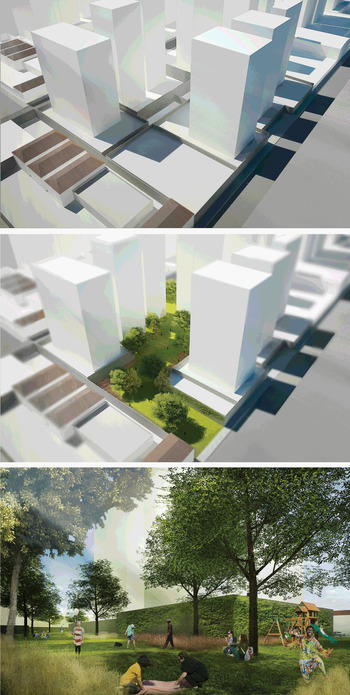
Figure 26.3 When walls come down, space can flow.
We start by tearing down walls and other physical barriers within the block. Then we open up some of these spaces to the city and start connecting blocks, parks, plazas, and squares. We redirect the logic of flows and invite nature in. We call neighbors to cohabitate in common spaces and revert the isolation of anonymity, bringing back the basic virtues of common ground: spontaneous encounters, sedimentation of bonds, and recognition of the other (Figure 26.4).

Figure 26.4 Open private spaces are joined and opened up for common use.
The consumption rhythm of nature is reversed, as a new city structure is defined. One where the void is constant and the city develops and densifies around it, permeated by it. We advocate for the comeback of communal knowledge and the radical and simple idea of being able to practice that basic element of democracy’s foundation: conviviality (Figure 26.5).
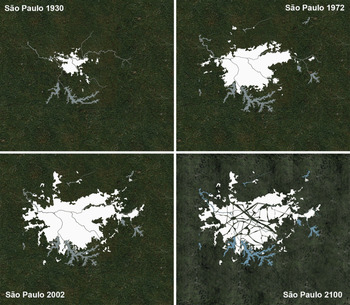
Figure 26.5 A timeline of expanding São Paulo, but in 2100 nature starts to come back in through green corridors and open spaces.
Many have used the analogy that cities evolve much like living organisms in a planetary ecosystem, with mechanisms for competition but also for cooperation, mutualism, and symbiosis. If we consider that humanity’s footprint on the planet is increasingly shaped by urban processes – and the perceptions and decisions made by urban citizens – and if we apply the analogy above, it makes sense that those “urban organisms,” these consumption centers and laboratories of innovation, should play a commensurate, central role in informing and influencing decision-makers at the global level. The UN, for instance, is, and will continue to be, the planetary-level consensual instrument that we have to prioritize investments and actions towards sustainable human settlements and urbanization.
Yet, when we look at the influence of local authorities and other local policy- and decision-makers in the agenda and investment policies of the UN and international institutions charged with global governance, we are still largely confronted with a loosely organized and under-coordinated scenario, in spite of a few encouraging initiatives. Our global governance systems are still not successful enough in giving room to, and coordinating the specific contributions and common interests of, our urban centers, which increasingly compose the world’s central nervous system – with our “sensory equipment” of the UN processes; our political, financial, and technical “muscles”; and our overall institutional “skeleton.” There are also huge gaps in this nervous system’s “central learning processes” – that is, in the production and distribution of knowledge on how best to promote and support, within the diversity of approaches across the globe, the coordination of governance efforts across different levels of government for sustainability.
Much progress has happened in the last ten years. At the Convention of Biological Diversity, when the coordination with subnational and local authorities first came up for deliberation in 2008, some delegates were concerned about the cost of additional demands of support from their numerous categories of subnational and local governments, and also by the political uncertainties linked to working with different levels of governance and their complex networks of influence. As the initiative matured, however, most realized that no additional resources were needed per se – in many countries, processes of articulation were already in place, and just needed to become more effective. For others, it was mostly a question of working with those subnational and local governments that were already leading, or interested, in the topic, and facilitating their encouragement to others. Today, on one hand, most parties report that they provide relatively low-cost guidance and technical support to subnational and local governments, and formally involve them in biodiversity strategies and actions plans, policies, and programmes; and on the other hand, many bottom-up approaches in which cities are leading in innovative global policies are developing around the world.
Local and subnational governments are supporting UN-Habitat within a Global Task Force in the Post-2015 Development Agenda and the New Urban Agenda. Many representative bodies and associations of cities are active in the UN, as well as in the international and regional arenas, and there are networks of cities and their mayors sharing lessons on collaborative processes to solve common problems.
Still, the current level of cooperation is limited when it comes to mechanisms that allow for global comanagement of programs, large-scale allocation of investments, and effective cooperation in knowledge generation and setting of targets. We need to expand these efforts towards another evolutionary leap. Let UN member countries explore innovative forms of cooperation with their subnational levels of government, each according to their circumstances – including at the global level. The International Labour Organization, for instance, is governed by a tripartite model where governments, representative bodies of businesses, and representative bodies of employees define joint agendas, each according to agreed mandates. The experience of municipal participatory budgeting can also be a source for inspiration for novel decision-making procedure at the global level.
We need organic, multilayered, and self-regulating governance systems for resource use, and we need sound scientific advice on how to set them up. For the UN’s science-policy interface to produce the needed solutions, we need the engagement of scientists as well as policy-makers, to find ways for the UN to function as a global assembly of local governments.
The UN’s New Urban Agenda and other outcomes of Habitat III, particularly the partnerships being prepared for action, are a great start. The full participation of knowledge producers as “neural systems” of our global urban planetary organism is required to translate needs and information across the science-policy interface. These academics, specialists, and knowledge-producers need to be aware of and be willing to influence the global politics of knowledge to help all levels of government to cooperate more closely, or they will miss the opportunity to make an enormous difference.
There has recently been a rapid decrease in the amount of open and natural space in Japan, and urban areas are particularly affected due to development. This has caused a decrease in the space available for children’s physical play in natural environments (Ito et al. Reference Ito, Fjørtoft, Manabe, Masuda, Kamada, Fujiwara, Muller, Werner and Kelcey2010). These are pressing issues; children’s play is crucial for learning about the structure of nature and is an essential aspect of environmental education. Indeed, early studies by American environmental psychologists described the value of complex environments and wild lands for children, and how children perceive and experience wild lands as places of their own domain (for example, see Hart Reference Hart1979 and Moore Reference Moore1986).
Children build relationships with landscape areas by having direct, hands-on interaction with vegetation during play and participation. The greening of school grounds increases the diversity of children’s school ground use, including more opportunities for pretend play. However, it could be even more beneficial and successful if children are included in the planning and long-term care of these spaces, from preliminary planning to assisting with ongoing maintenance. This would promote positive attitudes and caring behavior among children towards outdoor spaces as well as improve plant establishment.
If we convert even relatively small concrete structures in an urban area into functioning biotopes, they will also serve as stepping-stones for environmental and ecological education. Landscape diversity is related to different structures in topography and vegetation, which is important for children’s spontaneous play and activities. School biotopes are created using many different methods. Some have been successful, while many have failed and been abandoned. In Japan, many school biotopes have been constructed. The main aim of school biotopes is to provide ecological education for the children in urban areas. Some of them have been successful and were created in collaboration with children, teachers, planners, and people in the region; all use the space freely, as they want. However, there are some biotopes that have not been maintained and are ultimately abandoned. There are several reasons why such biotopes fail. First, children are not allowed to utilize the biotope due to an emphasis on its protection rather than its use. Second, planners fail to consider the larger regional ecosystem, which can lead to more harm than help. Third, the biotope is too small to have an ecological function. Finally, children and teachers do not use the biotope because it was planned and constructed by the local council without their participation (Ito et al. Reference Ito, Sudo and Fjørtoft2016).
One successful project was created in Fukuoka, a city in the south of Japan. The aim of this project was to create an area for children’s play and ecological education that could form part of an ecological network in their local urban area. The school actively sought to involve their students in the planning process in order to avoid the aforementioned problems. It aimed to create a place for children that could be easily approached, that safely utilized local flora, and that could help rehabilitate the regional ecosystem (Ito et al. Reference Ito, Sudo and Fjørtoft2016). As a result of this decision, children were able to freely use the space and felt more invested in its upkeep and use.
It is vital that planners and landscape designers consider landscape as an “Omniscape” (Numata Reference Numata1996; Ito et al. Reference Ito, Sudo and Fjørtoft2016) in which it is much more important to think of landscape planning as a “learnscape,” embracing not only the joy of seeing, but an exciting, more holistic way of using the body and senses for learning. Thus, it is very important to observe how children and teachers use their school’s biotope, which can help landscape designers and planners to create a plan that caters to their needs. Giving children more experiences with nature during their formative years creates more diverse cultures and biodiversity, even in urban areas.
In discussions about cities of the future, or perhaps, the future of cities, it is worth noting that one of the largest shifts to urban centers in world history is projected to occur in India in the next few decades (United Nations 2011). It is estimated that the middle class in Indian cities will more than triple from 31 million in 2013 to 114 million in 2025 (Economic Times 2011). Demographically, India is expected to add at least 10 million people to the job market each year for the next two decades (FICCI-Ernst & Young 2013). And Indian cities are estimated to be responsible for 75 percent of the country’s GDP in the next 15 years, with plans for a hundred new smart cities in the pipeline (Government of India 2014). Transitions of such scale place unprecedented pressures on energy resources: there is little doubt that the urban context promises to be a central determinant of the future of Indian energy, and by extension, of the future of India’s development.
Unravelling this future, however, is not straightforward. India is starting from a low base of development and faces enormous unmet energy needs, poor energy access, and increasing pressure from interrelated environmental concerns. How then, can it urbanize in a manner where energy needs are met, the local and global environment is preserved, and the economy and energy security are not put at risk?
One urban component that can help answer this question is the city’s built environment. There are three reasons for this. First, much of the energy consumption in cities takes place in buildings. Buildings consume more than a third of India’s electricity, and this number is set for dramatic increase with development and access to improved lifestyles (Kapoor et al. Reference Kapoor, Deshmukh and Lal2011). Yet, buildings are largely untapped in energy planning and the scale of unexploited energy efficiency potential is estimated to be of the order of 3 gigawatts per year (Natural Resources Defense Council 2012). Second, timing is of essence. Two-thirds of the commercial and high-rise residential buildings to exist between 2010 and 2030 are yet to be built (Kumar et al. Reference Kumar, Kapoor, Rawal, Seth and Walia2010). And given that buildings form long-lasting components of the economy and shape path dependencies for energy-use patterns, the next 15 years present a real occasion to lock in sustainable (or risky) consumption patterns. Third, unlike traditional pathways to meeting energy goals, the built environment offers benefits that go well beyond energy savings. These include carbon mitigation, improved energy security, job creation, and increased socioenvironmental outcomes.
Given this context, how can the role of India’s buildings be reimagined to enable better urban energy futures? Three interrelated aspects of the built environment can influence a transformative change in its energy use. The first of these is the technical, or the potential of available, accessible, and affordable energy saving technologies in the market. Most studies currently focus on this issue, in the form of macroeconomic and building-level analyses that determine the need and potential of technical efficiency. The next is the institutional or the formal and informal arrangements of regulations, finances, and capacities, which influence building energy policies and which are often in the form of voluntary or mandatory building energy codes or rating systems. And finally, it is the behavioral or the role of individual and organizational lifestyles in managing energy demand. Increasingly, a growing international literature points to the substantial potential that can be harnessed from tapping into behavioral solutions for energy savings, beyond technological fixes.
This framing deviates from India’s current technical approach to the built environment, which no doubt is an essential basis for decision-making. But this needs to be complemented with a knowledge base of institutional functioning, such as the governance of building energy policies, and equally, with the social and behavioral practices that enable energy savings. Ultimately, energy use in buildings is determined not just by how they designed, but also how they are built, commissioned, and used.
Broadening current approaches to include these interrelated aspects of the built environment will help create the often envisioned cities of the future. Moreover, since India and other transitioning economies are at the verge of much new construction, there is opportunity to configure urban infrastructure in a manner that can shape energy-use preferences and practices. Such an alternative conceptualization will require emphasizing the relationships between consumption trajectories, development, and socioenvironmental priorities. India’s built environment, where most of the energy demand infrastructure is yet to be built, provides a concrete space in which to stimulate such a shift.
In Gramscian terms, I believe in the role of the “organic intellectual” (Gottleib Reference Gottlieb1989). In Beuysian terms, I acknowledge an “extended concept of art” as was his idea of the Social Sculpture (Beuys Reference Beuys2004). However, these terms feel a little obscure or cultish for what I want to discuss here, even if they may be accurate, (art) historically speaking.
In considering the topic of urban sustainability – and specifically, how can we produce or coproduce knowledge that will propel the better cities of the future? – I think about a conspiracy between cultural production and dominant culture. I think of the instrumentalization of art and artists in the service of real estate agglomeration and the deadly perverse symbiosis of policy, such as “Quality of Life Enforcement” and the “Nuisance Abatement Action” (Goodman Reference Goodman2016) that can resultFootnote 1 when a city succumbs to what Sarah Schulman terms “The Gentrification of the Mind” (Schulman Reference Schulman2013).
In Representations of the Intellectual, Edward Said enumerates a set of pressures – or “impingements of modern professionalization” – he believed can “challenge the intellectual’s ingenuity and will.” These include specialization, attainment of expert status, and the “drift towards power and authority” (Said 1996: 82). His critique is not intended to challenge the acquisition of knowledge, but an observation that sometimes pedigreed “knowing” is best deployed in tandem with lay wisdom among its other forms. Shils (1959: 179) asserts “In every society … there are some persons with an unusual sensitivity to the sacred, an uncommon reflectiveness about the nature of the universe, and the rules which govern their society.” He is speaking of the intellectual in a way that can also describe the artist.
There is a double bind that serves to confuse the role of city building at the hands of nonexperts, the broader group to which artists are a subset when they go into residency at city agencies; are commissioned to make public art; and certainly when their interests and dedications become organically focused on social ills that societies encourage but fail to sustainably resource. This axis of obfuscation has traditionally rerouted the power of creativity (and perhaps what Said terms “ingenuity and will”) under or into a subservience to capital throughout recent history. This has the effect of leaving the artist in the “sacred man” predicament. In his seminal work Homo Sacer: Sovereign Power and Bare Life, Agamben (Reference Agamben1998) explains the original concept of homo sacer in Roman law, which is a person in the liminal state of being convicted of a crime not punishable by sacrifice (death), but who can be killed by a peer without the murder being considered homicide. He builds on the concept of homo sacer in order to show a contemporary society that maintains ambiguity through the use of positivist narratives, tropes, and wordplays may provide cover for maintaining the status quo.
Why do I put it in such harsh terms? It seems that the rhetoric of social practice art actually comes from the philanthropic fallout of the pan-Western subprime mortgage crisis that developed between 2007 and 2008. Raquel Rolnik, former UN Special Rapporteur on Adequate Housing and professor of architecture at the University of São Paulo, asserts that one important new development of social (specifically housing) movements is the expanding role of the cultural agent.Footnote 2 But the persistent loss of public money for art (as is typically the result of economic crises in a Western context) left a void. Into that void rushed a rhetoric of social art, social practice, creative place-making, artivism, and socially engaged art, as well as utilitarian and positivist sentiments. After the extreme and abrupt loss of culture funds, their replacement by “social art movements” was simply welcomed without being interrogated. Artists are faced with the double-bind of needing the social art money for their livelihoods, while also needing to critically engage the broader political economy in which they work: to understand and articulate the lived experience of precarity as a reality of neoliberal cultural production.
Cities need artists in the same way (or intensity) as Beuys suggests in a November 1969 interview in Artforum (Sharp Reference Sharp1969):
Art alone makes life possible – this is how radically I should like to formulate it. I would say that without art man is inconceivable in physiological terms.
A couple years ago, I was in a room full of grant-makers and philanthropists in which this question was asked: “How can we make sure that artists are as responsive to future natural disasters [as they were to Hurricane Sandy and the Calgary flooding]?” To which I reply: Art is as social as it has always been. Artists’ ideas are as vibrant as they have always been. However, to only pay attention to their societal function when faced with crises misses the point of art.
Is there a distinction between socially engaged art and just plain art? There is none. Does art produce knowledge? Of course – except when art merely supports a status quo.
Pursuing any vision of a thriving, agile city of the future requires grappling with a foe as ineluctable as gravity. That foe is inertia. It comes in two main varieties – infrastructural and societal. To convey what I mean, I’ll start with two moments from New York City Mayor Michael Bloomberg’s final term in office. In a 2013 report, his sustainability team featured this sobering finding: “Energy use in buildings accounts for 75 percent of New York City’s greenhouse gas emissions, and 80 percent of the buildings that will exist in 2050 are already here today.”Footnote 1
I hope you’ll stop and read that twice, slowly absorbing each word’s meaning in the context of what you’ve heard about grand visions for a rapid global transition to low-carbon societies in places for rich and poor. In older cities, a lot of what has to come is the kind of grinding door-to-door, boiler-by-boiler effort that isn’t well conveyed in shiny architectural renderings. An analyst in Mayor Bill de Blasio’s sustainability office told me in 2016 that, on closer look, 90 percent of 2050’s buildings exist today.)
That’s infrastructural inertia. It’s arguably a tougher enemy to overcome than fossil fuel lobbyists.
Then there’s societal inertia, much of which springs from basic reflexes embedded deep in human consciousness and is shaped by many of our social institutions, such as politics. People tend to overvalue the present, the familiar and proximal, while hyperbolically discounting future risks or hazards that are rare and unpredictable. This trait has served us well, so far. It’s no wonder elected officials mostly lead from behind, too often offering voters pothole repairs more than new commuter trains.
I don’t mean to pick on former Mayor Bloomberg, who in fact has been a tireless champion of action on climate change. But his final big speech on the subject as mayor, laying out plans for investing $20 billion by mid-century in making his city resilient, centered on a core theme that illustrates the potent pull of the status quo.
In the face of solid science pointing to centuries of sea-level rise ahead even with action to slow global warming, he said, “[A]s New Yorkers, we cannot and will not abandon our waterfront. It’s one of our greatest assets. We must protect it, not retreat from it.”Footnote 2
It’s easy to point a finger, but when talking to young people about climate change, I challenge them to pretend they’re the press secretary to a mayor of a coastal city and tasked with writing an effective speech proclaiming, “We will retreat.” I’ve tried many iterations myself and haven’t come up with a formulation yet that any mayor would embrace.
I also challenge young people to invent a new relationship with climate change and its impacts – working for the long haul to blunt warming, but moving beyond a defensive posture and embracing the design opportunities faced in a world with, among other novel features, no new normal coastline for centuries to come.
This all might sound insurmountably daunting, but I’ve seen bright possibilities, often involving innovations in education and communication. When she was director of sustainability for the New York City Department of Education, Ozgem Ornektekin oversaw a retrofitting program for heating and cooling systems in hundreds of buildings. After discussions with the city’s unions, she and others realized there weren’t enough skilled building technicians in the city to manage the new technology. So she pursued the creation of the High School for Energy and Technology in the Bronx to teach the skills needed to fill those jobs. Students there now routinely tour the boiler room (which ran on hand-shoveled coal just 20 years ago!) as part of their curriculum, learning about the school as a system, not just a collection of classrooms.
Imagine the potential for spreading smarter energy choices if every school had a boiler room tour.
As for the challenge of re-envisioning coastal cities in a world with (essentially) endlessly rising seas, compromise will be essential. Geographer Peirce Lewis’s description of New Orleans as both impossible and inevitable will increasingly apply to a host of metropolises around the world (Peirce Reference Peirce2013). In such instances, a managed (and politically tenable) retreat can be sold, as already has been the case in New York.
With federal funding and widespread support, New York City is taking the first steps by adopting the East Side Coastal Resiliency Project, which is seen as the first phase of a larger Dryline project – a buffer against storm surges that also serves as a public recreational and green corridor, designed by the Danish architectural firm Bjarke Ingels Group, with city involvement.
A day will come, perhaps not until well into the twenty-second century, when this defense will slide beneath the waves, given the inertia in the climate system and erosion of polar ice sheets.
But this is how the urban environment will evolve in the Anthropocene – Earth’s Age of Us – step by imperfect step, learning and adjusting, testing and faltering, then testing again, impossibly and inevitably.
The need for private sector finance is taking a commanding position in the emerging new urban agenda. Yet, there is an unavoidable tension between such calls and the ways in which current flows of private capital in land and property speculation are fueling urbanization across the world. For, at the heart of global urbanization is a challenge of rights – of access to and control over urban space, systems, and services, and of rights to decide urban futures.
This is, indeed, a super-wicked problem (Levin et al. Reference Levin, Cashore, Bernstein and Auld2012). On the one hand, it is argued that addressing climate change in urban areas requires market forces and private sector investment to fill the infrastructure deficit. On the other, the very problem of climate change and unbridled urbanization is a product of failures of the market and of state regulation. That which has caused the problem is now proposed as the solution.
That there is a need for investment in urban infrastructure and services is undeniable. Urban infrastructure in many parts of urban Asia is approaching the end of its lifespan and has been poorly maintained. In many cases, it has been designed for the demands of earlier decades, with little consideration of climate risks. Moreover, in many places, basic infrastructure is simply not there – whether it be water, sanitation, and drainage systems or public transport. It needs to be built and it needs to be paid for. The financial requirements are enormous, with estimates of global need from the World Economic Forum (n.d.) of one trillion dollars per year.
But the market is already hugely influential in how these systems take shape. Urban investment in much of Asia follows its own logic, often at odds with concerns for future climate change. That logic is often crudely profit-oriented – buy low, sell high. Such logic tends to target “low-value” land: vulnerable spaces such as wetlands and floodplain areas that are essential for water supply and drainage, or highly productive agricultural lands. Often, these lands are publicly owned or are utilized by marginalized people. National airports across Asia are built on such lands. Thailand’s international airport is built on the King Cobra Swamp.
Expansion of transport links also plays a role in fueling urban development, creating new values and additional opportunities for land speculation. As transport networks expand, established neighborhoods are pulled down and property prices in the newly created central areas are beyond the reach of many citizens.
Similarly, the industrial expansion that fuels much of the urbanization in Asia is itself dependent on dirty industries – coal provides much of the energy, and the petrochemical industry drives the new Special Economic Zones.
A common feature of all these investments is exploitation of weak legal frameworks for the environment and citizen rights (Friend et al. Reference Friend, Jarvie, Reed, Sutarto, Thinphanga and Toan2014). Rather than strengthening environmental legislation, requirements for Environmental Impact Assessments are being diluted by being presented as constraints on investment. Additionally, the basic monitoring information that could help manage specific investments and to reshape urban futures does not exist, or, if it does, it is not in the public domain. Most cities in Asia do not provide citizens access to basic information on air, water, and soil quality – let alone more contentious information on land-use plans.
Local government is often caught between playing the role of manager and entrepreneur, bearing the responsibility for attracting investment while also trying to play the role of regulator (Harvey Reference Harvey2006). Investment tends to win, with environmental legislation pushed aside in order to push through large-scale infrastructure development. Increasingly, public infrastructure, and even basic urban planning, lies in the domain of the private sector (Shatkin Reference Shatkin2007). The whole urban experiment is increasingly a private sector affair. Urban infrastructure tends to attract dirty money and open space for corruption.
Without a strong and unequivocal commitment to environmental legislation and to the rights of urban citizens, we risk that infrastructure proposed and financed under poorly defined notions of climate resilience in the new urban agenda will merely exacerbate existing inequalities. They will create new climate vulnerabilities and lock us into to a path that leads to environmental catastrophe.
We need commitments to specific sets of rights. These have a long history. Principle 10 of the Rio Declaration of the 1992 World Summit on Sustainable Development, which most of the sovereign states signed, commits to strengthening access rights: access to information, access to participation in decision-making, and access to redress and remedy. Access rights have been enshrined in the Aarhus Convention, a Europe-wide commitment. A similar convention needs to be extended for cities across the world. Further, the Right to the City that took such a prominent role in earlier international negotiations about urban futures, talks of rights of access and control over key urban systems – water, food, energy, shelter, mobility – as well as a safe environment, and public space, should be expanded. At the heart of both sets of rights is the right of urban people – whether they are recognized as citizens or not – to determine and reshape their urban futures. Similarly, decision-making frameworks for infrastructure projects – such as that of the World Commission on Dams (2000) – that are grounded in concepts of “rights and risks” should shape urban investments.
However, these kinds of commitments remain sadly lacking in the discourse of the new urban agenda. This is not to say that some cities will not be able to make significant progress in addressing climate vulnerabilities and risks, and in transforming their urban futures. But with growing inequality across the globe – within and between cities, between cities and their rural hinterlands – the likelihood is that networks of privileged resilient cities, and neighborhoods within them, will prosper while the more numerous, nonresilient cities will flounder.
Bringing finance to the table is certainly necessary. But it is essential that environmental safeguards and rights be strengthened to ensure that infrastructural investments in the new urban agenda meet the needs and aspirations of urban citizens. This is a challenge that cannot be left to states or markets alone; it requires citizens to be organized and engaged, supported by a legal framework that is applied from the source of investment to where it lands. This itself requires financial and political investment.
Imagine a baleen whale: immense, rendered in black and white, with a sliver of red – animated, yet evidently butchered – emerging from the meeting of brick and spackled walls. A spout of black liquid rises from its blowhole, its presence startling in an otherwise empty parking lot. Figure 33.1 is the work of Belgian artist ROA: aerosol paint applied meticulously in thin lines against exterior walls in the small coastal city of Stavanger, Norway. The piece is site-specific, sharply referencing to the Nordic welfare state as hunters of whales made rich by the discovery of oil. Is it possible to appreciate ROA’s whale in the absence of this knowledge of media, artist, and context? What if you mistakenly believe whales to be fish? Must you know that it is a mammal to appreciate its grandeur, its whaleness? Would your aesthetic appreciation be augmented if you knew whales to be mammals, members of the Cetacean order, related to dolphins and porpoises?

Figure 33.1 Mural created by ROA for the 2013 Nuart Festival in Stavanger, Norway.
Environmental philosopher Carlson (Reference Carlson1984) argues that knowledge of taxonomy is fundamental to the appreciation of a whale, that scientific knowledge is vital to the aesthetic appreciation of nature (Brady Reference Brady1998). Carlson’s positive aesthetics likens the aesthetic appreciation of nature to the appreciation of art and suggests that, like art, all nature can be beautiful if only you possess the right knowledge. Applying this logic to the urban environment, the following discussion suggests that a positive aesthetics approach may lead to greater appreciation of tagging and graffiti and its cultural and political significance. An aesthetic appreciation for tagging may facilitate more informed and creative graffiti policy in cities and allow for more democratic use of public space.
The figurative nature of street art and new muralism, such as ROA’s work, lends itself to aesthetic appreciation. It is easy to understand, admire, and respect. Tagging, on the contrary, is frequently maligned. It is a form of graffiti that involves writing a name in a consistent style in as many locations as possible. It has been linked to social disorder due to myths of moral panic and the “broken windows theory,” which has inspired strict anti-graffiti policies in many cities (Young Reference Young2014). Negative opinions of tagging have been shaped by a public conditioning carefully constructed by media and politicians, what Cresswell (Reference Cresswell1992: 332) describes as a “discourse of disorder.” In such policy climates, there is no good or bad graffiti: there is only bad graffiti (Iveson Reference Iveson2009). Such approaches do not accommodate aesthetic appreciation.
Aesthetic appreciation may also be fueled by experience, perception, intuition, and imagination, as Brady (Reference Brady1998) suggests for the aesthetic appreciation of nature. This type of appreciation, however, comes more easily with the representational and figurative. Appreciation for tagging may require more, including a breaking free of conventional social, cultural, and political constructions of urban space. This requires something of the viewer: a shift of mind and a thoughtful reconsidering. A positive aesthetic approach may enhance appreciation of tags by encouraging the viewer to consider encountered pieces more carefully and thoughtfully.
Though they may seem indecipherable, tags are replete with meaning and made with skill and artistry. The tags of many graffiti writers are highly diverse in style and media, are spatially distributed throughout the city – indicative of profound knowledge of the geography of cities – and reflect calligraphic technique and a sense of design. Many tags are site-specific, sometimes mirroring aspects of the urban landscape (Figure 33.2). There is a beauty to tags, proficiently executed, mindfully placed, betraying hidden respect for the landscape. There is also beauty in the collective expression that arises anonymously, in saturated and incremental collaborations that build up gradually (Figure 33.3). Challenging our views and fostering aesthetic appreciation may make policy-makers of us all, contribute to shifts in public opinion, acknowledge tagging and graffiti as forms of urban art, and open the city up for more democratic and creative expression and policy. As cities become increasingly commodified and citizens long for more free artistic and political expression, this type of appreciation and shift may be fundamental to creating more just and inclusive communities.

Figure 33.2 A tag by Vrom Seier mimics the adjacent wrought-iron fence in Oslo, Norway.

Figure 33.3 Various tags in Stavanger, Norway.
Cities have always been fundamental to the development and dynamic of the Arab world, which was only recently divided into nation states. However, when compared to cities in other regions, Arab cities are underresearched. The little data that is publically available on the Arab world is typically published by national government bodies and is thus focused on the national level. I was recently shocked when I could not find basic GDP data for a specific Arab capital city; all I could find were national statistics. The challenge of data availability is manifold, as it relates to the existence of comparable city-level data, to its public dissemination, and to the extraction of knowledge from this data. This chapter will focus on the first two aspects of the challenge: the creation and dissemination of data.
There are a number of emerging trends that will help nudge Arab cities towards action on this front. As cities compete regionally and globally for foreign investment, tourism, and talent, they will have to begin collecting and sharing data specific to their cities in order to better market themselves. Additionally, an increasing number of Arab cities are joining international networking and reporting initiatives, such as the C40 Climate Leadership Group (for example, Amman, Dubai) and the 100 Resilient Cities Challenge (for example, Byblos, Ramallah). These forums encourage cities to collect and share a wide range of data to inform city-level strategies and, ultimately, to contribute to global knowledge of cities. There is also a growing amount of spatial satellite data becoming publically available through research organizations (for example, the recent map of air pollution compiled by the Yale Environmental Performance Index). These data can act as incentives for cities to collect and share their own “bottom-up” data, or at least to better understand the existing data.
Where should cities begin on their journey of data collection? The recently released ISO 37120 (2014) standard sets out a series of indicators for city services and quality of life. These address strategic themes such as economy, health, environment, and governance, all of which are important aspects for cities regardless of scale or geography. Using this standard as a guide will allow cities to compare their performance against other cities, helping ensure that the data generated is meaningful and can catalyze action. The CDP (2016) questionnaire is another helpful guide, particularly on emerging topics such as climate change adaptation.
Much of this information may already exist within one or more city department. Depending on the ease of access, format, and accuracy of this data, the city can decide whether to use the existing data collection processes or to set up new ones. Cities may also decide to set up independent bodies for the collection and dissemination of this data or to delegate this responsibility to existing relevant authorities. When making this decision, it is important to keep in mind the strong tendency for individuals and organizations to be protective of their information. Setting up dedicated data collection entities may ultimately be the easier option.
The Abu Dhabi Spatial Data Infrastructure (n.d.) initiative, called AD-SDI, provides an example of a coordinated government effort to collect and share spatial data across entities. Currently, some of the data is also made available to the public. The AD-SDI is administered through the Abu Dhabi Systems and Information Centre and relies on the data contributions of over 60 government and semi-government stakeholders. As described in the initiative’s vision and illustrated in Figure 34.1, data are collected at a department level across all the involved stakeholders. It is then shared with and analyzed by an interdisciplinary strategic policy government body. Finally, the data are communicated to the Executive Council and are used to track performance against the emirate’s social, economic, and environmental vision. Each level is a two-way process, whereby the providers of data are simultaneously responding to and influencing a brief. It would be exciting to see this model applied at a wider scale, such that all the data collected can be influenced by and made available to the private sector, academia, and the wider public.

Figure 34.1 The Abu Dhabi Spatial Data Infrastructure Initiative’s vision
Herbert Girardet (Reference 407Girardet2014) described most urbanists as living in a “pre-Galilean” time where the city is the center of the universe; as we dig deeper into understanding the dynamics within a city, we must be cautious of falling into this trap. For example, even the most self-sufficient and sustainable cities rely on agricultural areas outside their borders, and often in other continents, to supply their food. Only by acknowledging and understanding this dependence on other systems can cities address their areas of vulnerability and build resilience in their own systems. City databases should extend to relevant data beyond the boundary of the city in order to provide policy-makers and the public with a full picture.
With the availability of a new generation of data collection and dissemination technology, Arab cities have the opportunity to set up their databases to make the most of this technology now, rather than having to retrofit later. What we need in order to develop truly sustainable and resilient cities is data that is accurate, up to date, and available – not just at the national level, but at the city level. We are fortunate to live in an age where this is an achievable goal.
The Sustainable Development Goals (SDGs) are ambitious in what they set as goals and targets: eliminating poverty; universally providing risk-reducing infrastructure and services; ensuring access to safe, adequate housing and justice; and so forth – and all by 2030. But the SDGs say little about how, by whom, and with what support this transformation is to be accomplished. There is also little discussion of systemic change – implying that the national governments and international agencies that have failed to meet so many goals and targets in the past can now transform their approaches and effectiveness. We have over 40 years of promises going back to Habitat I, the first UN Conference on Human Settlements, where all government representatives endorsed recommendations such as the universal provision for water and sanitation. There are actually many nations that had a lower proportion of their urban population with water piped to premises in 2015 than in 1990. Most urban centers in Africa and Asia have no sewers or other means to safely collect and dispose of human excreta or, if they do, these serve a small percentage of the population.
Most SDGs and their targets for urban areas are entirely or in part the responsibility of local governments. Of course, the actual division of responsibilities between municipal/city/metropolitan governments and higher levels of government varies largely by nation. In most, however, urban governments have responsibilities relevant to housing quality, land use, infrastructure (local roads, drains, piped water, and excreta management), and services (schools, primary health care, solid waste collection, policing, and emergency services). However, urban governments were not invited to make commitments to the SDGs.
The SDGs emphasize the need for new data to support and monitor progress, but this is data for national governments. It is not for generating the data that every urban government needs to be more effective, such as which neighborhoods and streets lack needed infrastructure and services, which diseases and causes of injuries and premature deaths within their jurisdiction need attention, and which settlements have high infant, child, and maternal mortality rates.
The most important actors for meeting the SDGs in urban areas are urban governments working with their citizens and civil society organizations. The majority of cities that have performed best in relation to past goals are in Latin America. These were driven by well-functioning local democracies and a new generation of elected mayors committed to their city and its citizens. This success was bolstered by measures such as participatory budgeting that gave citizens the right to prioritize what public investments were made in their neighborhoods. Of course, there is still much to do in Latin America and places where there is little progress, but there are enough cities that have shown new possibilities. Most drew not at all on international agencies.
Then there is what is perhaps the most important change in much of Africa and Asia: in over 30 countries, there are now organizations and federations of slum/shack dwellers or homeless people. At their foundation are savings groups mostly formed and managed by women. These federations have chosen a different strategy of protest. They recognize that they have to change the way that local governments and international NGOs view them. So they come to local governments and offer them their knowledge and capacity. They show local governments how they can design, build, and manage community toilets more effectively and efficiently than local public works or private contractors. They have shown an amazing ability to document and map each informal settlement in a city – data that local governments usually lack and have difficulty collecting.
These slum/shack dweller groups have shown their capacity to build good quality housing and manage upgrading. Some have even shown how to manage unavoidable large-scale relocations in ways that did not impoverish those who were moved – as in the work of the Kenyan and Indian federations managing the relocation of those living close to the railway tracks. Both federations negotiated smaller setbacks on each side of the rail lines so fewer people had to move. Now there are over 100 local governments that work with them, which increase the scale of what they can achieve. There is also the example of the Asian Coalition for Community Action that has catalyzed over a thousand community initiatives in 165 cities in 19 countries all over Asia. The coalition also helps each initiative join with others in its city to press local government to work with it.
Where are the needed responses from the SDGs for supporting the work of these slum/shack dweller groups? The federations have their own funds that are carefully managed and through which external support could be channeled. The umbrella group to which they belong (Slum/Shack Dwellers International) also manages an international fund to support member federations. Why do most international agencies ignore these? How can they claim to be participatory and accountable when they won’t work with and support representative organizations of the urban poor and their partnerships with local governments? What transformations would be possible if community-driven responses to the SDGs got just 1 percent of development assistance each year (around a billion dollars)?
We propose flipping the standard emphasis on economic growth as a means to reduce urban poverty by examining whether meeting the needs of the urban underserved can improve the economy and the environment of the city as a whole (Figure 36.4). This is our theory of change for how cities can become more sustainable.
Almost two decades into the “urban century,” with about 3.3 billion people residing in cities and a further increase of 2.5 billion urban residents expected by 2050, cities are acquiring prominence in national and global agendas (Kourtit et al. Reference Kourtit, Nijkamp and Geyer2015). Over 90 percent of the increase in urban population is expected in Asia and Africa (United Nations, Department of Economic and Social Affairs 2014), where urbanization can be a driver for poverty reduction and economic development (Figure 36.1). However, the unprecedented pace and scale of growth is placing heavy demands on urban services such as housing, transport, energy, water supply, and sanitation, and affecting people’s quality of life while increasing their vulnerability to climate impacts. A major opportunity thus lies in informing, empowering, and equipping city leaders to focus on inclusive urban development, while advancing crucial environmental, economic, and social objectives towards a more sustainable city.

Figure 36.1 Highest Urban Growth Expected in Asia and Africa.
Achieving sustainable cities is particularly challenging in regions of the Global South, where the urban population is growing the fastest and where the majority of the world’s urban population will reside in the coming decades (see Figure 36.1). For the first time in history, rapid urbanization is happening in countries where incomes have remained stagnant or economies are growing slowly, highlighting a weak relationship between urbanization and economic prosperity (United Nations, Department of Economic and Social Affairs 2014). In many of these countries, poverty is shifting from rural to urban areas, resulting in the “urbanization of poverty”. While three-quarters of the world’s poor reside in rural areas, the poor are urbanizing faster than the population as a whole, with poverty concentrating in cities (Ravallion et al. Reference Ravallion, Chen and Sangraula2007; UN-Habitat 2003). In most countries, this phenomenon contributes to the decline of poverty at the national level, which may be viewed by many as a positive trend. However, from the perspective of cities, the urbanization of poverty presents one of the most significant challenges to economic prosperity, environmental sustainability, and meeting the needs of growing populations. Many of the poorest cities in the world have the lowest budgets per capita to deal with the challenges of providing basic urban services and a decent quality of life. While not a perfect measure of a city’s capacity, budget per capita is a useful indicator of the resources available to a city. Budgets per capita of some of the fastest growing cities in the Global South are a fraction of that in cities of the Global North (Figure 36.2).

Figure 36.2 Comparison of city population and budget per capita in cities in Global South and North.
To solve challenges related to growing urban poverty, we must understand and operationalize the concept of urban poverty so that it can be linked to actions taken by urban practitioners and decision-makers. Conceptualizations of urban poverty range from those based on income or consumption deprivation, such as the standardized poverty lines that measure how many people live on less than two dollars a day, to broader, more multidimensional indices of human well-being, and to those based on vulnerability, social exclusion, and the lack of political power. All of these have their utilities, as well as documented strengths and weaknesses.
As urban planners are concerned with the quality of life of all residents in a city and aware of the limited impact that national and subnational poverty reduction programs have had on stemming the rise of urban poverty, we propose a new way to operationalize urban poverty in the Global South in terms of the urban underserved. We define the urban underserved as low- and lower-middle income urban residents who lack access to one or more basic services such as housing, water, energy, and transportation. They lack access to these services across various dimensions of access – the quality and quantity of the service, proximity to the service (for example, distance to public transport stops and jobs), affordability of the service, and time during which access exists (for example, duration of power or water supply and wait time for public transport). In most cities of the Global South, the composition of the urban underserved correlates strongly with income level, although the concept is broader than simply an income-based poverty line (Figure 36.3).

Figure 36.3 Income distribution in cities and the urban underserved.

Figure 36.4 Equity as an entry point to a more sustainable city – a theory of change.
Based on interviews in seven countries – India, Brazil, Mexico, China, Ghana, Kenya, and Nigeria – we find several common problems faced by urban residents in their level of access to reliable and affordable urban services. The urban services we include are secure and affordable housing; reliable and affordable potable water; clean, reliable, and affordable energy; and safe, convenient, and affordable transportation. These are all urgent needs that must be met in the short term; if not adequately addressed, the urban underserved are compelled to self-provide them in informal, illegal, expensive, or unsafe ways. These are all also areas that involve the built environment and infrastructure choices, where making poor, myopic decisions can result in long-term consequences that are extremely difficult and costly to reverse. There is thus a serious lock-in effect.
Urban services that fall at the intersection of fulfilling urgent needs of a growing urban population and avoiding unsustainable lock-in are the highest priorities for cities to get right. If these issues are not resolved for the urban underserved, the costs to the city as a whole are enormous. Progress in these high-priority areas requires coalitions of urban change agents working towards a shared vision, working within important enabling conditions of governance, urban financing, and the capacity to plan, manage, and sustain change over time. When cities make progress in one of these high-priority areas that touch many people’s lives, the momentum of these positive changes can affect transformations in other areas of urban development, with the potential to trigger broader, cross-sectoral, citywide transformation, as has been seen in cities such as Medellín and Surat.
Today is the day. Imagine that we wake up and, suddenly, everything has changed. The way we live, the places we live in. Social injustice, discrimination, poverty, hunger, homelessness, illiteracy; spatial segregation, lack of basic infrastructure and services; evictions and forced displacements; insecurity and violence; corruption, authoritarian and undemocratic regimes; environmental degradation and increasing vulnerability to disasters; unsustainable production, distribution, consumption, transportation; and settlement patterns, all are just a terrible memory from the past.
Today we wake up and, suddenly, our societies are guaranteeing that every human being on this planet and each member of the generations to come has the opportunity to live a fulfilling life “in dignity, good health, safety, happiness and hope.”Footnote 1 Nobody suffers discrimination or violations of their human rights and fundamental freedoms; we all have access to adequate housing, food and nutrition, education, culture and recreation, health, sufficient income, justice, and peace.
Imagine that, today, every person and every community is playing a fundamental role in making all this possible. Imagine that every actor and sector participates in truly democratic and effective decision-making processes. Imagine that local, provincial, and national authorities and all other public institutions fulfil their mandate of governing by obeying, ensuring “responsiveness to the needs of people,” respecting participation, transparency, and accountability. Imagine that multilateral agencies and the private sector are also working under the same principles.
Imagine that, today, the economy (production, market, money) has changed its rules and mechanisms, which will now work on the basis of complementariness and solidarity, rather than of competition and competitiveness, to provide the goods and services for people’s well-being. Imagine that our societies provide fair compensation to those in charge of socially relevant work, and that no one takes more than what is necessary for a good living.
Imagine that, today, we all operate with “respect for the carrying capacity of ecosystems, we all cooperate in a spirit of global partnership to conserve, protect and restore the health and integrity of the Earth’s ecosystem.” We all commit to “promote the conservation, rehabilitation and maintenance of buildings, monuments, open spaces, landscapes and settlement patterns of historical, cultural, architectural, natural, religious and spiritual value.”
But how did we get here?
We decided to take seriously our commitments, understanding that to be able to meet them, we needed to get back and honor the different types of knowledge that our communities have been producing for generations, focusing on addressing social justice while respecting Mother Earth’s rights.
We built social consensus around the worldviews that provided the ethical transformations we needed, making explicit the multiple links between the principles and values that promote and protect the commons, the responsibility to change urban life (right to the city) and the buen vivirFootnote 2 for all, respecting autonomy and self-determination through both individual and collective rights.
We finally understood that the urban life was neither inevitable nor the unique desirable way of living, and that a fulfilling life in dignity, multiculturalism, diversity, and peace was possible only if possible for everyone, everywhere.
We established a social, solidarity, sharing, and care economy that expanded access to products, services, and opportunities for human well-being, protecting and supporting nonprofit and cooperative institutions and activities.
We committed ourselves to the full implementation of the social function of land and property, guaranteeing democratic access to a place to live while promoting equitable and sustainable use of available land and the reuse of vacant or subutilized units in favor of social housing and community projects. We started prioritizing people suffering from homelessness and populations living in inadequate housing conditions.
Today might be the day to look behind, in order to see ahead.
The global community has just committed herself to a new, ambitious 2030 Development Agenda and an Urban Agenda for the next 20 years. But some fundamental questions are still floating in the air and should be tackled if we really want to move forward on implementation of these agendas. What kind of knowledge will we need in order to achieve them? What kind of knowledge, and for whom, will we produce in that process? What kind of capacity building do we need to provide for the different actors involved? What kind of professionals will we need to train? And how is all that going to transform us as individuals and societies?
It would certainly take more than a long, deep dream to make that day come true. Still, thousands of experiences all over the world are showing us that this utopia is possible.
Cities are an ancient form of human settlement. Successful ones continue to out-survive people, companies, cultural institutions, nonprofit organizations, and governments. The reason they do is because of their capacity to continuously adapt to the challenges particular to a place. Obviously, cities evolve differently based on their topography, natural resources, demographic composition, etc., but the real success of any city is especially dependent on one thing: connectivity. If a city’s land use, design, and planning enable connections between people – easing the transfer of goods, services, knowledge, and resources – then public policy decision-making and private investment will reflect local conditions, and the city will thrive. But if a city’s capacity to connect itself and operate holistically across sectors, communities, and jurisdictions is compromised, its viability is threatened.
Alas, over the last century, urban development in North America has been more informed by disconnection: land-use decisions were not properly connected to local knowledge; transit planning didn’t benefit from reliable data, which was either not collected adequately or held proprietarily; housing designs and locations were set without the insights of neighbors who knew the unique needs and attributes of their communities and what would fit best, and any regional environmental impacts from new development weren’t taken into consideration. The results from this disconnection can be seen in out-of-scale development that disrupts well-functioning streetscapes, expressways bifurcating vibrant commercial corridors, and public housing cited on flood plains. Sadly, the urban development mistakes committed over the last several decades in North America are being potentially repeated, as the Global South also rapidly urbanizes.
Were these development mistakes the result of a lack of knowledge? I doubt it. What continues to be lacking are reliable vehicles for locally generated knowledge to be incorporated into the decision-making processes that affect city livability. Will technology make it easier to ensure that decision-making affecting the built environment is informed by local knowledge? Proponents of big data and smart cities are suggesting yes. Perhaps, but only if they enable the sharing of tacit knowledge and hyper-local expertise, to produce place-specific innovations. These are tools, a means, not an end, for enabling agents within the city to communicate, collaborate, and codevelop. The proliferation of data and technology, advanced by private interests, also carries the risk that once again city leaders will be seduced by the promise of a “grand solution”, this time to make your city “smart” or “data rich.” Just as before when expressways, or large public housing developments were embraced as the latest universal big idea to solve an urban problem, we must be very wary of large-scale solutions that smother local knowledge and stifle innovation that is particular to place. Better data are valuable. But a smarter city is only that if it makes possible integrated decision-making that breaks silos, addresses policy fragmentation, and applies any new information in fundamentally innovative ways.
Communities know what makes their neighborhoods work well, as well as what inhibits them. The New Orleans Community Data Center (www.datacenterresearch.org/) demonstrated this after Katrina, identifying data gaps and local information sources, which proved critical to the city’s advocacy for recovery investment. Boston’s Office of Urban Mechanics http://newurbanmechanics.org/ and New York City’s Civic Hall http://civichall.org/ are other examples of local entities that are providing a bridge between local urban challenges, knowledge and opportunities for innovation. Looser alliances in cities that connect people across sectors are also important to building knowledge, such as Future Capetown (http://futurecapetown.com/), the Bandung Creative City Forum (http://bandungcreativecityforum.wordpress.com), and Toronto’s Civic Action (http://civicaction.ca/).
To be lasting and effective, we need multiple forms of bespoke urbanism. Outsiders have too often mistaken the complex weave of neighborhood exchange and improvization, that in fact make things work in a place, as examples of inefficiency and backwardness. But in fact, these patterns have evolved over time and work brilliantly within their local context. The determination of their effectiveness must be assessed locally, as should potential “fixes” to anticipate any unintended consequences. Contemporary city builders should observe the Hippocratic Oath, which reflects the Latin adage Primum non nocere (“First do no harm”) when venturing into communities to ”improve” them.
Various technologies have the potential to strengthen the city, but it is the particularities of a place, derived from local knowledge, practice, preferences, and culture – which will make it livable, sustainable, and real. Cities need innovations that connect to the local.
We are moving to the era of digital towns and villages that are connected via the Internet for their commercial, financial, administrative, and social activities. Digital settlements will be the future of development; they are the trajectory of our urban planet.
With the urgent need for sustainable, inclusive, resilient and prosperous cities, as expressed in the Sustainable Development Goals and the Paris Agreement, and the New Urban Agenda cities must be reconsidered in terms of planning; housing; infrastructure development; economic development; environmental sustainability; social development; disaster exposure and resilience; and peace and security. The planning of twenty-first century cities must take into consideration the emergence of Information Communications Technology (ICT) infrastructure, social media, and the data revolution. This revolution is not only at the technical level but also reflects dynamic changes in modern life. More importantly, with the development of ICT infrastructure, workplaces are becoming more spatially mobile. The dichotomy between settlements, particularly between cities, towns, and villages, is becoming less relevant than it was traditionally perceived to be. Comparative advantages associated with urban settings, such as diffusion of ideas, innovation, economies of scale, and agglomeration, can also be achieved in connected sparse settlements. Today, settlements must be planned in consideration of these emerging parameters and conditions that point towards a new form of urbanization, one where digitally connected towns and villages offer social, economic, and political advantages traditionally only found in large, dense cities.
Over the past 15 years, national governments have created legal institutional frameworks to support regulatory mechanisms on the development and use of ICT. According to the World Bank (2016), between 2005 and 2015, the number of Internet users increased from 1 billion to 3.2 billion. Today, mobile phones are present in the majority of households (varying from 73 percent in sub-Saharan Africa to 98 percent in high-income countries), easing potential access to the Internet. By 2030, access to other ICT infrastructures will also be quasi-universal. Only 31 percent of the population in developing countries had access in 2014, compared with 80 percent in high-income countries (World Bank 2016). Making the Internet universally accessible and affordable should be a global priority.
The growth in ICT has given birth to e-commerce, e-banking, and so on – all of which have led to the creation of “digital villages” that will likely become the norm by the late twenty-first century, if not earlier. This will challenge all projections of urban population and size to 2050 and beyond. Although declines in the sizes of cities have been observed in past decades, the trend was mainly associated with suburbanization and the development of small- and medium-sized cities, it will be further pronounced with the emergence of new forms of digital human settlements, traditionally known as villages.
There are many examples of digitally served villages around the globe in which ICT advances have made spatial obstacles irrelevant and have opened up remote areas to the world with great local benefits. For example, the economy of the village Dongfeng in China’s Jiangsu province drastically changed in 2006 when a migrant from the village returned to open an online shop (World Bank 2016). His successful experience was expanded to other sectors; four years later, the village had six board-processing factories, two metal parts factories, 15 logistics companies, and seven computer stores serving 400 households engaged in online sales throughout China and in neighboring countries. In Uganda, wider mobile phone coverage is contributing to increased sale of perishable crops, such as bananas, from farmers in remote areas (Muto and Yamano Reference Muto and Yamano2009). In India, e-Choupal is easing access to the Internet, making it possible for farmers to place orders for inputs and to directly negotiate the sale of their produce with buyers (World Bank 2016). E-Choupal services reach over four million farmers growing a range of crops in over 35,000 villages through 6,500 kiosks across 10 states (www.itcportal.com/businesses/agri-business/e-choupal.aspx).
ICT makes it easier for people to buy and sell products beyond geographical boundaries, reduces the cost of transactions by a large margin, and opens remote areas to new opportunities. Yet, it also renders cities and villages that lack versatility irrelevant through ICT’s ability to shift to areas that can adapt and transform with its rapid evolution. Through ICT, villages have access to the latest innovations, can participate in democratic debates, and make their voices heard. Today, voices are not just originating from the cities but also from the villages. Finally, the emergence of these digitally served towns and villages will foster economic development without damaging the environment; there will be less consumption of land for private property and fewer cars, making streets friendly and healthy for walking and cycling. In the long term, this will reduce carbon emissions, promote the creation of low-carbon settlements, reduce land degradation, and promote biodiversity. These digitally connected settlements will provide economic advantages at a larger scale while safeguarding the environment. They will be sustainable, inclusive, and prosperous. This will mark the end of big cities and the rise of digital urbanization.
Artists are underutilized assets for cities and the environment: People often perceive climate change and other environmental risks as future events, happening to people in places far away, outside their own experience. Art has the power to involve people through visceral and place-based experiences, direct personal connection, and emotional engagement to evoke reaction and inspire action.
City as Living Laboratory (CALL) proposes that sustainability can be made tangible and accessible to communities through the arts. We have been developing our methodology since 2009 with the intention of articulating a replicable framework that can be used in other cities. CALL’s framework consists of research, dialogues, and projects that intend to harness a sense of wonder and optimism to make people curious about their surroundings.
Results require long-term engagements and interdisciplinary teams: In Indianapolis in late September 2015, a community-wide project focusing on the tributaries of the White River was launched through with the support of a National Science Foundation grant. This grew out of FLOW, a project I completed in 2011 that drew attention to a six-mile stretch of the White River. That FLOW initiative was catalytic; it lead to the formation of a community organization, Reconnecting to Our Waterways, or ROW, that partnered on the grant, along with Butler University and the New Knowledge Organization. For this citywide project, I developed the conceptual framework and visual components of STREAM / LINES to highlight these five tributaries of the White River through contextual, immersive, and game-like experiences of the selected sites and their unique characteristics. It was a collaborative project involving a game designer, scientists, poets, musicians, and dancers.
Engagement benefits from multiple access points: In five modest neighbourhoods, a cluster of mirrors and red beams radiate out from a central point to nearby streams and waterways: these elements stake out a territory for observation. At the center, visitors can step up onto a pedestal to see their own image in a four-foot diameter mirror that places them in the middle of the reflected landscape while casting them in the role of the statue/activator/principal character. Single words and texts are reflected in the smaller mirrors that dot the site; some of the texts are poems, while others are prompts that encourage exploration. All are intended to provoke the visitor’s curiosity and send them out to the nearby waterways.
Engaging all of the senses is key: Whether following a red beam out to observe habitat at a stream’s edge, trying to walk at the same pace as the flow of the stream, or listening to music composed for each unique location, the goal is to engage citizens with a place-based experience of the waterways that supports every aspect of their lives. The installations are like anchors, the starting points for explorations, and will be activated over time by walks and dialogues with scientists and artists, by performances and readings. Engagement of the sites through programming is essential. The goal is to allow the people of Indianapolis to begin to imagine what they would like to see their streams, lakes, and rivers become in the future.
Diverse perspectives and community input are essential: The projects and contingent programming are part of a process of engagement that depends on the collaborative efforts of communities, various experts, and artists. Finding willing and enthusiastic participants is key. We look for people with very different ways of regarding the landscape, who can reveal their own observations to others: a climatologist points out the link between traffic patterns and ways to enjoy good weekend weather, while a poet reflects on the change over time of a particular place, or an ecologist reveals more about a day in the life of a turtle, or a community member describes the stream she knew before it was put in a pipe. Each of these “experts” can add a layer of insight into our surroundings. We are given a more complete picture of our landscape and our place in it.
Systemic challenges like global warming must be linked to the everyday: CALL proposes that rather than assuming only a top-down, governmental approach, we engage communities and citizens on the street with the pressing issues of our times. Rather than only focusing on a negative forecast of the future, the goal is to bring people together and to provide a platform to explore innovative, positive ways forward in creating socially and environmentally sustainable communities.
To promote/facilitate replication and scaling up, CALL focuses on specific principles and strategies: The City as Living Laboratory is building a methodology to engage artists with a process to be able to work with other experts, communities, and policy-makers to make lives of sustenance available to all.The replicable framework we are developing focuses on:
Encouraging inquiry and exploration
Envisioning future possibilities
Promoting interdisciplinary and dynamic thinking
Encouraging and promoting innovation and practical solutions
Bringing diverse cultural perspectives to the projects
Harnessing interdisciplinary collaborations led by artists
Producing distinctive artistic contributions
It is important that artists be recognized as essential members of the team addressing social and environmental issues in our cities and communities. We can have value beyond supplying artwork for the 1 percent of the population who are able to participate in the art market. Artists in the broadest sense – poets, musicians, dancers, and performers of all types – are an essential resource that must be recognized for the significance of the contribution they can make to help create an equitable and sustainable society.
Like most cities, Nairobi has its good sides: a national park, fabulous nightspots, and a vibrant, youthful population. Unfortunately, this young population is growing faster than employment opportunities; hence, many Nairobians must resort to informal work, such as street vending.
Street vendors, better known locally as “hawkers,” are the embodiment of what it is to survive in Nairobi. Out of sheer necessity, they break city bylaws with reckless abandon; they use any available street space to sell goods that range from insecticides to secondhand designer clothing. They also ingeniously display these goods on propped up carton boxes, which can be hurriedly folded up and sprung onto their backs as they dash off to escape the clutches of Nairobi City County, or NCC, officials. The NCC (colloquially referred to as kanjo) are themselves breakers of the law; they extort bribes and resort to violence in their frequent confrontations with the hawkers (Mungai Reference Mungai2016).
In its defense, the NCC, in its role as the local government of the city of Nairobi, is currently reviewing some of the city bylaws in a new attempt to bring order to downtown Nairobi. For instance, two large markets on the fringes of the city center have been designated for the hawkers (Odhiambo Reference Odhiambo2015). The hawkers, however, complain that they don’t get enough customers in those markets, so they troop back into the heart of the city, where they set up shop in front of banks, offices, and hotels. Thus continues the Nairobi hawker menace – a menace that is the obvious result of poor planning and bad management by the city.
Considering that Nairobi is Kenya’s capital, one would expect some foresight in its planning. Unfortunately, the city has expanded haphazardly and developed into fragmented neighbourhoods. There is an Integrated Urban Development Master Plan in the works (Niuplan 2016), but for now, Nairobians are left to their own devices. And this is not just the story of Nairobi; the development trajectory of most sub-Saharan African cities is haphazard, due in part to the inappropriateness of prevailing urban planning methods, which are, more often than not, borrowed from the Global North (Chen and Skinner Reference Chen, Skinner, Parnell and Oldfield2014).
To remedy the urban planning debacle in downtown Nairobi, some negotiations have taken place between three interest groups: the hawkers (who formed their own Nairobi Street Hawkers Association), the NCC, and the Nairobi Central Business District Association, which is made up of business owners (Kamunyori Reference Kamunyori2007). For such talks to bear fruit, Nairobi needs urban negotiators who can creatively facilitate inclusive dialogue.
One possible way to enhance city dialogues in Nairobi is through design thinking, which provides methods for understanding and facilitating long-term societal change via a user-centered, problem-focused approach (Brown and Wyatt Reference Brown and Wyatt2015).
A user-centered approach in planning Nairobi is urgently needed to ensure that the needs and knowledge of street hawkers and other vulnerable groups are brought to bear in developing the city. For example, the tacit design knowledge of street hawkers in navigating the city and dealing with daily challenges in downtown Nairobi could greatly enhance plans for better navigation and access in Nairobi’s streets.
Ultimately, the quest for sanity and order in Nairobi is a long-term project. Design thinking experts, along with other professionals, can better contribute to such a project if they can negotiate the clash between formal, informal, and even outright-illegal processes that, together, assemble Nairobi.
Record-breaking weather patterns are becoming a defining feature of our world. Although to some people in the United States, this simply looks like odd weather, it is irrefutable that climate change is here. Unless we start taking care of Earth, it will soon fall to destruction. Every year, low-lying countries and communities face rising sea levels that are threatening their existence. For someone born and raised in the United States with roots in Bangladesh (Umamah), knowing that this country will be underwater by the end of the centuryFootnote 1 is sickening. Climate change affects us all, whether it be coastal cities in the United States or island nations all together, everyone will face the consequences of this global issue.
Despite the overwhelming evidence, many in the United States still doubt that climate change is real (or at least a threat). In New York City, though, there is little doubt. We have seen the effects of climate change firsthand in 2012’s Superstorm Sandy. In author Kate’s neighborhood in Queens, NY, many homes were damaged by fallen trees, and there was flooding all over the city. The damage was so severe that many of her good friends were forced to relocate permanently. The level of destruction was massive; entire neighbourhoods, such as Far Rockaway and parts of Lower Manhattan and Staten Island, were wiped out. It has been proven that storms have intensified due to climate change, producing storms such as such as Sandy, and future storms will only increase in severityFootnote 2. In the aftermath of Superstorm Sandy, we realized how uninformed we were about climate change. We also learned that youth will be disproportionately affected by climate change because we are the ones inheriting a sick planet. Knowing this and realizing that apathy will not solve this problem, we decided to take action. Through our involvement with Global Kids, a nonprofit educational organization for youth leadership and global education, we became engaged citizens.
Although it may seem daunting, everyone, especially youth, can contribute to solving the climate change problem by encouraging, nudging, and even annoying government officials into taking action. Disinvestment campaigns promoted by hundreds of college students, which seek to drive academic institutions to disinvest from fossil fuel holdings, is an example of collective action’s effectiveness.
Here in New York City, we have taken a stand locally with our climate change education campaign. It began in 2013 when, as high school students, we decided the best way for us to fight climate change was through education. Climate education has the power to enlighten people on the science of climate change and to prepare people to find solutions. We reached out to New York City Council Member Costa Constantinides to express our concerns for the lack of climate change education in all New York City public schools. Constantinides represents parts of Queens that were particularly affected by hurricane Sandy; therefore, he has a particular interest in climate change. In addition to his interest in safeguarding his district, Constantinides also had a history of advocating for youth and supporting similar resolutions. By working with him, we were able to make connections with other city officials to support the resolution. Thanks in part to our advocacy efforts, in August 2014, NYC Council Members Constantinides and Donovan Richards introduced Resolution 0375 calling for climate change education in all New York State schools, grades K–12.
Since the introduction of Resolution 0375, we have contacted more New York City Council Members, often on a daily basis, to gain their support. Prior to this campaign, many of us had no experience in lobbying. While this process requires dedication and commitment, it can be a surprisingly simple job. Every week we were either calling offices, writing letters, emailing, and/or visiting offices to lobby for the resolution. When we went on these visits, we would explain our cause and ask for support; if we already had the individual’s support, we would ask for strategies to continue our momentum.
On April 19, 2016, along with ten other Global Kids high school students, we testified before the New York City Council’s Committee on Education in support of Resolution 0375. After listening to the reasons why we demand climate education, the Education Committee unanimously voted in favor of the resolution. During the hearing, Council Member Constantinides noted that Global Kids youth activists “make government work.” The next day, the resolution passed through the full City Council with overwhelming support.
It has been empowering to work on this campaign because it truly gives a voice to youth, those who have the most to lose from climate change. We learned that when we partnered with like-minded government officials, including our staunch ally, Council Member Constantinides, we could make a powerful difference. Youth will be the most affected by the damaging consequences of climate change, but youth also possess the energy, power, and enthusiasm to create real change to make better environments for all of us.
43.1 Preamble
Cities last for centuries – but when the climate is changing even faster than fashion, urban planning requires preparedness to experiment. Before entering the lexicon of the billions born after fateful decisions were made to cook the planet, city-making ideas that might repair past damage must be tested in practice, as fractals of the cities to which they aspire.
Then, the children can take the high ground.
Morally, it’s already theirs.
43.1.1 4˚C and Rising
Hot, humid, mid-winter in southern Australia. Space mirrors broken. Schools closed. Kids in the factories. Borgmol Industries bought the skies, stopped us frying. Borgmalazon drones deliver playthings and food. I have a license. I pay my fees. I know all my passwords.
Food’s scarce, tastes awful; rationed, like the water. SiBorg’s TerrorWatch stops crimes before they start. Petty criminals can’t beat SmartCityData. The city is smarter than its citizens. Still, hackers run resistance. Water gets stolen. Wars are started over less.
43.1.2 2˚C and Ecocities
I wake in turmoil, screaming. Matilda’s cool hand on my brow. The wedding ring she laughed at glinting in the morning light. We lie quietly, sunlight playing across the sheets.
Out on the balcony, our vine adds dappled shade and grapes to the breakfast she brought from the café two floors down. We watch the morning flow down the street where people struggle to protect our world from Borgmol and drones and omniscient cities and oceans out of control.
Someone’s got to do it.
The sea wall is being extended. Greenland’s catastrophic ice melt is being matched by Antarctica and glaciers are shrinking fast. We’ve stabilised the climate but the sea will rise for centuries. So we’re retreating in places where we have no choice, or building sea walls and platforms for our cities like Mesopotamians, shaping the land ocean-side to fit the flow of natural systems. Nay-sayers said don’t interfere, let nature run its course – we said screw you, we are nature.
Old cities live on, fractals of the new are added. Adjustments between them take place. Ecological corridors fit the evolving urban form, embraced by new shorelines. If they’re low enough, the sprawling suburbs of the infernal combustion engine are replaced by fish farms. Suburbanites and the rest of the dispossessed are relocated to ecocities.
Our Great Wall was the first. Brutally attacked when just an idea, it’s evolving, its community fused together by our fight for survival.
Solar light rail connects our coastal town of 50,000 to others. Inland, sprawl is undone. Land is released for nature. We still have to fight for it. Wind farms float where coal carriers and tankers once spewed their filth. Our building datum is 15 metres; a pattern repeated: Shanghai, London, Cairo, Guyana, Florida, Mexico, Holland, Vietnam, Bangladesh, the Maldives … we’re achieving the “impossible!”
43.1.3 4˚C and Rising
Sometimes, I see the yellow sky. But I’ve got drugs from the pharmadrones. Everybody takes them. It’s what remains from the ruins of Welfare.
I’m a climate refugee. I came on a small boat, pregnant with hope and child. My son was born and died in a storm that spared everyone else aboard. God help me, haven’t I paid my bills? Didn’t I give you my password? Don’t I have a license to live? Can’t anybody HELP ME?
43.1.4 2˚C and Ecocities
Greenery is everywhere. Matilda and I head up to our apartment building’s roof garden. Circling the lightwell’s cascading vegetation and handrail of flowing water, my 4˚ nightmare begins to fade.
“It’s beauty-in-progress, eh?” says Matilda, “I remember when people thought all new buildings had to be ugly and nature was doomed!”
She’s right. Shackled to a system run by the 1 percent, escaping from ugly reality meant images on screens tracking everything you did. In the prison of daily life you’d make choices as a conditioned consumer but never as a free citizen. There were troops in the streets. Now it’s easy to walk and cycle; easy to meet without appointments, though not all the troops have gone.
In the face of climate change and fascist corporations, reshaping society was never going to be a picnic, but we are the apes that became a force of nature. Now we understand our power. For many, egalitarianism, compassion, and sharing are still dirty words but they’re having to deal with increasing evidence that we can build cities that nurture our lives as citizens and restore the balance of nature.
And when they’re sufficiently provoked to respond in kind, we are flattered by their mimicry.
43.2 PostAmble
We know enough to make the difference between an ecocity future and hell, but the decisions that make that choice must be made now, while the children are young enough to benefit – before they are old enough to express the anger and resentment their elders deserve.
Now that urban sustainability is a global goal with the potential to undo the partitioning of disciplines within academic and nonacademic institutions, changes in the culture of knowledge creation are likely to differ in form and scale. Conventionally, urban development is a city-specific issue, limited to finding knowledge on urban forms that make it easier to live and work in the city. But because urban development has become a planetary and complex challenge, sustainability relies on knowledge beyond one’s field of comfort. If we use the current economic model of extracting more from nature, it would mean production and consumption that is beyond what the planet can offer and an increase in international resource conflicts. So, how do we ensure less or recyclable use of resources for the same economic output by cities for the entire global population? This is a planetary and complex question, characterized by predictable and unpredictable scenarios; expected and unprecedented overlaps in stakeholder interests; and a multiplicity of solutions that are never completely right, but rarely completely wrong.
Because urban sustainability has posed multiple, interconnected layers of planetary and complex questions, collaborative knowledge creation – that is, knowledge cocreation – is necessary. Knowledge cocreation is a mechanism for solution-focused interfaces between academics and nonacademics (including industry figures, policy-makers, and members of society). The key principle that has defined knowledge cocreation globally is that nonacademics and academics should have an equal chance to contribute to the framing of research questions and to the design methodologies for finding and experimenting with options for urban sustainability. For academics and nonacademics to operate on equal footing requires putting a dent in the power structures that characterize many research processes – wherein academics, in consultation with a particular funding agency, frame the research agenda and use predetermined methodologies to broaden the understanding of urban sustainability for, rather than with, nonacademics. By viewing knowledge cocreation as a means of changing the rules and regulations of the game, scientists can be positioned to offer an open hand that invites nonacademics in as coproducers, rather than end-users, of knowledge.
Who is responsible for what in the process of changing the culture of knowledge creation? Is it the academics, nonacademics, or both? I explore this with three synchronized layers of empowerment: (1) individual; (2) institutional; and (3) the empowerment of collaborations. The analysis is both normative and applied, and points to the merits and pitfalls of changing the culture of knowledge creation.
44.1 Individuals
Empowerment of individuals means opening up the space to include all relevant actors (scientists, government officials, industry figures, civil society, and local residents) in the process of cocreating knowledge. For instance, if architects, engineers, and urban sociologists are to collaboratively work with the building industry to create commercially viable developments that enhance tenants’ well-being while using scarce but precious metals sparingly, property owners in the city ought to have a front seat at the table. Their contribution would spring from ideas on how to manage properties in ways that reconcile the often-conflicting means of economic, environmental, and social viability. Policy-makers at municipal and central government levels also need to be involved from the start to realize a cohesive policy for the affected sectors. In such a scenario, individual actors would cocreate a sustainable urban design as the boundary object for learning beyond the limits of each person’s expertise. Besides creating a personal learning network, individuals would broaden their understanding of a methodology that relies on fewer natural resources to generate buildings that offer equally good economic outputs and lifestyles for tenants. The academics would generate quality criteria for conducting transdisciplinary research on cities and buildings.
However, differences in corporate power and social context can position the elite as the voice for the nonelite and academics as the voice for the nonacademics, thereby minimizing the influence of certain actors on the outcome of the research agenda. This puts academics in a double-agent position; on the one hand, they would care about generating research questions and a methodology that is “scientifically credible,” whereas, on the other, they would be expected to be ensure that the methodology produces a building design that is valuable to property owners, policy-makers, and tenant representatives. The question, then, is who among the academics or nonacademics is best suited to ensure that an outcome is scientifically valid and valuable to society, and what such an outcome would look like? Contestations among architects, engineers, and urban sociologists are very likely, and reconciliation of values and preferences among property owners, builders, policy-makers, and tenants is an uphill task.Footnote 1
For these reasons, changing the culture of knowledge creation is nonlinear; this nonlinearity makes knowledge cocreation empowering for academics and nonacademics in two ways: (1) the nonacademics would learn how multiple disciplines operate alongside each other on a given policy and societal issue and (2) the academics would gain exposure to aggregating multiple policy and societal perspectives – a joint empowerment.
44.2 Institutions
As individual academics and nonacademics participate in coproducing knowledge, they are not acting in a vacuum. They are traversing institutional mandates and governance structures with different rules and regulations, as well as defined boundaries for collaboration. For example, it is possible for researchers in a university to sign a memorandum of understanding with municipal authorities to produce knowledge on governance structures that constrain capacity to plan and implement sustainability projects. However, this is likely to be a collective study as opposed to a collaborative one because knowledge would be extracted from urban policy-makers and residents using a predetermined framework for undertaking key informant interviews and citizen juries.
Pressing sustainability challenges – climate change, biodiversity loss, and interference in nutrient cycles, for example – are related to industry and societal struggles along gender and class lines, as well as to other patterns of inequality, which sustainability experts may not easily uncover unless policy-makers, industry figures, and the public all have the platform to validate and align their experiences to the issues of social change towards equity and justice. Therefore, depending on how institutional collaborations are designed, they can empower or disempower academics to exchange knowledge beyond the limits of their fields. Who should undo the institutional barriers to changing the culture of knowledge creation? And how should such institutional constraints be overcome? One option is for academics and nonacademics to imagine modalities of engagement that stretch across legal/illegal boundaries and formal/informal administrative routes to garner the support of their institutions. Such sidesteps can change power relationships among institutions and enable individual actors to negotiate a “gray space” between legality and illegality while creatively using the law.
44.3 Collaborations
Collaborations will require academics that have international research experience and the mentality to operate alongside differing disciplines and worldviews. Therefore, the definition of a global researcher has to change from a person who has conducted international studies with citations by other scholars and multilateral agencies to a person who provides space for voices that transcends the researcher’s perspective and who participates in research collaborations that allow both academics and nonacademics in the Global North and South to flourish. While working from such a mindset, academics would work on projects that are valuable to industry and society in both hemispheres as opposed to partitioning international cases along developed/developing country lines. Such a collaboration would be manifest in a study on the feasibility of replacing disposable food containers with reusable containers, judged using criteria that focus on reduced operational cost and customer acceptance for industrial players; cutting down reliance on plastics and metal to attain efficiency in global supply chains; increased access to affordable food containers by school-going girls and boys in the Global South; and creation of jobs for youth that feel excluded by current employment policies. It would be critical for the academics in this research to work with nonacademics from both the Global North and South in framing key thematic issues that can constitute a science-policy-practice nexus in the context of sustainable food packaging.
In spite of the complexities associated with science-policy-industry-society interfaces, the culture of creating knowledge in cubicles is dying out, and not all academics are ready to lead or be part of the change. Academic and nonacademic institutions, such as Future Earth, have and will continue to invest in the technical aspects of coproducing knowledge; so, the value system of individuals and institutions within and outside the realm of transdisciplinarity ought to be studied in-depth, as culture and human factors are a precursor to the successful application of methods and tools across scales.
The title of this chapter is taken from a 2006 French film directed by Alain Resnais. Although it doesn’t relate directly to the urban, per se, it speaks very clearly to a set of concerns that have been on my mind since I was a teen. I grew up yo-yo-ing between two very different cities, Accra and London, and therefore between two very different urban cultures.
Through a child’s eyes, Accra was dense and close. Warm. Loud. Spontaneous. Anything could – and frequently did – happen. In the 1970s, it was fairly common to see a donkey trotting along, sandwiched between cars. Working traffic lights were few and far between. Kiosks selling bananas and oranges sat comfortably in the shade of suburban mansions. At lunchtime, municipal workers were as likely to sleep on the pavement as to walk on it. The city was gossipy, intimate, and indifferent. Peoples’ lives unfolded in and around the city, almost in spite of it. A traffic jam was an opportunity to sell something – live puppies, toilet paper, sugarcane. A street could host a funeral or a carnival, depending on the mood. Church began at dusk and lasted all night. Passersby, anything goes.
London was different, and oppressively so. Quiet. Fast. Apart. Roads were for cars, not donkeys. People shopped in shops that stuck rigidly to opening hours. No woman ever settled herself down by the side of the road to sell bottles of warm Coke or powdered milk. Nothing ever seemed to happen. The difference was expressed not only physically – in the scale, form, and shape of buildings – but also (and perhaps more interestingly) in peoples’ behavior, not just towards one another, but towards the city itself. Long before CCTVs sprang up on every corner, London’s buildings maintained a watchful, beady eye, expressed clearly in signs and admonishments: No Smoking. Do Not Walk on the Grass. Residents Only. No Dogs. Citizen, know thy place.
Of course, these generalizations are a little predictable. But in my second year of architecture school, suddenly the childish observations began to deepen and crystallize: cities are shaped as much by how we behave in them as by their tangible fabric. Programs, which dictate – to a certain extent – what we do in buildings and how we structure and form them – don’t hold quite as much sway in Accra, where adaptability, improvization, and an ability to just “go with the flow” are of more use to your average citizen than a well-mannered observance of the rules. Accra had attitude, in spades. London did too, but borne of arrogant confidence, not inventive contingency.
A decade ago, Richard Sennett wrote, “The cities everyone wants to live in should be clean and safe, possess efficient public services, be supported by a dynamic economy, provide cultural stimulation and also do their best to heal society’s division of race, class and ethnicity. These are not the cities we live in.”Footnote 1
How true. I live in Johannesburg, possibly one of the least “healed” cities on the planet. The divisions of race, class, and ethnicity are alive and well in Jo’burg, shaping not just the physical city but our mental image of it as well. This is a city of nothing but difference, relentlessly and continuously expressed. Here, Africa – whatever that means – and Europe exist cheek by jowl, simultaneously codependent and determinedly apart. Opportunities for the myriad citizens of Johannesburg to spontaneously “come together” are few and far between. The FIFA World Cup; Mandela’s passing; election day … these are solitary moments where South Africans of all backgrounds self-consciously rub shoulders, thrilled on the one hand to have “discovered” a shared sense of their public selves, but on the other, equally worried that a single false comment or a sideways glance will “set it all off.” The recent furor unleashed by the South African bigot Penny Sparrow illustrates this beautifully. Her Facebook comment,Footnote 2 which compared black South Africans to monkeys, hits the nail on the head, though it’s safe to assume not in the way she intended: private fears in public spaces. Sparrow has been expelled from the Democratic Alliance political party and is said to have immigrated to Australia. Yet for all the hue and cry, there’s an uncomfortable truth lying at the heart of the matter that few of us acknowledge: here in South Africa, there is – as yet – no common understanding around what it means to be urban. To be public. To share the city. To be together. Bourgeois values, lifted straight from nineteenth-century Europe and transplanted onto cultures that already had their own value system(s), make blanket, blind assumptions about all manner of behaviors, no pun intended. But urban cultures are formed, not imposed. They emerge out of shared experiences and shared histories, however contested. It takes a mature society to form not only the consensus around which public behavior – public “togetherness”– is molded but also the mechanisms by which it changes, develops, accommodates, renews itself. Sennett argues that cooperation is a skill.Footnote 3 It is learned, practiced, finessed. A healthy, tolerant, and resilient urban culture may also be viewed as a skill to which attention, effort, and energy must be paid. It’s an aspect of sustainability we seldom discuss: to be sustainable is not only to refer to ecology and the environment, it includes ideas about equity and etiquette, too. Perhaps it’s time we started practicing how to be together, learning how to fuse our often-contradictory attitudes about public and private together without friction and suspicion; understanding that these are not “universal” values, but are culturally determined and specific. It’s time for us to learn the basic ropes of urban etiquette, trying – and, yes, failing – and trying again, instead of blindly assuming that we somehow already know.

Figure 45.1 Makola Market, Accra, midday. Man carrying bathing sponges for sale.
In the eighteenth century, at the height of the Industrial Revolution, cities in the English Midlands were the pinnacles of technological advancement. The British Empire, served by vassal colonies, would have been the equivalent of major modern-day megalopolises such as New York and Tokyo. But failure to adapt – as, one by one, the empire lost its colonies and industries shifted elsewhere in the globe – led to the demise of once great English cities. Similar tales can be encountered in the United States (automobile manufacturers), Switzerland (watchmakers), and Germany (solar panels). How can other countries and their cities avoid a similar fate?
Climate change is one such major challenge facing several cities. Global warming is disrupting equilibrium; coastal cities, in particular, are at risk as sea level rises. People will have to reconfigure reclaimed land and design underground infrastructure, such as tunnels and submerged utilities, using climate protective measures. With many cities and towns approaching the limits of their carrying capacities and urban migration stretching resources, there is the added problem for cities of how to accommodate so many people let alone protect against the ravages of weather.
A partial solution can be offered by science and sound policies. The advanced production and distribution of food and other resources – so that a large number of the world’s projected 8.5 billion people by 2030 (UN Reference United2015) population are being fed through the efforts of a few – means that cities can yet thrive, and the construction of urban habitats and infrastructure that capitalize on economies of scale in heating, cooling, and mobility are a triumphant statement of modern urban development.
But the more science and technology come to the rescue, the more removed society becomes from appreciating nature. Plastic polymers are the epitome of the blessing and curse of science. Without plastics, from packaging to complex 3D laser printing, modern life would be almost inconceivable. Plastics are so commonplace today that they occur everywhere in our streets, countrysides, oceans, and in our food chains, where they will not break down for many decades. Society has become so imbued with consumer behavior that little thought is given to what happens after items are discarded. This is just one example of how behavior has been malformed as a result of science. Hence, science must be applied with good policies in mind to shape attitudes.
More enlightened cities these days are listening to scientists and drafting policies based on evidence instead of political populism. In tackling climate change, the C40 network of cities is an example of this type of thinking from cities worldwide. Conservation of resources makes sense, as does the protection of natural environments. The prudent use of energy and water means that current city dwellers will benefit from efficient use of resources but also that there will be enough of these resources for future generations. Investment now in renewable resources, linked with smart technologies, will result in meaningful long-term returns.
But if scientists are telling us how to get the policies right to conserve resources and execute the correct measures to address climate change, what is stopping us? A telling lack of statesmanship has dominated talks on climate change. Denial of climate change has long prevailed, spurred on by vested interests in certain sectors. The other major hurdle in solving climate change has been the lack of political will to make the hard calls, such as removal of subsidies on energy resources including oil and electricity, which garners popular sentiment, but does little good for the environment or the populace. The realization that externalities should be priced into resources such as water and energy is beyond the comprehension of most political dealers, which propels us onto our short-lived path of wanton consumption. This is not just irresponsible, but dangerous.
Science and politics should converge, even if they make uncomfortable bedfellows. Good political decisions coupled with science-based policies will “future proof” cities against climate change and other challenges.
A truly democratic city must empower its citizens and institutions as agents of change, through collective decision-making focused towards the common good. In order to achieve this, an urban pedagogy is necessary, aimed at encouraging collective decisions that include emotions and the advocacy of territorial governance; thus each citizen, along with institutions, in independent or organized fashion, exercise their capacity to self-govern.
This pedagogy would allow for citizens, schools, and universities, among others, to reactivate their social role, multiplying collective ways of solving local urban problems. Feelings and intuition can guide and be put to the service of a new democracy, for life is, in essence, both spatial and emotional (Nogue Reference Nogué, Luna and Valverde2015). We interact emotionally with places by filling them with meaning that comes back to us through evoked feelings. Each geographical context transmits emotion, as does each landscape, because they are social and cultural constructions full of intangible meanings that can only be read or experimented through emotions.
The city’s landscape acquires meaning through the significance and interpretation given to it by the particular vision of its inhabitants and visitors, making it nonexistent in the absence of an observer (Figure 47.1). Far from being a neutral space, landscape has the ability to transform itself through its two-way relationship with individuals: as they project their emotions onto it, it stimulates them, resulting in a sum of emotional geographies over the landscape (Luna and Valverde Reference Luna and Valverde2015). For this reason, a city’s complexity isn’t solely produced by the superposition of infrastructure systems, with their social and economic functions, but also by the sum of perspectives that increasingly demands for the existence of places that evoke emotions, positive feelings, and geographic roots.
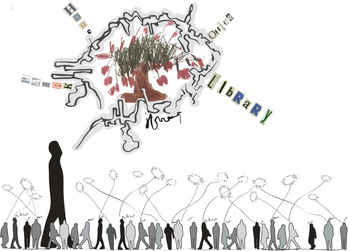
Figure 47.1 The city doesn’t exist without an observer, by Diana Wiesner
The spaces each person travels through every day are key factors within the urban experience, and the enrichment of said experience materializes in places that allow for the city to be perceived through the feet, the body and the senses, places to walk, free the mind, and connect to the self (Figure 47.2). Along with the need for environments that promote urban living spaces focused on the growth of individuals, it’s also crucial to propose urban projects that are framed within an urban ecology that is coherent with the ecosystem’s regional corridors. Thus, nature’s presence has a double functionality in the urban project. While contributing to the city’s ecosystem service maintenance, it improves the quality of the urban experience, offering a range of safe meeting places that are rich in symbols and meaning.

Figure 47.2 Section of a drawing by Colectivo Bogotá Pinta Cerros, 2017. Citizens who participated printed their feelings for the mountains of the region with a 12-hand watercolor in 16 plates of 11.2 meters, representing the 57 kilometers of mountains near the city
The development of urban nature is not a “natural” process within city planning. The concept of nature in itself generates contradictions for planners who deem rivers, wetlands, mountains, and high vegetation areas to be wild places dominated by a fear of the unknown. This attitude results in a preference for high cost artificial comfort zones. Green infrastructure proposals, coherent with the aforementioned objectives, force that paradigm to be broken, for they seek to mitigate the effects of climate change and increase risk resilience strategies, procuring a balance between conservation and development.
Another important challenge for these green spaces is to provide an identity to a diverse population. Heritage values and significant elements of a place must be rescued through methodologies that inquire into hidden stories and intangible memories, thus promoting a participative construction of public spaces where people can identify with an emotional geography. In addition, I suggest that indicators associated to the quality of life of human beings be established, for example what I call “soul resilience indicators,” which measure people’s intuitive ability to manage daily risks (Figure 47.3). This concept reclaims our ability to take mankind’s adaptability and well-being into consideration.

Figure 47.3 Soul Resilience, by María Ceciia Galindo
Although humans are social beings that seek each other out, public spaces should also guarantee places for individuality, for the enjoyment of solitude, for silence, for encountering the self, and for mourning. The city is an extension of a person’s home; it should offer multiple options, and it should use biodiversity as a tool to provide infinite possibilities for countless urban souls (Figure 47.4).

Figure 47.4 A Child Holding a Painting by Walter J. Gonzalez called “My Future Bogotá”: from the south of the city he draws his image of the future
People look for distinctive elements they can identify with, which make the city feel like their own. This can only happen through the acknowledgment of the culture and of the social groups that live in a given area. In this framework, local markets, artisanal production, and traditional practices gain recognition. In the face of imposed, foreign, globalized models, citizens yearn for those symbols that might be imperfect but are their own, that bring stories back to life and add value to their insufficient free time.
The new citizen assumes his role like a musician in an orchestra, in which effective results are delivered through synchronization and group work, eliminating any type of protagonism. An urban concert could be achieved by a conductor-less orchestra, like the Orpheus Chamber Orchestra: a unique ensemble in which the musicians decided that instead of a conductor, they would all share in the responsibility of musical decisions (Figure 47.5). Could a city be conducted with the sum of citizen initiatives focused on the concepts of justice, equality, resilience, sustainability, and security, without the need for a sole governor? Is it possible that we’re in a process of change, in which instead of focusing on the search for new city ideals, we’re centering on the advocacy of a new citizenship, one that is capable of interpreting a symphony of democracy (Luna Reference Luna and Valverde2015) that yields more just, beautiful, emotional, and human cities?

Figure 47.5 Symphony of Democracy, by Diana Wiesner in collaboration with Daniela González
The role models of smart cities as technological utopias have changed over the last 28 years from tech titans such as IBM and Cisco, with their wonderful levels of innovation, to do-it-yourself entrepreneurs. A wide range of activists, entrepreneurs, and civic hackers are tinkering their way towards a different kind of technological utopia, and are reimaging the smart city concept through prominent enablers such as smartphones, low-cost broadband, open data, and open-source technologies (Shueh Reference Shueh2015). Local governments, with the assistance of large-scale and expensive technologies, have always shaped urban and suburban infrastructures. “Urban tech” describes the emerging technologies that are being used to solve problems at the intersection of urbanization and sustainability, from reducing energy use and greenhouse gas emissions to reducing crime and increasing government efficiency (Baptiste Reference Baptiste2015). Accordingly, urban tech startups develop creative solutions to the urban challenges that all citizens face; their concepts have widely transferable applicability in the urban-centric areas of mobility, economic development, sustainability, and urban services (Stephens Reference Stephens2014).
One smart city trend identified by the International Data Corporation, or IDC, predicts a growing adoption and awareness of the smart city concept by an expanding set of government leaders. This demand for strategy development and implementation road maps includes a wide range of actors, from cities and counties to states and central or federal government agencies. IDC predicts that by 2017, at least 20 of the world’s largest countries will create national smart city policies to prioritize funding and to document technical and business guidelines (Yesner Clarke Reference Yesner Clarke2015). Based on the benefits of Urban Tech for achieving sustainable development, it’s strongly recommended that local governments promote friendly environments for meeting technology entrepreneurs’ needs, such as setting rules, regulations, policies, and even easy access to technical requirements. Furthermore, by unlocking important public information and supporting policies of Open Government, urban managers will democratize access to services; enable innovation that improves the lives of citizens; and increase transparency and efficiency (NYC Digital 2011).
Most urban tech startups are less than a decade old, but they are already dramatically reshaping how citizens move around and reduce their energy consumption and carbon footprint (Abrahamson Reference Abrahamson2015). For instance, Uber is a mobile app that connects passengers with drivers for hire. One of Uber’s stated visions is providing a simpler form of transportation while creating economic opportunities for all. In addition to these goals, they have set a target of promoting environmental sustainability (“Uber (company)” 2016). Rachio allows users to remotely control home watering systems for lawns or gardens. The Rachio app works through a connection to Rachio information through home Wi-Fi and automatically adjusts for the right amount of water needed for lawn and water savings. Waze is a free mobile navigation app for smartphones that allows drivers to use live maps, real-time traffic updates, and other road data. Traffic slows citizens down and pollutes cities. This app brings drivers together to find the best alternatives. (Urbantech Radar 2016). No one can predict what the future of cities will look like – but we can get a glimpse of what’s possible by looking at some of the fastest growing startups currently reshaping the way people live and work in cities. The way cities work with emerging technologies is entering a new paradigm in which the city is not only the customer but, more often, the regulator and promoter of the best ideas as well (Baptiste Reference Baptiste2015).
The movement for greening our cities is gathering momentum – but the time has come to move beyond tokenistic measures and to truly consider what type of cities we want to leave for future generations. It’s time for those of us in leadership roles to “walk the talk” through our bold decisions and actions to ensure that the issue becomes a mainstream imperative rather than a side, niche movement that is viewed only as the domain of environmental activists.
There are numerous examples of approaches and projects related to “greening cities” throughout the world – all with good intentions; however, I fear that we often celebrate mediocrity and think that the job is done if we plant a few more trees.
This is not to diminish the fine efforts of all involved in this movement or tree planting. We must also acknowledge that many approaches to greening are already ambitious and bold and to be applauded, with the City of Melbourne (in my home country of Australia) setting a fine example.
Pockets of best practice, however, are no longer an option if cities throughout the world, no matter how large or small, are going to address the impacts of climate change and create urban places and spaces that are liveable and inviting; responsive to environmental factors such as pressure on water resources and increasing temperatures; and able to promote and protect biodiversity, as well as considering the health and well-being of urban communities – for both current and future generations.
We all need to be part of creating urban environments that present our children with opportunities to experience and appreciate nature in their urban environment by mainstreaming the urban forest paradigm as the standard, not the exception. This is much more than an environmental issue – it is the key moral and ethical issue of our generation. If we create green cities and provide opportunities for our children to connect with nature in our urban environment, we are more likely to produce future generations, through our example and their experience, who will respect the planet, preserve and conserve our valued natural environments, and continue to support and build urban environments that are healthy, ecologically diverse, and livable in the future.
Mainstreaming urban forests is, of course, not without its challenges – including inertia surrounding departure from traditional notions of the look and feel of cities, resource requirements, design conflicts, tree selection that encourages the use of native species, community engagement, and enthusiasm. These challenges need to be confronted globally and prioritized as an imperative, with greening cities promoted as an once-in-a-lifetime opportunity to transform existing urban environments and to breathe life and soul back into our cities. Of course, there will be significant economic advantages, including healthier and happier communities resulting in reduced health costs; healthy ecosystems resulting in reduced costs associated with redressing environmental issues; and vibrant and activated city spaces that attract and embolden people.
All leaders must prioritize, through bold action and example, the greening of our cities and to see it as an opportunity to create urban spaces that reconnect all of us and our children to nature – and to loudly and confidently promote green cities and urban forests as central to not only the health and well-being of our people and our communities but also to the economic prosperity and livability of our cities and, ultimately, the planet that we are all fortunate to share and to call home.
Over the years, we have been deeply concerned about the abuse, misuse, and destruction of natural areas. We have been equally concerned about the systematic dismantling of the community and collective fabric. As a result, most cities across the world have been split into disparate and conflicting fragments.
Sadly, most governments and ruling elite continuously work towards dismantling the fabric of unity, sustainability, and justice. Such efforts are clearly reflected in the various policies and programs that, in most instances, are undermining larger public interest by stifling people’s voices, their participation in decision-making, and active governance.
These governments and the ruling elite are driven by a host of selective and discriminatory recognition policies and programs. They are obsessed with recognition – or, more accurately, the lack thereof – for people and nature, insofar as they relate to building stronger market forces that dictate the terms of development and principles of governance. To challenge this dominant phenomenon is a tough battle for those people who are committed to the many struggles for achievement of social and environmental equity and justice.
In Indian cities, for example, a majority of the people comprising the poor and lower-middle classes are constantly denied recognition on multiple grounds, to an extent that their right to live itself is often questioned. They are denied access to land, housing, food, water, sanitation, healthcare, education, and transport – to name just a few restrictions. It follows that today we find high instances of social tension and violence between people and communities. Such social divides are seen and experienced on the basis of caste, creed, religion, gender, and other identities. Cities are increasingly divided on the basis of identity politics and their landscapes are reconfigured in the form of distinct colonies of ghettoized affluence and abject deprivation.
This practice of selective recognition – and the government’s and ruling class’s mindset, which enables the practice – is also evident in matters relating to natural areas and environmental conditions. The case of Mumbai is an extreme example of abuse, misuse, and destruction of the vast extent of natural areas and open spaces that constitute nearly 50 percent of the total area of the city. Successive governments have consciously avoided mapping and documenting these areas. By leaving them out, government has allowed these areas to experience aggressive land filling and real estate development, as well as rampant destruction of the mangroves, wetlands, rivers, creeks, hills, and forests, largely by unscrupulous builders and developers. Governments are active in proposing further construction in these areas.
Only after many citizens’ movements in Mumbai demanding recognition of these natural areas and their environmental conditions has the city government begun documenting them for the first time in a development plan for the city. In fact, the first extensive mapping and comprehensive documentation of the natural areas of Mumbai, along with a clear action plan, was carried out by this author along with the Mumbai Waterfronts Center. A public exhibition which they held, titled “Open Mumbai,” exposed the lack of recognition of such vital assets and the rampant destruction of these areas, and, importantly, suggested a way forward.
The growing level of intolerance arising from and incited by such selective and discriminatory recognition phenomena is beginning to threaten the stability of cities. Levels of intolerance are leading to a state of aggression and violence, expressed in relationships between people at individual and collective levels, as well as between people, nature, and the environment.
Further, recognition deficit is steadfastly eroding the idea of cities. A constant state of denial of public interest in various aspects of life and environment by city authorities is alarming.
50.1 Unifying City Fragments
As an urban planner and architect, the pursuit to connect the disparate parts of our cities – people as well as landscapes – is my greatest challenge, fueling my everyday work and engagements. I firmly believe that architecture and urban design are incredible democratic tools of socio-environmental change and, therefore, must not be reduced to being merely “professions.”
Connecting people with urban planning and design exercises from the inception of preparing development programs is important. The implementation of city plans and programs with people’s participation is a significant instrument for mobilizing larger political struggles for equality and justice. It is public action alone that can deeply influence decisions governments take.
In this sense, the key question before us addresses the lack of recognition of certain people, land, and resources. This inquiry must form the basis of our protracted struggles for evolving strategies and plans for the unification of our fragmented and divided cities. We will be surprised if we begin to prepare lists of the various denials that we accept and pursue, or of what we pretend not to see or recognize at individual and collective levels. Making these lists and critically reviewing them would help in liberating ourselves and our movements, thereby strengthening our influence on governments for the achievement of much needed socio-environmental justice. May we therefore consider the value of our work, engagements, and success be measuring the extent to which they contribute towards this goal: unifying disparate city fragments.
Innate, intuitive, and experiential knowledge is a significant resource that we cannot afford to ignore. I am writing from Detroit, Michigan, in the United States – a city of invention and industry with a long history of valuing the new and pushing the boundaries of knowledge through innovation. Detroiters are constantly generating knowledge and striving for progress measured by new ideas. We are so busy moving forward that we rarely look back, overlooking valuable knowledge that we have left behind. In the face of every exciting advance in science and engineering and with respect to the daily terrestrial, celestial, and aquatic discoveries that enrich our understanding of the world around us, I offer the wisdom of the elders – the knowledge of those who have been here all along, which we know intuitively, innately, from living in a place or experiencing it. This knowledge is not less serious, less important, or less legitimate than the hard won, peer-reviewed, technical, and academic knowledge that is being generated in our laboratories, design studios, and academic institutions. Moreover, I propose that the traditional, historical, innate, and intuitive knowledge of all of the parts of this living ecosystem be mined, preserved, and used with the same gravitas and effect as the papers, studies, journal articles, and reports that we cite in support of our proposals, arguments, and opinions.
Mrs. Smith is a gardener with more than 60 years’ worth of hands-on experience growing flowers and vegetables in Detroit soil. She knows what plant varieties grow best here, when to plant each flower and vegetable that goes into her garden, and what soil amendments and practical pest-fighting remedies to apply to achieve the highest yields year after year. Mrs. Smith’s annual sunflower patch is a thing of beauty. I know this. I have benefitted from Mrs. Smith’s hyper-local and long-studied knowledge of her growing environment, and I have a desire to plant sunflowers as a part of a bio-remediation plan. Why should I rely upon a journal article generated by an academic in a far-off institution to tell me which sunflowers to grow, when I can look at the sunflowers that Mrs. Smith grows and ask her which varieties she’s had the most luck with over time in the very city where I wish to grow sunflowers? Why should Mrs. Smith’s experience-based knowledge be taken less seriously by my funder than the results published in that journal? They were.
Detroit is beginning an ambitious attempt at landscape-scale redesign of its landmass. Scores of design and planning professionals are being hired to lead this effort. Phrases like “internationally renowned designer” and “nationally recognized talent” are being used as a promise that Detroit will move ahead with new ideas generated by the leading designers of our time. A promise that in this area, like so many others, Detroit will break new ground, innovate, invent.
Let us pause from our headlong pursuit of the new and innovative for a moment to consider the value of the resource that is already embedded in that landscape which is to be redesigned. What grows in a place can tell you what the soil will support, and even where rivers once ran. Paths created by today’s travelers will tell you where sidewalks and streets would be most useful. People who are here now know what they need. Rather than assuming that the ideas and knowledge of talented outsiders are more relevant, useful, or reliable than the historical, innate, and intuitive knowledge of those who have been here all along, why not mine the knowledge and experience of Detroit’s elders to inform the redesign? Why not look at the landforms and the flora and fauna that once graced this landscape for instruction on what is most appropriate for the future? Shouldn’t the renowned designers that we are seeking, in fact, be expected to glean everything that they need to know from the plants, animals, and people who have experienced life in this place for so long?
Site-based, experiential knowledge is legitimate, valuable, and important. It can be found in the memories of our elders, in the patterns of nature, and in the traditions and history embedded within the culture of a place. There is much to be gained by a thoughtful and intentional attempt to capture, use, and respect this knowledge. We do ourselves, our research, and our future a disservice if we don’t stop and pay attention to the knowledge that we have left behind or that we have ignored entirely.
The Mapuche nation has a philosophical and spiritual structure that draws on the relationship with Pu Newen forces of nature and various vital energies, which are telling us how the art of living can bring us closer to harmony. For thousands of years, our people developed their farms, their community, and their territorial organization, incorporating certain sacred spaces as the central driving force of life. At the core, this implies respect for the habitat of the watersheds, rivers, lakes, volcanoes, and land. We did not invade these spaces. We lived next to them, but not on top of them, so to speak. We understood that the territorial organization grew from the need to respect the other elements that lived there.
From this notion of “co-living,” megacities would be unthinkable. However, the human crisis and global collapse facing the planet, along with the destabilizing impact of climate change, to which urbanization has significantly contributed, forces us to look for possible alternatives, both in the near and midterm, to set the stage for guaranteeing the continuation of human life on the planet.
To develop realistic strategies which might give concrete results, we have to think of a new urban design, which necessarily has to challenge and deconstruct the logic of capitalist development – which accumulates and concentrates resources for only a few. To do this, we must make progress in dismantling large estates, where huge tracts of land are owned by one person, family, or company, for speculation or exploitation, damaging mother earth, the Mapu – polluting and eroding her, killing her slowly to produce large business. While these companies destroy the countryside, many people are displaced and induced to settle in the cities in search of an opportunity to improve their lives. There they only find more misery and marginalization, which ultimately detracts from their humanity, stunting minds and spirits; in the end, they become Homo economicus, a kind of objectified human, an economic tool.
Poverty, misery, and violence generated by inequality are the constitutive elements of urban cannibalism. The megacities, such as we have conceived them, should disappear, transformed into small cities that are interconnected and coordinated with food production areas, natural medicine, and renewable alternative energy.
The spirituality of Indigenous peoples should not only be respected but also should serve as inspiration for these new urban structures. Population health is intrinsically linked to harmonious relationships with nature and, primarily, with the perceptible forces that interact in our territories. Sacred spaces are energetic centers in which forces and forms of life are harmonized. They must not be invaded by sports stadiums, buildings, or casinos, occurrences which have led to resistance and struggle of First Nations in various countries and cities, and which clearly violate the spiritual rights of the people.
The new ecological cities should redraw the maps of the persistent geopolitics of nations, doing away with the geographical boundaries of death, division, and racism introduced by nation states. It is irresponsible to think of the design of a new ecological urban model without proposing the construction of a new paradigm for civilizations, one that recovers the sense of reciprocity between people and nature. In a new humanity, a new design – and not only an urban, but a global peoples’ movement – resistance and struggle will be the makers of this revolution of thought. It must emanate from the identity of ancestral lands and recovery of true spirituality that prioritizes the heart above reason, and which does not look for the base benefit of anthropocentric forces, but rather for the construction of a circular order, harmonized, horizontal, and reciprocal.
Humans are not an abstraction. We are part of nature. We say we are Mapuche: people of the land. The land is us; it is our identity-space. Each element of our culture is the expression of each element of nature. When an element of nature disappears, an element of our culture also disappears. If rivers are murdered with dams, the sacred song of the rivers is reduced to a sick silence, like standing water that pollutes our spirit. To keep us flowing as with the energy of flowing water, let us be guardians and respectful of it.
The economic crisis, the climate crisis, the humanitarian crisis are all symptoms of a single major disease: the matrix of Western civilization, the dominant culture based on anthropocentrism, materialism, individualism, patriarchy, and racism. So far, it has never been challenged by the great revolutionary movements of the world, which have only questioned social inequality, reducing the problem to a question of class struggle. We must broaden our vision, deepen our analysis, and develop new tools with innovative theoretical frameworks that allow us to approach multiple approaches to this great problem.


 Open access