Book contents
- Frontmatter
- Contents
- IntroductionDivine Comedies for the New Millennium. Humbleness and Hubris
- The Translations of Dante’s Comedy in America
- Translating Dante into English Again and Again
- ‘Getting Just a Small Part of it Right’
- The Poet Translated by American Poets. In Search of the Perfect ‘Trasmutazione Musaica’
- Ciò Che Potea La Lingua Nostra. One Hundred and More Years of Dante Translations into Dutch
- Translating Dante’s Translations
- Notes
- About the Contributors
- Selected Bibliography of American and Dutch Dante Translations
- Index of Names
- Miscellaneous Endmatter
This chapter is part of a book that is no longer available to purchase from Cambridge Core
Translating Dante’s Translations
Edited by
Book contents
- Frontmatter
- Contents
- IntroductionDivine Comedies for the New Millennium. Humbleness and Hubris
- The Translations of Dante’s Comedy in America
- Translating Dante into English Again and Again
- ‘Getting Just a Small Part of it Right’
- The Poet Translated by American Poets. In Search of the Perfect ‘Trasmutazione Musaica’
- Ciò Che Potea La Lingua Nostra. One Hundred and More Years of Dante Translations into Dutch
- Translating Dante’s Translations
- Notes
- About the Contributors
- Selected Bibliography of American and Dutch Dante Translations
- Index of Names
- Miscellaneous Endmatter
Summary
Up to the last years of the twentieth century, a fairly large number of Dutch translations of the Divina Commedia had already been published. However, the years of transition towards the twenty-first century have seen an astonishing number of new translations of (parts of) Dante's magnum opus. In some cases the translation is accompanied by a remarkable apparatus of notes, comments, and illustrations. In 1999 Jacques Janssen published Mijn Komedie: Hel ; in 2000 Ike Cialona and Peter Verstegen published their De goddelijke komedie; in 2000 Rob Brouwer published the first volume (Inferno) of his translation De Goddelijke Komedie, to be followed in 2001 by the second volume (Purgatorio) and in 2002 by the third (Paradiso). This exceptional phenomenon can only be compared to the recent flourishing of English Dante translations in the USA, if the scale of diffusion of the two languages would not make such a comparison rather trivial.
The recent outburst of Dutch Dante translations is clearly not an isolated phenomenon of some translators wanting to take up the challenge of a very difficult task. The mentioned translations are part of a more general interest in Dante. In the same short period translations of other works by Dante were also published, such as his Convivio (2001) and the De vulgari eloquentia (2001), but also a study on Dante by Wiel Logister (2000), a translation of Boccaccio's Vita di Dante by Ike Cialona (2002), and such a superb booklet as Toon Tellegen's Enkele Onwaarschijnlijke Aantekeningen van Dante Alighieri bij het Schrijven van zijn Goddelijke Komedie (2000) [Some Unlikely Notes by Dante Alighieri While Writing His Divine Comedy].
To explain Dante's success in the Dutch culture at the end of the twentieth century and the beginning of the twenty-first, we should not limit ourselves to the motivations of translators, scholars, and writers. We should also take into consideration the fact that Dutch readers, at least in the estimates of the publishing houses, are willing to make the effort to read, interpret, and appreciate a literary work that requires more than the usual amount of attention, even when translated. The readers’ motivation could be of even greater interest than the translators’; in fact, perhaps the readers’ motivation could tell us something important about our present-day living conditions.
Information
- Type
- Chapter
- Information
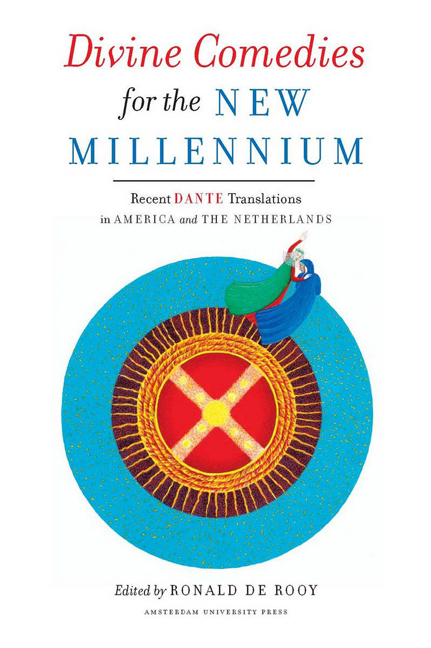
- Divine Comedies for the New MillenniumRecent Dante Translations in America and the Netherlands, pp. 101 - 114Publisher: Amsterdam University PressPrint publication year: 2003
Accessibility standard: Unknown
Why this information is here
This section outlines the accessibility features of this content - including support for screen readers, full keyboard navigation and high-contrast display options. This may not be relevant for you.Accessibility Information
Accessibility compliance for the PDF of this chapter is currently unknown
and may be updated in the future.