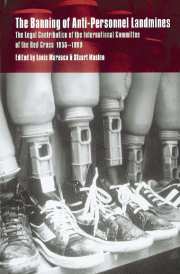
 The Banning of Anti-Personnel Landmines
 The Legal Contribution of the International Committee of the Red Cross 1955–1999
Book contents
- Frontmatter
- Contents
- Foreword by Cornelio Sommaruga, President, International Committee of the Red Cross
- Foreword by Ambassador Jacob S. Selebi, South Africa
- Foreword by Ambassador Johan Molander, Sweden
- Introduction
- PART 1 FROM PRINCIPLES TO RULES: REGULATING MINES UP TO THE 1980 CONVENTION ON CERTAIN CONVENTIONAL WEAPONS
- PART 2 THE REVIEW CONFERENCE OF THE 1980 CONVENTION ON CERTAIN CONVENTIONAL WEAPONS: AN INITIAL RESPONSE TO THE LANDMINE CRISIS
- PART 3 THE OTTAWA PROCESS FROM REGIONAL INITIATIVES TO AN INTERNATIONAL PROHIBITION OF ANTI-PERSONNEL MINES
- 1 Introduction
- 2 The International Strategy Conference Towards a Global Ban on Anti-personnel Mines, Ottawa, Canada, 3–5 October 1996
- 3 United Nations General Assembly, 1996
- 4 ICRC Position Paper No. 4 – December 1997, Landmines: Crucial Decisions in 1997
- 5 Expert Meeting on the Convention for the Prohibition of Antipersonnel Mines, Vienna, Austria, 12–14 February 1997
- 6 Fourth International Non-governmental Organization Conference on Landmines: Toward a Mine-Free Southern Africa, Maputo, Mozambique, 25–28 February 1997
- 7 Seminar on Anti-Personnel Landmines and Their Humanitarian Implications, Budapest, Hungary, 7 March 1997
- 8 1997: The Year of a Treaty Banning Anti-personnel Mines?
- 9 ICRC Regional Seminar for States of the Southern Africa Development Community (SADC), Harare, Zimbabwe, 21–23 April 1997
- 10 International Meeting of Experts on the Possible Verification of a Comprehensive International Treaty Prohibiting Anti-Personnel Landmines,Bonn, Germany, 24–25 April 1997
- 11 OAU Conference on a Landmine-free Africa: The OAU and the Legacy of Anti-personnel Mines, Johannesburg, South Africa, 19–21 May 1997
- 12 Debate on Landmines at the Angolan Parliament, Luanda, Angola, 23 May 1997
- 13 International Conference for a Global Ban on Anti-personnel Landmines, Brussels,Belgium, 24–27 June 1997
- 14 The Third Austrian Draft of the Convention on the Prohibition of Anti-personnel Mines,May 1997
- 15 Anti-Personnel Mines: What Future for Asia? Regional Seminar for Asian Military and Strategic Studies Experts,Manila, The Philippines, 20–23 July 1997
- 16 Diplomatic Conference on an International Total Ban on Anti-personnel Landmines, Oslo,Norway, 1–18 September 1997
- 17 A Global Ban on Landmines: Treaty Signing Conference and Mine Action Forum, Ottawa,Canada, 2–4 December 1997
- 18 ICRC Position Paper No. 5 – January 1998, Anti-personnel Mines: Agenda 1998 – From Prohibition to Elimination and Adequate Care for the Victims
- 19 Regional Conference on Landmines, Budapest, Hungary, 26–28 March 1998
- 20 Implementing the Ottawa Treaty: Questions and Answers
- 21 An International Ban on Anti-personnel Mines: History and Negotiation of the ‘Ottawa Treaty’, article by S.Maslen and P.Herby
- 22 The Entry into Force of the Ottawa Treaty
- 23 The First Meeting of States Parties to the Ottawa Treaty,Maputo, Mozambique, 3–7 May 1999
- 24 Regional Conference on Landmines, Zagreb, Croatia, 27–29 June 1999
- 25 South Asia Regional Seminar on Landmines, Wadduwa, Sri Lanka, 18–20 August 1999
- Index
7 - Seminar on Anti-Personnel Landmines and Their Humanitarian Implications, Budapest, Hungary, 7 March 1997
from PART 3 - THE OTTAWA PROCESS FROM REGIONAL INITIATIVES TO AN INTERNATIONAL PROHIBITION OF ANTI-PERSONNEL MINES
Published online by Cambridge University Press: 03 December 2009

Book contents
- Frontmatter
- Contents
- Foreword by Cornelio Sommaruga, President, International Committee of the Red Cross
- Foreword by Ambassador Jacob S. Selebi, South Africa
- Foreword by Ambassador Johan Molander, Sweden
- Introduction
- PART 1 FROM PRINCIPLES TO RULES: REGULATING MINES UP TO THE 1980 CONVENTION ON CERTAIN CONVENTIONAL WEAPONS
- PART 2 THE REVIEW CONFERENCE OF THE 1980 CONVENTION ON CERTAIN CONVENTIONAL WEAPONS: AN INITIAL RESPONSE TO THE LANDMINE CRISIS
- PART 3 THE OTTAWA PROCESS FROM REGIONAL INITIATIVES TO AN INTERNATIONAL PROHIBITION OF ANTI-PERSONNEL MINES
- 1 Introduction
- 2 The International Strategy Conference Towards a Global Ban on Anti-personnel Mines, Ottawa, Canada, 3–5 October 1996
- 3 United Nations General Assembly, 1996
- 4 ICRC Position Paper No. 4 – December 1997, Landmines: Crucial Decisions in 1997
- 5 Expert Meeting on the Convention for the Prohibition of Antipersonnel Mines, Vienna, Austria, 12–14 February 1997
- 6 Fourth International Non-governmental Organization Conference on Landmines: Toward a Mine-Free Southern Africa, Maputo, Mozambique, 25–28 February 1997
- 7 Seminar on Anti-Personnel Landmines and Their Humanitarian Implications, Budapest, Hungary, 7 March 1997
- 8 1997: The Year of a Treaty Banning Anti-personnel Mines?
- 9 ICRC Regional Seminar for States of the Southern Africa Development Community (SADC), Harare, Zimbabwe, 21–23 April 1997
- 10 International Meeting of Experts on the Possible Verification of a Comprehensive International Treaty Prohibiting Anti-Personnel Landmines,Bonn, Germany, 24–25 April 1997
- 11 OAU Conference on a Landmine-free Africa: The OAU and the Legacy of Anti-personnel Mines, Johannesburg, South Africa, 19–21 May 1997
- 12 Debate on Landmines at the Angolan Parliament, Luanda, Angola, 23 May 1997
- 13 International Conference for a Global Ban on Anti-personnel Landmines, Brussels,Belgium, 24–27 June 1997
- 14 The Third Austrian Draft of the Convention on the Prohibition of Anti-personnel Mines,May 1997
- 15 Anti-Personnel Mines: What Future for Asia? Regional Seminar for Asian Military and Strategic Studies Experts,Manila, The Philippines, 20–23 July 1997
- 16 Diplomatic Conference on an International Total Ban on Anti-personnel Landmines, Oslo,Norway, 1–18 September 1997
- 17 A Global Ban on Landmines: Treaty Signing Conference and Mine Action Forum, Ottawa,Canada, 2–4 December 1997
- 18 ICRC Position Paper No. 5 – January 1998, Anti-personnel Mines: Agenda 1998 – From Prohibition to Elimination and Adequate Care for the Victims
- 19 Regional Conference on Landmines, Budapest, Hungary, 26–28 March 1998
- 20 Implementing the Ottawa Treaty: Questions and Answers
- 21 An International Ban on Anti-personnel Mines: History and Negotiation of the ‘Ottawa Treaty’, article by S.Maslen and P.Herby
- 22 The Entry into Force of the Ottawa Treaty
- 23 The First Meeting of States Parties to the Ottawa Treaty,Maputo, Mozambique, 3–7 May 1999
- 24 Regional Conference on Landmines, Zagreb, Croatia, 27–29 June 1999
- 25 South Asia Regional Seminar on Landmines, Wadduwa, Sri Lanka, 18–20 August 1999
- Index
Summary
Organized by the Council of Europe Parliamentary Assembly Migration, Refugees and Demography Committee in collaboration with the ICRC
The break-up of the former Soviet Union and the subsequent bloody disintegration of the former Yugoslavia led to widespread – and frequently indiscriminate – use of landmines in Europe for the first time since the end of the Second World War. Concerned by the impact of landmines on the displaced, the Migration, Refugees and Demography Committee of the Council of Europe's Parliamentary Assembly convened a meeting with the ICRC to discuss the problem. The result of the meeting was a clear recommendation for the total prohibition of anti-personnel mines. A report containing that recommendation was forwarded to the Parliamentary Assembly for consideration.
ICRC News
20 March 1997
PARLIAMENTARY ASSEMBLY OF THE COUNCIL OF EUROPE: APPEAL FOR A TOTAL BAN ON ANTI-PERSONNEL MINES
On 7 March the ICRC and the Council of Europe's Committee on Migration, Refugees and Demography held a joint seminar in Budapest on anti-personnel landmines, an issue on which the Parliamentary Assembly and the ICRC have been cooperating closely. The seminar addressed an 11-point appeal to Member States of the Council of Europe, urging them to take an active part in the effort to achieve a comprehensive ban on anti-personnel mines and to sign an international treaty to that effect at the Ottawa Conference scheduled for December 1997. The Committee also called for increased contributions to rehabilitation programmes for mine victims, mine-clearance operations and mine-awareness campaigns for populations at risk.
Information
- Type
- Chapter
- Information
- The Banning of Anti-Personnel LandminesThe Legal Contribution of the International Committee of the Red Cross 1955–1999, pp. 512 - 513Publisher: Cambridge University PressPrint publication year: 2000
Accessibility standard: Unknown
Why this information is here
This section outlines the accessibility features of this content - including support for screen readers, full keyboard navigation and high-contrast display options. This may not be relevant for you.Accessibility Information
Accessibility compliance for the PDF of this chapter is currently unknown
and may be updated in the future.