Book contents
- Frontmatter
- Contents
- Tables and boxes
- Acknowledgements
- Abbreviations
- 1 The norms against genocide
- 2 European governments and the development of the international legal framework on genocide
- 3 European discourses on genocide during the Cold War
- 4 Bosnia and Herzegovina
- 5 Rwanda
- 6 Kosovo
- 7 Darfur
- 8 Is there a European way of responding to genocide?
- Appendix 1 United Nations General Assembly Resolution 96 (I), 11 December 1946
- Appendix 2 Convention on the Prevention and Punishment of the Crime of Genocide
- Bibliography
- Index
2 - European governments and the development of the international legal framework on genocide
Published online by Cambridge University Press: 05 June 2012

Book contents
- Frontmatter
- Contents
- Tables and boxes
- Acknowledgements
- Abbreviations
- 1 The norms against genocide
- 2 European governments and the development of the international legal framework on genocide
- 3 European discourses on genocide during the Cold War
- 4 Bosnia and Herzegovina
- 5 Rwanda
- 6 Kosovo
- 7 Darfur
- 8 Is there a European way of responding to genocide?
- Appendix 1 United Nations General Assembly Resolution 96 (I), 11 December 1946
- Appendix 2 Convention on the Prevention and Punishment of the Crime of Genocide
- Bibliography
- Index
Summary
This chapter analyses the role of European governments in the origins and development of the international legal and normative framework on preventing and punishing genocide. It cannot be said that European governments were among those leading the international community towards agreement on the Genocide Convention: smaller countries and the USA and Australia arguably played much more leading roles in this respect. And perhaps surprisingly, while some West European countries readily accepted the Genocide Convention, others were much more critical: several West European states were not among those countries that first signed, ratified or acceded to the Convention, and some took over twenty years to accede to it. Eventually European governments ‘came round’ to the legal norm, and have since espoused a stronger response to genocide.
European states and the drafting of the Genocide Convention
During the process of drafting the Convention, there was by no means a common viewpoint shared by the various European countries present. In fact, from the start of the negotiating process, two countries were generally hostile to the Convention: the United Kingdom and the USSR. Both had voted for the Genocide Resolution, but neither were enthusiastic about the idea of an international convention. The USSR's stance will not be discussed at length here, as this book is focused principally on the positions of France, Germany and the UK.
The UK's hostility was evident right from the start of the drafting process. Its opposition was based on several grounds, not all of them coherent with each other.
Information
- Type
- Chapter
- Information
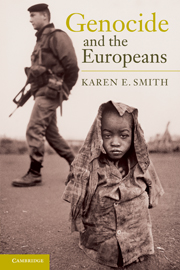
- Genocide and the Europeans , pp. 32 - 64Publisher: Cambridge University PressPrint publication year: 2010
Accessibility standard: Unknown
Why this information is here
This section outlines the accessibility features of this content - including support for screen readers, full keyboard navigation and high-contrast display options. This may not be relevant for you.Accessibility Information
Accessibility compliance for the PDF of this chapter is currently unknown
and may be updated in the future.