Book contents
- Frontmatter
- Contents
- List of maps and figures
- Acknowledgements
- Map 1
- Map 2
- Map 3
- INTRODUCTION
- PART I LATE ANTIQUE ARABIA AND EARLY ISLAM (c. 550–c. 660)
- PART II THE UMAYYAD CALIPHATE (c. 660–750)
- PART III THE EARLY ABBASID CALIPHATE (c. 750–809)
- PART IV THE MIDDLE ABBASID CALIPHATE (809–865)
- CONCLUSION
- Genealogical table of Quraysh
- Genealogical table of the Abbasid caliphs
- Bibliography
- Index
CONCLUSION
Published online by Cambridge University Press: 05 September 2013

Book contents
- Frontmatter
- Contents
- List of maps and figures
- Acknowledgements
- Map 1
- Map 2
- Map 3
- INTRODUCTION
- PART I LATE ANTIQUE ARABIA AND EARLY ISLAM (c. 550–c. 660)
- PART II THE UMAYYAD CALIPHATE (c. 660–750)
- PART III THE EARLY ABBASID CALIPHATE (c. 750–809)
- PART IV THE MIDDLE ABBASID CALIPHATE (809–865)
- CONCLUSION
- Genealogical table of Quraysh
- Genealogical table of the Abbasid caliphs
- Bibliography
- Index
Summary
Although the script for the inauguration of the Abbasid caliph at his public pledge of allegiance was to remain substantially unchanged after 861, the first explicit written formulations of a theory of caliphal accession and succession were composed over 100 years later. They were written by theologians and jurists working at the Abbasid court in the 990s and after. This was the era of the restoration of the status of the Abbasid caliphate after its domination for much of the tenth century by Shicite military elites. Under the caliph al-Qādir (r. 991–1031) and his son al-Qaɔim (r. 1031–75), the need to refute Shicite theology, which had rejected the interpretations of the Sunni scholars and thus also the authority of the Abbasid caliphs, appears to have spurred the articulation of a Sunni theory of the caliphate. According to the Shicites, the Sunnis should have pledged allegiance not to Abū Bakr as Muḥammad's successor in 632, but to his designated successor, cAlī, and then to a foreordained sequence of cAlī's descendants. The first Sunni formulations of a theory of the caliphate were explicitly composed as refutations of Shicite ideas.
Against the claim that the leadership of the Muslim empire had been usurped at the outset, Sunni theologians of the late tenth and early eleventh centuries argued that the imams recognised by the consensus (ijmāc) of the majority of Muslims had in fact been legitimate because, according to the Prophet, the Muslims ‘could not agree upon error’.
Information
- Type
- Chapter
- Information
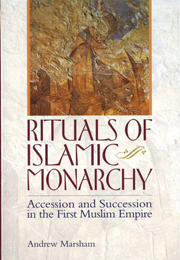
- Rituals of Islamic MonarchyAccession and Succession in the First Muslim Empire, pp. 309 - 317Publisher: Edinburgh University PressPrint publication year: 2009
Accessibility standard: Unknown
Why this information is here
This section outlines the accessibility features of this content - including support for screen readers, full keyboard navigation and high-contrast display options. This may not be relevant for you.Accessibility Information
Accessibility compliance for the PDF of this chapter is currently unknown
and may be updated in the future.