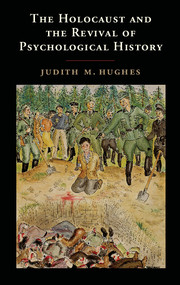
4 - Examinations of Conscience
Published online by Cambridge University Press: 18 December 2014

Summary
On the evening of May 11, 1960, Adolf Eichmann was seized in a suburb of Buenos Aires, and nine days later he was flown to Israel. The following April he stood trial in the District Court in Jerusalem – charged with “crimes against the Jewish people, crimes against humanity, and war crimes during the whole period of the Nazi regime and especially during the period of the Second World War.” In December 1961, having been found guilty, he was sentenced to death – a sentence carried out in May 1962. These legal proceedings triggered intense American interest in the Holocaust – thanks in no small part to Hannah Arendt’s Eichmann in Jerusalem: A Report on the Banality of Evil (1963).
Arendt was no ordinary journalist. Born in 1906, she was the only child of assimilated and secular middle-class Jews. At school in Königsberg, she early impressed teachers with her intelligence and her independence – this latter quality led her to being expelled. In the spring of 1924, after two terms at the University of Berlin and an intense six months of study, she passed the Abitur as an extraneous student. She spent the next five years at three different universities – a not uncommon practice in Germany. Initially, two semesters at Marburg: there she found her first love – philosophy – and its physical incarnation – Martin Heidegger. They had a brief affair, and she remained loyal to – in her words – “‘the last German Romantic.’” (After a seventeen-year interruption, and despite his Nazi party affiliation, she resumed contact with him in 1950.) From Marburg, Arendt went on to Freiburg and spent a semester with Edmund Husserl. And finally, three and a half years in Heidelberg where she wrote her dissertation under the direction of Karl Jaspers – a powerful and lifelong intellectual mentor and ally. By the time Arendt finished her university training, she was tuning in to public affairs.
Information
- Type
- Chapter
- Information
- The Holocaust and the Revival of Psychological History , pp. 121 - 152Publisher: Cambridge University PressPrint publication year: 2014
References
, Eichmann in Jerusalem: A Report on the Banality of Evil, rev. and enlarged ed. (New York: Penguin, 2006), p. 21Google Scholar
, Hannah Arendt: For Love of the World (New Haven: Yale University Press, 1982), p. 69Google Scholar
, September 4, 1947, Hannah Arendt/Karl Jaspers Correspondence, 1926–1969, ed. and , trans. and (New York: Harcourt Brace Jovanovich, 1992), p. 98Google Scholar
, April 26, 1951, Between Friends: The Correspondence of Hannah Arendt and Mary McCarthy 1949–1975, ed. (New York: Harcourt Brace, 1995), pp. 1–2Google Scholar
, The Healing Wound: Experiences and Reflections on Germany, 1938–2001 (New York: Norton, 2001), p. 88Google Scholar
, February 22, 1950, Within Four Walls: The Correspondence between Hannah Arendt and Heinrich Blücher 1936–1968, ed. , trans. (New York: Harcourt, 2000), p. 139Google Scholar
, Into That Darkness: An Examination of Conscience (New York: Vintage, 1983), pp. 23–24Google Scholar
, “A Reply to Eric Voeglin,” in , Essays in Understanding 1930–1954: Formation, Exile, and Totalitarianism, ed. (New York: Harcourt, Brace, 1994), p. 403Google Scholar
and , The Life of Benjamin Disraeli, Earl of Beaconsfield, 2 vols. (New York: Macmillan, 1929), 2: 292–293Google Scholar
, Lord George Bentinck: A Political Biography, 2nd ed. (London: Colburn, 1852), p. 497Google Scholar
, Lord Cromer (London: Hodder Stoughton, 1932), pp. 117
, in collaboration with Claus Sibyll, Eichmann Interrogated: Transcripts from the Archives of the Israeli Police, trans. (New York: Farrar, Straus and Giroux, 1983)Google Scholar
, Nazi Germany and the Jews, vol. 1, The Years of Persecution, 1933–1939 (New York: HarperCollins, 1997), p. 200Google Scholar
, Hitler’s Bureaucrats: The Nazi Security Police and the Banality of Evil, trans. (London: Continuum, 2002)Google Scholar
, The Uncompromising Generation: The Nazi Leadership of the Reich Security Main Office, trans. (Madison: University of Wisconsin Press, 2009)Google Scholar
, “Thinking and Moral Considerations: A Lecture,” Social Research, 38 (Autumn 1971): 417Google Scholar
, Eichmann’s Jews: The Jewish Administration in Holocaust Vienna, 1938–1945, trans. (Cambridge: Polity, 2011)Google Scholar
, Belzec, Sobibor, Treblinka: The Operation Reinhard Death Camps (Bloomington: Indiana University Press, 1987), p. 80Google Scholar
, Trap with a Green Fence: Survival in Treblinka, trans. (Evanston, IL: Northwestern University Press, 1995)Google Scholar
, Guilt and Its Vicissitudes: Psychoanalytic Reflections on Morality (London: Routledge, 2008)Google Scholar
Accessibility standard: Unknown
Why this information is here
This section outlines the accessibility features of this content - including support for screen readers, full keyboard navigation and high-contrast display options. This may not be relevant for you.Accessibility Information
Accessibility compliance for the PDF of this chapter is currently unknown
and may be updated in the future.