Book contents
- Frontmatter
- Contents
- Notes on Contributors
- Introduction
- 1 Abroad
- 2 Adventure
- 3 Aesthetic
- 4 Affect
- 5 Anthropology
- 6 Arrival
- 7 Beaten Track
- 8 Body
- 9 Border
- 10 Boredom
- 11 Breakdown
- 12 Cartography
- 13 City
- 14 Class
- 15 Clothing
- 16 Coevalness
- 17 Colonialism
- 18 Companion
- 19 Contact Zone
- 20 Counterpoint
- 21 Curiosity
- 22 Dark Tourism
- 23 Death
- 24 Diaspora
- 25 Disability
- 26 Domestic Ritual
- 27 End-of-Travel
- 28 Ethics
- 29 Ethnicity
- 30 Exotic
- 31 Extreme Travel
- 32 Fiction
- 33 Form
- 34 Gender
- 35 Genre
- 36 Ghosts
- 37 Grand Tour
- 38 Hearing
- 39 History
- 40 Home
- 41 Home Tour
- 42 Humour
- 43 Identity
- 44 Illustration
- 45 Intermediaries
- 46 Intertextuality
- 47 Islands
- 48 Local Colour
- 49 Margins
- 50 Memory
- 51 Migration
- 52 Minority
- 53 Mobility
- 54 Monarch-of-All-I-Survey
- 55 Money
- 56 Motivation
- 57 Nation
- 58 Nature
- 59 Nomadism
- 60 Orientalism
- 61 Pedestrianism
- 62 Persona
- 63 Picturesque
- 64 Pilgrimage
- 65 Place
- 66 Poetics
- 67 Politics
- 68 Polygraphy
- 69 Primitivism
- 70 Psychoanalysis
- 71 Psychogeography
- 72 Reading
- 73 Science
- 74 Self
- 75 Semiotics
- 76 Sex/Sexuality
- 77 Skin
- 78 Slowness
- 79 Smell
- 80 Solitude
- 81 Subjectivity
- 82 Sublime
- 83 Taste
- 84 Technology
- 85 Time
- 86 Tourism
- 87 Trade
- 88 Translation
- 89 Transport
- 90 Travel
- 91 Traveller/Travellee
- 92 Utopia
- 93 Velocity
- 94 Vertical Travel
- 95 Virtual Travel
- 96 Vision
- 97 War
- 98 Water
- 99 Wonder
- 100 World
- Bibliography
60 - Orientalism
Published online by Cambridge University Press: 13 July 2019
By

Book contents
- Frontmatter
- Contents
- Notes on Contributors
- Introduction
- 1 Abroad
- 2 Adventure
- 3 Aesthetic
- 4 Affect
- 5 Anthropology
- 6 Arrival
- 7 Beaten Track
- 8 Body
- 9 Border
- 10 Boredom
- 11 Breakdown
- 12 Cartography
- 13 City
- 14 Class
- 15 Clothing
- 16 Coevalness
- 17 Colonialism
- 18 Companion
- 19 Contact Zone
- 20 Counterpoint
- 21 Curiosity
- 22 Dark Tourism
- 23 Death
- 24 Diaspora
- 25 Disability
- 26 Domestic Ritual
- 27 End-of-Travel
- 28 Ethics
- 29 Ethnicity
- 30 Exotic
- 31 Extreme Travel
- 32 Fiction
- 33 Form
- 34 Gender
- 35 Genre
- 36 Ghosts
- 37 Grand Tour
- 38 Hearing
- 39 History
- 40 Home
- 41 Home Tour
- 42 Humour
- 43 Identity
- 44 Illustration
- 45 Intermediaries
- 46 Intertextuality
- 47 Islands
- 48 Local Colour
- 49 Margins
- 50 Memory
- 51 Migration
- 52 Minority
- 53 Mobility
- 54 Monarch-of-All-I-Survey
- 55 Money
- 56 Motivation
- 57 Nation
- 58 Nature
- 59 Nomadism
- 60 Orientalism
- 61 Pedestrianism
- 62 Persona
- 63 Picturesque
- 64 Pilgrimage
- 65 Place
- 66 Poetics
- 67 Politics
- 68 Polygraphy
- 69 Primitivism
- 70 Psychoanalysis
- 71 Psychogeography
- 72 Reading
- 73 Science
- 74 Self
- 75 Semiotics
- 76 Sex/Sexuality
- 77 Skin
- 78 Slowness
- 79 Smell
- 80 Solitude
- 81 Subjectivity
- 82 Sublime
- 83 Taste
- 84 Technology
- 85 Time
- 86 Tourism
- 87 Trade
- 88 Translation
- 89 Transport
- 90 Travel
- 91 Traveller/Travellee
- 92 Utopia
- 93 Velocity
- 94 Vertical Travel
- 95 Virtual Travel
- 96 Vision
- 97 War
- 98 Water
- 99 Wonder
- 100 World
- Bibliography
Summary
Etymologically, the term ‘orientalism’ has gone through three distinct stages of usage and meaning: based on the classical Latin word orient-, oriens – which denoted that part of the world situated to the east of a particular point (that point, originally, being the Roman Empire), or that part of the sky in which the sun rises – orientalism referred, in Britain from the eighteenth century, to the qualities, character, styles of oriental nations as opposed to occidental ones. In a global geography divided into east and west, orient and occident, the historian, literary scholar and Grand Tourist Joseph Spence (1726, 56) coined ‘a new Word, where we have no old one to my Purpose’, and referred to Homer's Orientalism, or ‘Eastern way’. This connotation of orientalism as denoting some oriental essence was supplemented by a second strand of meaning, which emerged slightly later and referred to the field of Western knowledge about the languages, cultures and customs of the orient. In this vein, Lord Byron referred, in his notes to Childe Harold's Pilgrimage (1812–16), to Thomas Thornton's erudition about Turkey. Orientalist scholarship – dominated by British, French and German philologists, linguists, (art) historians and biblical researchers – was at its height between the eighteenth and twentieth centuries, although the term ‘orientalism’ for such research about the Middle, Near and Far East by specialists from Barthélemy d'Herbelot via William Jones to Max Müller has since given way to the term ‘Asian studies’ and its subcategories. The third phase was, then, inaugurated by Edward Said with his 1978 publication Orientalism. Here, Orientalism (usually capitalized to denote an essentializing binarist position) denotes a specific discourse about the Orient, in which the representation does not follows the logic of truthfulness but rather the strategies of othering through stereotyping, inferiorization and exoticization (see exotic); all of which reveal and corroborate the struggle between knowledge and power and, more concretely, the supposed superiority of the West. As Said (1985 [1978], 12, 3) writes, showing his indebtedness to the theories of Michel Foucault and Antonio Gramsci, Orientalism is a hegemonic discourse which is dependent on ‘a distribution of geopolitical awareness into aesthetic, scholarly, economic, sociological, historical and philological texts’ (emphasis in the original); in short, it is ‘a Western style for dominating, restructuring, and having authority over the Orient’.
Information
- Type
- Chapter
- Information
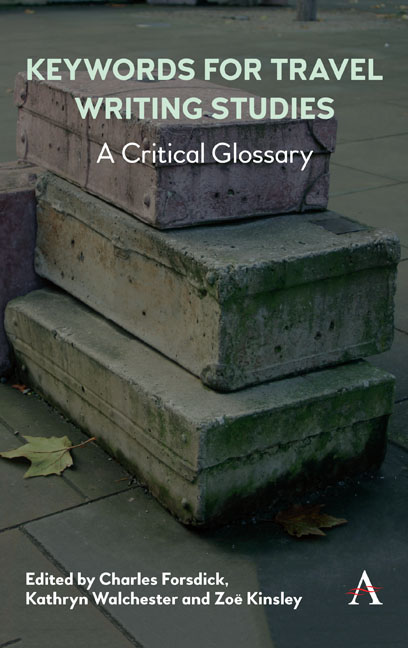
- Keywords for Travel Writing StudiesA Critical Glossary, pp. 175 - 177Publisher: Anthem PressPrint publication year: 2019
Accessibility standard: Unknown
Why this information is here
This section outlines the accessibility features of this content - including support for screen readers, full keyboard navigation and high-contrast display options. This may not be relevant for you.Accessibility Information
Accessibility compliance for the PDF of this chapter is currently unknown
and may be updated in the future.