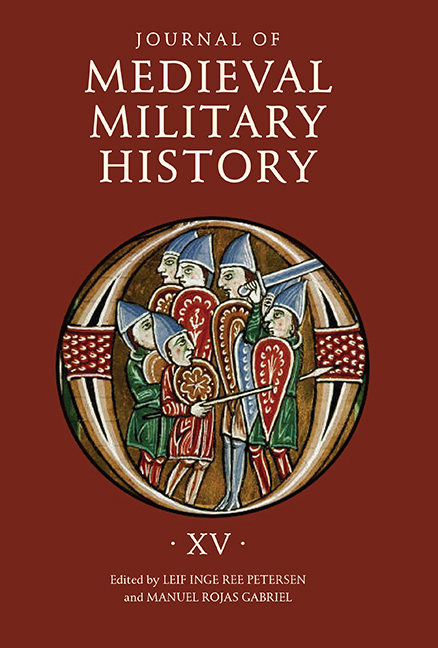
Book contents
- Frontmatter
- Dedication
- Contents
- List of Illustrations
- Preface
- 1 Later Roman Grand Strategy: The Fortification of the urbes of Gaul
- 2 In Search of Equilibrium: Byzantium and the Northern Barbarians, 400–800
- 3 Evolving English Strategies during the Viking Wars
- 4 Norman Conquests: A Strategy for World Domination?
- 5 The Papacy and the Political Consolidation of the Catalan Counties, c. 1060–1100: A Case Study in Political Strategy
- 6 Alfonso VII of León-Castile in Face of the Reformulation of Power in al-Andalus, 1145–1157: An Essay in Strategic Logic
- 7 The Treaties between the Kings of León and the Almohads within the Leonese Expansion Strategy, 1157–1230
- 8 A Strategy of Total War? Henry of Livonia and the Conquest of Estonia, 1208–1227
- 9 The English Longbow, War, and Administration
- List of Contributors
- Journal of Medieval Military History
- De Re Militari and the Journal of Medieval Military History
Preface
Published online by Cambridge University Press: 21 August 2019

Book contents
- Frontmatter
- Dedication
- Contents
- List of Illustrations
- Preface
- 1 Later Roman Grand Strategy: The Fortification of the urbes of Gaul
- 2 In Search of Equilibrium: Byzantium and the Northern Barbarians, 400–800
- 3 Evolving English Strategies during the Viking Wars
- 4 Norman Conquests: A Strategy for World Domination?
- 5 The Papacy and the Political Consolidation of the Catalan Counties, c. 1060–1100: A Case Study in Political Strategy
- 6 Alfonso VII of León-Castile in Face of the Reformulation of Power in al-Andalus, 1145–1157: An Essay in Strategic Logic
- 7 The Treaties between the Kings of León and the Almohads within the Leonese Expansion Strategy, 1157–1230
- 8 A Strategy of Total War? Henry of Livonia and the Conquest of Estonia, 1208–1227
- 9 The English Longbow, War, and Administration
- List of Contributors
- Journal of Medieval Military History
- De Re Militari and the Journal of Medieval Military History
Summary
The topic of medieval strategy has aroused lively debate among military historians in recent years, especially whether medieval military history was characterized by a particular type of strategy, be it Grand, Vegetian or Battle-seeking. This volume, based on a conference organized by Manuel Rojas Gabriel at Cáceres in 2009 and rounded out by specially commissioned papers, brings together many of the pre-eminent military historians active today in order to examine a number of case studies that display the complexity and diversity of strategic realities, as well as exploring new models and methodological avenues in evaluating medieval strategies. The cases span the late Roman Empire through the High Middle Ages, from the Baltic and the British Isles to Iberia and the Crusader States.
Bachrach examines the strategy behind the building of a defensive network of fortifications in Gaul, from the perspective of a late Roman government that was not hard pressed by barbarian invasions across the Rhine, as often argued, but did have to take extensive measures against sea-borne raiders whose bases were beyond Roman reach. Petersen follows the long-term survival and effectiveness of late Roman and early Byzantine methods of client management on the northern frontiers that persisted well into the middle Byzantine period. Abels demonstrates how the lack of coherent, long-term strategic planning led to failure under Aethelred II, despite immense military, organizational and economic efforts, whereas Alfred the Great had succeeded over a century earlier under similar circumstances by ensuring that each of his efforts reinforced the other. Bennett argues that Normans were masterful in their consistent application of the ideological component, alongside effective use of diplomacy, family connections, and technology such as ships and fortifications in what amounted to a strategic vision that characterized western Christian expansion in the High Middle Ages. Similarly, García-Guijarro demonstrates that the ideological support provided by the reform papacy was essential to the political coherence of the Catalan counties, while at the same time strengthening the papacy. Rojas and García examine the wildly fluctuating strategic needs of the Christian Iberian kingdoms in the 12th century, which shifted from truce with Muslim powers and conflict with Christian neighbors and back again to expansion at the expense of al-Andalus several times over, depending on power politics rather than ideology; however, behind the shifting alliances, the Iberian kingdoms always worked to ensure further opportunities of expansion.
Information
- Type
- Chapter
- Information
- Journal of Medieval Military HistoryStrategies, pp. ix - 1Publisher: Boydell & BrewerPrint publication year: 2017
Accessibility standard: Unknown
Why this information is here
This section outlines the accessibility features of this content - including support for screen readers, full keyboard navigation and high-contrast display options. This may not be relevant for you.Accessibility Information
Accessibility compliance for the PDF of this chapter is currently unknown
and may be updated in the future.