To save content items to your account,
please confirm that you agree to abide by our usage policies.
If this is the first time you use this feature, you will be asked to authorise Cambridge Core to connect with your account.
Find out more about saving content to .
To save content items to your Kindle, first ensure no-reply@cambridge.org
is added to your Approved Personal Document E-mail List under your Personal Document Settings
on the Manage Your Content and Devices page of your Amazon account. Then enter the ‘name’ part
of your Kindle email address below.
Find out more about saving to your Kindle.
Note you can select to save to either the @free.kindle.com or @kindle.com variations.
‘@free.kindle.com’ emails are free but can only be saved to your device when it is connected to wi-fi.
‘@kindle.com’ emails can be delivered even when you are not connected to wi-fi, but note that service fees apply.
This volume offers a clear and authoritative gateway into the world of Hellenistic poetry, presenting the state of the art in a form accessible to newcomers and valuable to experienced scholars alike. Designed for undergraduate and graduate students of ancient cultures, especially those in Classics, as well as instructors and researchers, it distils a complex literary era into an illuminating, concise guide. Moving beyond isolated readings of individual poets such as Callimachus, Theocritus and Apollonius, the book situates Hellenistic poetry within its rich historical, political, cultural, and religious contexts, and discusses its important afterlife in Roman poetry. It highlights how shifting power structures, expanding intellectual networks, and new forms of cultural expression and religion shaped poetic innovation both in Alexandria and in the wider Mediterranean world. Whether used in the classroom or consulted as a research companion, this Companion provides an indispensable, overview of a transformative period in ancient literature.
The Weird-a transgressive mode of fiction redolent with ooze, tentacles, and unfathomable geometries-has proven to be one of the most influential genres of the past century, despite being one of the most difficult to define. This volume charts the development of the Weird, from its origins in the nineteenth and early twentieth centuries (drawing connections to both popular, pulp fiction and 'high' Modernism) to the New Weird of today and related global forms. Leading scholars explore this troubling genre, offering global perspectives that go beyond the narrow frame of Euro-American fiction, to include works from Africa, Asia, and Scandinavia, as well as Indigenous voices, and ranging from novels and magazines to movies and games. The Cambridge Companion to Literature and the Weird is both a comprehensive history and a broad reimagining of the field, perfect for general readers, undergraduate researchers, and scholars of the form.
Vladimir Lenin remains one of the most significant figures of the twentieth century: a major socialist thinker, the leading figure in the October Revolution of 1917 in Russia and an enduring influence on the global revolutionary movement. This Companion offers a major reassessment of Lenin, his thought, experiences and legacy, through a series of concise and accessible chapters, grounded in the latest research. It provides an authoritative survey of important themes and events from the time of Lenin's emergence as a Marxist thinker, writer and revolutionary to his actions during Russia's revolutionary period. Central aspects of Lenin's thought are explored in depth, including revolution, the state, violence, gender, race and culture. The volume also explores the theoretical significance and enduring memorialisation of Lenin over a century after his death.
This Companion examines the relationship between philosophy and literature. It shows how philosophy, like literature, aims to transform its reader. It maps four shared terrains—Truth, Value, Form, and Being-to show how philosophical argument and literary imagination illuminate one another. Written by leading scholars, this Companion ranges from ethics, politics, and law to fiction, film, question, metaphor, and literature's power to shape a life. Historically informed and forward-looking, it offers an accessible guide to a vibrant interdisciplinary field, demonstrating how philosophy and literature together make real, existential claims on how we think, read, and live.
The Cambridge History of Mythology and Mythography offers a comprehensive overview of the history, theory, and practice of mythic analysis. From antiquity to the present day, and from the Americas to Africa, Eurasia, and Oceania, it demonstrates how mythic traditions have played a seminal role in a variety of cultures and civilizations. It also traces the origins and earliest expression of various mythic traditions, their similarities and differences, mutual influences, and their evolution. In addition, this History explores the key roles that literary figures, oral traditionalists, ethnologists, and cinematographers have played in collecting, cataloguing, interpreting, and reinterpreting the mythic traditions. It demonstrates how their work has influenced the transmission and perception of those traditions and enables an appreciation of the similarities and differences between mythological traditions. This comprehensive reference volume also brings an inter- and multi-disciplinary perspective to the topic, revealing how the interaction of various approaches contributes to the study of mythology across the world.
Addressing the full historical range of dystopian writing from the early nineteenth century to the present, this carefully curated collection of essays explores the shaping influence of major authors like George Orwell, Aldous Huxley, and Margaret Atwood alongside a number of rich and important texts by lesser-known and twenty-first-century writers. Chapters explore key themes including dictatorship and totalitarianism, the fear of revolution, anxiety about environmental collapse, misogyny, artificial intelligence and robotics, and imperialism as portrayed in literary dystopias. Focused primarily on the Anglo-American tradition, this Companion also features extensive discussion of European trends in the twentieth and twenty-first centuries, as well as a full chapter on non-Western dystopian literature.
In recent years, Queen Victoria (r. 1837–1901) and her world have come into sharper focus. Current scholarship has explored who the queen was and how her subjects saw her, both at home and abroad. We also have a deeper appreciation for Victoria's own role and agency in shaping her reign and constructing her self-image. This volume builds upon these developments and offers nuanced and historically grounded perspectives on the Victorian monarchy. The Cambridge Companion to Queen Victoria features the work of leading scholars across disciplines including literature, history, religion, women's studies and art history. Organized into four sections, the volume presents accessible and innovative scholarship on the queen as a cultural force and political agent, in domestic, international and imperial contexts.
George MacDonald (1824–1905) remains one of the most persistently read and beloved of the Victorians. His fairy tales and children's books have delighted generations of young readers, while his sermons, essays, and poems still offer startling insights into life and literature. He has increasingly been recognised as one of Scotland's most important nineteenth-century novelists. Here, seventeen new essays from an international, diverse group of scholars illuminate the crucial aspects of MacDonald's remarkable, varied works. The chapters are organised around MacDonald's life, major genres, and central themes, and provide clear points of entry for students, researchers, and curious readers. For readers approaching MacDonald's works for the first time and for those renewing a long acquaintance, The Cambridge Companion to George MacDonald is an indispensable guide. With a foreword by Malcom Guite and an afterword by Roderick McGillis.
What is the moral foundation of human rights, justice, and the rule of law? In a time of deep cultural and political division, this volume charts the rich history of one of the most enduring ideas in Western thought: that moral and legal norms are rooted in human nature and accessible to reason. Spanning ancient, medieval, early modern, and contemporary traditions-including Islamic and African-American perspectives-the volume shows how Natural Law has evolved and how it continues to shape debates in ethics, politics, and jurisprudence. With chapters on Aristotle, Aquinas, Grotius, Locke, and the American Founders, as well as modern voices like Jacques Maritain and Martin Luther King, it offers both historical depth and philosophical clarity. Essential reading for students and scholars in philosophy, law, theology, and political theory, it invites readers to rediscover a tradition that speaks urgently to the moral challenges of our time.
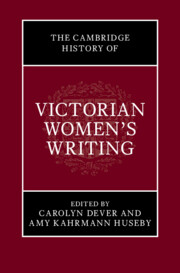
Victorian women's writing was a global project, offering platforms of expression to authors of wildly different perspectives, cultures, and life experiences. While conventional accounts of Victorian women's writing emphasize modest domestic ideals, this volume places that familiar narrative in conversation with voices that tell very different stories, including those that challenge, reject, reform, subvert, and sometimes reinforce received assumptions about what Victorian women thought, did, and wrote. Engaging sources from the 1830s to the dawn of the Great War in 1914 and beyond, this multi-authored history emphasizes the differences and the connections – both formal and thematic –linking those international, interdisciplinary, and transgeneric voices. Gathering cutting-edge contributions by scholars from across a rich variety of disciplinary perspectives, this History redefines what Victorian women's writing made possible in the modern world.
Covering the earliest known Anglophone literature for children from its medieval forms, its evolution in the early modern period and towards its emergence in the world of print culture, this volume explores the very foundations of the field through to its establishment as a popular genre for nineteenth-century consumers. In-depth discussion of specific sub-periods is provided in the opening chapters, while the remainder trace both major and more subtle changes in genre and style over time, charting an age of experimentation in form including both successful innovations and frequent failed attempts. The geographical range primarily focuses on the British Isles, but chapters also investigate early developments in children's books from North America and the wider impacts of colonialism and slavery. The shifting currents of didacticism and reading for pleasure across a variety of genres, bolstered by Enlightenment educational ideals, intersect here with new thinking about politics, sex, science, and faith.
Sixty years after their final collaboration Rodgers and Hammerstein remain central figures in the world of musical theatre, and their global influence continues to be felt. This Companion presents their iconic work for a new generation of students, teachers and fans, giving both historical context and new perspectives on the partners, the people with whom they collaborated, and the shows they created. A chapter is devoted to each musical, from Oklahoma! to The Sound of Music, providing key information about that work in both its staged and film versions, and analysis of its distinctive features including those that present challenges for practitioners, audiences and researchers today. The volume also introduces the early careers of both creators and Rodgers's work after Hammerstein's death. The contributions represent a variety of complementary disciplinary backgrounds that can serve as models for future study not just on Rodgers and Hammerstein but also on musical theatre more generally.
Highlighting the vibrancy and courage of women's contributions to the Romantic era's cultural politics, this History explores the period's British incarnations from the perspective of women to demonstrate how female accomplishment challenged women's secondary social status and initiated an early form of feminist protest and gender study. Separate chapters examine the media that women used – including (but not limited to) song, music, needlework, drawing, and empirical experimentation – and the range of venues and locales where they performed their gender identities and cultural assessments. While making space for writers, writing, and textual literacy, the History resists prevalent bias toward these media as agents of social transformation, prioritizing instead collective, improvisatorial, and embodied modes of creativity and protest. Recognizing the contested nature of both 'British Romanticism' and 'women' in today's critical discourse, this major work puts these two constructed entities into dialogue to explore the history and evolution of their creative critical interactions.
The first book in the English language to take a comparative look at the various roles played by all kinds of music and musicians in the fascist regimes of the twentieth century. It provides detailed overviews of musical life in Fascist Italy and Nazi Germany and identifies and challenges some of the stereotypes that became ingrained over the latter half of the twentieth century. Alongside comparative studies drawn from the German and Italian examples, the book presents case studies from a variety of regimes and situations. It analyses and compares numerous aspects of fascism (ideology, thought, practice, policy) in their interfaces with music and musicians across the twentieth century. Its broad range of topics expands the reader's horizons beyond a debate on 'music and totalitarianism' currently too often restricted to Stalinism on the one hand and Nazism on the other.
Volume II offers an authoritative new guide to life in the Crusader States of the Levant and the Eastern Mediterranean. Across nineteen chapters, leading experts explore how the crusaders not only imposed their own ideas and practices on the Levant but also adapted to its diverse landscapes and societies. With a strong emphasis on material culture, this volume offers a series of interpretative essays covering medicine, law, intellectual life and religious practice, while also providing a fresh treatment of topics including warfare, castles, the Military Orders, art, architecture, archaeology, and many aspects of daily life.
During the first four centuries of the common era, scholars and theologians laid the ground work for Christian doctrines that have shaped the faith and practice of believers for two millenia. This was the formative period of Christianity when the major theological tenets of the faith were articulated. The writings of the earliest Christians continue to serve as a vital source of inspiration and guidance for Christians around the world. This Companion offers an overview of Christianity's foundational beliefs and practices. Providing an historiographical overview of the topic, it includes essays on the key thinkers and texts, as well as doctrines and practices that emerged during early Christian era. The volume covers the range of texts produced over four centuries and written by theologians hailing from throughout the Mediterranean world, including the Latin West, North Africa, and the Greek east. Written by an international team of scholars, this Companion serves an accessible introduction to the topic for students and scholars alike.
Volume III focuses on the evolution of crusading beyond the Holy Land, the ways in which crusading impacted the people of Europe, and the cultural, political and religious legacies that were left behind. As a major cultural driver of the medieval age, it did much to shape religious thinking and practices, as well as influencing royal, knightly and civic ideology. Across twenty-one chapters, leading experts reveal the impact the Crusades had on women, Jews and emphasises the prominent presence of the Military Orders. Further essays show the rapid diversification of crusading to encompass enemies of the Catholic Church in Iberia, the Baltic and eastern Europe, the heretical Cathars, as well as the Ottoman Turks in the sixteenth century. It concludes with extensive coverage of the vast and diverse legacies of the Crusades, revealing the complexity and contemporary relevance of these contrasting memories in the West and the Muslim world.