Refine search
Actions for selected content:
2099 results in Shakespeare Survey
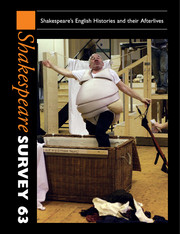
Shakespeare Survey
-
- Published online:
- 28 November 2010
- Print publication:
- 14 October 2010
Falstaff's Belly: Pathos, Prosthetics and Performance
-
-
- Book:
- Shakespeare Survey
- Published online:
- 28 November 2010
- Print publication:
- 14 October 2010, pp 63-77
-
- Chapter
- Export citation
Shakespearian Biography, Biblical Allusion and Early Modern Practices of Reading Scripture
-
-
- Book:
- Shakespeare Survey
- Published online:
- 28 November 2010
- Print publication:
- 14 October 2010, pp 212-224
-
- Chapter
- Export citation
The RSC's ‘Glorious Moment’ and the Making of Shakespearian History
-
-
- Book:
- Shakespeare Survey
- Published online:
- 28 November 2010
- Print publication:
- 14 October 2010, pp 184-197
-
- Chapter
- Export citation
Playing the Law for Lawyers: Witnessing, Evidence and the Law of Contract in The Comedy of Errors
-
-
- Book:
- Shakespeare Survey
- Published online:
- 28 November 2010
- Print publication:
- 14 October 2010, pp 262-271
-
- Chapter
- Export citation
Shakespeare Performances in England 2009
-
-
- Book:
- Shakespeare Survey
- Published online:
- 28 November 2010
- Print publication:
- 14 October 2010, pp 338-375
-
- Chapter
- Export citation
What Shakespeare Did with the Queen's Men's King Leir and When
-
-
- Book:
- Shakespeare Survey
- Published online:
- 28 November 2010
- Print publication:
- 14 October 2010, pp 316-325
-
- Chapter
- Export citation
Index to Volume 63
-
- Book:
- Shakespeare Survey
- Published online:
- 28 November 2010
- Print publication:
- 14 October 2010, pp 422-434
-
- Chapter
- Export citation
‘And is Old Double Dead?’: Nation and Nostalgia in Henry IV Part 2
-
-
- Book:
- Shakespeare Survey
- Published online:
- 28 November 2010
- Print publication:
- 14 October 2010, pp 78-88
-
- Chapter
- Export citation
Surface Tensions: Ceremony and Shame in Much Ado About Nothing
-
-
- Book:
- Shakespeare Survey
- Published online:
- 28 November 2010
- Print publication:
- 14 October 2010, pp 282-289
-
- Chapter
- Export citation
3 - Editions and Textual Studies
-
-
- Book:
- Shakespeare Survey
- Published online:
- 28 November 2010
- Print publication:
- 14 October 2010, pp 416-421
-
- Chapter
- Export citation
Daunted at a Woman's Sight?: The Use and Abuse of Female Presence in Performances of the Histories as Cycles
-
-
- Book:
- Shakespeare Survey
- Published online:
- 28 November 2010
- Print publication:
- 14 October 2010, pp 172-183
-
- Chapter
- Export citation
The Year's Contribution to Shakespeare Studies 1 - Critical Studies
-
-
- Book:
- Shakespeare Survey
- Published online:
- 28 November 2010
- Print publication:
- 14 October 2010, pp 388-405
-
- Chapter
- Export citation
Mapping the Globe: The Cartographic Gaze and Shakespeare's Henry IV Part 1
-
-
- Book:
- Shakespeare Survey
- Published online:
- 28 November 2010
- Print publication:
- 14 October 2010, pp 49-62
-
- Chapter
- Export citation
Richard II's Yorkist Editors
-
-
- Book:
- Shakespeare Survey
- Published online:
- 28 November 2010
- Print publication:
- 14 October 2010, pp 37-48
-
- Chapter
- Export citation
‘Watch Out for Two-handed Swords’: Double-Edged Poetics in Howard Barker's Henry V in Two Parts (1971)
-
-
- Book:
- Shakespeare Survey
- Published online:
- 28 November 2010
- Print publication:
- 14 October 2010, pp 162-171
-
- Chapter
- Export citation
Georgic Sovereignty in Henry V
-
-
- Book:
- Shakespeare Survey
- Published online:
- 28 November 2010
- Print publication:
- 14 October 2010, pp 114-126
-
- Chapter
- Export citation
Re-cognizing Leontes
-
-
- Book:
- Shakespeare Survey
- Published online:
- 28 November 2010
- Print publication:
- 14 October 2010, pp 326-337
-
- Chapter
- Export citation
2 - Shakespeare in Performance
-
-
- Book:
- Shakespeare Survey
- Published online:
- 28 November 2010
- Print publication:
- 14 October 2010, pp 405-416
-
- Chapter
- Export citation
Shame and Reflection in Montaigne and Shakespeare
-
-
- Book:
- Shakespeare Survey
- Published online:
- 28 November 2010
- Print publication:
- 14 October 2010, pp 249-261
-
- Chapter
- Export citation
