To save content items to your account,
please confirm that you agree to abide by our usage policies.
If this is the first time you use this feature, you will be asked to authorise Cambridge Core to connect with your account.
Find out more about saving content to .
To save content items to your Kindle, first ensure no-reply@cambridge.org
is added to your Approved Personal Document E-mail List under your Personal Document Settings
on the Manage Your Content and Devices page of your Amazon account. Then enter the ‘name’ part
of your Kindle email address below.
Find out more about saving to your Kindle.
Note you can select to save to either the @free.kindle.com or @kindle.com variations.
‘@free.kindle.com’ emails are free but can only be saved to your device when it is connected to wi-fi.
‘@kindle.com’ emails can be delivered even when you are not connected to wi-fi, but note that service fees apply.
This is the first volume of BHRS's series of late seventeenth and early eighteenth century poll books. Poll books tell the story of local people and their link with national history. This book is the first in a series by BHRS containing transcripts of the poll books for the county and borough seats of Bedford, and also includes some election accounts showing candidates' expenditure.
The introductory commentary gives an insight into political influences in Bedfordshire during the seminal period of English history from the Glorious Revolution to the accession of George I. It enables comparisons and political trends to be detected, including allegiances of regions of the county and parishes, the survival of the Tory party, the political allegiance of Anglican clergy and the role of Protestant nonconformists. Major landowners were important in Bedfordshire politics, but not dominant, and local gentry played a crucial role.
The transcriptions list all those who voted in four county and one borough election. The 8,500 names, fully indexed, will give unparalleled information on local landholding and help family historians find ancestors between the 1671 Hearth Tax and the 1841 Census.
This book accompanies the Paul Sacher Foundation's exhibition at the Bonn Beethovenhaus. In the twentieth and twenty-first centuries, composers have referred to Beethoven in their music. The volume explores this subject and illustrates it with documents from the Foundation's archives in Basel.
Religious guilds or fraternities proliferated throughout England until their dissolution in the late 1540s, yet remarkably few of their records have survived.
This is an edition of the official war diary of the 2nd Battalion, the Bedfordshire Regiment and complements BHRS's 2004 volume The Shiny Seventh: the 7th (Service) Battalion Bedfordshire Regiment at War 1915-1918, also edited by Martin Deacon.
Annual volume with contributions on writers and artists whose work intersects with Brecht's from three thematic perspectives: Brecht in a global age, women and Brecht, and Brecht's learning plays.
The collection of medieval manuscripts at Pembroke College is an important one. Its most striking feature is that the majority of MSS 1-120 came from the abbey of Bury St Edmunds, as the gift of Thomas Smart in 1599.
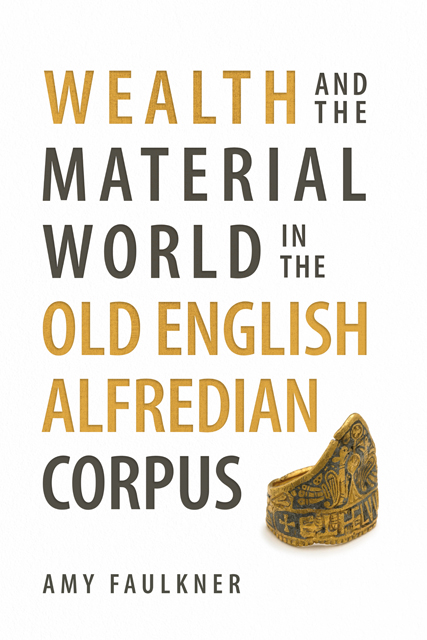
A new, materialistic reading of the Alfredian corpus, drawing on diverse approaches from thing theory to Augustinian principles of use and enjoyment to uncover how these works explore the material world.
In autumn 1397, Viscount Ramon de Perellós left the papal palace in Avignon to travel to St Patrick's Purgatory, famous throughout Europe as a gateway to the next world. There, he spent twenty-four hours in an underground cavern, where he claimed to have travelled through the nine fields of Purgatory, accompanied by demons, before entering the Earthly Paradise and catching a glimpse of Heaven.
Like much of Heinrich Heine's writing of the 1830s, his series of short articles on the Parisian Salon first published in the Morgenblatt für gebildete Stände in 1831 and subsequently in book form as Französische Maler (French Painters) offers reflections on the July Revolution and its aftermath. Heine uses the exhibit's juxtaposition of multiple paintings and the serial format of his journalistic reports as a double lens through which to consider the ends and beginnings of historical epochs in an age of revolution and its aftermath, a topic that will occupy us throughout this essay. In the concluding article, Heine discusses two paintings that the exhibit felicitously places side by side, and he seeks to recreate this visual juxtaposition on a textual level. The first, by Louis Robert, depicts agricultural workers outside of Rome. Heine finds in this tableau of reapers a representation of the lasting nature of the Roman people; the image presents a “Geschichte ohne Anfang und ohne Ende, die sich ewig wiederholt und so einfach ist wie das Meer, wie der Himmel, wie die Jahreszeiten” (history without beginning and without end that repeats itself eternally and is as simple as the sea, as the sky, as the seasons). This vaguely processional scene depicts festive dancing in rhythm with the seasonal harvest and evokes a classicizing shape of time based in the ceaseless repetition and constancy of Roman popular life, despite the fall of ancient Rome. The second painting, by Paul Delaroche, depicts Cromwell, the victorious representative of a new order, gazing down at the executed English king, Charles I.
The final act of the Congress of Vienna in 1815 was to document the failure of French-Napoleonic supremacy in continental Europe as well as new cooperation between the old and the restored monarchies. In their foreign relations, the powers assured mutual military aid in the case of domestic revolutions. This alliance was declared to be “holy.” However, after the suppression of civil wars and secessionist uprisings between 1815 and 1851—the revolutions in 1830 and 1848 come to mind—the monarchs believed that they had strengthened their positions domestically, and the second half of the nineteenth century consequently saw a new trend of an unrestrained willingness to start wars against former allies. The monarchs wasted no more thought on permanent supranational associations that could have influenced them in the decision-making process about military campaigns. A similar attitude had been typical for rulers in the pre-revolutionary eighteenth century, when the trauma from the destruction of the Thirty Years’ War no longer held sway and when the storming of the Bastille in Paris on July 14, 1789, was not yet in sight. The Peace of Westphalia in the middle of the seventeenth century granted sovereignty to the European nation-states and so there was no supranational authority under international law that could have put a stop to the warfare. Monarchs in the second half of the nineteenth century also returned to the old foreign policy principle of a continental equilibrium of powers. Wars were started again in the name of European equilibrium, but the peace expected to result from these wars always remained a phantom.
After 1851, the sovereign nation-state became the dominant model for the great powers in Europe. The American Revolution of 1776 and the French Revolution of 1789 had shown the extreme opposition between the republican national and the dynastic state model, but after the suppression of social and regional/national uprisings, the European monarchies were able to accept a form of a nation-state that would keep the monarchs in power while still allowing concessions to be made to the expectations of the rising middle classes. The French state under both the “citizen king,” Louis-Philippe, and Napoleon III was a typical example of this fusion, which represented neither the Old Regime nor the New Republicanism. When Napoleon III lost the war against Germany, the French nation-state again became a republic.
The forty-fourth meeting of Medieval English Theatre in 2022 was the third held online, as COVID restrictions continued. The conference took the theme of Editing and Adapting, being held in memory of Peter Happé and Martial Rose, two recently lost eminent scholars of medieval theatre, especially in the fields of editing and modern performance. Hosted by Jodi-Anne George from Dundee, the meeting was generously enabled by Clare Egan when the pandemic struck down its host. A tribute having been offered to Peter Happé last year, the day opened with a memorial from Phil Butterworth, recalling Martial Rose's influential and ground-breaking production of ‘The Wakefield Plays’ at Bretton Hall (1958) and at the Mermaid Theatre in London in the early 1960s, and sharing vivid extracts from his correspondence.
Several papers addressed early and recent issues in the editing of texts of medieval theatre. Meg Twycross gave a wide-ranging account of the problems confronting would-be editors in the late seventeenth and the eighteenth centuries, from lack of access to the manuscripts to an anti-Catholic mindset that inevitably distorted their narrative. Garrett Epp brought home the importance of modern editors’ sensitivity to performance, as well as text, in supplying stage directions for early playscripts, while Diana Wyatt opened up the very different editorial techniques needed to unpack the theatrical implications of the record evidence gathered by the REED project. Pamela King offered an insight into the importance of detail in editing as she explored the potentially revealing meanings in just two words of the Towneley Noah.
On adaptation, Bart Ramakers and Elsa Strietman reported on a major project to stage a fascinating Dutch tafelspel, and the fundamental questions it poses about engaging modern audiences with historically based performance. Eleanor Bloomfield and Tom Straszewski each considered modern adaptations of York plays, Eleanor addressing the revivals since 1951 that engage the plays with contemporary concerns, and Strasz the bricolage shaping of a site-specific production of the plays of Our Lady for the church of All Saints, North Street, York. Hilariously visual – and thought-provoking – entertainment was provided by Jeffery Stoyanoff's ‘TikTok-ing The Fall’.
The papers in this volume take forward a number of rich, often interlocking, strands and themes that have been developing in recent Medieval English Theatre issues and conference meetings.
We often turn to music for comfort and consolation when confronted with death. Music invariably plays a role in commemorative ceremonies, and questions of mortal existence are articulated with varying levels of profundity in virtually all musical traditions and genres throughout history, from the requiem tradition to ‘oppari’ laments of southern India to popular songs such as Eric Clapton's ‘Tears in Heaven’. The music, the way it is composed or performed, and how the performance is staged often provides solace at times of crisis. But there remain many questions as to why music has this effect. Psychological studies of music and death often begin with the listener and empirical investigations of the healing effects of music. In this chapter, we will instead start with music and performance as a creative response to thoughts on mortality, before identifying links between creative processes and the role music plays in mitigating negative responses when we are confronted with death. The themes presented will suggest new ways of understanding why we turn to certain kinds of musical expressions when faced with thoughts on death, and what relief this music may offer when coping with grief.
A close look at the striking musical poetics of pianist Marino Formenti will initiate a discussion of the connections between thoughts on mortality and creative practices. Analyses of Formenti's performances and interpretations add further layers of meaning to the empirical findings. The expressive qualities and characteristics in the music will be seen in light of psychological stress theory, highlighting the links between creative practices related to reflections on death and how we cope with stressful experiences and anxiety. Formenti's performances give rich incentive to address these issues and more specifically the following themes: the predictability of a listening context and the music – closely related to the role of repetition and temporal expansiveness; the individual's perceived control over a listening situation; and the role of music in encouraging social togetherness and belonging in order to cope with negative feelings associated with mortality.
Abstract: This article investigates how Heinrich von Kleist's gestures interrupt cognitive processes and implicate the embodied reader in the text—as a participant in the collective performance of meaning. While Kleist does not present a comprehensive theory of gesture, he provides threads to follow that address the role of gesture in epistemology and aesthetics in two of his two well-known essays, “Über die allmähliche Verfertigung der Gedanken beim Reden” (“On the Gradual Formulation of Thoughts While Speaking”) and “Über das Marionettentheater” (“On the Theater of Marionettes”). By reading these essays with and through Kleist's novella Das Erdbeben in Chili (The Earthquake in Chile), gestures become visible as productive interruptions of cognition that both disrupt hermeneutic interpretations and draw matter into the process of meaning-making—including the body of the reader. This dynamic comes into sharp relief when considered in conjunction with contemporary theories (e.g., those of Karen Barad, Donna Haraway, and Rebecca Schneider) of performance that illuminate the role of bodies in conceptual activity. With a performative approach, the reader can embrace their entanglement in the text and participate in the ongoing (re)configuration of meaning—two features that are unique to aesthetic engagement with Kleist's writing.
HEINRICH VON KLEIST's gestures disrupt a fictional world, transforming the text into a performance rather than a revelation of truth. I nstead of providing insight into the psychology of the characters and the reality of the narrative cosmos, the movements of Kleist's bodies hold together a multiplicity of disparate possibilities in a single instant, exploding the logic that governs the text. Without the decisive cut that distinguishes the limits of textual meaning, the text overflows with energetic possibilities. Hans-Thies Lehmann terms this Kleistian trope, in which a moment is both charged with potential and on the verge of catastrophe, “Theater im Exzeß” (theater in excess). Orienting Kleist's novellas and dramas in the context of modern theater praxis, he argues that only a framework that considers narration to be one component that works in combination with bodies, movement, and sound can make headway in light of the contingent excess that is at odds with representation.
John Blanke (also spelled ‘Blak’ or ‘Banke’), a Tudor court trumpeter of African descent, participated in some of the key ceremonial events of the early Tudor period. He was granted mourning livery for the funeral of Henry VII on 9 May 1509, was issued with ‘scarlet’ as one of the nine ‘Kyngs Trompyttes’ for the coronation of Henry VIII on 24 June six weeks later, and rode in the opening and closing processions at the two-day tournament organised in honour of the birth of the second Tudor's first son Henry, Duke of Cornwall, on 12–13 February 1511. This event is commemorated visually in the Westminster Tournament Roll, where a black musician appears as one of a group of six royal trumpeters, and has been identified, originally by Sydney Anglo, with Blanke. Blanke's established position as one of the king's servants is underscored by his receiving ‘a gown of violet cloth, a bonnet and a hat’ as a marriage gift from the king on 14 January 1512. The records also appear to reveal that following the death of his – presumably Italian – colleague Dominic Justinian, John Blanke (in this document called Blake) formally petitioned Henry VIII to request permission to take on Justinian's position, and with that, to ask for a raise in wages. Like the majority of petitions, this one was not dated; they rarely are. But Dominic Justinian was last seen in the records on 24 June 1509, when he was listed as one of the trumpet players present at Henry VIII's coronation. And, given that, as we will see below, Blanke asked to be paid in arrears for work done in lieu of the deceased from ‘the furste day of Decembre last passed’, this day in the year 1509 could be considered a theoretical terminus post quem for Blanke's request.
Blanke's petition pleads that ‘his wages nowe and as yet is not sufficient to maynteigne and kepe hym to doo your grace lyke seruice as other your Trompetours doo’, suggesting a discrepancy between the other trumpet players’ wages and his own.