To save content items to your account,
please confirm that you agree to abide by our usage policies.
If this is the first time you use this feature, you will be asked to authorise Cambridge Core to connect with your account.
Find out more about saving content to .
To save content items to your Kindle, first ensure no-reply@cambridge.org
is added to your Approved Personal Document E-mail List under your Personal Document Settings
on the Manage Your Content and Devices page of your Amazon account. Then enter the ‘name’ part
of your Kindle email address below.
Find out more about saving to your Kindle.
Note you can select to save to either the @free.kindle.com or @kindle.com variations.
‘@free.kindle.com’ emails are free but can only be saved to your device when it is connected to wi-fi.
‘@kindle.com’ emails can be delivered even when you are not connected to wi-fi, but note that service fees apply.
A fresh close reading of the texts of one of the four surviving major manuscripts of Old English poetry, reappraising Oxford, Bodleian Library, MS Junius 11 to discover some of the preoccupations of its compilers.
The music of the Dutch composer Alphons Diepenbrock (1862-1921) is one of the glories of European late-Romantic culture, although is hardly known outside his native Netherlands. This translation makes Leo Samama's masterly study of Diepenbrock available to non-Dutch readers for the first time.
In 1821 Bishop Carey conducted a visitation of the clergy of Devon and Cornwall, asking about the state of their parishes. This volume, along with DCRS New Series Volume 4, presents the answers for Devon, and they tell us much about religious life in the county, including the state of parishes, the activities of the clergy, and the relationship between dissenters and the ordinary life of the parish.
A comprehensive reassessment of British musical films 1946-1972 including 'King's Rhapsody', 'Beat Girl', 'The Tommy Steele Story', 'Rock You Sinners', 'The Golden Disc', and 'Oliver!'.
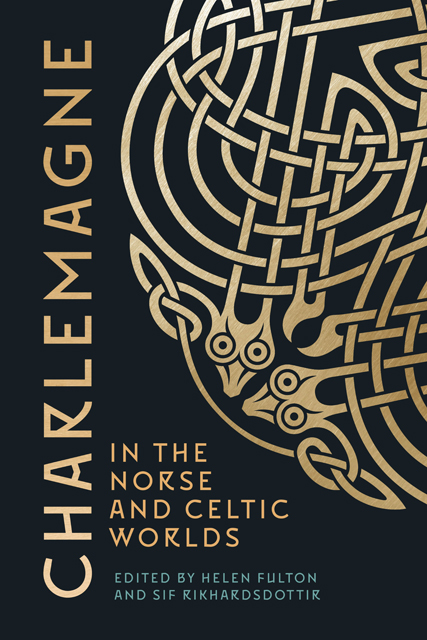
Captured here for the first time is the richness of the Charlemagne tradition in medieval Norway, Sweden, Denmark, Iceland, Wales and Ireland and its coherence as a series of adaptations of Old French chansons de geste.
Examines the history of post-colonial Kenya's and Zambia's relations with the People's Republic of China from ideological, political, economic and social perspectives.
This first full biography of Edward J. Dent (1876-1957), Cambridge Professor of Music and foremost musicologist, tells the story of a remarkable man who played a crucial role in the formation of twentieth-century culture and cultural institutions.
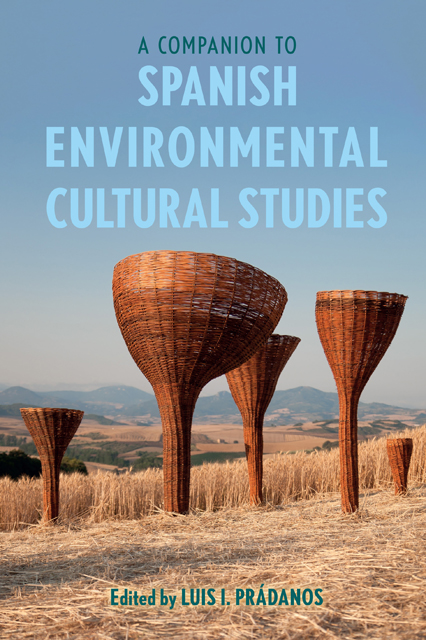
An exploration of how writers, artists, and filmmakers expose the costs and contest the assumptions of the Capitalocene era that guides readers through the rapidly developing field of Spanish environmental cultural studies.
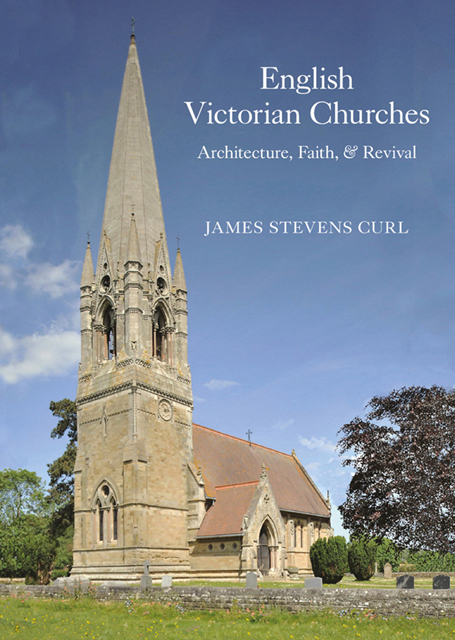
Victorian churches were often of high quality, reflecting in physical terms the intense theological debates of the time. This highly-illustrated book by a leading authority describes many of the finest examples.
This paper attempts to draw together all relevant textual, archival, and archaeological information concerning the appearance of Jerusalem's Fāṭimid and Seljȗk city defenses, including its multiple fortification walls and towers, ditches and outworks, on the eve of the Crusader conquest of that city in July 1099. What were the physical defensive impediments preventing the Crusader forces from getting close to the walls and gaining quick access to the city? Analysis of the textual sources is provided in this paper. What did the ditches and outworks look like, and how formidable were they? Details are provided based on recent archaeological excavation results, as well as from an examination of archival materials, some hitherto unpublished. New data is presented on the physical appearance and chronology of the previously unknown and elusive sunken ditch on the brow of Mount Zion at the spot where Raymond of St. Gilles laid siege to the city from the south. The paper also deals with what eventually transpired to the fortifications of Jerusalem under subsequent Frankish and Ayyȗbid rule. As we shall see, in the aftermath of Ṣalāḥ al-Dīn's conquest of the city in 1187, it appears that Jerusalem came to be protected from the south by two separate fortification walls.
Introduction
This paper will address primarily the archaeological evidence of the defensive outworks and ditches of Jerusalem that would have been major impediments to attacking Crusader forces in June–July 1099. New information on the northern and southern ditches has now become available as a result of recent archaeological excavations conducted to the north and south of the city. A re-examination of archival materials on earlier work done in the nineteenth century helps to contextualize much of this new material. The northern ditch was established at the time of the Fāṭimid Caliphate, and it served as a major defensive obstacle at the time of the Crusader siege in 1099. Indeed, it was still there and needed to be overcome at the time of Ṣalāḥ al-Dīn's siege in 1187. It would appear that the northern ditch was abandoned following the destruction of the Ayyȗbid fortifications in 1219/20, and that its infilling took place in subsequent Mamluk and Ottoman periods.
In July 2004, an exhibition entitled ‘Off the Beaten Track: Three Centuries of Women Travellers’ opened at the National Portrait Gallery in London. The subject of the exhibition was the watercolours painted by these travellers during their sojourn abroad. These women were not professional artists but ‘amateurs’, artists who operated in the sphere of leisure, not of commerce. The pictures, ranging from the ‘Ruins of Palmyra’ and ‘Four Portrait Heads of Afghan Leaders’ to ‘The Cactus Grove, near Algiers’ and botanical illustrations of Brazilian plants, were presented as art and as unique documents by the exhibition catalogue. This struck me, because the reason Jane Digby, Emily Eden, Maria Graham, and Barbara Bodichon were able to produce this art was that they had learned to paint watercolours, the ‘ideal medium for women’, as an accomplishment, a necessary part of their education as young ladies. Yet, such ‘female accomplishments’ were often disparaged at the time and have been treated in the historiography as a metonym for the dire state of female education in the period. This may explain why the term ‘accomplishment’ is not mentioned in the exhibition nor in its excellent catalogue.
In the long eighteenth century, accomplishments were debated by educationists, moralists, men and women of letters and artists, in essays, novels, poems, educational treatises as well as in visual culture. Most frequently, they were contested, variously held to be showy, superficial, trifling, mindless, and useless though sometimes useful, while the figure of the female performing accomplishments was often the object of satire or ridicule in the period's literature and satirical prints. Yet, the pervasiveness of accomplishments in debates of the time suggests that they must have performed important cultural work. In this chapter I propose to identify what this cultural work was, by using a different approach to the accomplishments. I argue that accomplishments must be studied not just individually but as different expressions of one overarching discourse, just like they were understood to be in the texts and discourses of the period. ‘No doubt the whole of the accomplishments have some general principles…’ declared Mudie at the start of the chapter on ‘Accomplishment’ in The Complete Governess.
Despite the Franks’ decisive defeat at the battle of Hattin in 1187, and the near destruction of the Latin kingdom of Jerusalem that followed, by the battle of La Forbie in 1244 the Franks were able to muster an army that contemporary sources indicate was comparable in size to that which it had summoned for Hattin. Yet, how the Latin kingdom was able to recover its martial strength between these two battles has not been adequately explored in the current historiography. An analysis of early thirteenth-century Jerusalemite charter material and narrative sources for post-Hattin crusades to the Latin East suggests that the military resources of the Latin kingdom recovered steadily in the decades after Hattin, so that by the mid-thirteenth century the Franks were once again able to field a large force of knights and a significant body of infantry. The Military Orders quickly replaced the losses they had suffered at Hattin while the Latin kingdom's baronage was able to assemble between 300 and 400 knights by the 1220s. The overall number of infantry available to the Latin kingdom is harder to assess, but the number of troops that the Franks could call upon in the early thirteenth century should not be underestimated. However, while the early thirteenth-century kingdom still possessed substantial military resources, its experiences at Hattin made it reluctant to employ these forces aggressively and risk another calamitous defeat. Rather, the Latin kingdom focused its attention upon limited objectives and waited until reinforcements from the Latin West arrived before undertaking any significant military action
The Latin kingdom of Jerusalem's catastrophic defeat at the battle of Hattin on 4 July 1187 has been the subject of considerable study by historians of the Latin East. So comprehensive was the Frankish defeat at Hattin that very few knights remained in the kingdom for its defense, and in the months that followed the battle, the kingdom was almost annihilated as one Frankish city after another fell to Islam.2 Only through the intervention of the Third Crusade (1189–92) was the Latin kingdom preserved, as crusader forces successfully restored a narrow strip of coastal territory, punctuated by a handful of port cities, to Frankish control.