To save content items to your account,
please confirm that you agree to abide by our usage policies.
If this is the first time you use this feature, you will be asked to authorise Cambridge Core to connect with your account.
Find out more about saving content to .
To save content items to your Kindle, first ensure no-reply@cambridge.org
is added to your Approved Personal Document E-mail List under your Personal Document Settings
on the Manage Your Content and Devices page of your Amazon account. Then enter the ‘name’ part
of your Kindle email address below.
Find out more about saving to your Kindle.
Note you can select to save to either the @free.kindle.com or @kindle.com variations.
‘@free.kindle.com’ emails are free but can only be saved to your device when it is connected to wi-fi.
‘@kindle.com’ emails can be delivered even when you are not connected to wi-fi, but note that service fees apply.
This comprehensive study of the piano music of award-winning American composer Samuel Adler will interest pianists, teachers, and anyone interested in the musical art of our day.
Shows that the work of Wilhelm von Humboldt (1767-1835) forms a philosophy of dialogue and communication that is crucially relevant to contemporary debates in the Humanities.
First English translation of the memoirs of Austrian Romani Holocaust survivor, writer, visual artist, musician, and activist Ceija Stojka (1933-2013), along with poems, an interview, historical photos, and reproductions of her artworks.
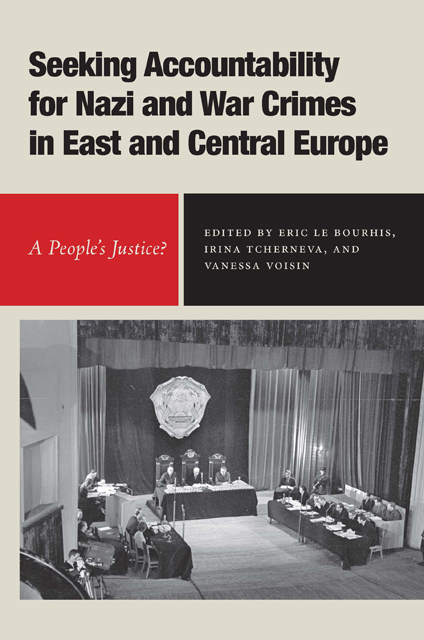
The thirst for post-World War II justice transcended the Cold War and mobilized diverse social groups. This is a story of their multilayered and at times conflictual interactions.
A new intellectual biography of Thomas Babington Macaulay, showing how nineteenth-century British liberal culture retained and transformed the ideas of the Enlightenment in a rapidly changing world.
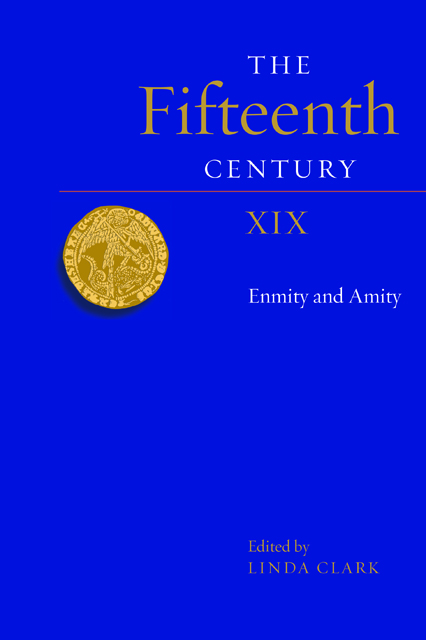
The essays in this volume explore relationships in all their different guises and expressions. Hostility between England and France cast a long shadow over the fifteenth century and beyond. While warfare at sea and the composition of the army which invaded Normandy in 1417 left extensive administrative records, sources of a different nature highlight the experiences of the French and Burgundians. The experience of the incursion of Henry VIII's forces in 1513 found expression in widely-distributed poems; while verses celebrating the births of heirs to the Hapsburg duke of Burgundy sought to allay fears over a change of regime by stressing the benefits of their multinational heritage. Portraits of rulers of Italian states emphasised the emergence of a shared courtly culture between England and Italy by commemorating their election as Knights of the Garter, while the records of Bishop's Lynn testify to the harmonious integration of immigrants from the Low Countries and Baltic regions. The Magna Carta of 1215 - intended to place the relationship between ruler and ruled on a new footing - had a long after-life, providing a blue-print for practices adopted by the Appellants of 1388 and being cited at the deposition of Richard II, only to be eclipsed in the late fifteenth century when depositions focused instead on challenges to the monarch's title. Poor records of the meetings of convocations have led to undue emphasis on their role in granting subsidies, but a register at Canterbury presents a different picture by revealing business of the southern convocation of 1462.
The middle-aged man who left his house near Charing Cross on the morning of Saturday 12 October 1678 didn’t know it, but the cause and circumstances of his death, probably later that same day, would become one of the most famous of all British unsolved mysteries. Sir Edmund Berry Godfrey (the full name by which he would be known to posterity) was a justice of the peace for Westminster and Middlesex, an unpaid official tasked to keep the peace and to receive criminal complaints. He had been knighted in 1666 for his courage and diligence in discharging his duties during the plague and the Great Fire of London, remaining at his post when other officials fled. Godfrey’s body was found on the evening of Thursday 17 October, five days after he had gone missing, several miles from his home, face-down in a ditch near Primrose Hill, impaled with his own sword. The forensic evidence – there was little or no blood, there seemed to be bruises on the body and a ligature mark around the neck – indicated that the wound had been inflicted post mortem and Sir Edmund had in fact been strangled or garrotted. Robbery was quickly ruled out, as neither Godfrey’s rings nor the substantial sum of money he had been carrying had been stolen. The fact that the dead man’s clothes were dry and his shoes clean, despite the wet weather and the muddy conditions, convinced contemporaries that the body had only recently been dumped at the scene. The tracks of a cart, a bent grate and some straw scattered nearby seemed to corroborate this theory. Wilder rumours, which would persist into modern times, also circulated – that Godfrey had been sequestered and starved, possibly tortured, for days before being murdered by asphyxiation.
Within hours of his disappearance, Godfrey’s household was in confusion, with friends and acquaintances worried and speculating over the magistrate’s whereabouts. And within days, Godfrey’s two brothers had raised the alarm, informing the Privy Council, and demanding that a search be launched. The contemporary lawyer Roger North would view the rumours that ran ‘as wild Fire in a Train, and … spread all over the Town’ the very afternoon of Godfrey’s disappearance as in itself evidence of a deeply laid ‘Party Intrigue’.
In the third volume of his Brief History of the Times (1688), The Mystery of the Death of Sir E.B. Godfrey Unfolded, Roger L’Estrange tells a story to demonstrate how dangerous it was in the autumn of 1678 even to suggest that Sir Edmund had committed suicide. On the evening of Thursday 17 October, Captain Thomas Paulden was at Mrs Duke’s coffee-house in Northumberland House near Charing Cross (only steps from Godfrey’s home in Hartshorn Lane) when he heard the news of the discovery of the body. Paulden deposed that several of the ‘Horsemen’ who had accompanied the constable and others to the scene told him that, judging from the posture of the dead man, Godfrey had ‘fall’n upon his own Sword’. At this, however, the crowd of people gathered around began to mutter, ‘These are the Rogues that Murther’d him Themselves, and would make People believe, that he did it himself’. The message was clear: those harbouring doubts that Godfrey had been murdered, and by the Catholics, had best keep their opinions to themselves. According to L’Estrange, ‘The Belief or Dis-belief to this Story was at This Time become Effectually the Test of a Protestant, or a Papist; and the Credit of it Promoted by All ways Imaginable by Reports, and Post-Letters’ and enforced ‘By Menaces, Promises and Extreme Cruelties’.
Roger L’Estrange was a gifted propagandist whose version of events and arguments – including his insistence that Godfrey committed suicide – have profoundly influenced all subsequent accounts. This was in part due to his enhanced authority as official investigator: in 1686, James II, anxious to debunk the Plot, gave him carte blanche to re-open the investigation into Godfrey’s death. But, even more importantly, this was because of the scores of witness statements he obtained, both from ‘true copies’ of original depositions handed over by authorities and from new interviews with surviving witnesses. For most of this evidence, later lost or destroyed, L’Estrange is the only source, even if – as scholars acknowledge – a highly partisan and problematic one. While L’Estrange boasted of omitting none of the witness depositions from his Brief History, he reproduced few of them at length, choosing instead to weave together different snippets at different times to make the case that Godfrey had killed himself.
On 31 October 1678, the Anglican clergyman William Lloyd preached the funeral sermon of Sir Edmund Berry Godfrey to an audience overflowing the pews of the church of St Martin-in-the-Fields, which had a normal capacity of about four hundred people. By all accounts it was an anti-Catholic tour de force. According to the contemporary Roger North, ‘the Crowd was prodigious and so heated that any Thing called a Papist, were it cat or Dog, had probably gone to Pieces in a Moment’. So high were emotions running – fear as well as grief and anger – that Lloyd was supposedly flanked on either side by two burly ministers ‘to guard him from being killed … by the Papists’ (North adding ironically, ‘Three Parsons in one Pulpit! Enough of itself, on a less Occasion, to excite Terror in the Audience’).
William Lloyd was a natural choice to deliver Godfrey’s funeral sermon in that he was both a friend of the deceased and the vicar of St Martin-in-the-Fields, Sir Edmund’s parish. He was also the dean of Bangor and something of a rising star in the Anglican Church (he would be made bishop of St Asaph in 1680 and of Worcester in 1699). Lloyd’s eulogy was critical in Godfrey’s construction as a Protestant martyr: a sacrifice to a ‘bloody religion’ whose blood, like Abel’s, cried out to God for vengeance. His text was 2 Samuel 3:33–4, in which David mourned the death of Saul’s cousin Abner, who had died as a result of a treacherous ambush: ‘And the King lamented over Abner, and said, Died Abner as a fool dieth? Thy hands were not bound, nor thy feet put into fetters: as a man falleth before wicked men, so fellest thou. And all the people wept again over him.’ Just as Abner was ‘an eminent man, both in dignity, and also in usefulness among his people’, Godfrey ‘was perhaps the Man of our Age that did the most good in that Station [of justice of the peace]’; Abner’s ‘Sufferings’ and ‘bloody violent death’ also paralleled Godfrey’s. With a pathos that would not have been lost on his auditors, Lloyd took on Godfrey’s voice: ‘I spent my life in serving you. It was my business to do Justice and shew Mercy. See what I had for it, Insnared and Butcher’d by wicked Men against Justice and without Mercy.’
The moral panic ignited by the death of Sir Edmund Berry Godfrey in October 1678 persisted even after his supposed murderers, Robert Green, Henry Berry and Lawrence Hill, were safely under lock and key. In January 1679, the French ambassador Barillon reported that three thousand daggers, each inscribed with Godfrey’s name and the day of his death, had been purchased by the wives of ‘people of quality … to defend themselves from the massacre with which the Protestants claim to be threatened if the Catholics were the masters’. The countess of Shaftesbury and other timorous ladies supposedly secreted ‘little pocket pistols’ in their fur muffs to defend themselves against papist attacks. The then chief justice of the Common Pleas Francis North (older brother to Roger) described how the ‘Murder and Exposing’ of the magistrate’s body to public view had stirred up the ‘Violence & Rage’ of the people to such a ‘Height against the Papists that No Reason could be heard but Every foolish story against them passed for Gospel’. But Catholics were not the only suspects. In addition to reports that traced Godfrey’s last movements to Somerset House or Arundel House, ‘it was whispered that he was seen last at the Cock-pitt’ in Whitehall, residence of the Anglican lord treasurer, Thomas Osborne, earl of Danby, where the magistrate had been ‘threatned by the E[arl]’, and ‘one Christian’ – the minister’s servant – was ‘suspected in the business’.
Just as in modern times the theory of a lone shooter, in the person of the obscure misfit Lee Harvey Oswald, was woefully incommensurate with the scale of emotion unleashed by the 1963 assassination of John F. Kennedy, so too the execution of three ordinary working men for Godfrey’s murder was, for contemporaries, anticlimactic and deeply unsatisfying. In both cases, conspiracy theories of appropriate grandiosity filled the void. The fact that Green, Berry and Hill had resolutely maintained their innocence – despite a stream of hopeful rumours that they had or were about to confess – fed suspicions not so much that justice had erred but that the true masterminds of the crime remained at large, still pulling the strings. There were from the first whispers that Godfrey’s murder was part of a cover-up orchestrated by the court to suppress the investigation of the Plot, rumours that inevitably trended upwards to the duke of York and even the king.
Less than four years after he acceded to the throne, James II and VII’s stubborn adherence to his Catholic faith would cost him his three kingdoms. That most unprescient of princes had however seen clearly enough a decade earlier, when he predicted that the discovery of Godfrey’s body, on 17 October 1678, would ‘cause … a great flame in the Parliament’ that was about to meet. Inevitably, it was the ‘usual suspects’ – the Catholics – who felt the heat. In addition to striking a committee to investigate the magistrate’s death, the House of Commons immediately addressed the king to remove ‘all Popish recusants’ from within twenty miles of London and from any public office and revived a bill ‘for hindering Papists to sit in either House of Parliament’. On 21 November, the Commons debated a proviso proposed by the more moderate Upper House that would have exempted James, the most prominent Catholic in the kingdom, from the provisions of the act. The MP Sir Thomas Meres objected, arguing that the stakes were too high, and the times too dangerous, for such ill-judged indulgence: ‘On one side, the reason against the Proviso is, prudence and safety. On the other, civility, gratitude, and compliment. I would be on the civil side, were not the safety of the nation concerned’. Meres concluded ominously: ‘No doubt but Sir Edmundbury Godfrey was civil to go to Somerset House, &c. and he was civil to Mr Coleman to compare notes [i.e. of Oates’s informations] with him: But he lost his life by it’.
The proviso passed by the narrowest of margins (158 for and 156 against), but in the event it was clear that the time for civility was past: as the secretary of state Henry Coventry spoke in defence of the measure, several members chanted ‘Coleman’s letters, Coleman’s letters’. These letters, as we have seen, revealed that the duchess of York’s former secretary, a zealous Catholic convert, had solicited foreign aid to promote both a repeal of the penal laws against recusants and the dissolution of the intolerantly Anglican Cavalier Parliament. There was little doubt that Coleman’s schemes had enjoyed the sanction and probably the active encouragement of his patron, the king’s brother and heir apparent James.