To save content items to your account,
please confirm that you agree to abide by our usage policies.
If this is the first time you use this feature, you will be asked to authorise Cambridge Core to connect with your account.
Find out more about saving content to .
To save content items to your Kindle, first ensure no-reply@cambridge.org
is added to your Approved Personal Document E-mail List under your Personal Document Settings
on the Manage Your Content and Devices page of your Amazon account. Then enter the ‘name’ part
of your Kindle email address below.
Find out more about saving to your Kindle.
Note you can select to save to either the @free.kindle.com or @kindle.com variations.
‘@free.kindle.com’ emails are free but can only be saved to your device when it is connected to wi-fi.
‘@kindle.com’ emails can be delivered even when you are not connected to wi-fi, but note that service fees apply.
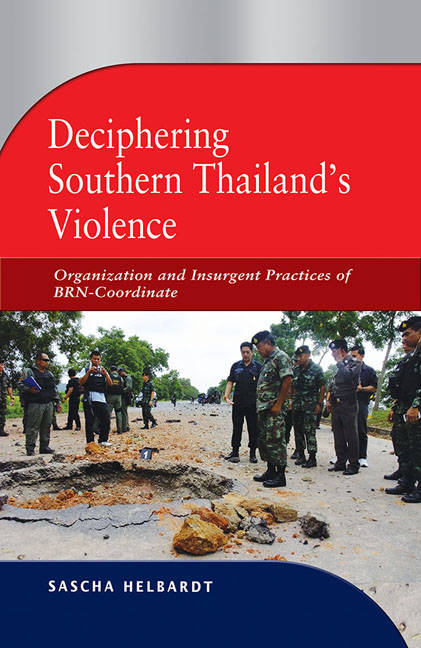
Scholars have given questions about the perpetrators of nameless violence in Southern Thailand little consideration, leaving the motives that drive Barisan Revolusi Nasional (BRN) heavily cloaked in secrecy and speculation. This book offers a rare glimpse behind the veil that shrouds BRN-Coordinate. Using exclusive access to and detailed interviews with BRN-Coordinate members, this book analyses the communicative dimension of the insurgency. It depicts the hidden channels and organized violence that drive the region's enduring rebellion as well as BRN's dichotomous existence between silence and communication.
Political accountability is a crucial element of any democracy since it is a safeguard against power abuse and corruption, both urgent problems of many political systems in Southeast Asia. Based on social science theories, the author analyses from a comparative perspective the ways institutional engineering concerning different dimensions of political accountability influenced the quality of democracy in Indonesia, Thailand and the Philippines. By highlighting the successes and shortcomings, this book evaluates the degree these institutional reforms resulted in the deepening, stagnation, or regression of the respective democratization processes in these three Southeast Asian countries.
'Southeast Asian Affairs is the only one of its kind: a comprehensive annual review devoted to the international relations, politics, and economies of the region and its nation-states. The collected volumes of Southeast Asian Affairs have become a compendium documenting the dynamic evolution of regional and national developments in Southeast Asia from the end of th 'second' Vietnam War to the alarms and struggles of today. Over the years, the editors have drawn on the talents and expertise not only of ISEAS' own professional research staff and visiting fellows, but have also reached out to tap leading scholars and analysts elsewhere in Southeast and East Asia, Australia and New Zealand, North America, and Europe. A full list of contributors over forty years reads like a kind of who's who in Southeast Asian Studies.
Regardless of specific events and outcomes in political, economic, and social developments in Southeast Asia's future, we can expect future editions of Southeast Asian Affairs to continue to provide the expert analysis that has marked the publication since its founding. It has become an important contributor to the knowledge base of contemporary Southeast Asia.' – Donald E. Weatherbee, Russell Distinguished Professor Emeritus, University of South Carolina
This edited volume examines the concept of overhangs or legacies or negative stereotypical images in international relations and their impact on bilateral relations between geographically proximate states in East Asia. The case studies chosen – Japan-Korea, Japan-China, Vietnam-China, Thailand-Myanmar and Thailand-Cambodia – demonstrate conclusively that bilateral overhangs or legacies have a significant impact on contemporary international relations. Such images are regularly replicated and stoked by a variety of constituencies including state agencies for their own selfish interests. The evidence also points to the fact that such bilateral relationships are relatively self-contained and often operate with their own dynamics. Powerful condensation symbols are appropriated to weave a story of the virtuous self and the stereotypical other. This negative image and its replication is important to an understanding of turbulent bilateral relations in East Asia and also helps to inform how such relations can be brought to an even keel.
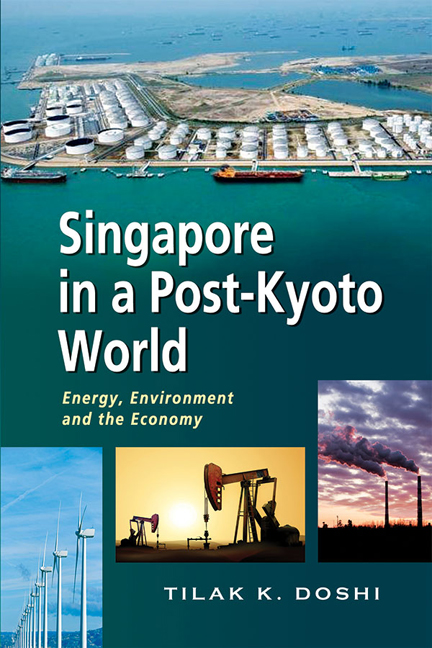
Singapore had, by the 1980s, emerged as one of the world's great oil refining and trading centres, with the 'East of Suez' region within its sphere of influence. The city-state's policy-making went against the grain in much of its practice of economic development. It ensured that energy products were bought and sold in the domestic market at essentially global prices, in contrast to the common practice in developing countries of subsidizing energy fuels for social equity. Without a drop of oil of its own, Singapore also managed to attract large foreign investments in the capital-intensive oil refining and petrochemical manufacturing sectors in an export-oriented strategy. This was at a time when governments of most newly independent countries were busy trying to promote heavy industry by protectionist trade policies and import-substituting industrialization. The purpose of this book is two-fold. It is intended to introduce a host of energy-related discussions relevant to a wider group of readers who do not 'do energy' for a living, yet are keenly interested in understanding the many complexities of modern industrial societies which need to balance economic, environmental, and security priorities of ordinary citizens. It is also meant to serve as an introductory assessment of key energy-related issues, with a particular relevance for small advanced countries such as Singapore.
The second edition of Population Policies and Programmes in Singapore presents an up-to-date and comprehensive account of the government's initiatives to influence the course of fertility, and hence the rate of population growth in the island-state of Singapore since the 1960s. The varied population issues and consequences associated with the prolonged below-replacement fertility are discussed in detail. The strength of the book lies in the author's intimate familiarity with the subject acquired through some personal involvement in the formulation of population policies for the country.
Singapore's Malay (Muslim) community, constituting about 15 per cent of the total population and constitutionally enshrined as the indigenous people of Singapore, have had its fair share of progress and problems in the history of this country. While different aspects of the vicissitudes of life of the community have been written over the years, there has not been a singularly substantive published compendium specifically about the community - in the form of a Bibliography - available. This academic initiative fills this obvious literature gap. The scope and coverage of this Bibliography is manifestly comprehensive, encompassing the different sources of information (print or non-print) about the many facets of life of the Republic 's Malays/Muslims - such as education, economy, politics, culture, history, health, language, religion, arts, and more. The result is a Bibliography that is arguably the most expansive, if not exhaustive treasury collection about the community, ever available anywhere. Scholars and researchers in particular and the public in general should find this Bibliography a highly valuable, indispensable source of information about the rich and varied life of Singapore's Malay/Muslim community, stretching a period of two centuries - from the time of Stamford Raffles in 1819 until today.
'Southeast Asian Affairs is the only one of its kind: a comprehensive annual review devoted to the international relations, politics, and economies of the region and its nation-states. The collected volumes of Southeast Asian Affairs have become a compendium documenting the dynamic evolution of regional and national developments in Southeast Asia from the end of the 'second' Vietnam War to the alarms and struggles of today. Over the years, the editors have drawn on the talents and expertise not only of ISEAS' own professional research staff and visiting fellows, but have also reached out to tap leading scholars and analysts elsewhere in Southeast and East Asia, Australia and New Zealand, North America, and Europe. A full list of contributors over forty years reads like a kind of who's who in Southeast Asian Studies.
Regardless of specific events and outcomes in political, economic, and social developments in Southeast Asia's future, we can expect future editions of Southeast Asian Affairs to continue to provide the expert analysis that has marked the publication since its founding. It has become an important contributor to the knowledge base of contemporary Southeast Asia.' – Donald E. Weatherbee, Russell Distinguished Professor Emeritus, University of South Carolina
'Southeast Asian Affairs, first published in 1974, continues today to be required reading for not only scholars but the general public interested in in-depth analysis of critical cultural, economic and political issues in Southeast Asia. In this annual review of the region, renowned academics provide comprehensive and stimulating commentary that furthers understanding of not only the region's dynamism but also of its tensions and conflicts. It is a must read.' – Suchit Bunbongkarn, Emeritus Professor, Chulalongkorn University.
'Now in its forty-third edition, Southeast Asian Affairs offers an indispensable guide to this fascinating region. Lively, analytical, authoritative, and accessible, there is nothing comparable in quality or range to this series. It is a must read for academics, government officials, the business community, the media, and anybody with an interest in contemporary Southeast Asia. Drawing on its unparalleled network of researchers and commentators, ISEAS is to be congratulated for producing this major contribution to our understanding of this diverse and fast-changing region, to a consistently high standard and in a timely manner.' – Hal Hill, H.W. Arndt Professor of Southeast Asian Economies, Australian National University
The year 2015 has special significance for regional economic integration. The ASEAN Community, integrating the political, economic and social aspects of regional cooperation, will complete its first milestone by December 2015. Expectations of tangible benefits under an ASEAN Economic Community have attracted much attention though many of the initiatives will be realized post-2015.
Following the policy of open regionalism, ASEAN has also signed free trade agreements with Australia, New Zealand, China, India, Japan and South Korea. It has launched negotiations for the Regional Comprehensive Economic Partnership (RCEP) agreement in 2013, with expected breakthrough by end-2015.
The Southeast Asian economies are also involved in two other regional initiatives. First is the Trans-Pacific Partnership (TPP), initiated by the United States. As part of the U.S. 'pivot to Asia', the TPP is envisioned as a 'comprehensive and high-quality' agreement and has concluded its negotiation in October 2015. Second, the discussions on regional connectivity have broadened; China has emerged as a recent lead proponent with its proposals for 'One Belt, One Road' and the Asian Infrastructure Investment Bank.
All these together have implications not only for individual Southeast Asian countries but also for regional trading architecture. To aid in understanding the beginnings, development, and potential of these grand plans, this collection of 22 essays offers a rich analysis of ASEAN's own economic integration and other related initiatives proliferating in the broader Asia-Pacific region.
Malaysia is among the most ethnically diverse and culturally rich nations on earth. Yet much of its cultural wealth lies buried beneath the rubric of its main Malay, Chinese and Indian 'race' categories; the dazzling diversity within and outside these groups remains largely unexplored. This book uncovers some of this fascinating diversity through the stories of five little-known acculturated ethnic groups in Peninsula Malaysia. The author, a Malaysian sociologist, delivers an insightful and lucid study of these groups, with some surprising findings. These communities illustrate how much more cross-cultural mingling, sharing and co-dependence there is within Malaysian society than we care to recognize, admit or celebrate. This raises various questions: Is a similar process of spontaneous inter-ethnic interaction possible between larger ethnic groups today? How can we foster such acculturation, and can it by itself contribute to ethnic harmony? The author also discovers that despite their long settlement and deep acculturation, segments of these groups are anxious about their future, and pine for an indigenous identity. What are the implications of this trend for ethnic relations, and how can it be resolved?
This book traces the acculturation journey of these communities and draws lessons for ethnic relations in one of the most complex multi-ethnic nations in the world. It will appeal to scholars, students, laymen and visitors interested in migration, history, culture, ethnicity and heritage in Malaysia and the region.
Revisionist' or 'alternative' historians have increasingly questioned elements of the Singapore Story – the master narrative of the nation's political and socioeconomic development since its founding by the British in 1819. Much criticism focuses especially on one defining episode of the Story: the internal security dragnet mounted on 2 February 1963 against Communist United Front elements on the island, known to posterity as Operation Coldstore. The revisionists claim that Coldstore was mounted for political rather than security reasons and actually destroyed a legitimate Progressive Left opposition personalized by the charismatic figure of Lim Chin Siong – rather than a dangerous Communist network as the conventional wisdom holds. Relying on both declassified and some previously unseen classified sources, this book challenges revisionist claims, reiterating the historic importance of Coldstore in helping pave the way for Singapore's remarkable journey from Third World status to First in a single generation.
This book examines the energy resource relations between China and ASEAN countries. It addresses the following issues: as the world energy demand shifts East because of the rise of China, ASEAN community and other emerging Asian economies, and as the Greater Indian Ocean and the South China Sea become the world's energy interstates, will geopolitical tensions over energy resources spark conflicts in the region, especially in the South China Sea? Against the background of China's rise and its growing influence in Southeast Asia, will China's quest for energy resource cooperation be viewed as a threat or opportunity by its neighbouring countries? Since the United States, Japan and India are important players in Southeast Asia, does the shifting geopolitics of energy give these big powers a new strategic tool in an intensifying rivalry with China? Or does the changing geopolitics of energy resources create more areas of shared interests and opportunities for cooperation between these big powers to balance, rather than increase, tensions in Southeast Asia?
This book will be of interest to anyone who is keen to learn how the world, especially the United States, can accommodate and adapt to the new global energy dynamics and how China and ASEAN operate as new players in global and regional energy markets.
Dr Comber's account of General Templer's administration in Malaya as High Commissioner and Director of Operations (1952–54) during the Malayan Emergency departs from the usually accepted orthodox assessment of his time in Malaya by focusing on the political and socioeconomic aspects of his governance rather than the military. In doing so, Dr Comber has relied mainly on primary and other first-hand sources, including the confidential reports sent from Malaya by the Australian Commission to the Australian government in Canberra, and the private papers of some of the leading Malayan politicians of the time with whom Templer had dealings which have been deposited in the ISEAS Library, Singapore, many of which have not been used before. The evidence and facts that Dr Comber marshals in this study reflect well the reservations that were often felt about General Templer's authoritarian form of government. While he was a good general and had an impressive military record, his administration in Malaya was marred by a lack of understanding of the background to Malaya's history and the subtleties that are inherent in its culture and way of life which would have enabled him to come to terms more easily with the aspirations of the Malayan people for self-government and independence.
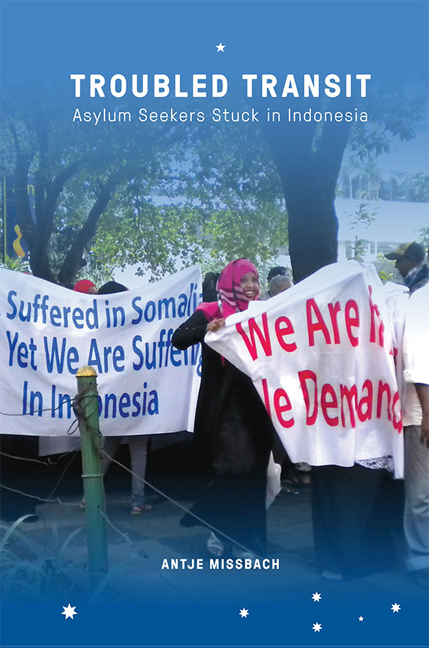
Troubled Transit considers the situation of asylum seekers stuck in limbo in Indonesia from a number of perspectives. It presents not only the narratives of many transit migrants but also the perceptions of Indonesian authorities and of representatives of international and non-government organizations responsible for the care of transiting asylum seekers. Fascinated by the extraordinary and seemingly limitless resilience shown by asylum seekers during their often lengthy and dangerous journeys, the author highlights one particular fragment of their time in Indonesia, which many expect to be the last stepping stone to a new life. While they long for their new life to unfold, most asylum seekers become embroiled in the complexities of living in transit. Indonesia, a vast archipelago of more than 17,000 islands, is more than a location where people spend time waiting; it is a nation state that interacts with transiting asylum seekers and formulates policies that have a profound impact on their experience in transit there. Troubled Transit tries to explain the complexities faced by the transiting migrants within the context of the Indonesian government and its political challenges, including its relationship with Australia. The Australia-centric view of recent asylum seeker issues has tended to ignore the larger socio-political context of the migratory routes and the perspectives of transit states towards asylum seekers stuck in transit. This book hopes to direct the Australia-centric gaze northwards to take Indonesian policies and policymaking into account, thereby giving Indonesia more relevance as a transit country and as an important partner in regional protection schemes and migration management. Even though some Indonesian policies and practices are less than favourable for asylum seekers, and even reprehensible from a human rights perspective, more attention must be paid to ongoing developments that impact on transiting asylum seekers in Indonesia if any of the hardships they suffer there are to be alleviated.
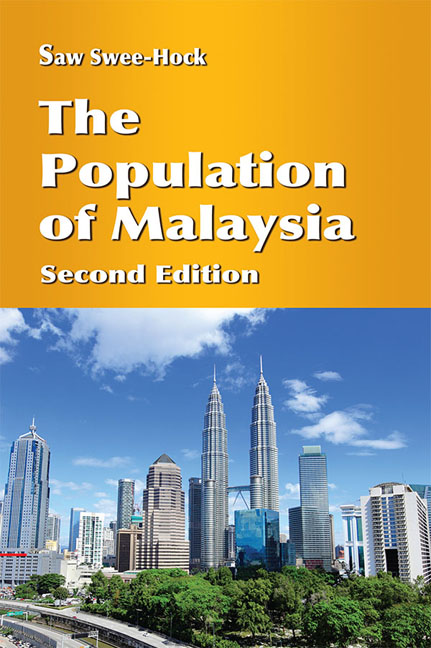
The second edition of this book presents a most comprehensive and up-to-date analysis of the multiracial population of Malaysia, with painstaking effort and skill of the author in interpreting the vast array of materials and statistics at his disposal. The strength of the book lies in the author's deep familiarity with the country where he was educated up to secondary level, taught for some time in the University of Malaya, and was even involved in the planning of population censuses. The book is indispensable to policymakers and social scientists who wish to seek a greater understanding of the demographic issues facing the country.
Today, more than ever, the state of a country's science and technology is a critical factor for economic competitiveness and long-term growth. This book traces the development of science and technology policies and initiatives in Singapore since 1965. Developed as a trading entrepôt by the British, science and technology were never strongly emphasized, right up to the 1970s. However, the need to stay ahead of economic competitiveness motivated the Singapore Government to initiate its national science and technology policy from the 1980s – moving Singapore from a low-skilled, low-technology economy to a high-skilled, high-technology one. Today, the drive for Singapore to become a hotbed for technological start-ups and R&D activities, supported by strong government funding and cutting-edge facilities, seems promising. Are the aspirations of nurturing a Silicon Valley–type culture in Singapore achievable? Are pragmatic, risk-averse Singaporeans ready for the mindset change? Can a nation of traders and service-brokers become a nation of technological innovators and entrepreneurs? This book attempts to provide the answers.
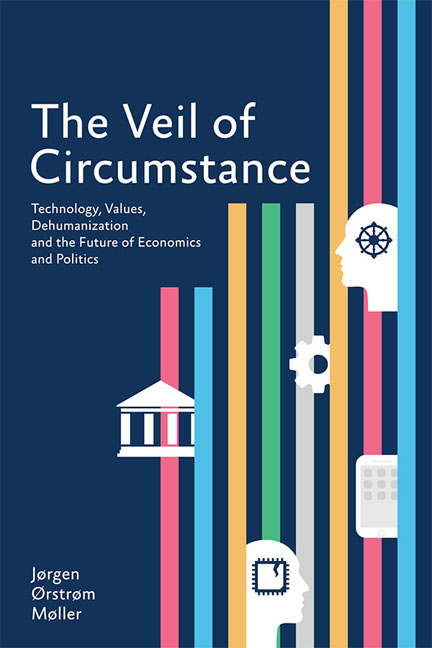
Discontent and frustrations around the world fuel commotion and rebellion against the global model. How did we get into this mess? How do we get out of it? Why doesn't globalization work? The author puts forward solutions to the most challenging transition civilization has ever faced: from individual Societies to full Humanity. M¿ller shows how the understanding of groups and values is the key to making our economics and politics work again.
The study of historical Buddhism in premodern and early modern Southeast Asia stands at an exciting and transformative juncture. Interdisciplinary scholarship is marked by a commitment to the careful examination of local and vernacular expressions of Buddhist culture as well as to reconsiderations of long-standing questions concerning the diffusion of and relationships among varied texts, forms of representation, and religious identities, ideas, and practices. The twelve essays in this collection, written by leading scholars in Buddhist Studies and Southeast Asian history, epigraphy, and archaeology, comprise the latest research in the field to deal with the dynamics of mainland and (pen)insular Buddhism between the sixth and nineteenth centuries C.E. Drawing on new manuscript sources, inscriptions, and archaeological data, they investigate the intellectual, ritual, institutional, sociopolitical, aesthetic, and literary diversity of local Buddhisms, and explore their connected histories and contributions to the production of intraregional and transregional Buddhist geographies.
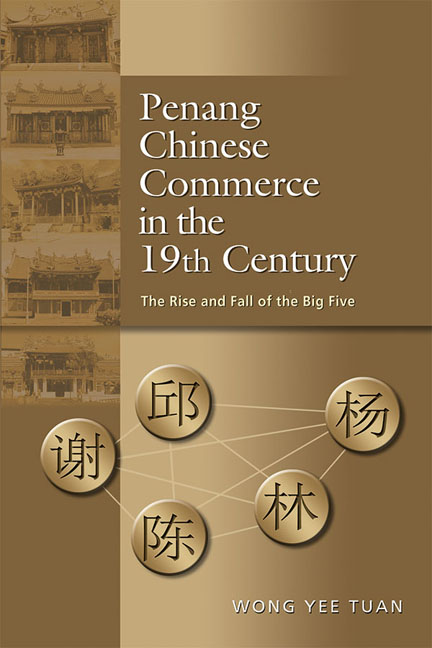
The story of Penang would be incomplete without the Big Five Hokkien families (the Khoo, the Cheah, the Yeoh, the Lim, and the Tan). It was the Big Five who played a preponderant role not only in transforming Penang into a regional entrepot and a business and financial base, but also in reconfiguring maritime trading patterns and the business orientation of the region in the nineteenth century. Departing from the colonial vantage point, this book examines a web of transnational, hybrid and fluid networks of the Big Five comprising of family relationship, sworn brotherhood, political alliance and business partnerships, which linked Penang and its surrounding states (western Malay states, southwestern Siam, southern Burma, and the north and eastern coasts of Sumatra) together to form one economically unified geographical region, having inextricable links to China and India. With these intertwining networks, the Big Five succeeded in establishing their dominance in all the major enterprises (trade, shipping, cash crop planting, tin mining, opium revenue farms), which constituted the linchpin of Penang's and its region's economy. By disentangling and dissecting this intricate web of networks, this book reveals the rise and decline of the Hokkien mercantile families' nearly century-long economic ascendancy in Penang and its region.