To save content items to your account,
please confirm that you agree to abide by our usage policies.
If this is the first time you use this feature, you will be asked to authorise Cambridge Core to connect with your account.
Find out more about saving content to .
To save content items to your Kindle, first ensure no-reply@cambridge.org
is added to your Approved Personal Document E-mail List under your Personal Document Settings
on the Manage Your Content and Devices page of your Amazon account. Then enter the ‘name’ part
of your Kindle email address below.
Find out more about saving to your Kindle.
Note you can select to save to either the @free.kindle.com or @kindle.com variations.
‘@free.kindle.com’ emails are free but can only be saved to your device when it is connected to wi-fi.
‘@kindle.com’ emails can be delivered even when you are not connected to wi-fi, but note that service fees apply.
In this chapter we will discuss the important role of the Arts in addressing the cross-curriculum priorities of the Australian Curriculum. The cross-curriculum priorities serve a number of functions, including fostering intercultural understanding. We will also explore ways the Arts can be used to respond to issues of sustainability. The chapter includes innovative and practical suggestions for developing continuous and sequential cross-curriculum learning in the Arts.
This chapter will explore the diverse technologies that can be used to purposefully communicate ideas, stories and information to an audience. The skills and knowledge involved in using and viewing media will be discussed in a way that will guide educators in their planning for quality media arts education, regardless of availability of equipment and technical support.
This chapter explores much of the current research concerning the value and effect of Arts education and aims to assist you as you develop your own thinking about the importance of the Arts in education. This research is framed by an understanding of developing modes of engagement in Arts education, and a discussion of the importance of personal agency and Arts education as ‘praxis’ (see Chapter 1). Finally, the notions of learning ‘in’ and ‘through’ the Arts are explored so that you understand the types of learning in which your students engage.
In this chapter we will explore the unique nature of the Arts along with what the Arts ‘do’ for people. The differences between Arts education policy and its actual provision will be presented with particular reference to the need for broad access to, and equity in, Arts education in primary and early childhood settings. The importance of an approach to Arts education that encourages and embeds learner agency and cultural diversity is discussed, and the benefits of sustained ‘quality’ Arts education are presented. Your role in the provision of the Arts in early childhood and primary education is discussed and a ‘praxial’ vision for the Arts in education is presented.
In this chapter we situate music education as ‘praxis’ (Alperson, 1991; Elliott, 1995; Regelski, 1998), encouraging personal agency and allowing children to become composers, performers and audiences as part of their daily lives. The importance of this approach is that musical learning and musical understanding occur in many ways: through listening, sharing, discussing, reflecting, performing, composing and recording. All of these processes should be conceived of culturally, socially and holistically in ways that enable children to explore connections between concepts, skills and understandings. In this approach, a music learning community of practice (Wenger, 2009) that encourages learning in multiple ways through learner agency can be established in your classroom.
This chapter will explore the fundamentals of drama, both as a skill and as a methodology for teaching other curricular requirements. It also offers practical activities and assessment practices, as well as theoretical underpinnings and methods to further develop teaching methodologies beyond this text. You will have the confidence and knowledge to engage learners of all ages and abilities to explore their own ideas through dramatic performance and to evaluate the performance of others. The key to drama is not only the development of skills, but also the ability to apply processes and value these processes as equal to the end product of a drama activity. The application of drama in literacy, numeracy and other areas of learning will be embedded throughout. A great deal of the focus on drama in the classroom, in Australia, is from a Western perspective.
Wherever we are in society, we are surrounded by the Arts. This text has been designed by artists, and the words you read are but visual artworks representing the oral storytelling foundation of all societies. Its layout was designed by artists, using multiple media forms. You are reading it in an environment where the soundscape will hopefully allow you to concentrate. Your body is probably positioned to minimise discomfort and maximise efficiency, while communicating to all those around you your current state of thought (whether consciously or not). Surrounding you may be posters, objects, noises, people interacting with facial expressions, probably some communicating via Facebook, Instagram or other social media using increasingly advanced technologies. The Arts power our lives, yet too often we power down children as they enter formal education (preschool and upwards), stifle their natural forms of communication and interaction, and slowly destroy their ability to be creative and to think diversely.
Throughout this book you have been challenged to look at the role the Arts play in society and in education. Various methodologies have been suggested and each specific Arts area has been broken down for you. The tools are now in place for you to organise Arts learning and teaching in your classroom. You also have reflective tools to apply to the learning and teaching you undertake. In this final chapter, we challenge you to imagine your Arts-rich classroom. What do you want the Arts to look like and how do you want your students to engage in them? These decisions will reflect your vision and rationale for teaching the Arts and your many experiences in working with the Arts as you have progressed through this book. These decisions are best made by the person who decides the ‘what’ and ‘how’ for their students every day – YOU.
Dance – often left to specialists outside the classroom – is a means by which children can explore the world through their whole bodies. For many learners who lack the ability or the interest to pursue more academic subjects, this is where they need to be given opportunities to demonstrate their potential for success.
This chapter will focus on forms and skills of dance and movement, methods for engaging children and the theoretical knowledge behind dance, as well as practical activities to use in the early childhood and primary classrooms. Linking to other Knowledge Learning Areas, as well as to wider school and curricular issues, this chapter aims to equip both the novice and the experienced educator in dance to confidently and knowledgeably facilitate the learning and development of children. Personal and environmental health and safety issues will also be explored.
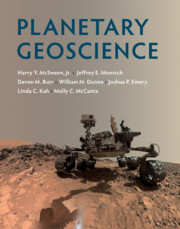
For many years, planetary science has been taught as part of the astronomy curriculum, from a very physics-based perspective, and from the framework of a tour of the Solar System - body by body. Over the past decades, however, spacecraft exploration and related laboratory research on extraterrestrial materials have given us a new understanding of planets and how they are shaped by geological processes. Based on a course taught at the University of Tennessee, Knoxville, this is the first textbook to focus on geologic processes, adopting a comparative approach that demonstrates the similarities and differences between planets, and the reasons for these. Profusely illustrated, and with a wealth of pedagogical features, this book provides an ideal capstone course for geoscience majors - bringing together aspects of mineralogy, petrology, geochemistry, volcanology, sedimentology, geomorphology, tectonics, geophysics and remote sensing.
A clear introduction to lexical-functional grammar (LFG), this outstanding textbook sets out a formal approach to the study of language using a step-by-step approach and rich language data. Data from English and a range of other languages is used to illustrate the main concepts, allowing those students not accustomed to working with cross-linguistic data to familiarize themselves with the theory, while also enabling those interested in how the theory can account for more challenging data sets to extend their learning. Exercises ranging from simple technical questions to analyses of a data set, as well as a further resources section with a literature review complete each chapter. The book aims to equip readers with the skills to analyze new data sets and to begin to engage with the primary LFG literature.
This modern text combines fundamental principles with advanced topics and recent techniques in a rigorous and self-contained treatment of quantum field theory.Beginning with a review of basic principles, starting with quantum mechanics and special relativity, students can refresh their knowledge of elementary aspects of quantum field theory and perturbative calculations in the Standard Model. Results and tools relevant to many applications are covered, including canonical quantization, path integrals, non-Abelian gauge theories, and the renormalization group. Advanced topics are explored, with detail given on effective field theories, quantum anomalies, stable extended field configurations, lattice field theory, and field theory at a finite temperature or in the strong field regime. Two chapters are dedicated to new methods for calculating scattering amplitudes (spinor-helicity, on-shell recursion, and generalized unitarity), equipping students with practical skills for research. Accessibly written, with numerous worked examples and end-of-chapter problems, this is an essential text for graduate students. The breadth of coverage makes it an equally excellent reference for researchers.
Contract Law: Principles and Context presents the development of contract law through a considered selection of cases that are both authoritative and used as factual examples to explain the law. The text introduces readers to the nature and range of contracts, the process for making a contract, rights and duties, adjustments to contracts, vitiating factors and unfair conduct, ending contracts, and remedies and restitution. The text considers the historical development of contracts through case law and legislation, then takes the reader to particular issues with contracts as they might arise in real life and navigates a legal pathway through them. Written in a clear and engaging style, Contract Law provides a fresh, topical and accessible account of the Australian law of contract, and is an invaluable resource for contract law students and practitioners.