To save content items to your account,
please confirm that you agree to abide by our usage policies.
If this is the first time you use this feature, you will be asked to authorise Cambridge Core to connect with your account.
Find out more about saving content to .
To save content items to your Kindle, first ensure no-reply@cambridge.org
is added to your Approved Personal Document E-mail List under your Personal Document Settings
on the Manage Your Content and Devices page of your Amazon account. Then enter the ‘name’ part
of your Kindle email address below.
Find out more about saving to your Kindle.
Note you can select to save to either the @free.kindle.com or @kindle.com variations.
‘@free.kindle.com’ emails are free but can only be saved to your device when it is connected to wi-fi.
‘@kindle.com’ emails can be delivered even when you are not connected to wi-fi, but note that service fees apply.
A Guide to Biblical Hebrew Syntax introduces and abridges the syntactical features of the original language of the Hebrew Bible/Old Testament. An intermediate-level reference grammar for Biblical Hebrew, it assumes an understanding of elementary phonology and morphology, and it defines and illustrates the fundamental syntactical features of Biblical Hebrew that most intermediate-level readers struggle to master. The volume divides Biblical Hebrew syntax and morphology into four parts. The first three cover the individual words (nouns, verbs, and particles) with the goal of helping the reader move from morphological and syntactical observations to meaning and significance. The fourth section moves beyond phrase-level phenomena and considers the larger relationships of clauses and sentences. Since publication of the first edition, research on Biblical Hebrew syntax has substantially evolved. This new edition incorporates these developments through detailed descriptions of grammatical phenomena from a linguistics approach. It retains the labels and terminology used in the first edition to maintain continuity with the majority of entry-level and more advanced grammars.
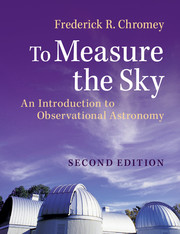
The second edition of this popular text provides undergraduates with a quantitative yet accessible introduction to the physical principles underlying the collection and analysis of observational data in contemporary optical and infrared astronomy. The text clearly links recent developments in ground- and space-based telescopes, observatory and instrument design, adaptive optics, and detector technologies to the more modest telescopes and detectors that students may use themselves. Beginning with reviews of the most relevant physical concepts and an introduction to elementary statistics, students are given the firm theoretical foundation they need. New topics, including an expanded treatment of spectroscopy, Gaia, the Large Synoptic Survey Telescope, and photometry at large redshifts bring the text up to date. Historical development of topics and quotations emphasize that astronomy is both a scientific and a human endeavour, while extensive end-of-chapter exercises facilitate the students' practical learning experience.
This book presents the definitive exposition of 'prospect theory', a compelling alternative to the classical utility theory of choice. Building on the 1982 volume, Judgement Under Uncertainty, this book brings together seminal papers on prospect theory from economists, decision theorists, and psychologists, including the work of the late Amos Tversky, whose contributions are collected here for the first time. While remaining within a rational choice framework, prospect theory delivers more accurate, empirically verified predictions in key test cases, as well as helping to explain many complex, real-world puzzles. In this volume, it is brought to bear on phenomena as diverse as the principles of legal compensation, the equity premium puzzle in financial markets, and the number of hours that New York cab drivers choose to drive on rainy days. Theoretically elegant and empirically robust, this volume shows how prospect theory has matured into a new science of decision making.
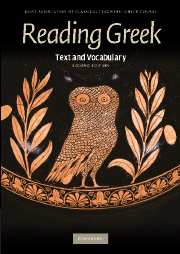
First published in 1978, Reading Greek has become a best-selling one-year introductory course in ancient Greek for students and adults. It combines the best of modern and traditional language-learning techniques and is used widely in schools, summer schools and universities across the world. It has also been translated into several foreign languages. This volume contains a narrative adapted entirely from ancient authors, including Herodotus, Euripides, Aristophanes and Demosthenes, in order to encourage students rapidly to develop their reading skills. Generous support is provided with vocabulary. At the same time, through the texts and numerous illustrations, students will receive a good introduction to Greek culture, and especially that of Classical Athens. The accompanying Grammar and Exercises volume provides full grammatical support together with numerous exercises at different levels, Greek-English and English-Greek vocabularies, a substantial reference grammar and language surveys.
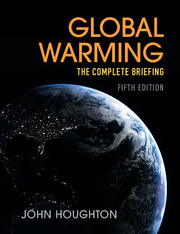
How much of global warming is due to human activities? How far will it be possible to adapt to changes of climate? Sir John Houghton's definitive, full colour guide to climate change answers these questions and more by providing the best and latest information available, including the latest IPCC findings. The simple, logical flow of ideas gives an invaluable grounding in the science, as well as the physical and human impacts of climate change, for undergraduate students across a wide range of disciplines. Accessible to both scientists and non-scientists, the text avoids mathematical equations and includes more technical material in boxes, while simple figures help students to understand the conclusions the science leads to without being overwhelmed by vast amounts of data. Questions for students to consider and test their understanding are included in each chapter, along with carefully selected further reading to expand their knowledge.
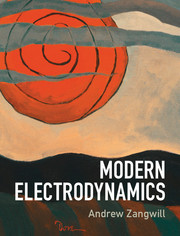
An engaging writing style and a strong focus on the physics make this comprehensive, graduate-level textbook unique among existing classical electromagnetism textbooks. Charged particles in vacuum and the electrodynamics of continuous media are given equal attention in discussions of electrostatics, magnetostatics, quasistatics, conservation laws, wave propagation, radiation, scattering, special relativity and field theory. Extensive use of qualitative arguments similar to those used by working physicists makes Modern Electrodynamics a must-have for every student of this subject. In 24 chapters, the textbook covers many more topics than can be presented in a typical two-semester course, making it easy for instructors to tailor courses to their specific needs. Close to 120 worked examples and 80 applications boxes help the reader build physical intuition and develop technical skill. Nearly 600 end-of-chapter homework problems encourage students to engage actively with the material. A solutions manual is available for instructors at www.cambridge.org/Zangwill.
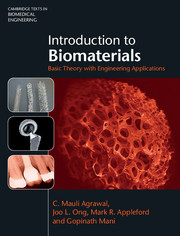
This succinct textbook gives students the perfect introduction to the world of biomaterials, linking the fundamental properties of metals, polymers, ceramics and natural biomaterials to the unique advantages and limitations surrounding their biomedical applications. Clinical concerns such as sterilization, surface modification, cell-biomaterial interactions, drug delivery systems and tissue engineering are discussed in detail, giving students practical insight into the real-world challenges associated with biomaterials engineering; key definitions, equations and concepts are concisely summarised alongside the text, allowing students to quickly and easily identify the most important information; and bringing together elements from across the book, the final chapter discusses modern commercial implants, challenging students to consider future industrial possibilities. Concise enough to be taught in a single semester, and requiring only a basic understanding of biology, this balanced and accessible textbook is the ideal introduction to biomaterials for students of engineering and materials science.
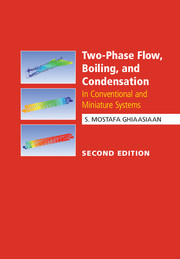
Providing a comprehensive introduction to the fundamentals and applications of flow and heat transfer in conventional and miniature systems, this fully enhanced and updated edition covers all the topics essential for graduate courses on two-phase flow, boiling, and condensation. Beginning with a concise review of single-phase flow fundamentals and interfacial phenomena, detailed and clear discussion is provided on a range of topics, including two-phase hydrodynamics and flow regimes, mathematical modeling of gas-liquid two-phase flows, pool and flow boiling, flow and boiling in mini and microchannels, external and internal-flow condensation with and without noncondensables, condensation in small flow passages, and two-phase choked flow. Numerous solved examples and end-of-chapter problems that include many common design problems likely to be encountered by students, make this an essential text for graduate students. With up-to-date detail on the most recent research trends and practical applications, it is also an ideal reference for professionals and researchers in mechanical, nuclear, and chemical engineering.
From 1400 to 1900 the Atlantic Ocean served as a major highway, allowing people and goods to move easily between Europe, Africa, and the Americas. These interactions and exchanges transformed European, African, and American societies and led to the creation of new peoples, cultures, economies, and ideas throughout the Atlantic arena. The Atlantic World provides a comprehensive and lucid history of one of the most important and impactful cross-cultural encounters in human history. Empires, economies, and trade in the Atlantic world thrived due to the European drive to expand as well as the creative ways in which the peoples living along the Atlantic's borders adapted to that drive. This comprehensive, cohesively written textbook offers a balanced view of the activity in the Atlantic world. The 40 maps, 60 illustrations, and multiple excerpts from primary documents bring the history to life. Each chapter offers a reading list for those interested in a more in-depth look at the period.
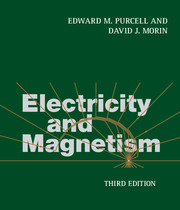
For 50 years, Edward M. Purcell's classic textbook has introduced students to the world of electricity and magnetism. The third edition has been brought up to date and is now in SI units. It features hundreds of new examples, problems, and figures, and contains discussions of real-life applications. The textbook covers all the standard introductory topics, such as electrostatics, magnetism, circuits, electromagnetic waves, and electric and magnetic fields in matter. Taking a nontraditional approach, magnetism is derived as a relativistic effect. Mathematical concepts are introduced in parallel with the physics topics at hand, making the motivations clear. Macroscopic phenomena are derived rigorously from the underlying microscopic physics. With worked examples, hundreds of illustrations, and nearly 600 end-of-chapter problems and exercises, this textbook is ideal for electricity and magnetism courses. Solutions to the exercises are available for instructors at www.cambridge.org/Purcell-Morin.
Based on an established course and covering the fundamentals, central areas and contemporary topics of this diverse field, Fundamentals of Condensed Matter Physics is a much-needed textbook for graduate students. The book begins with an introduction to the modern conceptual models of a solid from the points of view of interacting atoms and elementary excitations. It then provides students with a thorough grounding in electronic structure and many-body interactions as a starting point to understand many properties of condensed matter systems - electronic, structural, vibrational, thermal, optical, transport, magnetic and superconducting - and methods to calculate them. Taking readers through the concepts and techniques, the text gives both theoretically and experimentally inclined students the knowledge needed for research and teaching careers in this field. It features 246 illustrations, 9 tables and 100 homework problems, as well as numerous worked examples, for students to test their understanding. Solutions to the problems for instructors are available at www.cambridge.org/cohenlouie.