To save content items to your account,
please confirm that you agree to abide by our usage policies.
If this is the first time you use this feature, you will be asked to authorise Cambridge Core to connect with your account.
Find out more about saving content to .
To save content items to your Kindle, first ensure no-reply@cambridge.org
is added to your Approved Personal Document E-mail List under your Personal Document Settings
on the Manage Your Content and Devices page of your Amazon account. Then enter the ‘name’ part
of your Kindle email address below.
Find out more about saving to your Kindle.
Note you can select to save to either the @free.kindle.com or @kindle.com variations.
‘@free.kindle.com’ emails are free but can only be saved to your device when it is connected to wi-fi.
‘@kindle.com’ emails can be delivered even when you are not connected to wi-fi, but note that service fees apply.
The second edition of Principles of Seismology has been extensively revised and updated to present a modern approach to observation seismology and the theory behind digital seismograms. It includes: a new chapter on Earthquakes, Earth's structure and dynamics; a considerably revised chapter on instrumentation, with new material on processing of modern digital seismograms and a list of website hosting data and seismological software; and 100 end-of-chapter problems. The fundamental physical concepts on which seismic theory is based are explained in full detail with step-by-step development of the mathematical derivations, demonstrating the relationship between motions recorded in digital seismograms and the mechanics of deformable bodies. With chapter introductions and summaries, numerous examples, newly drafted illustrations and new color figures, and an updated bibliography and reference list, this intermediate-level textbook is designed to help students develop the skills to tackle real research problems.
Modern Legal Drafting provides a comprehensive, authoritative guide to drafting legal documents in effective, plain English. Peter Butt, a leading expert in the field, has fully revised and updated the text for this new edition. It combines a practical focus with the legal principles that underpin the use of plain language in law. This dual practical and academic approach distinguishes it from other books in the field. It includes expanded material on the techniques for achieving a style that is both clear and legally sound. It also includes new material on the challenges and merits of drafting in plain language, and provides many before-and-after examples to help both practising lawyers and students develop their skills. It takes an international approach, drawing upon case law and statutes from England, Australia, New Zealand, the United States, Canada, Ireland, India, Malaysia, Singapore and Hong Kong.
Care of the Person with Dementia responds to the urgent need for health practitioners to take an innovative approach to the challenge of dementia. The first Australian text of its kind, it combines evidence-based resources with interprofessional education and practice, exploring the ethical, social and environmental repercussions of dementia to provide a comprehensive overview of dementia care in an Australian context. The text is structured around a model of interprofessional education and practice (IPE) tailored to dementia care. This model incorporates the context of care, an important element missing from other recognised models of IPE. Throughout the book, principles of IPE are explained within the context of dementia, drawing on exemplars from a body of current, well-researched and evaluated dementia practice. Written by experienced academics, and providing national and international perspectives, this is a unique and crucial resource to develop collaborative skills and professional knowledge in the management of dementia.
Managing Change: Enquiry and Action, Australasian edition offers a fresh perspective of change theory with contemporary examples providing students with the tools they need to navigate the complexities of change within organisations. The book features notions of innovation, disruption and agile learning that are necessary in an intensified business world. Using an enquiry-action framework, the text is separated into three parts: diagnosing, explaining and enacting to combine theory with the practical tools needed to understand and manage change. Cases reinforce student understanding and focus on actions and outcomes while a selection of fifteen extended cases bring different concepts together. Written by leading professionals, Managing Change: Enquiry and Action, Australasian Edition is an essential resource for students looking to develop a strong skills base that can be employed in practice.
This new and exciting book offers a fresh approach to quantitative finance and utilises novel features, including stereoscopic images which permit 3D visualisation of complex subjects without the need for additional tools. Offering an integrated approach to the subject, A First Course in Quantitative Finance introduces students to the architecture of complete financial markets before exploring the concepts and models of modern portfolio theory, derivative pricing and fixed income products in both complete and incomplete market settings. Subjects are organised throughout in a way that encourages a gradual and parallel learning process of both the economic concepts and their mathematical descriptions, framed by additional perspectives from classical utility theory, financial economics and behavioural finance. Suitable for postgraduate students studying courses in quantitative finance, financial engineering and financial econometrics as part of an economics, finance, econometric or mathematics program, this book contains all necessary theoretical and mathematical concepts and numerical methods, as well as the necessary programming code for porting algorithms onto a computer.
The ever-evolving nature of electronic commerce and social media continues to challenge the capacity of the courts to respond to privacy and security violations in 'cyberlaw'. Social Media and Electronic Commerce Law is designed to provide students and legal practitioners with a thorough and engaging exploration of the laws, regulations and grey areas of commerce via online platforms. This new edition has been thoroughly revised to address changes in legislation and recent court judgments, and to reflect the dynamic sphere of social media. New chapters focus on internet and e-commerce law regarding social media, P2P file sharing, Cloud computing and workplace issues, with an emphasis on data security made particularly relevant by the proliferation of hacking incidents. Written in an accessible style, Social Media and Electronic Commerce Law investigates the challenges facing legal practitioners and commercial parties in this dynamic field, as well as the underlying legal theory that governs it.
An indispensable guide enabling business and management students to develop their professional competences in real organizational settings, this new and fully updated edition of Problem Solving in Organizations equips the reader with the necessary toolkit to apply the theory to practical business problems. By encouraging the reader to use the theory and showing them how to do so in a fuzzy, ambiguous and politically charged, real-life organizational context, this book offers a concise introduction to design-oriented and theory-informed problem solving in organizations. In addition, it gives support for designing the overall approach to a problem-solving project as well as support for each of the steps of the problem-solving cycle: problem definition, problem analysis, solution design, interventions, and evaluation. Problem Solving in Organizations is suitable for readers with a wide range of learning objectives, including undergraduates and graduates studying business and management, M.B.A students and professionals working in organizations.
Concern about humanity's impact on the planet has never been greater, but what are the drivers of environmental change? This wide-ranging introductory textbook outlines the competing explanations of why environmental problems occur and examines the different political approaches taken to address them. Adopting a case study approach, Hayley Stevenson enables students to gain a detailed understanding of how theories and concepts are applied in practice. Diverse perspectives on a variety of contemporary environmental challenges, from climate change to hazardous waste, as well as various responses, from multilateral diplomacy to consumer-focused campaigns, provide students with an in-depth understanding of the merits and limitations of different forms of political action. Refined on the basis of classroom feedback, features include textboxes, key points, a glossary of key terms, questions, further reading suggestions and supplementary online resources. This lively book is an essential resource for advanced undergraduate and postgraduate courses on global environmental politics and environmental policy.
Sustainable Learning: Inclusive Practices for 21st Century Classrooms provides readers with the knowledge and skills to be confident and effective inclusive teachers. The authors show that these skills are essential to quality teaching – teaching that is evidence-based, purposeful, relevant and responsive to students' needs. The book employs three overarching frameworks to examine inclusive practices in education: equity (learning for all), values (learning that matters) and sustainability (learning that lasts). Chapter features include:'Think and do' exercisesExamples, case studies and vignettes Tables, figures and diagrams to help readers visualise core ideas, theories and themes.It encourages teachers to see all students as developing learners and to consider the complexities and diversity of learning in the 21st century. In doing so, it canvasses topics such as a sustainable approach to inclusion, learning processes, teaching processes, differentiation, assessment to support teaching and learning, and life-long learning.
Research Methods and Statistics provides a seamless introduction to the subject, identifying various research areas and analyzing how one can approach them statistically. The text provides a solid empirical foundation for undergraduate psychology majors, and prepares the reader to think critically, and evaluate psychological research and claims they might hear in the news or popular press. The text can be used in all statistics, methods and experimental psychology courses.
Business Ethics introduces students to ethical issues and decision-making in a variety of contemporary contexts. It develops an awareness of the many ways in which ethical considerations can manifest in commercial domains, thereby helping prepare students for their professional careers. Business Ethics shows how theory works in practice. It includes hundreds of real-world examples that will help engage students. Examples draw on recent and emerging concerns, such as the moral implications of social media and the enforcement of codes of behaviour within industries. The book also addresses corporate social responsibility, stakeholder management and sustainability, reflecting the broad scope of business ethics today. Comprehensive online resources are available at www.cambridge.edu.au/academic/businessethics. Student resources include additional review questions and case studies, with answer guides, to help students reinforce learning and prepare for assessment tasks. Instructor resources include an extensive set of tutorial exercises, PowerPoint slides and a test bank of assessment resources.
Care of Older Adults is a comprehensive introduction to aged care for the nursing profession in clinical practice. By taking a strengths-based approach, the book encourages practice with a focus on individuals' potential and capacities rather than their limits. Theories of ageing are linked with the older individual's strengths to ensure the text is well framed from an evidence base, as well as a clinical orientation. The book presents the topic from a healthy ageing perspective through to chronic illness, frailty and end of life. Each chapter includes discussion and reflective questions, and concludes with a list of key points summarising the central content. Case studies combine evidence-based knowledge with practical examples in a number of aged-care settings. Written by internationally renowned authors with extensive practical experience in aged care, Care of Older Adults provides undergraduate students in Australia and New Zealand with local content with a nursing focus.
Drawing upon a range of disciplinary perspectives, Health Law: Frameworks and Context adopts a theoretically informed and principles-based approach to examining health law. Appealing to students and academic scholars alike, the text moves beyond traditional medical law frameworks to provide a broader contextual understanding of the way in which law intersects with health. A clear and accessible style of writing combined with a sophisticated and nuanced approach takes this rich and challenging field to a new level of analysis. Written by respected academics within the field, Health Law: Frameworks and Context is an essential text for scholars and students looking to grasp the fundamental concepts of this rapidly expanding area of law, as well as those who wish to deepen their knowledge and understanding of health law in Australia and internationally.
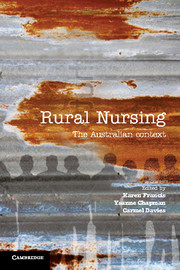
The Australian rural environment is unique, diverse and challenging for nurses who are the most significant providers of health care in this context. Rural Nursing: The Australian Context provides readers with an understanding of the knowledge and skills required to practise in rural locations and communities. This book includes chapters on pregnancy, parenting, childhood, adolescence, adulthood, ageing and mental health. It examines rurality, population and health demographics, and the different practice opportunities available in rural settings. The authors outline the importance of having well-established professional networks and encourage readers to develop practice skills in response to a particular community. Each chapter features a vignette, reflective questions and a list of websites for further reading. Written by a team of academics and practising rural nurses, Rural Nursing will equip nursing students with the confidence to provide high-quality health care in a range of practice settings.
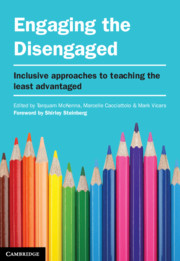
Engaging the Disengaged addresses strategies and models of immersive teaching and learning that lead to successful schooling outcomes. The new Australian Curriculum emphasises the importance of improved educational participation. This book will equip pre-service teachers with the tools and strategies they need to successfully implement these priorities. Drawing together a diverse range of experts, this book offers innovative ways of thinking about student engagement. Addressing education across early primary, middle and secondary school levels, it explores how differences in culture, sexuality and wealth can alienate students, and examines challenges faced by schools in rural, remote and high-poverty settings. It also offers new ideas for engaging students in subjects such as mathematics, physical education and the arts. Contemporary, real-life case studies help connect theory to practice. Each chapter also includes learning objectives, further reading suggestions and a reflective closure, as well as a set of strategies for invigorating disadvantaged students.
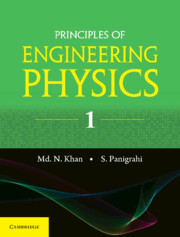
Covers the basic principles and theories of engineering physics and offers a balance between theoretical concepts and their applications. It is designed as a textbook for an introductory course in engineering physics. Beginning with a comprehensive discussion on oscillations and waves with applications in the field of mechanical and electrical engineering, it goes on to explain the basic concepts such as Huygen's principle, Fresnel's biprism, Fraunhofer diffraction and polarization. Emphasis has been given to an understanding of the basic concepts and their applications to a number of engineering problems. Each topic has been discussed in detail, both conceptually and mathematically. Pedagogical features including solved problems, unsolved exercised and multiple choice questions are interspersed throughout the book. This will help undergraduate students of engineering acquire skills for solving difficult problems in quantum mechanics, electromagnetism, nanoscience, energy systems and other engineering disciplines.
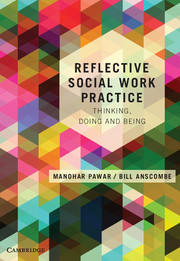
Reflective Social Work Practice demonstrates how social workers can creatively and consciously combine 'thinking, doing and being' when working with individuals, families, groups, communities and organisations, and when undertaking research. It discusses conceptual and theoretical aspects of reflective practice and presents a new, cohesive reflective social work practice model. It explores the themes of thinking (theory), doing (practice) and being (virtues). By defining 'being' in terms of virtues, the authors provide new perspectives for improved learning and practice in social work. Each chapter features reflective exercises, examples, review questions and activities to engage and challenge readers. Extended case studies throughout illustrate how a holistic approach to social work can enhance practice and enrich the quality of services delivered to people and communities. Written by authors with extensive professional experience in social work, Reflective Social Work Practice is an invaluable resource for social work, human services and welfare students, educators and practitioners alike.
Traditional money and banking textbooks are long, expensive, and full of so much institutional and technical modeling detail that students cannot understand the big picture. Thomas F. Cargill presents a new alternative: a short, inexpensive book without the 'bells and whistles' that teaches students the fundamentals in a clear, narrative form. In an engaging writing style, Cargill explains the three core components of money and banking, and their interactions: 1) the financial system, 2) government regulation and supervision, and 3) central bank policy. Cargill focuses on the interaction between government financial policy and central bank policy and offers a critique of the central bank's role in the economy, the tools it uses, how these tools affect the economy, and how effective these policies have been, providing a more balanced perspective of government policy failure versus market failure than traditional textbooks.
Designed for both one- and two-semester courses, this textbook provides a succinct and easy-to-read introduction to crystal structures and structure-property relations. By linking together the fundamentals of bond strength and the arrangement of atoms in space with the mechanical, optical, magnetic and electrical properties that they control, students will gain an intuitive understanding of how different materials are suited to particular applications. The systematics of crystal structures are described for both organic and inorganic materials, with coverage including small molecular crystals, polymers, metals, ceramics and semiconductors. Hundreds of figures and practice problems help students gain an advanced, 3D understanding of how structure governs behavior, and a wealth of examples throughout show how the underlying theory is translated into practical devices. With solutions, video lectures and overheads available online for instructors, this is an excellent resource for graduates and senior undergraduates studying materials science and engineering.
This new edition of Corporate Insolvency Law builds on the unique and influential analytical framework established in previous editions - which outlines the values to be served by insolvency law and the need for it to further corporate as well as broader social ends. Examining insolvency law in the fast-evolving commercial world, the third edition covers the host of new laws, policies and practices that have emerged in response to the fresh corporate and financial environments of the post-2008 crisis era. This third edition includes a new chapter on the growing issue of cross border insolvency and deals with a host of recent developments, notably; the consolidation of the rescue culture in the UK, the rise of the pre-packaged administration, and the substantial replacement of administrative receivership with administration. Suitable for advanced undergraduate and graduate students, professionals and academics, Corporate Insolvency Law offers an organised basis for rising to the challenges of an ever-shifting area of the law.