To save content items to your account,
please confirm that you agree to abide by our usage policies.
If this is the first time you use this feature, you will be asked to authorise Cambridge Core to connect with your account.
Find out more about saving content to .
To save content items to your Kindle, first ensure no-reply@cambridge.org
is added to your Approved Personal Document E-mail List under your Personal Document Settings
on the Manage Your Content and Devices page of your Amazon account. Then enter the ‘name’ part
of your Kindle email address below.
Find out more about saving to your Kindle.
Note you can select to save to either the @free.kindle.com or @kindle.com variations.
‘@free.kindle.com’ emails are free but can only be saved to your device when it is connected to wi-fi.
‘@kindle.com’ emails can be delivered even when you are not connected to wi-fi, but note that service fees apply.
The Aeneid is poetry: the rhythm of the words is part of the art form. But Latin poetry works on different principles from English poetry, in that it is based on syllable quantity: the Aeneid is built on a pattern of long and short syllables.
The gerund is a noun formed from a verb. In English gerunds are formed by adding ‘-ing’ to the stem of a verb; this makes them look like present participles. Nevertheless a gerund functions very differently from a participle, so it is important to be able to distinguish the two.
The perfect forms of deponent verbs, like those of regular verbs, are formed from the third principal part. But in the case of deponent verbs these are periphrastic; that is, each verb form is made up of two separate words, a participle and a form of sum, as in vēnātus sum from vēnor. Conjugating periphrastic verbs in Latin is trickier than conjugating one-word verbs, because both parts inflect. The form of sum is conjugated as usual, while the participle changes as necessary to agree with the subject in gender and number.
The key element of every sentence, both in English and in Latin, is a verb: a word indicating the action described by the sentence (e.g. ‘go’, ‘is’, ‘learn’, ‘eat’). English verbs can be identified by the way they inflect (change shape): a word to which ‘-ed’ and ‘-ing’ can be added is a verb. Thus ‘learn’ can be identified as a verb because of the forms ‘learned’ and ‘learning’. Likewise, if you put a verb after ‘they’ and then replace the ‘they’ by ‘he’, you will usually find that the verb then gets an ‘-s’ at the end. Thus ‘they eat’ → ‘he eats’, ‘they learn’ → ‘he learns’, etc. Some common verbs inflect in other ways, but they still indicate that they are verbs by the fact that they have different forms for past and present and for use after ‘they’ and after ‘he’: ‘run’ and ‘sit’ become ‘ran’ and ‘sat’ in the past, and ‘they are’ becomes ‘he is’. A problem, however, is that some English verbs are periphrastic (formed of two or more separate words): ‘is running’, ‘had run’, ‘did run’, ‘will be running’, and ‘will have been running’ are all periphrastic verb forms and each express one single idea – and each would be expressed with just one word in Latin. It is important to be able to spot English verbs, and to be able to identify periphrastic verb forms as units, in order to deal successfully with Latin. Those who are uncertain of their abilities in this area would benefit from doing the exercises on these points in chapter 63.1–2.
Verbs normally have subjects, that is, a word for the person or thing that does the action expressed by the verb (in the examples above, ‘he’ and ‘they’ are the subjects).
The last case is the ablative. In the declensions we have so far seen, the ablative endings are the same as those of the dative except in the singular of the first declension and in the feminine singular of adjectives: in those forms it ends in a long -ā. The length of the -ā is important because it serves to distinguish the ablative from the nominative. With the ablative added, the paradigms we have seen can be completed; words ending in -r and in -ius have the same ablative forms as other second-declension words, so the paradigms seen in chapter 8 pose no additional difficulties.
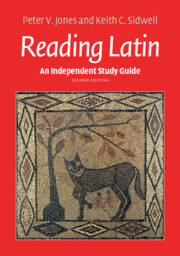
Reading Latin, first published in 1986, is a bestselling Latin course designed to help mature beginners read classical Latin fluently and intelligently. It does this by combining the understanding of continuous texts with rigorous teaching of grammar; it provides exercises designed to develop the skills of accurate translation; and it integrates the learning of classical Latin with an appreciation of the influence of the Latin language upon English and European culture from antiquity to the present. The Independent Study Guide is intended to help students who are learning Latin on their own or with only limited access to a teacher. It contains notes on the texts that appear in the Text and Vocabulary volume, translations of all the texts, and answers to the exercises in the Grammar and Exercises volume. The book will also be useful to students in schools, universities and summer schools who have to learn Latin rapidly.
Learning and Teaching Primary Science brings primary science to life through the stories and experiences of pre-service and practising teachers. It explores the roles of the teacher and the learner of science and examines major issues and challenges, including: engaging diverse learners, utilising technology, assessment and reporting, language and representation, and integration in the 'crowded curriculum'. Each chapter contains examples, activities and reflective questions to help readers create relevant and meaningful lesson plans. Dedicated chapters for the areas of chemistry, physics, biology and earth and environmental science will give confidence to those without a science background. Practical strategies and skills are underpinned by relevant theories and evidence-based research. Written by experts from Australia and New Zealand, Learning and Teaching Primary Science is an essential resource for those beginning their journey of teaching science in the primary school classroom.
Addressing not only inter-state dispute settlement but also the settlement of disputes involving non-State actors, The Peaceful Settlement of International Disputes offers a clear and systematic overview of the procedures for dispute settlement in international law. In light of the diversification of dispute settlement procedures, traditional means of international dispute settlement are discussed alongside newly developing fields such as the dispute settlement system under the United Nations Convention on the Law of the Sea, the WTO dispute settlement systems, the peaceful settlement of international environmental disputes, intra-state disputes, mixed arbitration, the United Nations Compensation Commission, and the World Bank Inspection Panel. Figures are used throughout the book to help the reader to better understand the procedures and institutions of international dispute settlement, and suggestions for further reading support exploration of relevant issues. Suitable for postgraduate law and international relations students studying dispute settlement in international law and conflict resolution, this book helps students to easily grasp key concepts and issues.
Twelve in-depth case studies of the EU and countries across the globe, written by the leading country specialists and combining insights of cutting-edge institutional analysis and deep study of national histories, explore how the concepts of interests, identities and institutions shape the politics of nations and regions. The country studies trace the global and historical contexts of political development and examine the diverse pathways that countries have taken in their quest to adapt to the competitive pressures of twenty-first-century globalization. These country studies constitute the overarching framework of the text, addressing the larger question, 'why are countries ruled and governed so differently?' Free of heavy-handed jargon, Comparative Politics inspires thought-provoking debate among introductory students and specialists alike, and encourages students to engage in real comparative analysis. In this new edition, all twelve country studies have been rewritten, and the first two theory chapters have been updated to reflect the latest research in the field.
The Boundaries of Australian Property Law offers a unique perspective on real property law in Australia. As the overwhelming majority of land interests in Australia now fall under the Torrens title system, this book's particular focus on the development and operation of the Torrens system in Australia is both timely and welcome. Addressing the prescribed Priestly 11 requirements for a property law subject in Australia, this informative and academically rigorous book includes carefully selected statutory material and case law from all Australian jurisdictions, as well as the United Kingdom. The general law system is also discussed and referred to where necessary, to give context and depth to the analysis of real property law. Written by prominent real property law academics from law schools around Australia, and edited by Hossein Esmaeili and Brendan Grigg, this text is a modern and much-needed addition to real property law literature.
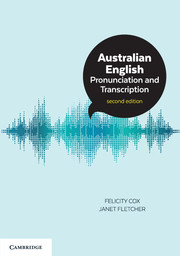
Australian English Pronunciation and Transcription is the first textbook to clearly describe Australian English speech patterns. Now in its second edition, this ground-breaking work addresses speech production characteristics and provides detailed instruction in both phonetic and phonemic transcription of the dialect. Each chapter features practical exercises to allow readers to develop skills and test their knowledge as they progress through the text. These exercises are complemented by an extensive companion website, which contains valuable explanatory materials, audio examples and accompanying activities for students. A new assessment bank includes exercises of varying difficulty, allowing lecturers to build unique assessment tasks tailored to their students' needs. Drawing on their extensive experience as teachers and researchers in phonetics and phonology, Felicity Cox and new author Janet Fletcher have crafted a comprehensive resource that remains essential reading for students, teachers and practitioners of linguistics, speech pathology and language education.
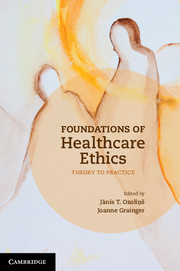
In order to provide the highest level of care to patients and clients, health professionals need a sound knowledge and understanding of healthcare ethics. Foundations of Healthcare Ethics: Theory to Practice focuses on the philosophical concepts underpinning contemporary ethical discourse for health professionals, and arms both students and professionals with the knowledge to tackle situations of moral uncertainty in clinical practice. Specially written to provide an in-depth study into the theoretical foundations of healthcare ethics, it covers a range of normative ethical theories, from virtue ethics to utilitarianism, while also investigating their application to contemporary issues in health care and society. It provides opportunities for self-directed learning, and presents questions and case studies to facilitate engagement and discussion. Foundations of Healthcare Ethics provides both students and professionals with an understanding of the philosophy governing healthcare ethics in order to help provide a better level of care to patients and clients.
War, Aggression and Self-Defence is an indispensable guide to international legal issues of war and peace, the crime of aggression, self-defence and its trigger, armed attack, and the different modalities of self-defence, as well as enforcement measures taken under the aegis of a binding decision of the Security Council. This new and fully updated 6th edition focuses on the key issues at the forefront of the contemporary international legal debate, as well as analysing the new armed conflicts in Syria, Ukraine and Georgia, re-examining the Kampala amendments on the crime of aggression and considering the phenomenon of 'robust' mandates of a peacekeeping force. Suitable for graduate and advanced undergraduate students, this market-leading book offers a wide-ranging and highly readable introduction to the legal issues surrounding war and self-defence.
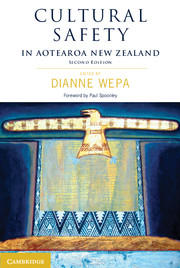
In this second edition of Cultural Safety in Aotearoa New Zealand, editor Dianne Wepa presents a range of theoretical and practice-based perspectives adopted by experienced educators who are active in cultural safety education. Thoroughly revised to incorporate the latest methods and research, this edition reflects updates in government policies and nursing practices, and features new chapters on ethical considerations when working cross-culturally, as well as the legislative requirements of the Nursing Council of New Zealand. Each chapter includes key terms and concepts, practice examples providing content from healthcare workers' everyday experiences, reflective questions to encourage the assimilation of ideas into practice, and references to allow further exploration of the issues discussed. Cultural Safety in Aotearoa New Zealand will equip students, tutors, managers, policy analysts and others involved in the delivery of healthcare with the tools to acknowledge the importance of cultural difference in achieving health and well-being in diverse communities.
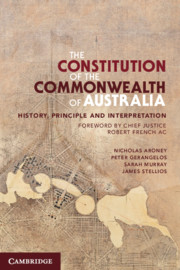
The Constitution of the Commonwealth of Australia examines the body of constitutional jurisprudence in an original and rigorous yet accessible way. It begins by exploring the historical and intellectual context of ideas surrounding the Constitution's inception, and closely examines its text, structure, principles and purposes in that light. The book then unpacks and critically analyses the High Court's interpretation of the Constitution in a manner that follows the Constitution's own logic and method of organisation. Each topic is defined through detailed reference to the existing case law, which is set out historically to facilitate an appreciation of the progressive development of constitutional doctrine since the Constitution came into force in 1901. The Constitution of the Commonwealth of Australia provides an engaging and distinctive treatment of this fundamental area of law. It is an excellent book for anyone seeking to understand the significance and interpretation of the Constitution.