To save content items to your account,
please confirm that you agree to abide by our usage policies.
If this is the first time you use this feature, you will be asked to authorise Cambridge Core to connect with your account.
Find out more about saving content to .
To save content items to your Kindle, first ensure no-reply@cambridge.org
is added to your Approved Personal Document E-mail List under your Personal Document Settings
on the Manage Your Content and Devices page of your Amazon account. Then enter the ‘name’ part
of your Kindle email address below.
Find out more about saving to your Kindle.
Note you can select to save to either the @free.kindle.com or @kindle.com variations.
‘@free.kindle.com’ emails are free but can only be saved to your device when it is connected to wi-fi.
‘@kindle.com’ emails can be delivered even when you are not connected to wi-fi, but note that service fees apply.
Equity closely scrutinises relationships in which one party places trust and confidence in another. There are many examples of trust in human interaction, but equity cannot grant relief against every breach of trust and confidence, any more than contract law can enforce all promises. Only some trusting relationships and some obligations of confidence are protected. The relationships which equity protects are known as ‘fiduciary relationships’. A relationship of trust and confidence will be recognised as fiduciary where it arises from F (fiduciary) undertaking to act in the interests of B (beneficiary) in a matter which confers a discretion on F, and in respect of which the exercise of discretion affects B’s economic interests. B may hand over property to F, such as an investor handing over money to an investment adviser. A settlor may hand property to F to hold on trust for B. Alternatively, B may entrust F with the task of negotiating a contract on behalf of B so that F is B’s agent. Or F may be entrusted with the task of obtaining information on behalf of B which will enable B to exploit a commercial opportunity. This is also an example of agency.
Both equity and trustee legislation confer rights on trustees which enable them to perform their obligations effectively and protect them from some of the more onerous aspects of the responsibilities of trusteeship. Only selected rights are covered in this chapter, the most important of which is the trustee’s right of indemnity. The trustee’s most significant liability is for breach of trust; however, the trustee is also liable at law to incur the expenses of the trust. This liability gives rise to the trustee’s right of indemnity. The trustee’s exposure to liability must therefore be understood before his or her rights can be considered.
Students tend to approach the law of charitable trusts with a sense of relief. After the fairly dry and technical case law of private trusts, the eccentricities of numerous testamentary trusts created for charitable purposes provide some colour. Despite the colour provided by facts in cases, the law with respect to charitable trusts deserves deeper consideration. The charities and not-for-profit sector is now a major component on the Australian economy. Philanthropy and the effective control of charitable organisations raise important policy considerations. Regulation of charitable trusts is a problematic area, in part due to the Australian federal system. Potential charitable trusts are validated (or invalidated) according to the general law as administered by State Courts and local statute. Additionally, the Commonwealth regulates many financial aspects of the charities and not-for-profit sector. The focus of this chapter will be upon the establishment of trusts for valid charitable purposes, rather than their later regulation.
All dispositions that are intended to transfer property, such as contracts, gifts, trusts and wills, must be clearly defined if they are to be legally effective. In the event of a dispute, a court may have to ascertain whether the property owner intended to dispose of her property and, if so, on what terms. In some cases, the court may have to determine the identity, or identities, of the recipients of the property, or the quantum of property transferred. A recipient of property will need to know if the transfer constitutes a gift, a loan or a trust. All trusts, whether or not they also have to satisfy writing requirements, must be sufficiently certain in order to be enforceable. The certainty requirements for trusts are more demanding than for contracts because trusts can affect the rights of parties who did not agree to, or participate in, its creation. These parties may include the beneficiaries and third parties who do business with the trustee.
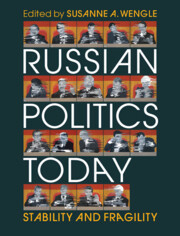
Russian Politics Today: Stability and Fragility provides an accessible and nuanced introduction to contemporary Russian politics at a time of increasing uncertainty. Using the theme of stability versus fragility as its overarching framework, this innovative textbook explores the forces that shape Russia's politics, economy, and society. The volume provides up-to-date coverage of core themes – Russia's strong presidency, its weak party system, the role of civil society, and its dependence on oil and gas revenues – alongside path-breaking chapters on the politics of race, class, gender, sexuality, and the environment. An international and diverse team of experts presents the most comprehensive available account of the evolution of Russian politics in the post-Soviet era, providing the tools for interpreting the past and the present while also offering a template for understanding future developments.
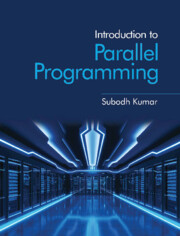
In modern computer science, there exists no truly sequential computing system; and most advanced programming is parallel programming. This is particularly evident in modern application domains like scientific computation, data science, machine intelligence, etc. This lucid introductory textbook will be invaluable to students of computer science and technology, acting as a self-contained primer to parallel programming. It takes the reader from introduction to expertise, addressing a broad gamut of issues. It covers different parallel programming styles, describes parallel architecture, includes parallel programming frameworks and techniques, presents algorithmic and analysis techniques and discusses parallel design and performance issues. With its broad coverage, the book can be useful in a wide range of courses; and can also prove useful as a ready reckoner for professionals in the field.
Scheme combines power and simplicity. Scheme is derived from Lisp, which John McCarthy developed—inspired in part by Alonzo Church’s work on the λ-calculus—while exploring ideas about computability, recursive functions, and models of computation. McCarthy intended Lisp for computing with symbolic data he called S-expressions. S-expressions are based on lists, and the name “Lisp” was formed from “list processing.” Lisp programs can be concise and natural programs, and they often resemble mathematical definitions of the functions they compute. Lisp has been used heavily in artificial intelligence for over fifty years, and in 1971, McCarthy received ACM’s Turing Award for contributions to artificial intelligence.
This chapter introduces the reader to the economic conditions and challenges of citizens who live in Russia outside metropolitan areas, regional capitals, or rich oil- and gas-producing regions. In the Soviet era, life in villages and small towns was organized around large and often powerful state-run factories and collective farms, which were responsible for providing many public services. The privatization of these enterprises left towns and villages uncertain not only about jobs, but also about who would take over the provision of basic services and duties. As the 1990s wrought havoc on local economies, Russian citizens in these smaller towns and villages sought ways to survive. They tried to rely on subsistence farming and occasional local incomes, and to find new ways to make a living as entrepreneurs or farmers. They worked without salaries to keep their jobs or took advantage of opportunities for labor migration to more prosperous places in Russia.
Protest is politics at its most primal, its most emotional, its most exciting, and sometimes its most consequential. But, at its core, protest is a learning process, one in which people “at the top” and people “at the bottom” struggle to discover where the real power lies, and then to wield that power once they find it. Protest has been an integral part of the dramatic and often traumatic processes of social and economic transformation that Russia has witnessed over the past forty years, both as a driver of that transformation and as a result of it. Moreover, recent years have seen the Russian state reorganize itself and its relationship with society in order to suppress grassroots mobilization in general and protest in particular. This chapter reviews that history and the contemporary landscape of protest in Russia and asks what is being learned – and who is doing the learning – when Russian citizens take to the streets.
Following the breakup of the Soviet Union, Russia has aspired to remain a major power in international relations. The status of “great power” has remained essential to Russia even after end of the period of Soviet grandeur and the post-Soviet transition. Until the mid-2000s, the country’s leaders sought to revive its great power status in partnership with Western nations. Since the mid-2000s, Russia has moved in the direction of challenging Western global priorities by stressing values of national sovereignty and patriotism. More recently, Russia has sought to establish areas of mutual noninterference in relations with the West. In 2022, this approach resulted in Russia’s invasion of Ukraine and the escalation of tensions and confrontation with the United States and NATO. Outside the West, Moscow has aspired to take advantage of global economic and geopolitical opportunities including in Asia, Africa, the Middle East, and Latin America. The chapter reviews the main developments in Russian foreign policy since 1991, giving an overview of the country’s relations with Western and non-Western countries, while focusing on recent years. Studying Russian foreign policy in general, and historical and contemporary goals in particular, is important for both policy-relevant and theoretical reasons. This chapter addresses these goals as well as policy choices following the dissolution of the USSR and discusses both realist and liberal explanations of Russian foreign policy and its limitations. Finally, this analysis will help formulate a framework to assess Russia’s ambition to become a major power in international relations in the future.
An abstract data type is not the only way to hide the representation of data: a representation can also be hidden in an object. An object is a bundle of operations—often called methods—that may share hidden state. An object interacts with other objects by sending messages; each message activates a method on the receiving object. An object’s methods can see the representation of the object’s own state, but not the representations of the states of other objects.