To save content items to your account,
please confirm that you agree to abide by our usage policies.
If this is the first time you use this feature, you will be asked to authorise Cambridge Core to connect with your account.
Find out more about saving content to .
To save content items to your Kindle, first ensure no-reply@cambridge.org
is added to your Approved Personal Document E-mail List under your Personal Document Settings
on the Manage Your Content and Devices page of your Amazon account. Then enter the ‘name’ part
of your Kindle email address below.
Find out more about saving to your Kindle.
Note you can select to save to either the @free.kindle.com or @kindle.com variations.
‘@free.kindle.com’ emails are free but can only be saved to your device when it is connected to wi-fi.
‘@kindle.com’ emails can be delivered even when you are not connected to wi-fi, but note that service fees apply.
This concluding chapter argues that current ideas about post-narrativism and post-representationalism still build on narrativism and representationalism rather than rejecting them. They do so in particular in their radical move away from grand narratives that are associated with the construction of collective identities. Yet, as the previous chapters have shown, this position can go hand in hand with maintaining that historical writing can and should amount to an intervention in the social world and that it is meaningful for directing and informing a variety of democratic policy agendas. It is historical writing that keeps the future open and makes us suspicious of all attempts to declare an end to history. The ‘new’ histories that have been emerging over recent decades and which have been the subject of analysis in this book often see identification in the definition by Stuart Hall as the basis for their social intervention. They contributed to a growing self-reflexivity about the relationship of historical writing and collective identity formation and they have often taken their starting point from a body of highly diverse theories that have been discussed in Chapter 1 of this volume. The chapter recaps the arguments of the previous eleven chapters of the book and finishes with a reflection on how the struggle over and with history will continue in the future. Denying the existence of any whiggish progressivism, it charts the well-known fact that professional historians’ greater reluctance to commit to the construction of essentialised collective identities has gone hand in hand with the willingness of ‘amateur historiansߣ to do precisely that. This in turn has made it increasingly necessary for professional historians not to retreat to their ivory towers but engage with all essentialised forms of identity history. They need to become engaged and public historians who continue an ongoing struggle over the past in all human societies.
This chapter looks at the spread of global history globally and the abandonment of historiographical nationalism. It examines the long practice of comparative, transnational and global history writing since the Enlightenments. It also looks at the construction of peculiarities and exceptionalisms through comparison as well as their critique. It distinguishes between comparative and global history and links the rise of both to the renewed crisis of historicism since the 1980s. It also discusses the controvery between comparative historians and historians of cultural transfer, arguing that both approaches need to be united. The chapter highlights the idea of circulations and examines the explosion of global history around particular themes. It also underlines its usefulness in overcoming Western-centric models of development and questioning universalisms. Transnational, comparative and global histories have all contributed to decentring collective identity constructions and making historians more aware of the ways in which historical writing has been connected to the construction of such collective identities. This is shown in relation to spatial boundaries, be they national or supra-national, but also in relation to class, racial and gender identities. Postcolonial perspectives on global history have been particularly adept at questioning the Western-centrism of historical writing and understanding diverse regimes of colonialism. It has also made transnational global history more aware of its own temptation to further global identities.
This chapter begins by summarising the development of the history of ideas out of which conceptual history emerged. It discusses in detail the founding figure of conceptual history, Reinhart Koselleck, and compares his approach to that of the influential Cambridge school, in particular Quentin Skinner and J. G. A. Pocock, and their ‘contextualism’. The bulk of the chapter is then dedicated to a discussion of a range of examples of how conceptual histories have helped to deconstruct a rainge of collective identities, including class, religious, racial and gender identities. In all of these areas we have seen an intense interest in linking the history of conceps with the study of emotions, social practices and the problematisation of the national container for historical studies. In particular the move to a transnational history of concepts has contributed in a major way to de-essentialising collective national identities but also transnational, i.e. European ones. Furthermore, conceptual history has been emphasising the importance of studying the translation of concepts into different languages and cultural spheres.
This chapter traces the emergence of the field of memory studies and assesses the historians’ contribution to this field. In particular the influential work of Pierre Nora is discussed here. Memory history, it argues, has moved from underpinning national historical master narratives to promoting transnational cosmopolitan forms of memory that in turn have produced greater self-reflexivity about the relationship between historical writing and collective identity formation and helped to de-essentialise collective identities. The chapter introduces and analyses a range of different memory debates that all, in their different ways, have helped to de-essentialise the construction of collective identities: memory debates surrounding communism, the Holocaust, Brexit, the Truth and Reconciliation Committee in South Africa are all discussed in this respect. The chapter also introduces the concept of ‘agonistic memory’ and discusses how it may help to repoliticise memory and contribute to greater self-reflexivity about the construction of memory and the shaping of collective identities.
This chapter begins by tracing the strong links between traditional political history writing and identity politics, be it national identity, the identity of empires or religious identity. It then analyses the crisis of political history writing in the 1960s and 1970s. Finally it examines the remaking of the ‘new’ political history, highlighting (a) a stonger concern for popular politics, (b) a major emphasis on the languages of politics, (c) the desire to look for links between popular politics and popular religion and (d) the study of political transfers. Overall the new political history has done much to problematise the strong link between political history writing and identity formation.
This chapter looks at the cultural turn in historical writing since the 1980s and how it changed the established traditions of cultural history writing which had existed since the beginnings of professional history writing. The strong influence of poststructuralist theories led to a growing attention to questions of representations and constructions as well as to hidden meanings. It also traces the increasing desire to embed discourses in social practices. The chapter argues that an emphasis on the situational and relational processes in which humans acted remained often linked to an emancipatory agenda. A concern for human agency united with an interest in forms of creolisation and hybridity. Theories of alterity and studies of cultural transfer moved to the fore in many sub-fields of history, e.g. in LGBT history. The chapter explores in particular a range of promising new avenues in the new cultural history: the history of the senses, the history of emotions, the history of the body, the history of violence, nationalism studies. The chapter concludes with a discussion of how the new cultural history contributed to greater self-reflexivity about the role of historical writing in collective identity formation. In particular Stuart Hall’s theory of ‘identification’ is used to describe the way in which a commitment to an engaged history writing can be squared with reflexivity about identity formation through historical writing.
This chapter opens with a brief vignette on the long struggle to give women a voice in history across different parts of the world. It then examines the agendas and ambitions of gender histories, the discovery of men’s studies, the history of private life, the history of the body. Gender, it argues, did not only develop new fields of historical inquiry, it also impacted massively on traditional fields of historical writing, including political history, the history of empire, the history of science, economic history, nationalism studies and the history of warfare. The fields of women’s and gender history have been closely connected to a feminist politics of historical writing. It sought to recover the full range and depth of women’s experiences and it discussed a range of diverse gender identiteis and multiple ways of constructing the category of ‘woman’ and ‘gender’. It also emphasised the relationality of gender with a range of other master concepts for historical writing, inclucing race, class and religion. By historicising gender identities, it also de-essentialised those identities and pointed to the discursive construction of gender, with more recent historians also rediscovering the embodied experience of gender. Gender history, the chapter concludes, played a crucial role in pluralising our understanding of identity.
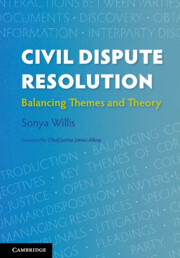
Understanding how to resolve conflicts between private parties is essential for Australian lawyers. Civil Dispute Resolution: Balancing Themes and Theory presents a comprehensive framework within which both civil procedure and alternative dispute resolution are addressed. This framework, based on balancing competing objectives of dispute resolution, simplifies and explains the many aspects of resolving disagreements between private parties. The book guides readers through every aspect of civil dispute resolution including the interaction between negotiation, mediation, arbitration and litigation as means to resolve civil disputes and the many stages of litigation, from the commencement of proceedings through to judgment and enforcement. The balancing themes are applied to demystify the resolution of civil disputes, including the role of specialist courts and tribunals, alternatives to court, pleadings, gathering documentary and witness evidence, legal costs, and trial preparation and attendance.
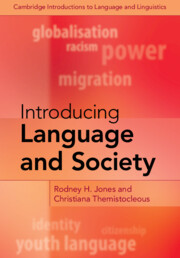
This accessible and entertaining textbook introduces students to both traditional and more contemporary approaches to sociolinguistics in a real-world context, addressing current social problems that students are likely to care about, such as racism, inequality, political conflict, belonging, and issues around gender and sexuality. Each chapter includes exercises, case studies and ideas for small-scale research projects, encouraging students to think critically about the different theories and approaches to language and society, and to interrogate their own beliefs about language and communication. The book gives students a grounding in the traditional concepts and techniques upon which sociolinguistics is built, while also introducing new developments from the last decade, such as translanguaging, multimodality, superdiversity, linguistic landscapes and language and digital media. Students will also have online access to more detailed examples, links to video and audio files, and more challenging exercises to strengthen their skills and confidence as sociolinguists.
Get up to speed with this robust introduction to the aerothermodynamics principles underpinning jet propulsion, and learn how to apply these principles to jet engine components. Suitable for undergraduate students in aerospace and mechanical engineering, and for professional engineers working in jet propulsion, this textbook includes consistent emphasis on fundamental phenomena and key governing equations, providing students with a solid theoretical grounding on which to build practical understanding; clear derivations from first principles, enabling students to follow the reasoning behind key assumptions and decisions, and successfully apply these approaches to new problems; practical examples grounded in real-world jet propulsion scenarios illustrate new concepts throughout the book, giving students an early introduction to jet and rocket engine considerations; and online materials for course instructors, including solutions, figures, and software resources, to enhance student teaching.
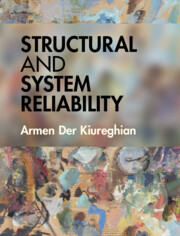
Based on material taught at the University of California, Berkeley, this textbook offers a modern, rigorous and comprehensive treatment of the methods of structural and system reliability analysis. It covers the first- and second-order reliability methods for components and systems, simulation methods, time- and space-variant reliability, and Bayesian parameter estimation and reliability updating. It also presents more advanced, state-of-the-art topics such as finite-element reliability methods, stochastic structural dynamics, reliability-based optimal design, and Bayesian networks. A wealth of well-designed examples connect theory with practice, with simple examples demonstrating mathematical concepts and larger examples demonstrating their applications. End-of-chapter homework problems are included throughout. Including all necessary background material from probability theory, and accompanied online by a solutions manual and PowerPoint slides for instructors, this is the ideal text for senior undergraduate and graduate students taking courses on structural and system reliability in departments of civil, environmental and mechanical engineering.
This unique textbook equips students with the theoretical and practical tools needed to model, design, and build efficient and clean low-carbon energy systems. Students are introduced to thermodynamics principles including chemical and electrochemical thermodynamics, moving onto applications in real-world energy systems, demonstrating the connection between fundamental concepts and theoretical analysis, modelling, application, and design. Topics gradually increase in complexity, nurturing student confidence as they build towards the use of advanced concepts and models for low to zero carbon energy conversion systems. The textbook covers conventional and emerging renewable energy conversion systems, including efficient fuel cells, carbon capture cycles, biomass utilisation, geothermal and solar thermal systems, hydrogen and low-carbon fuels. Featuring numerous worked examples, over 100 multi-component homework problems, and online instructor resources including lecture slides, solutions, and sample term projects, this textbook is the perfect teaching resource for an advanced undergraduate and graduate-level course in energy conversion engineering.
In the past decade or so, (deep) neural networks have captured people’s imagination through their empirical success in learning problems involving real-world high-dimensional data such as images, speech, and text [LBH15]. Nevertheless, there is quite a bit of mystery as to how deep networks achieve such striking results. Modern deep networks are typically designed through trial and error.
In the previous theoretical Part I of the book, we showed that under fairly broad conditions on the number of measurements needed, many important classes of structured signals can be recovered via computationally tractable optimization problems, such as ℓ1 minimization for recovering sparse signals and nuclear norm minimization for recovering low-rank matrices.
Chapter 1 describes the main objectives of the book. It argues that uncertainties are omnipresent in all aspects of the design, analysis, construction, operation, and maintenance of structures and infrastructure systems. It sets three goals for engineering of constructed facilities under conditions of uncertainty: safety, serviceability, and optimal use of resources. It then argues that probability theory and Bayesian statistics provide the proper mathematical framework for assessing safety and serviceability and for formulating optimal design under uncertainty. The chapter provides a brief review of the history and key developments of the field during the past 100 years. Also described are commercial and free software that can be used to carry out the kind of analyses that are described in the book. The chapter ends with a description of the organization of the book and outlines of the subsequent chapters.