To save content items to your account,
please confirm that you agree to abide by our usage policies.
If this is the first time you use this feature, you will be asked to authorise Cambridge Core to connect with your account.
Find out more about saving content to .
To save content items to your Kindle, first ensure no-reply@cambridge.org
is added to your Approved Personal Document E-mail List under your Personal Document Settings
on the Manage Your Content and Devices page of your Amazon account. Then enter the ‘name’ part
of your Kindle email address below.
Find out more about saving to your Kindle.
Note you can select to save to either the @free.kindle.com or @kindle.com variations.
‘@free.kindle.com’ emails are free but can only be saved to your device when it is connected to wi-fi.
‘@kindle.com’ emails can be delivered even when you are not connected to wi-fi, but note that service fees apply.
Without language, social interaction would be impoverished beyond recognition. It enables us to reveal our innermost thoughts to others, or, if the mood takes us, to disguise them with misinformation and lies. With language, action can be coordinated so that a group of people can act as one – even if chimpanzees could conceive of a pyramid they still couldn’t build one because they lack the ability to coordinate action through language. Language also, as we shall see in Chapter 14, enables hard-won knowledge to be passed on to others – including our children – enabling culture to proliferate in ways that would not have been possible in our languageless ancestors (in fact, as we shall see, one theory proposes that language evolve to facilitate cultural transmission). When language evolved it was evolutionary dynamite. Not only did it vastly extend the range of things that ancestral humans were capable of, enabling them, perhaps, to outcompete other hominins around at the time, but it is also likely to have had an impact on the evolution of the brain itself. It is unlikely that our languageless ancestors had brains identical to ours but lacking the appropriate language circuitry; it is more likely that the gradual evolution of communicative sophistication led to huge leaps in the way that we interact with others. So great are the advantages of language to our species that surely it must have been the product of natural (or sexual) selection.
Welcome to the world of statistical programming. We will start in this chapter by giving you an idea of what statistical programming is all about. We will also tell you what to expect as you proceed through the rest of the book. The chapter will finish with some instructions about how to download and install R, the software package and language on which we base our programming examples, and RStudio, an “integrated development environment” (or “IDE”) for R.
The word “input” is used in our everyday conversation to mean something that we put into a system, organisation or device. For example, input can be energy that can be put into an energy-supply circuit, resources that are put into a company or information that is fed to a computer.
Linear algebra deals with vector spaces and linear operations on them. In mathematics, we usually represent vectors as column vectors of numbers, and linear operations as matrices. Applying a linear operation to a vector becomes multiplication of a column vector by a matrix, and composition of operations is matrix multiplication.
So far, in Chapter 1 we have defined input as multimodal data that the receiver is exposed to during communication. We have identified the kinds and nature of input, and have discussed contemporary and interdisciplinary issues that have tended to be overlooked in past studies.
Recognition, recall, rehearsal and retrieval are important processes in both the acquisition and the use of a language. We will discuss these four processes separately, but they often operate in combination and not always in the sequence we have used. We are using the term “recognition” to refer to an awareness of familiarity when encountering a word, phrase, chunk, sound or structure, either mentally through use of the inner voice, visually when reading or auditorily when listening. By “recall”, we mean consciously accessing records in long-term memory. By “rehearsal”, we mean mental repetition of recalled or retrieved items. And by “retrieval”, we are referring to the subconscious process of bringing back information spontaneously from long-term memory in order to make use of it in acquisition, comprehension or production.
In this chapter we will discuss the potential application of the theories on intake reported in Chapter 2 by reference to the literature as well as to our and other people’s experience of applying the theories. We will also offer our own principled suggestions for application.
When people have the freedom to further their own personal interests in politics, the results may be disastrous. Chaos? Tyranny? Can a political system be set up to avoid these pitfalls, while still granting citizens and politicians the freedom to pursue their interests? Republic at Risk is a concise and engaging introduction to American politics. The guiding theme is the problem of self-interest in politics, which James Madison took as his starting point in his defense of representative government in Federalist 10 and 51. Madison believed that unchecked self-interest in politics was a risk to a well-ordered and free society. But he also held that political institutions could be designed to harness self-interest for the greater good. Putting Madison's theory to the test, the authors examine modern challenges to the integrity and effectiveness of US policy-making institutions, inviting readers to determine how best to respond to these risks.
This singular new textbook is both an introduction to the major theories of second language acquisition and a practical proposal for their application to language learning courses. It explains and evaluates these theories, and focuses on recent research that has enriched thinking about the best ways to facilitate communicative effectiveness in an L2. It then suggests practical applications regarding language planning, curriculum development, pedagogy, materials development, teacher development, and assessment, establishing a tangible connection between theory and practice. Unlike many SLA books which are narrowly focused on the acquisition of language, it explores the roles of factors such as pragmatics, para-linguistic signals, gesture, semiotics, multi-modality, embodied language, and brain activity in L2 communication. SLA Applied connects research-based theories to the authors' and students' real-life experiences in the classroom, and stimulates reflection and creativity through the inclusion of Readers' Tasks in every chapter. This engaging and relevant text is suitable for students in Applied Linguistics or TESOL courses, trainee teachers, researchers, and practitioners.
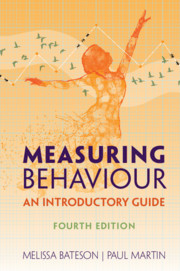
Measuring Behaviour is the established go-to text for anyone interested in scientific methods for studying the behaviour of animals or humans. It is widely used by students, teachers and researchers in a variety of fields, including biology, psychology, the social sciences and medicine. This new fourth edition has been completely rewritten and reorganised to reflect major developments in how behavioural studies are conducted. It includes new sections on the replication crisis, covering Open Science initiatives such as preregistration, as well as fully up-to-date information on the use of remote sensors, big data and artificial intelligence in capturing and analysing behaviour. The sections on the analysis and interpretation of data have been rewritten to align with current practices, with advice on avoiding common pitfalls. Although fully revised and revamped, this new edition retains the simplicity, clarity and conciseness that have made Measuring Behaviour a classic since the first edition appeared more than 30 years ago.