To save content items to your account,
please confirm that you agree to abide by our usage policies.
If this is the first time you use this feature, you will be asked to authorise Cambridge Core to connect with your account.
Find out more about saving content to .
To save content items to your Kindle, first ensure no-reply@cambridge.org
is added to your Approved Personal Document E-mail List under your Personal Document Settings
on the Manage Your Content and Devices page of your Amazon account. Then enter the ‘name’ part
of your Kindle email address below.
Find out more about saving to your Kindle.
Note you can select to save to either the @free.kindle.com or @kindle.com variations.
‘@free.kindle.com’ emails are free but can only be saved to your device when it is connected to wi-fi.
‘@kindle.com’ emails can be delivered even when you are not connected to wi-fi, but note that service fees apply.
This new and fully updated edition of International Financial Management blends theory, data analysis, examples and practical case situations to equip students and business leaders with the analytical tools they need to make informed financial decisions and manage the risks that businesses face in today's competitive global environment. Combining theory and practice, the authors offer the reader a multitude of real-world examples and case studies, emphasising fundamental concepts, principles and analytical theories to enable students to understand not only what to do when confronted with an international financial decision, but why that choice is the correct one. Features include: real data analysis - all fully updated for the third edition; extended cases illustrating practical application of theory; point-counterpoints offering insight into contentious issues; concept boxes that explore and illustrate key concepts; and end-of-chapter questions. Suitable for M.B.A and advanced undergraduate business students taking a course in international financial management or international finance.
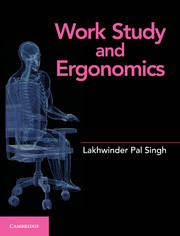
This book covers the fundamental concepts of work study and ergonomics in a single volume. It discusses the theories of human physiology and cognitive sciences, and evaluates the application of these theories to design a work environment that optimizes work potential and reduces threats of work-related disorders. It provides strategies to design effective work processes and a congenial work environment in order to enhance human well-being and efficiency. The book also explains the ergonomic tools and techniques including biomechanics, work posture assessment tools, anthropometry and work physiology. Using live examples from the industry, the author discusses the principles of work study including string diagram, method study, work sampling and man-machine system. The book demonstrates why it is important to 'fit the job to the man' rather than continuing with conventional practices that 'fit the man to the job'.
Leading and Managing Health Services: An Australasian Perspective provides a comprehensive overview of leadership and management in health services with a particular focus on the Australasian context. This text aims to help students develop leadership and management skills, and to critically analyse the issues they will face in practical health service settings. The book features a contemporary approach to learning, in line with the Health LEADS Australia framework which focuses on five key leadership attributes: Leads self, Engages systems, Achieves outcomes, Drives innovations and Shapes systems. Further, it offers a rich pedagogy both in the text and companion website. Chapters include case studies to provide examples of management and leadership issues in healthcare settings, and a wealth of reflective, short answer and multiple-choice questions to extend student learning. Written by respected Australian academics and industry experts, this text will equip health professional students with practical skills to successfully manage change and innovation.
Introduction to Optics is now available in a re-issued edition from Cambridge University Press. Designed to offer a comprehensive and engaging introduction to intermediate and upper level undergraduate physics and engineering students, this text also allows instructors to select specialized content to suit individual curricular needs and goals. Specific features of the text, in terms of coverage beyond traditional areas, include extensive use of matrices in dealing with ray tracing, polarization, and multiple thin-film interference; three chapters devoted to lasers; a separate chapter on the optics of the eye; and individual chapters on holography, coherence, fiber optics, interferometry, Fourier optics, nonlinear optics, and Fresnel equations.
Grounded in contemporary, evidence-based research, the second edition of Assessment for Teaching provides a comprehensive introduction to assessment and teaching in primary and secondary school settings. Taking a practical approach to assessment and the collaborative use of data in the classroom, this text advances a developmental model of assessment which aims to improve student outcomes through targeted teaching interventions. Thoroughly revised and updated to include the latest research, this edition features expanded content on collaborative teaching, competence assessment, learning and assessment and self-regulated teaching and learning. Each chapter features learning objectives, reflective questions, an extended exercise to link course content with classroom practice, and end-of-chapter rubrics which help readers assess their own understanding and learning. Written by a team of experts from the Assessment Research Centre at the University of Melbourne, Assessment for Teaching is an essential resource for both preservice teachers and inservice teachers.
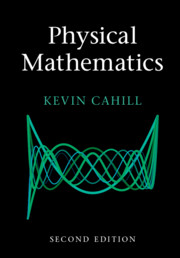
Unique in its clarity, examples, and range, Physical Mathematics explains simply and succinctly the mathematics that graduate students and professional physicists need to succeed in their courses and research. The book illustrates the mathematics with numerous physical examples drawn from contemporary research. This second edition has new chapters on vector calculus, special relativity and artificial intelligence and many new sections and examples. In addition to basic subjects such as linear algebra, Fourier analysis, complex variables, differential equations, Bessel functions, and spherical harmonics, the book explains topics such as the singular value decomposition, Lie algebras and group theory, tensors and general relativity, the central limit theorem and Kolmogorov's theorems, Monte Carlo methods of experimental and theoretical physics, Feynman's path integrals, and the standard model of cosmology.
Geographically and linguistically diverse, by 1789 the Habsburg monarchy had laid the groundwork for a single European polity capable of transcending its unique cultural and historic heritage. Challenging the conventional notion of the Habsburg state and society as peculiarly backward, Charles W. Ingrao traces its emergence as a military and cultural power of enormous influence. In doing so, he unravels a web of social, political, economic and cultural factors that shaped the Habsburg monarchy during the period. Firmly established as the leading survey of the early modern Habsburg monarchy, this third edition incorporates a quarter of a century of new, international scholarship. Extending its narrative reach, Ingrao gives greater attention to 'peripheral' territories, manifestations of high culture, and suggests links between the early modern monarchy and the problems of contemporary Europe. This elegant account of a complex story is accessible to specialists and non-specialists alike.
This third edition has been comprehensively updated to reflect the large changes in scientific knowledge and policy debates on climate change since the previous edition in 2009. It provides a concise but thorough overview of the science, technology, economics, policy, and politics of climate change in a single volume. It explains how scientific and policy debates work, outlines the scientific evidence for the reality and seriousness of climate change and the basic atmospheric science that supports it, and discusses policy options and the current state of the policy debate. By pulling these elements together, the book explains why the issue can be so confusing and provides guidance on practical routes forward. Anyone interested in climate change, the global environment, or how science is used in policy debates should read this book. It is the ideal textbook for undergraduate or graduate courses in environmental policy and climate change.
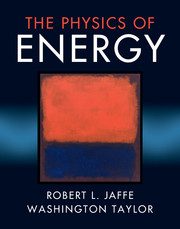
The Physics of Energy provides a comprehensive and systematic introduction to the scientific principles governing energy sources, uses, and systems. This definitive textbook traces the flow of energy from sources such as solar power, nuclear power, wind power, water power, and fossil fuels through its transformation in devices such as heat engines and electrical generators, to its uses including transportation, heating, cooling, and other applications. The flow of energy through the Earth's atmosphere and oceans, and systems issues including storage, electric grids, and efficiency and conservation are presented in a scientific context along with topics such as radiation from nuclear power and climate change from the use of fossil fuels. Students, scientists, engineers, energy industry professionals, and concerned citizens with some mathematical and scientific background who wish to understand energy systems and issues quantitatively will find this textbook of great interest.
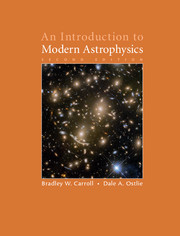
An Introduction to Modern Astrophysics is a comprehensive, well-organized and engaging text covering every major area of modern astrophysics, from the solar system and stellar astronomy to galactic and extragalactic astrophysics, and cosmology. Designed to provide students with a working knowledge of modern astrophysics, this textbook is suitable for astronomy and physics majors who have had a first-year introductory physics course with calculus. Featuring a brief summary of the main scientific discoveries that have led to our current understanding of the universe; worked examples to facilitate the understanding of the concepts presented in the book; end-of-chapter problems to practice the skills acquired; and computational exercises to numerically model astronomical systems, the second edition of An Introduction to Modern Astrophysics is the go-to textbook for learning the core astrophysics curriculum as well as the many advances in the field.