To save content items to your account,
please confirm that you agree to abide by our usage policies.
If this is the first time you use this feature, you will be asked to authorise Cambridge Core to connect with your account.
Find out more about saving content to .
To save content items to your Kindle, first ensure no-reply@cambridge.org
is added to your Approved Personal Document E-mail List under your Personal Document Settings
on the Manage Your Content and Devices page of your Amazon account. Then enter the ‘name’ part
of your Kindle email address below.
Find out more about saving to your Kindle.
Note you can select to save to either the @free.kindle.com or @kindle.com variations.
‘@free.kindle.com’ emails are free but can only be saved to your device when it is connected to wi-fi.
‘@kindle.com’ emails can be delivered even when you are not connected to wi-fi, but note that service fees apply.
Crisis Communication in a Digital World provides an introduction to major crisis communication theories and issues management, using practical examples from Australia and New Zealand. The book examines how public relations can influence the nature of a crisis and the impact of its aftermath. It explores the role of PR specialists in different crisis situations - including natural disasters and morphing crises - and examines the challenges they face in a world where social media is a key source of communication. Readers are provided with an in-depth understanding of crisis communication and issues management through practical approaches, strategies and skills, which are supplemented by relevant theories based on evidence and experience. International perspectives have been included throughout to illustrate the impact of multinational companies on the digital world, including global media cycles and social media activism. Each chapter explores a different aspect of communications, including media, natural disasters and celebrity crises.
History, Geography and Civics provides an in-depth and engaging introduction to teaching and learning socio-environmental education from F-6 in Australia and New Zealand. It explores the centrality of socio-environmental issues to all aspects of life and education and makes explicit links between pedagogical theories and classroom activities. Part I introduces readers to teaching and learning history, geography and environmental studies, and civics and citizenship, as well as issues in intercultural and global education. Part II explores the use of media and sources, values and attitudes, assessment and creative teaching. Each chapter provides links to the Australian Curriculum, including cross-curriculum priorities: sustainability, Aboriginal and Torres Strait Islander education, and Asia and Australia's engagement with Asia. History, Geography and Civics encourages the reader to consider their own beliefs, values and attitudes in relation to their teaching and includes provocations and reflective questions to foster discussion and engagement.
International Human Resource Management offers a contemporary and multilayered introduction to international and comparative human resource management for university study. It critically analyses the core issues and emerging trends in the field, with a consistent emphasis on real-world scenarios and concerns. At the macro level, the book examines how IHRM fits within and adapts to the ever-changing environment of international relations and global development. At the firm level, it elucidates the strategic goals served by IHRM and the processes used to achieve them. At the individual level, the analysis extends beyond the traditional focus on expatriates to encompass the various IHRM actors and their motivations. Each chapter features a case study, tutorial activities and discussion questions. The book concludes with three extended case studies, each based on a specific region, to help students consolidate their understanding.
Leading and Managing Early Childhood Settings: Inspiring People, Places and Practices examines what it means to be a leader, manager and administrator across the early childhood education field. The first section of the book introduces readers to core concepts, including self-understanding through professional reflection and consideration of people's beliefs and values. These chapters explore the challenges of working within various early childhood settings and the importance of connecting and communicating with families and the broader community. The second section considers four key roles that early childhood professionals undertake – team stakeholder, policy designer, pedagogy creator and rights advocate. This book challenges readers to make links across research, theories and everyday practices by thinking, reflecting, sharing with others and writing stories. The storytelling approach guides readers through the chapters and explores the themes of embodiment and sustainability. Leading and Managing Early Childhood Settings is an invaluable resource for pre- and in-service educators alike.
Modern Administrative Law in Australia provides an authoritative overview of administrative law in Australia. It clarifies and enlivens this crucial but complex area of law, with erudite analysis and modern perspectives. The contributors - including highly respected academics from eleven Australian law schools, as well as eminent practitioners including Chief Justice Robert French AC and Justice Stephen Gageler of the High Court of Australia - are at the forefront of current research, debate and decision making, and infuse the book with unique insight. The book examines the structure and themes of administrative law, the theory and practice of judicial review, and the workings of administrative law beyond the courts. Administrative law affects innumerable aspects of political, commercial and private life, and yet is often considered difficult to understand. Modern Administrative Law unravels the intricacies and reveals how they are applied in real cases. It is an essential reference for students and practitioners of administrative law.
Tailored specifically for undergraduate students, this Companion offers uniquely comprehensive coverage of the topics necessary for successful communication in psychology, making it a valuable resource for research methods and introductory psychology courses. Readers will learn how to effectively plan and write papers in accordance with the latest style guidelines from the Publication Manual of the American Psychological Association, Sixth Edition; present data in posters and talks; and evaluate their own and others' work. The clear writing style and reader-friendly format, meanwhile, allow students to absorb information easily, even when reading chapters selectively or out of order. The book includes numerous up-to-date examples drawn from career experiences to engage students and help them apply what they've learned to forward their own careers, while questions encourage them to think more deeply about larger issues in the field, preparing them for future research.
Communication across Cultures explores how cultural context affects the use and (mis)interpretation of language. It provides an accessible and interdisciplinary introduction to language and language variation in intercultural communication by drawing on both classic and cutting-edge research from pragmatics, discourse analysis, sociolinguistics, linguistic anthropology and politeness studies. This new edition has been comprehensively updated to incorporate recent research, with an emphasis on the fluid and emergent practice of intercultural communication. It provides increased coverage of variation in language within and between cultures, drawing on real-world examples of spoken and written communication. The authors review classic concepts like 'face', 'politeness' and 'speech acts', but also critique these concepts and introduce more recent approaches. Each chapter provides a set of suggested readings, questions and exercises to enable the student to work through concepts and consolidate their understanding of intercultural communication. This is an excellent resource for students of linguistics and related disciplines.
The first textbook dedicated to interactional linguistics, focusing on linguistic analyses of conversational phenomena, this introduction provides an overview of the theory and methodology of interactional linguistics. Reviewing recent findings on linguistic practices used in turn construction and turn taking, repair, action formation, ascription, and sequence and topic organization, the book examines the way that linguistic units of varying size - sentences, clauses, phrases, clause combinations, and particles - are mobilized for the implementation of specific actions in talk-in-interaction. A final chapter discusses the implications of an interactional perspective for our understanding of language as well as its variation, diversity, and universality. Supplementary online chapters explore additional topics such as the linguistic organization of preference, stance, footing, and storytelling, as well as the use of prosody and phonetics, and further practices with language. Featuring summary boxes and transcripts from recordings of everyday conversation, this is an essential resource for advanced undergraduate and postgraduate courses on language in social interaction.
The third edition of Early Childhood Curriculum provides a comprehensive and accessible introduction to curriculum theories and approaches in early childhood and early primary settings. Drawing on a cultural-historical framework for education, the text explores a variety of approaches to learning and teaching and equips readers with the tools to effectively plan, design and implement curriculum strategies. Thoroughly revised and updated, this edition features up-to-date coverage of national curriculum documents, including the Early Years Learning Framework and Te Whāriki, and expanded content on play-based curriculum, assessment and documentation. Key domain areas of the curriculum are explored in depth and have been revised to include updated discussions of environmental factors, digital knowledge and multiliteracies. Each chapter is enriched with learning intentions, definitions of key terms, reflection points, links to current curriculum documents and illustrative case studies to help readers connect theory to practice.
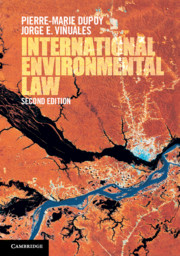
International Environmental Law offers a concise, conceptually clear, and legally rigorous introduction to contemporary international environmental law and practice. The book covers all major environmental agreements, paying particular attention to their underlying structure, main legal provisions, and practical operation. It blends legal and policy analysis, making extensive reference to the jurisprudence and scholarship, and addressing the interconnections with other areas of international law, including human rights, humanitarian law, trade and foreign investment. The material is structured into four sections - foundations, substantive regulation, implementation, and influence on other areas of international law - which help the reader to navigate the different areas of international environmental law. Each chapter includes charts summarising the main components of the relevant legal frameworks and provides a detailed bibliography. Suitable for practicing and academic international lawyers who want an accessible, up-to-date introduction to contemporary international environmental law, as well as non-lawyers seeking a concise and clear understanding of the subject.
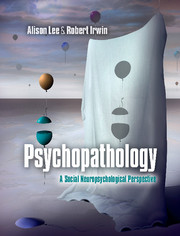
In Psychopathology: A Social Neuropsychological Perspective, Lee and Irwin demonstrate that mental distress often defies traditional forms of medical classification. Integrating both psychosocial and neuropsychological frameworks, they present a unique and balanced perspective on psychopathology, emphasising the importance of context, relationships and neuroplasticity. Written to support teaching and learning at the undergraduate level, Psychopathology: A Social Neuropsychological Perspective encourages students to explore alternatives to traditional diagnostic models. Pedagogical features such as reflection points in each chapter encourage critical engagement and classroom debate. The result is an original examination of mental distress and a stand-alone resource for students in this area.
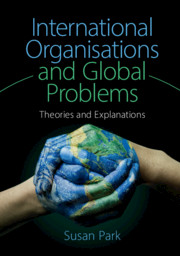
International organisations (IOs) are considered fundamental in addressing global problems, but how effective are they? Conflict (war), human rights, global health, financial governance, international trade, regionalisation, development and the environment are all issues that international organisations have been created to address. This book looks at these eight key issue areas and guides the reader through an analysis of the successes and failures of international organisations in solving issues in global politics. With an introduction to international relations theory, it incorporates the best and most up-to-date scholarly research, and applies it to examples from around the world to show how to answer the question, 'Are IOs a help or a hindrance?' This textbook is an essential resource for courses on global governance, international organisations and international relations. Including an expanded further reading list for each global issue, as well as a thorough bibliography of the most up-to-date research, this is a resource that will be useful during study and on into the future.
This accessible yet in-depth textbook describes the step-by-step processes involved in biomedical device design. Integrating microfabrication techniques, sensors and digital signal processing with key clinical applications, it covers: the measurement, amplification and digitization of physiological signals, and the removal of interfering signals; the transmission of signals from implanted sensors through the body, and the issues surrounding the powering of these sensors; networks for transferring sensitive patient data to hospitals for continuous home-monitoring systems; tests for ensuring patient safety; the cost-benefit and technological trade-offs involved in device design; and current challenges in biomedical device design. With dedicated chapters on electrocardiography, digital hearing aids and mobile health, and including numerous end-of-chapter homework problems, online solutions and additional references for extended learning, it is the ideal resource for senior undergraduate students taking courses in biomedical instrumentation and clinical technology.