Refine search
Actions for selected content:
10 results
Beyond Hume: Recovering the Scottish Enlightenment Background of James Madison’s Thought
-
- Journal:
- The Review of Politics , First View
- Published online by Cambridge University Press:
- 30 March 2026, pp. 1-21
-
- Article
-
- You have access
- Open access
- HTML
- Export citation
18 - Reform and Rebellion in Spanish America at the Time of the American Revolution
- from Part II - The British Colonies
-
-
- Book:
- The Cambridge History of the Age of Atlantic Revolutions
- Published online:
- 20 October 2023
- Print publication:
- 09 November 2023, pp 474-499
-
- Chapter
- Export citation
17 - Shaping the Constitution
- from Part II - The British Colonies
-
-
- Book:
- The Cambridge History of the Age of Atlantic Revolutions
- Published online:
- 20 October 2023
- Print publication:
- 09 November 2023, pp 448-473
-
- Chapter
- Export citation
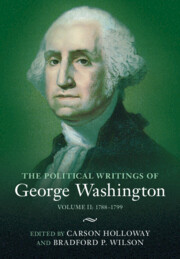
The Political Writings of George Washington
- Volume II: 1788–1799
-
- Published online:
- 10 August 2023
- Print publication:
- 31 August 2023
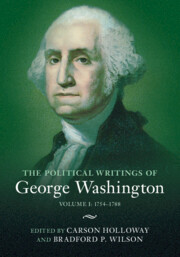
The Political Writings of George Washington
- Volume I: 1754–1788
-
- Published online:
- 10 August 2023
- Print publication:
- 31 August 2023
1 - Introduction
-
- Book:
- The Classical and Christian Origins of American Politics
- Published online:
- 22 December 2022
- Print publication:
- 15 December 2022, pp 1-28
-
- Chapter
- Export citation

Foundations of American Political Thought
- Readings and Commentary
-
- Published online:
- 09 July 2021
- Print publication:
- 29 July 2021
12 - Obeying God Rather Than Men
- from Part II - Conscience According to Major Figures and Traditions
-
-
- Book:
- Christianity and the Laws of Conscience
- Published online:
- 12 June 2021
- Print publication:
- 24 June 2021, pp 227-244
-
- Chapter
- Export citation
1 - Reworking Reformation in the Early English Atlantic
-
-
- Book:
- Protestant Empires
- Published online:
- 20 August 2020
- Print publication:
- 10 September 2020, pp 30-55
-
- Chapter
- Export citation
The Idea of Rights in the Imperial Crisis
-
-
- Book:
- Natural Rights Individualism and Progressivism in American Political Philosophy
- Published online:
- 05 June 2014
- Print publication:
- 27 August 2012, pp 82-103
-
- Chapter
- Export citation
