To save content items to your account,
please confirm that you agree to abide by our usage policies.
If this is the first time you use this feature, you will be asked to authorise Cambridge Core to connect with your account.
Find out more about saving content to .
To save content items to your Kindle, first ensure no-reply@cambridge.org
is added to your Approved Personal Document E-mail List under your Personal Document Settings
on the Manage Your Content and Devices page of your Amazon account. Then enter the ‘name’ part
of your Kindle email address below.
Find out more about saving to your Kindle.
Note you can select to save to either the @free.kindle.com or @kindle.com variations.
‘@free.kindle.com’ emails are free but can only be saved to your device when it is connected to wi-fi.
‘@kindle.com’ emails can be delivered even when you are not connected to wi-fi, but note that service fees apply.
Edited by
Rosa Andújar, Barnard College, Columbia University,Elena Giusti, University of Cambridge,Jackie Murray, State University of New York, Buffalo
This chapter foregrounds recent studies on race and religion as analytic categories in the study of the ancient world. Conventional scholarly analysis of the late-antique Mediterranean world often assumes that uses of the terms race and racism are anachronistic in studies of premodern societies. By contrast, religion is often taken for granted as an unproblematic category of analysis across both modern and premodern social contexts. More recently, critical studies of race and religion have illustrated the shortcomings in the basic assumptions that undergird the uses and disuses of terms like race, racism, religion, and ethnicity in studies of premodernity. Drawing on these recent works, this chapter demonstrates the entanglements between religious and racialised conceptions of group identities and hierarchies. Race and religion are conceptually intertwined to the extent that religious ideas have been instrumental in processes of racialisation and religious groups have been targets of racialisation. The chapter concludes with examples of how theories of environmental determinism and anti-Semitism manifest in Christian ideologies and imperial policies in late antiquity.
In the US, engaging in scholarship and advocacy on Middle East issues, certainly on Palestine, has long attracted attacks from campus and off-campus organizations and individuals. However, a near consensus has emerged that the threats to academic freedom that we are witnessing today are unprecedented, as it is now the US government that is leading the assault. The weaponization of charges of antisemitism against those engaged in teaching about Palestine and/or in pro-Palestine advocacy has become a battering ram utilized by the political right to achieve a central goal: taming or destroying American higher education as a locus of critical inquiry and potential opposition to the Trump administration’s authoritarian project. What does the current moment mean for us as members of a Middle East studies community? How have the challenges we face evolved and how are today’s attacks different from those of the past? This essay addresses the evolution of these growing threats in the US as well as longer-standing threats in the Middle East North Africa (MENA) region in the context of the role and work of MESA’s Committee on Academic Freedom (CAF) in responding to them.
The term “race” was widely used in the 1500s to describe many types of blood relationships but gradually became focused on ethnicity and skin colour. The elevation of Anglo-Saxons as a superior race developed alongside “scientific racism” in the 1800s, and in turn gave an impetus to eugenics and Aryianism. By 1900, the language of race was found everywhere in England, and it declined very slowly throughout the subsequent century.
This chapter considers the deployment of radical Orientalism as a mode of political critique in the popular fiction of the bestselling Chartist leader and author George W. M. Reynolds. It focuses on the structural congruences between the depictions of aristocratic debauchery in his two Mysteries series (1844–8; 1848–56) and the figuration of Old Corruption as in league with the Jewish sweater in ‘The Seamstress’ in Reynolds’s Miscellany (1850). Examination of this alignment permits a discussion of the mutable hierarchies within the category of the People at mid-nineteenth century, focused specifically on those groups excluded from full political rights: the working-class man, women, and Jews. It considers how Reynolds’s use of radical literary-political tropes positions Jews as Occidental in matters of parliamentary democracy, but designates them Oriental when the sweating system that they are understood to represent is figured as an atavistic, foreign, and unchristian form of economics.
Merchants and travelers sought food, lodging, entertainment, care, and other services in Nombre de Dios, Panama and Portobello, as well as at the inns punctuating the land and water routes between them. Sometimes accompanied by husbands and more often by slaves, enterprising women of diverse ancestry offered a range of services across the isthmus. In contrast to Seville or Malaga, Panama’s authorities, like those of New Spain, avoided regulating prostitution. Instead, they protested the unlicensed migration of unattached women from Castile and the sexual abuse of enslaved women. Sources described prostitution, like debt or enslavement, as a temporary misfortune.
The current chapter investigates the relationship dynamics between Germany and the Axis bloc countries. The chapter concludes that the Axis coalition-building efforts were poorly organized, haphazardly coordinated, and dreadfully led, suffering from German racism, mutual mistrust, and systematic lack of resources. Finnish participation in Operation Barbarossa was motivated by two things: the country’s exposed geographical position next to Russia and the unfinished Soviet attempt to occupy it during the Winter War in 1939–1940. Finland was not occupied by the Red Army and thus maintained its liberal democracy.
While most histories describe the Romanian Army as a reluctant ally of the German Army on the Easten Front, this chapter argues that Romania had embraced a far-right ideology that made the country Nazi Germany’s most important partner in the campaign against the Soviet Union. The Italian Royal Army fought an unplanned campaign, under German command, against the Red Army between August 1941 and January 1943. Despite severe limitations, the combatants of the CSIR and the ARMIR fought bravely until German defeat at Stalingrad led to the deadly disaster on the Don River.
The extent to which religious motivations helped inspire the American Revolution has generated debate among historians. Some perceive the Revolution to be the convergence of the English radical traditions of religious dissent and political protest. In this view, a strong millennialist, anti-Catholic strain in Protestant evangelicalism saw the war of independence as an apocalyptic confrontation with the Antichrist. Other historians regard religion as a secondary factor in the independence movement. Yet consideration of connections between religion and Revolution cannot be limited to spiritual influences on the independence movement. Many enslaved African Americans embraced Protestant Christianity to criticize slavery and claim a right to freedom. Native American revival movements from the Great Lakes to the Deep South fueled resistance to colonial and Revolutionary land grabs. Loyalists asserted the same right to individual conscience as the Revolutionaries. Accordingly, the narrative of religion must include the sacred motives of many more participants, including those opposed to the struggle for independence.
The first instalment of Zola’s novel Vérité appeared on 10 September 1902, just nineteen days before the author died under suspicious circumstances that were likely related to his involvement in the Dreyfus Affair. The novel provided an allegorical transposition of the contemporary political drama that had divided the nation, but which, as yet, had been denied its proper dénouement. This chapter explores how Zola imagined the right and just resolution of the legal case, as well as of the national crisis it galvanised. Working across Zola’s journalistic and fictional versions of the Affair, it argues that Zola understood the Dreyfus case as an aesthetic problem: as a matter of style, taste, plot, and plausibility. In order for the truth to win out, Zola must imagine the aesthetic and ethical re-education of a nation; and this happy ending involves harnessing an acceptable version of the idealist imagination.
This chapter overviews the characteristics and circumstances predisposing people to lead or join hate movements with a particular focus on the virulent anti-Semitism that united figures such as Father Charles Coughlin, Charles Lindbergh, and Henry Ford. By analyzing these figures and their followers, we extrapolate practices common among hate groups. After identifying character traits and risk factors (e.g., political and economic insecurity), we discuss their more modern manifestations. First we clarify our definition of hate groups as defined by the Department of Justice, Federal Bureau of Investigation, and Southern Poverty Law Center. We then extrapolate from these definitions to show how they align well with our definition of a cult. Following this, we acknowledge the challenges that accompany hate group designation while concluding that it is still vital for tracking modern-day hate groups and discrimination. We conclude by acknowledging the continued threat of hate groups and the presence of risk factors seen throughout history, such as global public health emergencies. We also discuss challenges unique to the technology age, such as epistemic bubbles and echo chambers. In summary, the chapter provides an outline of how hate groups come to be and provides a discussion of their continuing threat in society.
The essay focuses on the career of playwright Arthur Laurents from his graduation from college to the opening of West Side Story, including discussions of his early plays and screenplays as well as his involvement in the development of the classic musical.
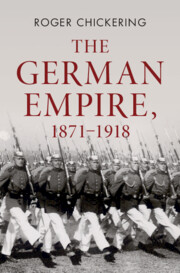
Furious economic growth and social change resulted in pervasive civic conflict in Imperial Germany. Roger Chickering presents a wide-ranging history of this fractious period, from German national unification to the close of the First World War. Throughout this time, national unity remained an acute issue. It appeared to be resolved momentarily in the summer of 1914, only to dissolve in the war that followed. This volume examines the impact of rapid industrialization and urban growth on Catholics and Protestants, farmers and city dwellers, industrial workers and the middle classes. Focusing on its religious, regional, and ethnic reverberations, Chickering also examines the social, cultural, and political dimensions of domestic conflict. Providing multiple lenses with which to view the German Empire, Chickering's survey examines local and domestic experiences as well as global ramifications. The German Empire, 1871–1918 provides the most comprehensive survey of this restless era available in the English language.
Jesus’s Jewish identity offers fresh insights into Christian–Jewish relations and historical Jesus research. Although often obscured in Christian tradition, this recognition has been emphasized by Jewish scholars to counter anti-Semitism and challenge Christian theological narratives. Memory of the Jewish Jesus serves as a critical tool in rewriting the history of Jewish–Christian relations and understanding the evolution of both Judaism and Christianity. It can energize a reevaluation of exegetical methodologies and dogmatic discourses, thus reshaping Christian theology and fostering mutual understanding.
During the past five years the cultural world in Germany has been shaken and divided by a series of controversies involving contemporary works of art charged with being anti-Semitic. Obviously, with the Holocaust continuing to occupy a major position in modern German consciousness and history, sensitivity to anti-Semitic expressions is particularly keen here. This sensitivity has been increased by a number of recent developments, including the growing visibility of far-right political groups, the rise of the Boycott, Divestment, and Sanctions movement (BDS) protesting Israeli treatment of the Palestinians, and the official politicization of these tensions by a parliamentary ruling in 2015 restricting the activities of the BDS. The conflict between legitimate criticism of policies of the Israeli state and legitimate censorship of ethnically offensive material has recently become increasingly bitter in Germany. This article discusses the dynamics of three of the most significant recent examples: the conflict involving Germany’s most prestigious arts festival, the Kassell documenta in 2020; the withdrawal in 2022 of the European Drama Award, the continent’s largest award, from British dramatist Caryl Churchill; and the withdrawal from the Munich stage of the most recent play by Wajdi Mouawad, who has been widely heralded in Germany as the most significant contemporary dramatist.
Bernstein’s fame, reputation, and personality have for the most part been seen as excessive and problematic. This perception militated from the start against his position in time, place, and tradition as a serious composer being influential or even accepted. Yet from the golden moment of opportunity for American composers in which he grew to adulthood to his barely noticed final works, he was following a diligent route of creative output that may yet bear fruit at greater distance from the man himself, though it would be difficult to claim that, taken as a whole, it has yet done so.
This chapter explores a key aspect of Pirandello’s relationship with the Fascist regime. In 1926, Benito Mussolini created the Royal Italian Academy (the Academy), to rival the prestigious national academies of other European countries such as France and Britain. Pirandello was the most famous appointee amongst the first thirty nominations of accademici in March 1929. The chapter traces Pirandello’s ambivalent attitude toward the Academy. On the one hand, he considered it just recognition of both his fame as an author and his early support of Fascism. On the other, he was skeptical of the usefulness of a national academy, especially if it bent to the will of the Fascist regime. The chapter reconstructs several episodes showing how Pirandello’s status as an accademico was related to his hopes of taking a leading role in the renewal of Italian theatre. His correspondence with his son Stefano and his confidant and muse Marta Abba reveals Pirandello’s low opinion of the rhetoric and emptiness of Fascist cultural policies, of which the Academy was a prime example.
Today’s reception of Wagner and assumptions about the composer’s complicity in inspiring the Holocaust are primarily influenced by events that transpired long after the composer’s death. This chapter analyses Wagner’s own shifting attitudes toward Jews in the context of his life and times and considers the twentieth-century events that have shaped the Wagner legacy: Adolf Hitler’s associations with the Wagner family and Bayreuth, the exploitation of works and musical excerpts for political purposes during the Third Reich, rumours about the use of Wagner’s music in concentration camps, repertoire and staging during the Hitler years, and the troubled and conflicted reception of Wagner’s works in Israel. It also considers how refugees from Nazi Germany initially raised suspicion about the anti-Semitic content of the music dramas and their characters, how post-war scholarship has concentrated on proving these allegations, and how the Wagner family still struggles to come to terms with the past.
The title of this essay references two provocative discourses in contemporary critical conversation, both of which inform my reading of Ruth Gilligan’s extraordinary novel, Nine Folds Make a Paper Swan (2016). “Afterlives” alludes to Paige Reynolds’ Modernist Afterlives in Irish Literature and Culture (2016), a volume that explores how the “themes, forms and practices of high modernism are manifest in Irish literature and culture produced subsequent to that cultural movement.” Following Reynolds’ lead, this essay expands the idea of “afterlives” to include “diaspora” and “race” while constructing an archive of Irish–Jewish texts, both fictive and academic, for a novel that concerns the intersections of Irish and Jewish characters at three historical moments: the inaugural decade of the twentieth century, the years during and after World War II, and the fall of the Celtic Tiger economy in the present century.
The study presents popular conspiracy theories spread within the Czech and Slovak language milieu. Along with the growth in the number of internet portals disseminating this type of texts, their reflection in public opinion is also visible in the way almost every major foreign policy issue or domestic case is commented upon in public internet discussions. The authors seek to identify the narrative and rhetorical sources of conspiracism in these countries since the rise of modern nationalism in the 19th century, focusing on the events accompanying the creation of the common state of the Slovaks and Czechs, the period of the Second World War, the rule of the Communist regime, the events related to the fall of the Iron Curtain and the “Velvet Revolution” in 1989 up to the present. The paper focuses attention on group-shared images of the enemies and on mutual interactions between the interpretations of local events and global conspiracy theories, as well as updates or later reinterpretations of older conspiracy motifs.