To save content items to your account,
please confirm that you agree to abide by our usage policies.
If this is the first time you use this feature, you will be asked to authorise Cambridge Core to connect with your account.
Find out more about saving content to .
To save content items to your Kindle, first ensure no-reply@cambridge.org
is added to your Approved Personal Document E-mail List under your Personal Document Settings
on the Manage Your Content and Devices page of your Amazon account. Then enter the ‘name’ part
of your Kindle email address below.
Find out more about saving to your Kindle.
Note you can select to save to either the @free.kindle.com or @kindle.com variations.
‘@free.kindle.com’ emails are free but can only be saved to your device when it is connected to wi-fi.
‘@kindle.com’ emails can be delivered even when you are not connected to wi-fi, but note that service fees apply.
The introduction discusses the ways in which Alejo Carpentier has been seen by critics over time. Showing that much has been said about the writer’s style and vision for a Latin America that is connected to the world, this chapter also discusses critiques of the writer’s unfailing support for the Cuban Revolution and a controversy surrounding his official biography. It further presents readers with the history of Carpentier’s editorial successes and the recent renaissance of interest in his work, and it showcases resources for further Carpentier research. It ends by briefly introducing the six-part division of the book and each of its contributions.
This chapter argues that the influence of Carpentier on Cuban literature of his time and after is not clear, given that there was some animosity towards him. It cites as reasons the fact of Carpentier’s absence from Cuba in the 1970s. It also acknowledges that the teachers who taught the Novísimo generation of Cuban writers with whom the author identifies most closely all emphasized the mastery of Carpentier’s prose and admired what they called Carpentier’s carnivalization of language or baroque language. The chapter concludes that understanding how Carpentier’s lifelong journalism had served as a foundation of his literary writing was an important lesson for him and others, and he ends by calling Carpentier a classic.
A substantial portion of Alejo Carpentier’s writings, nonfictional and fictional, can be classified as Neobaroque, making their author one of the key representatives of this transhistorical, transnational, cross-cultural and interartistic contemporary movement. This chapter focuses on images and expressions of deformed chronology that abound in Carpentier’s fiction, and which are associated with the Baroque, an aesthetics of excess and transgression that sets established forms into variation. It argues that what can be classified as baroque futurisms – eccentric because it deforms linear chronology – is the gist of Carpentier’s concept of the New World Baroque. The chapter briefly outlines Carpentier’s Baroque theory before exploring instances of baroque futurism in representative works of Carpentier’s fiction.
Alejo Carpentier in Context examines one of the greatest novelists of Latin American literature in the 20th century. The Cuban Carpentier was one of the regions firmest supporters of the Cuban Revolution yet was revealed later to have hidden important details of his biography. A polymath of encyclopedic knowledge, contributions to this book showcase his influence, not only as a novelist but also as a musicologist, writer of ballet scenarios, radio broadcaster, opera aficionado and expert in modernist architecture. This volume offers perspectives on Carpentier's concept of the marvelous real, which later morphed into magical realism, as well as on the baroque as a defining characteristic of Latin American culture. Debates focus on Carpentier's role as a public intellectual in Cuba and abroad, on new revelations about his biography and readings of his major novels, introducing ecocritical perspectives, theories of intermediality and recent philosophies of history.
Asking the question of when the Renaissance ended, the Conclusion proposes it to be the early seventeenth century, with the advent of the Baroque as a literary and artistic movement. This shift was accompanied by a sharp change in gender attitudes, with the sixteenth century elites’ general stance of supportiveness to women’s cultural ambitions being displaced by a born-again misogyny, which began to abate only at the end of the seventeenth century. Postdating the end of the Renaissance to the early seventeenth century produces a more coherent narrative than traditional periodizations that regard the advent of the Counter-Reformation as a cultural end point. It also helps to challenge widely adopted but questionable constructions of European cultural history which posit a translatio imperii et studii from southern to northern Europe dating to the Protestant Reformation. The book concludes with a call for further work on the neglected Late Renaissance moment of the late sixteenth century with the aim of ‘reintegrating’ the Renaissance and enabling a better understanding of the full arc of the movement.
Originally dismissed as curiosities, J. S. Bach's Cello Suites are now understood as the pinnacle of composition for unaccompanied cello. This handbook examines how and why Bach composed these highly innovative works. It explains the characteristics of each of the dance types used in the suites and reveals the compositional methods that achieve cohesion within each suite. The author discusses the four manuscript copies of Bach's lost original and the valuable evidence they contain on how the Suites might be performed. He explores how, after around 1860, the Cello Suites gradually entered the concert hall, where they initially received a mixed critical and audience reception. The Catalan cellist Pablo Casals extensively popularized them through his concerts and recordings, setting the paradigm for several generations to follow. The Cello Suites now have a global resonance, influencing music from Benjamin Britten's Cello Suites to J-pop, and media from K-drama to Ingmar Bergman's films.
The vestments and regalia worn by the pope have long been used to convey the role’s primacy and singularity in the Catholic Church as both temporal and spiritual sovereign. This chapter describes the evolution of papal garb, alongside their visual and textual representations, from the twelfth century to the present day. It also maps the changing sites of the reception of the pope’s appearance over eight centuries, considering how the papacy has mobilized clothing to convey meaning in different pastoral, political, and media contexts. Clothing and regalia have been used strategically and deliberately, at various times, to represent the pope’s spiritual humility, his wealth and prestige, his status as international diplomat, and his sovereignty.
Though not among the most famous of the Baroque’s architects and builders, the Bregenzerwald Baroque Master Builders, who were heavily involved in the creation of a sacred landscape of churches and monasteries in the wider Lake Constance area, have attracted scholarly attention since the nineteenth century. This article attempts to recontextualize these builders by taking them out of the usual framework proposed by art historians who, not least due to a chance discovery of an important source in the mid-twentieth century, tended to interpret the remote alpine valley of the Bregenzerwald as some kind of “rustic Florence.” Instead, this article rereads these builders in the context of the more mundane social and political realities of the Bregenzerwald. It suggests that in order to better understand this fascinating group of builders and craftsmen, it may be helpful to avoid reconstructing their sociopolitical history from their artistic achievement (How were they able to accomplish this?), and instead to reverse this approach to uncover the sociopolitical structures in which they lived (Who were they before they accomplished this?).
Chapter 6 takes as its subject the relatively sudden proliferation of narrative images of the virtuous deeds and dramatic martyrdom of the saints that became popular themes for altarpieces in the second half of the sixteenth century. These transformations to the altarpiece were the result of earlier artistic developments, but they were also shaped by the context of the Reformations.
The chronology of the Baroque age in Russian culture is contested, but by the broadest definition it can be located in the second half of the seventeenth century and approximately the first third of the eighteenth century. The emergence of the Baroque tends to coincide with the emergence of the court as a focus and patron. General features include a greater prominence of individuality (even originality), a greater emphasis on entertainment as one function and purpose of literary production, and a highlighting of performative verbal and formal devices. This chapter explores two types of literary production that particularly exemplify aspects of the Baroque mode: parody and satire, and syllabic verse. As a case-study in the latter, the chapter introduces a cycle of poems by the most prominent and prolific Baroque versifier, and arguably Moscow’s first professional writer of literature, Simeon Polotskii.
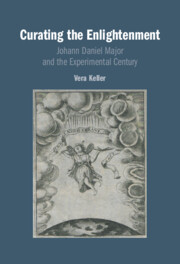
How did the research universities of the Enlightenment come into being? And what debt do they owe to scholars of the previous era? Focusing on the career of German polymath Johann Daniel Major (1634–93), Curating the Enlightenment uncovers how late seventeenth-century scholars crafted the research university as a haven for critical inquiry in defiance of political and economic pressures. Abandoning the surety of established intellectual practice, this 'experimental century' saw Major and his peers reshaping fragments of knowledge into new perspectives. Across new disciplines, from experimental philosophy to archaeology and museology, they reexamined what knowledge was, who it was for, and how it was to be stored, managed, accessed, judged, and transformed. Although later typecast as Baroque obstacles to be overcome by the Enlightenment, these academics arranged knowledge in dynamic infrastructures that encouraged its further advancement in later generations, including our own. This study examines these seventeenth-century practices as part of a continuous intellectual tradition and reconceptualizes our understanding of the Enlightenment.
This introduction sets out Major’s view of his age, "the experimental century," in relation to curiosity and curation. Although curiosity had been recuperated from a vice to a virtue in early modern Europe, Major continued to relate curiosity to original sin as a faulty, bodily lust for knowledge. This insatiable desire drove all people since Adam, but it did so more than ever in his age when the bounds and divisions set upon knowledge in the traditional encyclopedia were torn down. Curators applied cura or care (from the same root as curiosity) to knowledge. By acknowledging their own flaws, curators could guide the passion for knowledge closer and closer to truth, which, however, always remained out of human reach.
“Metatheatre,” the term coined by Lionel Abel, flourished in the baroque (roughly 1550–1650) and modernist (or neobaroque, twentieth century) in Europe and the United States. Rather than representing the illusion of reality, it represents the reality of illusion. Pirandello’s Henry IV may be read as a modernist rendering of Hamlet. More radically than Hamlet, “Henry” perceives the impossibility of grasping truth beneath appearances and chooses to live in theatrical play forever. This chapter compares Six Characters in Search of an Author to an untitled play by the baroque artist Gian Lorenzo Bernini. Both feature characters angry at their author and discussion of a play to be made. In each, the “fourth wall” is removed to reveal theatre-in-process. Instead of portraying theatre as an imitation of life, metatheatre reveals life’s inherent theatricality.
First mentioned in 1194, Bayreuth became the centre of the rule of the Margraves of Andechs-Merania. The city reached its Baroque heyday in the mid-eighteenth century under the regency of Margraves Friedrich and Wilhelmine, a sister of Friedrich II of Prussia (‘the Great’). After the loss of the margravial residence in 1769 and as a result of the Napoleonic Empire, the city lost its former importance and passes from Prussian to Bavarian rule. The poet Jean Paul (actually Johann Paul Friedrich Richter) lived in Bayreuth from 1804 until his death in 1825. With Richard Wagner’s move to Bayreuth in 1872, the construction of the Festspielhaus, and the founding of the Bayreuth Festival in 1876, the city in the Franconian province becomes the epitome of German culture with international significance and impact – but also a symbol of the ideological claim to Wagner by National Socialism and the Wagnerian Adolf Hitler.
This article discusses two imperial Roman literary descriptions of architectural space (Luc. 10.111–35 and Stat. Silv. 4.2) as responses to the real architectural space of two imperial palatial complexes in Rome, Nero’s Golden House and Domitian’s Palatine palace. Building on definitions of baroque spatiality in architecture and on concepts of literary space, it explores the interplay between the textual worlds created by these writers and the real spaces fashioned by Roman imperial architects. It considers the convergences and divergences between the architects’ ‘Baroque’ spatial strategies and the authors’ literary conceits that intimate an illusory materiality, and between the narrated memories or virtual reconstitutions of desolate imperial vastness and the physical experiences of populated space. Finally, it reflects on both differing and common perspectives towards real and literary space constructed in the ‘Baroque’ manner by considering neo-Baroque sensibilities today in both literature and the visual arts and how these might not only problematise but also allow a convergence between the spatial turn of archaeological studies and the exploration of similar spatialities in literary culture.
The next chapter on Macbeth looks at how the play uses a Baroque, expressionist aesthetic to help define the empty world of power it depicts, and the ambiguities of the Baroque aesthetic form as defined by Walter Benjamin provide the setting for the faint glimmers of utopian thinking in the play. In this, the complicated figures called the Weird Sisters in the play’s text – but Witches in the paratextual stage directions and speech prefixes of the non-authorial Folio text – play a central role and get detailed examination. They are fundamentally ambiguous dramatic figures, showing conflicting traits as both the Three Fates of classical mythology and witches of medieval and early modern legend and belief-systems. Accordingly, they can be seen as either detached prophets merely predicting events, or co-agents of Macbeth’s crimes and failures. There are even utopian elements in their complex construction, especially if the songs Thomas Middleton inserted in the Folio text are taken into account. But the play remains a dark tragedy of the emptiness and cruelty of the politics of force, its hints at utopian alternatives muted and subordinated to the predominant bleak and troubling qualities of a world dominated by force and power.
This chapter turns to the curatorial role of authors on the countershelf, tracing the impact of Octavio Paz’s sojourn as Mexican ambassador to India (1962–1968) on Indian poets and artists in the little magazine scene of the 1960s and 1970s, including Arvind Krishna Mehrotra, Geeta Kapur, and Jagdish Swaminathan. While Neruda often formed the image of the countershelf for South Asian authors, Paz was the nearly invisible engine through which that imaginary consolidated. Paz’s sensibility of “strangerhood” reflected his growing interest in the baroque, a form which emerged to aestheticize the rapidly and radically changing concept of the world in the era of colonial expansion. This same strategy was taken up by several creators of Indian little magazines, among whom Paz helped to establish a very particular idea of world-literary friendship: not an increasingly unified and easily digestible singular style but a series of intentionally disorienting enigmas. Both route through Latin American literature of the 1960s, but the 1970s Indian poets set a very different course for global English, one that the rise of the novelists in the 1980s dramatically interrupted and then, essentially, cut off.
The hybrid name for Latin America is a clue to its double consciousness and, as a corollary, to its talent for exploring complexity. A push and pull between competing classical and local lineages among displaced and replaced peoples has brought curses on Latin America, but also the blessings of an unbidden freedom to invent new patterns. If bitterness haunts the deracination on a continental scale, irreverence lightens the burden. From colonial times through the current post-Boom period, Latin American literature has been a vehicle for cagey revenge against metropolitan conventions, and for re-membering aboriginal cultures. The legend of Inkari, for example, literally foretells how the body of the Inca emperor, dismembered by Spanish conquerors, will reassemble underground and emerge triumphant. Double consciousness in Latin America describes a culture of baroque anxiety and compensation for doubt about one’s place in the world. With Afro-Latin American literature, the ironies multiply exponentially. Architectural monuments to excess -- meant to overwhelm worries that followed from the discovery of sophisticated cultures that had no debts Europe – worries about the nature of God, the center of culture, one’s own identity -- are visible throughout the continent’s landscape. Local gods and African orishas adorn Catholic temples. Excess is audible too, in the complex strategies for addressing readers, starting from colonial times and reviving after interruptions of purposeful coherence and optimism. The great first masters of Latin American literature were baroque, practically by default as they navigated conflicting codes and overwhelmed the fault lines with clever structures. As pioneers of local style, they set the tone for future movements, through the taste for complexity waffled when political ambitions for independence or national consolidation triumphed through foundational fictions written by political leaders in order to win the hearts of newly minted citizens. Compared to the skillful jousts with European conventions by baroque masters, nation builders and populists would seem naïve to the ironic novelists who ignited a Boom in Latin American literature and who brought European readers face to face with the structural contradictions of modern cultures.
Elizabeth Bishop wrote with an awareness of developments in the visual arts at the beginning of the twentieth century, often seen as spearheading the Modernist movement in all the arts. As well as being a profoundly visual poet and sharing an interest in detailed description with her mentor Marianne Moore, Bishop also questioned the idea of a settled point of view and embraced both uncertainty and multiplicity in relation to seeing. Temperamentally she found an affinity with the idea of the Baroque in seventeenth-century writing and in the parallels with twentieth-century art drawn in art theory. Her early attraction to Surrealism also had to do with the disorientating effects of seeing and the uncertain boundary between inner and outer worlds. A writer who also painted herself, though in a small way, Bishop was always alert to issues of spatial representation, and how art and writing traced a similar process of their own emergence.
Surrealism thrived within environments characterized by a profusion of collected objects that inspired the surrealist collector’s work and thought. André Breton (in Paris) and Roland Penrose and Lee Miller (in Sussex) had well-documented collections that reveal the practice of collecting at the root of surrealist theories of the object; they anticipated recent explorations of new materialism by Bruno Latour and Jane Bennett, and of the object as thing by W. J. T. Mitchell. Breton saw “concealed realities” and “latent possibilities” in objects in a way that foreshadowed the “vital materialism” Bennett finds in things. Like Breton, Penrose and Miller favored objects that had had a ceremonial function in their culture of origin, remote in time as well as geographically, as a way of understanding themselves better. In both collections, the impressive sculptures from the Pacific Islands exemplify the surrealist desire to orient the self within a larger world through objects capable of looking back.