To save content items to your account,
please confirm that you agree to abide by our usage policies.
If this is the first time you use this feature, you will be asked to authorise Cambridge Core to connect with your account.
Find out more about saving content to .
To save content items to your Kindle, first ensure no-reply@cambridge.org
is added to your Approved Personal Document E-mail List under your Personal Document Settings
on the Manage Your Content and Devices page of your Amazon account. Then enter the ‘name’ part
of your Kindle email address below.
Find out more about saving to your Kindle.
Note you can select to save to either the @free.kindle.com or @kindle.com variations.
‘@free.kindle.com’ emails are free but can only be saved to your device when it is connected to wi-fi.
‘@kindle.com’ emails can be delivered even when you are not connected to wi-fi, but note that service fees apply.
This chapter examines the ‘peculiar’ utopian temporality of the contemporary moment as expressed in the fictional works of three Black British female writers: Queenie (2019), by Candace Carty-Williams, Swing Time (2016) by Zadie Smith, and Girl, Woman, Other (2019) by Bernadine Evaristo. The chapter argues that these novels represent a particular incarnation of utopian realism. This names a strong commitment in contemporary British fiction to articulating post-racial futures. In utopian realist texts, writers use realism not to convey mimetic depictions of the present here and now but, rather, to convince readers of the viability of alternative, transformed futures. Utopian realists such as Candace Carty-Williams, Zadie Smith, Bernadine Evaristo, Monica Ali, and Diana Evans foreground a relationship between utopian thinking and models drawn from personal and historic experience. Like design fictions, the term given for fictional narratives used by designers of prototype products and technologies to help imagine their future use, these texts offer readers identifiable utopian alternatives to contemporary Britain. Shaped in relation to the long history of Black experience in the United Kingdom, as well as gender and queerness, these novels reveal the need to consider the future not as a speculative possibility but a realisable plan for how we might live.
"A new development as postmodern fiction in Britain moved into the 1980s was the stronger presence of writers from Black British and British Asian backgrounds. This reshaping of the literary landscape, as the work of culturally diverse authors contained a renewed concentration on ethnic and historical difference, paralleled the full transformation of Britain into a multicultural nation following the migration of people to the country from the Caribbean, South East Asia and Africa from the 1950s.
However, while the postmodern remains a useful paradigm, challenging established narratives, deconstructing hierarchies, and offering counter-discourses, certain British authors strived to escape the deconstructive pessimism of postmodern identity politics to create new formations of cultural interdependence. Through a close reading of authors such as Hari Kunzru, Zadie Smith and Bernardine Evaristo, this chapter argues for the emergence of the transglossic in fiction, a paradigm that concerns an alignment of aesthetics and ethico-political imperatives and captures an emergent cosmopolitan mode that moves beyond postmodern representation."
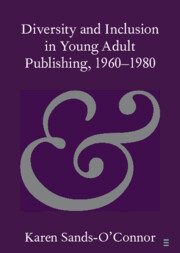
This Element examines the early years of British Young Adult (YA) publishing at three strategic publishing houses: Penguin, Heinemann and Macmillan. Specifically, it discusses their YA imprints (Penguin Peacocks, Heinemann New Windmills and Macmillan Topliners), all created at a time when the population of Britain was changing and becoming more diverse. Migration of colonial and former colonial subjects from the Caribbean, India, and Africa contributed to a change in the ethnic makeup of Britain, especially in major urban centres such as London, Birmingham and Manchester. While publishing has typically been seen as slow to respond to societal changes in children's literature, all three of these Young Adult imprints attempted to address and include Black British and British Asian readers and characters in their books; ultimately, however, their focus remained on white readers' concerns.
Recommend this
Email your librarian or administrator to recommend adding this to your organisation's collection.