Refine search
Actions for selected content:
10 results
You Can’t Argue Against Rationality
- Part of
-
- Journal:
- Public Humanities / Volume 2 / 2026
- Published online by Cambridge University Press:
- 28 May 2026, e76
-
- Article
-
- You have access
- Open access
- HTML
- Export citation
Five - Life without Form
- from Part III - Life: Contextual Aporetics
-
- Book:
- The Life of Form
- Published online:
- 26 February 2026
- Print publication:
- 12 March 2026, pp 169-207
-
- Chapter
- Export citation
Chapter 7 - Emerson’s “Experience” and Plato’s Republic
-
- Book:
- Emerson, the Philosopher of Oppositions
- Published online:
- 20 November 2025
- Print publication:
- 22 January 2026, pp 137-151
-
- Chapter
- Export citation
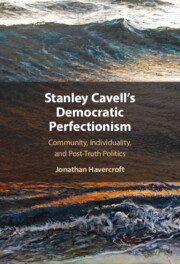
Stanley Cavell's Democratic Perfectionism
- Community, Individuality, and Post-Truth Politics
-
- Published online:
- 17 August 2023
- Print publication:
- 31 August 2023
2 - Revolutionary Uses of Wittgenstein in Must We Mean What We Say?
- from Part I - Ordinary Language and Its Philosophy
-
-
- Book:
- Cavell's <i>Must We Mean What We Say?</i> at 50
- Published online:
- 03 March 2022
- Print publication:
- 10 March 2022, pp 34-55
-
- Chapter
- Export citation
What if it were True? Why Study the New Testament
-
- Journal:
- New Testament Studies / Volume 68 / Issue 2 / April 2022
- Published online by Cambridge University Press:
- 04 March 2022, pp. 144-155
- Print publication:
- April 2022
-
- Article
- Export citation
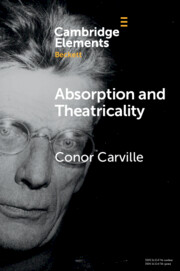
Absorption and Theatricality
- On Ghost Trio
-
- Published online:
- 17 February 2022
- Print publication:
- 17 March 2022
-
- Element
- Export citation
Chapter 2 - Fantasies of Private Language
-
- Book:
- Skepticism in Early Modern English Literature
- Published online:
- 16 April 2021
- Print publication:
- 29 April 2021, pp 74-91
-
- Chapter
- Export citation
Chapter 4 - Seneca and the Antisocial in King Lear
-
- Book:
- Shakespeare and Senecan Tragedy
- Published online:
- 06 October 2020
- Print publication:
- 15 October 2020, pp 110-151
-
- Chapter
- Export citation
3 - An Allegory of Affinities
-
-
- Book:
- Seeing Wittgenstein Anew
- Published online:
- 05 June 2012
- Print publication:
- 15 March 2010, pp 61-80
-
- Chapter
- Export citation
