To save content items to your account,
please confirm that you agree to abide by our usage policies.
If this is the first time you use this feature, you will be asked to authorise Cambridge Core to connect with your account.
Find out more about saving content to .
To save content items to your Kindle, first ensure no-reply@cambridge.org
is added to your Approved Personal Document E-mail List under your Personal Document Settings
on the Manage Your Content and Devices page of your Amazon account. Then enter the ‘name’ part
of your Kindle email address below.
Find out more about saving to your Kindle.
Note you can select to save to either the @free.kindle.com or @kindle.com variations.
‘@free.kindle.com’ emails are free but can only be saved to your device when it is connected to wi-fi.
‘@kindle.com’ emails can be delivered even when you are not connected to wi-fi, but note that service fees apply.
Abstract: In this chapter, McKenna and Varner apply John Dewey’s ethical philosophy to environmental and animal ethics. They argue that Dewey’s experimental and fallibilistic approach offers a dynamic framework for addressing ecological challenges. Dewey emphasizes the continuity between humans and nature, advocating for an out-of-doors intelligence – an ethical reasoning that engages directly with natural and social environments rather than relying on fixed moral theories. Dewey rejects both domination of nature and passive nonintervention, favoring intelligent engagement where moral inquiry emerges through interaction with humans, animals, and ecosystems. Ethics, in this view, is a process of adapting habits through inquiry and experimentation rather than applying rigid principles. The authors argue that Dewey’s philosophy calls for thinking with rather than thinking about nature, fostering holistic, context-sensitive solutions. Ethical progress depends on experimental, adaptive inquiry that integrates human, animal, and environmental concerns, ensuring sustainable coexistence and responsible ecological stewardship. The authors conclude with two case studies that illustrate Dewey’s approach: US predator control and land stewardship at Bears Ears National Monument. The persistence of destructive wildlife management habits reflects the need for reform through intelligent inquiry. Collaborative efforts, such as conservation partnerships and the Bears Ears Inter-Tribal Coalition, demonstrate Deweyan ethics in practice.
Chapter 2 continues the thread from Chapter 1, moving from objections against Kant in animal ethics to broader concerns in environmental philosophy. I begin with problematic passages from Kant’s critical texts such as the Groundwork for the Metaphysics of Morals and the Critique of Pure Reason. While Kant does not discuss the environment, the standard interpretation of Kant suggests that nature has no intrinsic value and that environments are of mere instrumental worth. Environmental philosophers are warranted to suspect that Kant’s critical philosophy may be a nonstarter given its apparent dualism and anthropocentrism. Next, I examine three camps of Kant defenders who challenge these suspicions. Some commentators defend Kant’s system, others modernize him, and some synthesize Kant with other philosophers such as Aristotle. I assess the merits of their arguments, ultimately recommending a move beyond the standard reading to address the climate crisis.
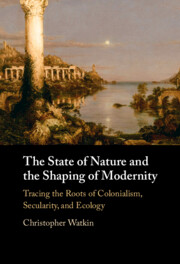
The state of nature is a powerful idea at the heart of the fragmented and sometimes conflicting stories the modern West tells about itself. It also makes sense of foundational Western commitments to equality and accumulation, freedom and property, universality and the individual. By exploring the social and cultural imaginaries that emerge from the distinct and often contradictory accounts of the state of nature in the writing of Hobbes, Locke and Rousseau, The State of Nature and the Shaping of Modernity offers a fresh perspective on some of the most pressing debates of our time, showing how the state of nature idea provides a powerful lens through which to focus the complex forces shaping today's political and cultural landscape. It also explores how ideas about human nature and origins drive today's debates about colonialism, secularism, and the environment, and how they can shed new light on some of society's most heated debates.
Kant and Environmental Philosophy starts with problems of the Anthropocene and looks to Immanuel Kant for answers. It offers a close reading of Kant's texts, arguing that the views we find in his ethical, political, and aesthetic theory are helpful for making sense of ecological challenges like climate change. The book clarifies our duties regarding climate extinction, geoengineering, consumerism, and future generations. It provides insights and solutions for obstacles to sustainability, including corruption and the possibility of civil collapse. In environmental philosophy, historical commentators mine familiar philosophers for insights to these problems, but Kant is often seen as an anthropocentric and dualistic individualist in a world dominated by consequentialist thinking, and accordingly he is overlooked as relevant for environmental philosophy. This book challenges that conclusion, and its comprehensive examination of Kant's texts provides lessons for environmental philosophy and climate ethics at a time when a fresh perspective is desperately needed.
Is a religious naturalism possible? 'Scientific' naturalism accommodates only 'thin' religiousness. A more robust religious naturalism posits an ultimate reality that supports the ideals of eco-morality and the hope that human fulfilment may be achieved by following those ideals. Such an account may yet be 'expansively' naturalist in taking the natural world to be the only (concrete) reality, and in not going against, only beyond, well-confirmed science. For the core content of an expansive religious naturalism, this Element proposes the idea of an inherent integrative cosmic purpose. The authors reflect both on Indigenous worldviews and on theist traditions in pursuing this proposal.
This Element draws on the transdisciplinary field of agroecology to clarify and deepen Catholic social teaching's natural law ethic. In response to the ecological crisis, social teaching has begun to appeal to ecology and the exemplarity of natural ecosystems to foster care of creation. Some have criticized this natural law ethic, along with its invocations of balance and harmony, as overly idealized, advocating instead for an alternative view in which ecological dynamism and ambiguity preclude appeals to ecology for guidance. While sympathizing with these criticisms, this Element offers a different way forward, contending that social teaching's natural law ethic should be revised rather than abandoned. Agroecology displays an approach to tilling and keeping the earth that accommodates dynamism and ambiguity, while also discerning ecological principles and processes that are mimicked agriculturally. In short, this Element argues that engaging agroecology can help social teaching clarify, concretize, and deepen its understanding of natural law.
German sociologist Ulrich Beck writes that Japan has become part of the ‘World Risk Society’ as a result of the 2011 nuclear accident in Fukushima. By World Risk Society he means a society threatened by such things as nuclear accidents, climate change, and the global financial crisis, presenting a catastrophic risk beyond geographical, temporal, national and social boundaries. According to Beck, such risk is an unfortunate by-product of modernity, and poses entirely new challenges to our existing institutions, which attempt to control it using current, known means. As Gavan McCormack points out, ‘Japan, as one of the most successful capitalist countries in history, represents in concentrated form problems facing contemporary industrial civilization as a whole’. The nuclear, social, and institutional predicaments it now faces epitomise the negative consequences of intensive modernisation.
The 2011 tsunami and nuclear disaster at Fukushima has encouraged comparisons in many quarters with the tragic experience of Minamata more than 55 years earlier, when mercury-poisoned industrial runoff caused widespread illness and death in the human and animal populations. Rather than viewing these disasters as the unfortunate side effects of modern industrial capitalism (to be addressed, in the capitalist view, with financial compensation) Yoneyama Shoko draws on Minamata victim's advocate Ogata Masato to imagine a more humane and life-affirming vision of our obligations to one another. In crafting his response to the Chisso Corporation and the Japanese government, Ogata (who eschewed financial compensation) drew on elements of the popular Japanese religious heritage to affirm an ethos of interdependence and the responsibility that follows. This can be seen, for example, in Ogata's use of the term tsumi, an indigenous Japanese category of ritual impurity that encompasses both physical pollution and moral transgression. Combining notions of “defilement” and of “sin,” tsumi is a principle that (as Brian Victoria notes) has justified some in shunning the victims of chemical or radioactive contamination. Ogata, however, employs the traditional imagery of tsumi to describe, not the victims of pollution but its perpetrators, thereby presenting ecological damage as a profoundly moral matter, one that cannot be reduced to economic impacts or financial compensation.
Much ecological thought today turns to Japan's past for inspiration. The reason, according to conservative Japanese ecologists, deep ecologists, and environmental philosophers, is that Japan's history of aesthetic “oneness” with nature provides a model for the world to emulate as it addresses the global environmental crisis. I critique this view by showing that conservative, or more accurately, reactionary ecology in Japan is closely intertwined with ethnic communitarianism, Japan's wartime ideology of the 1930s, and deep ecology. I suggest that these forms of reactionary ecology reflect a fascist desire to create or rely upon a nationalistic narrative of Japanese cultural uniqueness that conceals the excesses of capitalism and operates to sustain the socio-economic order that is today generating ecological catastrophe.
How we should treat nonhuman animals is one of the most important environmental questions that we face. Although most people think of humans as having a qualitatively different moral status than nonhuman animals, there is no morally significant criterion for membership in the moral community that is satisfied by all and only humans. If the criterion is demanding enough (e.g., language), it excludes some humans; if it is permissive enough to include all humans (e.g., sentience), it includes some nonhumans. The discovery that “speciesism” is indefensible opens the door to a range of strong animal-protection philosophies – for example, Peter Singer’s “animal liberation,” which is founded on utilitarianism, and Christine Korsgaard’s “fellow creatures” view, which has a Kantian foundation. These views converge in concluding that many of the ways that we treat animals are wrong.
One of the primary ways we encounter animals is as a food source. The dominant system of animal agriculture is “factory farming,” which is designed to produce the greatest amount of meat at the lowest possible cost. Factory farming is grossly inefficient from an ecological point of view, imposes enormous suffering on animals, and damages both humans and the environment. “Conscientious omnivores” reject factory farming but defend painlessly killing animals for food. Some defend hunting because they think it promotes other important values as well. These arguments are rejected by vegetarians and vegans, but they remind us that concerns about animals exist against the background of other values, including those that relate to the broader value of nature.
A new way of thinking about environmental problems has emerged since the 1980s. Environmental problems are increasingly seen as systematically entwined, with human action as their primary cause. We are in a new epoch in Earth’s history, the Anthropocene, and climate change is its most immediate and dramatic manifestation. The drivers of the Anthropocene can be seen through the lens of a simple equation: Environmental impact is the product of population, affluence, and technology. Nations and individuals vary greatly in their impacts, so questions of justice are unavoidable. Questions of justice extend across generations as well as among nations and individuals. Ultimately, we must ask what kind of world we want for ourselves and our children.
The words ‘nature’ and ‘environment’ have different senses and referents. The idea of the environment is keyed to what surrounds us, and we can speak of natural and built environments as well as others. This book is concerned with ethical questions about the environment. Many of these concern problems that occur at different scales and cause harms of various types. Environmental problems can be viewed from technological, economic, religious, and aesthetic perspectives, among others. No single perspective provides the sole correct or exhaustive way of viewing environmental problems. There is an ethical dimension to most environmental problems and that is the focus of this book.
The question of how should I live has special resonance in the Anthropocene, which threatens virtually everything we care about. This chapter answers this question by saying that I should live in a way that expresses my values, and that these values should be directed towards making the world better. In practice this means living car-free if possible, avoiding airplane travel, eating a plant-based diet, and having few, if any, children. In addition to living this way, we should try to change law and policy, and support individuals in their efforts to live in this way. Yet, no matter how much we may succeed, we will inevitably live with change and perhaps even disaster. These present threats to living a meaningful life, but they are also the elements from which meaning and joy must be forged.
Normative ethics is divided between ethical theory and practical ethics. Three families of ethical theories are consequentialism, virtue ethics, and Kantianism. Consequentialism is the view that consequences determine what we ought to do. Virtue ethics is the view that right actions should be understood in terms of virtuous agents and their character. Kantianism’s central concern is with how rational agents ought to relate to themselves and to each other. Ethical theory is difficult to disentangle from practical ethics, which is concerned with what we ought to do in particular situations, which – along with the question “How should I live?” – is the most important topic in ethics and perhaps all of philosophy.
Understanding human morality is important in appreciating the ethical dimensions of environmental problems. As a first approximation, morality is a behavioral system, with an attendant psychology, that has evolved among some social animals for the purposes of regulating their interactions. This chapter discusses and rejects challenges to morality from amoralism, theism, and relativism, arguing instead that morality is ubiquitous and difficult to escape, does not need the support of God in order to have content or be motivating, and is not culture-bound. However, this does not imply that there is a single, true morality, that belief in God is inconsistent with morality, or that there is no conflict between morality and individual desire. Armed with this understanding of human morality, we are now prepared to discuss some substantive questions in moral philosophy.
The connection between ecological responsibility and differing conceptions of Christian eschatology is widely observed. It is often assumed that the necessary response to Christian environmental inaction is affirmation of a strongly this-worldly vision of new creation (so, influentially, N. T. Wright). However, recent systematic theology has seen retrieval of elements of eschatology that foreground discontinuity and transcendence (e.g. Hans Boersma). Moreover, there are exegetical challenges to continuationist claims (e.g. Markus Bockmuehl and Edward Adams) and doctrinal reactions to ‘eschatological naturalism’ (Katherine Sonderegger and Michael Allen). Where does this leave the connection between ecological witness and the content of Christian hope? Doubtless, continuationist accounts have some salutary emphases, but on exegetical, doctrinal and moral grounds I seek to disentangle the assumed compact of particular construals of this-worldly continuity and ethical commitment. Finally, drawing on James Cone's meditations upon black spiritual traditions, I explore how discontinuous interpretations of the life to come themselves need not undermine responsible action.
Philosophers have used thought experiments to examine contentious examples of genetic modification. We hypothesised that these examples would prove useful in provoking responses from lay participants concerning technological interventions used to address welfare concerns. We asked 747 US and Canadian citizens to respond to two scenarios based on these thought experiments: genetically modifying chickens to produce blind progeny that are less likely to engage in feather-pecking (BC); and genetically modifying animals to create progeny that do not experience any subjective state (i.e. incapable of experiencing pain or fear; IA). For contrast, we assessed a third scenario that also resulted in the production of animal protein with no risk of suffering but did not involve genetically modifying animals: the development of cultured meat (CM). Participants indicated on a seven-point scale how acceptable they considered the technology (1 = very wrong to do; 7 = very right to do), and provided a text-based, open-ended explanation of their response. The creation of cultured meat was judged more acceptable than the creation of blind chickens and insentient animals. Qualitative responses indicated that some participants accepted the constraints imposed by the thought experiment, for example, by accepting perceived harms of the technology to achieve perceived benefits in reducing animal suffering. Others expressed discomfort with such trade-offs, advocating for other approaches to reducing harm. We conclude that people vary in their acceptance of interventions within existing systems, with some calling for transformational change.
Although the dominant meaning of virtue today concerns human ethical capacity, the word had a much broader scope in Aristotle’s natural philosophy and in early-modern herbal and agricultural literature. This chapter tackles this ecological sense of “vertue” (as it was often spelled in the period), unpacking the resilient force it named in natural matter and the skill and virtue of stewardship it solicited from the humans entangled in its management in household, garden, or apothecary. As this chapter shows through readings of examples from Shakespeare, early modern practical texts, and modern environmental thinking, stewardship and resilience promise to capture the skills and virtues of household management in its broadest sense, to include care for the oikos shared by human and nonhuman creatures and systems – especially, in contemporary settings, in times of catastrophe. As keywords of contemporary environmental ethics, however, they have also been criticized for individualizing environmental virtue, undermining necessary structural change in favor of personal care and tenacity. This chapter suggests we might clarify this debate through a return to early modern vertues, by engaging the powers of nonhuman virtues and the legacy of these mixed and distributed agencies in the present.
Human activities deprive wild animals of their life requisites by destroying or impoverishing their surroundings, causing suffering of individuals. Yet, the notion that animal welfare applies to wildlife has escaped many animal welfarists and conservationists. A well-accepted and applied ethical foundation for animal conservation that considers animal welfare is lacking. We address this by examining how worldviews of conservationists and animal welfarists are related. The clear conceptual link is that individuals within anthropogenically disturbed populations often endure suffering caused by humans. Accordingly, our objectives are to provide an overview of wildlife conservation, integrate ethical aspects of wildlife conservation and animal welfare, and encourage a ‘wildlife welfare’ ethic among conservationists. We describe the relationship between contemporary socioeconomic and environmental conditions and the impoverished status of North American wildlife. We then describe the ecological plight of large mammalian carnivores in North America. Finally, as a case study, we focus on the tenuous lives of grey wolves (Canis lupus) living in the midst of human-dominated landscapes. We conclude that the suffering wildlife endures because of humans is a collective responsibility that presents a moral imperative for animal welfarists and conservationists alike. Habitat destruction and impoverishment deprives species of life requisites, causing trauma, prolonged suffering, and eventually death. We suggest that a shared doctrine of animal welfare principles is needed, such as a modified version of the internationally recognised Five Freedoms. In essence, this would be an ethical affirmation for conservationists and animal welfarists.