To save content items to your account,
please confirm that you agree to abide by our usage policies.
If this is the first time you use this feature, you will be asked to authorise Cambridge Core to connect with your account.
Find out more about saving content to .
To save content items to your Kindle, first ensure no-reply@cambridge.org
is added to your Approved Personal Document E-mail List under your Personal Document Settings
on the Manage Your Content and Devices page of your Amazon account. Then enter the ‘name’ part
of your Kindle email address below.
Find out more about saving to your Kindle.
Note you can select to save to either the @free.kindle.com or @kindle.com variations.
‘@free.kindle.com’ emails are free but can only be saved to your device when it is connected to wi-fi.
‘@kindle.com’ emails can be delivered even when you are not connected to wi-fi, but note that service fees apply.
This chapter examines the intersection of militarism, climate change, and Islamic environmental ethics from a transnational perspective, arguing that the military-industrial complex is a structurally overlooked but significant contributor to global ecological degradation. It critiques the exemption of military emissions from international climate protocols and highlights the disproportionate environmental burdens placed on Muslim-majority countries. Drawing on Quranic principles such as khalīfah (trusteeship), mīzān (balance), and ‘adl (justice), the chapter presents a theological framework that calls for demilitarization and ecological justice. Through case studies from Iraq, Gaza, and Afghanistan, as well as analysis of Islamic legal tools, eco-fatwas, grassroots movements, and green finance instruments, the chapter outlines a holistic response rooted in Islamic teachings. It concludes by advocating for a reconceptualization of national security and climate action that centers spiritual responsibility, ecological stewardship, and transnational solidarity.
How do competing political projections, economic motives, and security rationales inform infrastructural policy? How do state actors project infrastructural imaginations into the future when they perceive the present to be under duress? This article examines these questions by looking at Turkey’s infrastructural development from the late Ottoman period to the early Cold War through archival research and fieldwork. In this article, I argue that state actors can clash over the objectives, disposition, tempo, and modality of infrastructural development and opt for policy choices that may seem counterintuitive from the perspective of theories that treat infrastructure as a force multiplier of state power and identify in the state an insatiable and uniform drive for infrastructural power. These clashes are framed as contestations over infrastructural ideology and shows how state elites may consciously pace, manipulate, and even withhold infrastructural development in national territories, particularly in light of crisis perceptions and conditions. It claims that contests over infrastructural ideology arise from the recognition that infrastructure is ambivalent and can accommodate different power projections. In tracing Turkey’s infrastructural development since the Ottoman era and the gradual consolidation of centripetal preparedness as the state’s predominant infrastructural ideology, the article demonstrates how unorthodox forms of infrastructural policymaking under crisis conditions can entrench spatial fragmentations and skew the distribution of resources and life chances across national space and populations.
Chapter 5 compares Wilhelmine Germany with Edwardian England and arrives at an unconventional conclusion about their relative stability. There is a scholarly tradition of viewing the Second Reich, particularly after the fall of Bismarck and the political ascension of King Wilhelm II, as so ridden with internal contradictions that it was in near-permanent crisis. More recently, scholars have argued that Germany was in fact democratizing, suggesting again that this major historical case of competitive authoritarianism was volatile. I find instead that the balance of evidence indicates that Imperial Germany is a good case of institutionalized competitive authoritarianism, and that it was Edwardian England rather than Wilhelmine Germany where the most serious threat of regime change existed. I contest two widely held misconceptions: (1) that the UK had transitioned to democracy significantly before the outbreak of WWI and (2) that the landed elite acquiesced in this transition. I argue instead that the UK was not only a prototypical competitive oligarchy before WWI but also that it was in a constitutional crisis and close to civil war.
According to Dazai Shundai, regulations governing people’s dress and their ceremonial guards and retinues are a way to visibly display distinctions in status, but appropriate systems for these are lacking in Tokugawa Japan. The military is a necessary complement to the civil in governing, but the samurai of Tokugawa Japan, who have lived in cities for several generations while receiving hereditary stipends, have lost the qualities of true warriors and would be of little use in an actual battle. To remedy this, samurai should be required to train in the martial arts.
This chapter studies the significance of King Arthur’s status as a military fighter and as a leader of warriors in both medieval and modern literary contexts. First exploring the militarist and imperialist version of King Arthur that was appropriated and expanded by Geoffrey of Monmouth, the essay shows how aggressive Arthurian militarism was consistently haunted by anti-imperialist critique, particularly within late medieval romances of the Old French tradition (such as Chrétien de Troyes’s Perceval) and late medieval English work (particularly, Sir Gawain and the Green Knight). After analysing the ambivalence of Arthurian militarism within Malory, the essay shows the modern deployment of Arthurian militarism by figures such as Spenser and Tennyson. The essay closes with comparison of ghostly, late medieval warnings about the ill fruits of militarism in the Awntyrs off Arthure with Kazuo Ishiguro’s contemporary portrait of the endemic nature of violence in the Britain shaped by Arthurian militarist culture.
The relationship between states and their militaries has long been a subject of social enquiry. Most nation-states have their origins in war, formed and reformed by external conflict and civil wars. Yet the military aspects of state power are intimately tied to all other aspects of state power in relation to its industrial, entrepreneurial and global dimensions. Having discussed the ways in which militaries shape and constrain transition pathways through innovation and their everyday conduct as well as the exercise of violence and war, the chapter explores potential to transform the military state arguing that at the heart of transforming the military state is the need to rethink security, possibly along the lines of ecological security. In conjunction with efforts to embed more ecological thinking in relation to security, a prerequisite for such a shift is a revisioning of the goal and purpose of the economy as proposed in Chapter 4, at least in richer countries in the first instance.
This article addresses questions about the identity of the subject of constitutional law from a historical-sociological perspective. It aims to reconstruct, beneath the surface of constitutional texts, the actual material subjects that commonly give rise to constitutions. To do this, it isolates the constituent conjunctures in which constitutions have typically been written, and it describes the social pressures that obliged members of different societies to articulate their subjectivities in constitutional fashion. It uses this reconstruction to suggest a new framework for approaching questions of constitutional subjectivity and legitimacy, as, contrary to more deliberative methods, it explains how experiences of military violence usually shaped the emergence of constitutional subjects. On this basis, it argues that constitutions typically acquired stable legitimating force, not by enacting the will of identifiable constitutional subjects, but by displacing such subjects into a manageable form, separate from their military emphases. It cautions against idealist theories of constitutional subjectivity, arguing that most constitutions create legitimacy for government specifically as they promote societal integration in procedures that are not defined by the subjects to which they attribute their authorship. It concludes by addressing some current examples of constitutional crisis, considering how these have been shaping by literalist understandings of constitutional subjectivity.
The introduction presents the main arguments that will be developed in the book and how letters and petitions that were found in the military archive are the basis from which to argue that the military was an institution in the first half of the nineteenth century. The nearly one thousand case studies provide the information that makes it possible to understand the Peruvian armed forces. This chapter also covers the historiographical debate by discussing the notion of caudillos and how although most of the new republics have been seen as controlled by armed men on horseback, the military can be described as an insitution that while having a colonial origin, transformed throughout the wars of independence. The way in which those who became members of the armed forces is analyzed in detail showing that a social system of protection for those who were part of it developed from the colonial systems Comparisons are made with the cases of the United States, France, Spain and the rest of Latin America. This section ends with a description of the book’s structure and a description of each chapter.
The Japanese archipelago and the Korean peninsula are neighbouring regions, with histories of similarities and contrasts. Currently inhabited by a population of about 123 million in an area slightly bigger than Germany, Japan has been relatively isolated throughout much of the last two millennia. In the late nineteenth century, Japan reinvented itself from a land on the margins of the Sinitic cultural zone to a world power. In contrast, Korea – a landmass a little larger than Great Britain and inhabited by about 78 million people – was an active participant in the China-centred world order during much of its 2,300 year-history before losing sovereignty to Imperial Japan in 1910. (See Map 13.)
Sub-Saharan Africa was on the threshold of a new and violent era in the second half of the fifteenth century. The ensuing four centuries would see innovative forms of military organisation, novel cultures of militarism underpinning such systems, and new wars, as well as new ways of fighting them. There were often different factors at work in different regions; the presence of external drivers was a key distinction between Atlantic Africa and the rest of the continent, for instance. However, warfare across early modern Africa had much in common, in terms of the aim to control factor endowments, to maximise population, and to construct enduring ideological systems, whether territorially or culturally defined. In some ways – certainly in terms of the underlying trends and broad contours of Africa’s military history – the existence or absence of external intrusion is a distraction, however significant it was in particular places at particular times. The outcome of the processes in motion between c. 1450 and c. 1850 was an expansion in military scale, the professionalisation of soldiery, the adoption of new weaponry, and the militarisation of the polity – whether ‘state-based’ or otherwise. The militarisation of African polities and societies was an ongoing process between the fifteenth and the nineteenth century, a period which in many ways witnessed the laying of the foundations of modern African political systems; this would culminate in a veritable military revolution in the nineteenth century, a transformation in the organisation and culture of violence, without which Europe’s later partition of the continent cannot properly be understood.
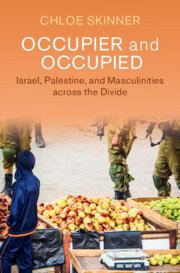
Chapter III delves into the discursive mechanisms through which former Israeli conscripts in this study understood, justified and/or distanced themselves from the violent regime in which they serve(d) – relating this to the broader context of ‘moralised militarism’ so frequently attributed to the Israeli military. Through analysis of the speech acts, moralisations and emotive articulations by former and current soldiers, I argue that traits of emotional expression, reflection and critique – far from being anomalies of militarised masculinity in this context – are central to its legitimation and idealisation, enabling the soldier, and society more broadly, to retain their sense of humanity amidst enduring violence. Rather than performances of stoicism and emotional control with which ‘traditional’ forms of militarised masculinity are normatively associated, a more philosophical, emotive, and cerebral approach to violence appears to be celebrated and encouraged within Israeli militarism – consolidating the supposed relation between militarism, masculinity, and moralism in the settler-colonial state.
Chapter I explores traditionally ‘non-hegemonic’ attributes as inherent to militarised masculinities in contemporary Israel, examining embodied compliance and submission to a higher order as a normalised means of ascending the ‘hierarchy of bodies’ that bolsters and undergirds the Zionist project from its outset. Exploring basic training, punishments, military hierarchy, friendship, camaraderie and death, I argue that the conscious performance of embodied submission (with enthusiastic consent) is as much valued within conscripted military masculinities as militarised domination in this context. Indeed, I suggest that the conscripted combat soldier – the archetypal national and masculine hero – must be both visibly dominant over the indigenous Palestinian ‘Other’, while simultaneously malleable and submissive to the goals of the Israeli state. As such, I explore both polarities of domination and submission as demanded within the parameters of idealised military masculinity – illustrating the gendered tensions that punctuate normative binaries in this militarised setting.
Chapters V explores the sexual politics of Israel’s colonial regime, serving to undo the all-too-common misconception that sexual violence is “extremely limited” in this context. Emphasising the obfuscation of dynamics of race and coloniality, I start with exploration of hegemonic analyses of conflict-related sexual violence, and the related depiction of Israeli militarism as devoid of sexual violence. I then analyse the eroticisation of the Israeli military and colonial ‘conquest’, and the fetishization of the bodies that undertake it – entangling colonial domination with notions and physiological sensations of erotic pleasure. Finally, I discuss the policing of militarised hierarchies through the logic of sexual violence, trickling from those ‘on top’ to inferior soldiers – by age, gender, and class – to the occupied Palestinian body. I thus argue that sexualised violence pervades the entire structure of Israeli settler colonialism, fusing military activity and colonisation with hetero-masculinised notions of domination, virility, pleasure, and control.
Working from the premise that gender and violence are cyclically related, masculinities' connection to power and violence are frequently simplistically assumed. Yet, amid ongoing colonisation and military occupation, there are other more complex dynamics simultaneously at play across Israel and Palestine. In this book, Chloe Skinner explores these dynamics, untangling the gendered politics of settler colonialism to shed specific light on the ways in which masculinities shift and morph in this context of colonial violence. Oscillating between analysis of Israeli militarism, colonisation, and military occupation in Palestine, each chapter examines the constitutive performance and negotiation of masculinised ideals across these colonial hierarchies. Masculinities are thus analysed across these settings in connection, rather than in isolation, as gendered hierarchies, performances, and identities intertwine and intersect with the racialised violence of settler colonialism.
This paper examines a protest tour in Okinawa in which participants travelled from different prefectures in Japan to protest against construction of a new military base at Henoko. Drawing on participant observation, surveys, and interviews with group members and a peace-tour guide, it examines how participants experienced Okinawa as a destination of political activismm, and assesses their experience. The tour contributed to developing a sense of solidarity among the participants in support of demilitarization in Okinawa. Protest tourism provided a space for education about militarism on the ground. However, drawing from the fields of critical tourism studies and indigenous studies, the paper also draws attention to the challenges of framing a protest tour as a strategy for demilitarization. I develop the notion of “souvenirs of solidarity” to reflect on broader issues concerning US bases in Okinawa, Japan and the Pacific and the possibilities for anti-base activism.
Now capital of the Federal Republic of Germany, Berlin rose from insignificant origins on swampy soil, becoming a city of immigrants over the ages. Through a series of ten vignettes, Mary Fulbrook discusses the periods and regimes that shaped its character – whether Prussian militarism; courtly culture and enlightenment; rapid industrialisation and expansion; ambitious imperialism; experiments with democracy; or repressive dictatorships of both right and left, dramatically evidenced in the violence of World War and genocide, and then in the Wall dividing Cold War Berlin. This book also presents Berlin's distinctive history as firmly rooted in specific places and sites. Statues and memorials have been erected and demolished, plaques displayed and displaced, and streets named and renamed in recurrent cycles of suppression or resurrection of heroes and remembrance of victims. This vivid and engaging introduction thus reveals Berlin's startling transformations and contested legacies through ten moments from critical points in its multi-layered history.
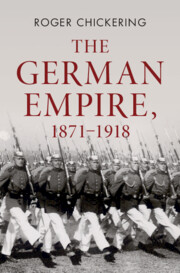
Furious economic growth and social change resulted in pervasive civic conflict in Imperial Germany. Roger Chickering presents a wide-ranging history of this fractious period, from German national unification to the close of the First World War. Throughout this time, national unity remained an acute issue. It appeared to be resolved momentarily in the summer of 1914, only to dissolve in the war that followed. This volume examines the impact of rapid industrialization and urban growth on Catholics and Protestants, farmers and city dwellers, industrial workers and the middle classes. Focusing on its religious, regional, and ethnic reverberations, Chickering also examines the social, cultural, and political dimensions of domestic conflict. Providing multiple lenses with which to view the German Empire, Chickering's survey examines local and domestic experiences as well as global ramifications. The German Empire, 1871–1918 provides the most comprehensive survey of this restless era available in the English language.
In 2021, scientists published a preprint stating that the dugong population of Okinawa had declined below the minimum viable population and should be considered extinct. The publication led to an outcry amongst Japanese/Okinawan environmentalists and to criticism by international dugong specialists. Two issues were raised: 1) Declaring dugongs extinct, although feeding trails were found in several locations, misrepresented the reality in Okinawan waters, and could have negative impacts on conservation measures; 2) Three authors were sitting on the Environmental Monitoring Committee for a controversial military base construction project in an area where dugongs were frequently spotted before construction commenced. The presence/absence of dugongs at the site had become a political issue, as the animal’s protected status and its depiction in folklore gave it symbolic meaning in the anti-base movement. The declaration of dugong extinction reminded protesters of a former Environmental Impact Assessment conducted by Japan’s Ministry of Defence, declaring the site to be no relevant dugong habitat. The paper explores the implications of the preprint for the political situation in Okinawa and questions the certainty of dugong extirpation in the region. It argues that speculations about extinction cannot be divorced from the political contexts to which they are invariably tied.
Ever more doubts are being raised over the ‘transformative potential’ of the Women, Peace and Security (WPS) agenda and whether it brings us closer to realising feminist peace. Underpinning a current of WPS activism and scholarship is a radical conceptualisation of feminist peace rooted in anti-militarism, anti-capitalism, and anti-imperialism. This strand shares many commonalities with abolition feminism, yet the two literatures and movements are rarely put in conversation. While both begin from similar political commitments and analyses of the international system, they propose radically different solutions for bringing about feminist liberation. Building on this observation, we ask: (1) how would abolition feminism explain why the WPS agenda has often failed to make progress towards a radical vision of feminist peace?; and, as a corollary, (2) what does abolition feminism demand of the WPS agenda? First, using the framework of ‘reformist’ and ‘non-reformist reforms’, we argue that many WPS policies are better understood as reformist rather than transformative. Second, we argue that abolitionist thinking suggests deeper critiques of WPS than those often put forward by its anti-militarist critics, based on a broader conceptualisation of militarism. Ultimately, abolition feminism demands non-reformist, anti-carceral solutions that raise challenging questions about pathways towards feminist peace.
The notion of solidarity, although not new to the humanitarian sector, has re-emerged in recent discussions about effective and ethical humanitarian action, particularly in contexts such as Ukraine and Myanmar where the traditional humanitarian principles have been facing certain pressures. Because solidarity appears as a good but can also involve selectivity and privilege, and because it risks continued militarism and normalization of civilians participating within that militarism, the notion of solidarity merits rich and rigorous thinking. This article explores how the notion of solidarity is being utilized by those currently re-emphasizing its importance and what it might mean in practice in today's humanitarian contexts. The article argues that if solidary action involves not only a political stance but solidary working methods, the recent calls for solidarity demand respect for the variety of principles and practices within the humanitarian ecosystem, while nevertheless upholding mutual obligations owed within that professional community – that is, within careful limits as to what is considered humanitarian action.