To save content items to your account,
please confirm that you agree to abide by our usage policies.
If this is the first time you use this feature, you will be asked to authorise Cambridge Core to connect with your account.
Find out more about saving content to .
To save content items to your Kindle, first ensure no-reply@cambridge.org
is added to your Approved Personal Document E-mail List under your Personal Document Settings
on the Manage Your Content and Devices page of your Amazon account. Then enter the ‘name’ part
of your Kindle email address below.
Find out more about saving to your Kindle.
Note you can select to save to either the @free.kindle.com or @kindle.com variations.
‘@free.kindle.com’ emails are free but can only be saved to your device when it is connected to wi-fi.
‘@kindle.com’ emails can be delivered even when you are not connected to wi-fi, but note that service fees apply.
This chapter explores the relationship between migration dynamics, policies and the establishment of oil-based, rentier social contracts in the Gulf Cooperation Council (GCC) region. Spanning from the 1930s to the present day, the text examines the pivotal role of migration policies in defining the distribution of hydrocarbon rent benefits among Gulf citizens. Notably, it explores how migration policies have created a unique demographic makeup in Gulf populations, marked by a significant dominance of foreign citizens yet with limited socio-political claims.
Fluctuating oil prices influenced the evolution of social contracts and prompted a ‘demographic engineering’ of migrant numbers and diversification by origin. While unemployment emerged among nationals and put Gulf states at risk of political destabilisation after the Arab uprisings, the looming contraction of oil rent compelled the GCC countries to diversify their economies and boost employment for Gulf nationals.
Examining the impact of the COVID-19 crisis and economic downturn, the chapter suggests a deepening of the rift within foreign resident populations. As Gulf regimes must sustain high economic growth rates to create jobs for nationals, they compete to attract and retain increasing numbers of ‘high value-added’ expatriates, through promoting economic inclusion, eroding the kafala and granting limited social rights. Recent social protection measures, however, incurred limited improvements for low-wage ‘detainable and deportable’ workers. The chapter unveils migration policies as a product of ideologies, reflecting conceptions about country, nation, history, origin, people, citizenship and welfare.
This chapter revisits Sadr’s production from the mid-1970s until his execution in 1980, analyzing two overlooked texts – Manabi‘ al-Qudra fi al-Dawla al-Islamiyya and Al-Madrasa al-Qur’aniyya – that challenge portrayals of Sadr as an unequivocal supporter of Khomeini and Wilayat al-Faqih. These writings reflect Sadr’s engagement with Arab Leftist thought and Marxist determinism, as well as his commitment to developing a political theology centered on human agency. In contrast to Khomeini’s model of absolute clerical guardianship, Sadr advanced a participatory theory of Islamic government. His writings articulated the cultural and civilizational aims of Islamic governance. Notably, Sadralso staged a rare intervention on veiling and gender norms, marking a striking but forgotten episode. The chapter situates Sadr’s thought within ideological currents of the 1970s, including intra-Shi‘i debates in Iraq, the emergence of the Islamic Left, and evolving conceptions of turath (heritage). It argues that Sadr’s vision represented a distinctive alternative to both leftist models and clerical authoritarianism: a Shi‘i Islamic framework for cultural renewal, moral agency, and constitutionalism. By theorizing an Islamic notion of free will and social contract, Sadr carved out a critical space within post-1967 Arab political thought – one that remains vital to rethinking modern Islamic political thought.
Hugo Grotius, jurist and ‘father of natural law’, produced the first substantial discussion of punishment in On the Law of Peace and War (1625). The death penalty is not a central concern of Grotius. His unstated position is that it was legitimate and justified for certain offences, which he does not detail. Our specific interest is in his notion that the right to punish, including to punish with death, was already present in the State of Nature, that is, in an order outside of or prior to civil society. His views were criticised by later natural philosophers from Hobbes to Rousseau. The first abolitionists, close readers of the natural jurists, were compelled to oppose the notion that the right to deprive of life had the status of natural law. Pelli, in particular, made use of arguments critical of Grotius’s theory issuing from some of his successors, notably, Pufendorf and Heineccius. Beccaria went a step further in producing a version of social contract theory that ruled out the possibility that natural man could have surrendered to a civil sovereign his right of self-preservation in the form of the institution of capital punishment.
Beccaria of Milan was a member of a group of high-powered intellectuals, the self-styled ‘Academy of Fisticuffs’, headed by his patron and mentor Pietro Verri. Unlike the milieu of Pelli, his group was committed to the principles of the European Enlightenment. He admired and was strongly influenced by leading French philosophers, in particular, Montesquieu (the Persian Letters) and Helvétius. Of earlier authorities he was particularly drawn to Francis Bacon and Heineccius, and was influenced by preceding natural jurists including Hobbes. His attack on the death penalty begins with an individual interpretation of the social contract. His argumentation is multi-faceted. It involves, among other things, an in-depth analysis (after Helvétius) of human nature, and a forthright argument in favour of perpetual hard labour as the ultimate penalty, based on the claim that this (long-drawn-out) punishment would be a more effective deterrent than (quick) execution.
The historical background to democracy, which good citizens must defend, started with the Greeks. Thucydides, Plato, Aristotle, and Polybius thought that political history was circular, which meant that good regimes, ruling on behalf of the people, held sway for a time but deteriorated into bad regimes – tyrannical – ruling for the rulers’ benefit. Their solution was to propose “mixed regimes,” containing monarchical, aristocratic, and democratic elements which, checked and balanced, would have to cooperate with each other by compromising different interests. Such a regime was the Roman Republic, which promoted both compromise and public virtue (“republicanism”) in the sense of devotion toward the state. During the Enlightenment, European political thinkers added the concepts of “sovereignty,” in order to impose public order, and “social contracts,” to make sovereigns at least somewhat answerable to subjects. Thus when the Founders convened to invent their government, they used “common sense,” prescribed by Paine, Jefferson, Madison, and others, to fashion a mixed government of special character. That government, which the Founders called “republican,” rested on a written “constitution,” which reined in “factions” via “checks and balances,” and which refrained from creating a “sovereign” who might, as in the French case almost immediately, plunge the nation into war.
As unprecedented as the Declaration was, it was not without intellectual antecedents. The Declaration interacted with and built upon recent expressions of European Enlightenment political philosophy in its focus on “Nature and Nature’s God,” and in its reliance upon the normative principles of “laws of Nature” as well as natural or “unalienable” rights. European Enlightenment political philosophers themselves stood in complex and varied relationships with their ancient and medieval predecessors; sometimes adding to, sometimes transforming, and sometimes rejecting these preceding ideas. The Declaration brilliantly navigates this complex web of intellectual antecedents by treating the ideas of laws of nature, natural rights, the social contract, and republicanism in such a way that the points of tension between their different interpretations are minimized and subsumed within a shared understanding of the importance of nature for political life. In so doing, the Declaration provides an intriguing hint of how the deep fault lines between these political philosophical traditions might ultimately be bridged. The Declaration’s succinct statement of political principles may be viewed as a transformative distillation of a few of its most important European antecedents.
In contribution to current debates on the changing roles and responsibilities of civil society in welfare state arrangements, I examined the participation of various types of civil society organizations in national welfare policymaking in Sweden between 1958 and 2012. Drawing upon an extensive dataset of over 1400 civil society, state, and for-profit organizations, I tested three claims related to the role and responsibility of civil society in the governance of welfare: the changing balance between corporatist and welfare organizations, the shift from voice to service, and another shift from nonprofit organizations to FPOs. My results revealed weak but emerging trends aligned with changing patterns of corporatism and the marketization of Sweden’s welfare system. However, support for any shift from voice to service remains uncertain.
Food in the era of the First World War was much more than a military necessity. The shortages of foodstuffs profoundly shaped states and societies during the conflict and beyond. Hunger in war was not a new phenomenon, but its experience during the First World War led to three main changes. First, it changed the social contract between citizens and the state. People who had suffered serial nutritional deprivation came to believe more forcefully than before that a primary responsibility of the state was to provide a bare minimum of supplies for their survival. States, too, understood that being able to provide foodstuffs for their citizens was essential for their legitimacy. Second, hunger in the era of the First World War brought a new emphasis on “nutritional sovereignty”: the idea that states must be able to produce their food supplies themselves, rather than import them. Finally, hunger in the era of the First World War was a turning point in the development of international aid. While international charitable aid had existed long before the War, the amount of aid given the number of different groups and institutions grew exponentially.
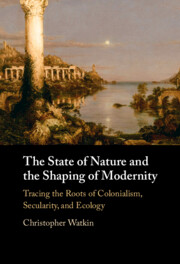
The state of nature is a powerful idea at the heart of the fragmented and sometimes conflicting stories the modern West tells about itself. It also makes sense of foundational Western commitments to equality and accumulation, freedom and property, universality and the individual. By exploring the social and cultural imaginaries that emerge from the distinct and often contradictory accounts of the state of nature in the writing of Hobbes, Locke and Rousseau, The State of Nature and the Shaping of Modernity offers a fresh perspective on some of the most pressing debates of our time, showing how the state of nature idea provides a powerful lens through which to focus the complex forces shaping today's political and cultural landscape. It also explores how ideas about human nature and origins drive today's debates about colonialism, secularism, and the environment, and how they can shed new light on some of society's most heated debates.
This chapter embarks on a rigorous examination of the evolving social contracts within the Gulf states delineating their foundational role in facilitating the region’s pursuit of decarbonization, climate change adaptation, and socioeconomic diversification. The analysis delves into the intricate web of socioeconomic, political, national security, and sociocultural transformations inextricably linked to the ongoing economic restructuring within the region and assesses how these countries navigate this multifaceted transition amid a complex interplay of domestic and global pressures.
Chapter 6 focuses on the political structure of a rational state. In the Philosophy of Right, by handing the bulk of the state’s political power to unelected agents, Hegel is in effect compromising the reconciliation of particular and collective interests he regards as essential to a rational political order. However, his wariness of democracy is more than a mere relapse into some pre-modern, reactionary standpoint. This chapter argues that Hegel is right to denounce the atomism favoured by mass electoral systems, which tend to reduce the citizens’ political identity to that of individual voters, but that he is wrong to dismiss mass democracy altogether. His critique is overly severe because his conception of democracy presupposes the liberal logic of civil society, which he attempts to sublate in a strictly political manner. As this chapter seeks to show, the atomism he argues against is best avoided not by limiting democracy, but by extending it to the economic sphere. In a democracy that is both political and economic, individuals are no longer mere atoms, but part of collective social units organized around commonly held goals.
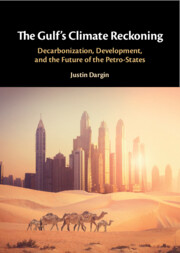
In a world demanding climate action, the oil-rich Gulf states face a defining crossroads: can they transform economies built on fossil fuels into resilient, climate-aligned powerhouses? This timely and original study offers a rigorous, multidimensional analysis of how Saudi Arabia, the United Arab Emirates, and Qatar are navigating the high-stakes transition to decarbonization. Weaving together historical political economy, postcolonial state formation, economic pressures, geopolitical realignments, and environmental imperatives, it explores the difficult trade-offs and strategic decisions forging the region's trajectory. Through incisive analysis, it reveals emerging policy innovations, evolving social contracts, and institutional strategies that are redefining the Gulf's energy future—while critically evaluating the macroeconomic consequences of climate-driven transformation. Essential reading for policymakers, financiers, energy professionals, multilateral institutions, and scholars, The Gulf's Climate Reckoning offers an intellectual and strategic framework for understanding the Gulf's climate-industrial transformation and its far-reaching implications for the emerging global energy and governance landscape.
Chapter 2 starts by considering our social evolutionary trajectory that saw humans collaborate with one another to bring down prey larger than themselves and to ward off assailants seeking to pillage hard earned resources. The chapter reviews theories of the social contract that enabled family gatherings to grow in size, reaping the benefits of collaboration and setting the groundwork for specialisation and division of labour. It then proceeds to consider the downside of communal resources that involve the tendency to further personal interests at the expense of public ones. This is known as the Tragedy of the Commons in the social sciences literature. The chapter proceeds to consider this implication in terms of the benefits conferred by cheating, which put selective pressures on human systems to develop strategies for their detection and punishment.
Rousseau casts the social contract both as a genealogical account of how governments arise and a prescriptive account of how they ought to be made. He can also be read as casting the social contract in a critical role: showing how society would organize itself in certain counterfactual circumstances. A merely hypothetical contract can serve the critical role of reconciling us to our actual circumstances while at the same time specifying what reforms are demanded. Rousseau’s social contract creates a general will, volonté générale, which is not an aggregation of separate wills, nor is it simply the immersion of several selves into a “hive mind.” It is what each wills, even those who disagree with the majority, which announces what the general will wills. Especially interesting is the act by which the general will arises: Citizens abstract from their own selves and situations and surrender all their rights to the political community. And “since each gives himself entirely, the condition is equal for all, and [thus] no one has any interest in making it burdensome to the rest.” Rousseau’s social contract requires there be a civil religion intolerant of those who believe their own faith to be the unique way to salvation.
The increasing acceptance of marquee “liberal” doctrines such as liberty of conscience, limited government, and universal adult suffrage occurred mainly during a period in which social contract theory was dormant and other philosophies – Hegelianism, Marxism, and utilitarianism –largely prevailed in the West. If Rawls’s social contract apparatus can deliver something beyond mere “yea-saying” to the liberal consensus, one could confidently say that contract doctrine has helped. Substantive political equality might be that something, but its delivery is still contested.
Rawls expounded “a theory of justice that generalizes and carries to a higher level of abstraction the traditional conception of the social contract.” His theory applies to society’s basic structure, a system of productive cooperation over generations. The state of nature was reconfigured as an “original position” which “incorporates certain procedural constraints on arguments.” The “parties” in the original position have general knowledge but no knowledge specific to themselves: their strengths, weaknesses, values, desires, social position, and so on. The “parties” choose principles that will maximize their fund of “primary goods,” or all-purpose means – means useful to all, whatever their particular interests, talents, etc. Two principles would be chosen: a maximum-equal-liberties principle, and a principle governing the distribution of opportunities, wealth, and income. These are in “lexical” order: equal basic liberties, then fair equal opportunity, then the “difference principle,” viz. distribute so to maximize the resources of the least-advantaged class. The chapter describes the “fact of reasonable pluralism” the social contract must accommodate, and the “well-ordered society” the social contract is to stabilize “for the right reasons,” securing the three great achievements of the tradition: toleration, limited government by popular consent, and “the winning of the working classes to democracy.”
In the Feyerabend lecture Kant already presents his claim that the principle of right is a principle of coercion, that is, that the state is authorized to use coercion to counteract an unauthorized violation of universal freedom. Such state use of force is a hinderance of a hinderance to freedom. But how is this coercive power specified in particular circumstances? I examine three extreme cases in which a state might be authorized to use its coercive power against its own citizens to cause their deaths: capital punishment, eminent right in emergencies, and war. This paper will show that Kant offered specific explanations of particular limits to legitimate state power, rejecting different limits offered by Beccaria (capital punishment), Achenwall (eminent right and war), and Vattel (war). These assessments reveal that Kant was of several minds regarding whether in any social contract a citizen could rationally consent to these uses of coercion and whether actual or only hypothetical consent was required. I suggest that only later in the published Doctrine of Right did Kant work out his position consistently.
Common sense morality follows – in many cases – the prescriptions of threshold deontology. Governments, for example, are expected to follow their own rules, but in the face of an extreme price increase, public opinion has often supported changing the rules ex post to increase tax revenues. Such moral license in extreme situations is puzzling from a philosophical and an economic point of view. We present a simple contractualist solution to this puzzle using a game-theoretic model. We argue that allowing for deviations from the social contract in extreme circumstances is a necessary condition for the stability of any social contract.
We are all parties to a social contract and obligated under it. Or is this mere fiction? How is such an agreement possible in a society riven by deep moral disagreement? William Edmundson explains the social-contract tradition from its beginnings in the English Revolution, through Hobbes, Locke, and Rousseau to its culmination in the work of John Rawls. The idea that legitimate government rests on the consent of free equals took shape in the seventeenth century and was developed in the eighteenth but fell into disuse in the nineteenth century even as democracy, toleration, and limited government gained ground. Edmundson shows how Rawls revived the idea of a social contract in the mid-twentieth century to secure these gains, as the then-dominant moral theories, such as utilitarianism, could not. The book also defends Rawls's conviction that political equality is integral to the idea of reciprocity at the heart of the tradition.
Final Chapter 9 explains why ‘free’ market competition under regulatory capitalism underlies widespread unrecognized regulatory violence and argues that the cultivation of competitive desire (cf. Girard 2000) succeeds at the expense of what have become ‘sacrificeable’ patients. After a discussion of suggestions of altering the social contract between science and publics, and the observation of the prevalence of competitive desire in the context of political debate in the UK, I explain how, instead of regulatory capitalism based on competitive desire, a vision of caring solidarity applying the generative principle of creative desire (Adams 2000) would be more conducive to policies aimed at medical and public-health targets. I argue that guidelines rooted in ‘caring solidarity’ can largely prevent the violence of regulatory competition that has become endemic to regulatory capitalism. By avoiding high-risk strategies that are oriented on one-size-fit-all solutions expected to generate high-profit margins, the proposed vision of caring solidarity is more conducive to sustainable health. The rudiments of such a model, I suggest, would use the generative principle of creative desire, building on local notions of wisdom incorporating virtue ethics of prudence and justice.