To save content items to your account,
please confirm that you agree to abide by our usage policies.
If this is the first time you use this feature, you will be asked to authorise Cambridge Core to connect with your account.
Find out more about saving content to .
To save content items to your Kindle, first ensure no-reply@cambridge.org
is added to your Approved Personal Document E-mail List under your Personal Document Settings
on the Manage Your Content and Devices page of your Amazon account. Then enter the ‘name’ part
of your Kindle email address below.
Find out more about saving to your Kindle.
Note you can select to save to either the @free.kindle.com or @kindle.com variations.
‘@free.kindle.com’ emails are free but can only be saved to your device when it is connected to wi-fi.
‘@kindle.com’ emails can be delivered even when you are not connected to wi-fi, but note that service fees apply.
Bowen’s letters, novels, and short stories all attest to her love of Italy, a country that she visited often and one where she experienced excitement, love, grief, sorrow, and occasionally boredom. The country provided the location for significant events in her life: the breaking off of an engagement; the shared experiences of a country providing solace when she and her lover, Charles Ritchie, were apart; facing both the potential and actual loss of her family home, Bowen’s Court; or mourning the deaths of Humphry House, her former lover, and her husband, Alan Cameron. Like many of her characters in her novels and short stories, Bowen’s response to, and relationship with, Italy is multi-layered and nuanced, the result of her experiences, both physical and emotional, over many years. This chapter draws on those experiences in Italy, placing Bowen’s writing – in letters, essays, selected early short stories, novels, and her ‘travelogue’, A Time in Rome – within their biographical, bibliographical, and geographical contexts.
This article traces the career trajectories, publishing strategies, and intertwining networks of Barbara Strozzi and two of her Venetian contemporaries: the Jewish salonniére and poet Sara Copia Sulam (1592?–1641) and the forced nun and polemicist Arcangela Tarabotti (1604–1652). All three figures were connected to the influential Venetian Accademia degli Incogniti, a libertine circle of writers, critics, and opera librettists with interests including literature and music. Each woman pursued a career as a public intellectual in an early modern world that often chafed at women’s voices, and each broadcast their ideas by publishing on prominent presses. The experience of Copia Sulam, who was prominent as the Incogniti academy was beginning to coalesce and was forced from the public eye after meeting with a vicious backlash for her intellectual activities, could in the coming decades serve as a cautionary tale to Strozzi and Tarabotti, who had long and prolific careers that were nevertheless beset by controversy. Though the trajectories of these three women varied in significant ways, their shared literary networks and their use of the presses to craft a commanding public persona illuminate the editorial environment for women in seventeenth-century Venice.
This chapter examines the life, movement, and works of Margherita Costa, a professional singer and one of Italy’s most prolific women writers. With Barbara Strozzi, Costa shared an occasional city (Venice), a prominent dedicatee (Vittoria della Rovere, Grand Duchess of Tuscany), and several poetic themes, including that of the bella donna, a trope of Baroque Marinist verse. Found primarily in her first poetry collection, La chitarra (1638), Costa’s bella donna is not simply a physically alluring woman who articulates and pursues her own desires—already an innovation—but is also a singer. The chapter concludes by considering three examples of musically centered poems in the volume: erotically charged verse to a Venetian noblewoman, complaints to a negligent lover who demands her song, and humorous poems regarding the gift of an ugly, out-of-tune harpsichord.
This essay looks at the artistic patronage of the Strozzis and Widmanns, who were connected not only through commerce and culture, but also through the relationship between Giovanni Paolo Widmann and Barbara Strozzi. Both Giulio and Barbara, as well as various members of the Widmann family, were painted by the leading artists active in Venice at that time, such as Tiberio Tinelli, Bernardo Strozzi (well known as Il Prete Genovese) and Nicolas Régnier. Through the surviving documents and works of art, the dense intertwining of painting, music and poetry emerges, fostered by the Accademia degli Incogniti, the most famous literary circle flourishing in Venice in the seventeenth century, and to which Barbara and Giulio Strozzi and the abovementioned artists were connected. Furthermore,the essay sheds new light on the genre of the and the role it plays in celebrating the individual’s features and perpetuating personal memory.
In the early seventeenth century, female singers were novelties, objects of obsession to be admired, collected, and displayed. Heard only seldom in opera (until the establishment of Venetian public opera) and forbidden from singing in church, they performed primarily in private and semiprivate settings, inspiring their male admirers to write poems and discourses that variously praised and condemned their alluring voices and bodies. A comparison of Barbara Strozzi’s performances with the Venetian Accademia degli Unisoni with those of her antecedents and contemporaries (such as Adriana Basile or Leonora Baroni) in Papal Rome reveals fundamental differences in attitudes towards virtuose: the political structure in Venice that limited public roles for noblewomen created an environment discouraged the development of conversazioni and veglie – many of which were sponsored by female patrons – that the Roman women enjoyed. Giulio Strozzi’s founding of the Accademia degli Unisoni may well have been inspired by his experiences hearing female singers during his time in Rome.
This chapter examines the construction of Casulana’s persona in the late 1560s. It draws on three sources that simultaneously conveyed antagonistic images of Casulana in the public arena: the Dilettevoli madrigali by her student Antonio Molino (1568); “L’Ava di Magagnò,” a poem in Vicenza dialect by Giovanni Battista Maganza (1569); and “A caso un giorno,” a madrigal that Casulana published in her Primo libro a4 (1568). While Molino constructs a poetic and musical image of a morally and intellectually exemplary woman, borrowing his rhetorical strategies from philogynist discourses, Maganza presents Casulana as a hypersexualized body freely available to male desire, implicitly equating her to a courtesan. Casulana, for her part, seizes the semiotic opacity of the music, and perhaps also the sexual freedom that she may have experienced at the time, to offer us one of the rarest representations of female carnal jouissance conceived by a woman in sixteenth-century Italy.
This article examines the interrelations between the political economies of the Ottoman Empire and the administration of justice for European merchants in Ottoman cities during the seventeenth century. By focusing on the sultan’s court of justice, the Imperial Council (divan-ı hümayun), and the Venetian merchants who appealed to it, this piece illustrates how Ottoman commercial interests and political concerns influenced the production and application of Islamic law (Sharia) in Ottoman courts for European merchants. To promote international trade, Ottoman political and legal authorities introduced new norms and procedures in matters of legal evidence and court jurisdiction in commercial cases between Venetian and Ottoman subjects, and they encouraged settlements in favor of foreign merchants and Ottoman-Venetian trade. These politics of justice, I argue, demonstrate the dynamism of the Ottoman legal system in the sixteenth and seventeenth centuries, a period characterized by global commercial development and Ottoman military and political ascendancy in the Mediterranean.
In the first decades of this century, historians emphasised cross-cultural commerce in the Mediterranean to refute both the ‘clash of civilisations’ account of Islamic–Christian relations and an equally binary Saidean reading of the early modern past. While such refutations may be sound, the connection between the ‘nuts and bolts of cross-cultural trade’ and the ‘flourishing (or not) of mutual cultural understanding’ often implicit therein remains oblique. Here I examine disputes arising in commercial settings as presented by the dispatches of the Venetian bailo in Constantinople in order to shed further light on this relationship. Specifically, I focus on the decision to describe certain types of (ostensibly) unfair conduct by non-Christians as ‘avanias’, contextualising these episodes using sources produced by Venetian and Ottoman institutions. The immediate purpose of this discursive convention was to delegitimise claims against Venetian subjects and obfuscate compromising details, but its use was shaped above all by idealised notions of Venetian political economy and by a patrician emotional regime of republican service. Despite the entanglement that emerges from the sources – indeed, often because of it – a discourse of religious difference could nevertheless thrive, encouraged by traders who instrumentalised these concerns even if they did not necessarily share them.
When Shelley resolved to leave England for Italy with his family, he conceived his expatriation as a voluntary exile. Yet, for several months after their arrival, the Shelleys criss-crossed the peninsula like the Grand Tourists of old, visiting all its major cities and a few minor destinations, which Shelley described at length in his correspondence and often evoked in his poetry. A peculiarity of Shelley’s travel letters is his ambivalent attitude towards Italy, revealed by his constant juxtaposition of the magnificent beauty of its art and nature and the equally striking spectacle of the Italians’ degradation. However, as the first independence movements raised the promise of the country’s political and cultural resurgence, Shelley started to develop a greater appreciation of its inhabitants. At the same time, having finally settled, he turned his attention away from the wonders and contrasts of Italy to celebrate the simple life of his exile community.
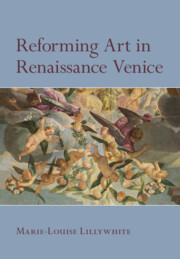
The spiritual turmoil of the sixteenth century had a profound impact on religious life throughout Italy. Art and architecture were directly implicated in the seismic historical events of the age, as the Catholic Church countered Protestant iconoclasm through the embrace of sacred images as decreed by the Council of Trent in 1563. In this volume, Marie-Louise Lillywhite considers the impact of religious reform on the devotional art and architecture of sixteenth-century Venice. Interrogating early modern censorship, artistic liberty, notions of decorum tied to depictions of the body, and the role of sacred images in the shaping of local identity, she shows how Venice, a crossroads city exposed to a rich gamut of religious and artistic currents, serves as a fascinating case study through which to explore these themes. Her study reconstructs the conditions that enabled artistic invention to prevail and how artists became interpreters of spiritual values.
This paper analyses the period following the annexation of Veneto to the Kingdom of Italy in 1866 from the standpoint of forest history. Recent historiography has demonstrated that the development of scientific forestry was a crucial factor in the state-building process. Post-unification Veneto provides an opportunity to explore these dynamics from a decentralised perspective, focusing on two critical aspects, relevant in Italy as in many other countries at that time: (a) the administration's attempts to study and manage forest resources, and (b) the forest conflicts arising from economic and institutional transformations in rural areas.
The Venetian Republic reached its zenith in the dramatic takeover of “a quarter and a half a quarter” of the Byzantine Empire in the Fourth Crusade. It acquired a network of port cities – the Stato da Mar – that enabled its control over trade routes between Europe, Asia, and the Middle East. Called the “hinge” of Europe by one historian, Venice spearheaded an economic leap forward on the continent through a mastery of long-distance navigation. This was Italy’s second great urban age, as cities saw resurgences from the dramatic declines into feudalism in late antiquity. Venice was the prototypical world city of the time, competing with Genoa for control of seaborne trade routes. Indeed, the activities in Italian city-states are critical to the scholarly understanding of the European economic revivals in the ninth and eleventh centuries. The city figures centrally in major works by Janet L. Abu-Lughod, Michael McCormick, Henri Pirenne, and Fernand Braudel for fostering seminal forms of intercity relations at crucial times. Its relations with Constantinople, for example, were of equal importance with those of its Italian neighbors.
Wagner’s relation to Italy and Italian culture has been explored numerous times in relation to his criticisms of Italian opera, where potential reinterpretations of this starkly negative assessment sit alongside analytical readings of Italianate style in certain works. This chapter moves past that tradition, situating biographical and familial contexts for Wagner’s stated dislike of Rossinian opera alongside his deep attachment to Venice, and the progressive importance his works acquired within Italy, evidenced by commercial interests that paired locomotive travel with tours of Lohengrin, Rienzi, and the Ring and the Wagnerian characters that formed advertising emblems for the Liebig meat company.
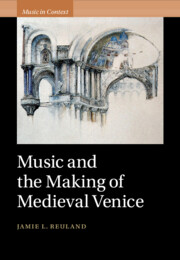
Music played an essential part in raising the city of Venice and in founding the empire on which its fortunes would depend. This book focuses on a set of musical projects - played out in liturgy and civic ritual - that formed the city's history and framed and interpreted its unique material culture as it was in the process of taking shape. Jamie L. Reuland shows the state's most imaginative musical endeavors bound up with legal culture, stemming from the chancery's engines of historiography, or situated within the rich material environment of relics and reliquaries, mosaics and wall paintings, icons and statues. Arguing for music's technical ability to fabricate a sense of place and give form to history, Reuland recovers Venice's fascinating early propensity for a statecraft of the imagination, the consequences of which would be the better-known history of its material decay.
This paper examines Master Lucas, a bell founder based in Venice who was active between the thirteenth and the fourteenth centuries. Through the examination of sixteen bells, some of which are no longer extant, the career of one of the earliest known Venetian bell founders can be traced. A catalogue of the bells describes their measurements, inscriptions and decorations. The distribution of his products to locations in Montenegro and central Italy demonstrate the importance of Venice as a bell casting centre in the Middle Ages. Written documents are cited to provide further information about Lucas’s life and some of the bells that he cast. Collation of this evidence sheds important light on the practices of bell casting in Venice around ad 1300.
Fearing shortage of culturally significant fish, medieval societies reacted in several ways. In a culture of markets, scarce supply motivates sellers to demand and/or buyers to offer more for the commodity: anecdotes from the twelfth century and serial prices from the thirteenth indicate fish prices rising even past 1350. Ownership of the productive resource itself could capture some of those sellers’ gains, not to mention the prestige and power medieval society associated with landownership: elite acquisition of fishing rights had begun with early creation of private lordships, but by and after the twelfth century it also promised income from direct exploitation or from leasing operations to artisans (depriving local subsistence fishers). In contrast, relict and then emergent claimants to public authority could gain by regulating resource exploitation ‘for the public good’. From the 1200s onwards kings, territorial princes, and self-governing communes asserted control over fishing rights and activities, first on acknowledged public waters (large rivers, coastal waters) and eventually over practices and uses of private natural waters. The chapter explores grounds for regulating fisheries as a ‘public’ resource to allocate their value, settle disputes, ensure consumer safety, and occasionally to encourage what might now be called ‘sustainable’ uses within recognizable limits. Like the artisanal fisheries toward which they were directed, these cultural measures retained close ties between local natural ecosystems and consumers of fish.
Artisan fishers broke the early medieval pattern of subsistence fishing. Participants in Europe’s medieval ‘Commercial Revolution’, artisans made their living by catching fish to sell on a local market. Evidence of such people appears around 1000 CE in commercially precocious northern Italy but also in England, France, the Rhineland, and elsewhere. Commonly they arose at or near emerging towns, where skilled subsistence fishers might offer a surplus catch to other non-agricultural specialists. The chapter examines the social position of these household-based fishers, their traditional small-scale technologies, and the collective organizations (guilds) used to manage their human and environmental relations. It then turns to the urban markets where these men and their wives provided fresh fish from nearby waters. In larger towns professional fishmongers consolidated catches from various regional habitats, while communal concern for a safe and abundant supply caused municipal authorities to regulate market dealings. By the late twelfth century the interplay of seasonal demand (Lent) and supply (runs of migratory fish) coupled with cultural criteria of taste and quality shaped fish prices. Whether in great cities like Venice or Paris or small towns on the Castilian plateau or English coast, local markets offered consumers the regional fish they ate.
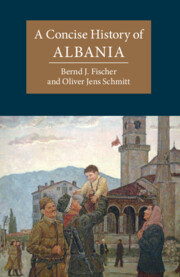
A Concise History of Albania charts the history of Albania and its people, within their Balkan and European contexts. It shows the country's journey from its ancient past, still shrouded in mystery and controversy, through its difficult transition from a particularly brutal form of communism to an evolving form of democracy and a market economy. Bernd Fischer and Oliver Schmitt challenge some of the traditional narratives concerning the origins of the Albanians, and the relations between Albanians and their Balkan neighbours. This authoritative and up-to-date single-volume history analyses the political, social, economic, and cultural developments which led to the creation of the Albanian state and the modern nation, as well as Albania's more recent experience with authoritarianism, war, and communism. It greatly contributes to our understanding of the challenges facing contemporary Albanians, as well as the issues confronting the region as a whole as it attempts to grapple with one of the last remaining significant ethnic issues in the Balkans.
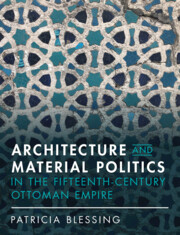
In this book, Patricia Blessing explores the emergence of Ottoman architecture in the fifteenth century and its connection with broader geographical contexts. Analyzing how transregional exchange shaped building practices, she examines how workers from Anatolia, the Mediterranean, the Balkans, and Iran and Central Asia participated in key construction projects. She also demonstrates how drawn, scalable models on paper served as templates for architectural decorations and supplemented collaborations that involved the mobility of workers. Blessing reveals how the creation of centralized workshops led to the emergence of a clearly defined imperial Ottoman style by 1500, when the flexibility and experimentation of the preceding century was levelled. Her book radically transforms our understanding of Ottoman architecture by exposing the diverse and fluid nature of its formative period. It also provides the reader with an understanding of design, planning, and construction processes of a major empire of the Islamic world.
Commemorations brought authors and their works to wide public attention, partly through reports in the newspaper and magazine press, and, when such occasions were marked by the erection of public statues, by a continuing visible presence. They were unavoidable reminders of a particular and selected past. There were, however, further remains and archival strata that invited investigation. In these archival survivals lay the explanation, rationale and often the justification for modern religious, political and other aspects of social organisation.