To save content items to your account,
please confirm that you agree to abide by our usage policies.
If this is the first time you use this feature, you will be asked to authorise Cambridge Core to connect with your account.
Find out more about saving content to .
To save content items to your Kindle, first ensure no-reply@cambridge.org
is added to your Approved Personal Document E-mail List under your Personal Document Settings
on the Manage Your Content and Devices page of your Amazon account. Then enter the ‘name’ part
of your Kindle email address below.
Find out more about saving to your Kindle.
Note you can select to save to either the @free.kindle.com or @kindle.com variations.
‘@free.kindle.com’ emails are free but can only be saved to your device when it is connected to wi-fi.
‘@kindle.com’ emails can be delivered even when you are not connected to wi-fi, but note that service fees apply.
The Epilogue reflects on the implications of abandoning “magic” as a scholarly category, urging greater attention to how modern frameworks distort ancient evidence and to the imperial contexts in which categories of deviance and alterity were produced. It argues that rather than comparing magic across cultures, scholars should examine how empires construct and deploy such labels, revealing the colonial legacies that still shape interpretations of ancient ritual life.
This chapter reinterprets Cicero’s use of magi not as a proto-category of Roman magic but as an ethnographic resource through which Roman elites oriented themselves within a comparative intellectual world. By situating Cicero’s references within the late Republican intersection of Greek philosophy and Roman imperial imagination, the chapter shows how the magi functioned to map alterity and articulate Roman identity rather than to inaugurate a concept of magic.
Chapter 2 analyzes the concept of not-knowing through various anthropological and philosophical perspectives. It examines how culture addresses the boundaries of knowledge and what transcends rationality. A crucial aspect of this discussion is the notion of blind spots, which connect to extreme experiences of alterity, and which are often challenging to describe ethnographically. The blind spot encompasses a wide range of knowledge-generating structures, including the natural sciences, but also, and particularly, the humanities, literature, and theology. The latter has, ironically, transformed its blind spot into a historically intricate discursive form – negative theology. The chapter contends that this theology of unsaying provides a platform for exploring diverse processes of not-knowing within religious contexts.
This chapter traces William Burroughs’ self-imposed exile across the Americas, North Africa, and Europe, arguing that the geographic settings where he lived were integral to the conceptual structure of his work. Rather than treating setting as backdrop or exotic inspiration, Burroughs reimagines place as a set – simultaneously stage, fiction, and experiential filter – through which he explores identity, language, and systems of control. From his ironic travel ethnographies in Junky and The Yage Letters, to the colonial parody of Queer, and the fractured landscapes of Naked Lunch and the cut-up novels, Burroughs engages in a layered literary expatriation that aligns him with, but ultimately distinguishes him from, figures like Bowles, Baldwin, Stein, and Beckett. Focusing on Tangier and Paris as creative epicenters, the chapter argues that Burroughs’ spatial displacements catalyze formal and thematic experimentation. His work reveals a persistent tension between immersive estrangement and mediated construction, exposing alterity not only in foreign cultures, but within language and self.
Chapter 8 considers the politics and poetics of alterity or otherness. Others confront us with experiences that may be radically unfamiliar, strange, and unsettling. This may be compounded by illness, trauma, and cultural difference. With empathy and imagination, we can gain an understanding of another’s experience, see their perspective, and build a picture of their predicament. The imaginative spaces and places in their stories offer us a way into another’s lifeworld—even when that world is profoundly different from our own. Narrative medicine provides a pedagogy of empathic understanding through literature. While much of this work employs story, lyric poetry offers another mode of articulating illness experience that may be closer to patients’ emotionally charged, confused efforts to make sense of experiences that do not fit cultural models or templates. The work of the poets Paul Celan and Edouard Glissant sheds light on the power of language to bridge disparate worlds and on the ethical stance needed when empathy fails. A poetics of alterity has implications for efforts to understand individuals’ illness experience and grounding an ethics of care.
This chapter examines how the acquisition of material and immaterial things from outside visitors to Surama Village is used in local projects of transformation and becoming. The chapter begins with the author’s encounter with a villager in Surama who claimed to have inadvertently started becoming ‘white’ during his work with a BBC film crew. This transformation mostly centred around changes in diet and clothing. The chapter discusses how such transformations among the Makushi occur at a broader level through changing practices and how they are often associated with ‘development’ in the present. It links Makushi interactions with tourists with bodily orientated perspectival changes and shows how transformation is seen in the desires for education, healthcare, and political representation in Surama Village. Transformation is also seen in the gradual adoption of economic individualism, wage labour, and a cash-mediated economy. The chapter focuses on the shamanic aspects (particularly perspectival shape-shifting) of such transformations.
What are the basic coordinates of the dispute between Heidegger and Levinas over the phenomenology of “death” and its larger ontological or ethical significance? Or, put in the “perfectionist” terms developed in Chapter 4, in what ways do Heidegger and Levinas disagree about how we human beings become genuinely or fully ourselves? Examining the convergences and divergences of Heidegger’s and Levinas’s phenomenologies of death, this chapter suggests that Heidegger and Levinas both understood themselves as struggling to articulate the requisite ethical response to the great traumas of the twentieth century. By comparing their thinking at this level, I contend, we can better understand the ways in which Levinas genuinely diverges from Heidegger even while building critically on his thinking.
The Greeks created a culture that seemed secure and well ordered, in which status, gender and identity appeared to be if not fixed, then at least clear cut. A free man knew his place and his privileges, a foreigner was aware of their disabilities, an enslaved woman had a fair idea of her lot, a worker in the mines of Laureion even more so. Yet, lived experience was precarious. The rich man could lose his fortune, the highborn girl could become shipwrecked and enslaved. These are not just the plot devices of Hellenistic novels; they are the potential experiences of men and women for whom vulnerability and impermanence were as real as wealth and good fortune. These conditions favoured expressions – stories and images in particular – that made change and anomaly part of the cultural repertoire of the Greeks. This is perhaps why the vivid, vibrant hybrids of the Greek imagination attracted so much attention from Christian writers. By imagining other ways of engaging with the world and offering alternatives to the settled convention, hybrids would always be a threat to those attempting to impose their order. Hybrids became demons to be slain.
As seemingly cognate sub-genres of history, the history of sexuality and women’s history have a complicated relationship. Both tell 1970s origins stories from global north liberation movements, despite the scholarly scrutiny of sexuality and women in earlier historical periods. Core journals and publications reveal these sub-fields’ distinctive, sometimes incommensurate development trajectories. Perhaps due to their recent advent, presentism is clear in both, with the corollary of a marked post-1800 skew of most research and publications. Women’s history tracks women, in all their subdivisions, of necessity with focus upon sexualities in many registers, while seeking address of race, indigeneity, ethnicity, and international and global foci. Alternatively, the history of sexuality prioritizes sexual minorities and erotic alterities, welcoming studies of identities, expression, and representation. Key themes are transgressive resistance against repression and heteronormativity, entailing special concentration on same-sex history. Women figure within these themes, while innovative feminists are influential historians of sexuality. Nonetheless, women’s history and feminist analysis of sexualities have no default standing for the history of sexuality. In short, intellectual, methodological, and political properties prove less reciprocal than might be presumed. These exciting areas of history should evolve, to illuminate crucial topics for both, for instance reproduction. As both pursue aims to incorporate all historical periods and regions, their interconnections may become stronger.
The Unvanquished and Go Down, Moses present a striking response to the earliest cognitive cartography of the Sartoris plantation house. While ideology continues to be preserved and replicated within the principal nodes of social space, Faulkner turns his attention in these works to the disruptive and resistant activity of a hidden interiority within these systems. He employs a variety of images to evoke this emergent interior dimension – from the creek bottom to the burial mound, to the fiery hearth, to the symbolic motif, most importantly, of a submerged woman in the depths, a motif that begins with Eunice’s suicidal act of defiance in Go Down, Moses. Around this last image, Faulkner develops the possibility of alterity, of producing an alternative hub of information flow that is capable of resisting, challenging, and even upending the top-down vertical hegemony that defines the cognitive cartographies of the plantation system. In this chapter, I trace this paradigm as an emergent Faulknerian ethics that emphasizes, above all, the possibility of spontaneous and free movement in social space as well as the paramount value of immanence and interpersonal relationships.
This chapter critically analyzes the work of late nineteenth-century and early twentieth-century white settler colonial writers who represented Indigenous characters and stories. It will examines how certain tropes persisted, from Rolf Boldrewood’s late romanticism to Eleanor Darks reconstructive modernism. It explores how novels by these writers manifest a contradictory set of ideas towards race and landscape, which it takes as emblematic of wider white Australian culture.
The introduction presents some general reflections on what characterises Heidegger’s fundamental ontology and what makes his thought a particularly promising point of departure for doing social ontology. I first introduce Heidegger’s holistic conceptions of Dasein and being-in-the-world by way of contrast to Cartesian atomism. I then go on to show that Heidegger conceives of intersubjectivity as a triangular relation between self, world, and other rather than a dyadic relation between two independent subjects. My claim is that Heidegger’s social ontology is found directly in his conception of the shared world and that his more well-known accounts of the Anyone and solicitude should be understood within this general framework. I also reflect on the relation between Heidegger’s social ontology and his politics and provide an outline of the book.
In this chapter, I clarify, contextualise, and reassess Heidegger’s ambiguous and polemical account of social cognition. Although commentators often take his critique of, for instance, empathy to be pretty straightforward, a closer look reveals that Heidegger makes a number of seemingly incoherent claims. To clarify this, I identify six different objections raised by Heidegger against theories of social cognition and then reassess who (among both historical and contemporary contenders) are, in fact, vulnerable to these objections. Drawing on Fundamental Concepts of Metaphysics, I then go on to develop a positive, Heideggerian account of social cognition. I show that Heidegger’s view has much in common with phenomenological empathy theories but that he departs from these by arguing that we must understand the other as exhibiting a practical comportment that constitutively depends on our shared environment. Finally, I consider how our understanding of our fellow Dasein differs from our understanding of nonhuman animals.
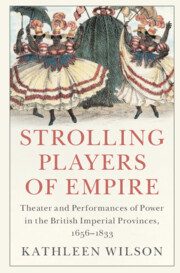
Why did Britons get up a play wherever they went? Kathleen Wilson reveals how the performance of English theater and a theatricalized way of viewing the world shaped the geopolitics and culture of empire in the long eighteenth century. Ranging across the Atlantic, Indian and Pacific Oceans to encompass Kingston, Calcutta, Fort Marlborough, St. Helena and Port Jackson as well as London and provincial towns, she shows how Britons on the move transformed peripheries into historical stages where alternative collectivities were enacted, imagined and lived. Men and women of various ethnicities, classes and legal statuses produced and performed English theater in the world, helping to consolidate a national and imperial culture. The theater of empire also enabled non-British people to adapt or interpret English cultural traditions through their own performances, as Englishness also became a production of non-English peoples across the globe.
In 1980, Paul Zumthor published Parler du moyen age, an elegant little book on the state of the discipline and the task of the medievalist, tracing a history of medieval studies from its pre-war romanticism and positivism up to Zumthor’s own view from the horizon of the late 1970s. Through this retrospective, Zumthor in part recounts the transformation of the field by medievalists like Auerbach, Curtius, and Spitzer, but also positions himself as a kind of bridge between that generation of medievalists whose most influential works came out in the years immediately following WWII and the work of medievalists today, with the rise of post-structuralism, for instance, breaking in between. One of the central concerns of the book is precisely this movement between eras, not only between postwar medievalism and its romantic heritage, but also between the present moment of a reader and the objects of the past being read. Such concerns with interpretation across historical distance have a long and crucial history in the field of hermeneutics, which reached its peak between the 1960s and 1980s. Following Zumthor’s lead, therefore, this chapter will look backwards, performing a genealogy of philosophical and literary hermeneutics that traces Zumthor’s engagement with this tradition – particularly his engagement with Hans Robert Jauss, Hans-Georg Gadamer, and his friend Roland Barthes – and attends to the place of the medieval in it.
Literature on neighbourhood disputes has explored legal consciousness by focusing on identity, personal relationships, and community norms. However, it still remains unclear how affective factors and one’s sense of identity can influence the social practice of law and how the recursive relationship between law, emotion, and identity can influence life in particular communities. This study explores the dynamics of identity/alterity construction, and the role of emotion in shaping these dynamics during a neighbourhood conflict in Taipei, Taiwan. This dispute highlights how ordinary Taiwanese people’s legal consciousness is constituted through a culturally embedded sense of emotion (qíng) and belonging (zìjǐrén). Analysis of “The Noodle Shop Case” advances our understanding of the social presence and authority of law and the ways in which the role of law changes according to how individuals feel as they seek both mutual recognition and justice.
Chapter 5 shows that Kierkegaard does not reject prudence or self-interest as antieudaimonism tends to do. Instead, he develops a noneudaimonistic ethics and theology, in which morality overrides prudence in cases of conflict. Still, his concept of the highest good (eternal happiness) involves a synthesis of morality and prudence, in which happiness is conditioned by morality. Like Kant, Kierkegaard develops a noneudaimonistic “highest good” and rejects both predestination and Pelagianism, sketching an intermediary view that combines human agency with divine grace. However, he departs from Kant by combining a modern account of alterity, in which morality is essentially other-regarding, with the idea that morality is Christocentric, since it concerns imitating Christ and serving the neighbor. The result is an account of morality and happiness which is not only broadly Augustinian and Kantian but also highly modern.
The paper focuses on two problems with Alexander Wendt's unification of physical and social ontology on the basis of quantum theory. Firstly, by endowing social phenomena with an ontological foundation in physical reality defined in quantum terms Wendt risks reducing a plurality of worlds as ‘fields of sense’, ordered by their immanent rules, to the physical world ordered by the laws of quantum theory. Secondly, by defining his quantum social science as an ontology Wendt risks excluding from consideration all that which violates ontological laws, yet may still be said to exist or take place: event, potentiality, and alterity. Although the advantages of a scientific ontology are indisputable, the price we pay for it is a sense of ontological captivity, whereby everything that is definitely is so, being and non-being rigorously distinguished and separated with nothing between them. This captivity may be escaped by supplementing quantum ontology with ethics in the Levinasian sense of ‘otherwise than being’.
In addition to the ‘Key words’ at the head of the article that are provided for online searches, there are a number of other terms that may be regarded as key words in Theory, i.e. terms that tend to recur in works of Theory, works about Theory, and works that employ Theory, terms by which the presence of Theory may be recognised. Many of these are French (or German) words that an English rendering may not fully explicate. Also, they cannot be fully understood outside the context in which they are used, which is a necessary limitation on books about Theory, necessary though these are for beginners. (Wittgenstein famously said that one should not ask for the meaning of a term but look for the use.)
There is no consensus regarding whether Gilles Deleuze offers a cogent theory of the Other. Deleuze develops the notion of the Other-structure, but given his scarce remarks on this concept, his treatment of this issue is debated. This article argues that to elucidate Deleuze's philosophy of the Other, his notion of the Other-structure must be analyzed in parallel to Edmund Husserl's intersubjective theory. This comparison, made possible by Natalie Depraz's reading of the Husserlian alterity, reveals nuanced phenomenological traces in Deleuze's Other-structure and its implicated structural moments while substantiating his affirmation of the Otherless world, as an impetus to surpass phenomenology.