To save content items to your account,
please confirm that you agree to abide by our usage policies.
If this is the first time you use this feature, you will be asked to authorise Cambridge Core to connect with your account.
Find out more about saving content to .
To save content items to your Kindle, first ensure no-reply@cambridge.org
is added to your Approved Personal Document E-mail List under your Personal Document Settings
on the Manage Your Content and Devices page of your Amazon account. Then enter the ‘name’ part
of your Kindle email address below.
Find out more about saving to your Kindle.
Note you can select to save to either the @free.kindle.com or @kindle.com variations.
‘@free.kindle.com’ emails are free but can only be saved to your device when it is connected to wi-fi.
‘@kindle.com’ emails can be delivered even when you are not connected to wi-fi, but note that service fees apply.
Chapter 1 examines three distinct organic farming movements that arose in Germany in the 1920s as pioneering examples of environmental ideals in practice. Though disparate in their origins and political commitments, all three organic tendencies found considerable common ground with Nazism, in some cases well before the Nazis came to power. Tracing their divergent fates under Hitler’s regime after 1933, the chapter offers a dense historical reconstruction of early environmental ambitions that were sometimes thwarted and sometimes fulfilled through active cooperation with Nazi agencies. A core aspect of the analysis centers on the implicit and explicit influence of racial ideologies within the emerging organic milieu and the opportunities and challenges this opened up under the conditions of Nazi rule. The chapter is built around a comprehensive range of archival sources, many of which have never been examined before, and provides the fullest portrait yet in German or English of the inception of organic farming currents in the context of proto-environmental politics.
For some Germans, Nazism represented an ecological outlook and a return to a simpler, healthier, more natural way of life founded on environmental harmony. That image fundamentally conflicts with the astonishing destructiveness of the Nazi military machine and its legacy of concentration camps, dictatorship, and mass murder. This study argues that these two facets of Nazism, the ecological and the imperial, were integrally intertwined. Peter Staudenmaier uses new archival evidence to examine this contested history, ranging from early organic farming movements to landscape protection advocates. In doing so, Staudenmaier reveals a remarkable range of practical endeavors in Nazi Germany that were shaped by ecological ideals coupled with potent racial myths. The Politics of Nature in Nazi Germany challenges previous scholarly frameworks, bringing together environmental history and the history of Nazism in new and revealing ways.
This chapter traces the historical junctures that have shaped the political-economic trajectories in those countries. It explains the structural contexts through which environmental movements have emerged as responses to political and economic transformation. The chapter demonstrates how the political-economic structure of the country where they operate has shaped the diverse characteristics of environmental movements in terms of their organisational structures, strategies, and modalities.
To illuminate the obstacles to the development of a global civil society, the experience of the most developed transnational social movement—the environmental movement—in the most developed supranational political system—the European Union—is considered. National differences are shown to be persistent and there is little evidence of Europeanization. It is argued that the impediments to the development of a global civil society are yet greater and that, despite the advent of antiglobalization protests, global civil society remains an aspiration rather than an accomplished fact.
This article, taking as its point of departure that voluntary organizations are of crucial importance in a democracy, views the transformation of the Norwegian voluntary sector through the lenses of what happens within the environmental field. Seeing changes within this field as prototypical for the transformation of the voluntary sector more generally, we start with the organizational level and contrast old versus new environmental organizations. The aim is to ascertain to what extent the newly built organizations are leaving the historically important democratic organizational model. Second, we compare attitudes toward democracy of members of the democratically and nondemocratically built organizations: attitudes both toward democracy within a voluntary organization (internal) and democracy in society (external). Furthermore, we compare these findings with what we find for the population at large. The last section analyzes demographic characteristics of organized environmentalists to see whether a new type of elite, more distanced from the population at large, is emerging in the new and nondemocratically built organizations. The study finds that new organizations are definitely breaking with the democratic organizational model. The support for democracy (internal and external) is comprehensive but not always overwhelming, and there is a tendency in the direction of congruence between organizational structure and individual attitudes. That is, members of democratically built organizations especially value internal but also to some extent external democracy more than members of nondemocratically built organizations. However, even if formal democratic structure and democracy as an absolute and generalized value seems to be under pressure, it does not follow that a new type of elitism is emerging.
This chapter is an overview of the life and work of Oodgeroo Noonuccal (formerly Kath Walker), whose poetry collection We Are Going (1964) was not only the first ever book of poetry by an Aboriginal person but also one of the fastest-selling books in Australian history. It traces her early involvement in civil rights in Queensland, her ongoing activism in Aboriginal struggles, and the power of her poetry to articulate the feelings and lived experiences of the Aboriginal people. It discusses Oodgeroo’s friendship with Judith Wright and her founding of Moongalba, an Aboriginal cultural and education centre on Noonuccal country. The chapter outlines her role in various national Aboriginal and Torres Strait Islander arts organisations and her international connections with Indigenous writers. Lastly, it emphasises Oodgeroo’s lifelong work in foregrounding Aboriginal cultural and political perspectives.
This chapter documents the conflicts among Đông Triều Coal Company (also known as SCDT), the city of Hải Phòng, and the French colonial government in Tonkin over the protection of potable water at a time when uncontrolled mining expansion in the Đông Triều highland, where SCDT was based, threatened to pollute the Hương River – Hải Phòng city’s source of potable water. This chapter argues that the French colonial state’s environment-centered attempts to safeguard the Hương River and public health, such as the creation of a massive water protection zone, were primarily driven by French concerns about the lack of hygiene and infectious diseases circulating within the indigenous communities located close to the Hương River rather than the industrial pollution caused by SCDT. The chapter also underlines issues pertaining to environmental laws, such as the logistical challenges of surveying and protecting water sources, and the lack of compliance with environmental regulations by big coal companies such as SCDT. More importantly, the chapter underscores the complex impact of mining expansion and environmental regulations on local ethnicities, such as the Dao communities.
Michael Field’s notion of ecology includes as fundamental components of their sense of being not only the external elements with which humans interact but also the gestures of curiosity, invitation, and emotional outreach themselves. In conceptualising the act of writing as part of this interspecies mutual realisation, they grappled with the conundrum of existing within their environment while seemingly being forced to render it from an external vantage point. This chapter proposes that they address the issue not simply through formal and other writerly innovations that depict their eco-relationality but also by encouraging a sense of their writing as an actual part of this network of emotional linkages and potentialities. Focusing primarily on their play, William Rufus, and a section of their diaries, this chapter explores that this is an undertaking less invested in reifying an eco-queer identity than in breaching the knowledge structure that scaffolds the concept of identity itself.
Benjamin Britten’s Noye’s Fludde (1958) was arguably the first community opera with an environmental message. It explored the potential extinction of animal and human life, and since then environmentalism as a social issue has begun to emerge in community operas as a distinctive trope. This article examines some more recent examples produced in the UK, from The Split Goose Feather (1979) by Christopher Brown, to Timber! (1990) by Timothy Kraemer, to Russell Hepplewhite’s Till the Summer Comes Again (2012) inspired by Glyndebourne’s wind turbine. It concludes with some reflections on the questions that arise in relation to contemporary opera, the environment and sustainability – notably how the professional operatic world can respond to concerns about the environment, and what steps are necessary to ensure the sustainability of opera for the future.
This article argues that, as they are currently designed, UN climate talks fail to address the environmental catastrophe they aim to address. While dialogue is the primary means through which the world’s population can get together, discuss the scope and nature of the problem, and put appropriate measures into action, these talks are, year after year, employed as a way to create the illusion that democratic decision-making occurs. As a result, these kinds of events can only succeed in entrenching positions, exacerbating the impasse at which we currently find ourselves. This, in turn, solidifies the notion that we indeed need to engage in a dialogue about climate change, thus perpetuating a never-ending cycle that protects, under the veneer of planetary engagement, the continuation of capitalist business as usual. The article, therefore, proposes that a dialogic path to finding a solution to the climate catastrophe can only be successful if climate talks are rethought, placing at the helm voices from the most affected populations in the Global South. Otherwise, these talks will continue to fail in making a significant change that ensures the possibility of an environmentally just and viable future for the planet.
This chapter traces and contingently periodizes the development of Latinx science fiction from the early 1990s to the present, and charts its historical, political, and cultural contexts. While noting the complex genealogies of the genre, the chapter begins with a survey of Latinx dystopian and post/apocalyptic works responding to the nightmarish aftermath of the passing of NAFTA. The chapter then shifts to examine how Latinx science fiction following 9/11 foregrounds how Latinxs have never been safe in our own ostensible homeland. The remainder of the chapter maps how the genre proliferates in an unprecedented manner following the turn of the millennium, diversifying in terms of ethno-racial identity, subgenres, tropes, and subject matter that demand hemispheric approaches. The diverse narratives comprising Latinx science fiction reengage the post/apocalyptic, cyberpunk, and dystopian/utopian to excavate and linger in the past so as to radically restructure both the present and future. This chapter explores how Latinx science fiction narratives – differential, dissensual, and generative – collectively envision brown temporalities and futures of being-in-common.
This chapter posits that water’s repudiation of containment transforms this element into a space, place, and being that can usher in new directions for Latinx studies. Specifically, the chapter contends that when water overflows it “undoes” the work of borders, a move signaled by the Spanish word for this action, desbordar. Underscoring how water can generate theoretical frameworks that reach across geographic divides, the chapter provides a succinct analysis of this element in Héctor Tobar’s The Tattooed Soldier, Myriam J. A. Chancy’s What Storm, What Thunder, and Daniel José Older’s Shadowshaper. The chapter also stresses the connections between environmentalism and spirituality by emphasizing readings of water informed by Afro-diasporic religions such as Haitian Vodou and Santería/Regla de Ocha. By highlighting water’s capacity to sustain conversations regarding such topics as violence, memory, and repair, the chapter offers water as an entryway into critical conversations in Latinx literature that do not disregard cultural and/or national specificity but remain provocatively untethered to these allegiances.
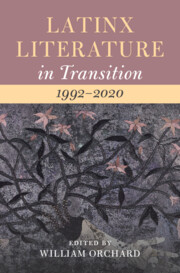
This book chronicles important formal and theoretical innovations in Latinx literature during a period when Latinx writers received increasing acclaim while their communities became targets of rising hostility. The essays in this collection show how Latinx writers confront this contradiction by cultivating an understanding of Latinx experience in its transnational dimensions, by recovering histories that were suppressed or erased, by engaging in burgeoning decolonial projects that resist Western epistemologies, and by forming coalitions and solidarities within Latinx groups as well as with other minoritized racial and ethnic communities to challenge state violence and US imperial projects. The book highlights the increasingly important role of genre, form, and media in the contemporary Latinx literature and provides an account of how the shifting demographics and new migrations of Latinx people have not only resulted in new narratives and art but also altered and expanded how we imagine the category 'Latinx.'
Following Expo 70, the Japanese state continued to use international exhibitions and other big events to remodel the archipelago, with Okinawa in 1975 and Tsukuba in 1985 the beneficiaries of the bureaucratic determination to develop the regions. They were vastly outnumbered, however, by a torrent of local initiatives in the 1980s, as cities and regions turned again to exhibitions, as they had in the 1930s, to resituate themselves on the national map, trying to navigate the shift of the economy away from heavy industry. This chapter explores both, thereby tracing the relationship between national plans and regional development. Big cities used expos to rebrand themselves for the information age, regional centres to advertise their distinction. Many expos continued to rely on corporate exhibits to attract the crowds; but some branched out, acknowledging environmental limits, and incorporating the local community, not just as consumers but also as participants. More important than the exhibits, however, was the demand unleashed by the expo and the impact on the local economy.
The wheels came off the Japanese economy in the early 1990s, throwing into question the expos that had emerged from and contributed to the previous two decades of growth. The first casualty was the Tokyo World City Expo, planned in the late 1980s and cancelled in 1995. By the end of the decade, there was a wave of nostalgia for Expo 70, as middle-aged creatives mourned the betrayal of its promises, or bemoaned its continuing hold on the present. But expos continued to have their uses. Alongside the laments, this chapter explores how the national bureaucracy and local authorities continued to use a new system and new kinds of expos to coordinate and foster development in the regions. It argues that the complicated genesis and unexpected success of Expo 2005 in Aichi, which evolved from a spur for regional development to the first eco-expo recognized by the United Nations, shows how expos remain a tool in the armory of development, even if observers in the West and intellectuals in Japan think their time has passed.
Chapter 6 completes the theme of the European Mythology of the Indies (III) and analyzes the impact of Enlightenment thought (French and British) on interpretations of Native Americans and Pacific Islanders. The chapter explores myths of primitivism and progress, showing how appeals to scientific authority grew at the expense of reference to biblical texts. It then examines the impact of the scientific voyages of Bougainville and Cook. On the one hand, the manner and customs of some of the South Seas peoples evoked the same kind of comparisons with classical antiquity as had been made in the Americas, especially the Golden Age of Antiquity, and appeared to offer confirmation of the myth of humankind in its infancy. So it was not just the Polynesians who interpreted the first Europeans in terms of their own myths; the same was true vice versa. On the other hand, the “enlightened” scientific expedition produced new data on non-European peoples which laid the foundations for rethinking theories of development of humankind, whether through progress or degeneration. Increasingly towards the end of the eighteenth century, notions of race became more salient in how non-European peoples were understood.
I examine the applicability of ecological concepts in discussing issues related to space environmentalism. Terms such as “ecosystem”, “carrying capacity”, and “tipping point” are either ambiguous or well defined but not applicable to orbital space and its contents; using such terms uncritically may cause more confusion than enlightenment. On the other hand, it may well be fruitful to adopt the approach of the Planetary Boundaries Framework, defining trackable metrics that capture the damage to the space environment. I argue that the key metric is simply the number of Anthropogenic Space Objects, rather than for example their reflectivity, which is currently doubling every 1.7 years; we are heading towards degree scale separation. Overcrowding of the sky is a problem astronomers and satellite operators have in common.
By appealing to public concern over environmental issues, Green parties have emerged to gain secure positions in several party systems. However, in Canada, we know very little about why people support the Green Party. This research note draws upon the Canadian Election Study (CES) to explore the ways in which demographic factors, personality traits and individual environmentalism impact vote choice. Theorizing Green Party support as a form of pro-environmental behaviour, we build a model that tests the impact of demographic factors and personality traits as mediated through environmental attitudes. It finds that, while pro-environmental policy attitudes are the strongest predictor of Green Party support, several demographic factors and personality traits—specifically conscientiousness, openness to experience, agreeableness and extraversion—have an effect.
Increasing educational standards in the workforce have increased the use of experts throughout the economy, leading to processes that more closely resemble bureaucracies and stakeholder policymaking, with an increasing emphasis on culturally liberal values such as diversity, representation, and social responsibility. The guiding industries and workforces of the scientific and technology sectors have enabled a technocratic ethos in government and industry. But public opposition to technocracy and skepticism of meritocracy is growing among voters, allowing conservatism to brand itself as an opposition movement to the extension of government reach and the associated prevalence of “politically correct” messages and practices across educational institutions and in the workplace. The polarized American brand of politics pervades internal debates across organizational sectors, enlarging the scope of activist politics beyond campaigns and government, especially where educational and cultural divides are strongest. The distinct styles of the culture war’s two conflicting sides have become more dissimilar at the national, state, and local levels, even in ostensibly apolitical arenas.
Chapter 6 expands on African legal cosmologies by demonstrating what it is that the world has missed out on by not incorporating customary law, ethics, and Indigenous norms from the Global South much earlier into the jurisprudence on sustainable development. The different senses of the legal dimensions of the concept of sustainable development as embedded in non-positivist legal traditions and thinking about law differently have tremendous potential to ensure that the sustainable development becomes effectively local, a concern that must engage the attention of international law scholars. This is where eco-legal philosophies and ecological integrity interact to found ecological law which involves reorganising the law–ecology nexus by retrenching the overbearing dominance of Eurocentric law on the planetary community and its disproportionate dominance in the humanity–nature nexus. In this respect, the renewed normativity of sustainable development as ecological integrity recalibrates law as a subset of a universal whole where law is appropriately located within, and not external to, nature. This remedial task is made possible by forging a beneficial interconnection between customary law, ethics, and Indigenous norms guided by the awareness that sustainable development reflects legal pluriversality and a significant feature of alternative legal ontologies.