To save content items to your account,
please confirm that you agree to abide by our usage policies.
If this is the first time you use this feature, you will be asked to authorise Cambridge Core to connect with your account.
Find out more about saving content to .
To save content items to your Kindle, first ensure no-reply@cambridge.org
is added to your Approved Personal Document E-mail List under your Personal Document Settings
on the Manage Your Content and Devices page of your Amazon account. Then enter the ‘name’ part
of your Kindle email address below.
Find out more about saving to your Kindle.
Note you can select to save to either the @free.kindle.com or @kindle.com variations.
‘@free.kindle.com’ emails are free but can only be saved to your device when it is connected to wi-fi.
‘@kindle.com’ emails can be delivered even when you are not connected to wi-fi, but note that service fees apply.
In considering the charges brought against Al Hassan Ag Abdoul Aziz Ag Mohamed Ag Mahmoud, the ICC has been forced to address the question of Islamic criminal law. Following the reasoning of the Prosecution, Trial Chamber X considered Sharia punishments mandated by the Islamic court and implemented by the Islamic police to be evidence of the existence of an organizational policy to commit a widespread or systematic attack against a civilian population with the aim of denigrating and subjugating the community in Timbuktu. Trial Chamber X also accepted the Prosecution’s conclusion that applying different forms of Sharia punishments amounted to the crime of torture. Such an expansive view of core international crimes has the potential to send an alienating message to Muslim communities around the world and particularly those countries that apply Sharia criminal law. The overriding narrative of the article does not diminish the harm caused by Ansar Eddine but rather presents an alternative to the Trial Chamber’s and the Prosecution’s reasoning, campaigning for more active engagement with the principles of Sharia. As discussed at length, the duty of an international court is to adapt a multicultural and diverse interpretative guidelines by considering more traditional systems of justice. In that regard, the ICC has yielded to the universalists and Eurocentric agenda by deciding to dismiss Islamic traditions in their entirety. While Sharia based punishments remain shocking for the Western societies, their spiritual, religious, and exonerating value remains poignant for the Muslim majority states and communities. The practices cannot be therefore dismissed, and if looked at in line with the Third World Approaches to International Law could enrich the legal reasoning for future investigations and trials.
The concept of Humanity is defined as the character of the human species, and it is distinguished from other similar concepts: humankind, humanness, human rights, human obligations, human dignity, and human mutual love. Humanity encompasses the spirit of general reason, and Marcus Aurelius is cited as a prime example of this spirit. The purpose of social and state institutions, of the arts and sciences is to humanize. This is borne out by Lucretius, Homer, Shaftesbury, Lessing, Diderot, and Swift, and citations of their works are given as testimony. Lessing’s Emilia Galotti is read as an example of how morality is realized in the theatre. The chapter closes with a poem by Ludwig Gleim as an example of human goodness.
The progressive digitalization of industries and services has direct effects on the organization of labor. Telework is foremost a consequence of the general increased use of information technology in our professional and private lives. The organizational changes of labor due to digitalization however challenge the functionality and effectiveness of labor law. The employer’s comprehensible concerns, that teleworkers might pursue private interests at home, serve in practice as a justification for implementation of closed meshed monitoring measures. Hence, we face a significant paradox: even though teleworkers enjoy a putative higher degree of autonomy because they are not present at premise and therefore not subject to the employers’ physical authority, they are exposed to a higher degree of dependency rooted in digital control measures. Data protection acquires increasing importance for workers. Labor protection in many cases cannot be separated from data protection. This chapter argues that this evolution is not sufficiently mirrored by the law, and then analyses in its first part the existing shortcomings and loopholes exemplified by the problem of digital surveillance of telework. In its second part the chapter seeks to identify possible legal mechanisms to create or even foster interaction between labor and data protection law.
With the global proliferation of armed conflicts, children are among the most vulnerable, facing serious violations of their human rights, most notably the right to education. Although both international humanitarian law (IHL) and international human rights law (IHRL) provide protection, schools continue to be attacked, educational infrastructure is destroyed, and millions of children lose access to learning. Against this backdrop, the present article examines the protection of children’s right to education under IHRL and IHL, and argues for a shift in how these existing norms are interpreted to better reflect the centrality of education to human dignity. Drawing on the established link between the right to education and human dignity under IHRL, the article proposes a novel interpretive lens that reframes the denial of education during armed conflict as a direct assault on the human dignity of the child, rather than merely a legal violation. Through this lens, education shifts from an ancillary social right to a core humanitarian concern grounded in the child’s dignity. The article argues that this human dignity-based understanding of education found in IHRL should inform the interpretation of IHL, as integrating this perspective would strengthen the normative coherence of IHL and offer stronger protection for children’s right to education in armed conflict. Recognizing schools as vital spaces for learning, stability and development, this approach emphasizes that access to education underpins children’s holistic growth, the realization of their rights and the safeguarding of their human dignity.
In its opening clause, the preamble to the UN’s Universal Declaration of Human Rights (UDHR) asserts the strong affinity between the concepts of human dignity and human rights. “Recognition of the inherent dignity and of the equal and inalienable rights of all members of the human family,” the declaration grandly begins, “is the foundation of freedom, justice and peace in the world.” Preambles are repositories of lofty rhetoric, but they are also expressions of shared values and basic ideological assumptions. The expansive political claims of the UDHR find justification in the idea of human dignity. Moreover, the Declaration itself helped to cement the place of dignity in the modern discourse of rights, and the importance of dignity as a source of moral justification remains a lively theme in explorations of the origins and normative basis for human rights claims. In the words of Jeremy Waldron, for instance, “Dignity is intimately connected with the idea of rights – as the ground of rights, the content of certain rights, and perhaps even the form and structure of rights.”
Is there anything in the ancient world that deserves to be called a “right” in the subjective sense? The philosopher Alasdair MacIntyre stated quite apodictically that “there is no expression in any ancient or medieval language correctly translated by our expression ‘a right’ until near the close of the middle ages: the concept lacks any means of expression in Hebrew, Greek, Latin or Arabic, classical or medieval, before about 1400,” concluding from this that even if there were such rights, “no one could have known that there were.” Until relatively recently, historians would have agreed with MacIntyre. The prevailing view was that in antiquity we look in vain for what has come to be called subjective rights – that neither the concept of rights nor the word “right” could be encountered in the ancient world in its subjective sense.
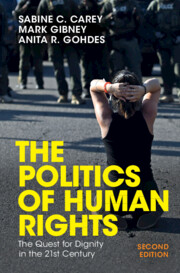
Accessible and engaging, The Politics of Human Rights offers a fresh, empirical approach to understanding human dignity and the global responsibility to protect it. Unlike traditional texts, this textbook moves beyond theory, using data-driven insights to explore why human rights violations occur and how they can be prevented. It emphasizes shared responsibility across borders to uphold human rights. Designed for students and educators, this fully updated edition enhances learning with discussion questions, recommended readings, and a unique collection of films, podcasts, and websites that bring human rights issues to life. It provides a well-rounded perspective, grounded in latest social scientific research, for anyone interested in human rights. Whether used for introductory courses or interdisciplinary studies, this book equips readers with the knowledge and tools to critically engage with human rights issues, making it an essential resource for understanding and advocating for human dignity in the twenty-first century.
There is growing global interest in how AI can improve access to justice, including how it can increase court capacity. This chapter considers the potential future use of AI to resolve disputes in the place of the judiciary. We focus our analysis on the right to a fair trial as outlined in Article 6 of the European Convention on Human Rights, and ask: do we have a right to a human judge? We firstly identify several challenges to interpreting and applying Article 6 in this new context, before considering the principle of human dignity, which has received little attention to date. Arguing that human dignity is an interpretative principle which incorporates protection from dehumanisation, we propose it provides a deeper, or “thicker” reading of Article 6. Applied to this context, we identify risks of dehumanisation posed by judicial AI, including not being heard, or not being subject to human judgement or empathy. We conclude that a thicker reading of Article 6 informed by human dignity strongly suggests the need to preserve human judges at the core of the judicial process in the age of AI.
An initial glance at the intricate web of the English legal system may perceive human rights and private law as paths leading to different realms. In this vision, contract law, shaped by economic concerns, is confined to a role of enforcing agreements. Yet, given ageing population trends and the increase in the number of people with mental health conditions, such as dementia, entering into grossly asymmetrical contracts, we must re-assess the lens through which we perceive contract law. This book calls for a re-examination of the role of contract law in light of the UN Convention on the Rights of Persons with Disabilities (UNCRPD), insisting on an approach that responds to both economic and social concerns. The book aims to contribute towards bridging the areas of disability equality and contract law, questioning the compatibility of key principles and doctrines in contract law with UNCRPD values, including autonomy and human dignity.
This chapter introduces the vision of contract law adopted in this book, based on two concentric spheres: an inner sphere encompasses an economic realm rooted in values such as freedom and sanctity of contract, reflecting a non-interventionist approach that can accommodate imbalanced transactions and an outer sphere shaped by public policy concerns, which embodies social values such as the protection of relational autonomy and human dignity. The chapter justifies the structure of the book, the choice of legal frameworks examined, as well as the relevance of this study for disability equality and contract legal research.
This chapter highlights the interconnection between economic and social values in the contractual realm, rooted in a perception of people as holder of rights and a broad interpretation of autonomy and human dignity that looks beyond individualistic values. With a focus on grossly asymmetrical contracts, it promotes an understanding of vulnerability in the contractual context based on the circumstances of the transaction, rather than on people’s medical conditions. The chapter reflects on the merits and drawbacks of the UN Convention on the Rights of Persons with Disabilities (UNCRPD) as a potential benchmark for promoting a vision of contract law that responds to both economic and social concerns and recognises the equality of all human beings. The second part considers how English contract law could be brought closer to the equality vision promoted by the UNCRPD, proposing an understanding of the contractual realm based on concentric economic and social spheres, shaped by fluid boundaries, and reflecting on the relevance of contract law as part of a broader set of measures to ensure a fairer society.
This chapter brings together the idea of bridges between economic and social concerns. The discussion reinforces the need to recognise the outer sphere of contracting in holding these connections together, recognising the role of contract law in protecting both economic values (including freedom and sanctity of contract) and social values (including relational autonomy and human dignity). A suggested path to succeed in these endeavours is to embrace the idea of complementarity in contract law, which enables us to accept the coexistence of ideas that may appear, initially, to be mutually exclusive. The idea of complementarity in contract law enables us to see economic and social values not as antagonistic, but as coexisting parts of interconnected spheres.
The third bridge is explored in chapter five and focuses on the connection between constitutional values and private law. The analysis concentrates on the values of autonomy and human dignity and their interplay with the principle of freedom of contract in English contract law. The discussion also reflects on the link between the UNCRPD, the European Convention on Human Rights (ECHR), the Human Rights Act (HRA) 1998, and English contract law, and suggests that rather than looking for a seamless bridge that links the UNCRPD directly with English contract law, we should look for steppingstones connecting the UNCRPD, the ECHR, the HRA and domestic private law. This chapter also discusses the values of participation and inclusion, with a focus on the idea of influence vulnerability explored in the previous chapter, and reflects on the need to enhance the influence of persons with disabilities and DDPOs in shaping legislative developments in English law, including consumer contract law.
This title explores the foundational theoretical aspects of international human rights law, delving into the philosophical underpinnings and conceptual frameworks that shape our understanding of human rights. It examines the historical evolution of human rights ideas, the influence of various philosophical traditions, and the ongoing debates about the nature and universality of human rights. This section also addresses the epistemological ruptures between philosophy and law, and between law and justice, highlighting the challenges in reconciling these perspectives within a coherent human rights framework. It discusses the contributions of different schools of thought, such as natural law, positivism, and sociological approaches, to the development of human rights theory. By critically analyzing these theoretical foundations, this title aims to provide a deeper understanding of the principles and values that underpin international human rights law and to highlight the complexities and nuances involved in defining and protecting human rights in diverse cultural and legal contexts.
A pragmatic approach to international human rights law involves discussing its premises, principles like human dignity, liberty, equality, and solidarity, and structural principles such as democracy, pluralism, and the rule of law. The chapter also examines the conditions, matters, and actors involved in the discussion. It explores how these principles are applied in practice and the challenges faced in their implementation. The chapter emphasizes the importance of a pragmatic approach that considers the practical realities of applying human rights principles in different contexts. It also discusses the role of various actors, including states, international organizations, and civil society, in promoting and protecting human rights.
While sexual violence is receiving increasing attention in terms of international humanitarian and criminal law, and on the world political scene, this does not apply to all aspects of such crimes. Sexual acts on dead bodies are a common practice in times of armed conflict, constituting an affront to universal moral values that exacerbates the violence, domination and humiliation which motivates such abuses. However, such crimes have rarely been prosecuted under international criminal law, and where they have, perpetrators have been charged with umbrella offences or in connection with the protection of human dignity rather than with sexual offences. To explain this tendency, the present article takes stock of the legal treatment of sexual violence on dead bodies, examining the legal, philosophical and moral concepts that apply, with a view to obtaining recognition of such acts as sexual offences.
The right to freedom of thought is not explicitly mentioned in the German Basic Law. This chapter examines whether and how freedom of thought might be implicitly protected in the Basic Law (GG), focusing on the right to freedom of belief, conscience and religion (Article 4 GG), the right to freedom of expression and information (Article 5 GG), the right to human dignity (Article 1(1) GG) and the general right of personality (Article 2(1) in conjunction with Article 1(1) GG). Freedom of thought is sometimes mentioned in the literature in connection with freedom of belief, conscience and religion and freedom of expression and information as a necessary precondition for the formation of convictions and opinions. Inner freedom is an inherent aspect of human dignity, but only extreme forms of interference with the inner freedom of the person constitute a violation of this right. The general right of personality protects the prerequisites of personal freedom and self-determination and therefore could provide the most comprehensive protection for a person’s inner freedom. It is therefore argued that while freedom of thought is within the scope of protection of these four rights, it can be rooted in the general right of personality in particular.
Artificial Intelligence (AI) has enriched the lives of people around the globe. However, the emergence of AI-powered lethal autonomous weapon systems (LAWS) has become a significant concern for the international community. LAWS are computer-based weapon systems capable of completing their missions, including identifying and engaging targets without direct human intervention. The use of such weapons poses significant challenges to compliance with international humanitarian and human rights law. Scholars have extensively examined LAWS in the context of humanitarian law; however, their implications for human rights warrant further discussion. Against this backdrop, this paper analyzes the human rights challenges posed by LAWS under international law. It argues that using LAWS in warfare and domestic law enforcement operations could violate human rights, such as the rights to life, human dignity, and remedy, among others. Thus, it calls for a prohibition of the use of killer robots against humans.
This chapter contains answers to the Questionnaire on Constitutional Democracy for Chinese Liberal Intellectuals, which covers the basic concepts and institutional designs of constitutional democracy. China’s most pressing task is not making a new and better constitution, but rather formulating social contract through implementing the existing constitution, which does pay lip service to many political natural law precepts. Unlike many admirers of the American presidential system, I advocate for a Westminster-type parliamentary system, which has largely been borrowed by the current Chinese constitution, to be embedded in a federal framework for future China.
The widespread use of artificial intelligence technologies in border management throughout the European Union has significant human rights implications that extend beyond the commonly examined issues of privacy, non-discrimination and data protection. This article explores these overlooked impacts through three critical frameworks: the erosion of freedom of thought, the disempowerment of individuals and the politicization of human dignity. In uncovering these dynamics, the article argues for a broader conception of human rights to prevent their gradual erosion and safeguard the core principle of protecting human dignity.