To save content items to your account,
please confirm that you agree to abide by our usage policies.
If this is the first time you use this feature, you will be asked to authorise Cambridge Core to connect with your account.
Find out more about saving content to .
To save content items to your Kindle, first ensure no-reply@cambridge.org
is added to your Approved Personal Document E-mail List under your Personal Document Settings
on the Manage Your Content and Devices page of your Amazon account. Then enter the ‘name’ part
of your Kindle email address below.
Find out more about saving to your Kindle.
Note you can select to save to either the @free.kindle.com or @kindle.com variations.
‘@free.kindle.com’ emails are free but can only be saved to your device when it is connected to wi-fi.
‘@kindle.com’ emails can be delivered even when you are not connected to wi-fi, but note that service fees apply.
In 1984, the Hungarian Evangelical Church Press posthumously published the Hungarian-language memoir of Gábor Sztehlo, a Lutheran pastor credited with saving hundreds of Jewish children during the Holocaust. Uncovered in the archives, the memoir’s original manuscript was recently published by Gergely Kunt. This article compares the original and published texts to reveal the significant differences between them. Recognising which topics were deliberately omitted and altered from the published version reveals how attitudes at the time sought to tell a certain history: one that was politically expedient in a communist country and acceptable to the Church authorities who supported its publication.
This chapter argues that any critical or historical study of life-narrative, memoir, or autobiography by “gay Latino male” writers in the United States must attend to questions or problems unique to the intersecting fields of queer and Latinx literary studies. At the level of genre, such an analysis must address the decades-long influence of testimonio theory coursing through both Latin American and Latina/o/x literary studies as a destabilizing element in any discussion of genre as a tool for understanding literature, or “the literary” per se, especially in its grounding relationship to any claim to historical knowledge, through the modes of either fiction or nonfiction. At the level of gender, such an analysis must address the recent emergence of the self-interrogating mark of the “x” in Latinx (in the mid-2020s perhaps ceding finally to the “e” in Latine) as the refusal to accept the binary logic of gender as imbedded in the orthography and grammar of conventional Spanish. These considerations destabilize but do not disable the possibility of curating a collection of texts that have since the mid-twentieth century comprised an archive of “Gay Latino American Autobiography.”
This chapter argues that contemporary memoirs by gay men about transactional sex challenge assumptions that commercial and noncommercial sex divide into separate spheres, and that sex can be cleanly differentiated from other, mundane practices. While these memoirs contain many unambiguous depictions of transactional sex, they also depict moments where transactional arrangements yield intimacies that are far more difficult to categorize. In addition, they raise questions regarding where the “sex” in the sex trade both ends and begins.
This chapter explore five works of gay literary autobiographical writing about the 1970s. These autobiographies by Michael Rumaker, Robert Glück, Kevin Killian, Essex Hemphill, and Bernard Cooper paint an ambivalent picture of the decade, a period in which the unprecedented rewards and celebratory tenor of sexual liberation did not merely erase the traumas of the past: homophobia, self-hatred, and abusive relationships. Most of these writers are quite different from one another; they belonged to different gay cultural scenes and lived and worked in different cities across the US. By identifying shared themes across their work, however, this chapter illuminates why the 1970s was a pivotal moment in the formation of gay literature as we know it.
This chapter explores how victims have participated in unofficial transitional justice efforts involving non-state armed groups. Using the memoir of Seamus Kearney in the Northern Ireland context as a case study, we critically examine how victims participate in what we argue to be ‘quiet’ transitional justice efforts. Our discussion centres around two interlinked foci: the story told about how Kearney unofficially engaged with the Irish Republican Army in the pursuit of acknowledgement and truth; and how his memoir represents a participatory space where he leads in narrating the experience of ‘quiet’ transitional justice. Arguing that his memoir is, and contains, evidence of victim-led transitional justice, we juxtapose Kearney’s agency in the ‘quiet’ transitional justice process with his more passive role within formal truth recovery mechanisms. In doing so, we expand the transitional justice imagination on the place and role of victims beyond their engagement with formal mechanisms.
This chapter serves as an introduction to African Literature in Transition. The edited volume is intended to function as a compendium of histories of selected genres that have emerged in the written literature and other verbal arts of the African continent from at least the beginning of the twentieth century to the early twenty-first century. The introduction analyzes the role of genre as organizing principle for African literary history writ large both in the popular arts and in high literary forms. The primary argument of the chapter is that understanding African literary histories is not simply a matter of creating a record of what has been written and performed, but also a matter of surveying how and why particular types of African-authored texts have become more or less visible at different points in time through an examination of the role of genres. To advance this argument, the introduction focuses on the sub-categories of genre in African literature rather than the broad generic classifications of African literature such as the African novel, African poetry, or African drama. Equally, the chapter juxtaposes genres that are read mainly locally with those that are read both locally and outside Africa.
Realist narrative genres, such as memoir and autobiography, are the most prevalent women’s prison writing. Contemporary readers rely on these narrative elements in order to believe stories. However, when the writer disassociates during a traumatic event and does not remember details that would ground their telling in recognizable details, their narratives cannot reliably reference them. As incarcerated women authors grapple with what they’ve suffered and what they’ve done, their narratives inevitably intersect with social realities that form the background violence that created the conditions for the discrete, traumatic events of harmdoing. While carceral culture essentializes people into stagnant categories of worth – good/flawed, criminal/victim, innocent/guilty – incarcerated women’s stories show how facile these conceptions are, how much harm they cause, and that incarceration does nothing to address these issues and often actively prohibits healing.
This chapter offers the first comprehensive account of the tangential maritime figure of the sailor’s daughter. Though neglected in the scholarship, her life was shaped in material and emotional ways by the intermittent presence of a seafaring father and the complex gender dynamics that attended the composition of the maritime family. With reference to a unique and overlooked corpus of memoirs by working-class women raised in seafaring families within the Victorian and Edwardian periods, the chapter returns to myth of the ‘sailor in the family’, presented in Chapter 1, but this time from the sidelong perspective of the daughter. The analysis shows how these memoirs disrupt the paradigmatic model of the dutiful sailor’s daughter in narratives that set out the compromises, strange intimacies, and frustrations of childhoods shaped by the maritime world. While the sailor-fathers described in the memoirs belong to the late nineteenth century, the book concludes by arguing that it is the writerly daughter’s insurgent account that carries new perspectives on maritime relations into the twentieth century.
The presentation of the Commission on Caporetto final report to Parliament, in 1919, marked the end of Cadorna’s career and public life. But not the end of a new battle for his reputation. His monumental account of his own performance as commander, published in 1921 (War on the Italian Front), was a first rejoinder to what he saw as a campaign of vituperation with the blessing and backing of governments in Rome. This quarrelsome, bitter struggle was ended by Fascism. The regime was eager to patch up the old rifts of civil war (meaning 1914, but also 1919–1922); above all, it sought to gather as much consensus as it could. The time had come, it decided, to quell all controversy surrounding the ‘Cadorna affair’. On 4th November 1924 the former Chief was raised to the new top rank in the army. It must be said that the aged general keenly appreciated the honours bestowed on him by the new war-mongering fascist Italy. But the long civil war, setting in on the heels of world conflict, triggered a process of hypostatization, turning him into an icon, a paladin, or an insensitive, blood-thirsty criminal.
Percy Shelley once joked, ‘self, that burr that will stick to one. I can’t get it off yet’. But a burr, if annoying, often carries seeds. That ‘self’ abided with those he left behind. The crop of major biographies and memoirs of Shelley written during the period 1823–78 came from those who knew him. While their portraits are often consistent in details, each offers a different facet of a chameleonic figure. This chapter surveys some of the Shelleys from which one might choose.
Just as Song of Solomon and Down These Mean Streets inspired Junot Díaz to become a writer, Youngblood (1954), a novel by the radical African American author John Oliver Killens, inspired Piri Thomas to write Down These Mean Streets (1967). What does Thomas’s personal relationship with Killens reveal about the intertextual relationship between DTMS and Youngblood? What can we learn from reading DTMS as a coming-of-age memoir rather than as a coming-of-age novel? What can be gained by reading DTMS from a child-centered perspective? Inspired by Ralph Ellison’s concept of literary ancestry, Harold Bloom’s theory of the anxiety of influence, Gerard Genette’s definition of intertextuality, and Henry Louis Gates Jr.’s theory of signifying, I argue that the shared themes of racial, sexual, and gendered trauma intertextually bind the homosocial coming-of-age narratives in DTMS and Youngblood. I examine how the coming-of-age narratives in each of these texts explore the entanglement of homosocial camaraderie and ethnic, racial, and sexual identity formation. In critically explicating these themes, this chapter expands Latino American and African American literary history and reveals new insights about the intertextual genealogy of influence between DTMS and Youngblood.
This chapter examines forms of self-writing (memoir, autobiography, diaries, documentary prose, and other in-between genres) that demonstrate an ‘orientation toward authenticity’, to borrow the phrase of the writer-scholar Lidiia Ginzburg. The arc spans the late seventeenth century to the present, with a focus on the period from the end of World War II to the late Soviet era, which witnessed an explosion of non-fictional narratives to document the war, camps, and Stalinist terror. The chapter takes its cues from Ginzburg’s theory that in-between prose is uniquely innovative when it fixes its attention on concepts of the self and literary forms, and that it flourishes most when canonical genres are in flux. In addition to the topic of childhood and, more centrally, personal encounters with history, the chapter discusses the role of women writers, and the sub-genre of the memoirs of contemporaries written by members of the intelligentsia.
This essay delves into a pivotal incident where Edward Said’s Palestinian identity collided with entrenched conservative American values, revealing the dichotomy of his dual role as a Columbia University professor and outspoken advocate for Palestinian statehood. The catalyst was a provocative article, “Edward Said Accused of Stoning in South Lebanon,” from the Columbia Daily Spectator. Said, renowned for his incisive critique of Western depictions of the East and the global dissemination of “orientalism,” brazenly condemned American foreign policy, particularly its support for Israel’s colonial expansion. I examine the episode’s portrayal in the New York Times and Columbia Daily Spectator, highlighting Edward Said’s seemingly conflicting intellectual legacy. Drawing from his essays like “On Nelson Mandela, and Others” (1994), “Homage to a Belly Dancer” (1990), and the memoir “Out of Place” (1999), I explore Said’s views on the public intellectual’s role in America. This investigation probes whether Said’s public identity aligns with his academic persona, and how visibility shapes his concept of the “public.” It questions if public intellectuals can maintain autonomy within academia or if they inevitably conform to university norms.
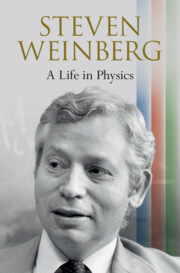
Steven Weinberg shares his candid thoughts, in his own words, on theoretical physics and cosmology, along with personal anecdotes and recollections of the people who helped shape his career. These memoirs of his life as a scientist and public figure cover his student days and early career, through the golden age of particle physics in the 1970s, his being awarded the Nobel prize, through to the end of the twentieth century. In addition to his research insights, Weinberg provides glimpses into his life in academia more broadly: dealing with the 'two-body problem', tenure, international conference travel, his book-writing, advisory work with JASON, and his advocacy for the Superconducting Super Collider. Physicists, historians of science and interested readers will find the presentation engaging and often witty, as Weinberg reflects on his life in physics.
This paper describes the content and evolution of a fourth-year course for medical students on teaching pathographies of mental illness. (It is a follow-up to Nathan Carlin’s Pathographies of Mental Illness that appeared as an Element in the Bioethics and Neuroethics series published by Cambridge University Press.) The course originally centered on classic (and some contemporary) memoirs; however, responding to student evaluations, newer material now ensures more diversity, with material written by women and people of color, and describes the difference that can make.
Twentieth-century critics have opposed the supposed objectivity of the essay to the letter and diary as private, self-expressive, and autobiographical genres. But this was a modern development. From Michel de Montaigne to the early nineteenth century, the essay, the letter, and the diary were more alike and far more closely aligned than they later became, particularly with regard to representations of the self and notions of publicity. For instance, they were all considered forms of address, and means of presenting one’s intellectual physiognomy to others that were likely to be read aloud, shared, and discussed. This chapter therefore explores now-forgotten family resemblances among these genres both in form and function and concludes by showing where they were fused or embedded in one another.
This chapter traces queer and trans North American memoir through the long twentieth century by engaging the reality that for the majority of people in the majority of that period sexual identities did not adhere in a straight/gay binary and gender identities did not adhere in a cis/trans binary. To answer the challenge posed by this historical reality, this chapter proposes a theory of queer and trans memoir rooted in the racializing and classed gendering regimes and sexual arrangements of the period. This theory then guides the chapter through its engagement with the minoritized works of queer and trans memoir, skirting the white bourgeois gay male genealogy from Oscar Wilde to Edmund White that has too often been proffered as the geneology of LGBT literature.
The article deals with the phenomenon of shaping Ukrainian national identity in artistic works of autobiographical nature, created at the time of life crisis and oppressive sociopolitical situation, using Leon Getz as an example. Getz (1896–1971) was a painter who was raised in a Polish-Ukrainian family in Lviv but made a decision to identify nationally with the Ukrainian minority, oppressed both in pre- and postwar Poland. After WWII, he was subjected to surveillance by the Polish Security Office because of his Ukrainian identification. That led him and his wife (also a Ukrainian) to attempt suicide—unsuccessful in the case of the artist, fatal in the case of his wife. Getz wrote down his memoirs twice: the first time in the 1930s, the second time after his wife’s death in the 1950s. The first memoirs expressed his loneliness in an environment dominated by Poles, and they were drawn up openly, though for the author’s needs only. The second memoirs presented his personal tragedy and were kept in secret because the Security Office sought to intercept Getz’s notes as documents incriminating the officers. However, the author hoped to make the text public in the future. The subject of the analysis is constituted by memoirs read in the context of the artist’s other personal documents and works. They present the formation of his Ukrainian national identity as the chosen one and at the same time as the one that, in his opinion, was related to his and his wife’s tragedy. I interpret these memoirs in two different but complimentary ways: first, as life writing at the time of a man’s personal life crisis and, second, as life writing in a situation of oppression by the authoritarian and after WWII totalitarian state, under surveillance by the Security Office, whose moves put the very subjectivity of an individual in crisis. Both interpretations highlight the process of building Getz’s self-identification not as a discovered preexisting nationality, but as a deliberate—and nonobvious—choice of national path. The article is based on Getz’s unpublished memoirs and works, which are held in archives in Cracow (Poland) and Rome (Italy).
This chapter examines the representation of illness and impairment in various works of fiction, poetry, and memoir to demonstrate the creative possibilities of disability. Where literary uses of disability have historically been thought to denote suffering, corruption, social failure, or inspirational and redemptive lessons aimed at non-disabled readers, recent scholarship has explored disability’s generative relation to structures of plot and to poetics as well as its epistemological effects, constituting new forms of knowledge. The chapter spotlights three texts that explicitly challenge tropes of deviance and lack and foreground bodymind anomalousness as the source of creative expression and knowing.