To save content items to your account,
please confirm that you agree to abide by our usage policies.
If this is the first time you use this feature, you will be asked to authorise Cambridge Core to connect with your account.
Find out more about saving content to .
To save content items to your Kindle, first ensure no-reply@cambridge.org
is added to your Approved Personal Document E-mail List under your Personal Document Settings
on the Manage Your Content and Devices page of your Amazon account. Then enter the ‘name’ part
of your Kindle email address below.
Find out more about saving to your Kindle.
Note you can select to save to either the @free.kindle.com or @kindle.com variations.
‘@free.kindle.com’ emails are free but can only be saved to your device when it is connected to wi-fi.
‘@kindle.com’ emails can be delivered even when you are not connected to wi-fi, but note that service fees apply.
Chapter 2 tells the story of how ethnicity came to be known in Kenya through territory, providing an overview of the history of ethnic territorial boundary drawing from its inception with the first colonial administration, to today. The principal motivation for the earliest hard boundaries between purportedly homogenous ethnic groups was to free up land for white settlement and capital accumulation. After independence, the administrative boundaries of provinces and districts were deliberately retained, and ethnic patterns of land settlement were engineered. With multi-party elections in the 1990s, these established ‘ethnic territories’ motivated electoral gerrymandering, the most significant postcolonial driver of ethnic territorialisation. All these practices cemented a profound connection between land, boundaries, identity, rights, power, and security. I show how the 2010 constitution worked within this paradigm, too, but in novel ways that moved toward vagueness to manage the inflammatory, grievance-based politics tethered to boundary drawing in Kenya. In doing so, I show how ethnic territorial population concentration today is less certain than commonly imagined.
This chapter examines the enumeration of ethnic populations in the census, where ‘the tribe question’ has been included since 1948. I trace its evolution – from its origins as self-evidently important with a self-evident list of groups – through numerous changes up to 2019. The powerful social imaginary of ‘42+ tribes’ comes from the 1969 census, despite the numerous changes since then. I show how changes in classifications over time, as well as the way they have been used and narrated by the state, reveal the multiple political purposes of classifying and counting ethnicity. In the colonial period, this centred on ethnic population distribution to support indirect rule via ethnicity, as well as tax collection and labour control. In the postcolonial period, ethnic demographic posturing for electoral purposes or ‘the tyranny of numbers’ became a major driver of interest in ‘the tribe question’. However, since 2009, the census has also been a site of recognition for minorities and of the painting of a portrait of a nation defined by its diversity. In this chapter, I also show how the quintessentially unambiguous nature of ethnic census codes has been rendered ambiguous in useful ways.
Lizards represent a diverse group, adapted to a wide variety of environments, and interact with a wide range of parasites. The composition of a parasitic community can be influenced by several factors, including the host, the environment, and the parasite itself. This study evaluated the composition of the helminth community in three species of lizards of the genera Ameiva, Ameivula, and Tropidurus, from a Carrasco habitat in Chapada do Araripe, Brazil. Carrasco is a little-explored environment in which the diversity of hosts and parasites is still poorly understood. The composition of the helminth community associated with lizard species was evaluated by comparing richness, evenness, dominance, and diversity among component communities, including host sex and size as influencing factors, using different statistical comparison tools. The community consisted of 12 taxa from eight genera of parasitic helminths, seven of which were Nematoda and one Cestoda. The factors analysed had different influences on the different parasitic communities of each host species. It was possible to determine the dissimilarity between host populations based on their parasitic communities, and it was observed that the host species itself represented the most important factor in the structuring of helminth communities. The information recorded here converges with other results obtained in different studies with lizards, but points to patterns in the helminth community that differ from those observed in other areas of the Caatinga. The results obtained reveal complex patterns of association between parasites and hosts, demonstrating the existence of ecological relationships that can be shaped by specific factors.
Radiocarbon dates have become a cornerstone in archaeological reconstructions of past population dynamics. The increasing reliance on large-scale radiocarbon databases, usually aggregated from diverse sources, however, raises persistent concerns about sampling bias, especially heterogeneous sampling intensity across sites. In this paper, we introduce a rescaling method that adjusts the frequency of dates in radiocarbon datasets in proportion to dwelling counts at the settlement level, using weighting and bootstrap resampling. Through a series of simulations, we show that this approach consistently yields probability distributions that more closely reflect hypothetical population trends, particularly in contexts with high inter-settlement variability in sampling intensity. We apply our method to archaeological data from two areas in Korea, the Yeongsan and Geum River Basins, during the Proto–Three Kingdoms (1C BC–AD 3C) and Three Kingdoms Periods (AD 4–7C). Results demonstrate that rescaled datasets offer significantly different interpretations of population organization and reconfiguration than those derived from original data. This study highlights the importance of addressing sampling heterogeneity in local-scale demographic research and suggests that rescaling is a valuable complement to existing bias-correction strategies in archaeological studies of demography.
Edited by
Latika Chaudhary, Naval Postgraduate School, Monterey, California,Tirthankar Roy, London School of Economics and Political Science,Anand V. Swamy, Williams College, Massachusetts
The chapter, along with a discussion on India’s population size, and estimates of mortality based on the decennial censuses from 1872 to 1951, reviews at length the factors that explain virtual stagnation in population size during most of the decades. Lack of growth in India’s population from 1872 to 1921 was a result of high mortality due to the spread of epidemics such as cholera, plague and malaria. Their etiology and spread were not fully understood. As a result, the measures taken by the British Raj could not bring deaths under control. Also, recurrent famines – widespread or localized – caused food shortages that resulted in starvation deaths and the spread of water-borne infections during post-famine periods when rains arrived. The period between 1921 and 1951 witnessed modest population growth and the onset of slow but steady decline in death rates. The decline is attributed to control over famines, mass vaccination against smallpox, some improvement in sanitation and an increase in health facilities, mostly in urban areas. However, malaria and diarrheal diseases continued to take a heavy toll when India became independent in 1947.
If the governor’s decision to wage war in Taranaki over Waitara in 1860 was heavy-handed and aggressive, the invasion of the Waikato launched by Sir George Grey in July 1863 amounted to a blatant lunge for power. Indeed – as a narrow victory of numbers – it presaged the takeover by settler New Zealand that deluged Māori. From the 1860s the scales of power tipped to the settler society. Within a generation, Māori shrank from being most of the population to a small minority. The amount of land in Māori ownership, already much diminished, halved between 1860 and 1891. But pockets of resistance nurtured a proud legacy that would recalibrate relations a century and more later.
The years between about 1780 and 1850 can be understood as a meaningful period in the making of a romantic Ireland. Nestled within the cradle of that century, though, lie folds and divisions that lend a distinctive texture to the underlying political formations described. The introduction traces some of these textures while setting out the main phases and patterns through which Irish romantic culture can be analysed and understood.
From 1830, Irish literature shares with official and state documentation an intense interest in the details of everyday life while also drawing energy from O’Connellite mobilisation of the mass of the Irish people. An uncertain new sociology of literature emerged, characterised by hesitations and questions, part of an Irish romanticism darkened by detail. The chapter tracks Irish romanticism through to the period of the Great Famine and offers discussions of works by Maria Edgeworth, James Clarence Mangan and William Carleton.
What does 'Irish romanticism' mean and when did Ireland become romantic? How does Irish romanticism differ from the literary culture of late eighteenth- and nineteenth-century Britain, and what qualities do they share? Claire Connolly proposes an understanding of romanticism as a temporally and aesthetically distinct period in Irish culture, during which literature flourished in new forms and styles, evidenced in the lives and writings of such authors as Thomas Dermody, Mary Tighe, Maria Edgeworth, Lady Morgan, Thomas Moore, Charles Maturin, John Banim, Gerald Griffin, William Carleton and James Clarence Mangan. Their books were written, sold, circulated and read in Ireland, Britain and America and as such were caught up in the shifting dramas of a changing print culture, itself shaped by asymmetries of language, power and population. Connolly meets that culture on its own terms and charts its history.
The medicinal significance of Phlomis olivieri Benth. and the unknown diversity among its distinct populations prompted the investigation. The primary objective of the study was to analyse the components of essential oils (EOs) derived from the above-ground parts of 10 wild populations of P. olivieri Benth. (Lamiaceae) originating from different regions of the Iranian plateau. The EOs were subjected to analysis using gas chromatography–mass spectrometry (GC-MS). In total, 20 compounds were identified in the oils, with a relatively high content variation. The major components of the EO were (E)-caryophyllene (2.51–54.48%), germacrene D (6.25–53.51%), spathulenol (4.38–23.41%), bicyclogermacrene (3.97–16.41%), α-pinene (0.07–11.32%), caryophyllene oxide (0.28–9.57%) and germacrene B (2.21–9.13%). To assess chemical variability, the EO components were categorized using hierarchical cluster analysis (HCA), which revealed two main clusters. HCA of the EO data revealed two main clusters, and principal component analysis corroborated this grouping. Identifying compounds such as isospathulenol, (2E)-2-dodecen-1-ol and undecanal in this species for the first time adds to its chemical profile. Furthermore, the discovery of a substantial presence of (E)-caryophyllene and germacrene D in select populations underscores the high chemical diversity among these populations.
This chapter covers the problems with current norms in the participants we recruit for psychology experiments, and how to solve some of these problems by taking a Big Data approach. Specifically, many psychology experiments use very restricted and similar samples – such as American college students. However, this sample differs greatly from the global adult population, in many ways described here. The chapter then discusses how we can move toward more representative groups using Big Data, while also highlighting caveats that we will never be able to make a perfect sample, and sometimes we may want to intentionally restrict the people we recruit. The chapter finishes with a look at the big ethical questions surrounding participant recruitment, and discussion on imbalances in the demographics of psychology researchers themselves.
This chapter discusses the crucial role of sampling in quantitative research. Selecting an appropriate sample is essential, as it directly impacts the validity and reliability of the study’s findings. The chapter explores various sampling procedures and the key factors that must be considered when determining both the sampling method and the appropriate sample size. It begins by clarifying the concepts of sampling frames and populations, discussing their significance in selecting a representative sample from a larger group. The chapter then examines various sampling strategies, including probability and non-probability methods and discussing the advantages and disadvantages of each. Understanding these approaches will enable you to make informed decisions tailored to your specific research questions. Finally, the chapter guides you through calculating the required sample sizes for your studies and examining the factors that influence sample size determination. By the end of this chapter, you will not only see the importance of effective sampling but also have the knowledge to apply these concepts confidently in your own quantitative research studies.
Compared with Britain, industrial transformation occurred more slowly in nineteenth-century France and Italy, forcing two early marginalists from the Lausanne school to pay continued attention to family poverty among the agrarian masses. Although Léon Walras and Vilfredo Pareto wanted to explain and resolve family impoverishment by securing a market whose outcomes correlated with what families deserved, the two economists diverged on the causes of family impoverishment, and on the best ways to respond. Walras’s ‘social economics’ rejected a popular view that family ‘immorality’ was the cause of family impoverishment, instead identifying badly designed government policy as the key factor. Pareto’s studies of population suggested the opposite position. Assuming government corruption and protective policies had been dismantled, Pareto assigned primary responsibility for poverty to egoistical parents, who should have anticipated cyclical economic decline before having children. Describing Malthus’s rejection of contraception as ‘not very scientific’, Pareto studied ‘people as they are’, finding families to be already limiting fertility through delayed sexual union or contraceptive knowledge. This suggested to Pareto that poverty would disappear spontaneously. Neither Walras nor Pareto explained how to manage existing family destitution or unanticipated economic crisis, and they did not problematise the many structural impediments to escaping one’s class.
In Victorian times, the family’s problems were viewed by one influential British economist, Alfred Marshall, through the lens of public consternation with urban family impoverishment. Marshall provided a critical extension of the population studies of late eighteenth-century clergyman, T. Robert Malthus, for whom poverty occurred when family reproduction exceeded the capacity of agricultural production. On the one hand, Marshall argued that Malthus had not recognised how larger populations could be sustained by the productivity gains of industrialisation. On the other hand, Marshall extended Malthus’s criticisms of the Old Poor Laws to the New laws too, which were rejected for encouraging poor families to have more children than they could adequately sustain. Marshall also followed Malthus by rejecting calls by Annie Besant, Charles Bradlaugh, and others for working-class access to contraceptive knowledge and birth-control techniques. Describing and evaluating class-based behaviour in factory families, artisanal families, and families of the higher class, Marshall identified the effects on labour productivity and living standards of patterns of family formation, fertility, mortality, household–market labour division, educational investment, and aged care provision. However, his policies supported gendered divides, overlooking how male breadwinning did not convert into an adequate family income, and rejecting activist demands for women’s rights.
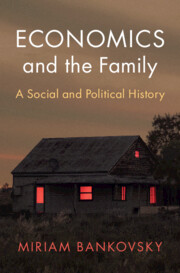
Most economists think family economics began in the 1960s when price theory was applied to family behaviour. Instead, this book focuses on enduring concerns with family poverty across the last two centuries. In nineteenth-century Britain and Europe, economists debated the effects of poverty relief and sought to improve family productivity. In the US, interwar household consumer economists studied how to rationalise family consumption, because factories were producing goods for low-income families. From the 1960s onwards, 'New' household economists attributed family poverty to inadequate human capital investment in predominantly non-white families. Even when feminist, development, and queer economists problematised gendered injustices, they recentred family poverty, targeting the 'pauperisation' of motherhood and the marginalisation of 'families we choose.' Economics and the Family does not simply reconstruct this alternate history, it also shows how economists in all these periods overlooked injustices which must be shouldered today.
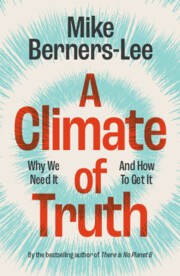
We have most of the technology we need to combat the climate crisis - and most people want to see more action. But after three decades of climate COPs, we are accelerating into a polycrisis of climate, food security, biodiversity, pollution, inequality, and more. What, exactly, has been holding us back? Mike Berners-Lee looks at the challenge from new angles. He stands further back to gain perspective; he digs deeper under the surface to see the root causes; he joins up every element of the challenge; and he learns lessons from our failures of the past. He spells out why, if humanity is to thrive in the future, the most critical step is to raise standards of honesty in our politics, our media, and our businesses. Anyone asking 'what can each of us do right now to help?' will find inspiration in this practical and important book.
This chapter looks at the most recent climate science and starkly sets out the severity of the problems ahead. It gives the reader all the knowledge needed to broadly understand the critical issues of our day from a technical perspective, including systems of production and consumption for energy and food, biodiversity loss, pollution (including plastics), disease threats and population levels. It then looks at ways in which we can technically transfer to a sustainable way of living.
The World Health Organization developed a framework for family and community nursing that identified a role for community health nurses, identifying the needs of their communities and addressing them. Primary health care shifted the focus from a disease model treating illness to a preventative model that focused on population and social health, community development, health promotion, illness prevention and early intervention, including community nurses as part of this movement.
Epidemiological evidence shows a concerning rise in youth mental health difficulties over the past three decades. Most evidence, however, comes from countries in Europe or North America, with far less known about changes in other global regions. This study aimed to compare adolescent mental health across two population-based cohorts in the UK, and two population-based cohorts in Pelotas, Brazil.
Methods
Four population-based cohorts with identical mental health measures were compared. In Brazil, these included the 1993 Pelotas Birth Cohort and the 2004 Pelotas Birth Cohort. In the UK, cohorts included the Avon Longitudinal Study of Parents and Children, and the Millennium Cohort Study. Mental health was measured in all cohorts using identical, parent-rated scores from the Strengths and Difficulties Questionnaire (SDQ). This was assessed in both countries over approximately the same time periods, when adolescents were aged 11 (2004 vs 2015 in Brazil, and 2003 vs 2012 in the UK), with follow-up analyses focused on outcomes in later adolescence.
Results
Mental health problems were higher in the UK for adolescents born in the early 2000s compared to those born in the early 1990s. In Pelotas, the opposite was found, whereby problems were lower for adolescents born in the early 2000s compared to those born in the early 1990s. Despite these promising reductions in mental health problems in Pelotas over time, SDQ scores remained higher in Pelotas compared to the UK.
Conclusions
Our study represents the first to compare two population-based cohorts in the UK, and two population-based cohorts in Pelotas, Brazil, to understand how mental health problems have changed over time across the two settings. Our findings provide the most up-to-date insight into population-level rates of youth mental health problems in Pelotas, and shed novel insight into how these have changed over the last two decades in comparison to the UK. In doing so, our study provides a tentative first step towards understanding youth mental health over time at a more global scale, and presents a valuable opportunity to examine putative contributors to differences across time.