Refine search
Actions for selected content:
3 results
Existence and concentration of normalized solutions for logarithmic Schrödinger–Bopp–Podolsky type system
- Part of
-
- Journal:
- Proceedings of the Royal Society of Edinburgh. Section A: Mathematics , First View
- Published online by Cambridge University Press:
- 29 December 2025, pp. 1-39
-
- Article
- Export citation
-
In this paper, we are interested in the existence and concentration of normalized solutions for the following logarithmic Schrödinger–Bopp–Podolsky type system involving the $p$-Laplacian in $\mathbb{R}^3$:
 \begin{equation*}\left\{\begin{array}{ll}\displaystyle -\varepsilon^p\Delta_p u+Z(x)|u|^{p-2}u-\kappa\phi u=\lambda |u|^{p-2}u+|u|^{p-2}u\log|u|^p& \text{in} \ \mathbb{R}^3, \\\displaystyle -\varepsilon^2\Delta\phi+a^2\varepsilon^4\Delta^2\phi=4\pi u^2& \text{in} \ \mathbb{R}^3, \\\displaystyle \int_{\mathbb{R}^3}|u|^pdx=d^p\varepsilon^3,\end{array}\right.\end{equation*}
where $\Delta_p\cdot =\text{div} (|\nabla \cdot|^{p-2}\nabla \cdot)$ denotes the usual $p$-Laplacian operator, $Z$ is a given external potential, $\kappa \gt 0$ a constant, $a \gt 0$ is the Bopp–Podolsky constant and $\varepsilon \gt 0$ is a small parameter. The unknowns are $u,\phi:\mathbb{R}^{3}\to \mathbb{R}$ and the Lagrange multiplier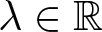 $\lambda\in\mathbb{R}$. If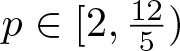 $p\in[2,\frac{12}{5})$, we obtain, via the variational method, that the number of positive solutions depends on the profile of $Z$ and the solutions concentrate around the global minimum points of $Z$ in the semiclassical limit as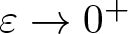 $\varepsilon\to 0^{+}$.


An Adaptive Grid Method for Singularly Perturbed Time-Dependent Convection-Diffusion Problems
- Part of
-
- Journal:
- Communications in Computational Physics / Volume 20 / Issue 5 / November 2016
- Published online by Cambridge University Press:
- 02 November 2016, pp. 1340-1358
- Print publication:
- November 2016
-
- Article
- Export citation
Error Analysis for a Non-Monotone FEM for a Singularly Perturbed Problem with Two Small Parameters
-
- Journal:
- Advances in Applied Mathematics and Mechanics / Volume 7 / Issue 2 / April 2015
- Published online by Cambridge University Press:
- 10 March 2015, pp. 196-206
- Print publication:
- April 2015
-
- Article
- Export citation
-
In this paper, we consider a singularly perturbed convection-diffusion problem. The problem involves two small parameters that gives rise to two boundary layers at two endpoints of the domain. For this problem, a non-monotone finite element methods is used. A priori error bound in the maximum norm is obtained. Based on the a priori error bound, we show that there exists Bakhvalov-type mesh that gives optimal error bound of
 (N−2) which is robust with respect to the two perturbation parameters. Numerical results are given that confirm the theoretical result.
 (N
(N