To save content items to your account,
please confirm that you agree to abide by our usage policies.
If this is the first time you use this feature, you will be asked to authorise Cambridge Core to connect with your account.
Find out more about saving content to .
To save content items to your Kindle, first ensure no-reply@cambridge.org
is added to your Approved Personal Document E-mail List under your Personal Document Settings
on the Manage Your Content and Devices page of your Amazon account. Then enter the ‘name’ part
of your Kindle email address below.
Find out more about saving to your Kindle.
Note you can select to save to either the @free.kindle.com or @kindle.com variations.
‘@free.kindle.com’ emails are free but can only be saved to your device when it is connected to wi-fi.
‘@kindle.com’ emails can be delivered even when you are not connected to wi-fi, but note that service fees apply.
Drawing from both the medieval Scholastic philosophical-theological tradition and Aristotelian virtue ethics, Thomas Aquinas offers a comprehensive and nuanced account of the virtuous life – one that suggests fruitful relationships not only with contemporary philosophical and theological discussions but also with recent empirical work. In this short chapter, I sketch the big picture using an Aristotelian, four-causes approach. Section 1 mainly addresses the final cause or telos of virtue: ultimately, perfect happiness in eternal life – although a good earthly life affords “a certain participation” in happiness. Section 2 considers virtue’s quasi-material causes: reason and the appetites, including the intellectual appetite or will. Section 3 focuses on the formal causes (modes) of virtue in general and of the cardinal and theological virtues in particular, as well as the relationships between various virtues in the larger structure of Thomistic virtue ethics – including the possibility of a unity of the virtues. And Section 4 discusses proposed efficient causes of such virtues, drawing on the various ways in which virtues are developed and related to each other in the Thomistic picture. Throughout, I consider connections between Aquinas’s account of the virtuous life and contemporary work in ethics, psychology, and education.
Abraham Lincoln began his political life as an adherent of henry clay's Whig party, which was formed in the 1830s in opposition to the democratic party, whose chief figurehead at that time was Andrew Jackson. As a Whig, Lincoln Promoted the public funding of "Internal improvements," a national bank (to create a uniform medium of commercial exchange) and tariffs to protect American production from foreign competition. He condemned what he considered the lawlessness of the democrats, and occasionally condemned slavery as well.
The virtue of temperance, or moderation, is central to a discussion of responding to climate change by showing restraint. In this chapter, we discuss the idea that temperance is not about despising goods or pleasures, but about ordering them, being willing to forgo lesser goods for the sake of greater goods. Attention to the need for temperance helps us to be realistic that the climate challenge we face does require some sacrifice, some letting go. Approaching that in terms of the ordering of goods helps us to find motivation: we do it for the sake of the things we love most, among which we might list God, the earth, human societies and other people, not least those who will come after us.
Mid-nineteenth-century American stories of self-making increasingly oriented toward material ambition rather than service. Values evolved within cultural venues as diverse as advice literature, temperance advocacy, business guidance, and phrenology. Expanding expectations for “self-reliance,” for example, promoted beliefs that alcoholism and status were entirely matters of personal choice and moved mainstream Americans toward accepting self-made success and failure. After the Civil War, more stories offered some version of self-making—always judging, prodding, urging, and rewarding. But no consensus had yet emerged on what it meant, what qualified someone as self-made, or how to measure a “self-made” man’s worth. Whereas Harriet Beecher Stowe’s 1872 compilation of traditional biographies praised service and disdained wealth, James D. McCabe, Jr.’s 1871 anthology embraced wealth as a measure of worth. Despite her fame, his volume sold vastly better. His often repeated “We are emphatically a nation of self-made men” glorified a materialist American exceptionalism and a social and economic system that demeaned many while it praised a few.
Temperance is a condition of a person’s physical appetites (for food, drink, and sexual contact) in which those appetites themselves conform to a rational standard. Temperance is possible for human beings because of the sophistication with which we can conceptualize the objects of our appetites and because an appetite’s object is internal to the appetite’s identity. A salmon steak construed as poisoned appeals to our appetite (and thus affects the pleasure of satisfying it) differently than one construed as healthful. Temperance differs from self-control, which doesn’t involve a conformity of the appetites themselves, but imposes rational control on unmodified appetites. The rational standard for temperance is the human good, which is the object of the virtues of caring. Thus, the temperate person’s physical appetites are such that, without being controlled, they fit the person to participate in an order of peace.
We study prudence and temperance (next to risk aversion) in social settings. Previous experimental studies have shown that these higher-order risk preferences affect the choices of individuals deciding privately on lotteries that only affect their own payoff. Yet, many risky and financially relevant decisions are made in the social settings of households or organizations. We elicit higher-order risk preferences of individuals and systematically vary how an individual’s decision is made (alone or while communicating with a partner) and who is affected by the decision (only the individual or the partner as well). In doing so, we can isolate the effects of other-regarding concerns and communication on choices. Our results reveal that the majority of choices are risk averse, prudent, and temperate across social settings. We also observe that individuals are influenced significantly by the preferences of a partner when they are able to communicate and choices are payoff-relevant for both of them.
It is now well established that higher-order risk preferences play a crucial role in determining the risky choices of decision makers in a wide range of important areas such as economics, finance and health. While influential theories of risky choice in those fields can explain attitudes to second order risk, the implications of these models for higher order risk preferences is still to be developed. This paper addresses that gap for the Markowitz (J Political Econ, 60:151–58, 1952) (M) model of utility which embodies reference-dependent utility, loss aversion and was seemingly the first model to explain the fourfold attitude to risk. In this paper, we set out new properties of the M model for higher order preferences, such as higher-order risky choice reversals, that can help explain experimental evidence not readily reconcilable with other models of risky choice. A second contribution of the paper is to empirically examine the heterogeneity of preference functionals describing second as well as higher order risky choices using hierarchical Bayesian estimation methods. Our analysis of the risky choices revealed in three prominent studies provides support for the M model as a useful complement to other leading models of risky choice such as cumulative prospect theory (CPT). In addition, we set up a new experiment whose design is shown to have satisfactory discriminatory power between the M and CPT specifications, and our results based on the Bayes factor confirm the heterogeneity of preference functionals across decision makers, and that the CPT specification is more prevalent.
Four ways of considering partisanship and factionalism dominated the political landscape of the nineteenth-century United States: the residual anti-party views of classical republicans, who were often drawn to a traditional politics of deference involving voluntary allegiance to leaders of a higher class who would advance the “common good”; James Madison’s view that multiple factions, in shifting configurations extending across a large geographic expanse, could prevent majorities from dominating minorities; the stance of those like Andrew Jackson who believed that parties harnessed the power of the people, whose interests would otherwise suffer neglect or worse from elite leaders; and finally, the fear of a polarizing, two-party system expressed by John Adams evolved in the views of a Mugwump like Henry Adams, who held himself apart from partisan corruption without aspiring to restore the elite politics of deference. This chapter explores the presence of these varied approaches to partisanship and factionalism in literary works by Henry Adams, Hugh Henry Brackenridge, James Fenimore Cooper, William Ellery Channing, Ralph Waldo Emerson, Nathaniel Hawthorne, Harriet Beecher Stowe, Albion Tourgée, Sarah Orne Jewett, Mark Twain, and Simon Pokagon.
The first ladies of the United States are often not thought about as activists. But in fact, many used their political position strategically to advocate for important reforms that benefited minorities and other underrepresented groups. Their activism from the White House helped social and political causes in different eras. Their unsung work contributed to their administration’s public profile and legacy. It also aided larger social justice campaigns going on throughout US history. This chapter explores the frequently unsung efforts of US first ladies in the realm of social advocacy to shed greater light on the significant work done by these women. It challenges the notion that first ladies were simply ornaments or companions for their husbands and highlights the actions that they took to create change.
Virtue ethics tells us to ‘act in accordance with the virtues’, but can often be accused, for example, in Aristotle’s Ethics, of helping itself without argument to an account of what the virtues are. This paper is, stylistically, an affectionate tribute to the Angelic Doctor, and it works with a correspondingly Thomistic background and approach. In it I argue for the view that there is at least one correct list of the virtues, and that we can itemise at least seven items in the list, namely the four cardinal and three theological virtues.
The chapter begins with a paradox, namely that the liquor laws were liberalised in the early 1960s at precisely the moment when the apartheid regime was becoming distinctly illiberal. It argues that part of the reason was that the temperance movement had failed to reproduce itself generationally while its influence on the National Party government was marginal. Moreover, Afrikaner nationalists hitched wine to the bandwaggon of cultural nationalism. Successive commissions of enquiry targeted excessive drinking amongst the Coloured population, but attempts to extend the reach of racialised prohibition stalled. Indeed, the racial provisions of the 1928 Liquor Act were repealed in 1962, following the Malan Commission which maintained that the law was being routinely flouted. After a heated parliamentary debate the law was amended such that that wine could be purchased by all South Africans. Moreover, the distribution became freer with the creation of grocers’ licences for wine and promises of intervention to reverse vertical integration in the liquor industry. This outcome signalled a defeat for temperance interests and pointed to the greater influence wielded by the wine lobby.
The first substantive chapter addresses the structural problem facing wine farmers at the Cape. Much like in France, there was a serious problem of overproduction of wines of indifferent quality leading to unstable prices. The chapter details the struggle between wine merchants and farmers, which led to the constitution of the Koöperatieve Wynbouwers Vereniging van Suid-Afrika (KWV) in 1918. It shows how the KWV successfully lobbied the Smuts government for devolved regulatory powers that enabled it to control the pricing for distilling wines from 1924. At the same time, the chapter shows that the market was constrained by low consumption amongst whites, including the Afrikaner wine farming community itself. This was compounded by the efforts of the Women’s Christian Temperance Union (WCTU) and its allies in the South African Temperance Alliance (SATA) to pursue local option for whites and a form of temperance for the black population. The former failed, but the passage of the 1928 Liquor Act prevented the majority of the population from purchasing wine or brandy. Hence the victory of the KWV over the merchants was tempered by the legislative success of the temperance movement.
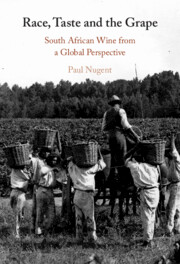
With the introduction of wine to the Cape Colony, it became associated locally with social extremes: with the material trappings of privilege and taste, on the one side, and the stark realities of human bondage, on the other. By examining the history of Cape wine, Paul Nugent offers a detailed history of how, in South Africa, race has shaped patterns of consumption. The book takes us through the Liquor Act of 1928, which restricted access along racial lines, intervention to address overproduction from the 1960s, and then latterly, in the wake of the fall of the Apartheid regime, deregulation in the 1990s and South Africa's re-entry into global markets. We see how the industry struggled to embrace Black Economic Empowerment, environmental diversity and the consumer market. This book is an essential read for those interested in the history of wine, and how it intersects with both South African and global history.
This chapter analyses in detail the major part of Socrates’ long and complex discussion with Critias about the nature of temperance. Central to the discussion is Critias’ proposal that temperance is knowing oneself. It is argued that this discussion brings out several important ways in which Socrates and Critias differ from one another. One is in their respective attitudes towards interpretation: while Socrates is negligent of interpreting the words of others, Critias shows a keen interest in the interpretation of texts. A second difference is in the pair’s conception of self-knowledge. It is argued that Critias’ conception is based on what I call a social authority model, while Socrates’ is based on what I call a reflective model. It is shown that, despite the heavily aporetic nature of the discussion, a substantive conception of temperance can be gleaned from critical engagement with that discussion.
This chapter develops in detail a conception of temperance, based on a critical engagement with the dialogue’s resources, which I dub temperance as self-realisation. I explore how this conception is modelled in the dialogue, with particular reference to Socrates’ own procedure as depicted therein. The model enables us to address questions of Socrates’ own relation to temperance, and of how temperance can be regarded as of benefit on this conception. Emphasis is placed on the exercise of temperance as a continuous process and to that extent on self-realisation as something that is necessarily imperfectible. However, it is argued that this makes sense both of the status of temperance as a branch of practical knowledge and of its ability to characterise a whole life.
Plato's Charmides is a rich mix of drama and argument. Raphael Woolf offers a comprehensive interpretation of its disparate elements that pays close attention to its complex and layered structure, and to the methodology of reading Plato. He thus aims to present a compelling and unified interpretation of the dialogue as a whole. The book mounts a strong case for the formal separation of Plato the author from his character Socrates, and for the Charmides as a Platonic defence of the written text as a medium for philosophical reflection. It lays greater emphasis than other readings on the centrality of eros to an understanding of Socratic procedure in the Charmides, and on how the dialogue's erotic and medical motifs work together. The book's critical engagement with the dialogue allows a worked-out account to be given of how temperance, the central object of enquiry in the work, is to be conceived.
At first glance, international arbitration—a legalistic method for the peaceful settlement of disputes among nations—may seem like a topic belonging only to the formal, male-dominated realms of diplomacy and international law. Most men in the late nineteenth century certainly thought so, and many historians since have treated it as such. But prominent women like May Wright Sewall and Belva Lockwood, and mass organizations like the Woman’s Christian Temperance Union, took a lively interest in the subject in the 1890s. In that interest lay the roots of women’s foreign policy activism that led to their participation in debates over the War of 1898 and their peace efforts during and after World War I. International arbitration appealed to women because it complemented their better-known campaigns for temperance, suffrage, and other causes. As a more “civilized” method of resolving conflicts, arbitration was both a symbol of and a prerequisite for a more advanced, temperate, and equal society. It thus became a key component of women’s arguments for inclusion in the public and political life of the nation.
Why did people petition and why did they continue to do so when petitions were rarely successful in securing immediate change? The point of petitioning was extensively discussed within nineteenth-century political and social movements. Critics questioned the wisdom of petitioning and argued in favour of electioneering or more direct forms of protest. Tellingly, however, many of these alternatives were either petitions by another name or were facilitated by subscriptional activity. Even if they were ignored or rejected by authorities, petitions were indispensable to political campaigns and social movements, including Chartism, anti-slavery, women’s suffrage, anti-Catholics, and the Anti-Corn Law League, for a variety of reasons. This explains why so many Victorian activists were indefatigable petitioners. Petitioning was the key method for mobilising popular support and pressuring Parliament; an important way of recruiting activists and developing formal political organisation, at both national and local level; raising public awareness and political consciousness; and finally, for forging valuable networks with elite politicians. Petitioning thus underpinned and made possible a broader repertoire of modern campaigning.
Socrates here draws on the cyclical and kinship arguments to further explain nearly every claim made earlier in the defense speech (Chapter 3). He provides an interconnected account of virtue, happiness, moral psychology, reincarnation, and soul–body interaction. He first describes how coming to know the divine will ultimately allow the philosopher’s soul to spend the afterlife with the gods, eternally happy. By contrast, non-philosophers reincarnate because their desire for the body-like pulls them into a new body after death. Understanding this mechanism requires clarifying how Socrates thinks of the impurities in non-philosophers’ souls. After examining this, the chapter turns to how the body deceives the soul into desiring things that are not good for it. Socrates develops the account of true courage and temperance from the exchange passage (69a–e) to explain how the philosopher avoids and resists the body’s insidious effects so that the soul can pursue wisdom and so be eternally happy.
That David Foster Wallace designed his fiction to serve a therapeutic function for readers is, at this point, axiomatic. Timothy Aubry (Reading as Therapy) has effectively demonstrated how it serves this function, as well as how his fiction’s contingent relation to addiction and recovery stories enabled Wallace to reinject what he saw as a dispassionate and exhausted postmodern form with moral and affective urgency. Rob Short (Big Books) has thoroughly documented how Wallace’s own adherence to the twelve-step recovery program of Alcoholics Anonymous (1939) shapes the aesthetic practice of his novels. Wallace also frequently used the text to stage “the production and elision of intimacy between the (male) author and the (male) reader.” In conversation with this sections other chapters on gender and sexuality, this chapter explores the ways in which Wallace’s writing occupies queer spaces in its representation of the fractured contingency of the addicted self in recovery. Specifically, the chapter draws a comparison with Whitman, through his first and only novel Franklin Evans or The Inebriate: A Tale of the Times (1842), by far his largest commercial success during his lifetime despite being generally forgotten and, like Wallace, a first novel he would often disavow. For Whitman, masking his exact intention to connect with the reader in his poetry, as well as through this addiction and recovery novel, was the very mechanism by which he could construct the queer intimacies socially and politically foreclosed during his lifetime. As scholars like Michael Warner (“Whitman Drunk”) and Michael Moon (Disseminating Whitman) have documented, Whitman too attended alcohol recovery meetings in part to listen to “dirty” stories about same-sex encounters. Through this connection, I hope to accomplish two goals: first, to recontextualize the fantasy of pre-postmodern and even pre-realist novels imagined to be better suited to the aesthetic project of therapy and recovery in a post-postmodern America, and second, to bring Wallace’s aesthetic practice in closer contact with issues of sexuality that the universalizing gesture of fiction-as-therapy can too often elide. While the chapter does not argue that Wallace was a queer writer, it elucidates the disruptive potential of queer readings within the context of late postmodernist constructions of self.