Science & Technology

rss
Organic smallholders are cultivating resilient rice systems

In the Philippines, organic rice systems are proving to be more climate resilient than conventional rice systems. This is according to a Self-evaluation and Holistic Assessment of climate Resilience of farmers and Pastoralists (SHARP), a methodological tool developed by a team at the United Nations’ Food and Agriculture Organization.…

Read more

CO2 beneath our feet

Climate change is currently one of the biggest threats to human existence. Carbon sequestration – the storage of CO2 underground – is one innovative method that could help to reduce the amount of CO2 in the Earth’s atmosphere and ultimately save the human species.…

Read more

Towards an improved estimation of animal feed efficiency

The animal article of the month for July is ‘Isolating the cow-specific part of residual energy intake in lactating dairy cows using random regressions ‘ Improving feed efficiency is essential for sustainable livestock farming: it is expected to reduce feed resources use and to decrease waste and environmental impacts.…

Read more

Q&A with Tünde Fülöp

Professor Tünde Fülöp, of the Division of Subatomic and Plasma Physics at Chalmers University of Technology, the newly appointed editorial board member of the Journal of Plasma Physics, participates in a Q&A with the Journal.

Read more

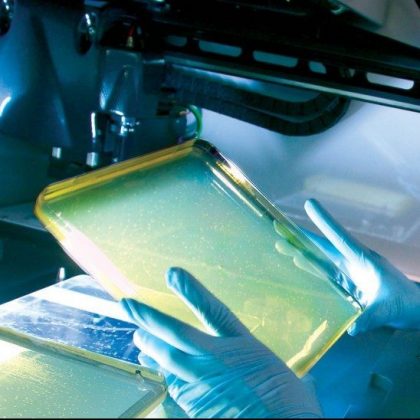
On the Cover of HPL: Research on cleanliness optimization of multisegment disk amplifier based on vectorized flow mode

Rigorous cleanliness on the National Ignition Facility (NIF) is essential to assure that 99.5% optical efficiency is maintained on each of its 192 beam lines by minimizing obscuration and contamination-induced laser damage.” said James A. Pryatel and William H. Gourdin from Akima Infrastructure Services and Lawrence Livermore National Laboratory

Read more

In memory of Prof. Zunqi Lin

Prof. Zunqi Lin, co-editor-in-chief of HPL, passed away aged 76 in Shanghai, China, on 28th May. He was one of the pioneers of inertial confinement fusion science in China, and a well-respected scientist in high power laser from Shanghai Institute of Optics and Fine Mechanics. He was elected the academician of CAS in 2003.

Read more

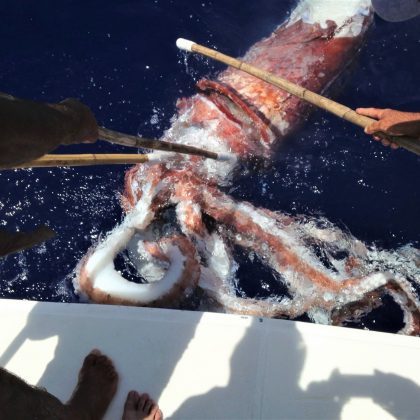
Bees, Squid and Oil Plumes

Spring has almost sprung which means we’re taking a look at the fluid dynamics of bees, how to build squid-inspired robots and modelling oil plumes eight years on from the Deepwater Horizon oil spill.…

Read more

How partial differential equations can unravel information in data

The advance of data science and the solution of big data questions rely heavily on fundamental mathematical techniques. We are surrounded by technology that collects, transmits and manipulates data on an immense scale; the key is the application and development of advanced mathematics for the efficient gathering and manipulation of ‘data’–values of qualitative or quantitative variables–and efficient extraction of ‘information’–the content and meaning present in data.…

Read more

We think we’re the first advanced earthlings—but how do we really know?

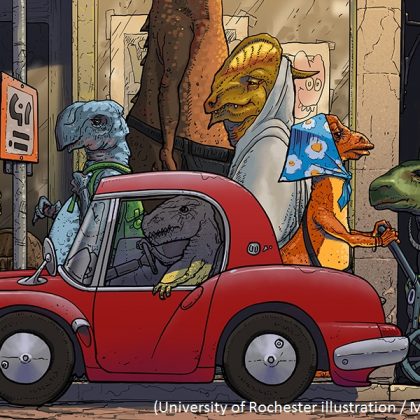
Imagine if, many millions of years ago, dinosaurs drove cars through cities of mile-high buildings. A preposterous idea, right? Over the course of tens of millions of years, however, all of the direct evidence of a civilization—its artifacts and remains—gets ground to dust. How do we really know, then, that there weren’t previous industrial civilizations on Earth that rose and fell long before human beings appeared? It’s a compelling thought experiment, and one that Adam Frank, a professor of physics and astronomy at the University of Rochester, and Gavin Schmidt, the director of the NASA Goddard Institute for Space Studies, take up in a paper published in the International Journal of Astrobiology.

Read more

Under the microscope: SemStat Elements

A few months ago, Cambridge University Press launched a new set of succinct, yet information-rich products known as SemStat Elements, edited by Ernst Wit, Chair of Statistics and Probability at the University of Groningen.…

Read more

The end of the universe

Manu Paranjape, author of The Theory and Applications of Instanton Calculations, discusses the potential end of the universe. Recently, reports in the media have warned that our universe could be destroyed abruptly in a collision with a bubble of negative energy, and that the process may have already started!…

Read more

Materials Science to Empower Quantum Information Technologies

Quantum materials have exotic physical properties that arise from quantum mechanical or topological properties of their electrons. These materials display novel surface properties, magnetic effects, and optical properties, and are expected to lead to, for example, qubits with enhanced coherence times and sensors with unprecedented accuracy.

Read more

Artificial Intelligence for Materials

The materials community is just beginning to utilize Artificial Intelligence (AI) and Machine Learning (ML) in the research process, and it is already clear that this represents a potentially game changing method to accelerate materials development.

Read more

Managing egg incubation to benefit chicken bone strength

The animal article of the month for April is ‘Incubation and hatch management: consequences for bone mineralization in Cobb 500 meat chickens‘ Following two field observations of newly hatched chicks that had soft bones and were having difficulty standing,  we wanted to find out what causes soft bones and, what could be done to prevent this from occurring in the future.   …

Read more

Electrocatalysts for Hydrogen and Oxygen Evolution

Hydrogen is one of the most valuable energy carriers and a clean and renewable energy supply. Electrolysis of water, that is, water splitting into hydrogen and oxygen gases under an electrical bias, offers a near-term and long-term solution for the production of hydrogen gas as fuel and for chemical products with large-scale capability.

Read more

The Anthropocene

This is an English translation of the Editorial to Annales. Histoire, Sciences Sociales Volume 72 – Issue 2. This issue of the Annales contains a thematic dossier dedicated to the Anthropocene, a concept currently enjoying undeniable scientific and public success.…

Read more

Acceleration of growth disturbs health

The animal article of the month for March is ‘Invited review: resource allocation mismatch as pathway to disproportionate growth in farm animals – prerequisite for a disturbed health‘ Resources are nutrients and energy which must be properly used during growth and development, and later on for performance.…

Read more

On the Cover of HPL: Assembly and Metrology of NIF target subassemblies using robotic systems

When the first targets for the National Ignition Campaign (NIC) at Lawrence Livermore National Laboratory (LLNL) were built to be fielded on the National Ignition Facility (NIF) in the late 2000’s, the assemblies were handcrafted, meticulously measured, and carefully tested. The resulting assemblies were literally one-of-a-kind and fairly fragile pieces of art, as well as fully functional high energy density physics targets. They were true engineering marvels.

Read more

JFM Symposium – Chennai

Dr. Tom Crawford, the Social Media Editor for JFM, documents the final leg of the first-ever JFM Symposia: From Fundamentals to Applied Fluid Mechanics that took place in the three Indian cities of Mumbai, Bangalore and Chennai in December 2017.…

Read more

JFM Symposium – Mumbai

Dr. Tom Crawford, the Social Media Editor for JFM, documents the start of the first-ever JFM Symposia: From Fundamentals to Applied Fluid Mechanics that took place in the three Indian cities of Mumbai, Bangalore and Chennai in December 2017.…

Read more

Vedanta: A New Landmark in Litigating Extraterritorial Torts

The July 2017 issue (6:2) of Transnational Environmental Law (TEL) includes a contribution by Elena Merino Blanco and Ben Pontin examining jurisdictional grounds for hearing foreign tort claims, with reference to recent and ongoing oil pollution nuisance litigation involving Royal Dutch Shell Plc and its Nigerian subsidiary operating in the Niger Delta.…

Read more

The Global Livestock Environmental Assessment Model (GLEAM)

The animal article of the month for February is ‘Invited review: a position on The Global Livestock Environmental Assessment Model (GLEAM)‘ The livestock sector is one of the fastest growing subsectors of the agricultural economy and it makes a major contribution to global food supply and economic development.…

Read more

Hydrogen: fuel of the future?

Hydrogen is the most abundant element in the universe. And as the race to find energy sources to replace our dwindling fossil fuel supplies continues, hydrogen is likely to play a crucial role.

Read more

JFM Symposium Bangalore

As the Social Media Editor for JFM, I was kindly asked to document the first-ever JFM Symposia: From Fundamentals to Applied Fluid Mechanics that took place in the three Indian cities of Mumbai, Bangalore and Chennai in December 2017.…

Read more

JMR: Supporting Early Career Scholars in Materials Science

Journal of Materials Research (JMR) publishes an annual Issue that is devoted to early career scholars in Materials Science. The Issue provides a unique opportunity to be highlighted and promoted early in one’s research career and in order to increase attention to these papers, the issue is fully open access. 

Read more

The need of an ethics of planetary sustainability

How long will humankind survive? Besides the fact that we have been able to eliminate ourselves with nuclear weapons for decades, even without a third world war, the challenge to take care of the resources of our planet remains; we need to use them in a way that our children and their children can have a place on Earth as well. In this blog post Andreas Losch discusses his recent review article in the International Journal of Astrobiology, The need of an ethics of planetary sustainability

Read more

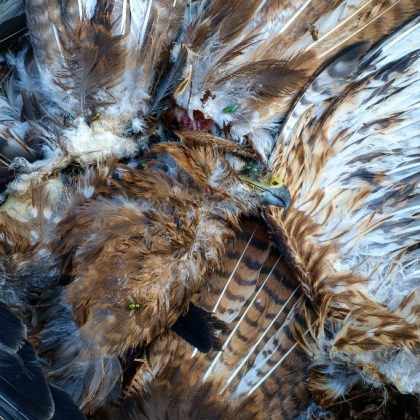
Illegal killing of birds still occurring in Europe

In spite of national legislation and international obligations, a new BirdLife International-led review showed illegal killing and taking is still occurring in Northern and Central Europe and the Caucasus, birds being primarily killed illegally for ‘sport’, ‘food’ or ‘predator and pest control’.…

Read more

Reproduction in Blade Runner 2049

Reproduction on Film, the recently published special issue of The British Journal for the History of Science, investigates the theme of biological reproduction in the history of cinema, television, and other screen media.…

Read more

Aliens are more like us than we think

Hollywood films and Science-Fiction literature fuel the fantasy that aliens are other-worldly, monster-like beings, who are very different to humans. But, new research suggests that we have more in common with our extra-terrestrial neighbours, than initially thought. In a new study published in the International Journal of Astrobiology scientists from the University of Oxford show for the first time how evolutionary theory can be used to support alien predictions and better understand their behaviour.

Read more

Building a sustainable future: urgent action needed

We need to act urgently to increase the energy efficiency of our buildings as the world’s emerging middle classes put increasing demands on our planet’s energy resources. These are the findings of a new report, published in MRS Energy & Sustainability by authors Matthias M. Koebel, Jannis Wernery and Wim J. Malfait.

Read more