To save content items to your account,
please confirm that you agree to abide by our usage policies.
If this is the first time you use this feature, you will be asked to authorise Cambridge Core to connect with your account.
Find out more about saving content to .
To save content items to your Kindle, first ensure no-reply@cambridge.org
is added to your Approved Personal Document E-mail List under your Personal Document Settings
on the Manage Your Content and Devices page of your Amazon account. Then enter the ‘name’ part
of your Kindle email address below.
Find out more about saving to your Kindle.
Note you can select to save to either the @free.kindle.com or @kindle.com variations.
‘@free.kindle.com’ emails are free but can only be saved to your device when it is connected to wi-fi.
‘@kindle.com’ emails can be delivered even when you are not connected to wi-fi, but note that service fees apply.
The Xuanquan postal station is to date the most well-documented example of a working postal station from the Han period. This paper presents a corpus of 115 excavated horse names recorded in Xuanquan administrative documents. Analysis of these names not only clarifies what tasks these horses were expected to perform at the station, but two unique naming conventions further articulate the complex relationships forged between humans and horses at this frontier site: giving horses human surnames and venerating aged horses. This article thus centers the act of naming individual animals as being of significant importance for future studies of human-animal interactions.
Depuis son édition par Heiberg au XIXe s., on savait que le texte grec de La mesure du cercle d'Archimède qui nous est parvenu est fautif, altéré par l'intervention d'un compilateur. Pour certaines de ses parties au moins, il est donc d'une authenticité douteuse. Plus récemment, l'examen de la traduction latine (au IXe siècle) de la traduction arabe de ce texte a permis de conclure que le manuscrit grec traduit appartient à une tradition textuelle meilleure et plus ancienne que le texte édité par Heiberg. Dans cette étude, on trouve l'editio princeps de la traduction arabe de La mesure du cercle, sa première traduction et une analyse historique et mathématique. Les nombreuses lectures de cette traduction faites au cours des siècles ont inspiré plusieurs « rédactions ». Trois d'entre elles seront éditées, traduites et examinées dans une prochaine étude.
This article explores the commentaries on Analects 3.5 and related texts in light of Confucius’ other discussions of the Yi Di. It also speculates on the ways readings of these texts have been shaped by the historical-cultural contexts of the scholars who have interpreted them over the years. Finally, it questions whether there might be a relationship between Analects 3.5 and the pericopes that make up the rest of chapter 3.
This paper aims to introduce and discuss al-Fārābī's (d. 950–1 CE) fallacy from transfer and substitution in his little-studied “On Deceptive Topoi” (Kitāb al-amkina al-muġalliṭa) and the criticism leveled at him by Averroes (d. 1198 CE) for violating Aristotle's claim of the exhaustiveness of his list of fallacies. The first and larger half of this paper introduces al-Fārābī's treatise and its innovations upon Aristotle's Sophistici elenchi. The second half focuses on Averroes’ criticism in his so-called middle commentary (talḫīṣ) on Aristotle's SE and discusses the validity of his arguments against al-Fārābī. As the final analysis will show, Averroes’ criticism does not sufficiently take into account the independence of al-Fārābī's treatise from Aristotle's SE, its disregard for the study of dialectical deception and counter-deception, and its particular focus on the demonstrative sciences. In light of al-Fārābī's innovation his “On Deceptive Topoi” turns out to be a work of great originality drawing on a broad range of source texts.
The Lomas Entierros archaeological site provides a case study of domestic activities in two socioeconomic sectors. Located in Central Pacific Costa Rica, it was a primary center and important node for the exchange of goods throughout the region. In this article, we characterize and compare the domestic and socioeconomic activities at two structures from different sectors of the site through the analysis of micro-remains, chemical residues (phosphates, carbonates, pH, carbohydrates, protein residues, and fatty acids), and starch grains. Our findings show that differences between the two structures were determined both by their function and the socioeconomic status of their occupants. Structure 13, in the elite sector, presents a richer dataset that suggests the cooking of plants and mollusks in the interior of the dwelling. Structure 44, in the intermediate-status sector, has a lower diversity and density of remains, suggesting very low use that may result from its role as a storage space. This article provides a nuanced methodology for the study of domestic spaces in tropical areas.
The textual history of the Analects (論語) has long been based on narratives according to which disciples of Confucius (tr. 551–479 bce) recorded his sayings after his death. During the Western Han (206 bce–9 ce), three textual traditions of the Analects circulated: the Lu 魯, the Qi 齊, and the “old script” (古文). The Lu Analects in 20 chapters would eventually become the only one transmitted. Early textual losses have been offset in the last decades by recoveries of several ancient manuscripts. In this paper, we examine two manuscripts produced around 300 bce with a close connection to the Analects: the Anhui University *Zhongni said (仲尼曰) and the Wangjiazui *Kongzi said (孔子曰). Their dating makes them of particular importance to cast new light on traditional narratives. By looking at parallels and linguistic evidence of these manuscripts, we argue that *Zhongni said and *Kongzi said confirm the existence by ca. 300 bce of a tradition of collecting sayings attributed to Confucius. We define these manuscripts as “Analects-like materials,” which are characterized as lists of sayings, with little to no context, attributed to Confucius. This label separates them from Warring States narratives about the figure of Confucius.
This article analyzes the assemblages of humans and other-than-humans that animated the sacred landscape of Cerro de la Virgen, a hilltop site occupied during the Formative period (1800 BC–AD 250) in the lower Río Verde Valley of coastal Oaxaca, Mexico. Commensalism in the region increased markedly in scope and complexity throughout the Formative period, culminating in the region's first polity at AD 100. Feasting practices became relatively standardized, but the placement of objects and bodies in public architecture—a set of collective practices associated with the vital forces that animated the cosmos—varied considerably from site to site during the late Terminal Formative period (150 BC–AD 250). Lower Verde scholars have argued that these idiosyncrasies reflect the myriad collective identities of the region's hinterland communities, a pattern rooted in local affiliations that may have conflicted with an expanding regional identity centered at the urban center of Río Viejo. I augment this discussion by highlighting the role that the materiality of the landscape, present before humans even occupied the region, played in the construction of collective identity. I develop an interpretive approach that pays special attention to Indigenous concepts of ontology, particularly those related to animacy and its transference, and uses the semiosis of American philosopher Charles Peirce to elucidate meaning from deposits of cached objects. The animate qualities assembled through fired clay and chiseled stone at Cerro de la Virgen afforded a ritual pattern that was unique in coastal Oaxaca at the end of the Formative period.
The typological, technological, and use-wear analyses of obsidian artifacts from Terminal Classic Pook's Hill (AD 830–950+) provide opportunities to better reconstruct socioeconomic activities in this plazuela group, including long-distance trade, tool production, subsistence practices, domestic tasks, and the organization of craft production. Based on visual sourcing, most of the obsidian originated from highland Guatemala, specifically El Chayal. The majority of obsidian artifacts were prismatic blades, although both casual and bipolar reduction of blade cores and the recycling of blades from earlier occupations occurred at the site. Use-wear analysis reveals that obsidian tools were mainly used for subsistence and domestic household activities; however, the concentrations of tools with specific wear patterns (bone, ceramic, plants, and shell) at some locations in the plazuela provide evidence for local craft production among the population. Further support for craft production is provided by comparable use-wear on chert/chalcedony tools from these same locations. The products of low-level craft production were used within Pook's Hill itself and may have been distributed to neighboring communities within the Roaring Creek and Upper Belize River Valleys. Despite the sociopolitical and socioeconomic disruptions to lifeways that accompanied the Terminal Classic period, the Pook's Hill Maya seem to have experienced minimal upheaval in their daily lives and continued local low-level craft production. However, one important change in the Terminal Classic appears to be the increased difficulty in obtaining obsidian at Pook's Hill and the growing need for tool recycling and raw material conservation.
La agricultura fue una actividad fundamental de las comunidades aldeanas de las tierras altas de Arica en los Andes centro sur, durante el período Intermedio tardío (1100-1450 dC), hasta convertirse en uno de los principales propósitos de la expansión inca en la región en los siglos quince y dieciséis. Este trabajo presenta el hallazgo, en la cuenca alta del Valle de Azapa, de maquetas o infraestructuras agrícolas grabadas en miniatura. Caracterizamos sus formas y soportes, examinamos su distribución en los territorios tardíos de la región y las contrastamos a macroescala regional con evidencias similares. Finalmente, discutimos su vínculo con el flujo de conocimientos y experiencias relativos al manejo del agua y la topografía, junto con la ritualización del paisaje agrícola en tiempos incas.
Circular shell rings along the South Atlantic coast of the United States are vestiges of the earliest sedentary villages in North America, dating to 4500–3000 BP. However, little is known about when Indigenous communities began constructing these shell-ring villages. This article presents data from the Hokfv-Mocvse Shell Ring on Ossabaw Island, Georgia. Although shell rings are often associated with the earliest ceramics in North America, no ceramics were encountered in our excavations at Hokfv-Mocvse, and the only materials recovered were projectile points similar to points found over 300 km inland. Bayesian modeling of radiocarbon dates indicates that the ring was occupied between 5090 and 4735 cal BP (95% confidence), making it the earliest dated shell ring in the region. Additionally, shell geochemistry and oyster paleobiology data suggest that inhabitants were living at the ring year-round and had established institutions at that time to manage oyster fisheries sustainably. Hokfv-Mocvse therefore provides evidence for Indigenous people settling in year-round villages and adapting to coastal environments in the region centuries before the adoption of pottery. The establishment of villages marks a visible archaeological shift toward settling down and occupying island ecosystems on a more permanent basis and in larger numbers than ever before in the region.
In May 2021 a group of 96 classical antiquities was seized from Fordham University where they had formed part of their museum collection. The seizure was directly linked to the investigation by US authorities of objects that had been handled by the dealer Edoardo Almagià. The Fordham material was dominated by objects derived from Italy: Apulian, Campanian, and Paestan figure-decorated pottery; red-on-white ware associated with Crustumerium in Lazio; and Etruscan pottery, architectural terracottas, and terracotta votives. The objects were all donated to Fordham by William D. Walsh and had largely been acquired at auctions or through a narrow group of Manhattan galleries.
Opus signinum is a lime mortar mix that includes crushed pottery as an aggregate. Because it is water-resistant, it was used to line hydraulic structures like pools and aqueducts. While there have been numerous recreations of Roman ‘concretes’ in the past, hydrophobic linings have received little attention, and all preliminary studies in these recreations have paid more attention to the dry components and the lime than to the hydric needs of the mortar. The experiment presented here was to gain a better understanding, with the help of traditional builders, of the process of mixing and applying hydrophobic linings and calculate the water consumption of individual samples. The data obtained contribute to assessing the water consumption needs on Roman construction sites, what associated logistics these volumes required, and what the technicalities of applying this specific type of lining were.
Los últimos trabajos de sondeo llevados a cabo en la zona de reservas de la cultura Chinchorro en el Morro de Arica (Desierto de Atacama, costa centro-sur andina), han permitido fechar y analizar estratigráficamente los depósitos domésticos asociados espacialmente a las conocidas áreas de funebria Chinchorro de los sitios arqueológicos Morro 1, Morro 1/6, Morro 1/5 y Colón 10. El rango de fechas 14C precerámicas obtenidas en este sondeo (7090-3715 cal aP), en comparación al rango de fechas 14C de funebria (6453-3687 cal aP) registradas en estudios anteriores, permite hipotetizar para los espacios domésticos de este sector del Morro de Arica, un probable momento ocupacional previo al desarrollo de la momificación entre la población humana. El análisis crono-estratigráfico llevado a cabo sugiere un proceso de formación de sitios marcado por dos momentos de actividad fúnebre en asociación con la actividad doméstica vecina. Esta última se inicia más tempranamente, y todos los depósitos se encuentran intensamente intervenidos durante momentos alfareros, intermedio tardíos y tiempos recientes.
Although land loss is among the most profound impacts that settler colonialism had for Indigenous societies across North America, archaeologists rarely study one of the principal colonial mechanisms of land dispossession: allotment. This process forever altered the course of North American history, breaking up collectively held Indigenous lands into lots “owned” by individuals and families while further stressing local Indigenous subsistence patterns, social relations, political organization, and more. Archaeology's long-term, material, and sometimes collaborative vantage stands to offer insights on this process and how it played out for Indigenous peoples in different times and places. As its case study, this article considers the allotment of Mohegan lands in southeastern Connecticut (USA). An archaeology of Mohegan allotment speaks to more than land loss and cultural change. It provides evidence of an enduring and long-term Indigenous presence on the land; of the challenges faced and overcome by Mohegan peoples living through, and with, settler colonialism; and of the nuances of Indigenous-colonial archaeological records. This study also shows the importance of Indigenous and collaborative archaeologies for shedding new light on these challenging but important archaeological traces.
Regional variation in the historic development of agricultural societies in South-west Asia is increasingly apparent. Recent investigations at the wetland site of Balıklı (c. 8300–7900 BC) provide new insights into the initial processes of sedentism in Central Anatolia and the interaction of early communities within local and larger-scale networks. Located near major obsidian sources, excellent architectural preservation and faunal and botanical records at Balıklı suggest cultural connections to the upper Middle Euphrates region, yet inhabitants of the site do not appear to have participated in the wider South-west Asian obsidian-exchange networks and largely relied on wild resources.
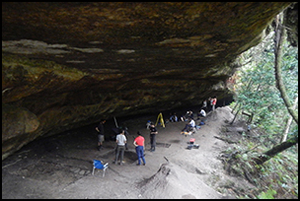
Systematic investigation of caves and rockshelters in Uruguay is revealing the archaeological importance of these sites and their association with earthen mounds. Multiple periods of human occupation at Tamanduá rockshelter are revealed through stratigraphic analysis, and radiocarbon dates suggest recurrent occupation from the Early Holocene up to the historic period.
Pottery vessels played a central role in the processing, storage and transport of animal and plant products by prehistoric and historic peoples with their chemical residues surviving for thousands of years. Accurate radiocarbon dating of archaeological pottery vessels by isolating reliable sources of carbon relating to the use of pots has long been a major challenge, but is now possible using compound-specific radiocarbon analysis of absorbed organic residues preserved in the ceramic fabric of the vessel wall. This method involves the radiocarbon dating of single fatty acids most commonly derived from degraded animal fats. These compounds are extracted from the ceramic matrix and isolated from potentially interfering compounds using preparative capillary gas chromatography. When coupled with lipid biomarker and compound-specific stable carbon isotope analyses, this method enables the palaeodietary and chronological information contained in archaeological lipids preserved in ceramic vessels to be interpreted together. From a practical perspective the methodology is challenging and for successful application must adhere to rigorous protocols. We present here guidelines which include (i) consideration of pottery selection, (ii) technical parameters for the isolation of fatty acids then their 14C dating and calibration, and (iii) case studies selected to illustrate the best use of this method.