To save content items to your account,
please confirm that you agree to abide by our usage policies.
If this is the first time you use this feature, you will be asked to authorise Cambridge Core to connect with your account.
Find out more about saving content to .
To save content items to your Kindle, first ensure no-reply@cambridge.org
is added to your Approved Personal Document E-mail List under your Personal Document Settings
on the Manage Your Content and Devices page of your Amazon account. Then enter the ‘name’ part
of your Kindle email address below.
Find out more about saving to your Kindle.
Note you can select to save to either the @free.kindle.com or @kindle.com variations.
‘@free.kindle.com’ emails are free but can only be saved to your device when it is connected to wi-fi.
‘@kindle.com’ emails can be delivered even when you are not connected to wi-fi, but note that service fees apply.
In light of police raids and de facto forms of censorship, Shelley Streeby has powerfully pointed to what she aptly terms “the limits of print as an archive of radical memory,” and, so too, the limits within American literary studies in so far recognizing the various and voluminous genres of nineteenth-century radical print culture – from fiery speeches and satirical strike songs to political pamphlets, worker song-poems, insurgent novels, and experimental biography – as literature. This chapter explores the ways American literature nevertheless archives radical movements and the ways nineteenth-century radicals engaged with and rethought the canon of American literature. It also considers how nineteenth-century US radicalism shaped American literature more broadly by turning to Henry James’s 1886 novel The Bostonians as an unexpectedly rich archive of radical abolition and its legacies.
The chapter returns to what has been called the “central paradox of American history,” the ostensible contradiction between this nation’s declared liberal ideals (“all men” being promised the inalienable right to “life, liberty, and the pursuit of happiness”) and its sanctioning of slavery, the supreme denial of liberty. It focuses on how antebellum debates (literary, political, and theological) over the moral and political legitimacy of slavery were ultimately debates over “personhood” in order to make clear that the conceptual category of the “person” (the center of liberal thought) needs to be understood as a historically contingent – rather than absolute – identity. Noting how deeply modern accounts of slavery remain indebted to the liberal presumption that slavery is wrong precisely to the extent that those enslaved possess a fixed, transhistorical personhood (a personhood that racism, ideology, or self-interest too often obscures), the chapter seeks to leave behind arguments over the conflict between slavery and liberalism and ultimately asks whether it is possible to imagine a liberatory politics that does not require the “person” to be at its center.
This chapter explores the oscillations of political power and the “revolutions” – both violent and subtle – that appeared on the US stage throughout the nineteenth century. While many dramatists sought to avoid political debate, all too aware of the potential consequences (from boycotts to riots), timely issues of the day, including the abolition of slavery, the eradication of Indigenous populations, temperance, and women’s suffrage, inevitably made their way onto the stage. Some playwrights struck out boldly, naming issues of substance misuse and miscegenation in dramas such as The Drunkard or The Octoroon. Others infused politics into their depictions of everyday life, including Ossawattomie Brown (which retells John Brown’s history as a romantic family plot) and the labor melodrama Bertha, the Sewing Machine Girl. These homely narratives reminded viewers of how inescapable these issues had become. But whether starkly challenging or subtly questioning, nineteenth-century US theater never escaped the pressing political issues of the day.
Four ways of considering partisanship and factionalism dominated the political landscape of the nineteenth-century United States: the residual anti-party views of classical republicans, who were often drawn to a traditional politics of deference involving voluntary allegiance to leaders of a higher class who would advance the “common good”; James Madison’s view that multiple factions, in shifting configurations extending across a large geographic expanse, could prevent majorities from dominating minorities; the stance of those like Andrew Jackson who believed that parties harnessed the power of the people, whose interests would otherwise suffer neglect or worse from elite leaders; and finally, the fear of a polarizing, two-party system expressed by John Adams evolved in the views of a Mugwump like Henry Adams, who held himself apart from partisan corruption without aspiring to restore the elite politics of deference. This chapter explores the presence of these varied approaches to partisanship and factionalism in literary works by Henry Adams, Hugh Henry Brackenridge, James Fenimore Cooper, William Ellery Channing, Ralph Waldo Emerson, Nathaniel Hawthorne, Harriet Beecher Stowe, Albion Tourgée, Sarah Orne Jewett, Mark Twain, and Simon Pokagon.
Despite arriving in smaller numbers than other ethnic groups in the nineteenth century, Chinese immigrants to the United States were the central target of immigration restriction laws. Chinese laborers comprised the first and only demographic group to be denied entry to the United States based on ethnicity. In this chapter, I address the history of the Chinese in America, focusing on key economic issues and laws related to immigration. I then track the widely known literary trope of the “Heathen Chinee” through works of the 1870s and 1880s, highlighting how it directly mediated political and economic issues of the period, while also illustrating its shaping role in English-language writings by early Chinese immigrants Wong Chin Foo and Yan Phou Lee. The tension between these authors’ perspectives, I conclude, anticipates the later emergence of Asian American politics and the contemporary racialization of Asians as America’s “model minority.” Nevertheless, the anomalous circumstances of these two writers meant that they were not representative of most Chinese immigrants of the time.
Among Americans in the nineteenth century, literary interest in the image, idea, and practice of “community” extended beyond any conventional historical understanding of national togetherness. The abiding conception of community that obtained in the United States between the American Revolution and World War I was also informed by an emergent theory and practice of communitarianism. This was especially the case for those contemporaries who regarded the changes to an increasingly modern society and economy from a collectivist, and typically socialist, perspective. Across a range of early national, antebellum, and postbellum phases of the communitarian experiment in the United States, American writers gave expression to communitarianism’s unique reformist program through a variety of genres and political positions. Among the former were works of fiction, nonfiction, and polemic. Among the latter (in both book and short-form formats) were writings by several generations of authors and journalists that reveal a complex array of interpretive positions and ideologies, ranging from advocacy at one end of the political spectrum to skepticism at the other. The differences in their politics notwithstanding, many of the era’s communitarian-minded writers shared a desire to shape the course of events in American life with their work.
This collection of essays provides a thorough and probing account of an author who is quickly becoming one of the most read, studied and taught contemporary writers, but whose work remains underrepresented in scholarship. It is broad and ambitious in scope, mirroring the richness of Ward's oeuvre, and it brings together a diverse and dynamic range of approaches that reflect the scholarly conversations in which Ward is embedded.
Since around 2000, there has been a noticeable upsurge in critical work on the visual archive of Atlantic slavery, resulting in a host of important studies. While most of these contributions are weighted towards images created during the era of slavery itself, some critics have adopted a more historically far-reaching approach, exploring the ways in which such images live on beyond the original context of their production, circulation and consumption, returning imaginatively in different forms at different times and in different places. This book shares the fascination with the afterlives which such visual materials have enjoyed, but places the accent on how that posterity has evolved in the realms of literature, especially poetry. It focuses on transactions between texts written between the mid-1990s and 2020 and images of slavery that belong to British, American and (in one case) French traditions, as produced between c. 1779 and 1939.
This book is an account of how American realism in the Progressive Era contributed to debates about modernity. It uses the anthropological theories of Franz Boas, and Jacques Ranciere's work on aesthetics and politics to develop a mode of reading class and culture that challenges conventional interpretations that pit the two modes of representation in opposition. It paints a picture of the late-nineteenth century, prior to modernism, as an aesthetically exciting, original, and politically radical stage in American life to reinvigorate realism as a radical aesthetic practice, with implications for understandings of American literature both in the past and into the future.
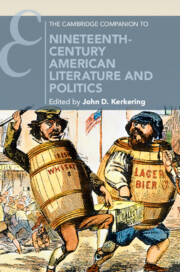
The Cambridge Companion to Nineteenth-Century American Literature and Politics addresses the political contexts in which nineteenth-century American literature was conceived, consumed, and criticized. Individual chapters examine how US literature from this period engaged with broad political concepts and urgent political issues, such as liberalism, conservatism, radicalism, nationalism, communitarianism, sovereignty, religious liberty, partisanship and factionalism, slavery, segregation, immigration, territorial disputes, voting rights, gendered spheres, and urban/rural tensions. Chapters on literary genres and forms show how poetry, drama, fiction, oratory, and nonfiction participated in political debate. The volume's introduction situates these chapters in relation to two larger disciplines, the history of political thought and literary history. This Companion provides a valuable resource for students and instructors interested in Nineteenth-Century American literature and politics.
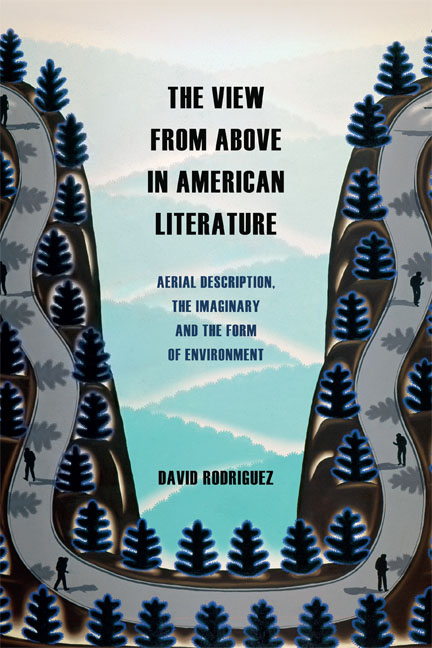
Readers encounter the environment through literature in ways not available to everyday perception. This is especially clear when a text integrates the grand vistas of what is known as the bird's-eye view. In this welcome contribution to the contemporary theoretical discussion about storied environments and non-human perceptions, David Rodriguez presents an original interpretation of the aesthetics of the view from above. Focusing on fiction by twentieth-century American writers including Willa Cather, Paul Bowles and Don DeLillo, Rodriguez skilfully combines ecocriticism, narrative theory and phenomenological approaches to literature to develop the term 'form of environment'. This theory of literary fiction foregrounds the environment not as setting or historical context, but as an equal agent with the human figures and scales that are normally the focus of literary analysis.
This chapter summarizes the primary explanations for women’s numeric underrepresentation and sets the stage for examining the gender dynamics of the candidate emergence process. Although several factors contribute to men’s dominance in US politics, we argue that the gender gap in political ambition continues to limit women’s full political inclusion. We recognize, of course, that women’s numeric representation has increased throughout the last two decades. But electing more women to state legislative and congressional seats – while certainly an important step – should not be conflated with closing the gender gap in political ambition more broadly. Because patterns of traditional gender socialization are so deeply embedded, socialized norms and behaviors still keep millions of women from envisioning themselves as candidates and perceiving the political arena as open to them. The chapter concludes with a description of our multiwave Citizen Political Ambition Study, our central tool for shedding light on gender differences in political ambition.
This chapter employs the two-stage conception of candidate emergence we presented in Chapter 2 as a framework to examine how gender interacts with the decision to run for office. Our survey data and interviews with potential candidates reveal that women and men are quite similar when it comes to their political participation and experience with the political system. But the same can’t be said of their political ambition. Not only are women less likely than men to consider running for office, but they are also less likely to take any of the steps that precede a political campaign. And among those who have thought about running for office, women are less likely than men to enter actual political contests. Ultimately, this chapter establishes the critical finding of this book: the presence of a pronounced and enduring gender gap in political ambition.