To save content items to your account,
please confirm that you agree to abide by our usage policies.
If this is the first time you use this feature, you will be asked to authorise Cambridge Core to connect with your account.
Find out more about saving content to .
To save content items to your Kindle, first ensure no-reply@cambridge.org
is added to your Approved Personal Document E-mail List under your Personal Document Settings
on the Manage Your Content and Devices page of your Amazon account. Then enter the ‘name’ part
of your Kindle email address below.
Find out more about saving to your Kindle.
Note you can select to save to either the @free.kindle.com or @kindle.com variations.
‘@free.kindle.com’ emails are free but can only be saved to your device when it is connected to wi-fi.
‘@kindle.com’ emails can be delivered even when you are not connected to wi-fi, but note that service fees apply.
Alexander Lindsay (1812–80) was the head of an aristocratic family who owned vast coalfields in Lancashire, generating enormous wealth. Educated at Eton and Trinity College, Cambridge, he spent the majority of his time travelling in Italy, collecting, and writing on a variety of subjects, including art, the Indo-Aryan race and the Etruscans. This important work, published in three volumes in 1847, surveys Christian painting and sculpture. Addressing Romance literature of the Middle Ages, iconography and legends of the saints, the book's historical narrative is infused with the author's strong moral approach to the subject. Volume 2 covers Gothic architecture; the art of the Lombards; Pisano and Giotto, and their schools and followers. Though derided by John Ruskin, the work strongly influenced aristocratic collecting, and remains relevant to readers interested in the Victorian construction of morals and artistic taste.
Alexander Lindsay (1812–80) was the head of an aristocratic family who owned vast coalfields in Lancashire, generating enormous wealth. Educated at Eton and Trinity College, Cambridge, he spent the majority of his time travelling in Italy, collecting, and writing on a variety of subjects, including art, the Indo-Aryan race and the Etruscans. This important work, published in three volumes in 1847, surveys Christian painting and sculpture. Addressing Romance literature of the Middle Ages, iconography and legends of the saints, the book's historical narrative is infused with the author's strong moral approach to the subject. Volume 3 covers the schools of Siena, Florence and Bologna, then moves north to look at Cologne, Dürer, and Cranach, the Van Eycks and the Netherlandish School. Though derided by John Ruskin, the work strongly influenced aristocratic collecting, and remains relevant to readers interested in the Victorian construction of morals and artistic taste.
A prodigiously talented artist, Sir John Everett Millais (1829–96) co-founded the Pre-Raphaelite Brotherhood with Rossetti and others, helping to revolutionise the Victorian art world. The minute realism of paintings like Christ in the House of his Parents, and his high-profile marriage to Ruskin's ex-wife Effie, were gradually accepted, and the iconic Ophelia was widely admired. Success as an illustrator also put him in the public eye, with the engravings market bringing him new wealth. With popularity came a return to more traditional forms in portraiture and landscape, inspired by Reynolds, Velázquez and the Old Masters, although he also played off Whistler and the aesthetic movement. He became president of the Royal Academy in the last year of his life. His son, John Guille Millais (1865–1931), published this highly illustrated and acclaimed two-volume biography in 1899. Volume 1 provides an account of Millais' most influential years up to 1867.
An architect and architectural theorist, George Edmund Street (1824–81) was one of the key proponents of the 'High Victorian' Gothic style in nineteenth-century Britain. He is best known as the mind behind London's Royal Courts of Justice. Elected an associate of the Royal Academy in 1866, Street became its professor of architecture in 1880. In 1874 he received the gold medal of the Royal Institute of British Architects after John Ruskin declined it, and he served as the Institute's president in 1881. Street's Gothic architecture was influenced by continental examples: this book, first published in 1855, serves as an important source for interpreting his output. It is copiously illustrated, arranged as a travelogue of mostly pointed-arch architecture seen in Italy, and covers exterior and interior elevations, sculptural details, metalwork and furniture.
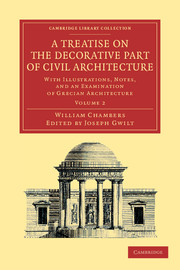
Sir William Chambers (1722–96), architect and furniture designer, wished to further his career in the 1750s by publishing on architecture. He also became the Prince of Wales' architectural tutor, architect to the office of works, then head of the royal works (comptroller and surveyor-general from 1782). Notably, he remodelled Buckingham House (1762–73) and designed Somerset House (1775–96), but Chambers' reputation rests also on his Treatise on Civil Architecture (1759), which he revised and expanded in 1791 as A Treatise on the Decorative Part of Civil Architecture. It is regarded as one of the standard English texts on classical architecture, and remains essential reading. This reissue is of the two-volume edition of 1825, annotated by the architect and writer Joseph Gwilt (1784–1863). Volume 2 focuses on the application of the orders as well as smaller architectural features, including doors, windows, balustrades, chimney-pieces and ceilings.
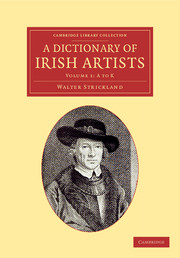
First published in 1913, this highly illustrated two-volume work was intended to give as full an account as possible of the lives and works of painters, sculptors and engravers in Ireland from the earliest times to the nineteenth century. Until then, the history of Irish art had been largely neglected, so this project was an extensive undertaking for Walter George Strickland (1850–1928), who became Director of the National Gallery of Ireland. It took him two decades to compile, and involved accessing private collections, corresponding with experts, meeting with the artists' descendants, and consulting letters, diaries and notes relating to their works. Volume 1 covers artists with surnames beginning A to K. Each entry contains biographical information on the artist and details of their works, with portraits and examples provided in hundreds of plates. This unique reference work remains of great interest to art historians and historians of Ireland.
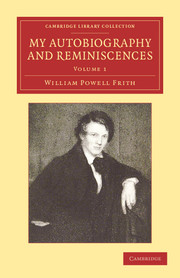
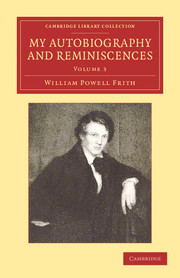
The celebrated Victorian narrative painter William Powell Frith (1819–1909) was a born raconteur. His two-volume autobiography of 1887 ran to three editions in the same year. The third edition is reissued here, together with its supplementary volume of 1888. Frith was an ideal commentator on his age. He never lost his early interest in literary and historical subjects, and moved in the highest artistic and literary circles. Yet he also saw himself as a man of the people. His most famous works were his 'modern-life' panoramas, Ramsgate Sands (1854), Derby Day (1858) and The Railway Station (1862). Discussing such projects, he reflects on everything from costume to portraiture, art dealers to female artists, and even picture frames. Volume 1 covers his childhood, training, friendships with Dickens and others, and the phenomenal success of his first crowd scenes, up to and including The Marriage of the Prince of Wales (1865).
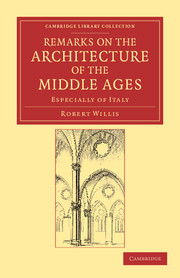
Professor of natural and experimental philosophy at the University of Cambridge, Robert Willis (1800–75) mostly lectured on mechanism, and was elected an honorary member of the Institution of Civil Engineers in 1838. But Willis's interests also included Italian Gothic architecture, and his observations on the style, amassed in 1832–3 while travelling in France, Italy and Germany, were presented in this book, first published in 1835. The work is a pioneering study of Italian Gothic, a mode overlooked by his contemporaries, and key examples are brought together. It places Italian Gothic architecture within a European context and argues that the style represents an evolutionary assemblage of architectural motifs from different places and earlier periods. Willis's narrative refocused attention on Italian Gothic, winning the approval of the Institution of British Architects, which made him an honorary member in the year of its publication.
Sir William Chambers (1722–96), architect and furniture designer, wished to further his career in the 1750s by publishing on architecture. He also became the Prince of Wales' architectural tutor, architect to the office of works, then head of the royal works (comptroller and surveyor-general from 1782). Notably, he remodelled Buckingham House (1762–73) and designed Somerset House (1775–96), but Chambers' reputation rests also on his Treatise on Civil Architecture (1759), which he revised and expanded in 1791 as A Treatise on the Decorative Part of Civil Architecture. It is regarded as one of the standard English texts on classical architecture, and remains essential reading. This reissue is of the two-volume edition of 1825, annotated by the architect and writer Joseph Gwilt (1784–1863). Volume 1 contains Gwilt's prefatory material, including an analysis of Grecian architecture's development, followed by Chambers' systematic treatment of the orders of architecture.
Published in 1848, this two-volume work was received with great praise. During a celebrated career, Anna Brownell Jameson (1794–1860) produced Shakespeare criticism, travel writing, biography, and art history, and was admired by contemporaries such as Mary Shelley and Thomas Carlyle. Taking an aesthetic rather than religious approach, the work is a study of the legends represented in Western art of the Middle Ages, ordered taxonomically. Though Jameson is considered the first professional female art critic, this is a reductive label; she was, rather, one of the great art critics of her age and her work is still of importance to art historians. Volume 1, which is richly illustrated, covers the literary origins of the legends and surveys the representation of angels and archangels, the Four Evangelists, the Twelve Apostles, the Doctors of the Church, and a number of significant saints, including Mary Magdalene.
An Attempt to Show How the Taste for Medieval Architecture which Lingered in England during the Two Last Centuries Has since Been Encouraged and Developed
Charles Locke Eastlake (1833–1906), an interior, furniture and industrial designer, showed talent as an architect and was awarded a Silver Medal in 1854 by the Royal Academy. He is known for influencing the style of later nineteenth-century 'Modern' Gothic furniture with his Hints on Household Taste (1868), but his passion for medieval architecture developed much earlier while he was in Europe during the 1850s. In 1866 he became Secretary to the Royal Institute of British Architects, and it was in 1872 that this work was published. The book is notable for being released at the height of the Gothic Revival movement in the later nineteenth century. It includes detailed comments on the architects, societies, literature and buildings that formed the cornerstones of the Gothic Revival, primarily in Britain, from around 1650 to 1870. A valuable mine of information, it remains a key source on the topic.
A prodigiously talented artist, Sir John Everett Millais (1829–96) co-founded the Pre-Raphaelite Brotherhood with Rossetti and others, helping to revolutionise the Victorian art world. The minute realism of paintings like Christ in the House of His Parents, and his high-profile marriage to Ruskin's ex-wife Effie, were gradually accepted, and the iconic Ophelia was widely admired. Success as an illustrator also put him in the public eye, with the engravings market bringing him new wealth. With popularity came a return to more traditional forms in portraiture and landscape, inspired by Reynolds, Velázquez and the Old Masters, although he also played off Whistler and the aesthetic movement. He became president of the Royal Academy in the last year of his life. His son, John Guille Millais (1865–1931), published this highly illustrated and acclaimed two-volume biography in 1899. Volume 2 applauds the freedom and breadth of treatment in Millais' later work.
The celebrated Victorian narrative painter William Powell Frith (1819–1909) was a born raconteur. His two-volume autobiography of 1887 ran to three editions in the same year. The third edition is reissued here, together with its supplementary volume of 1888. Frith was an ideal commentator on his age. He never lost his early interest in literary and historical subjects, and moved in the highest artistic and literary circles. Yet he also saw himself as a man of the people. His most famous works were his 'modern-life' panoramas, Ramsgate Sands (1854), Derby Day (1858) and The Railway Station (1862). Discussing such projects, he reflects on everything from costume to portraiture, art dealers to female artists, and even picture frames. In particular, Volume 3 records the breakdown of the talented Richard Dadd, Frith's admiration for Daniel Maclise, John Tenniel and George du Maurier, and reflections on the vagaries of fashions in art.
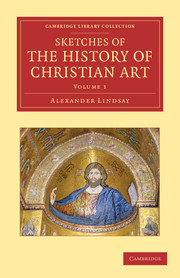
Alexander Lindsay (1812–80) was the head of an aristocratic family who owned vast coalfields in Lancashire, generating enormous wealth. Educated at Eton and Trinity College, Cambridge, he spent the majority of his time travelling in Italy, collecting, and writing on a variety of subjects, including art, the Indo-Aryan race and the Etruscans. This important work, published in three volumes in 1847, surveys Christian painting and sculpture. Addressing Romance literature of the Middle Ages, iconography and legends of the saints, the book's historical narrative is infused with the author's strong moral approach to the subject. Volume 1 covers philosophical method, Christian symbolism and mythology, Roman art, and Byzantine art, which Lindsay sees as having stimulated the Western revival. Though derided by John Ruskin, the work strongly influenced aristocratic collecting, and remains relevant to readers interested in the Victorian construction of morals and artistic taste.
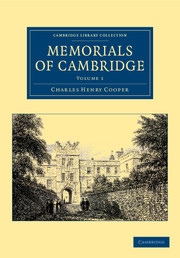
When Charles Henry Cooper (1808–66) undertook to revise the text of the 1841 Memorials of Cambridge, illustrated by the engraver John Le Keux (1783–1846), he was under the impression that 'only a slight amount of labour' would be imposed on him. However, this three-volume work was altered and modified so extensively that it may be considered as entirely re-written. Containing over 250 photographs, engravings and etchings, Volumes 1 and 2 of the work are a comprehensive guide to the Cambridge colleges, while Volume 3 is almost entirely concerned with the history of other landmarks throughout the city, such as the Fitzwilliam Museum, the Guildhall and the Botanic Garden. It was published in 1860, just six years before Cooper's death, and stands as a detailed and fully illustrated guide to Cambridge at that time. Volume 1, dealing with the colleges in order of their foundation, covers Peterhouse to Jesus.
Architecture affects us on a number of levels. It can control our movements, change our experience of our own scale, create a particular sense of place, focus memory, and act as a statement of power and taste, to name but a few. Yet the ways in which these effects are brought about are not yet well understood. The aim of this book is to move the discussion forward, to encourage and broaden debate about the ways in which architecture is interpreted, with a view to raising levels of intellectual engagement with the issues in terms of the theory and practice of architectural history. The range of material covered extends from houses constructed from mammoth bones around 15,000 years ago in the present-day Ukraine to a surfer's memorial in Carpinteria, California; other subjects include the young Michelangelo seeking to transcend genre boundaries; medieval masons' tombs; and the mythographies of early modern Netherlandish towns. Taking as their point of departure the ways in which architecture has been, is, and can be written about and otherwise represented, the editors' substantial Introduction provides an historiographical framework for, and draws out the themes and ideas presented in, the individual contributors' essays. Contributors: Christine Stevenson, T. A. Heslop, John Mitchell, Malcolm Thurlby, Richard Fawcett, Jill A. Franklin, Stephen Heywood, Roger Stalley, Veronica Sekules, John Onians, Frank Woodman, Paul Crossley, David Hemsoll, Kerry Downes, Richard Plant, Jenifer Ní Ghrádraigh, Lindy Grant, Elisabeth de Bièvre, Stefan Muthesius, Robert Hillenbrand, Andrew M. Shanken, Peter Guillery.
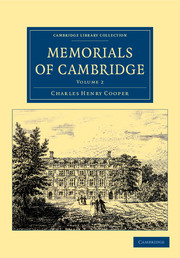
When Charles Henry Cooper (1808–66) undertook to revise the text of the 1841 Memorials of Cambridge, illustrated by the engraver John Le Keux (1783–1846), he was under the impression that 'only a slight amount of labour' would be imposed on him. However, this three-volume work was altered and modified so extensively that it may be considered as entirely re-written. Containing over 250 photographs, engravings and etchings, Volumes 1 and 2 of the work are a comprehensive guide to the Cambridge colleges, while Volume 3 is almost entirely concerned with the history of other landmarks throughout the city, such as the Fitzwilliam Museum, the Guildhall and the Botanic Garden. It was published in 1860, just six years before Cooper's death, and stands as a detailed and fully illustrated guide to Cambridge at that time. Volume 2, dealing with the colleges in order of their foundation, covers Christ's to Emmanuel.
The announcement that American architect Steven Holl had won the competition to design a new building for the Glasgow School of Art opposite Charles Rennie Mackintosh's original (built 1897–1909), and the revelation of his plans to the public, provoked plenty of criticism about the possible relationship between the two buildings. Professor William Curtis first wrote on the topic in the Architects' Journal almost a year from the announcement, and his opinions on the relationship were forthright: ‘Rather than dialogue’, he argued, ‘there is a dumb lack of articulation in construction and material.’ A response came in the following issue of the AJ from David Porter, then Professor at the Mackintosh School of Architecture. He disagreed with Curtis, claiming that the new building will have ‘an extraordinary spatial richness’ and that ‘the original sketch Curtis saw in Glasgow last December has progressed very rapidly’, for it was but an early stage in ‘a design strategy driven forward with a mixture of poetics and ruthless pragmatics: qualities that are singularly appropriate in this context, and developed with artistry and skill’.
Curtis subsequently wrote a further open letter to ‘the Governors, the Director, the Faculty, Students, Staff, Alumnae and Alumni’ of Glasgow School of Art, which was published in facsimile in the Architects' Journal on 3 March 2011:
What a disappointment then to contemplate Steven Holl's proposed addition. It is horrendously out of scale, it dominates Mackintosh, it does not create a decent urban space, it fails to deal with the context near and far, it is clumsy in form and proportion, it lacks finesse in detail, has no relationship to the human figure, and is a stillborn diagram dressed up in Holl clichés such as ‘iceberg’ glass.
Architecture in Northern Ireland in the twentieth century followed much the same pattern as elsewhere in the British Isles moving, broadly, from historic styles around the turn of the century, through a phase of Arts and Crafts activity for a decade or so, until settling down to a concentrated period of interest in Neo-Georgian styling in the 1920s and '30s. This inter-war era included, however, some examples of Modernism, primarily of an ornamented Art Deco type but occasionally of a more plain variety which ranged between Functionalism and the International Style. Examples of this type of modern architecture – characterised by flat roofs, white walls, large horizontal windows and a general avoidance of ornamentation – formed only a comparatively small part of the overall output of the period in Northern Ireland, and, for most architects who were involved, their contribution amounted to little more than a building or two; such was the prevailing tradition-bound architectural mood of the time.
One architect in Northern Ireland, however, demonstrated a commitment to the Modern Movement that appears to have been greater than most. That was Philip Bell, whose name has been mentioned from time to time by various commentators, whether as a designer of Modernist houses or as the architect of one other particularly well-known building of the 1930s in Northern Ireland, the Strangford Lough Yacht Club House, which was an accomplished and stylish enough building to have been featured in the English architectural press at the time.
As to the isothermicity of the translucent walls, experimental laboratories will be able in the near future to give us a new translucent material whose isothermal properties will be equal to that of the thickest wall. From then on, we will witness the inauguration of a new era: buildings will be altogether hermetically closed. Windows will no longer be needed on the façade; consequently neither dust nor flies nor mosquitoes will enter the houses; nor will noise.
Le Corbusier's fascination with light and glass formed a continuing thread throughout his career. After his maxim ‘architecture is lighted floors’ came the passionate discourses to defend the building's openness, first with his fenêtre en longueur, the ribbon window, and ultimately with his emblematic pan de verre, the glass wall that would not only provide sunlight-flooded interiors but would also most significantly contribute to shape the Modernist imagery. Despite the profuse explorations invested in this concept, Le Corbusier would always lament his failure to execute his ‘pan de verre 100%’ in the way he would have desired: ‘as a mur neutralisant constituted by a double glass-wall with an internal cavity through which conditioned air would circulate, hot in winter, cold in summer’.
The idea of the mur neutralisant was born as part of a challenging environmental theory for buildings, termed either respiration exacte or air exact [1], proposed by Le Corbusier in collaboration with his cousin and practice partner Pierre Jeanneret in 1928. Le Corbusier would describe this theory in two of his most dogmatic publications: first, as one of his lectures (5 October 1929) collected in Précisions (1930) and, second, as part of La Ville Radieuse (1935), his manifesto on modern habitation.