Refine search
Actions for selected content:
7915 results in Architecture
Lines and words on display: Alvin Boyarsky as a collector, curator and publisher
-
- Journal:
- arq: Architectural Research Quarterly / Volume 14 / Issue 2 / June 2010
- Published online by Cambridge University Press:
- 03 August 2010, pp. 165-174
- Print publication:
- June 2010
-
- Article
- Export citation
Books received
-
- Journal:
- arq: Architectural Research Quarterly / Volume 14 / Issue 2 / June 2010
- Published online by Cambridge University Press:
- 03 August 2010, pp. 175-176
- Print publication:
- June 2010
-
- Article
- Export citation
Valuing design and interdisciplinary research Who feels the impact?
-
- Journal:
- arq: Architectural Research Quarterly / Volume 14 / Issue 2 / June 2010
- Published online by Cambridge University Press:
- 03 August 2010, pp. 85-87
- Print publication:
- June 2010
-
- Article
-
- You have access
- Export citation
ARQ volume 14 issue 2 Cover and Back matter
-
- Journal:
- arq: Architectural Research Quarterly / Volume 14 / Issue 2 / June 2010
- Published online by Cambridge University Press:
- 03 August 2010, pp. b1-b2
- Print publication:
- June 2010
-
- Article
-
- You have access
- Export citation
Wasteland: a collaborative studio
-
- Journal:
- arq: Architectural Research Quarterly / Volume 14 / Issue 2 / June 2010
- Published online by Cambridge University Press:
- 03 August 2010, pp. 182-184
- Print publication:
- June 2010
-
- Article
- Export citation
The art museum as a city or a machine for showing art?
-
- Journal:
- arq: Architectural Research Quarterly / Volume 14 / Issue 2 / June 2010
- Published online by Cambridge University Press:
- 03 August 2010, pp. 129-138
- Print publication:
- June 2010
-
- Article
- Export citation
ARQ volume 14 issue 2 Cover and Front matter
-
- Journal:
- arq: Architectural Research Quarterly / Volume 14 / Issue 2 / June 2010
- Published online by Cambridge University Press:
- 03 August 2010, pp. f1-f2
- Print publication:
- June 2010
-
- Article
-
- You have access
- Export citation
The question of evidence: current worldviews in environmental design research and practice
-
- Journal:
- arq: Architectural Research Quarterly / Volume 14 / Issue 2 / June 2010
- Published online by Cambridge University Press:
- 03 August 2010, pp. 105-114
- Print publication:
- June 2010
-
- Article
- Export citation
Communication across cultures
-
- Journal:
- arq: Architectural Research Quarterly / Volume 14 / Issue 2 / June 2010
- Published online by Cambridge University Press:
- 03 August 2010, p. 83
- Print publication:
- June 2010
-
- Article
-
- You have access
- Export citation
Environmental retrofit: building integrated passive cooling in housing
-
- Journal:
- arq: Architectural Research Quarterly / Volume 14 / Issue 2 / June 2010
- Published online by Cambridge University Press:
- 03 August 2010, pp. 139-151
- Print publication:
- June 2010
-
- Article
-
- You have access
- Export citation
The architect is present?
-
- Journal:
- arq: Architectural Research Quarterly / Volume 14 / Issue 2 / June 2010
- Published online by Cambridge University Press:
- 03 August 2010, pp. 89-91
- Print publication:
- June 2010
-
- Article
- Export citation
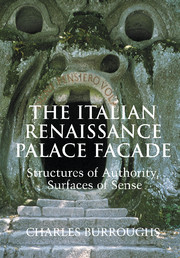
The Italian Renaissance Palace Façade
- Structures of Authority, Surfaces of Sense
-
- Published online:
- 17 March 2010
- Print publication:
- 17 June 2002

Integrated Land Use and Transport Modelling
- Decision Chains and Hierarchies
-
- Published online:
- 12 March 2010
- Print publication:
- 13 July 1989
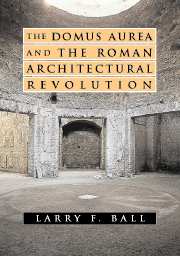
The Domus Aurea and the Roman Architectural Revolution
-
- Published online:
- 03 March 2010
- Print publication:
- 11 September 2003
Flow: architecture, object and relation
-
- Journal:
- arq: Architectural Research Quarterly / Volume 14 / Issue 1 / March 2010
- Published online by Cambridge University Press:
- 04 May 2010, pp. 21-27
- Print publication:
- March 2010
-
- Article
- Export citation
Architectural research and its enemies
-
- Journal:
- arq: Architectural Research Quarterly / Volume 14 / Issue 1 / March 2010
- Published online by Cambridge University Press:
- 04 May 2010, pp. 11-16
- Print publication:
- March 2010
-
- Article
- Export citation
Electr(on)ic palpitations: a visitors' pavilion for the Bieudron power plant, Switzerland
-
- Journal:
- arq: Architectural Research Quarterly / Volume 14 / Issue 1 / March 2010
- Published online by Cambridge University Press:
- 04 May 2010, pp. 29-39
- Print publication:
- March 2010
-
- Article
- Export citation
Where did that come from?
-
- Journal:
- arq: Architectural Research Quarterly / Volume 14 / Issue 1 / March 2010
- Published online by Cambridge University Press:
- 04 May 2010, p. 3
- Print publication:
- March 2010
-
- Article
-
- You have access
- Export citation
Evaluating the evaluation of research Technological optimism
-
- Journal:
- arq: Architectural Research Quarterly / Volume 14 / Issue 1 / March 2010
- Published online by Cambridge University Press:
- 04 May 2010, pp. 5-10
- Print publication:
- March 2010
-
- Article
-
- You have access
- Export citation
ARQ volume 14 issue 1 Cover and Back matter
-
- Journal:
- arq: Architectural Research Quarterly / Volume 14 / Issue 1 / March 2010
- Published online by Cambridge University Press:
- 04 May 2010, pp. b1-b2
- Print publication:
- March 2010
-
- Article
-
- You have access
- Export citation
